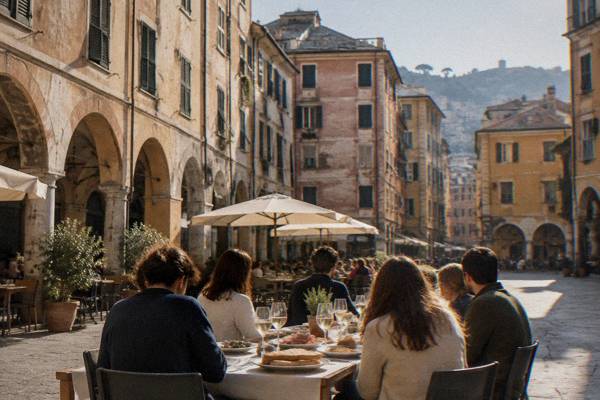
What To Eat In Genoa: Pesto, Focaccia, Farinata And More
Genoa's kitchen runs on five dishes: pesto genovese, focaccia, farinata, trofie and pansoti. This guide sets out what each one is, what the protected labels cover, and where the food streets and markets sit.
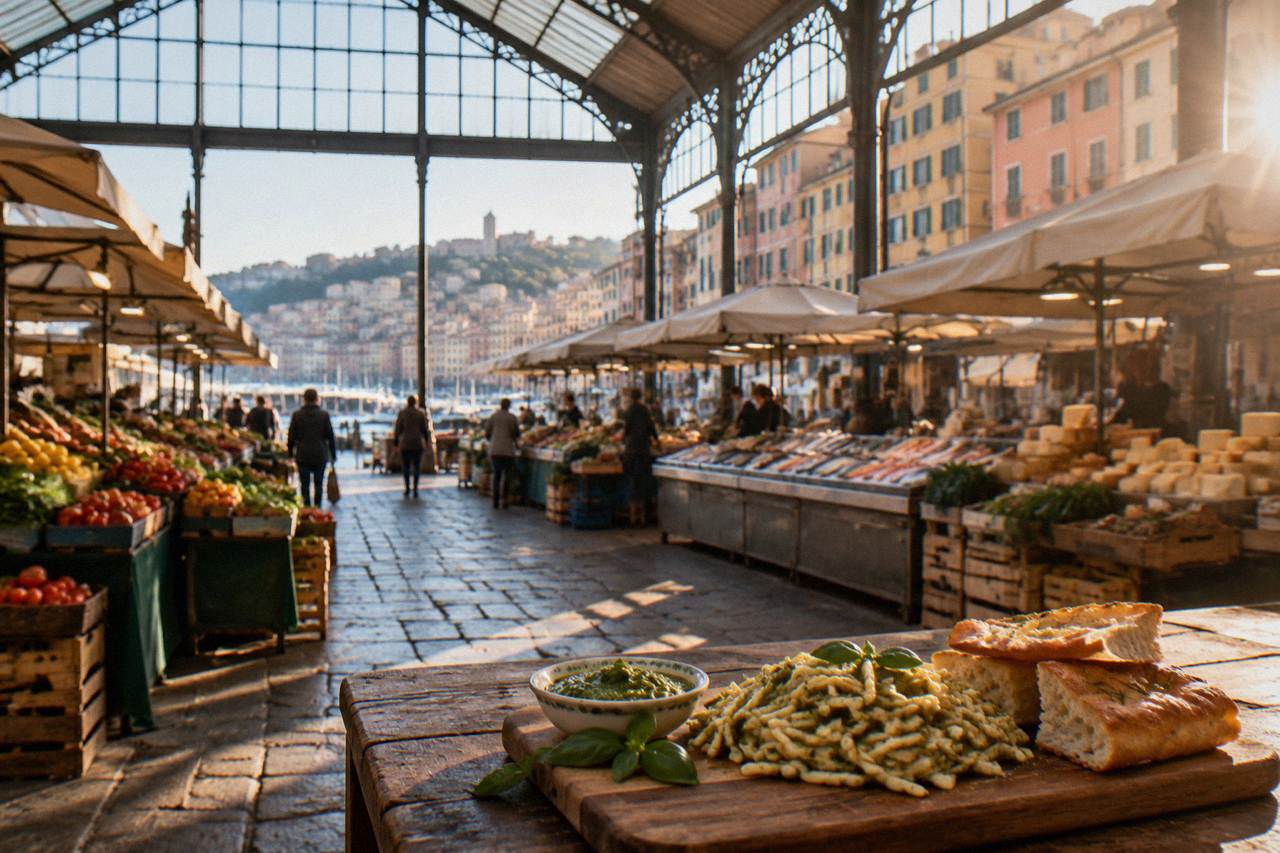
Short answer
The food Genoa is famous for is pesto genovese made with Basilico Genovese PDO basil, salted focaccia, chickpea farinata, and the pastas trofie and pansoti. Focaccia di Recco, an IGP product since 2015, is made only in Recco, Camogli, Sori and Avegno.
Genoa, the coastal city in Liguria on the Ligurian Sea, built its kitchen on the narrow strip between the port and the Apennine hills, and that kitchen is unusually precise about itself. Five names cover the core of it: pesto genovese, focaccia, farinata, trofie and pansoti. Two of them carry protected status tied to this exact stretch of coast, the basil through the Basilico Genovese PDO and the focaccia of Recco through an IGP recognised in 2015. This page from the Genoa Travel Guide sets out what each dish is, what the labels do and do not cover, where the food streets and markets sit, and how a short trip can be organised around tasting all of it.

What Is Genoa Food Famous For?
Genoa food is famous above all for pesto genovese, the basil sauce bound by the Basilico Genovese PDO label, for salted focaccia baked flat and oily, for farinata made from chickpea flour, and for two pasta shapes built to carry them, trofie and pansoti. The city's reputation rests on these five names, and two carry protected status that names this coast specifically.
Liguria's cooking is a coastal and hillside kitchen, not a heavy one. Basil, olive oil, chickpea flour, pine nuts and cheese are the load-bearing ingredients, and the port's history as the capital of a republic that lasted until 1797 left the city with a merchant class that could afford saffron, spices and sugar centuries before inland farming regions could. The result is a repertoire that is small, exact and taken seriously at home. The guide to what food Genoa is famous for covers the same question in short form; this page goes dish by dish.
Two protected designations matter to anyone eating their way through the city. Basilico Genovese PDO is the basil for pesto genovese, a designation that covers basil grown in defined parts of Liguria under defined methods. Focaccia di Recco IGP, recognised in 2015, covers a cheese-filled flatbread that may be produced only in four communes east of the city: Recco, Camogli, Sori and Avegno. Everything else on the list is a tradition rather than a legal designation, which is worth knowing when a menu anywhere in the world claims authenticity.
Where To Eat Focaccia In Genoa?
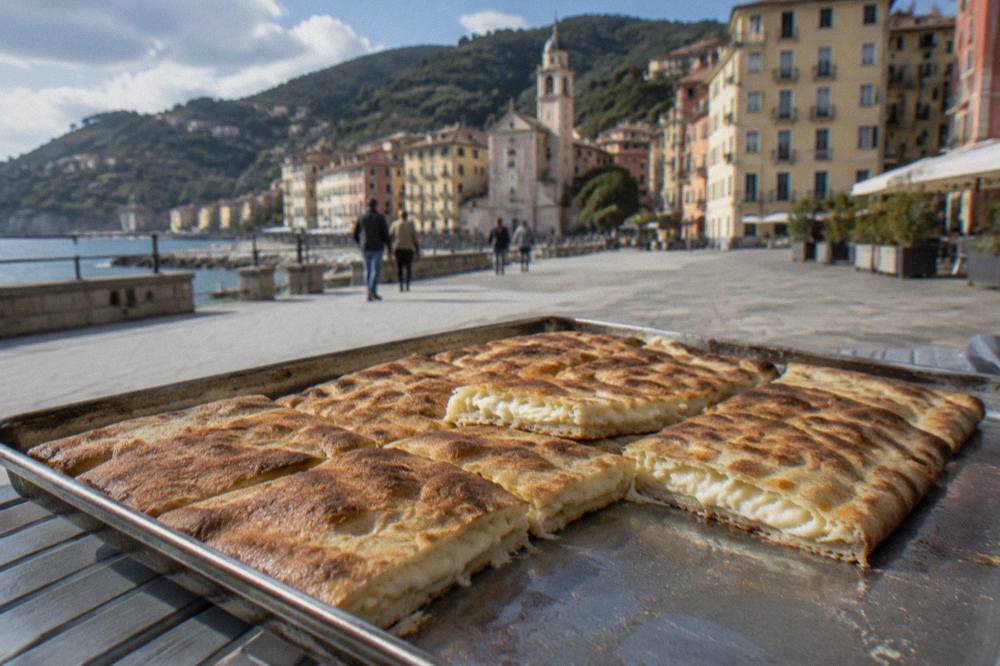
Focaccia in Genoa is the everyday bread of the city, a flat, dimpled, well-oiled bake salted on top, eaten at breakfast, mid-morning and late afternoon, and bought by weight or by the slice from bakeries across the old town and along Via XX Settembre. The version with a cheese filling, focaccia di Recco, is an IGP product made only in Recco, Camogli, Sori and Avegno east of the city.
The plain Genoese focaccia and the Recco version are different products with different rules. The city one is a daily bread, and the constraints of this site's focaccia guide describe it in full: dimpled, oily, salted, cut from a tray. The Recco one is a protected name, IGP since 2015, with a soft cheese between two thin layers of dough, and the protection names exactly four permitted communes of production. Recco itself sits on the coast east of Genoa and is covered in the site's Recco day-trip guide; Camogli, also inside the IGP zone, lies about 18 km from Piazza De Ferrari in a straight line.
| Baked good | Source | Area covered | Key rule |
|---|---|---|---|
| focaccia di Recco | IGP since 2015 | Recco, Camogli, Sori, Avegno | Cheese-filled, produced only in the four named communes |
| Genoese focaccia (city style) | Traditional, no listed designation in the site's sources | Genoa | Flat, oiled, salted, sold by weight or slice |
| Farinata | Traditional, no listed designation in the site's sources | Genoa and the Ligurian coast | Chickpea flour, baked in a copper pan |
Bakeries are one of the few food categories this site cannot name individually: no reliable bakery list exists in the site's sources, and a wrong name printed once is worse than a method for finding a good one. The workable method is the one locals use without thinking: buy where the tray is coming out of the oven rather than where it has been sitting, and buy by weight, which is the standard way focaccia is sold in the city. The street food guide applies the same logic to the fried and filled things sold from counters in the caruggi.
What Is Pesto Genovese And Why Does The Basil Have A PDO?
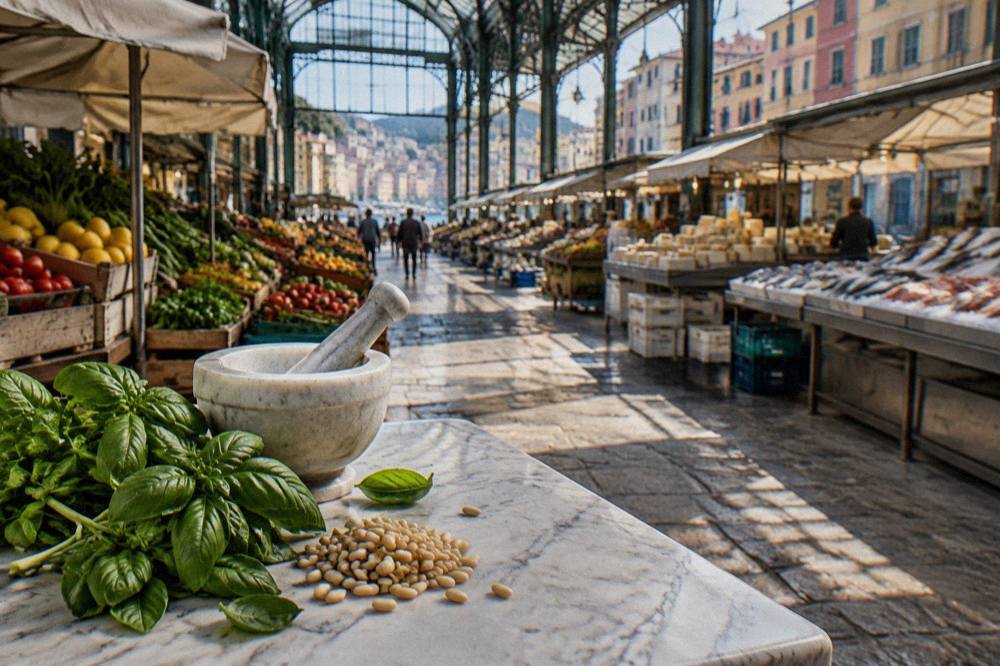
Pesto genovese is a raw sauce crushed from Basilico Genovese PDO basil, olive oil, pine nuts, cheese and garlic, and the PDO on the basil is the legal core of the dish's identity: the designation covers basil grown in defined Ligurian areas under defined methods, which is why the name of the sauce and the name of the leaf are inseparable on this coast.
The sauce is not cooked. Everything depends on the leaf and on the crushing, traditionally in a marble mortar with a wooden pestle, so that the basil is pressed rather than cut. The site's pesto genovese guide covers the method and the designation in detail. What matters for a visitor is that the PDO is real law rather than marketing: Basilico Genovese is a protected name for basil from defined production areas, and a jar or a plate in Genoa labelled with it is claiming a specific origin. The basil's own consortium sets out the rules on its official site, from the growing area to the harvesting method.
The connection between the sauce and the city's pasta shapes is direct. Trofie, the small twisted pasta, and pansoti, a filled pasta, are the two traditional carriers, and both appear further down this page. Pesto also travels onto the menu of practically every kitchen in the city, and a food tour that ends in a full meal is one structured way to taste it in several settings in one afternoon; the site's Genoa food tour page describes what that kind of tour covers, and Check availability if a guided table sounds like the right format for your dates.
What Is Farinata And When Do Genoese Eat It?
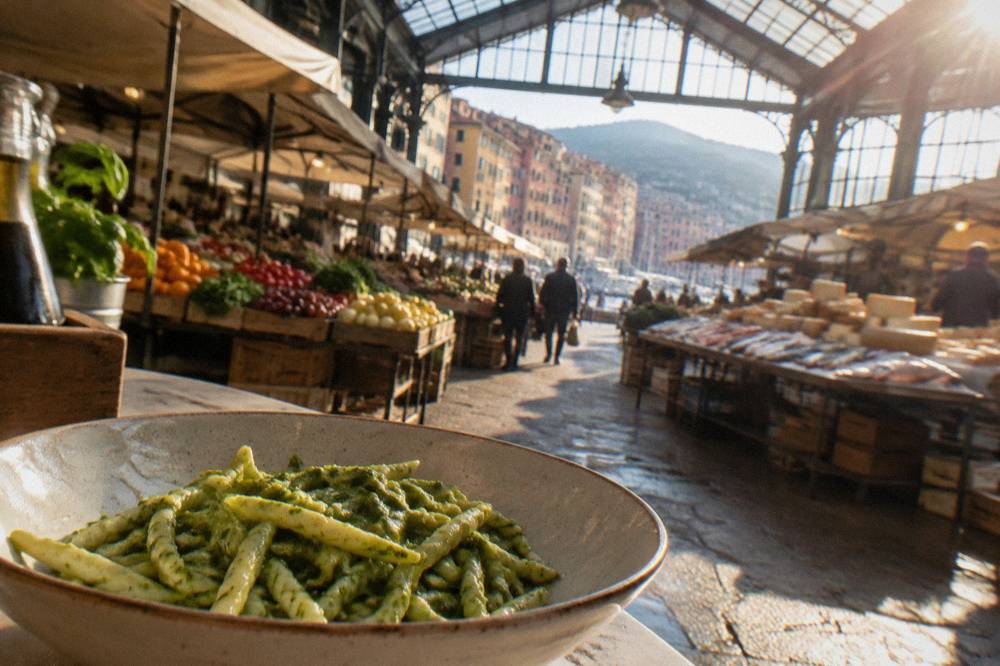
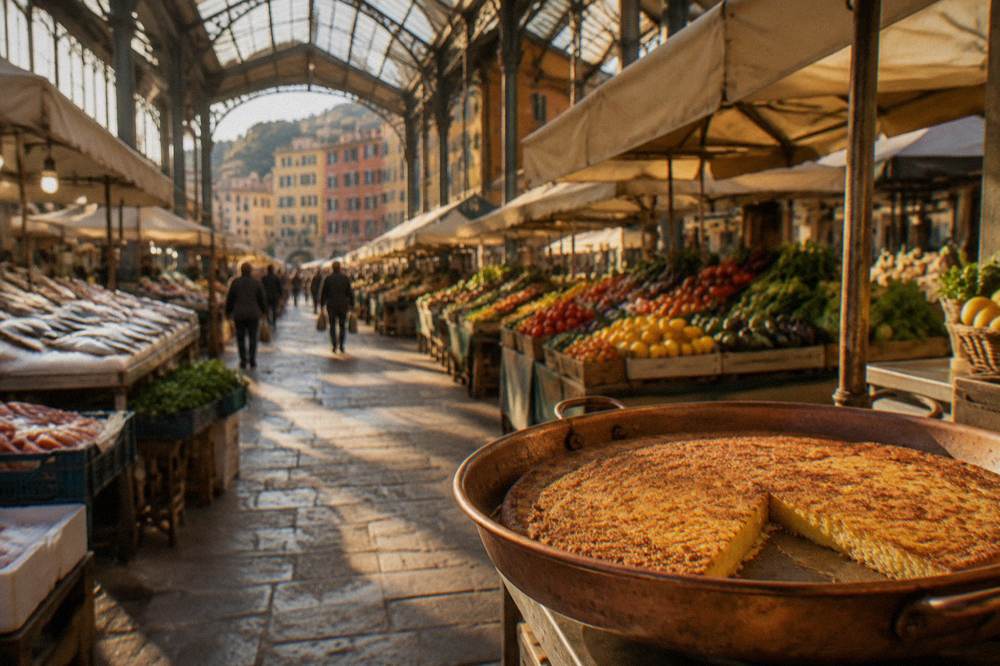
Farinata is a thin, firm custard of chickpea flour, water, olive oil and salt baked in a copper pan until the edges crisp and the middle stays soft, sold by weight in slices across Genoa and the Ligurian coast, and eaten as a snack or a light meal at any hour rather than as a restaurant first course.
The ingredient list is short enough to fit in one clause, and the skill sits entirely in the bake. The pan is copper, the oven is very hot, and the result is judged on the contrast between the crisp rim and the soft centre. The site's farinata guide covers the dish and its place in the city's street food. Because it is made from chickpea flour and contains no dairy in its base form, it occupies the same counter space as focaccia in many bakeries, and buying a slice of each is the standard way to compare them.
Farinata belongs to the same broad family as the chickpea flatbreads of the western Mediterranean coast, but this site's sources give no origin story for the dish, and no recipe history will be invented here. What the sources do give is the present: the dish under its Genoese name, sold by weight, baked in copper, across the city and the coast towns. That is enough to eat it well.
What Are Trofie And Pansoti In Genoa Cooking?
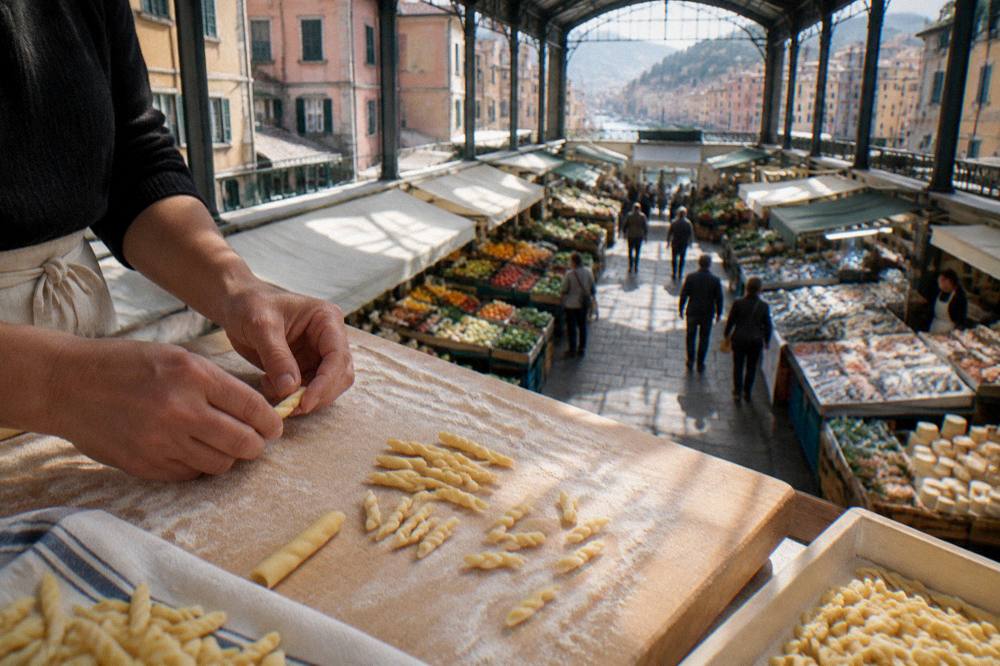
Trofie are small hand-rolled twists of eggless pasta dough, and pansoti are a filled pasta closed around a filling that traditionally includes foraged greens and cheese; the two shapes are the standard carriers for pesto genovese and for walnut sauce respectively, and together with focaccia they form the pasta side of the Genoese repertoire.
Trofie are made by rolling a small piece of dough under the palm and twisting it, which leaves a shape that holds sauce in its grooves. Pansoti are larger, closed around a filling, and their name appears in various spellings across the region; the spelling this site uses, pansoti, is the one in its own constraints. Both are fresh pastas, made and eaten the same day, and both appear on menus as the paired dish to the sauces of the province: pesto with trofie, walnut sauce with pansoti.
Neither shape carries a protected designation in the site's sources, so there is no label to check and no commune list to obey. What there is, instead, is a strong local habit of judging a kitchen by its trofie: hand-rolled twists vary in size and tension, and the difference between a careful one and a rushed one is visible on the plate. A cooking class is the direct way to learn that difference, and several of the classes in the site's roster, including the rooftop pesto and pasta class in the band above, are built exactly around making pasta by hand and eating the result.
Where To Shop For Food In Genoa?
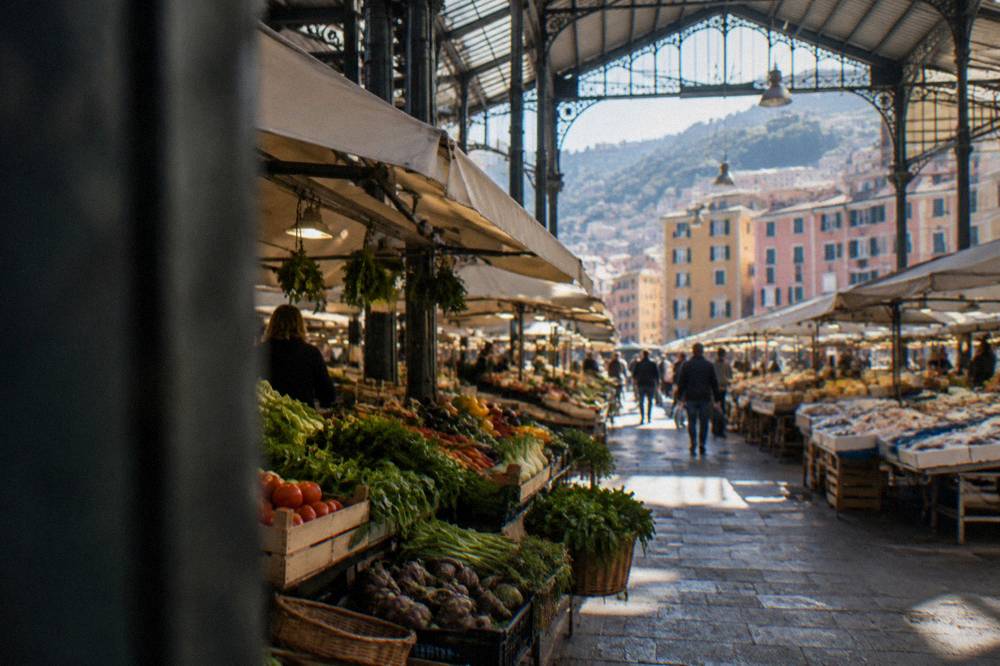
The main named food market of Genoa is the Mercato Orientale on Via XX Settembre, one of the city's principal streets, and the surrounding quarter carries the bakeries, counters and shops that supply the five dishes of this page; the site's sources list the market as a place name and street address only, so hours and stall details need confirming on the spot.
Via XX Settembre is the broad shopping street that runs east from the centre, and the Mercato Orientale sits on it as the city's historic market name. This site's sources record the market as a name and a location and nothing more: no stall list, no hours, no price ranges. The working approach is the same as for bakeries: go, look at what the counters are actually selling on that day, and buy from the queues that move.
For planning around market days and eating weather, the climate record is official and worth knowing. The Aeronautica Militare's 1971-2000 climate normals for the Genoa Sestri station give monthly rainfall, and the wet months are the ones where an indoor market and a long lunch do the day's work. October, the month this page is dated, carries the year's heaviest figure in that table at 171.3 mm, against 24.2 mm in July.
| Month | Mean high (C) | Rain (mm), 1971-2000 normals for Genoa Sestri |
|---|---|---|
| July | 27.3 | 24.2 |
| August | 27.7 | 69.3 |
| September | 24.4 | 136.4 |
| October | 20.0 | 171.3 |
| November | 15.1 | 108.8 |
The full monthly table sits in the site's Genoa weather guide, and the best time to visit Genoa page folds the same normals into a season-by-season argument. Neither changes the food list; they only change whether you eat it at a counter standing up or at a table sitting down.
Can You Learn To Cook Genoa Food On A Short Trip?
Yes: the Genoa cooking classes in this site's roster are short, hands-on sessions built on pesto made in a mortar and pasta rolled by hand, several of them on rooftops or in home kitchens, and they end with the meal you have made; they are the fastest route from tasting the city's five dishes to being able to reproduce two of them.
The classes differ in setting and in what they cover. Some centre on pesto and fresh pasta with wine, some on a fuller menu with lunch on a terrace, and one is led by a pesto world championship winner working with a mortar. Prices, ratings and durations for each are printed by the listing cards rather than typed into this text, and the roster's cooking-class section can be compared side by side there. What the formats share is the mortar and the rolling pin: the two skills this kitchen actually turns on.
A class also solves the souvenir problem better than a jar does. Pesto made in a food processor at home with any basil is a different product from pesto crushed by hand from PDO leaves; a class teaches the difference in the wrist rather than in the reading, and the recipes travel. For travellers who would rather be led to tables than taught at them, the restaurants guide covers the sit-down side of the city.
Where To Eat Beyond The City: Recco, Camogli And The Food Day Trips?
The food day trips from Genoa run east along the coast to the four communes of the focaccia di Recco IGP, Recco, Camogli, Sori and Avegno, and onward to the gulf towns of San Fruttuoso, Santa Margherita Ligure and Portofino, with Camogli about 18 km from Piazza De Ferrari in a straight line and Portofino about 25 km.
The IGP zone is the pull. Recco gives the focaccia its name, Camogli shares the protection, and Sori and Avegno complete the four-commune list, all of them reachable on the coast line east of the city. The Recco day-trip guide covers the practical side of the visit, and Camogli, about 18 km out, doubles as a boat hub: boats run from Camogli to San Fruttuoso year round, with crossings of about 20 to 30 minutes, and the Golfo Paradiso operator runs its Two Gulfs tour from Genoa Porto Antico on listed dates from March, calling at Camogli, San Fruttuoso and Portofino.
| Destination from Piazza De Ferrari | Straight-line distance | Food reason to go |
|---|---|---|
| Boccadasse | about 4 km | City fishing-village quarter with local eateries |
| Nervi | about 9 km | Coast walks east of the city |
| Camogli | about 18 km | focaccia di Recco IGP commune, boats to San Fruttuoso |
| San Fruttuoso | about 22 km | Abbey reachable by boat, FAI entry 10 EUR full |
| Santa Margherita Ligure | about 24 km | Boat and bus hub for Portofino |
| Portofino | about 25 km | End of the Two Gulfs boat route |
| Sestri Levante | about 40 km | Far end of the eastern food coast |
The abbey at San Fruttuoso charges 10 EUR full entry, 5 EUR for visitors aged 6 to 18 and students up to 25, under 5s free, with a family ticket at 26.00 EUR, per the FAI's own visit page, and its opening times run seasonally. The Genoa to Portofino guide and the Genoa to Cinque Terre guide cover the transport detail for the longer versions of these trips, including the boat lines and the train options along the coast.
How Do You Fit Genoa Food Into A Short Stay?
A short stay covers the five dishes by pairing the old town counters with one market street and one guided meal: focaccia and farinata by the slice from bakeries in the caruggi, pesto with trofie and walnut sauce with pansoti at a table on one evening, and either the Mercato Orientale or a food tour on the remaining half-day, all inside the transport figure of a 2.00 EUR AMT ticket valid 110 minutes.
Ready to pair the old town counters with that one guided meal? Book a guided food tour here.
The transport arithmetic is simple and fixed. A single AMT ticket costs 2.00 EUR and is valid 110 minutes on the whole urban network, lifts and the Sant'Anna funicular cost 1.20 EUR a ride, and the 24-hour Met Daily at 10.00 EUR covers the full network including the airport Volabus and line 782 toward Portofino. That is enough to move between the centre, Via XX Settembre and the coast quarters for the price of a coffee in northern Europe.
| Ticket | Price | Validity |
|---|---|---|
| AMT ordinary single | 2.00 EUR | 110 minutes, whole urban network |
| AMT and Trenitalia integrated | 2.20 EUR | 110 minutes, urban plus limited rail |
| Lift or Sant'Anna funicular ride | 1.20 EUR | One ride |
| Met Daily | 10.00 EUR | 24 hours, full network including Volabus |
| Carnet of 11 tickets | 20.00 EUR | 11 x 110 minutes |
For the structure of the whole visit, the site's itinerary pages do the sequencing, and the things to do in Genoa overview folds the food stops into the sightseeing. The guided formats below are the ones this site has listings for, and each ends with food on the table.
Common Questions About Food In Genoa
What food is Genoa famous for?
Genoa is famous for pesto genovese, focaccia, farinata, trofie and pansoti. The basil in the pesto is protected as Basilico Genovese PDO, and the cheese-filled focaccia di Recco has been IGP since 2015, produced only in Recco, Camogli, Sori and Avegno.
What is the difference between focaccia and focaccia di Recco?
The city focaccia is a flat, dimpled, salted bread sold by weight, while focaccia di Recco is a protected IGP product made only in Recco, Camogli, Sori and Avegno, with a soft cheese filling between two thin layers of dough.
Is pesto genovese cooked?
No. It is a raw sauce, traditionally crushed in a marble mortar with a wooden pestle so the basil is pressed rather than cut. The basil used is Basilico Genovese PDO, a protected designation covering defined growing areas.
What pasta goes with pesto in Genoa?
Trofie, the small hand-rolled twists, are the traditional carrier for pesto genovese. Pansoti, a filled pasta, is the traditional pairing for walnut sauce.
Can you eat farinata as a meal?
Farinata is sold by weight in slices and works as a snack or a light meal at any hour. It is made from chickpea flour, water, olive oil and salt, baked in a copper pan.
Where can you eat the real focaccia di Recco?
The IGP rules permit production only in Recco, Camogli, Sori and Avegno, all east of Genoa on the coast. Camogli lies about 18 km from Piazza De Ferrari in a straight line, and the site's Recco day-trip guide covers the visit.