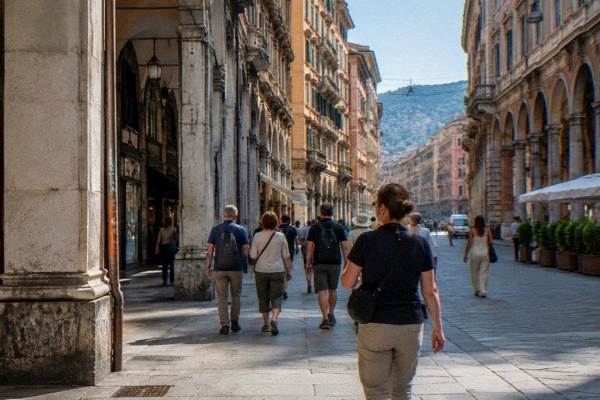
Genoa Weather By Month: Sea Temperature, Rain And Wind
The official Aeronautica Militare climate normals for Genoa Sestri give a precise picture of Genoa weather: mild winters, warm summers and a sharply autumnal rainfall peak in October.
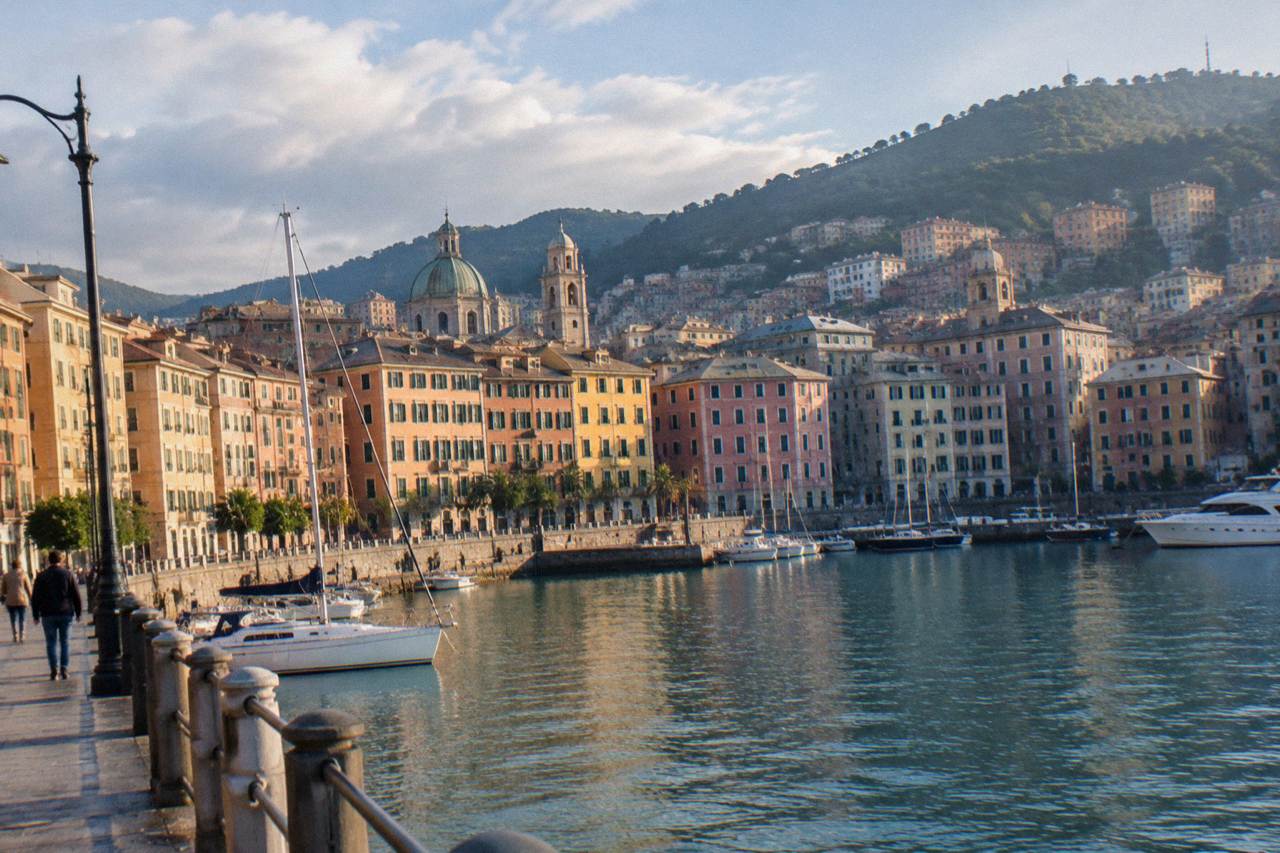
Short answer
Genoa has a Mediterranean coastal climate: the official 1971-2000 normals for Genoa Sestri show January means of 11.5 C by day and 5.5 C at night, August means of 27.7 C and 21.0 C, and a rainfall peak in October at 171.3 mm against July's 24.2 mm.
Genoa sits on the Ligurian Sea as a coastal city in Liguria, north-west Italy, squeezed between the water and the Apennine hills, and its weather follows the classic Mediterranean coastal rhythm: mild, damp winters and warm, drier summers. The figures on this page come from one instrument only, the official Aeronautica Militare CLINO 1971-2000 climate normals recorded at the Genoa Sestri station, which stands at the airport about 7 km west of Piazza De Ferrari. That station record is what makes a month-by-month Genoa weather guide useful: it gives a thirty-year average for every month rather than a single year that might have been unusually wet or unusually dry.
Because the city climbs hillsides straight from the shore, weather in Genoa can differ from the beaches and villages east of it, and it differs again from inland Liguria. The monthly numbers answer the questions travellers actually ask about rain, cold, swimming and packing, and the indoor options, from the Aquarium of Genoa to the Musei di Strada Nuova, carry a Genoa day when the rain arrives. For trip timing decisions that go beyond the thermometer, the companion page on the best time to visit Genoa adds events and prices to the climate picture.
What Is The Weather Like In Genoa?
Genoa has a Mediterranean coastal climate with mild winters, warm summers and a strong autumn rainfall maximum: the official 1971-2000 normals for Genoa Sestri record a January mean high of 11.5 C and low of 5.5 C, an August mean high of 27.7 C and low of 21.0 C, and annual rainfall totalling 1079.2 mm, of which October alone contributes 171.3 mm. July records 24.2 mm of rainfall, and the sea moderates both ends of the year.
The station behind these numbers is Genoa Sestri, the official Aeronautica Militare site at the airport, and its CLINO 1971-2000 series is the reference record for the city. Three features stand out. First, winter cold is limited: a mean January night of 5.5 C is far gentler than the interior of north-west Italy, because the Ligurian Sea holds heat through the season. Second, summer warmth is steady rather than extreme, with mean lows around 21.0 C in August keeping evenings warm. Third, the rain is not spread evenly: it concentrates hard in September, October and November, with October's 171.3 mm making it the month with the highest total in the normals.
That autumn concentration matters for planning more than any average does. A summer visitor and a June visitor face nearly the same temperatures on paper, but the rain columns differ by a factor of several. The full monthly table below makes the pattern visible month by month.
What Are The Genoa Weather Averages By Month?
The official 1971-2000 normals for Genoa Sestri show mean daily highs rising from 11.5 C in January to 27.7 C in August, mean daily lows from 5.5 C to 21.0 C over the same span, and monthly rainfall ranging from 24.2 mm in July to 171.3 mm in October, with the three autumn months of September, October and November together accounting for roughly 38 percent of the annual 1079.2 mm total.
| Month | Mean High C | Mean Low C | Rainfall Mm |
|---|---|---|---|
| January | 11.5 | 5.5 | 101.8 |
| February | 12.2 | 6.0 | 74.0 |
| March | 14.6 | 8.2 | 81.7 |
| April | 16.8 | 10.5 | 88.0 |
| May | 20.5 | 14.2 | 72.4 |
| June | 23.9 | 17.6 | 58.2 |
| July | 27.3 | 20.9 | 24.2 |
| August | 27.7 | 21.0 | 69.3 |
| September | 24.4 | 17.9 | 136.4 |
| October | 20.0 | 13.8 | 171.3 |
| November | 15.1 | 9.2 | 108.8 |
| December | 12.5 | 6.5 | 93.1 |
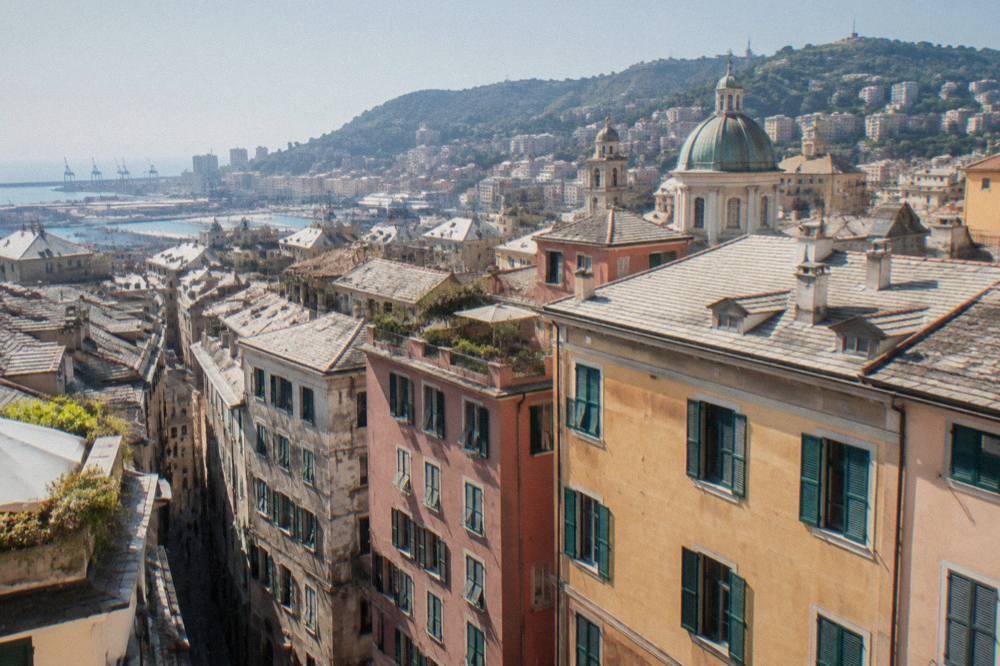
Read the table by columns and the shape of the year appears quickly. The temperature columns climb steadily from January to August and descend again by December, with spring and autumn sitting in the comfortable middle: April averages 16.8 C by day, October 20.0 C. The rainfall column tells a different story, with a dip through the summer and a spike from September onward. June at 58.2 mm is already half of January's total, July drops to 24.2 mm, and then September more than doubles July's figure in a single step.
Two practical conclusions follow. For travellers who prioritise dry days, the June and July columns are the place to look. For travellers who prefer walking temperatures and can accept rain, the April and May columns pair highs in the high teens with rainfall under 90 mm, and October pairs the same kind of daytime warmth with the year's heaviest rain totals. The seasonal summary table compresses the same data into four planning blocks.
| Season | Mean High Range C | Mean Low Range C | Rainfall Pattern |
|---|---|---|---|
| Winter (Dec to Feb) | 11.5 to 12.5 | 5.5 to 6.5 | 74.0 to 101.8 mm per month |
| Spring (Mar to May) | 14.6 to 20.5 | 8.2 to 14.2 | 72.4 to 88.0 mm per month |
| Summer (Jun to Aug) | 23.9 to 27.7 | 17.6 to 21.0 | 24.2 to 69.3 mm per month |
| Autumn (Sep to Nov) | 15.1 to 24.4 | 9.2 to 17.9 | 108.8 to 171.3 mm per month |
These normals describe averages, not guarantees, and Genoa's position between sea and mountains means a single day can swing around them. What the record does establish is the ordering of the months: there is no month in the normals with a mean high below 11.5 C, and no summer month whose mean low falls below 17.6 C. That is the baseline a packing list should be built on, and it is why the question of rain, not cold, is usually the deciding one for a Genoa trip.
When Does It Rain Most In Genoa?
October is the month with the highest rainfall in the official Genoa Sestri normals at 171.3 mm, followed by September at 136.4 mm and November at 108.8 mm, while July records 24.2 mm with just 2.8 rain days; the whole wet season is autumn, and the summer months from June to August stay between 24.2 and 69.3 mm.
The autumn maximum is the single most useful fact in Genoa's climate record. Between September and November the three months together carry roughly two fifths of the annual 1079.2 mm total, and October alone carries more rain than the entire summer. The detailed answer to whether that matters for a visit is on the companion page does it rain a lot in Genoa, but the short version is that autumn rain in Liguria tends to arrive in concentrated episodes rather than as steady drizzle, so a wet week can contain completely dry days.
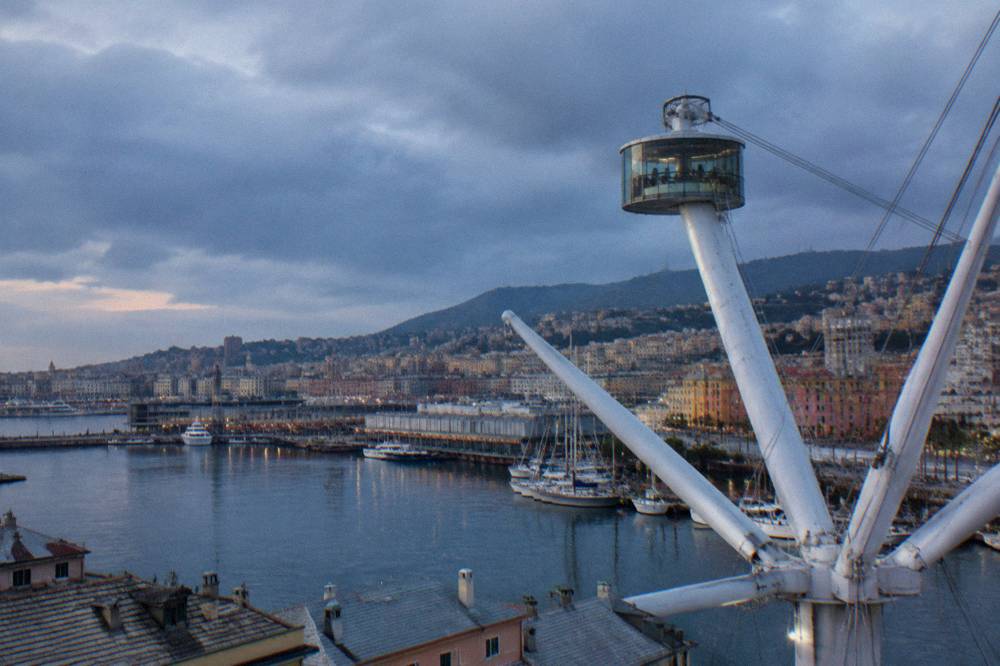
A rainy day in Genoa does not strand a visitor indoors at a hotel. The city's core indoor attractions are substantial enough to fill a full day: the Aquarium of Genoa is open 365 days a year with adult fixed-date tickets from 26.00 EUR and a combined Aquarium, Biosfera and Bigo ticket from 37.00 EUR, per the Aquarium's own ticket page, and the Musei di Strada Nuova run a winter timetable of daily opening from 10:00 to 18:30, with only Palazzo Rosso visitable on Mondays between 28 September 2026 and 18 April 2027. The Genoa Museum Card, at 24 EUR for 24 hours or 45 EUR for 48 hours in the 2026 rates, covers 28 city museums and pairs well with a forecast that forces the day inside. The full indoor playbook is laid out in Genoa in the rain.
| Rank | Month | Rainfall Mm | Mean High C In That Month |
|---|---|---|---|
| 1 | October | 171.3 | 20.0 |
| 2 | September | 136.4 | 24.4 |
| 3 | November | 108.8 | 15.1 |
| 4 | January | 101.8 | 11.5 |
| 5 | December | 93.1 | 12.5 |
| 6 | April | 88.0 | 16.8 |
The table ranks six months by rainfall; the summer trio of June, July and August sits at the bottom of the same ranking. Note that January belongs in the upper half of the rain table despite its mild temperatures, which is why winter visitors should pack for showers even though frost is rare. For anyone travelling in the peak autumn weeks, the two-day Genoa itinerary alternates outdoor and indoor stops so a wet morning costs nothing from the plan.
What Is The Coolest Month In Genoa?
January is the coolest month in the official 1971-2000 normals for Genoa Sestri, with a mean daily high of 11.5 C and a mean daily low of 5.5 C; February and December follow closely at 12.2 and 12.5 C by day and 6.0 and 6.5 C at night, so no winter month in the record averages a daytime high below 11.5 C.
Those are coastal numbers, and they describe the mildest winter of any large Italian city region outside the deep south, moderated by the Ligurian Sea and shielded from northern cold by the Alps and Apennines. The deeper comparison between the winter months, and what the season actually feels like for sightseeing, is covered in the coolest month in Genoa and in Genoa in winter. What the normals add here is precision: the warmest and coolest months sit close enough in the record that no month requires a fundamentally different wardrobe, and the same is true of the nights, from 5.5 C in January to 21.0 C in August.
Winter rain, not winter cold, is the planning variable. January's 101.8 mm in the normals exceeds every summer month, and December adds 93.1 mm. A December or January packing list for Genoa should therefore centre on a real rain layer and footwear for wet stone, with warm layers sized for 11 or 12 C afternoons rather than sub-zero conditions. Indoor anchors such as Palazzo Ducale, whose exhibition programme runs through the winter months, and the Cathedral of San Lorenzo sit within short walks of each other in the centre.
When Is The Best Weather For Visiting Genoa?
June and July in the Genoa Sestri normals bring 58.2 and 24.2 mm of rain and mean highs of 23.9 and 27.3 C, while late spring offers mean highs of 20.5 C in May with 72.4 mm of rain, and September still averages 24.4 C by day but carries 136.4 mm, so the trade-off is between summer dryness and shoulder-season walking comfort.
Every traveller weighs that trade-off differently. Summer visitors get the lowest rain figures in the record and the warmest sea-adjacent afternoons, at the price of 27 C-class heat in a city built on staircases and hillside lanes. May and June visitors get mild daytime temperatures with monthly rainfall below 90 mm, which suits the walking-heavy way Genoa rewards: the caruggi of the old town, the Spianata Castelletto viewpoint and the Passeggiata Anita Garibaldi in Nervi are all outdoor experiences. September remains warm but enters the wet season, and October pairs pleasant 20.0 C means with the year's heaviest rainfall total. More of these guides are collected on Genoa Travel Guide.
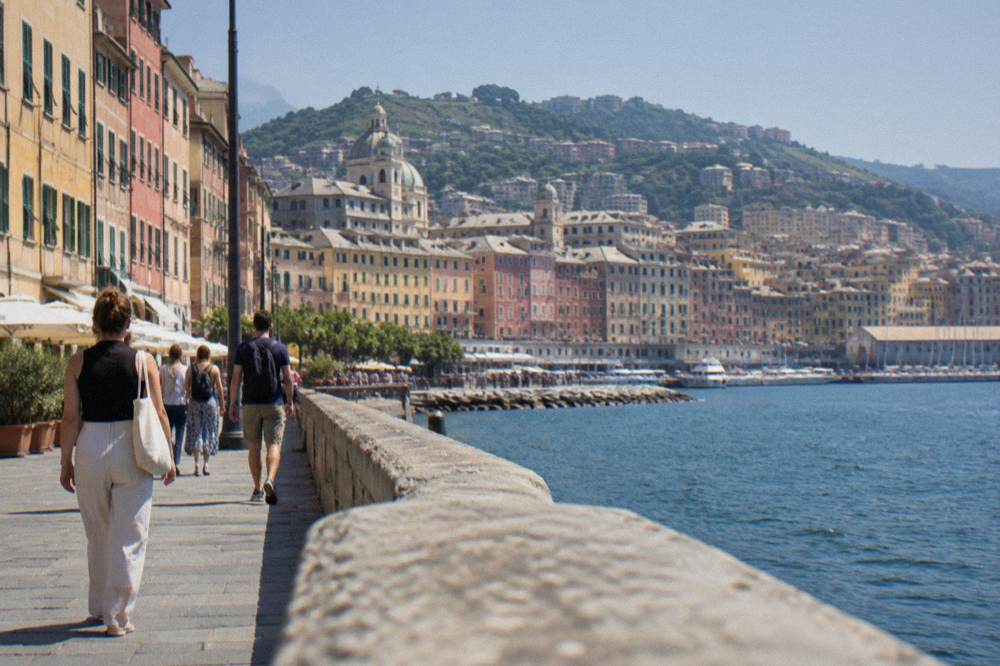
One Genoa-specific advantage of the shoulder months deserves mention: the city's vertical geography. The Zecca-Righi funicular and the Castelletto Levante lift both run daily from 06:40 to 24:00, per the AMT fare table, so a warm afternoon can be spent gaining the viewpoints without climbing on foot, and a cooler one can be spent in the museums covered by the Genoa Museum Card. A guided panoramic tour that uses the funicular is one way to lock that skyline hour into any forecast; the operator's live listing shows the current schedule, and Check availability if a clear stretch is in the forecast for your dates.
| Month | Mean High C | Rainfall Mm | What The Numbers Suggest |
|---|---|---|---|
| May | 20.5 | 72.4 | Warm days, moderate rain |
| June | 23.9 | 58.2 | Warm and drier |
| July | 27.3 | 24.2 | Summer heat |
| August | 27.7 | 69.3 | Warmest month, rain returns |
| September | 24.4 | 136.4 | Warm but wet season begins |
| October | 20.0 | 171.3 | Mild days, peak rainfall |
The table repeats four figures from the master table on purpose: these are the six months on which most visit-timing decisions actually turn. Beyond the climate record, the choice of month interacts with the city's calendar, its ferry season to the east and the water temperature question handled next, and the full treatment of those factors sits on the best time to visit Genoa page.
Can You Swim In Genoa When The Weather Is Warm?
Swimming in Genoa is possible from the city's own shore at places such as Boccadasse and along Corso Italia, both about 4 km from Piazza De Ferrari in a straight line, but water quality varies by point: ARPAL's 2026 bathing classification rates Boccadasse as SCARSA, poor, while Nervi, about 9 km east, is rated BUONA, good, out of 380 sampling points monitored on the Ligurian coast.
That is a precise and slightly uncomfortable pair of facts, and it is worth stating plainly because blanket claims about Ligurian water are common. The regional agency ARPAL classifies every bathing point into four bands, Eccellente, Buona, Sufficiente and Scarsa, and the 2026 results place Boccadasse, the postcard fishing village beach, in the poor band while the rocky access along the Nervi promenade sits in the good band. Sea surface temperatures by month are not part of the official station normals and are not printed on this page; the air-temperature columns above are the closest sourced proxy for the swimming season.
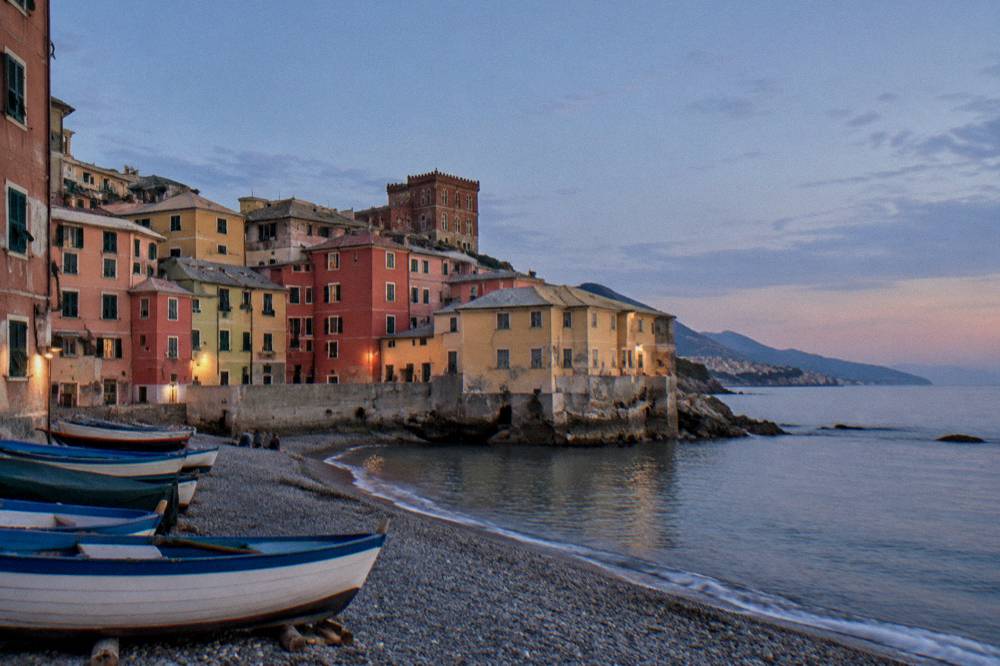
Swimmers willing to travel east along the coast reach progressively famous water. Straight-line distances from Piazza De Ferrari, computed from the coordinates, run about 17 km to Recco, about 18 km to Camogli, about 22 km to San Fruttuoso and about 25 km to Portofino. Boats from Camogli to San Fruttuoso run year round, per the Golfo Paradiso line, and the abbey at San Fruttuoso is a FAI property with adult entry at 10.00 EUR. A day on that coast pairs naturally with warm-weather months, and the practical options for reaching it are laid out in Genoa to Portofino and Genoa to the Cinque Terre.
For a swim stay inside the city itself, the practical geography is simple: Corso Italia is the seaside promenade that links the Foce area to Boccadasse, and the eastern districts towards Nervi hold the better-classed water in the 2026 ARPAL results. The neighbourhood background for both is on Foce and Albaro and Nervi.
What Should You Pack For Genoa Weather?
Pack for mild temperatures and episodic rain rather than extremes: the normals never drop below an 11.5 C mean daily high or exceed a 27.7 C mean daily high, so the core list is layers for 11 to 28 C days, a proper rain jacket weighted toward the September to November window when rainfall runs 108.8 to 171.3 mm per month, and sturdy shoes for steep, paved lanes that stay slick after rain.
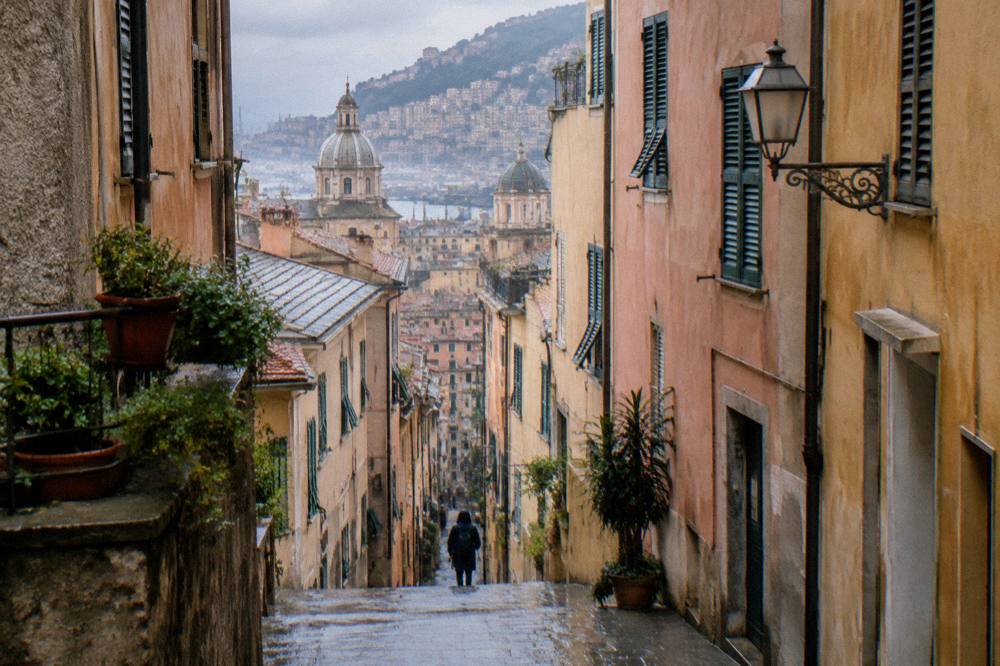
The shoe advice is Genoa-specific and worth a sentence of its own. The city centre is one of the largest medieval historic centres in Europe, 113 hectares of it, per the official tourism site, and its lanes are stone laid on gradients between the sea and the hills. Wet stone on a slope is the single most common physical complaint the geography produces, and it is fully avoidable with footwear that has tread. In summer, the same gradients argue for a water bottle and for planning sightseeing around the cooler morning hours, since mean August lows of 21.0 C mean nights give limited relief.
A compact packing matrix by season, using only the normals:
| Season | Mean Highs C | Rain Per Month Mm | Packing Emphasis |
|---|---|---|---|
| Winter | 11.5 to 12.5 | 74.0 to 101.8 | Warm midlayer, rain jacket, wet-stone shoes |
| Spring | 14.6 to 20.5 | 72.4 to 88.0 | Layers, light rain shell, mix of footwear |
| Summer | 23.9 to 27.7 | 24.2 to 69.3 | Sun protection, breathable clothing, water bottle |
| Autumn | 15.1 to 24.4 | 108.8 to 171.3 | Serious rain gear, quick-dry layers, sturdy shoes |
Two small additions complete the list. First, an umbrella earns its place in every month except the June to July window, where the normals drop below 60 mm. Second, in warm months a swim kit weighs little against the coastal access described above, provided the ARPAL class of the chosen point has been checked. Nothing in the record argues for heavy winter equipment: sub-zero means appear nowhere in the Genoa Sestri normals.
Does Wind Change Genoa Weather?
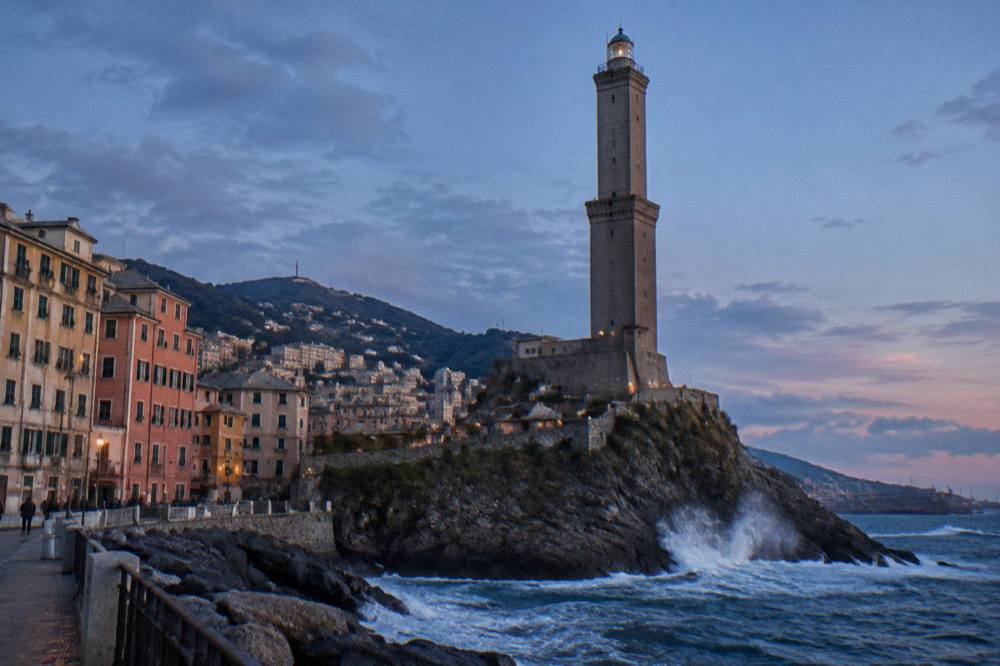
The official Genoa Sestri normals cover temperature and rainfall only, but wind matters in Genoa in one practical, geographic way: the city is an exposed coastal strip on the Ligurian Sea, and weather arriving from the sea reaches the waterfront, the Porto Antico, the Bigo lift and the promenades first, which is why coastal activities are the first thing a forecast should be checked against.
That is a planning principle rather than a statistic, and it has consequences worth spelling out. Boat services along the coast, including the Golfo Paradiso tours from the Porto Antico and the Camogli to San Fruttuoso line, are sea-state dependent by their nature, and the FAI notes that San Fruttuoso abbey access closes when boats suspend. The same logic applies in reverse inland of the water: the caruggi of the old town channel and shelter, and the museums cluster within short indoor walks of one another. A day that starts with a rough sea can still be a full day.
For travellers using the sea actively, the practical habit is to check the marine forecast the evening before any boat day and to hold an indoor alternative ready. The Museum Card window is one such alternative, as is the Aquarium, whose 365-day opening makes it the default wet-weather anchor; Genoa Aquarium tickets covers the pricing tiers in detail. Sea-facing walkways such as the Passeggiata Anita Garibaldi in Nervi, about 2 km long per the official tourism site, reward calm days in any season.
How Does Genoa Weather Shape Day Trips?
Day-trip planning from Genoa should follow the rain columns more than the temperature columns: in the June to August window, with 24.2 to 69.3 mm per month, coastal and boat trips to Portofino, San Fruttuoso or Camogli are the natural use of the weather, while in the September to November window, at 108.8 to 171.3 mm, the inland city-and-museum options and the nearer cities such as Milan hold up better under a changing forecast.
The coast east of Genoa concentrates the classic warm-weather day trips. Camogli lies about 18 km from Piazza De Ferrari in a straight line, San Fruttuoso about 22 km, Santa Margherita Ligure about 24 km and Portofino about 25 km, and regular trains plus seasonal boats serve that stretch; the practical detail sits on the day-trip pages. When the weather turns, the same rail network points inland: Milan is about 119 km away, Turin about 123 km, and trains to Milan run about 1 hour 30 to 2 hours according to schedule data. The pages on Milan to Genoa and how to get to Genoa carry the arrival logistics.
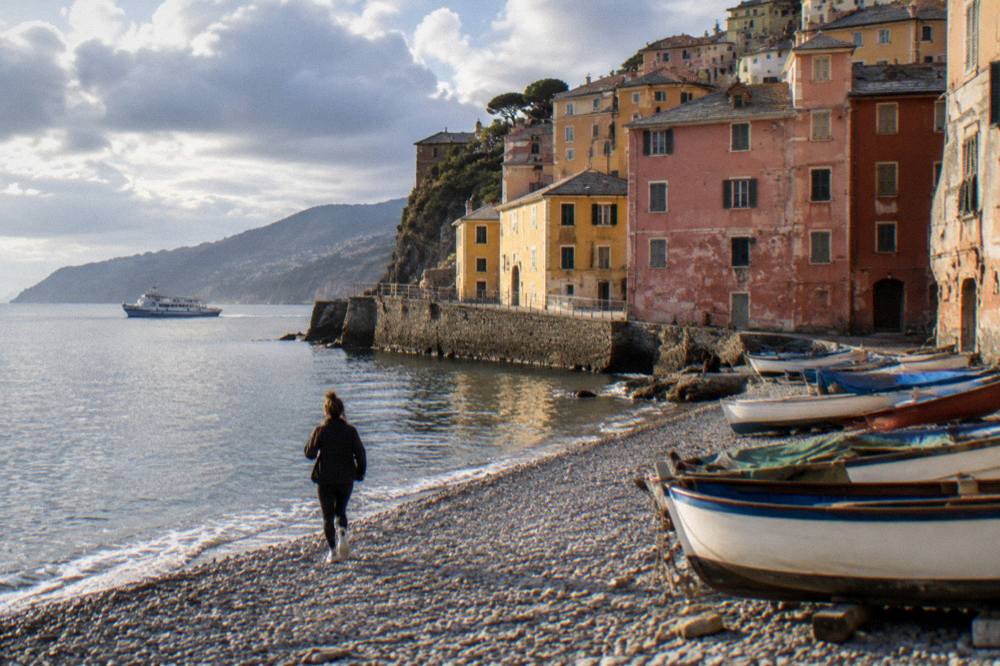
Within the city, weather-driven day planning is helped by how compact the indoor cluster is. Palazzo Ducale, the Cathedral of San Lorenzo, the Musei di Strada Nuova and the Aquarium are all reachable on short walks or single AMT journeys, a ticket costing 2.00 EUR for 110 minutes on the whole network per the AMT fare table. The things to do in Genoa overview indexes the full set by interest, and a walking tour that mixes street food with the lanes of the centre keeps much of its value under changeable skies, since the route moves between covered and open stretches; the listing for Discover Hidden Treasures and Street Food describes what it covers.
The final planning habit is the simplest one: match the booking to the forecast window rather than the calendar. Boat days and viewpoints want the dry columns, museums and food experiences absorb the wet ones, and the Genoa record gives a clear enough monthly picture to make that matching straightforward before any forecast exists.
Common Questions About Genoa Weather
What Is The Weather Like In Genoa?
Genoa has a Mediterranean coastal climate: the official 1971-2000 normals for Genoa Sestri show mean highs from 11.5 C in January to 27.7 C in August, mean lows from 5.5 C to 21.0 C, and annual rainfall of 1079.2 mm concentrated in autumn.
What Is The Rainiest Month In Genoa?
October, with 171.3 mm in the official Genoa Sestri normals, ahead of September at 136.4 mm and November at 108.8 mm. July averages 24.2 mm of rainfall with 2.8 rain days.
What Is The Coolest Month In Genoa?
January, averaging a high of 11.5 C and a low of 5.5 C in the official normals. No winter month averages a daytime high below 11.5 C.
When Is The Best Weather In Genoa?
June and July combine the warmest reliable conditions with the lowest rainfall, 58.2 and 24.2 mm respectively. May offers 20.5 C mean highs with 72.4 mm of rain for those who prefer cooler walking weather.
Can You Swim In Genoa?
Yes, from the city shore at Boccadasse and along Corso Italia, though ARPAL's 2026 bathing classification rates Boccadasse as SCARSA, poor, while Nervi is rated BUONA, good. Check the current class before swimming at any given point.
Does It Rain A Lot In Genoa?
It depends sharply on the month: the summer runs at 24.2 to 69.3 mm per month in the normals, while the autumn months of September, October and November together carry about 38 percent of the annual 1079.2 mm total.