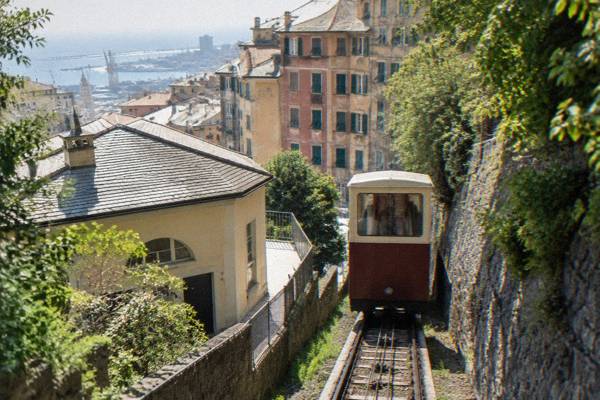
Nervi: The Cliff Promenade And Garden Suburb
Nervi is Genoa's garden suburb on the eastern edge of the city, about 9 km in a straight line from Piazza De Ferrari, where a 2 km cliff promenade, 9.2 hectares of parks and four museums sit directly on the Ligurian Sea.
Short answer
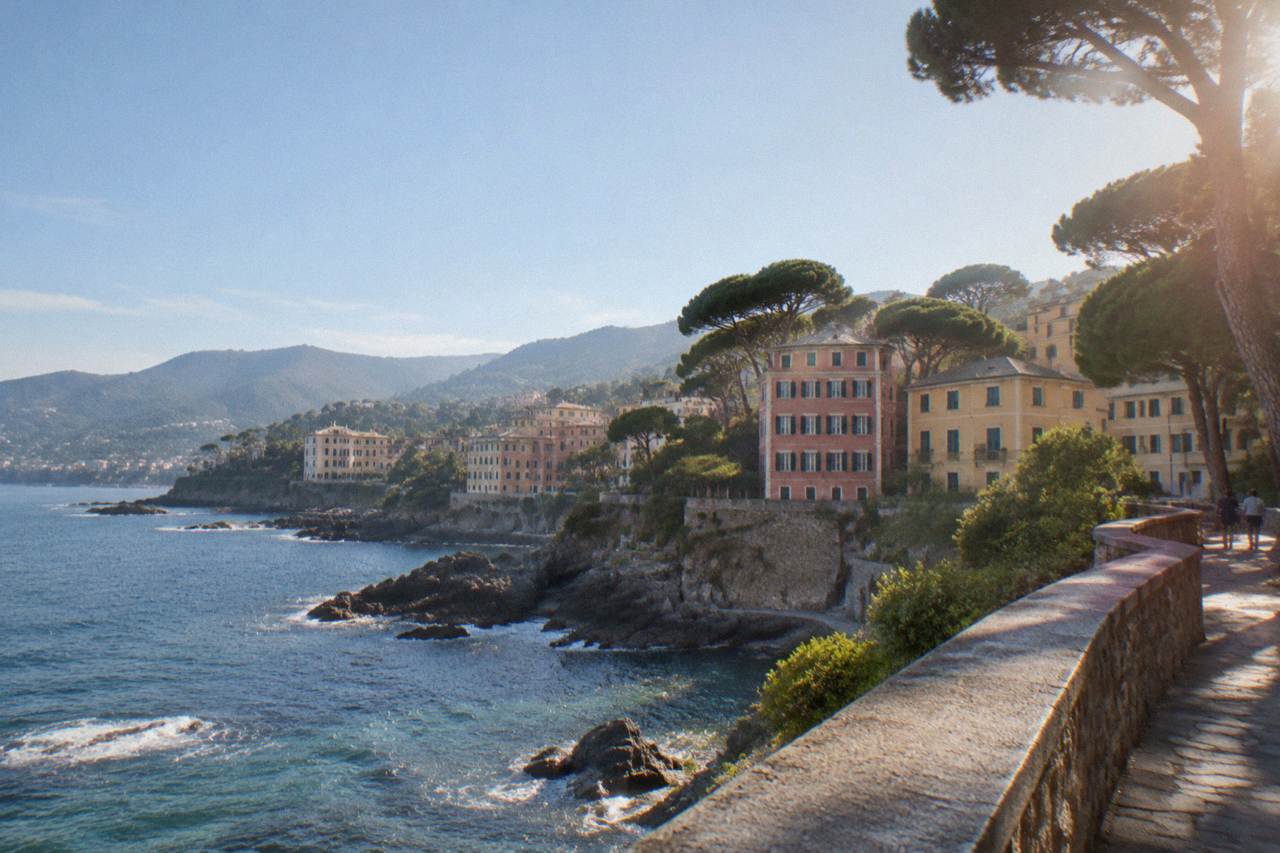
Nervi is a coastal district at the eastern end of Genoa, Liguria, reached by regional train to Genoa Nervi station next to the promenade. The Passeggiata Anita Garibaldi runs about 2 km along the cliffs, the Parchi di Nervi cover 92,000 square metres, and ARPAL's 2026 bathing-water class for Nervi is reported as good.
Nervi is the seaside district at the eastern end of Genoa, the coastal city in Liguria, north-west Italy, where the built-up strip between the Ligurian Sea and the Apennine hills finally gives way to gardens, villas and a cliff path. It lies about 9 km in a straight line from Piazza De Ferrari, the square at the heart of the city, and it belongs to Genoa in the fullest administrative sense: the same AMT Genova tickets, the same tourist tax, the same comune. What sets it apart is geography. The Passeggiata Anita Garibaldi, a pedestrian walkway of about 2 km, runs along the rocks from the small harbour to Capolungo, and behind it the Parchi di Nervi spread across 92,000 square metres between Via Aurelia and the sea, according to the city's own tourism pages. The official 1971-2000 climate normals for Genoa Sestri record a mean daily high of 27.7 C in August against 11.5 C in January, which is the coastal Ligurian pattern the gardens grow in. This page from Genoa Travel Guide sets out what Nervi contains, how to reach it, what the parks hold, where its museums sit and how the district compares with the city's other seaside quarters.

What Is Nervi In Genoa?
Nervi is a coastal district of Genoa on the Ligurian Sea, about 9 km east of Piazza De Ferrari in a straight line, combining a roughly 2 km cliff promenade, the 92,000 square metre Parchi di Nervi, a small harbour and four museums housed in historic villas. Genoa Nervi railway station sits beside the promenade, so the district functions as both a residential suburb and a half-day destination for visitors to the city.
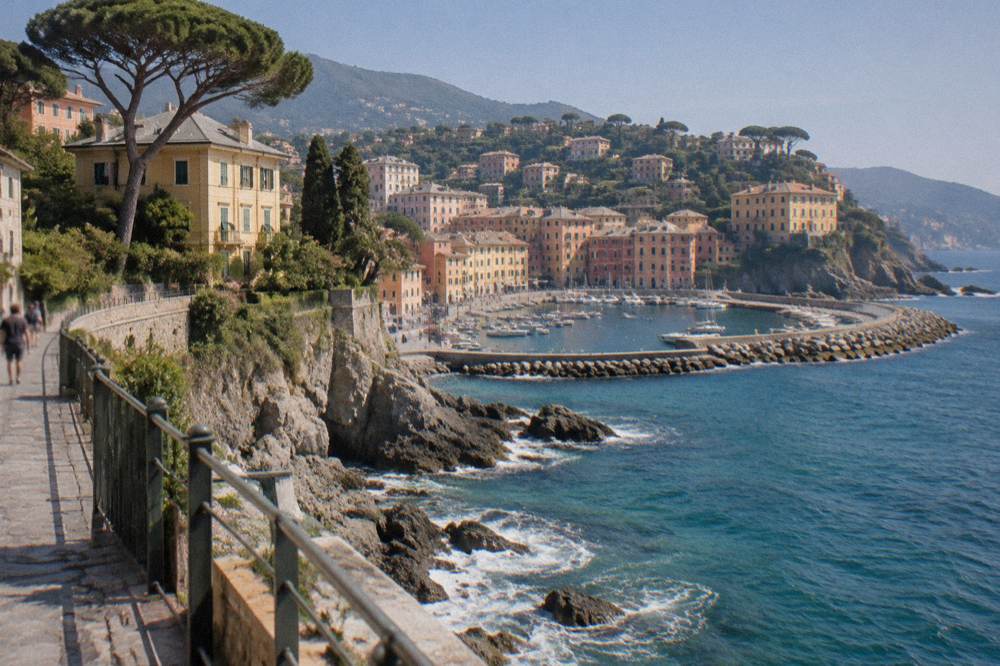
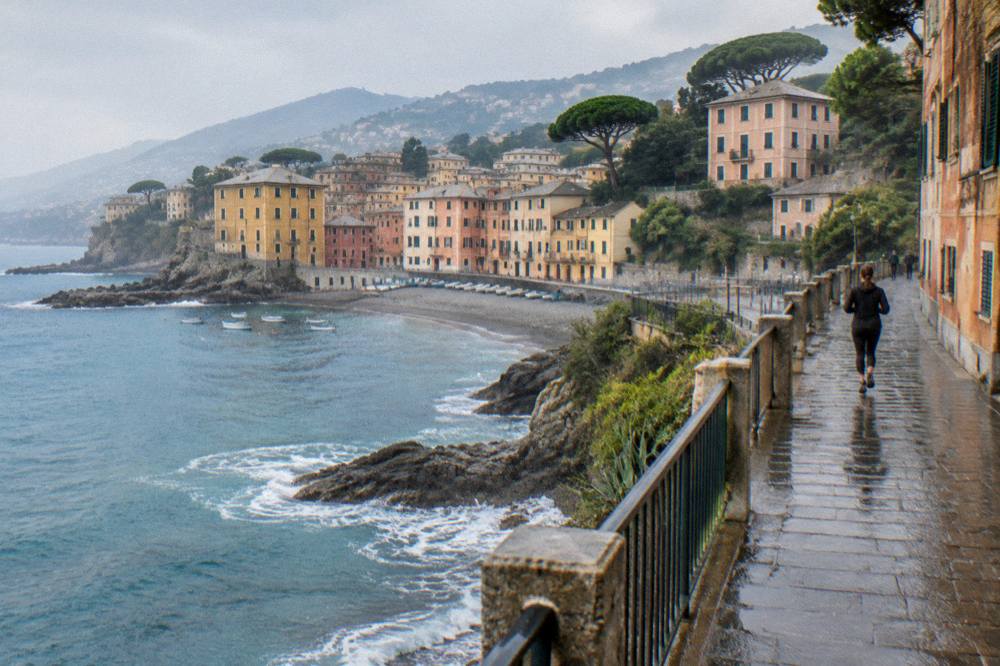
The city's tourism site describes Nervi's identity in two connected pieces. The first is the sea edge: the Passeggiata Anita Garibaldi, a pedestrian cliff-top walk of about 2 km running from the harbour, the porticciolo, to Capolungo, with views along the coast towards the Portofino promontory. The second is the green belt behind it: the Parchi di Nervi, 9.2 hectares of historic gardens between Via Aurelia and the water, formed around a series of villas built when Nervi was a resort for Genoese families. Those villas now hold the museums of the Polo Museale di Nervi.
The district sits within the same municipal transport system as the rest of Genoa. An AMT ordinary ticket at 2.00 EUR, valid 110 minutes on the whole Città Metropolitana network, covers the bus routes the AMT site lists for Nervi, including lines 15, 17, 607, 617 and N2. The regional railway also stops at Genoa Nervi, and the station is adjacent to the promenade, the tourism site notes, which makes the district one of the few parts of the Genoese waterfront reachable without a bus connection from the centre.
For orientation, the whole district sits at the base of the hills, like the rest of Genoa. The official 1971-2000 normals for Genoa Sestri, the station at the airport about 7 km west of Piazza De Ferrari, give the nearest published climate record for the city.
How Do You Get To Nervi From Central Genoa?
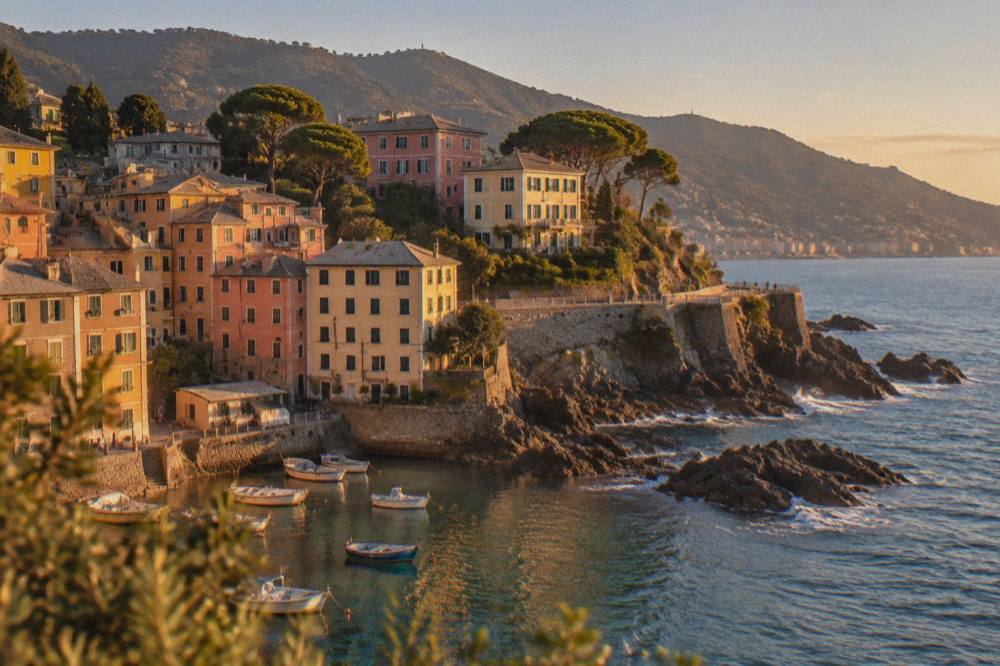
The direct route is the regional train to Genoa Nervi station, which the city's tourism site places adjacent to the promenade; buses listed by AMT Genova for Nervi include lines 15, 17, 607, 617 and N2, all covered by the 2.00 EUR ordinary ticket valid 110 minutes on the whole network. From Piazza De Ferrari the district lies about 9 km in a straight line east along the coast.
The railway is the simplest option for a visitor staying near either main station. Regional services run along the coast towards the Riviera di Levante and stop at Genoa Nervi; the station sits by the seafront, next to the start of the cliff walk. AMT tickets and the Trenitalia network are separate systems, but the AMT fare table includes an integrated AMT plus Trenitalia ticket at 2.20 EUR valid 110 minutes, and a 5-hour ticket at 5.00 EUR, both of which the AMT pages list for combined urban rail and bus use.
For buses, the AMT line list names Nervi connections including lines 15, 17, 607, 617 and N2. A carnet of 11 ordinary tickets costs 20.00 EUR, and the Met Daily 24-hour ticket at 10.00 EUR covers the full AMT network. Travellers combining Nervi with the city centre in one day often find the Met Daily simpler than counting single rides.
| Option | Ticket | Fare | Validity |
|---|---|---|---|
| AMT bus to Nervi | Ordinary ticket | 2.00 EUR | 110 minutes, whole network |
| Bus plus Trenitalia | Integrated ticket | 2.20 EUR | 110 minutes |
| Longer day out | 5-hour ticket | 5.00 EUR | 5 hours |
| Multiple rides | Carnet of 11 | 20.00 EUR | 11 x 110 minutes |
| Full network day | Met Daily 24h | 10.00 EUR | 24 hours, whole AMT network |
Distances help with planning. The straight-line figures below come from computed coordinates for Piazza De Ferrari and are the only distance form this site prints.
| From Piazza De Ferrari to | Straight-line distance |
|---|---|
| Nervi | about 9 km |
| Boccadasse | about 4 km |
| Corso Italia | about 4 km |
| Camogli | about 18 km |
| Santa Margherita Ligure | about 24 km |
| Portofino | about 25 km |
Nervi also works as a first stop on a coastal day. Recco lies about 17 km away in a straight line, Camogli about 18 km, and the Golfo Paradiso boat network connects those towns onwards to San Fruttuoso and Portofino, about 22 and 25 km from the centre respectively. The cliff walk at Nervi and the boat from Camogli sit on the same stretch of coastline, and the tourism site notes that the promenade itself looks out towards the Portofino promontory.
What Can You See On The Passeggiata Anita Garibaldi?
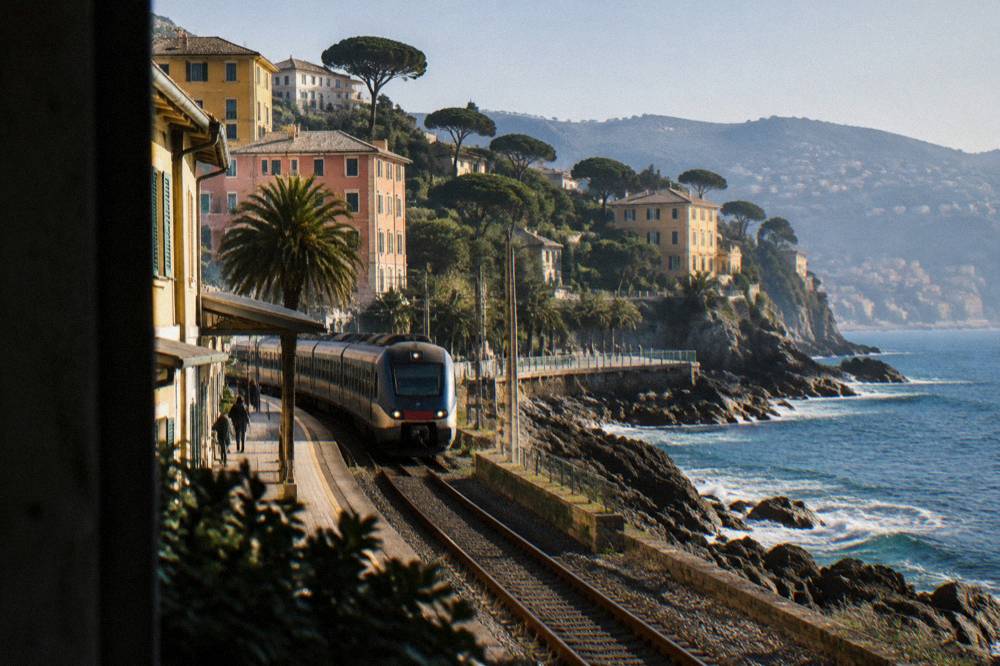
The Passeggiata Anita Garibaldi is a pedestrian cliff-top promenade of about 2 km, described by the city's tourism site as running from Nervi's small harbour to Capolungo, built at sea level along the rocks with views that take in the Portofino promontory. It is a walk, not a park or a beach: a paved path above the water, with swimming access from the rocks at points along it.
The tourism site gives the essential figures plainly. The promenade runs roughly 2 km, though some pages cite about 1.8 km for the same route, from the harbour at Nervi to Capolungo at the eastern end. It is pedestrian, it sits directly on the cliff line, and from it the coast towards Portofino is visible on clear days. The path is the district's single defining feature, the way the Zecca-Righi funicular defines the Righi hill or the caruggi define the old town.
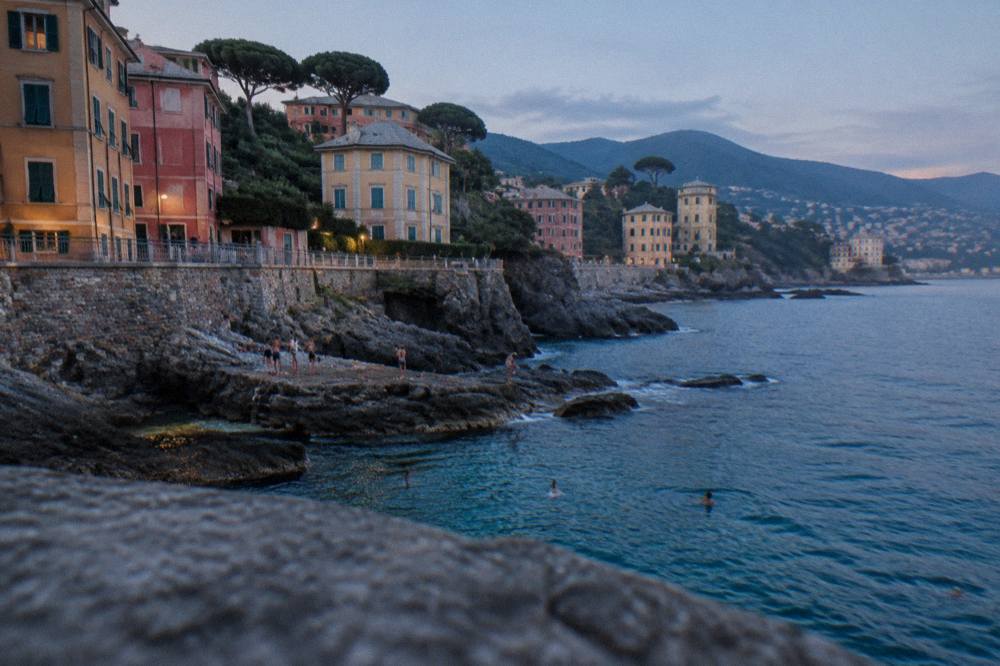
The rocks below the walk serve as swimming points. The site's beach page notes public access to the rocks and scogli along the Passeggiada and at Capolungo for swimming, on an unguarded, seasonal basis. ARPAL, the Ligurian environmental agency, classifies bathing water at 380 sampling points along the region's coast in 2026 into four classes, and Nervi's point at the Passeggiata di Nervi is reported in the good class, a contrast with Boccadasse on the other side of the city, which is reported as poor. That reported class is the only water-quality statement a visitor should rely on; the site prints no blanket claim about the sea being clean everywhere.
The promenade connects at its landward side to the parks, so a natural circuit forms: train in, walk the full length of the cliff path, return through the Parchi di Nervi, and catch the train back. No section of the walk requires a ticket, and no guided visit exists for it, though guided products cover the wider city, such as the Genoa walking tour overview, and coastal outings east of the city, including the boat runs described on the Portofino boat tour from Genoa page.
What Is In The Parchi Di Nervi?
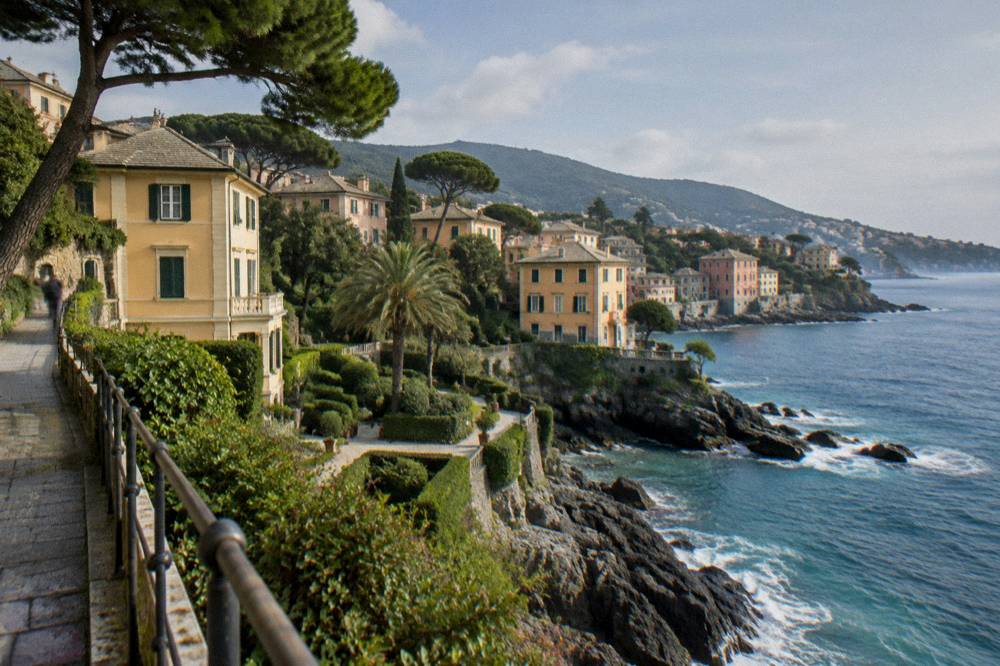
The Parchi di Nervi cover 92,000 square metres, about 9.2 hectares, between Via Aurelia and the sea, and contain four historic villas, a rose garden with more than 200 varieties, roughly 100 botanical species including palms and cedars, and five monumental trees, according to the city's tourism pages. Three of the villas are museums and the fourth is a museum house.
The parks are the reason Nervi reads as a garden suburb rather than a bare cliff. The city's tourism site lists the villas by name: Gropallo, Saluzzo Serra, Grimaldi Fassio and Luxoro. It gives the rose garden, the Roseto Luigi Viacava, more than 200 varieties, and counts about 100 botanical species across the grounds with five trees classed as monumental. The land sits on the coastal strip below Via Aurelia, the old Roman road that shadows the whole Ligurian coast.
The villas carry the district's museum collection. The Polo Museale di Nervi, as the tourism site names it, places the GAM Galleria d'Arte Moderna in Villa Saluzzo Serra, the Raccolte Frugone in Villa Grimaldi Fassio, the Wolfsoniana in its own building in the grounds, and Villa Luxoro as a museum house. The Parchi di Nervi guide on this site carries the detail; for hours and any admission charge, the museums' own pages are the reference, since municipal museum openings shift with the season and this page prints none.
| Villa | Collection | Role in the park |
|---|---|---|
| Villa Saluzzo Serra | GAM Galleria d'Arte Moderna | Modern art gallery |
| Villa Grimaldi Fassio | Raccolte Frugone | Fine art collections |
| Villa Gropallo | Park building | Within the park grounds |
| Villa Luxoro | Museum house | Historic house museum |
| Wolfsoniana | Decorative and modern art | Museum in the grounds |
The gardens and the cliff walk together make Nervi the greenest stretch of Genoa's shoreline. On the western side of the city, the sea edge is urban for long stretches: Corso Italia, the roughly 2.5 km seaside promenade of the early 20th century that links the Foce area to Boccadasse, as the Corso Italia page describes. Nervi's equivalent edge keeps its trees. For garden visiting, the official 1971-2000 normals for Genoa Sestri give the working backdrop: a mean daily high of 20.5 C in May and 23.9 C in June, with July the month of least rain at 24.2 mm.
Are The Museums Of Nervi Worth Visiting For A Short Trip?
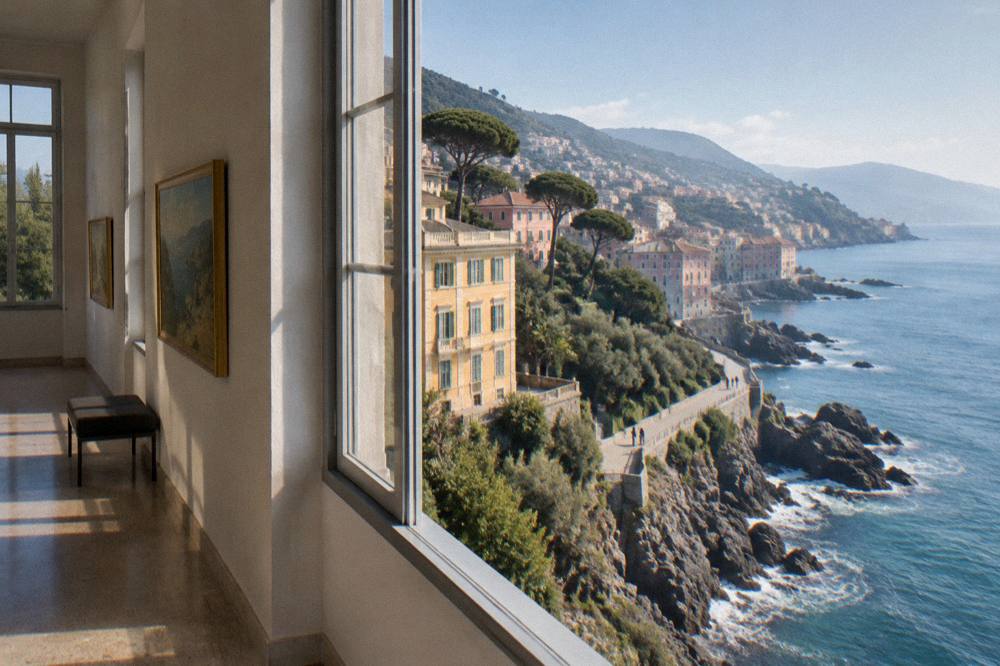
The four Nervi museums hold the city's modern and decorative art collections in a compact group inside one park, which makes them a genuine half-day programme rather than a full day's commitment: the GAM Galleria d'Arte Moderna, the Raccolte Frugone, the Wolfsoniana and the Villa Luxoro museum house, all within the Parchi di Nervi. A short trip pairs one museum with the cliff walk more naturally than it pairs all four.
What the group offers is concentration. Elsewhere in Genoa the great museums sit in the centre: the Palazzo Ducale, the Cathedral of San Lorenzo, the Strada Nuove palaces described on the Via Garibaldi and Musei di Strada Nuova page and the Palazzi dei Rolli page. Nervi's museums are on a different scale and a different subject: modern art, decorative art and a preserved house, set in gardens rather than on city streets.
Planning around the winter timetable matters less here than in the centre, because the parks themselves have no closing time, but the museums set their own hours and the city's museum network publishes them per venue. The Genoa Museum Card, at 24 EUR for 24 hours and 45 EUR for 48 hours in the 2026 rates, covers 28 city museums, and the card's conditions list which sites belong to it; check the museums' own pages for the current inclusions before counting on it for Nervi.
For a visitor with one day in Genoa, the honest arithmetic is this: the Aquarium of Genoa, the old town and the Porto Antico sit within walking distance of each other in the centre, as the things to do in Genoa page sets out, while Nervi needs a train ride each way. Two days or more, and the district earns its place, especially in combination with the coast further east. The Genoa in two days itinerary handles that split.
Can You Swim In Nervi?
Swimming in Nervi is from rocks and paved sea edges rather than sand: the city's beach page records public access to the rocks along the Passeggiata Anita Garibaldi and at Capolungo, and ARPAL's 2026 classification for the Nervi sampling point is reported in the good class. No lifeguard service is stated for those sections, and the access is seasonal.
The ARPAL classification deserves the emphasis, because it is the one official statement about water quality on this stretch. Liguria's 2026 bathing-water network covers 380 sampling points on the coast, graded in four classes from excellent to poor. Nervi's point is reported as good. On the other side of the city, Boccadasse is reported as poor in the same 2026 classification, so the two neighbourhoods swimmers compare should not be treated as equal on that measure. ARPAL's published register is the document to check for the current season.
The physical swimming set-up at Nervi is rocky. The Genoa beaches guide covers what the city's shoreline consists of: pebbles, rocks and sea-edge platforms rather than wide sand. Swim shoes and an awareness that no supervised service is stated for the Nervi sections are the practical notes. Sea temperatures, beach-club prices and lifeguard seasons are not printed on this site.
The season follows the climate, and the official 1971-2000 normals for Genoa Sestri give the pattern. The mean daily high reaches 27.3 C in July and 27.7 C in August, with mean nightly lows of 20.9 C and 21.0 C in those months. Rain, not cold, is the variable: October carries 171.3 mm in the normals and September 136.4 mm, against July's 24.2 mm, so late summer is the steadier swimming window on the long record.
What Is The Weather Like In Nervi?
Nervi shares Genoa's coastal Mediterranean climate as measured at the Genoa Sestri station: mean daily highs run from 11.5 C in January to 27.7 C in August, and rainfall is strongly seasonal, from 24.2 mm in July to 171.3 mm in October, on the official 1971-2000 normals. The district's exposure on the water makes wind and spray the local difference.
The table below is the official Aeronautica Militare CLINO 1971-2000 record for Genoa Sestri, the station at the airport about 7 km west of Piazza De Ferrari and the closest published normals to the whole city, Nervi included. No other temperature or rainfall source is used on this site, and no sunshine or sea-temperature figure is printed.
| Month | Mean high C | Mean low C | Rain mm |
|---|---|---|---|
| Jan | 11.5 | 5.5 | 101.8 |
| Feb | 12.2 | 6.0 | 74.0 |
| Mar | 14.6 | 8.2 | 81.7 |
| Apr | 16.8 | 10.5 | 88.0 |
| May | 20.5 | 14.2 | 72.4 |
| Jun | 23.9 | 17.6 | 58.2 |
| Jul | 27.3 | 20.9 | 24.2 |
| Aug | 27.7 | 21.0 | 69.3 |
| Sep | 24.4 | 17.9 | 136.4 |
| Oct | 20.0 | 13.8 | 171.3 |
| Nov | 15.1 | 9.2 | 108.8 |
| Dec | 12.5 | 6.5 | 93.1 |
Two readings of that record matter for planning. First, the rain is autumn-weighted: October, November and September are the three heaviest months in the normals, at 171.3, 108.8 and 136.4 mm. Second, the shoulder seasons are mild rather than cold, with mean highs of 14.6 C in March and 20.0 C in October, which keeps the promenade and the parks usable outside summer. The Genoa weather and best time to visit Genoa pages carry the fuller reading.
The cliff walk's exposure is the practical point. A path built at sea level along the rocks takes weather directly from the Ligurian Sea, and the city's tourism site notes that views from it extend to the Portofino promontory, a sighting that depends entirely on conditions. No figure exists for how often the view opens, and none is invented here.
How Does Nervi Compare With Genoa's Other Seaside Districts?
Nervi is the garden district at the eastern end of the city, about 9 km from the centre, while Boccadasse is the old fishermen's village about 4 km west of it on Corso Italia and Pegli sits about 10 km to the west: same sea, same ARPAL network, three different characters, and on the reported 2026 water classes Nervi grades good where Boccadasse grades poor.
The comparison the city's tourism site draws is structural. Boccadasse is described as the most famous ancient fishermen's village still visible in Genoa, between Corso Italia and Capo Santa Chiara, with colourful houses, fishing boats and nets on a small beach. Nervi was built around villas and gardens, and its sea edge is a 2 km walkway rather than a beach crescent. Foce and Albaro sit between them on the Corso Italia side, and Pegli mirrors Nervi on the western flank of the city.
Distance and water class are the two measurable differences, and both are printed above. A third difference is transport shape: Boccadasse is served by AMT bus lines the city lists, including line 42 from the Dante area, while Nervi adds the railway station beside the promenade, which shortens the trip from the main stations.
For a visitor choosing one seaside half-day from a central base, the decision usually comes down to time and purpose. Boccadasse pairs with a walk along Corso Italia and is closer. Nervi pairs with gardens, museums and the longer coastal outlook, and it is the natural direction of travel for anyone continuing east towards Camogli and Portofino, about 18 and 25 km from the centre respectively. The Italian Riviera itinerary page sequences the whole coast.
Guided products covering the city itself work as a complement to a Nervi half-day, since the district needs no guide to walk. The segway tour of the UNESCO site covers the Strade Nuove system in the centre; its live listing carries current pricing and availability at Check availability. Food-focused walks in the old town, covered on the Genoa food tour page, are another way to fill the central half of the day.
Common Questions About Nervi
What is Nervi in Genoa?
Nervi is a coastal district at the eastern end of Genoa, about 9 km in a straight line from Piazza De Ferrari, known for the roughly 2 km Passeggiata Anita Garibaldi cliff walk, the 92,000 square metre Parchi di Nervi and four museums in historic villas.
How do I get from Genoa centre to Nervi?
The regional train stops at Genoa Nervi station, which sits beside the promenade. AMT Genova lists bus lines 15, 17, 607, 617 and N2 for the district, all covered by the 2.00 EUR ordinary ticket valid 110 minutes on the whole network.
Can you swim in Nervi?
Yes, from the rocks along the Passeggiata Anita Garibaldi and at Capolungo, on a public, unguarded and seasonal basis. ARPAL's 2026 classification for the Nervi sampling point is reported in the good class.
How long is the Nervi promenade?
The Passeggiata Anita Garibaldi runs about 2 km from the small harbour to Capolungo, with the Portofino promontory visible along the coast, according to the city's tourism site.
Is Nervi worth visiting compared with Boccadasse?
The two are different in kind: Boccadasse is a former fishermen's village about 4 km from the centre on the Corso Italia side, while Nervi is a garden and museum district about 9 km east with a cliff walk and a railway station beside it. On the reported 2026 ARPAL classes, Nervi's bathing water grades good and Boccadasse's grades poor.
What museums are in Nervi?
The Polo Museale di Nervi places the GAM Galleria d'Arte Moderna in Villa Saluzzo Serra, the Raccolte Frugone in Villa Grimaldi Fassio, the Wolfsoniana in the grounds and Villa Luxoro as a museum house, all inside the Parchi di Nervi.