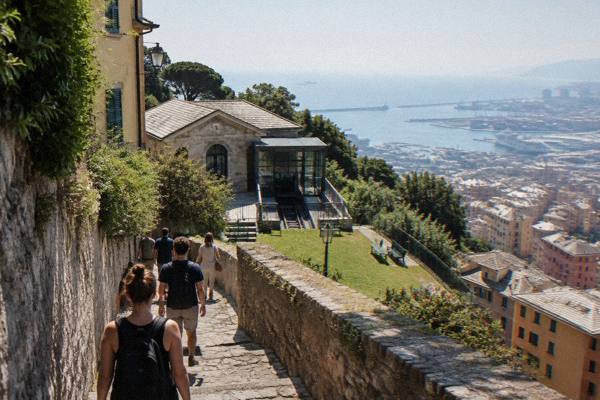
Genoa Beaches: Boccadasse, Nervi And The Lidos Of Corso Italia
Genoa is a coastal city on the Ligurian Sea, and its beaches split into three families: the pebble cove at Boccadasse, the rocky swimming platforms of Nervi, and the lidos lined up along the Corso Italia promenade. Here is what each one offers, what the 2026 water-quality classes say, and how to reach them.
Short answer
Genoa's city beaches are the pebble cove at Boccadasse (about 4 km from Piazza De Ferrari), the rocks and Passeggiata Anita Garibaldi at Nervi (about 9 km), and the bathing establishments of Corso Italia (about 4 km). ARPAL's 2026 classes rate Boccadasse poor and Nervi good, so check the class before you swim.
Genoa is a coastal city on the Ligurian Sea, wedged between the water and the Apennine hills, and its seafront is shorter and stonier than the postcard Riviera further south. That is not a criticism. The city's shoreline runs from the working port through the redeveloped Porto Antico, along the roughly 2.5 km seaside promenade of Corso Italia, to the former fishermen's village of Boccadasse, and then on eastwards to the cliffs and parks of Nervi. What Genoa offers is a beach life woven into the city itself, reached by bus, lift or a coastal train rather than a long expedition.

This page gathers what the primary sources actually say about the beaches of Genoa: the ARPAL bathing-water classes for 2026, the distances, the transport fares, and the climate normals that tell you when swimming weather arrives. Where a figure is not published, no estimate is offered. For the wider picture of the city's sights, start with things to do in Genoa, and for the neighbourhoods themselves read the dedicated pages on Boccadasse and Nervi.
What And Where Are The Beaches Of Genoa?
Genoa's beaches fall into three groups: the small pebble cove at Boccadasse with free public access, the rocky swimming shores below the Passeggiata Anita Garibaldi at Nervi, and the line of bathing establishments along the Corso Italia promenade, which runs about 2.5 km from the Foce side of the city to Boccadasse itself. Straight-line distances from Piazza De Ferrari are about 4 km to Corso Italia, about 4 km to Boccadasse, about 9 km to Nervi and about 10 km to Pegli on the western side.
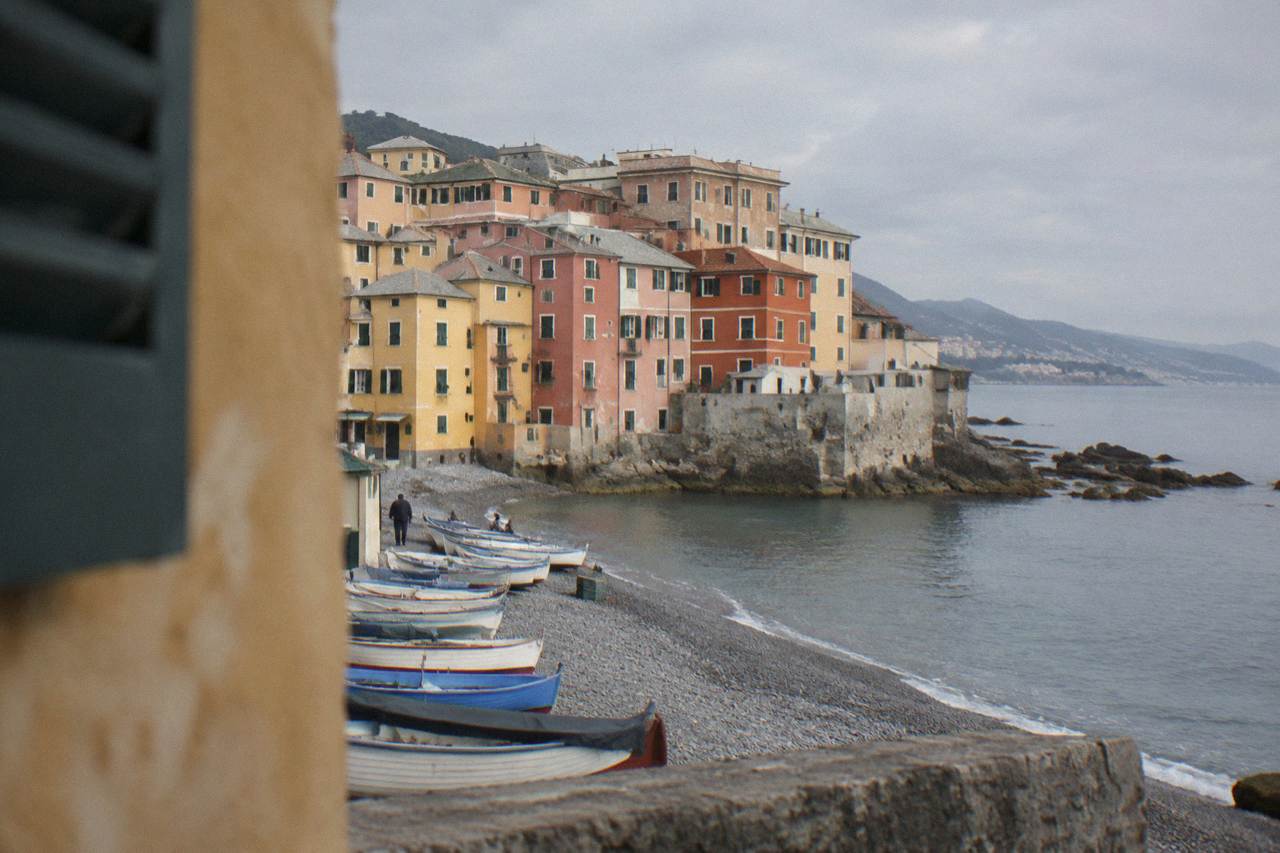
Boccadasse is the most famous of the three. The city's own tourism site describes it as the most famous ancient fishermen's village still visible in Genoa, set between Corso Italia and Capo Santa Chiara, with colourful houses, fishing boats drawn up on a small beach, nets, stone staircases and eateries. The beach there is small, pebbly and partly free public access, with some free entry points alongside the paid establishments. The full character of the village is covered on the Boccadasse area page.
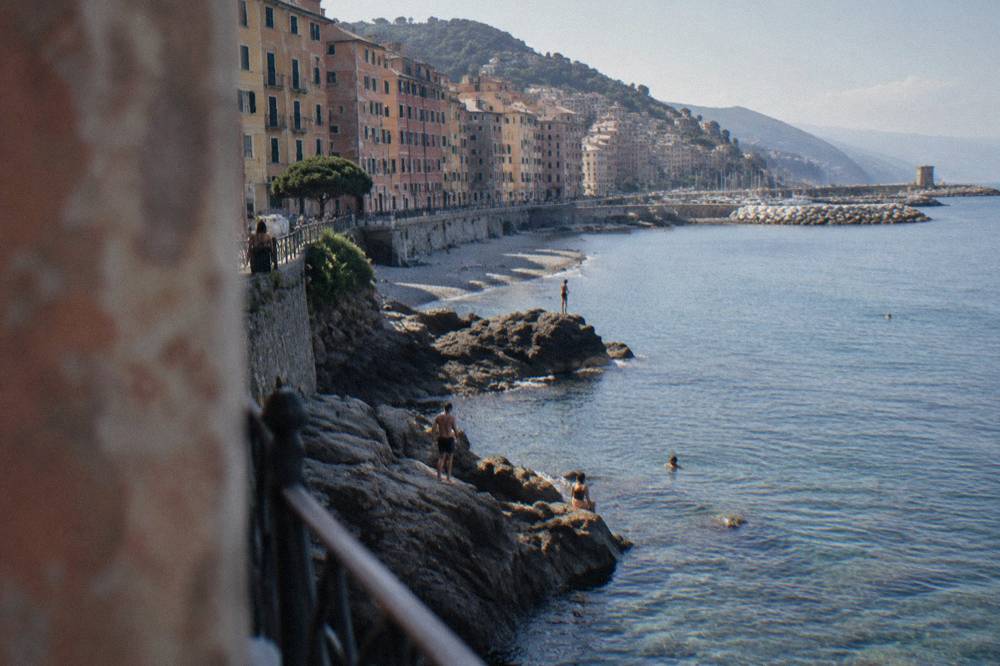
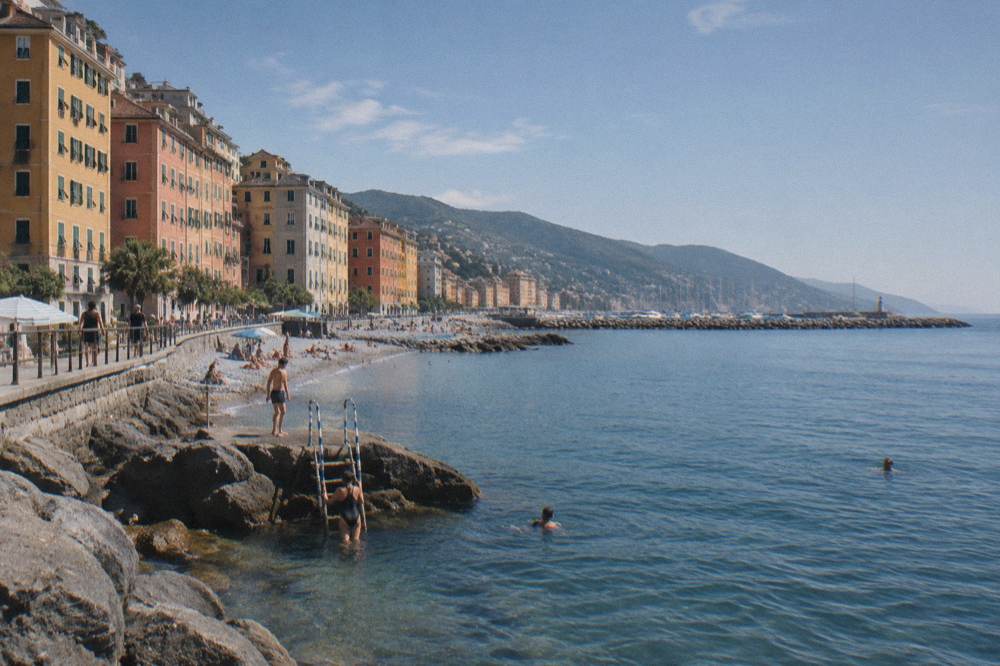
Nervi is different again. Its shoreline is rock and shingle rather than sand, reached from the cliff-top Passeggiata Anita Garibaldi, a pedestrian promenade of about 2 km that runs from the small harbour at Nervi to Capolungo. Public access to the rocks for swimming is noted along the walk. Behind the promenade sit the Parchi di Nervi, 9.2 hectares of parks between Via Aurelia and the sea, covered in detail on the parks page.
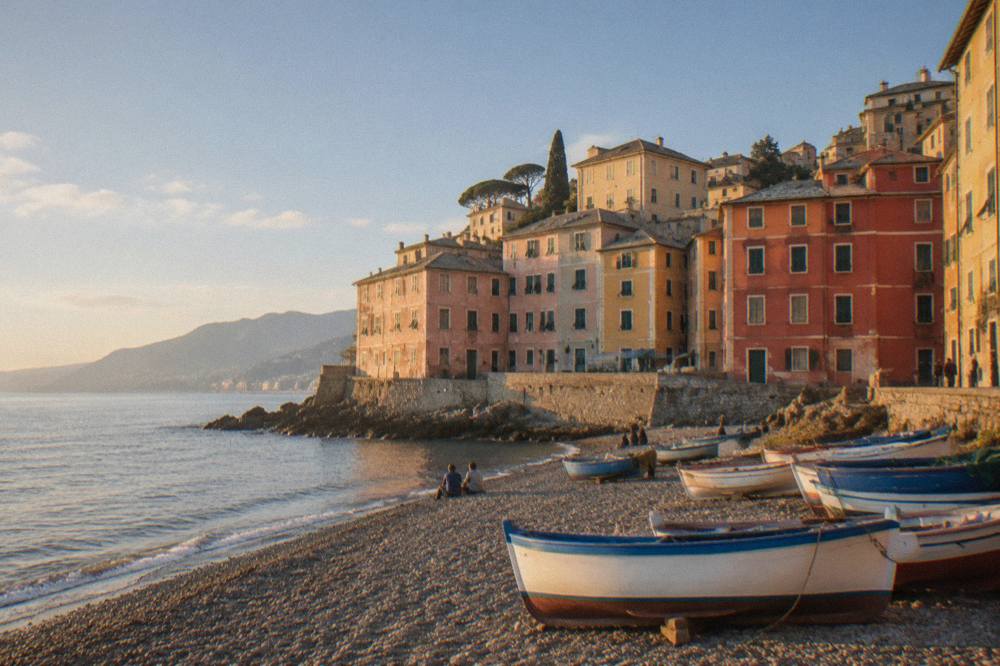
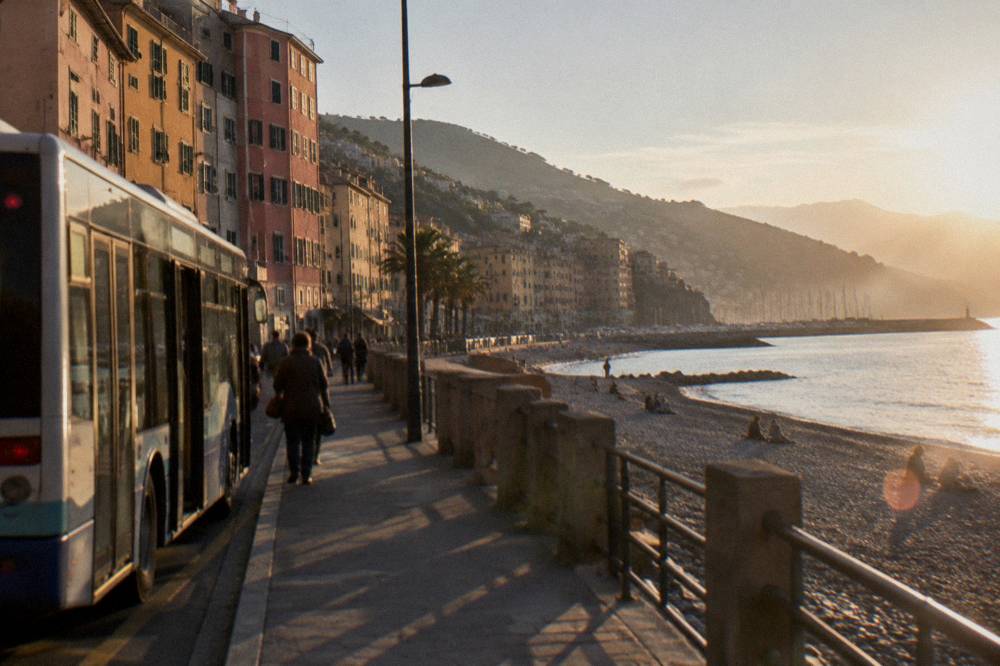
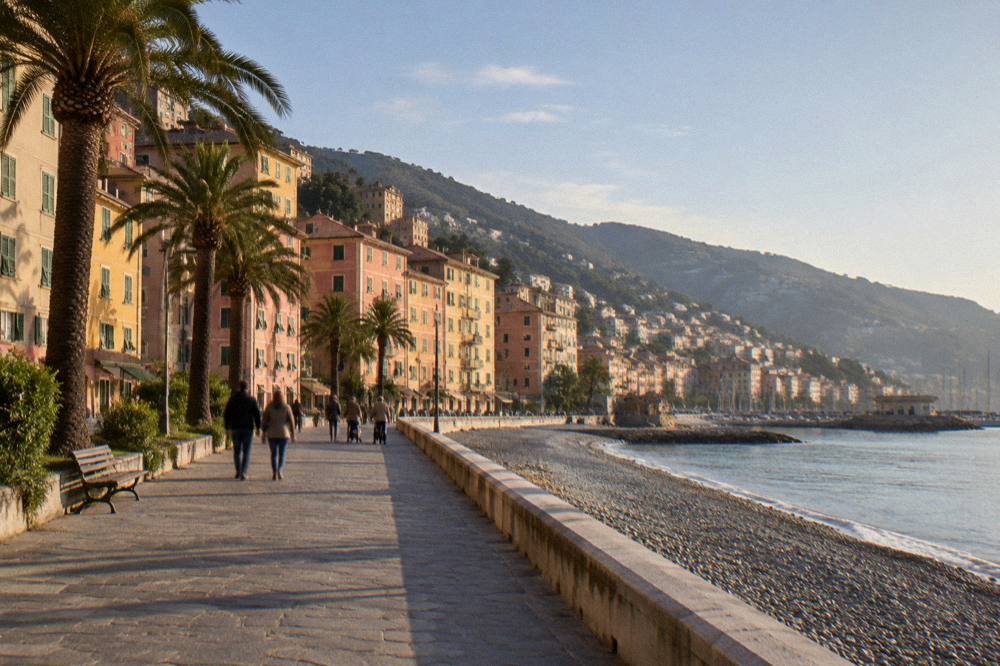
Corso Italia is the connective tissue. The early 20th century promenade links the Foce area to Boccadasse and is lined with beach establishments and historic buildings, per the city's tourism description. It is the closest thing Genoa has to a classic seafront boulevard, and it is walkable end to end. Other named beach areas of the city, such as Sturla, Vernazzola, Pegli, Voltri and Quarto, sit further out along the same coastline.
Genoa's Beach Areas At A Glance
| Beach area | Character | Distance from Piazza De Ferrari (straight line) | Access notes |
|---|---|---|---|
| Boccadasse | Small pebble cove, former fishermen's village | about 4 km | Free public access points alongside paid establishments |
| Corso Italia | About 2.5 km promenade lined with bathing establishments | about 4 km | Seaside walk from Foce to Boccadasse |
| Nervi | Rocks below the Passeggiata Anita Garibaldi, about 2 km cliff-top walk | about 9 km | Public access to rocks for swimming |
| Pegli | Western shoreline of the city | about 10 km | Reached by local transport |
| Vernazzola, Sturla, Quarto, Voltri | Smaller eastern and western beach spots | varies | Local bus and train links |
Is The Sea Water Clean At Genoa Beaches?
No blanket claim survives the data: ARPAL, Liguria's environmental agency, classes every sampling point individually, and its 2026 network covers 380 points on the Ligurian coast under four classes, Eccellente, Buona, Sufficiente and Scarsa. For Genoa's two signature swimming spots the 2026 classes are reported as SCARSA, poor, at Boccadasse and BUONA, good, at Nervi, so the water-quality picture differs sharply between beaches only a few kilometres apart.
That contrast is the single most useful fact on this page. A swim off the rocks at Nervi sits in water classed good in 2026, while the picture-postcard cove at Boccadasse carries the poor class in the same year's classification. Along Corso Italia the results are mixed: some points near Vernazzola and Priaruggia are reported as poor or sufficient, while others are classed excellent or good. Liguria as a region reports 97 percent of its sampling points in the top two classes, but Genoa's city beaches are not uniformly among them.
The classes are published annually by ARPAL, and they are the authoritative check before swimming. Beach-club prices, lifeguard seasons and blue-flag awards should be checked before a visit. What the data does support is simple advice: look up the current class for the exact stretch of coast you plan to swim from, because within one city the rating moves from poor to good within a few kilometres.
Can You Actually Swim In Genoa?
Yes, swimming in Genoa is a normal part of city life from the rocky shores of Nervi to the pebbles of Boccadasse and the establishments of Corso Italia, with free public access points recorded at Boccadasse and along the Nervi promenade, but the experience is stone and rock rather than sand, and the ARPAL 2026 classes, good at Nervi and poor at Boccadasse, are worth checking before you get in.
Curious about getting into the water in Genoa? Book a snorkeling session here.
Genoa is not a sandy resort. The city's shoreline drops quickly, and its beaches are pebble, shingle and rock. Swimmers at Nervi use the rocks below the Passeggiata Anita Garibaldi, where public access is documented and the water class for 2026 is reported as good. At Boccadasse the small beach has free public points mixed with paid establishments, and the 2026 class there is reported as poor. Swims elsewhere along the city coast follow the same pattern: rock, shingle and mixed water-quality results.
For readers weighing Genoa against other swim spots on the Riviera, the dedicated comparison material on the Nervi area page and the beach-and-cliff day trip destinations such as Finale Ligure cover the alternatives. The broader swimming question, including what the climate normals say about the season, is answered in the site's guide to Genoa weather.
When Is Beach Weather In Genoa?
The official 1971-2000 climate normals for Genoa Sestri put the mean daily high at 20.5 C in May, 23.9 C in June, 27.3 C in July and 27.7 C in August, with the lowest rainfall of the year in July at 24.2 mm, so the core swimming window by temperature and rainfall runs from June through August, with May and September still reaching mean highs above 20 C.
These figures come from the Aeronautica Militare's CLINO 1971-2000 station normals for Genoa Sestri, at the airport about 7 km west of Piazza De Ferrari. October is a different story: it carries the highest monthly rain total of the whole year at 171.3 mm, against 24.2 mm in July. September still averages a mean high of 24.4 C but 136.4 mm of rain. Anyone planning a beach trip around the shoulder months should weigh those two numbers, warmth against rainfall, and read the fuller breakdown in the best time to visit Genoa.
| Month | Mean high C | Mean low C | Rain mm |
|---|---|---|---|
| Jan | 11.5 | 5.5 | 101.8 |
| Feb | 12.2 | 6.0 | 74.0 |
| Mar | 14.6 | 8.2 | 81.7 |
| Apr | 16.8 | 10.5 | 88.0 |
| May | 20.5 | 14.2 | 72.4 |
| Jun | 23.9 | 17.6 | 58.2 |
| Jul | 27.3 | 20.9 | 24.2 |
| Aug | 27.7 | 21.0 | 69.3 |
| Sep | 24.4 | 17.9 | 136.4 |
| Oct | 20.0 | 13.8 | 171.3 |
| Nov | 15.1 | 9.2 | 108.8 |
| Dec | 12.5 | 6.5 | 93.1 |
No figure for sea temperatures is offered. What the air-temperature normals show is a long warm season by northern European standards: mean highs stay at or above 20 C from May through October. Rain, not cold, is the variable that reshapes an October beach plan. The full index of guides sits on Genoa Travel Guide.
How Do You Get To Genoa's Beaches Without A Car?
An AMT ticket costs 2.00 EUR and is valid 110 minutes on the whole urban network, and it covers the buses that serve Boccadasse and the seafront; the Met Daily 24-hour ticket at 10.00 EUR adds the airport Volabus and line 782 to Portofino, while Nervi is reached by regional train to Genoa Nervi station, which sits next to the promenade, so every major beach area is reachable on one modest ticket.
The transport facts are straightforward. AMT bus lines listed for Boccadasse from the centre include 42, 31 and 606. Nervi is served by trains stopping at Genoa Nervi station, adjacent to the Passeggiata Anita Garibaldi, and by AMT buses including lines 15, 17, 607 and 617. A single 2.00 EUR ticket lasts 110 minutes across the Città Metropolitana network; a carnet of 11 tickets costs 20.00 EUR. The Met Daily at 10.00 EUR covers the full AMT network for 24 hours, including Volabus from Genova Cristoforo Colombo airport. Details are gathered on the public transport guide.
| Ticket | Price | Validity |
|---|---|---|
| AMT ordinary single | 2.00 EUR | 110 minutes, urban network |
| AMT + Trenitalia integrated | 2.20 EUR | 110 minutes, urban plus limited rail |
| 5-hour ticket | 5.00 EUR | 5 hours |
| Carnet 11 x 110 min | 20.00 EUR | Eleven single journeys |
| Met Daily | 10.00 EUR | 24 hours, full AMT network incl. Volabus and line 782 |
Arriving from further afield changes the arithmetic. The airport sits about 7 km from Piazza De Ferrari, and the fixed taxi fare to the centre is 25 EUR per car. Train travellers can read the Genoa train stations guide, and the routes from Milan to Genoa cover the main northern approach. Parking in the historic centre is complicated by limited-traffic zones, so the bus-and-train pattern above is the practical default for a beach day.
Are There Better Beaches Within Reach Of Genoa?
Yes, and they are close: Camogli lies about 18 km from Piazza De Ferrari with a year-round boat service to San Fruttuoso about 22 km away, San Fruttuoso itself sits in a cove reachable by boat from Camogli in about 30 minutes, and the trains and boats of the eastern Riviera put Santa Margherita Ligure about 24 km and Portofino about 25 km from the city centre, all reachable as day trips without a car.
The eastern Riviera is where the sand and the famous names begin. Camogli has the boats: Golfo Paradiso runs a Camogli to San Fruttuoso service year round, with crossings of about 20 to 30 minutes and return fares reported at about 12 EUR for an adult. The abbey at San Fruttuoso, run by FAI, charges 10 EUR full entry with reductions for children and students. From Genoa itself, the Golfo Paradiso Two Gulfs tour departs Porto Antico at 11:00 on listed dates and calls at Camogli, San Fruttuoso and Portofino, with full-day fares reported around 29 EUR. The guide to reaching Portofino and the Cinque Terre route page cover the longer options.
| Destination | Straight-line distance from Piazza De Ferrari | Reported sea link |
|---|---|---|
| Camogli | about 18 km | Year-round boats to San Fruttuoso, about 20 to 30 min |
| San Fruttuoso | about 22 km | Boat from Camogli; abbey entry 10 EUR full |
| Santa Margherita Ligure | about 24 km | Boat to Portofino return about 20 EUR |
| Portofino | about 25 km | Line 782 bus included in Met Daily |
| Rapallo | about 25 km | Tigullio boat lines along the coast |
| Recco | about 17 km | Boats to San Fruttuoso April to September |
No regular scheduled ferry from Genoa to the Cinque Terre exists in the sources: Golfo Paradiso runs a Genoa to Cinque Terre tour on set dates only, so check the operator's calendar rather than assuming a daily boat. The Genoa ferries guide covers the overnight and international lines, which are a different thing entirely from the day-trip boats.
What Should A Beach Day In Genoa Look Like?
A realistic plan pairs the shoreline with the city rather than treating them separately: start on the Corso Italia promenade, walk its about 2.5 km length into Boccadasse, continue by bus or train to Nervi for the Passeggiata Anita Garibaldi and the rocks, and close with the Porto Antico and the Aquarium, whose ticket page lists adult entry from 26.00 EUR and a combined Aquarium, Biosfera and Bigo ticket from 37.00 EUR, all on one 2.00 EUR bus ticket per leg.
The logic is geographic. Corso Italia runs from Foce to Boccadasse along the water, so the walk and the beach are the same activity. Boccadasse rewards a slow loop: the cove, the stone staircases, the boats. From there the coastline turns east towards Nervi, where the cliff walk and the parks sit side by side, and where the 2026 water class is reported as good. Coming back, the Porto Antico clusters the Aquarium, the Biosfera and the Bigo lift in one redeveloped harbour, and the ticket prices above come from the Aquarium's own ticket page. Booking details are on the Aquarium tickets guide.
Two cautions shape the day. First, the water class: Boccadasse is reported poor for 2026, Nervi good, so swim where the class supports it. Second, the season: October carries 171.3 mm of rain in the normals, more than any other month, so a late-season beach day in Genoa has a real chance of showers alongside a mean high of 20.0 C.
Where Should You Stay To Be Near The Beaches?
The eastern side of the city puts you closest to the water: the Foce and Albaro side sits at the inland end of Corso Italia about 4 km from Piazza De Ferrari, Boccadasse itself about 4 km, and Nervi about 9 km at the far end of the coastal train line, so a base near the promenade or the Genoa Nervi station area keeps every beach within one bus or one train stop, while the historic centre trades sea proximity for the caruggi and the museums.
Accommodation figures that can be stated are limited to the city's tourist tax, the imposta di soggiorno: 2.00 EUR per person per night in 1-star hotels, 2.50 EUR in 2-star, 4.00 EUR in B&Bs and holiday lets of the affittacamere type, and 2.00 EUR in hostels and campsites, charged on the first 8 consecutive nights, with under-14s exempt. The fuller neighbourhood breakdown is on the where to stay in Genoa page.
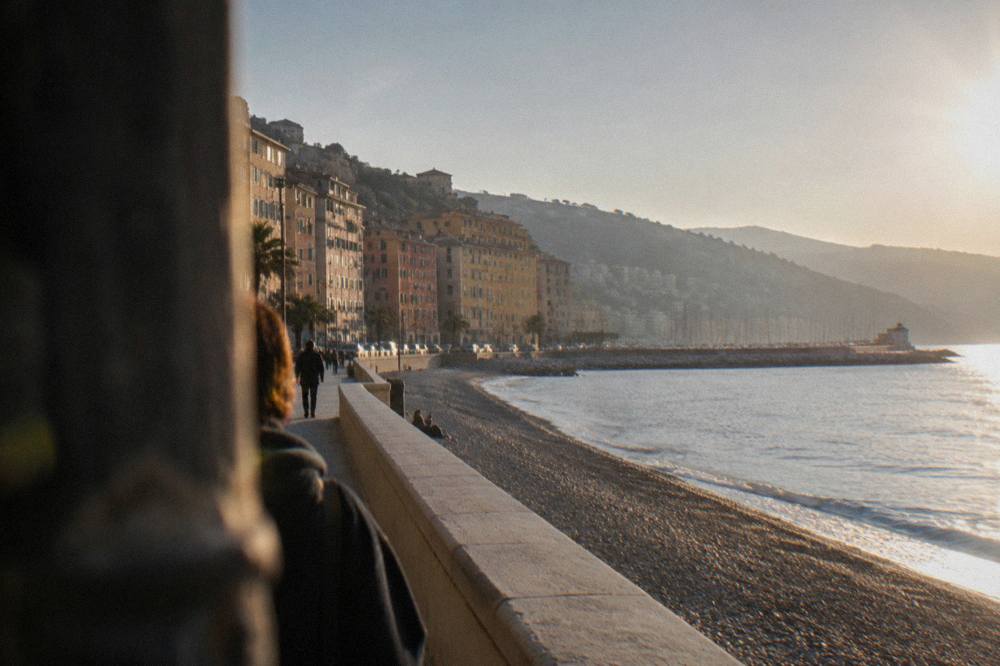
The trade-off is simple. A stay near the promenade puts the morning swim within walking distance and keeps the buses and trains to Camogli and Portofino close at hand. A stay in the centre puts the UNESCO-listed Strade Nuove, the Aquarium and the food of the old town on foot, with the beach a 2.00 EUR ride away. Readers who want the sea as the organising principle of the trip can also base themselves along the eastern Riviera and treat Genoa as the day trip, reversing the usual direction.
What Do You Eat On A Genoa Beach Day?
The city's beach foods are the ones Liguria is known for: focaccia, farinata and pesto genovese, with pesto made to the Basilico Genovese PDO specification, and the focaccia di Recco style, protected with IGP status since 2015 and produced only in Recco, Camogli, Sori and Avegno, sitting just up the coast from Nervi, so a beach day eastwards doubles as a route through the food's home territory.
The PDO claim comes from the basil producers' own consortium, and the IGP status of focaccia di Recco since 2015, limited to those four communes, is the reason Recco appears on food itineraries despite being a modest town about 17 km from Piazza De Ferrari. Within Genoa itself, the city's food identity is covered on the what to eat in Genoa page and the pesto genovese guide. No restaurant names, dish prices or café recommendations appear on this page.
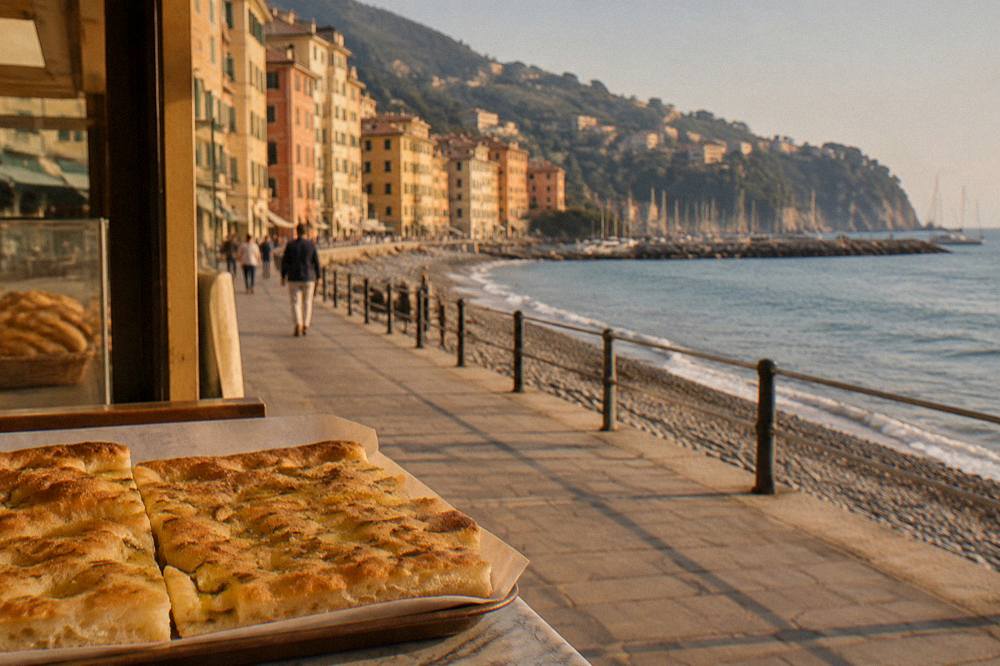
The practical pattern for a beach day: the promenade and the villages have their own eateries, listed on the city tourism site's description of Boccadasse, and the cooking class options in the city, including the rooftop pesto and pasta classes in this site's roster, teach the same dishes from the inside. For a city introduction with a guide before the beach afternoon, the Segway tour of the UNESCO-listed streets is the featured option: Check availability.
Common Questions About Genoa Beaches
Does Genoa have beaches?
Yes. Genoa is a coastal city on the Ligurian Sea with a small pebble cove at Boccadasse, rocky swimming shores at Nervi below the Passeggiata Anita Garibaldi, and bathing establishments along the about 2.5 km Corso Italia promenade.
Is the water clean at Boccadasse?
ARPAL's 2026 bathing-water class for Boccadasse is reported as SCARSA, poor. Nervi, about 9 km away along the same coast, is reported as BUONA, good, in the same 2026 classification.
Can you swim in Genoa?
Yes. Free public access points are documented at Boccadasse and along the rocks of the Nervi promenade. Check the current ARPAL class for the exact stretch of coast before swimming, because ratings vary within the city.
How far is Boccadasse from central Genoa?
Boccadasse is about 4 km from Piazza De Ferrari in a straight line, at the eastern end of the Corso Italia promenade, and is served by AMT bus lines including 42, 31 and 606.
How do you get to Nervi from Genoa city centre?
Regional trains stop at Genoa Nervi station, adjacent to the promenade, and AMT buses including lines 15, 17, 607 and 617 serve the area. An AMT ticket costs 2.00 EUR and is valid 110 minutes on the urban network.
When is the best month for a Genoa beach trip?
By the official 1971-2000 climate normals for Genoa Sestri, July and August have the highest mean daily highs, 27.3 C and 27.7 C, and July has the lowest rainfall at 24.2 mm. October has the highest monthly rainfall of the year at 171.3 mm.