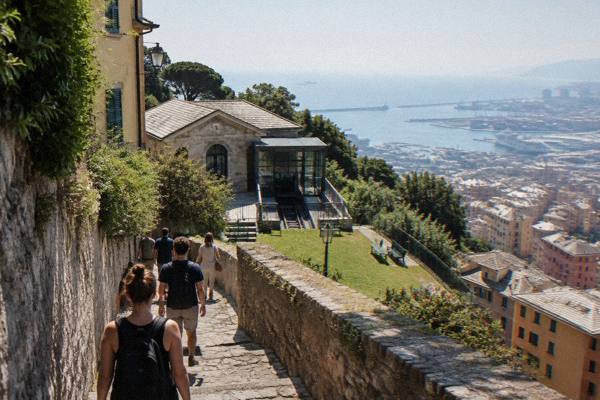
Corso Italia: The Seafront Promenade From Foce To Boccadasse
Corso Italia is Genoa's seaside promenade, a stretch of coast in the Foce area that runs west to the old fishermen's village of Boccadasse. This guide covers its length, transport, water quality and what lines the way.
Short answer
Corso Italia is a seaside promenade of about 2.5 km linking the Foce area to Boccadasse, reached by AMT bus with a 2.00 EUR ticket valid 110 minutes. It is lined with beach establishments and historic buildings, and it ends at Boccadasse, about 4 km straight-line from Piazza De Ferrari.
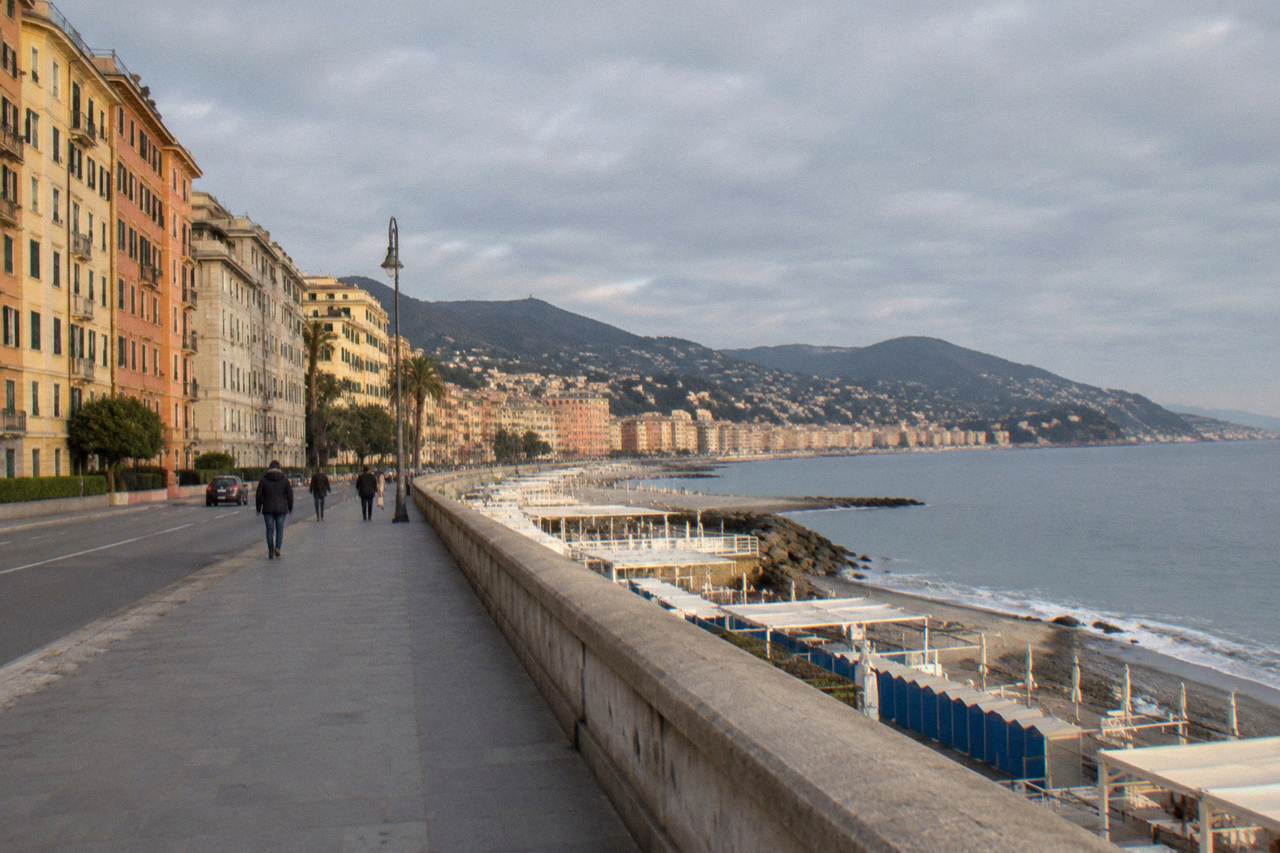
Corso Italia is Genoa's seafront promenade, a coastal walk of about 2.5 km in the Foce area that runs west along the Ligurian Sea to the old fishermen's village of Boccadasse. The city's own tourism site describes it as an early twentieth-century promenade lined with beach establishments and historic buildings, and it sits about 4 km straight-line from Piazza De Ferrari, the centre the site uses as its reference point. This page gathers what the published sources say about the walk itself: its length, how AMT buses reach it, what the 2026 bathing-water classes say about swimming, and how it connects to Boccadasse and the wider coast. For orientation, the site's Genoa map guide places the promenade in context with the old town and the port, and for visitors weighing the seafront against the city's other headline sights, the overview at things to do in Genoa sets out the full range.
What Is Corso Italia In Genoa?
Corso Italia is Genoa's seaside promenade, a walk of about 2.5 km built in the early twentieth century that links the Foce area of the city to the fishermen's village of Boccadasse along the shore of the Ligurian Sea. The city's tourism site describes it as lined with beach establishments and historic buildings, and it is the principal sea-level promenade inside the city itself, distinct from the cliff-top Passeggiata Anita Garibaldi at Nervi.
The promenade belongs to Genoa's coastal identity. The city sits on a narrow strip between the sea and the Apennine hills, and most of its street grid climbs steeply away from the water. Corso Italia is the stretch where the city meets the shore at its own level, which is why the tourism site pairs it with Boccadasse in a single description: the two form one continuous seafront narrative, ending at the small bay of colourful houses, fishing boats and nets that the site calls the most famous ancient fishermen's village still visible in Genoa.
It is a promenade in the specific Italian sense, a traffic-free seafront terrace rather than a road. The buildings behind it date from the period of its construction, and the beach establishments below run along the water's edge for the length of the walk. The villages beyond it, from Nervi eastward, continue the same coastline at a greater distance from the centre: Nervi is about 9 km straight-line from Piazza De Ferrari, against about 4 km for Corso Italia and Boccadasse.
Genoa's relationship with the sea has two working faces, and the promenade looks onto one of them. The port handles 2.4 million cruise passengers and 2.6 million ferry passengers in the figures the port authority publishes in its port-in-numbers page, with ferries sailing from the Stazioni Marittime terminals to Sardinia, Corsica, Sicily, Barcelona and Tunis. Corso Italia sits well away from that working harbour, on the leisure coastline east of the centre, and the distinction is worth holding onto when planning a day: the harbour sights and the promenade are different experiences of the same sea.
How Long Is The Corso Italia Walk And Where Does It End?
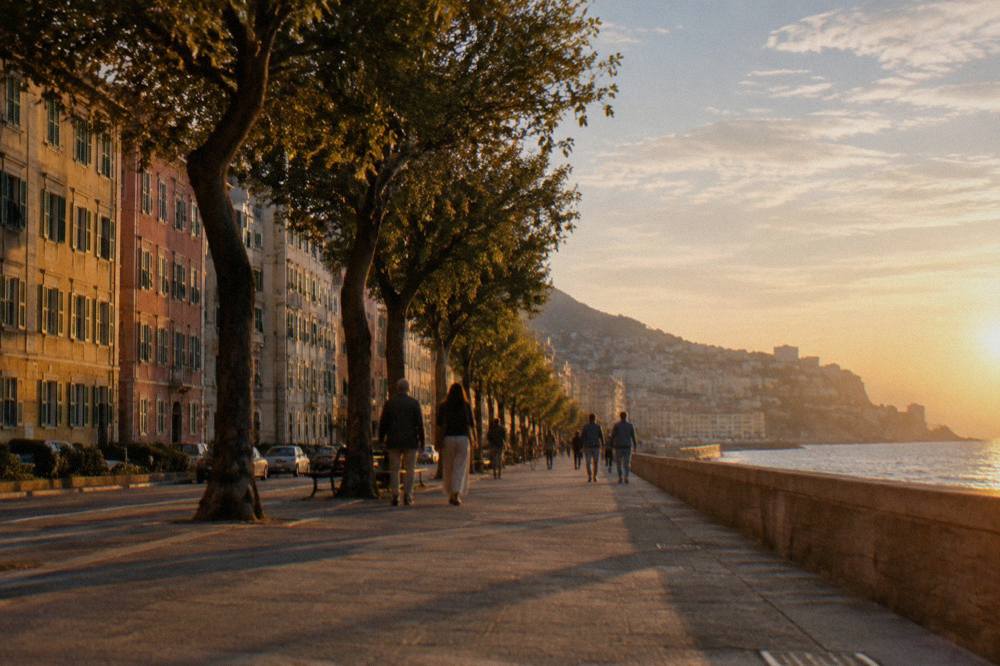
Corso Italia runs about 2.5 km from the Foce area to Boccadasse, according to the city tourism site's description of the promenade, and Boccadasse lies about 4 km straight-line from Piazza De Ferrari. The walk therefore fits easily inside a morning or an afternoon, and its western end connects to the village the same site describes as the most famous ancient fishermen's village still visible in the city.
The 2.5 km figure comes from the tourism site's own page on Boccadasse and Corso Italia, which also notes the promenade's early twentieth-century origin. The straight-line distances below are computed from Piazza De Ferrari and give a sense of how the seafront sits relative to the rest of the city and the coast beyond it. The table also shows how quickly the classic day-trip destinations follow once the city ends: Camogli at about 18 km, Portofino at about 25 km, all reachable on the same coastal railway line that serves the eastern suburbs.
| Place | Straight-line distance from Piazza De Ferrari |
|---|---|
| Corso Italia | about 4 km |
| Boccadasse | about 4 km |
| Nervi | about 9 km |
| Pegli | about 10 km |
| Recco | about 17 km |
| Camogli | about 18 km |
| San Fruttuoso | about 22 km |
| Santa Margherita Ligure | about 24 km |
| Portofino | about 25 km |
| Rapallo | about 25 km |
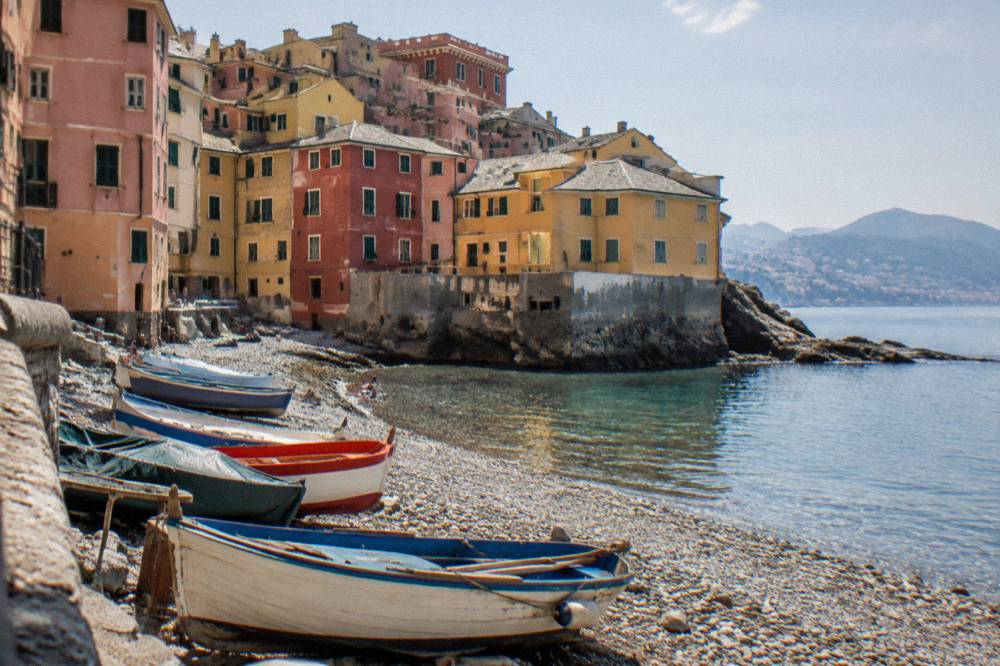
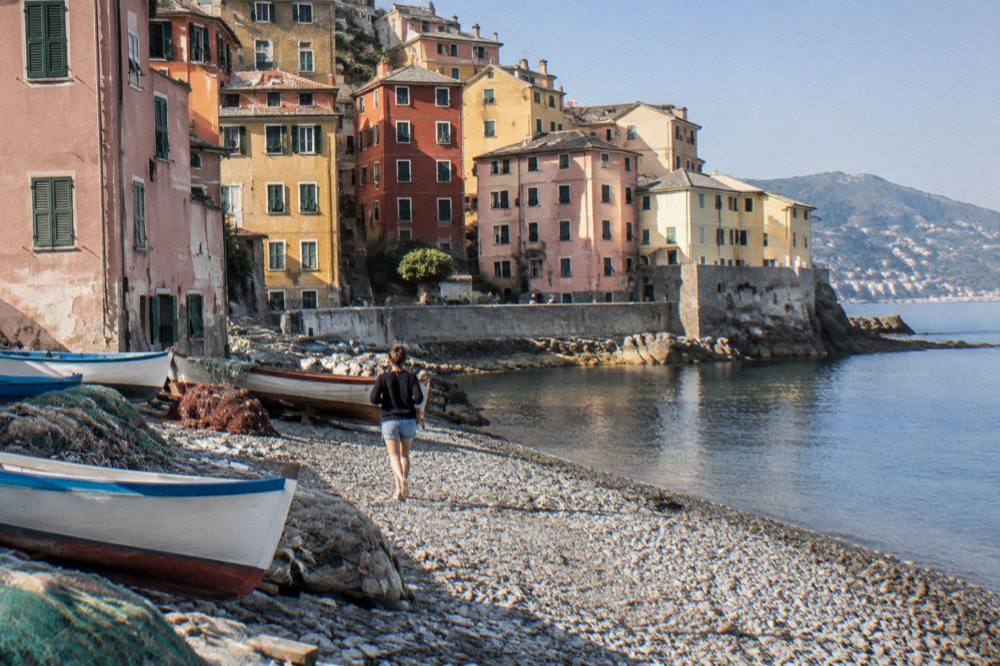
At the far end, Boccadasse is described by the tourism site as featuring colourful houses, fishing boats known as gozzi, nets on a small beach and stone staircases, with local eateries. The Boccadasse area guide covers the village itself in detail. Between the centre and the start of the promenade lies the Foce and Albaro district, the residential quarter the promenade runs through, which this site covers separately for readers deciding where to base themselves.
A different way to see the same stretch is from above. The creuze are the dry-stone footpaths that link the Ligurian coast to the hills behind it, and a panoramic guided tour across them with a storyteller runs in the hills above this part of the city. The full description and live pricing sit on Check availability through the operator's live listing.
How Do You Get To Corso Italia By Bus Or Metro?
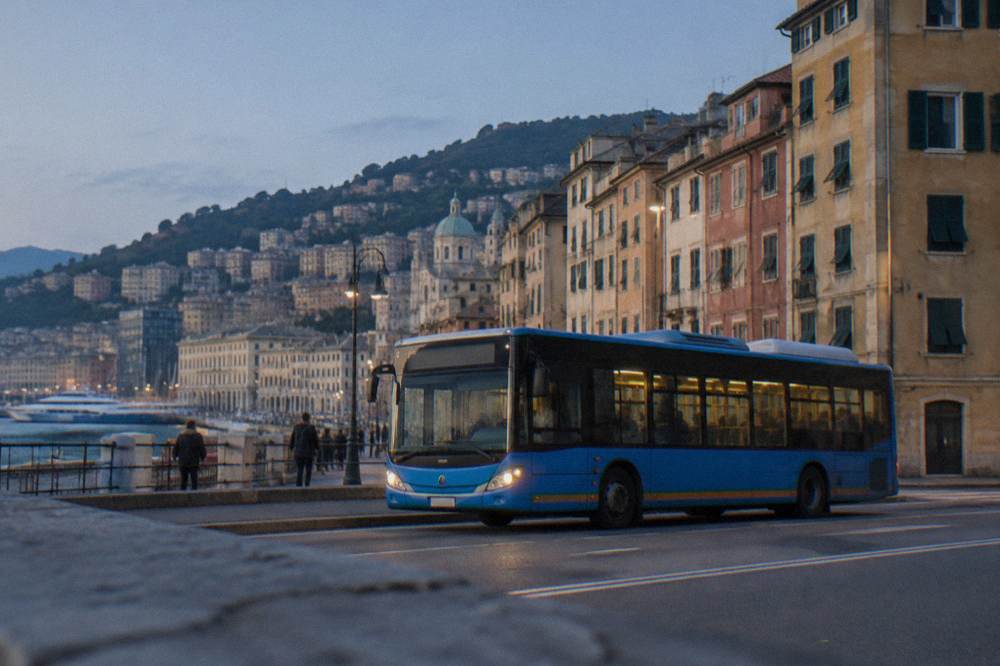
AMT buses reach the Corso Italia seafront from the centre on lines that include 31, 42 and 606, with an ordinary ticket at 2.00 EUR valid 110 minutes on the whole urban network. The line 42 connects the Dante and Casa di Colombo area to the De Gaspari stop at the Boccadasse end, and the promenade sits about 4 km straight-line from Piazza De Ferrari, inside the ordinary AMT fare zone.
The AMT fare structure is flat across the network, which matters for a seafront trip because the same 2.00 EUR ticket covers the bus out and any connection within its 110-minute validity. The AMT ticket table sets the integrated AMT-Trenitalia version at 2.20 EUR, a 5-hour ticket at 5.00 EUR and a carnet of eleven 110-minute tickets at 20.00 EUR. The Volabus airport service requires the Met Daily 24-hour ticket at 10.00 EUR, the same pass that covers the full AMT network.
| AMT ticket | Price | Validity |
|---|---|---|
| Ordinary ticket | 2.00 EUR | 110 minutes, urban network |
| Integrated AMT-Trenitalia | 2.20 EUR | 110 minutes, urban plus limited Trenitalia |
| 5-hour ticket | 5.00 EUR | 5 hours |
| Carnet of 11 tickets | 20.00 EUR | 11 x 110 minutes |
| Met Daily | 10.00 EUR | 24 hours, full network incl. Volabus |
| Lifts and Sant'Anna funicular | 1.20 EUR | single ride |
For a visitor combining the seafront with the rest of the city, the metro runs from Brin to Brignole across 7 km and 8 stations, and the stations on that single line include Principe, San Giorgio, Sant'Agostino, De Ferrari and Brignole. The nearest metro alignment to the promenade is the Brignole end of the line, with buses covering the final leg to the coast. The airport is about 7 km straight-line from Piazza De Ferrari, and the Volabus airport service connects the airport to Principe, De Ferrari and Brignole in about 30 minutes with the Met Daily ticket. A taxi from the airport to the centre runs on a fixed fare of 25 EUR per car, 30 EUR for more than four people, with a 2 EUR supplement at night and on holidays.
Can You Swim From Corso Italia And Boccadasse?
Boccadasse has a small public beach of pebbles and rocks with some free access points alongside the paid establishments, but the 2026 bathing-water class for Boccadasse is reported by ARPAL as poor, while Nervi's class is reported as good. ARPAL's 2026 network samples 380 points along the Ligurian coast and classes each one as excellent, good, sufficient or poor, so the seafront and the village beaches carry different 2026 classifications.
The distinction matters for anyone planning to swim in the city. ARPAL, the regional environment agency, publishes the annual classes, and its 2026 report is the source for both figures on this page: Boccadasse SCARSA, Nervi BUONA. Along Corso Italia itself the 2026 points show a mixed picture, with some classed poor or sufficient and many excellent or good, so a swimmer should check the class for the exact point before choosing where to enter the water. The regional picture overall is that 97 percent of Ligurian points are classed excellent or good, which places the city's two most famous swimming spots on the wrong and right side of that divide respectively. Everything else covered here is indexed on Genoa Travel Guide.
| ARPAL 2026 bathing-water class | Meaning |
|---|---|
| Eccellente | highest class |
| Buona | good |
| Sufficiente | sufficient |
| Scarsa | poor |
The public beach at Boccadasse is described on the tourism site as pebbles and rocks with free access points noted alongside paid establishments. Sea temperatures, beach-club prices and lifeguard seasons should be confirmed locally before planning a swimming day. For the wider picture of the city's coastline, the Genoa beaches guide covers the free and public options from the city to its western edge at Pegli, where the same ARPAL report governs what counts as a swimming beach.
What Will You See Along Corso Italia Itself?
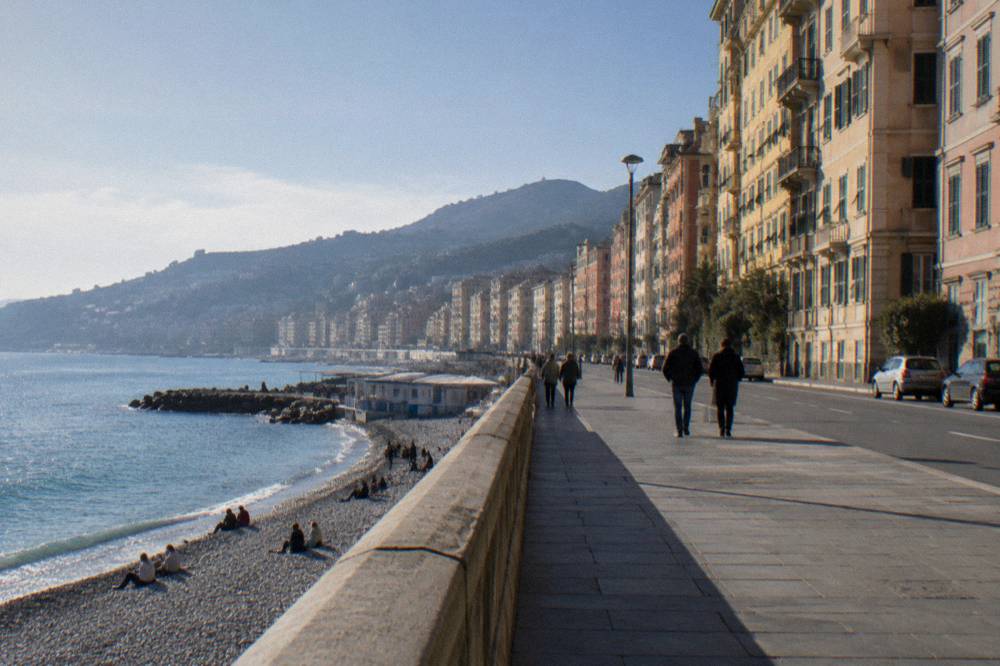
The promenade is lined with beach establishments and historic buildings from its early twentieth-century construction, according to the city tourism site, and at its western end it delivers Boccadasse: colourful houses, gozzi fishing boats, nets on a small beach, stone staircases and local eateries. The walk is the city's principal sea-level terrace over the Ligurian Sea, with the hills of the city rising directly behind it.
The tourism site's description is specific about the fabric of the promenade: the early twentieth-century date, the establishments along the water, the historic buildings behind. What the published sources do not do is name individual bars, beach clubs or restaurants, and this site does not add names of its own. The practical reading is that the promenade is a piece of urban coastline rather than a monument district, and its interest is the combination of the sea on one side and the architecture of Genoa's seaside expansion on the other. That expansion is part of the city's broader story: Genoa was a European Capital of Culture in 2004, shared with Lille, and its UNESCO inscription, "Genoa: Le Strade Nuove and the system of the Palazzi dei Rolli", covers 42 palaces on the Rolli lists of 1576, 1588, 1599, 1614 and 1664, all far inland of the seafront in the Palazzi dei Rolli district around Via Garibaldi.
For visitors building a route, the promenade pairs naturally with the harbour-side sights at the other end of the centre. The Porto Antico redevelopment by Renzo Piano for the 1992 Columbus Expo, described as such in the sources this site uses, sits on the old harbour, and the Aquarium of Genoa, opened in 1992 and open 365 days a year, anchors it. A day that takes in the harbour in the morning and the seafront in the afternoon covers the two faces of the city's relationship with the sea.
When Is The Best Weather For Walking Corso Italia?
The official 1971-2000 climate normals for Genoa Sestri show July and August mean daily highs of 27.3 and 27.7 C and January and February mean lows of 5.5 and 6.0 C, with October the month carrying the highest rainfall total at 171.3 mm and July the lowest at 24.2 mm. The promenade is walkable year-round on those numbers, with rain concentrated in autumn and winter.
The normals come from the Aeronautica Militare station at Genoa Sestri, the official station record for the city, and they describe a Mediterranean coastal regime: warm dry summers, mild winters, and a marked autumn rainfall peak. October's 171.3 mm is the highest monthly total of the year, with September at 136.4 mm and November at 108.8 mm, while summer months fall to between 24.2 and 69.3 mm. The annual precipitation total across the twelve months comes to 1079.2 mm, and the rain is not spread evenly: three autumn months carry more than a third of it.
| Month | Mean daily high C | Mean daily low C | Rain mm |
|---|---|---|---|
| Jan | 11.5 | 5.5 | 101.8 |
| Feb | 12.2 | 6.0 | 74.0 |
| Mar | 14.6 | 8.2 | 81.7 |
| Apr | 16.8 | 10.5 | 88.0 |
| May | 20.5 | 14.2 | 72.4 |
| Jun | 23.9 | 17.6 | 58.2 |
| Jul | 27.3 | 20.9 | 24.2 |
| Aug | 27.7 | 21.0 | 69.3 |
| Sep | 24.4 | 17.9 | 136.4 |
| Oct | 20.0 | 13.8 | 171.3 |
| Nov | 15.1 | 9.2 | 108.8 |
| Dec | 12.5 | 6.5 | 93.1 |
On those normals, even the January mean daily high sits above 11 C, which is the arithmetic behind the city's reputation as an all-season destination. The wind and the sea state on the exposed promenade are not in the station record, and this site prints no prediction about them: check the forecast before a walk in the rainier months.
How Does Corso Italia Fit Into A Day In Genoa?
A practical route uses the 2.00 EUR AMT ticket's 110-minute validity to bus out to Boccadasse, walk the 2.5 km promenade east to Foce, and return to the centre on foot or by bus, with the harbour sights at Porto Antico and the Aquarium of Genoa as the natural morning counterpart. The promenade lies about 4 km straight-line from Piazza De Ferrari, inside a single ordinary fare from the centre.
The order can be reversed with equal ease, and the promenade's flat profile is the reason it suits the end of a day spent in the steep lanes of the old town, which the tourism site describes as 113 hectares and one of the largest medieval historic centres in Europe. The contrast between the caruggi and the open seafront is one of the city's defining shifts of scale, and it takes a single bus ride to move between them. Visitors staying in the centre should also note the city's tourist tax when budgeting: the comune's 2026 rates run 2.00 EUR per person per night in one-star hotels, 2.50 EUR in two-star, 4.00 EUR in B&Bs and 2.00 EUR in hostels and campsites, charged on the first eight consecutive nights only.
Visitors with more than a day can extend along the coast. Nervi, about 9 km straight-line from Piazza De Ferrari, adds the Passeggiata Anita Garibaldi, a cliff-top pedestrian promenade of about 2 km from the harbour at Nervi to Capolungo, and the Parchi di Nervi, which cover 92,000 square metres between Via Aurelia and the sea and include a rose garden with more than 200 varieties. Further still, the boat and rail connections east toward Camogli, San Fruttuoso and Portofino are covered in this site's day-trip pages, and La Spezia marks the far side of that stretch of coast.
Is Corso Italia Good For Families And For Running?
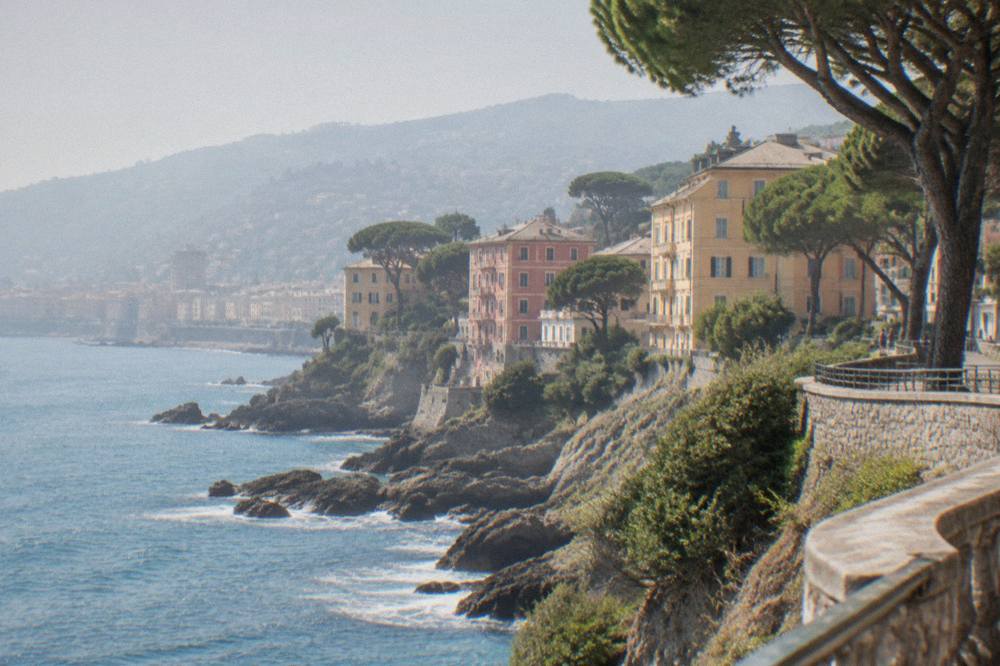
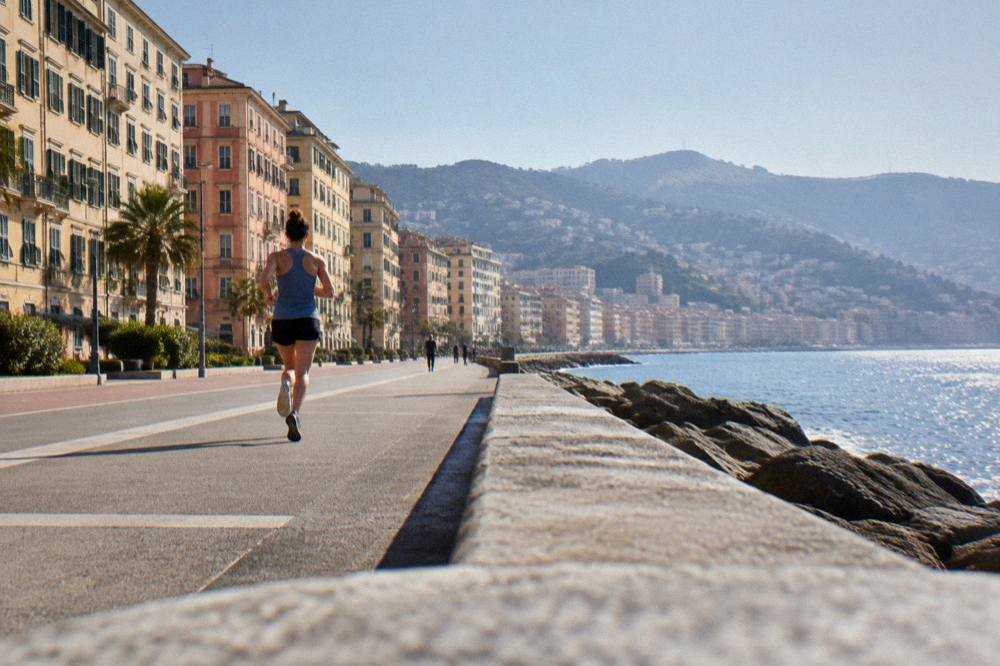
The promenade is a flat, traffic-free seafront terrace of about 2.5 km with beach establishments and historic buildings along it, and the public beach at its Boccadasse end offers free access points on pebbles and rocks, which together make it one of the few fully level family routes in a city built on hills. For runners it offers the same continuous 2.5 km surface with the sea alongside.
Genoa's vertical geography is the background here. The city rises from the shore into the Apennine foothills, and its public lifts and funiculars exist because of that rise: the Castelletto Levante lift climbs 57 m from Piazza Portello to the Spianata Castelletto, and the Zecca-Righi funicular runs daily from 06:40 to 24:00, both covered on the Spianata Castelletto and Zecca-Righi funicular pages. Against that backdrop, Corso Italia is the city's level ground, and families with pushchairs or visitors avoiding stairs have few alternatives of comparable length. The Sant'Anna funicular and the city's fourteen public lifts all charge 1.20 EUR a ride on the vertical ticket, a reminder of how much of Genoa's transport is devoted to going up rather than along.
For swimmers in the family, the ARPAL 2026 classes above are the deciding information: Boccadasse is classed poor and Nervi good, so the eastern end of the coast is the reported better bathing water in the city. For the wider set of family activities, the site's overview page at things to do in Genoa places the promenade among the city's principal sights.
Common Questions About Corso Italia In Genoa
How long is Corso Italia in Genoa?
Corso Italia runs about 2.5 km from the Foce area to Boccadasse, according to the city tourism site, which describes it as an early twentieth-century seaside promenade lined with beach establishments and historic buildings.
How do I get to Corso Italia from central Genoa?
AMT buses including lines 31, 42 and 606 connect the centre with the seafront, and the line 42 runs from the Dante and Casa di Colombo area to the De Gaspari stop at the Boccadasse end. An ordinary AMT ticket costs 2.00 EUR and is valid 110 minutes on the whole urban network.
Can you swim at Boccadasse?
There is a small public beach of pebbles and rocks with free access points, but ARPAL's 2026 bathing-water class for Boccadasse is reported as poor, while Nervi's is reported as good. Check the class for the exact sampling point before swimming.
Does Corso Italia continue to Nervi?
No, the promenade of about 2.5 km ends at Boccadasse. Nervi, about 9 km straight-line from Piazza De Ferrari, has its own cliff-top walk, the Passeggiata Anita Garibaldi, about 2 km from the Nervi harbour to Capolungo, reachable by train to Genoa Nervi station or by AMT bus.
Is Corso Italia flat?
Yes, the promenade is a level seafront terrace for its full length, which distinguishes it from the rest of a city that climbs steeply from the shore into the hills behind it.
When is the best time of year to walk Corso Italia?
The official 1971-2000 climate normals for Genoa Sestri show mean daily highs from 11.5 C in January to 27.7 C in August, with October the month of highest rainfall at 171.3 mm and July the lowest at 24.2 mm. The walk is feasible year-round on those figures; check the forecast in the autumn months.