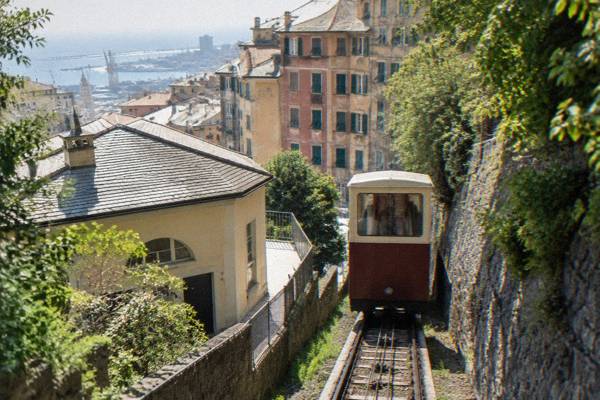
Zecca-Righi Funicular: From The Caruggi To The Forts
The Zecca-Righi funicular is Genoa's hill railway, running daily from 06:40 to 24:00 from the edge of the old town up to the Righi hill, with an ordinary AMT ticket at 2.00 EUR covering 110 minutes of travel.
Short answer
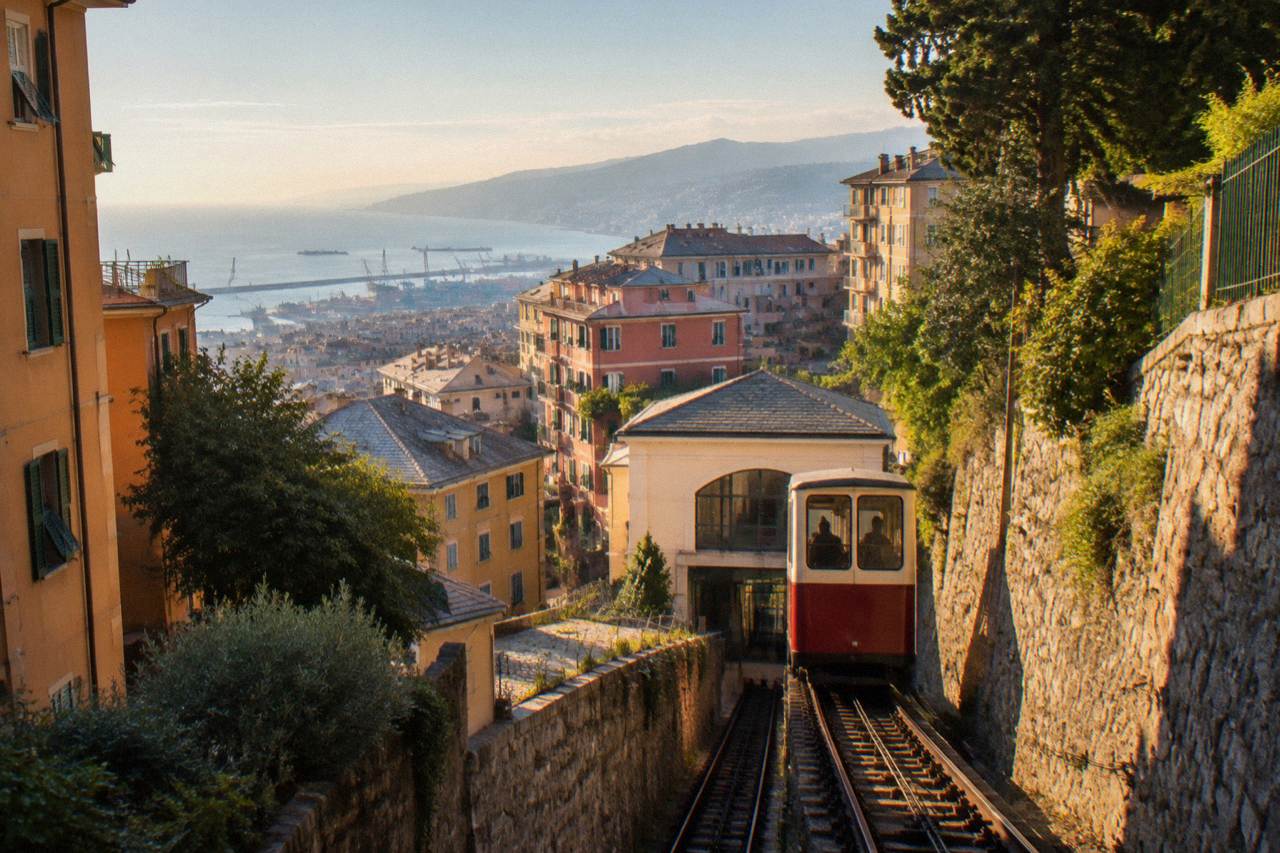
The Zecca-Righi funicular in Genoa runs daily from 06:40 to 24:00. An ordinary AMT ticket at 2.00 EUR is valid for 110 minutes across the whole urban network, and a single ride on the lifts or the Sant'Anna funicular costs 1.20 EUR. The line starts near Piazza De Ferrari, about 1.9 km away in a straight line, and climbs to the Righi hill.
Genoa is a coastal city in Liguria, north-west Italy, squeezed between the Ligurian Sea and the Apennine hills, and the Zecca-Righi funicular is the machine the city built to negotiate that vertical geography. The line runs daily from 06:40 to 24:00, according to the AMT Genova timetable pages, and it connects the lower town at the edge of the old town with the Righi hill above the city. An ordinary AMT ticket, at 2.00 EUR for 110 minutes of travel across the whole urban network, covers the ride. This guide lays out the hours, the fares, the stations the card constraints describe, and how to pair the funicular with the viewpoints and forts that sit at the top.
What Is The Zecca-Righi Funicular In Genoa?
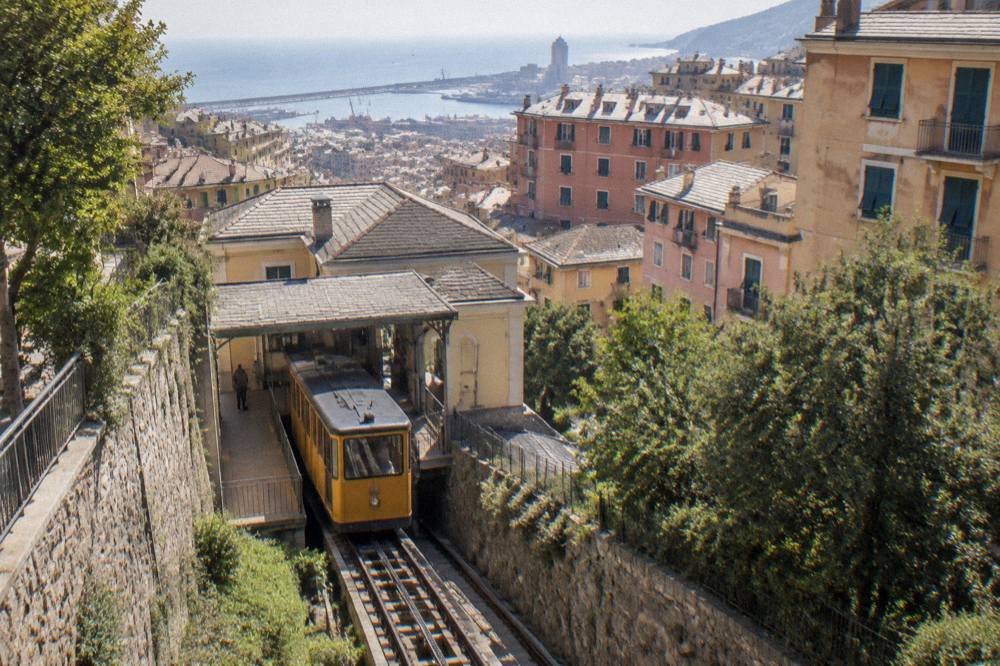
The Zecca-Righi funicular is Genoa's public hill railway, operated by AMT Genova, running daily from 06:40 to 24:00 between the lower town near the edge of the caruggi and the Righi hill above the city. The AMT funicular page describes a ride of about 12 minutes across seven stations, and the line is part of the ordinary urban fare system, so the standard 2.00 EUR ticket valid for 110 minutes applies, as does a 1.20 EUR vertical-transport single.
The funicular exists because of the shape of the city. Genoa's historic centre, which the tourism authority describes as one of the largest medieval historic centres in Europe at 113 hectares, sits at sea level, while the residential districts rise steeply behind it. Rather than a cable car built for sightseers, the Zecca-Righi line is commuter infrastructure that happens to deliver one of the most useful vertical journeys in the city. You board in the dense lower town and step out on the hill.
AMT Genova, the municipal transport operator, runs the funicular alongside a wider family of vertical transport: 14 public lifts across the city plus the Sant'Anna funicular. The whole set works on the same fare logic, which makes planning simple. One ticket type, the ordinary 110-minute ticket, covers the metro, buses and the Zecca-Righi funicular together, so a journey that mixes hill climbing and street level does not need separate purchases.
The lower station sits about 1.9 km from Piazza De Ferrari in a straight line, on the fringe of the old town and its caruggi. That position is what makes the line so practical for a visitor: it starts where the medieval lanes end and finishes where the hillside walks begin. The full picture of the city's slopes, from the port to the forts, is covered in things to do in Genoa.
What Are The Zecca-Righi Funicular Hours And Ticket Prices?
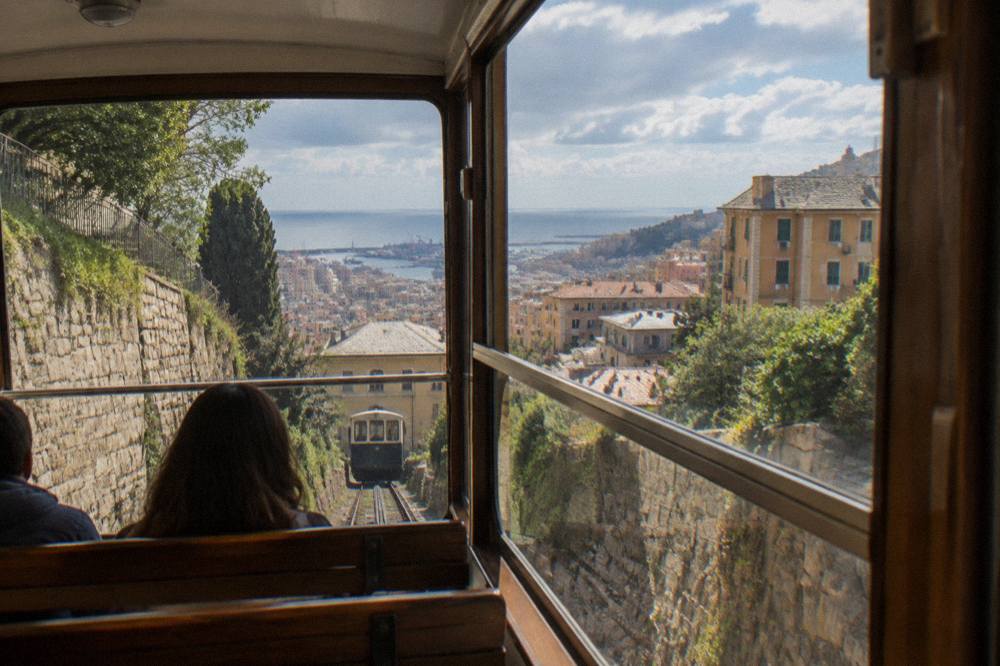
The Zecca-Righi funicular runs every day from 06:40 to 24:00. The ordinary AMT ticket costs 2.00 EUR and is valid for 110 minutes on the whole Città Metropolitana network; the integrated AMT and Trenitalia version costs 2.20 EUR; a single ride on the lifts or the Sant'Anna funicular costs 1.20 EUR; and the Met Daily 24-hour ticket at 10.00 EUR covers the full AMT network for a day.
Those figures come from the AMT Genova ticketing pages, and they are the only ones worth holding in your head. The funicular is not a separate fare world. It shares the urban tariff with the buses, the metro's eight stations from Brin to Brignole, and the public lifts, so a single 2.00 EUR ticket can carry you from a metro station to the funicular and back down again inside its 110-minute window.
| Ticket | Price | What it covers |
|---|---|---|
| Ordinary AMT ticket | 2.00 EUR | 110 minutes on the whole urban network, including the funicular |
| AMT + Trenitalia integrated | 2.20 EUR | 110 minutes, urban network plus limited Trenitalia sections |
| Vertical single (lifts, Sant'Anna funicular) | 1.20 EUR | One ride on a lift or the Sant'Anna funicular |
| 5-hour ticket | 5.00 EUR | Five hours of urban travel |
| Carnet of 11 tickets | 20.00 EUR | Eleven 110-minute tickets |
| Met Daily 24h | 10.00 EUR | Full AMT network for one day, including Volabus and line 782 |
Buying is straightforward. AMT sells tickets through its app, by SMS, through the ILA contactless system on board and at machines and retailers, and at Trenitalia offices for the integrated version. If you plan several rides in a day, the Met Daily at 10.00 EUR is the ceiling: it includes the airport Volabus service and line 782 to Portofino, which no ordinary ticket reaches. There is no single Volabus fare at all, the airport bus simply requires the Met Daily.
One pairing decision is worth making early. The Genoa Museum Card, at 24 EUR for 24 hours or 45 EUR for 48 hours in the 2026 rates, covers 28 city museums, but only the "+bus" card variants include urban transport, and none of them includes Volabus, the Navebus or trains. If your day is museums plus hills, check which variant you are buying before assuming the funicular is inside it.
Where Does The Zecca-Righi Funicular Start And Stop?
The funicular starts at its lower station about 1.9 km from Piazza De Ferrari in a straight line, at the edge of the old town, and climbs about 12 minutes across seven stations to the Righi hill, per the AMT Genova description of the line. At the top the line serves the hill district from which the walkable ridge toward the city's forts begins, connecting directly into the territory covered by the Parco delle Mura.
The lower end is the practical anchor. You arrive from the caruggi, the narrow lanes of the medieval centre, and the funicular takes over where the flat city gives out. The AMT page notes services running at intervals of roughly every 15 to 20 minutes at peak times, so the line behaves like a bus route in the sky rather than a scheduled attraction with fixed departure slots you must book.
At the summit, Righi is the gateway to the green belt above Genoa. The Parco delle Mura and the forts sit on the ridge, and the funicular is the car-free way to reach that walking country without first conquering the slope on foot. Hikers can read the longer routes in the hiking near Genoa guide; the funicular is the sensible start line for several of them.
How Does The Funicular Compare With The Castelletto Lift?
The Castelletto Levante lift climbs 57 m from Piazza Portello to the Spianata Castelletto and runs daily from 06:40 to 24:00, while the Zecca-Righi funicular climbs far higher, about 12 minutes across seven stations to the Righi hill. Both use the same tickets, the 2.00 EUR ordinary or the 1.20 EUR vertical single, and both keep the same daily hours, so the choice is about destination, not price or timetable.
Spianata Castelletto lies about 0.7 km from Piazza De Ferrari in a straight line, making the lift the short option: a quick ascent to one of the city's best-known viewpoints and back down again. The funicular, starting about 1.9 km out, is the commitment: it carries you the full height of the hillside to where the ridge walks and the fort country begin. The Spianata Castelletto page covers the terrace itself.
| Feature | Castelletto Levante lift | Zecca-Righi funicular |
|---|---|---|
| Vertical rise | 57 m | Full hillside to Righi |
| Stations | 2 (Piazza Portello to Spianata Castelletto) | 7 |
| Ride time | One short lift ride | About 12 minutes |
| Daily hours | 06:40 to 24:00 | 06:40 to 24:00 |
| Ordinary ticket | 2.00 EUR, 110 minutes | 2.00 EUR, 110 minutes |
| Vertical single | 1.20 EUR | 1.20 EUR |
| Straight-line distance from Piazza De Ferrari | Spianata about 0.7 km | Lower station about 1.9 km |
AMT runs 14 public lifts besides these two headline options, and the Sant'Anna funicular on the other side of the centre uses the same 1.20 EUR single. The vertical network as a whole is described on the AMT pages as lifts, two funiculars, the metro and the buses under one tariff, which is unusual for a city of Genoa's size and is the reason a single ordinary ticket goes so far here. The wider set of guides lives on Genoa Travel Guide.
The lifts and funiculars run the same hours for a reason: they are residential transport. The hill districts above the centre are home to thousands of Genoese who commute down each morning, so the 06:40 start and the midnight finish are working service hours. Treat the ride as commuting with a view and the practical questions answer themselves.
What Can You See From The Top At Righi?
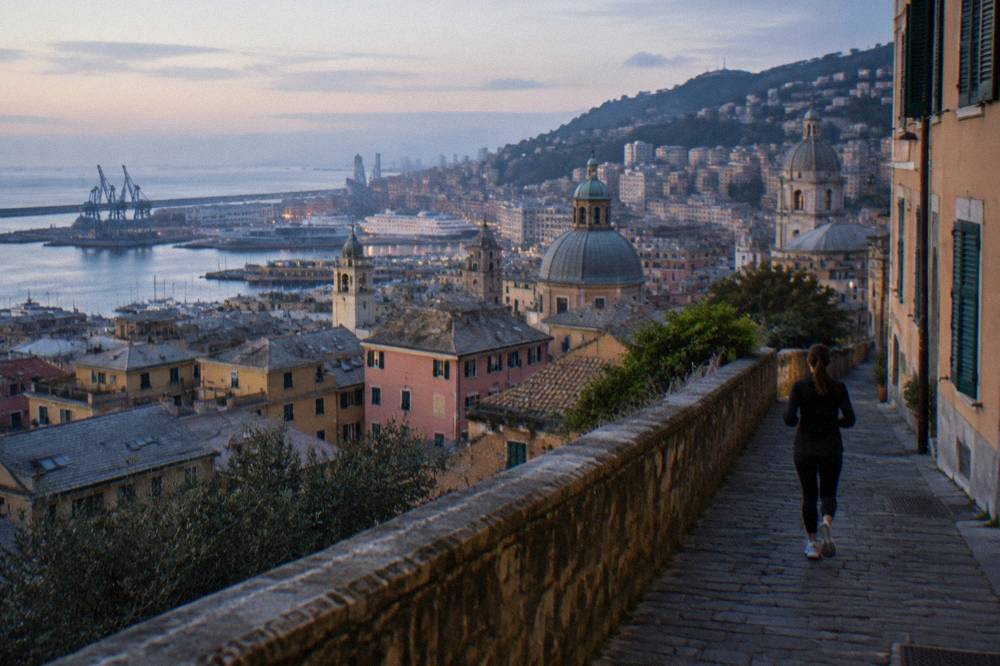
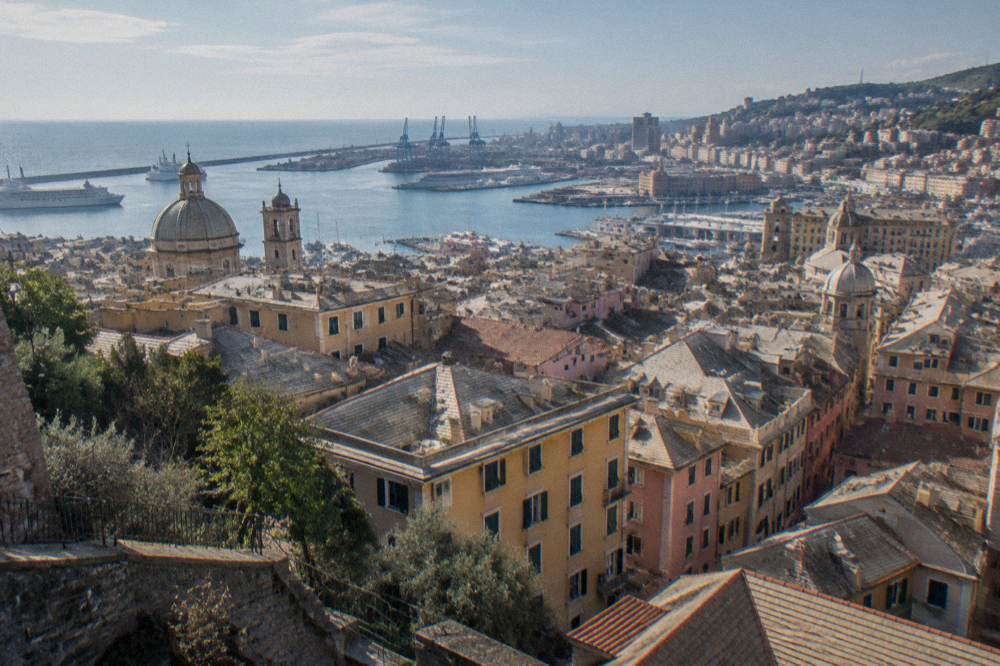
From the Righi hill the city opens below in a single frame: the red roofs of the 113-hectave historic centre, the Porto Antico and the port, the Lanterna lighthouse and, on clear days, the coastline stretching west and east along the Ligurian Sea. The funicular delivers you to the ridge where the Parco delle Mura and the forts begin, and the walk back down toward Spianata Castelletto is the classic descent.
The panorama from the top takes in the whole geography that defines Genoa: a narrow strip of city between the sea and the Apennine hills, with a working and ferry port running along the water. The Lanterna, built in 1128 and rebuilt in 1543, stands 117 m above the sea at the port's western edge and is billed as the tallest lighthouse in the Mediterranean. From Righi you look down on that whole spread rather than up at any single piece of it.
Below the viewpoint, the city's flat sights line up for the afternoon. The Piazza De Ferrari, the Cathedral of San Lorenzo and the Palazzi dei Rolli sit in a compact band between the funicular's lower station and the sea, which is why the standard advice is hills first, streets after: do the climb while the legs are fresh, then descend into the lanes.
How Does The Zecca-Righi Funicular Fit Into A Day In Genoa?
A workable day pairs the funicular with the flat sights either side of it: the old town lanes in the morning, the funicular up around midday, the ridge and viewpoints at the top, then the descent back into the historic centre for the afternoon. The ordinary 2.00 EUR ticket's 110-minute window will not span the whole day, so a Met Daily at 10.00 EUR is the simpler choice once you add buses or the metro to the plan.
The Genoa in one day itinerary follows exactly this logic, because the city's sights split cleanly by altitude. The lower band holds the caruggi, the Strade Nuove museums and the Porto Antico; the upper band holds Righi, Spianata Castelletto and the fort walks; and the funicular is the hinge between them. Doing the heights first also means you spend the warmer midday hours on the exposed ridge and the shaded lanes later.
For a first visit built around this route, a guided intro to the lanes you will descend into is a sound opener. The Segway tour of the caruggi covers the old town's lanes with a guide, and you can Check availability alongside the operator's listing before you lock the day's order. The guided walking tour of the historical centre is the on-foot equivalent for anyone who prefers to move at walking pace through the lanes.
| Part of the day | Place | Transport note |
|---|---|---|
| Morning | Old town caruggi and Strada Nuova museums | On foot; museums open daily 10:00 to 18:30 in the winter timetable, Mondays Palazzo Rosso only |
| Midday | Zecca-Righi funicular to Righi | 2.00 EUR ordinary ticket, 110 minutes |
| Early afternoon | Ridge walks and forts at the top | On foot from the upper station |
| Late afternoon | Descent and Spianata Castelletto | Lift or funicular, 1.20 EUR vertical single |
| Evening | Piazza De Ferrari and dinner | On foot or bus within the same ticket window |
What Should You Know About Weather And When To Ride?
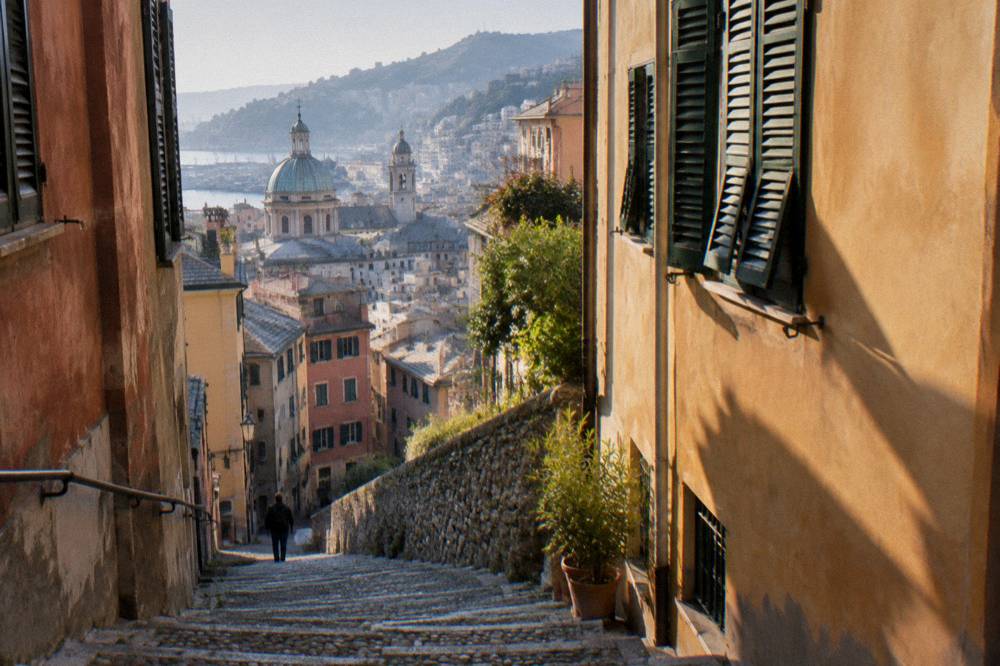
The official 1971-2000 climate normals for Genoa Sestri show why the funicular matters seasonally: January averages a high of 11.5 C and a low of 5.5 C, August a high of 27.7 C and a low of 21.0 C, and October carries the heaviest monthly rainfall at 171.3 mm against July's 24.2 mm. On rain days the funicular replaces the exposed ridge walks, and on hot days it replaces the climb itself.
The numbers come from the Aeronautica Militare's CLINO tables for the Genoa Sestri station, which sits at the airport about 7 km west of Piazza De Ferrari. They describe a mild Mediterranean coastal climate, but the rain totals concentrate hard in autumn: September averages 136.4 mm and October 171.3 mm, while July drops to 24.2 mm. The hillside paths above Righi are exposed country, and Staglieno's own notices show the city closes hill sites on weather alerts, so the funicular is the reliable half of any hill plan in the wet months.
| Month | Mean high C | Mean low C | Rain mm |
|---|---|---|---|
| January | 11.5 | 5.5 | 101.8 |
| April | 16.8 | 10.5 | 88.0 |
| July | 27.3 | 20.9 | 24.2 |
| August | 27.7 | 21.0 | 69.3 |
| October | 20.0 | 13.8 | 171.3 |
In summer the arithmetic favours the funicular for a simpler reason: the alternative is a long ascent on foot under a sun that pushes the August mean high to 27.7 C. The ride takes about 12 minutes. The hours help too, since the 06:40 to 24:00 service spans everything from a morning departure to an evening ride up for the view after dinner, all inside the ordinary ticket.
What Else Is Near The Zecca-Righi Funicular In Genoa?
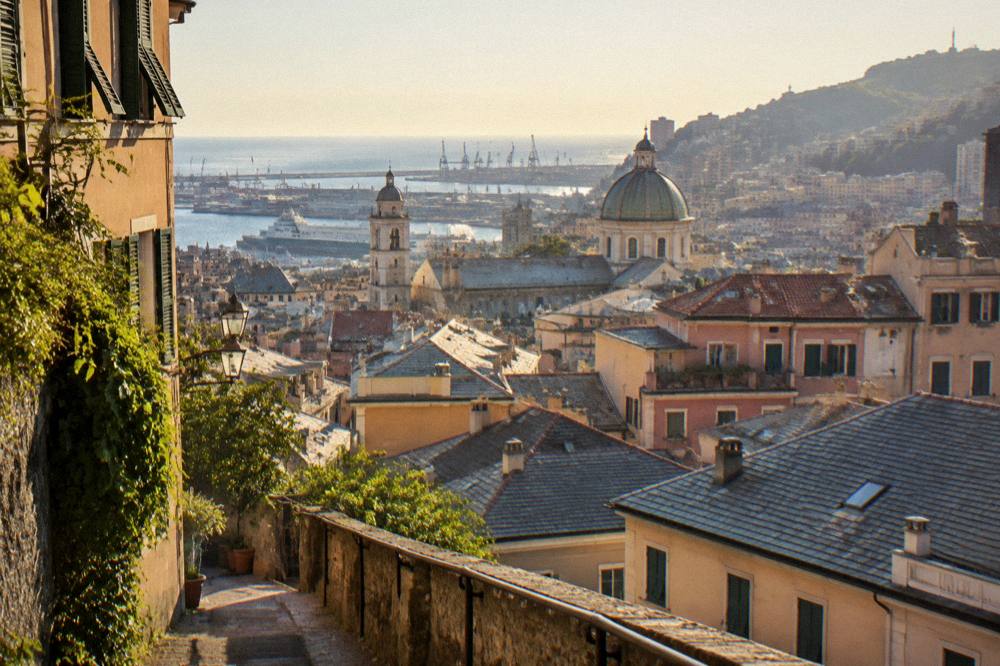
Within the ordinary ticket's 110-minute window you can pair the funicular with the Spianata Castelletto lift, the metro from De Ferrari or Principe, and the buses along the lower town, reaching the Porto Antico, the Aquarium and the Strade Nuove museums from the hill without buying another ride. The funicular's lower station sits about 1.9 km from Piazza De Ferrari in a straight line, with Spianata Castelletto about 0.7 km out and the Aquarium of Genoa at the harbour beyond that.
The neighbourhood logic works outward from the base. The Via Garibaldi and the Musei di Strada Nuova lie in the band between the funicular and the sea, as do the Palazzo Ducale and the cathedral. The Porto Antico, redeveloped by Renzo Piano for the 1992 Columbus Expo, holds the Aquarium of Genoa, which is open 365 days a year with fixed-date adult tickets starting from 26.00 EUR according to its own ticket page.
If the hill has earned your whole afternoon, the alternatives are the forts or the descent. The Parco delle Mura and the forts occupy the ridge above Righi, and the walking routes between them are set out in the hiking near Genoa guide. Down at sea level, the Piazza De Ferrari is the natural re-entry point to the flat city, with the old town caruggi spreading from its edge.
| Sight | Straight-line distance from Piazza De Ferrari | Relation to the funicular |
|---|---|---|
| Spianata Castelletto | About 0.7 km | Reached by the Castelletto lift or the descent from Righi |
| Zecca-Righi lower station | About 1.9 km | The base of the climb, at the edge of the old town |
| Porto Antico and the Aquarium | Harbour, flat city below | Metro or bus from the lower town, same ordinary ticket |
| Parco delle Mura and the forts | Ridge above Righi | On foot from the upper station |
| Genova Cristoforo Colombo Airport | About 7 km | Volabus requires the 10.00 EUR Met Daily |
Is The Zecca-Righi Funicular Worth It For Visitors?
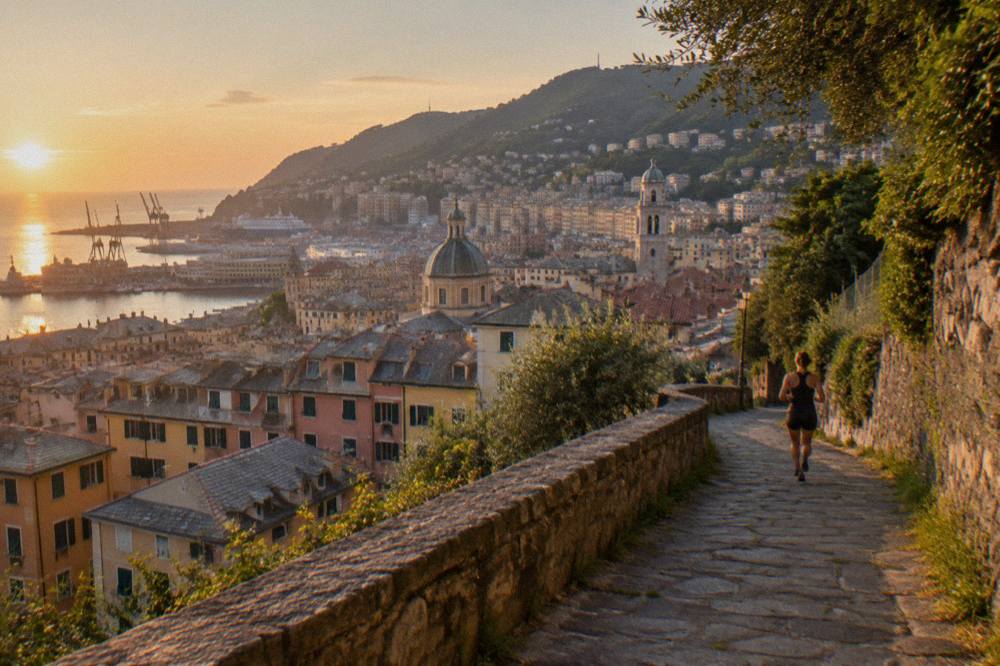
Yes, because it is the cheapest big view in Genoa: 2.00 EUR buys a 110-minute ticket that includes a roughly 12-minute, seven-station climb from the edge of the old town to the Righi hill, running daily from 06:40 to 24:00. No other single ride in the city moves you that far vertically, and the same ticket keeps working on the buses, the metro and the Castelletto lift afterward.
The comparison that matters is with walking the same ground. The historic centre's lanes are flat, but everything behind them climbs, and the ridge country above Righi is a serious slope. The funicular converts that ascent into a quarter of an hour, which changes what a single day can hold: hills in the morning, museums in the afternoon, and the harbour in the evening, all on one or two ordinary tickets or a single Met Daily.
For anyone assembling a first visit, the practical sequence is the one this page has followed: arrive through the caruggi, ride up, walk the ridge, come down at Spianata Castelletto, and finish in the flat city. The full order of sights is in things to do in Genoa, and the Genoa in one day itinerary sets it out hour by hour. The funicular is the one piece of transport in that plan you will remember as an attraction in its own right.
Common Questions About The Zecca-Righi Funicular
How much does the Zecca-Righi funicular cost?
The ordinary AMT ticket costs 2.00 EUR and is valid for 110 minutes on the whole urban network, including the funicular. A single ride on the lifts or the Sant'Anna funicular costs 1.20 EUR, and the Met Daily 24-hour ticket at 10.00 EUR covers the full AMT network for a day.
What are the Zecca-Righi funicular hours?
The funicular runs daily from 06:40 to 24:00, per the AMT Genova timetable pages. The Castelletto Levante lift keeps the same daily hours.
Where does the Zecca-Righi funicular start?
The lower station sits about 1.9 km from Piazza De Ferrari in a straight line, at the edge of the old town and its caruggi. The line climbs about 12 minutes across seven stations to the Righi hill.
Is the Zecca-Righi funicular included in the Genoa Museum Card?
Only the "+bus" card variants include urban transport; the standard 24-hour card at 24 EUR and 48-hour card at 45 EUR in the 2026 rates cover 28 city museums but not the transport network. No card variant includes Volabus, the Navebus or trains.
Can I reach the forts of Genoa from the funicular?
Yes. The upper station at Righi is the starting point for the walkable ridge toward the Parco delle Mura and the forts, described in the hiking near Genoa guide on this site.
Does the funicular run in the rain?
The service runs daily from 06:40 to 24:00, but October averages 171.3 mm of rain in the official 1971-2000 normals for Genoa Sestri, and the city closes hill sites on weather alerts, so check conditions before planning the ridge walks at the top.
What is the difference between the funicular and the Castelletto lift?
The Castelletto Levante lift climbs 57 m from Piazza Portello to the Spianata Castelletto, while the funicular climbs the full hillside to Righi across seven stations. Both run daily from 06:40 to 24:00 and both take the same tickets.