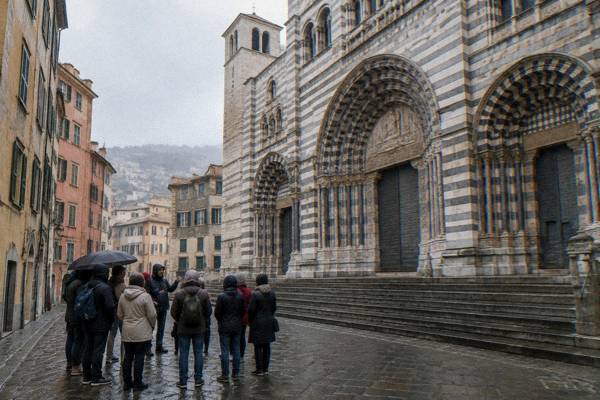
Genoa Old Town: The Caruggi, Squares And Where They Lead
The Genoa old town is one of the largest medieval historic centres in Europe: 113 hectares of narrow caruggi lanes running inland from the port to the UNESCO palaces of the Strade Nuove.
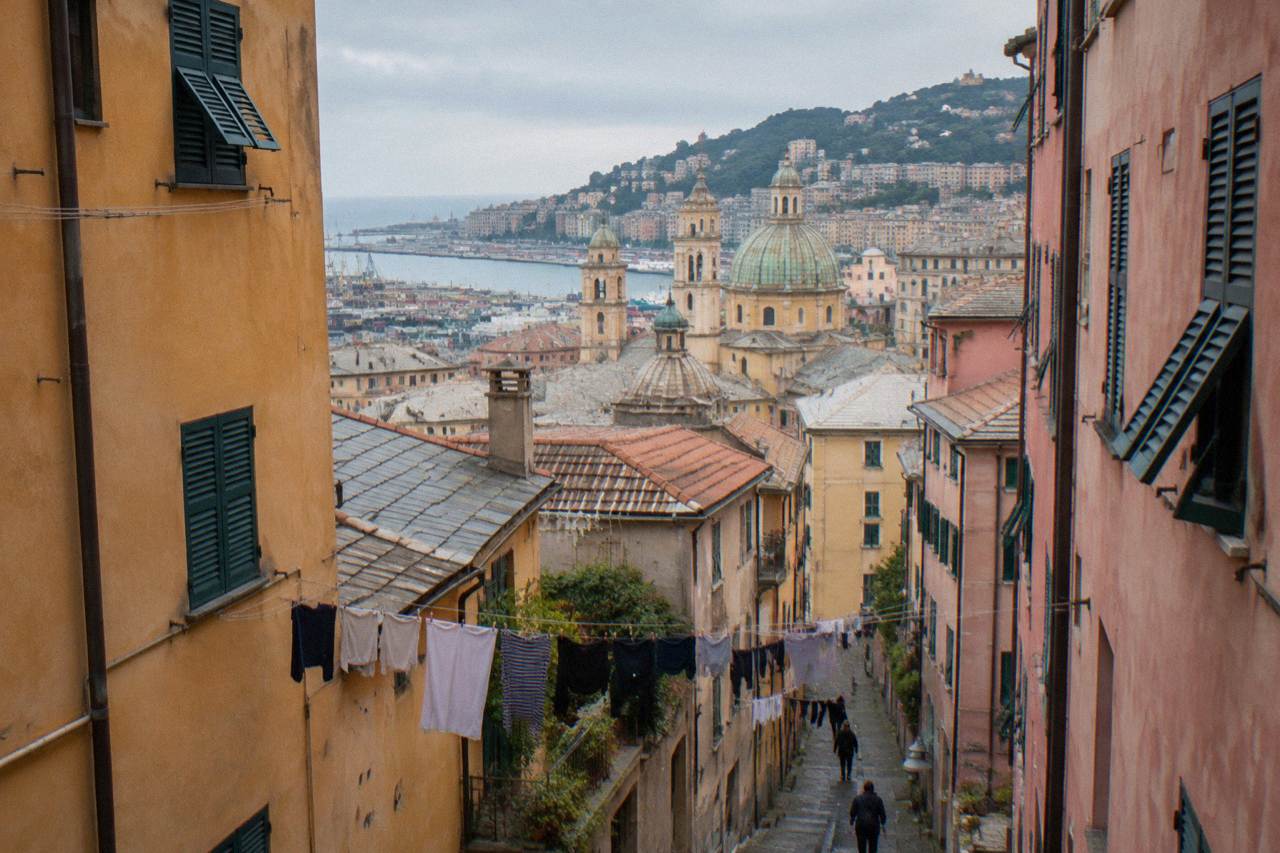
Short answer
The Genoa old town is a 113-hectare medieval quarter between the Porto Antico and the Strade Nuove, best seen on foot from Piazza De Ferrari or Genova Piazza Principe, with an AMT ticket at 2.00 EUR for 110 minutes and the main museums covered by the 24 EUR Genoa Museum Card.
The Genoa old town is a 113-hectare medieval quarter squeezed between the port and the first slopes of the Apennine hills, and the city's own tourism office describes it as one of the largest medieval historic centres in Europe. Its fabric is the caruggi, the narrow lanes that run in a dense grid from the sea inland, cross-cut by smaller alleys and opening without warning into small squares. This page maps the quarter: which lanes matter, what the squares lead to, how the UNESCO palaces of the Strade Nuove sit on its western edge, and what tickets, transport and day plans cost in figures that come straight from the operators and the city.

What Is The Genoa Old Town And What Are The Caruggi?
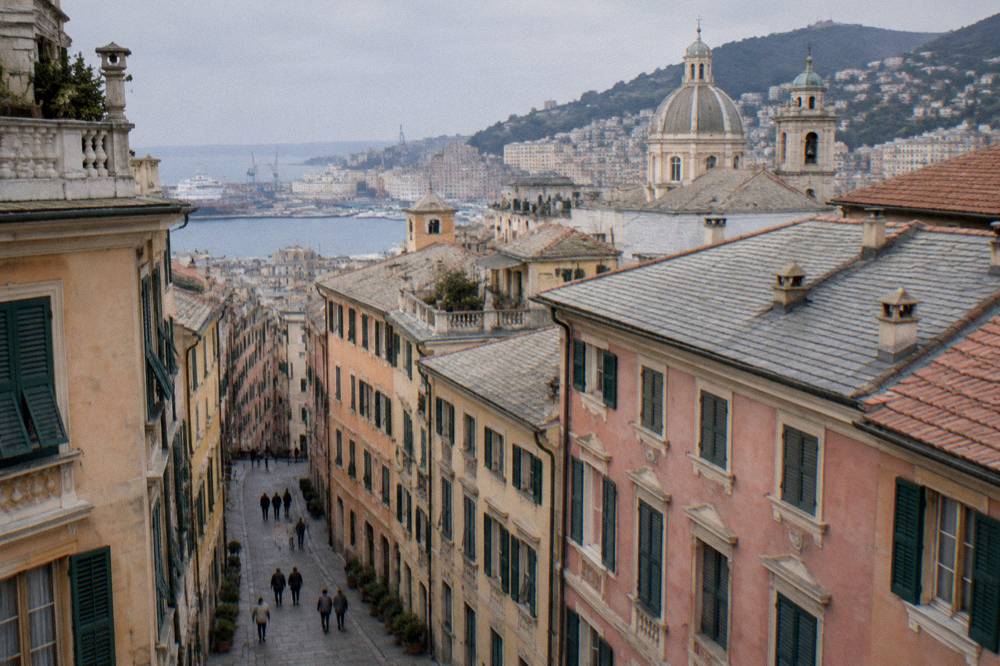
The Genoa old town is the medieval historic centre of Genoa, a coastal city in Liguria on the Ligurian Sea, covering 113 hectares between the Porto Antico and the Strade Nuove, and the caruggi are its narrow lanes, running in a dense grid that was laid out long before the Republic of Genoa came to an end in 1797. The word covers both the wider through-lanes and the tight cross-alleys, and the whole network is pedestrian in practice: it grew when the city was a merchant republic whose wealth came from the sea, and the lanes were cut for foot traffic and loaded mules, not for cars.
The quarter's geography is simple once you see it. The sea is one edge, marked by the Porto Antico with the Aquarium and the Bigo lift. The eastern edge sits near Piazza De Ferrari and Via XX Settembre, the artery that runs out toward the Foce quarter and Corso Italia. The western edge is Genova Piazza Principe station and Via Balbi, and above it all the hills rise steeply, served by public lifts and the Zecca-Righi funicular, which runs daily from 06:40 to 24:00.
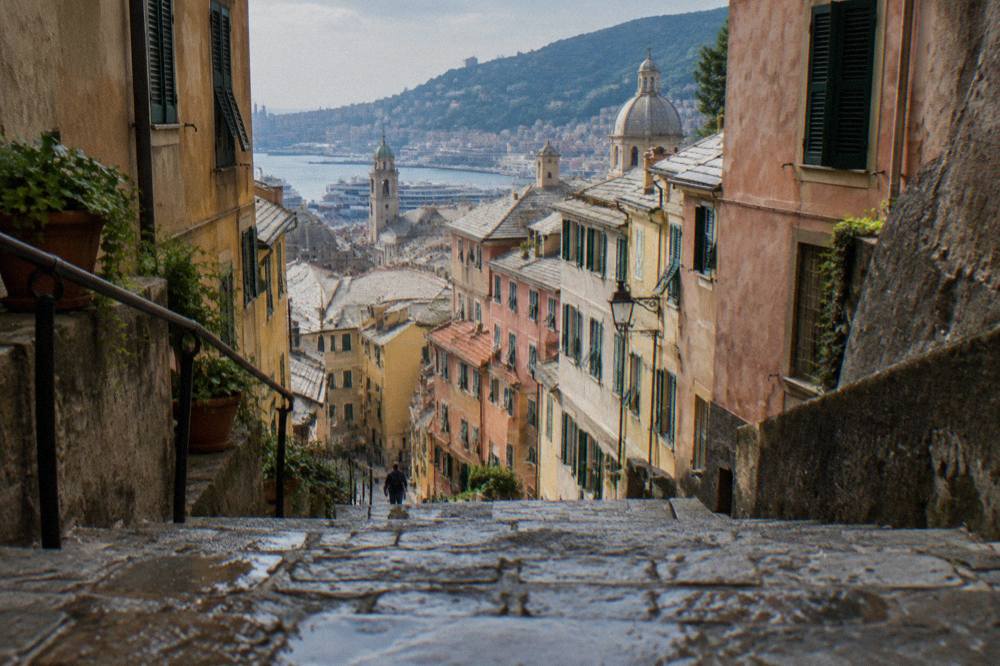
Genoa is famously vertical, and the old town is where that shows first. The grid of lanes runs flat near the water, then breaks into stairways that climb toward Spianata Castelletto and the ring of walls above the city. You can cross the whole quarter on foot, but the climbs are real, and the lifts exist for a reason: a single ride on a public lift or the Sant'Anna funicular costs 1.20 EUR on the AMT fare table.
The quarter's weight in the city's story is hard to overstate. The Republic of Genoa lasted as a political body until 1797, and the palaces of its merchant families line the edges of this grid, on the Strade Nuove inscribed by UNESCO in 2006 as "Genoa: Le Strade Nuove and the system of the Palazzi dei Rolli", with 42 palaces on the property. The old town is not a museum piece beside that: it is the working centre the palaces were built to serve.
Where Do The Main Squares Of The Genoa Old Town Lead?
The old town's main squares each act as a gateway: Piazza De Ferrari at the eastern edge, next to Palazzo Ducale and the Cathedral of San Lorenzo's quarter; Piazza San Lorenzo in front of the cathedral itself; and the squares along the port side, which open onto the Porto Antico and the Aquarium, each one releasing you into a different part of the lane grid. Moving square to square is the simplest way to navigate a quarter where street names matter less than direction.
Piazza De Ferrari is the practical hinge. The fountain square sits where the old town meets Via XX Settembre, and from it the lanes drop toward the port in one direction and toward Palazzo Ducale in another. The Palazzo Ducale runs an exhibition programme through 2026 that includes World Press Photo to 8 December 2026 and a show of Renoir, Monet, Toulouse-Lautrec and Cézanne from 15 October 2026. The Cathedral of San Lorenzo stands a short lane inland, and its treasury museum keeps hours of 09:00 to 12:00 and 15:00 to 18:00, Monday to Saturday, closed Sunday.
On the port side, the lane grid spills straight into the Porto Antico, the old harbour redeveloped by Renzo Piano for the 1992 Columbus Expo, where the Aquarium of Genoa, the Biosfera and the Bigo panoramic lift now stand. The Aquarium is open 365 days a year, with fixed-date adult tickets from 26.00 EUR and a combined Aquarium, Biosfera and Bigo ticket from 37.00 EUR for an adult, per the Aquarium's own ticket page. Prices are dynamic, so the from-figure is exactly that, a floor.
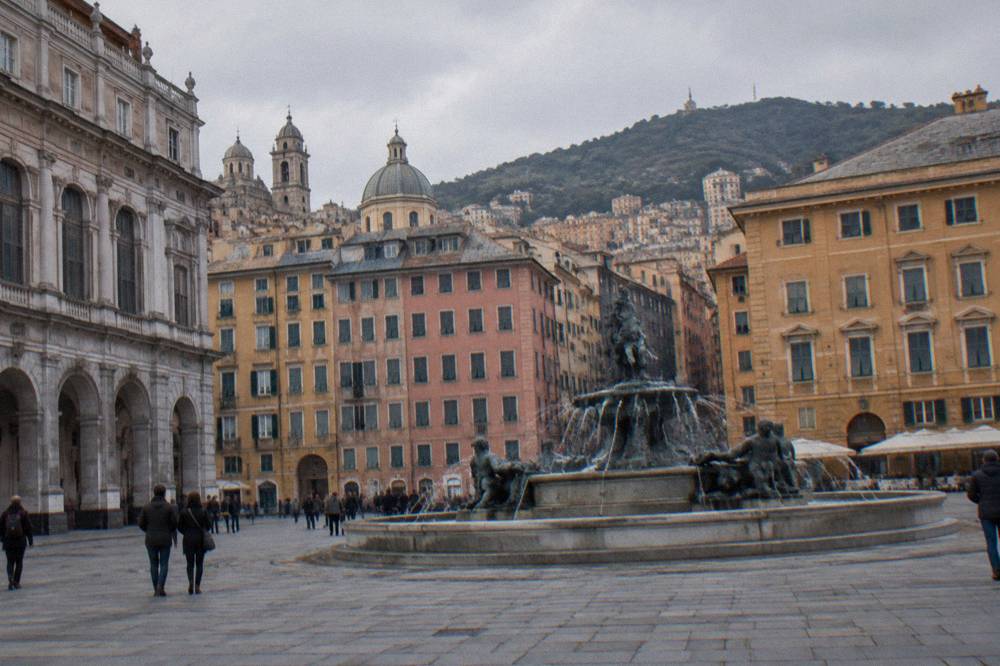
The squares are also where the quarter's events concentrate. The autumn 2026 Rolli Days ran from Friday 16 to Sunday 18 October 2026 with free entry to palaces that normally stand closed, booking required at most of them, under the theme "Abitare il cambiamento", which marked twenty years since the 2006 UNESCO inscription. The Festival della Scienza followed from Thursday 22 October to Sunday 1 November 2026 with the keyword "Prospettive". Both are annual fixtures; visitors should check the official websites for the dates of future editions.
A useful orientation trick: the lanes run roughly east to west, parallel to the sea, and the stairways and smaller caruggi run north to south, up the hill. If you are lost, drop downhill toward the water and you will reach either the port side or Corso Italia depending on how far east you drifted.
What Should You See Inside The Caruggi Themselves?
Inside the lane grid the sights that hold up are the Cathedral of San Lorenzo, the Casa di Colombo, where Christopher Columbus lived from 1455 to 1470, the Museo di Sant'Agostino, and the tangled lanes around them, plus the Galata Museo del Mare on the port edge, open 10:00 to 19:00 with 12,000 square metres over five levels and 31 rooms. The caruggi are less a list of stops than a fabric you move through, but a few anchors keep the walk honest.
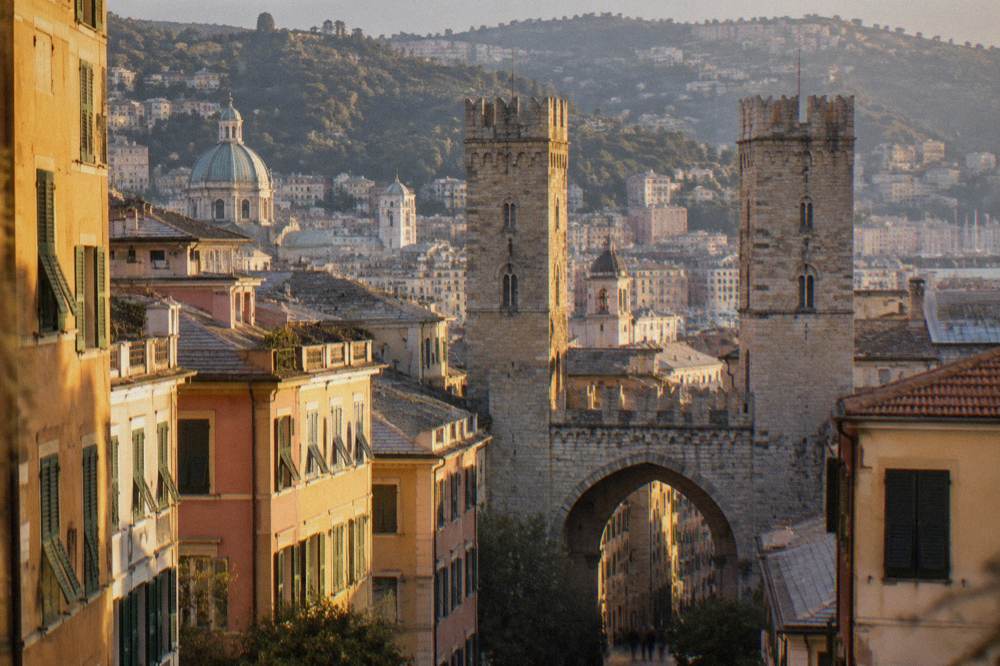
The Casa di Colombo is claimed as the house where Columbus lived as a boy: his family moved there in 1455, when he was four, and he lived there until about 1470. The building you see is a reconstruction on the original site, standing beside the cloister of Sant'Andrea and the towers of Porta Soprana, one of the surviving medieval gates in the city walls. It sits at the eastern edge of the grid, a short lane from Piazza De Ferrari.
The Museo di Sant'Agostino matters for a practical reason as well as a cultural one: its ticket is combined with the Strada Nuova museums, at 14.00 EUR full and 9.00 EUR reduced for Palazzo Rosso, Palazzo Bianco, Palazzo Doria-Tursi and Sant'Agostino together. That combined route is one of the cheapest structured ways to see both the lane grid's museum and the palace strip in a single ticket.
At Palazzo Doria-Tursi, one of the three Strada Nuova palaces, the Paganini rooms hold the violin called "Il Cannone", built in Cremona in 1743 by Bartolomeo Giuseppe Guarneri and left to the city by the violinist. It is the single most famous object inside the museums on the old town's western edge, and it is included in the standard museum route.
For the port-side anchor, the Galata Museo del Mare covers the city's sea history across five levels, and its own site lists hours of 10:00 to 19:00. Ticket prices are on the museum's booking pages; buy there rather than trusting any figure in a guide, including this one. The same rule applies to the Lanterna, the lighthouse built in 1128 and rebuilt in 1543, standing 117 m above the sea on its rock and billed as the tallest lighthouse in the Mediterranean: its opening schedule is published on its own site.
A guided route earns its price in this quarter specifically because the grid defeats signage. The Genoa walking tours on this site cover the caruggi and the sights above, and the related tour on this page walks four of the UNESCO-listed Rolli palaces with a guide. Details, prices and review scores render on its own page: Check availability.
Prefer to set your own pace through the lanes? Book a self-guided audio tour here.
How Do The Palazzi Dei Rolli Meet The Old Town?
The Palazzi dei Rolli line the Strade Nuove, the Renaissance streets on the old town's western edge, and they were ranked on public lists in 1576, 1588, 1599, 1614 and 1664 to decide which palace hosted a state visit; UNESCO inscribed 42 of them in 2006 as one property together with the streets themselves. Via Garibaldi is the central one of these streets, and it is the sharpest contrast in Genoa: the lanes narrow to their tightest, then a palace frontage opens full width.
The three palaces of the Musei di Strada Nuova, Palazzo Rosso, Palazzo Bianco and Palazzo Doria-Tursi, run on the winter timetable from 28 September 2026 to 18 April 2027: open daily 10:00 to 18:30, but on Mondays only Palazzo Rosso can be visited. They close on red weather alerts, which matters in a city where October brings 171.3 mm of rain in the official 1971-2000 normals for Genoa Sestri. The full Rolli system spreads far beyond the three museum palaces, and most of it is visible only from the street except during events such as the Rolli Days.
The Genoa Museum Card is the arithmetic that ties the quarter together. The 2026 rates are 24 EUR for 24 hours and 45 EUR for 48 hours, and the card covers 28 city museums, 19 municipal plus 9 others. Only the "+bus" card variants include AMT buses, and no variant covers Volabus, Navebus or trains, so read the conditions before assuming transport is bundled in. More of these guides are collected on Genoa Travel Guide.
| Ticket | Price | What it covers |
|---|---|---|
| Musei di Strada Nuova combined with Sant'Agostino | 14.00 EUR full, 9.00 EUR reduced | Palazzo Rosso, Palazzo Bianco, Palazzo Doria-Tursi, Museo di Sant'Agostino |
| Genoa Museum Card 24 hours | 24 EUR | 28 city museums (19 municipal, 9 others) |
| Genoa Museum Card 48 hours | 45 EUR | Same 28 museums over two days |
| Aquarium of Genoa, fixed date | from 26.00 EUR adult | Dynamic pricing; children 4 to 12 from 16.00 EUR, under 4 free |
| Aquarium, Biosfera and Bigo combined | from 37.00 EUR adult | All three Porto Antico sights on one ticket |
What And Where To Eat Around The Caruggi?
The foods the old town is built around are pesto genovese, made with Basilico Genovese PDO basil, focaccia, farinata, trofie and pansoti, and the quarter's market and lane-side shops are where those base ingredients are sold, while the focaccia di Recco IGP, protected since 2015 and made only in Recco, Camogli, Sori and Avegno, belongs to the coast to the east rather than the city centre. The food of this quarter is simple, cheap by nature and hard to fake, which is why a food walk is one of the more reliable tours in Genoa.
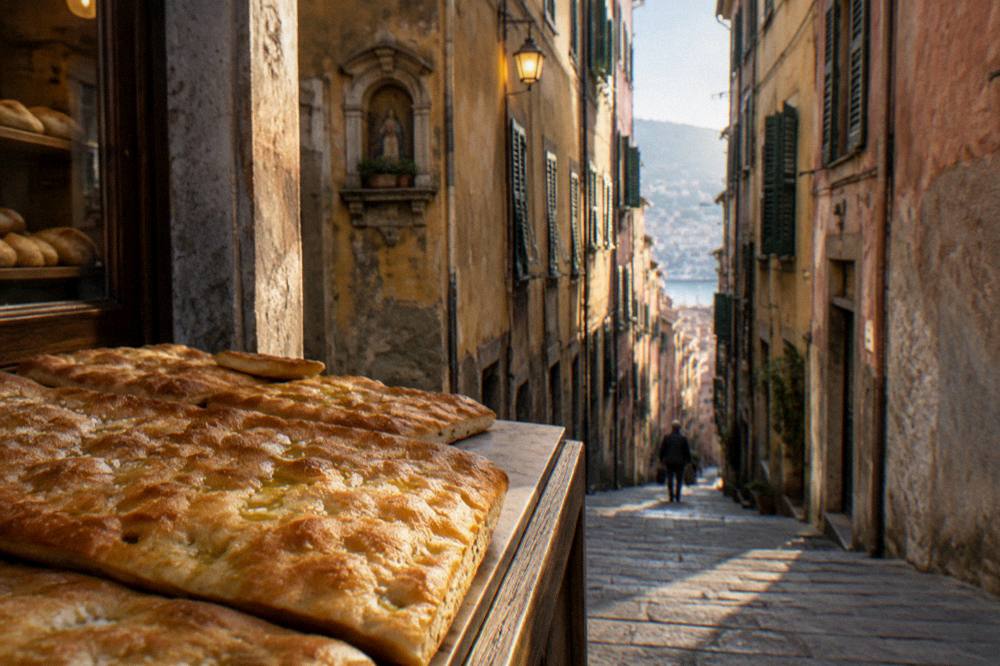
Pesto genovese has a protected ingredient at its core: the basil that carries the Basilico Genovese PDO label, grown in the Ligurian growing area. Trofie are the twisted pasta traditionally dressed with it, and pansoti the filled pasta served with a walnut sauce. Farinata is a chickpea pancake baked in a wood oven, and focaccia genovese, the oily, salt-crusted flatbread, is the city's everyday bread. Individual shop and restaurant names change hands and hours too often for any static list to stay true, so this site names dishes rather than doors.
The food tours in the roster handle the door-to-door part: one runs as a small-group tour with a full meal, another as a food and wine tasting walk, and a street food walking tour covers the lane grid over a longer route. What each one costs and how it is rated renders on the tour cards on this site rather than in prose here. Cooking classes are the other route in: several pesto and pasta classes in the roster run inside the city, including rooftop and garden lessons.
For self-guided eating, the rule that holds in the caruggi is the rule that holds across Italy: order what the counter is holding, not what a translation app suggests, and expect the day's market to set the menu. The Mercato Orientale sits just outside the eastern edge of the grid near Via XX Settembre, and the coast's fish comes through the port a few lanes away, which is why anchovies and small bluefish anchor so much of the local cooking.
How Do You Get To And Around The Genoa Old Town?
You reach the old town on foot from Genova Piazza Principe station on its western edge or from Piazza De Ferrari on its eastern edge, and once inside it you walk: the AMT ordinary ticket costs 2.00 EUR and is valid 110 minutes on the whole metropolitan network, the Met Daily 24-hour ticket costs 10.00 EUR, and a single ride on a lift or the Sant'Anna funicular costs 1.20 EUR. Cars are a poor fit: the historic centre and neighbouring zones are ZTL limited-traffic areas under a city regulation updated in 2025.
The metro skims the quarter's edge, running 7 km from Brin to Brignole with eight stations including Principe, Darsena, San Giorgio, Sant'Agostino, De Ferrari and Brignole. Extensions to Canepari and Martinez are not open in October 2026: Canepari is reported as targeted forJune 2027 and Martinez for December 2028, per progress reports on the works. The practical read is that the stations that exist already frame the old town at both ends.
| AMT ticket | Price | Validity |
|---|---|---|
| Ordinary single | 2.00 EUR | 110 minutes, whole metropolitan network |
| AMT and Trenitalia integrated | 2.20 EUR | 110 minutes including limited Trenitalia travel |
| 5-hour ticket | 5.00 EUR | Five hours on the network |
| Carnet, 11 tickets | 20.00 EUR | Eleven 110-minute tickets |
| Met Daily | 10.00 EUR | 24 hours, full network including Volabus and line 782 |
| Lift or Sant'Anna funicular, single ride | 1.20 EUR | One ride |
From the airport, Volabus connects Genova Cristoforo Colombo to Principe, De Ferrari and Brignole in about 30 minutes, and there is no separate Volabus fare: it requires the 10.00 EUR Met Daily ticket. A taxi from the airport to the centre is a fixed 25 EUR per car, 30 EUR for more than four people, with 2 EUR added at night and on holidays, per the airport's own ground-transport page. Straight-line, the airport sits about 7 km west of Piazza De Ferrari.
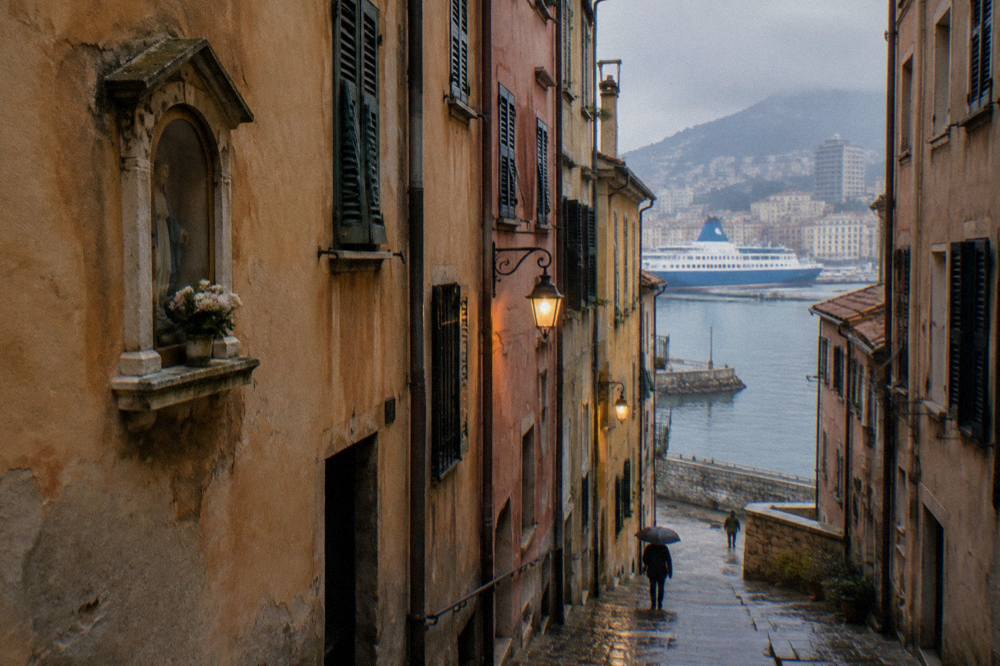
Cruise passengers land close: the Stazione Marittima terminals at Ponte dei Mille and Andrea Doria stand beside the Porto Antico end of the grid, and the port's own figures put cruise passengers at 2.4 million and ferry passengers at 2.6 million a year. If you arrive that way, the walk into the caruggi starts at the harbour, not at a station. Day-trip distances are straight-line from Piazza De Ferrari, and the coast runs one way while Milan, Turin and Nice sit the other:
| Place | Straight-line distance from Piazza De Ferrari |
|---|---|
| Boccadasse | about 4 km |
| Nervi | about 9 km |
| Pegli | about 10 km |
| Camogli | about 18 km |
| San Fruttuoso | about 22 km |
| Santa Margherita Ligure | about 24 km |
| Portofino | about 25 km |
| Cinque Terre | about 67 km |
For luggage, storage services operate near Principe and Brignole, and the luggage storage guide on this site covers the options. The Zecca-Righi funicular and the Castelletto Levante lift both run daily 06:40 to 24:00, which is the comfortable way to reach the viewpoints above the grid without the stairways.
Can You See The Genoa Old Town In One Day?
One full day covers the lane grid, the Cathedral of San Lorenzo, one palace cluster on the Strade Nuova and the Porto Antico, while two days add the Galata Museo del Mare, the museums at a slower pace and a half-day out to Boccadasse or the coast; the itineraries on this site split exactly that way, and the limiting factor is museum hours rather than distances, because the whole quarter is walkable end to end. A single day asks you to choose between depth and breadth.
A workable one-day shape: start at Genova Piazza Principe, walk Via Balbi into the grid, cross the caruggi to the Cathedral of San Lorenzo and Piazza De Ferrari, then return west along Via Garibaldi for the Musei di Strada Nuova, and finish at the Porto Antico. The one-day itinerary and the two-day itinerary on this site give the fuller sequences. Weather is worth checking in autumn: the official 1971-2000 normals for Genoa Sestri put October at 171.3 mm of rain against July's 24.2 mm.
| Month | Mean daily high | Mean daily low | Rain |
|---|---|---|---|
| January | 11.5 C | 5.5 C | 101.8 mm |
| April | 16.8 C | 10.5 C | 88.0 mm |
| July | 27.3 C | 20.9 C | 24.2 mm |
| October | 20.0 C | 13.8 C | 171.3 mm |
Source for the table: the official Aeronautica Militare CLINO 1971-2000 normals for the Genoa Sestri station, which is the only temperature and rainfall series this site quotes.
For planning around events, the fixed points in the city's calendar are the Salone Nautico, which ran 1 to 6 October 2026 and returns 30 September to 5 October 2027, and the Festival della Scienza, which ran 22 October to 1 November 2026. Rolli Days ran twice in 2026, with the autumn edition on 16 to 18 October. The next Euroflora is in 2028.
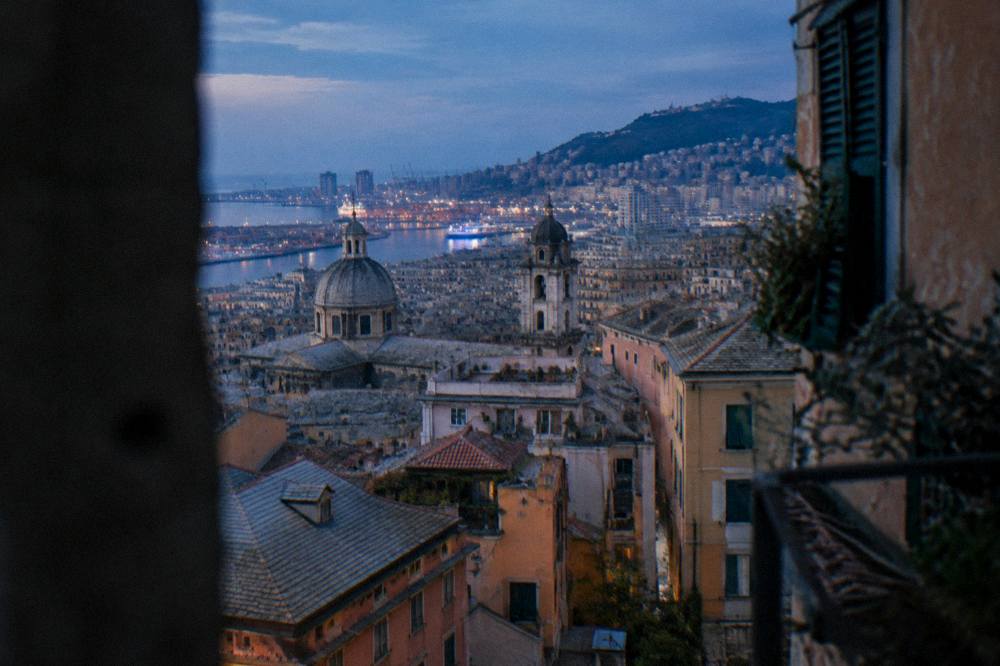
Around the quarter, the areas worth pairing with it are the fishermen's village of Boccadasse and the parks and promenade of Nervi to the east, both on the sea side, and the quieter Principe and Via Balbi quarter at the old town's western door. After dark, the nightlife guide covers where the centre's evenings concentrate, and the Genoa map page ties the segments together.
Common Questions About The Genoa Old Town
Is the Genoa old town the same as the caruggi?
The caruggi are the lanes inside the old town, not a separate district. The Genoa old town is the full 113-hectare medieval centre between the port and the Strade Nuove, and the caruggi are its street network, including both the wider through-lanes and the narrow cross-alleys.
How big is the Genoa old town?
The historic centre covers 113 hectares, which the city's tourism office describes as one of the largest medieval historic centres in Europe. It runs from the Porto Antico inland to the base of the hills and from Via Balbi in the west toward Piazza De Ferrari in the east.
Is the Genoa old town walkable?
Yes, and walking is the only sensible way through it. The lanes are narrow and pedestrian in practice, the grid is compact, and the climbs toward Spianata Castelletto can be shortened with the public lifts or the Zecca-Righi funicular, both running daily 06:40 to 24:00, at 1.20 EUR a ride.
What does it cost to visit the old town itself?
Nothing: the lanes and squares are public streets. The costs sit in the museums, from the 14.00 EUR combined Strada Nuova and Sant'Agostino ticket to the 24 EUR 24-hour Genoa Museum Card covering 28 city museums, and in transport, where an AMT ticket is 2.00 EUR for 110 minutes.
When is the best time of year for the Genoa old town?
The official 1971-2000 normals for Genoa Sestri put July at a mean daily high of 27.3 C with 24.2 mm of rain and October at 20.0 C with 171.3 mm, so the trade is between summer heat and autumn rain. October also carries the Rolli Days and the Festival della Scienza in 2026, which offset the wetter statistics with open palaces.
Can you reach the old town from the cruise port on foot?
Yes. The cruise terminals at Ponte dei Mille and Andrea Doria stand beside the Porto Antico, at the seaward edge of the medieval grid, and the first caruggi begin directly inland from the harbour. No transport is needed for the port-side lanes.