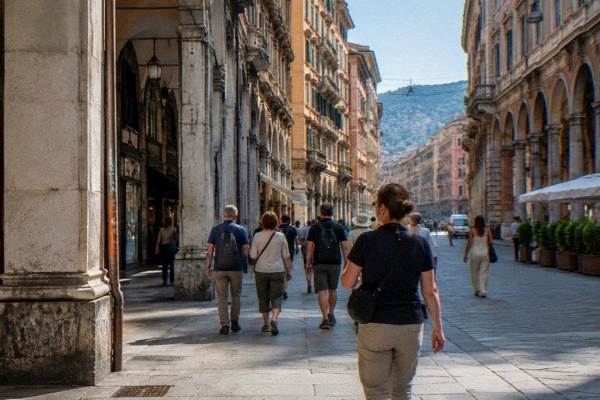
Two Days In Genoa: The Old Town, Then The Sea
Two days split the city cleanly: the old town, the palaces and the cathedral on day one, the harbour, the Aquarium and the coast on day two.
Short answer
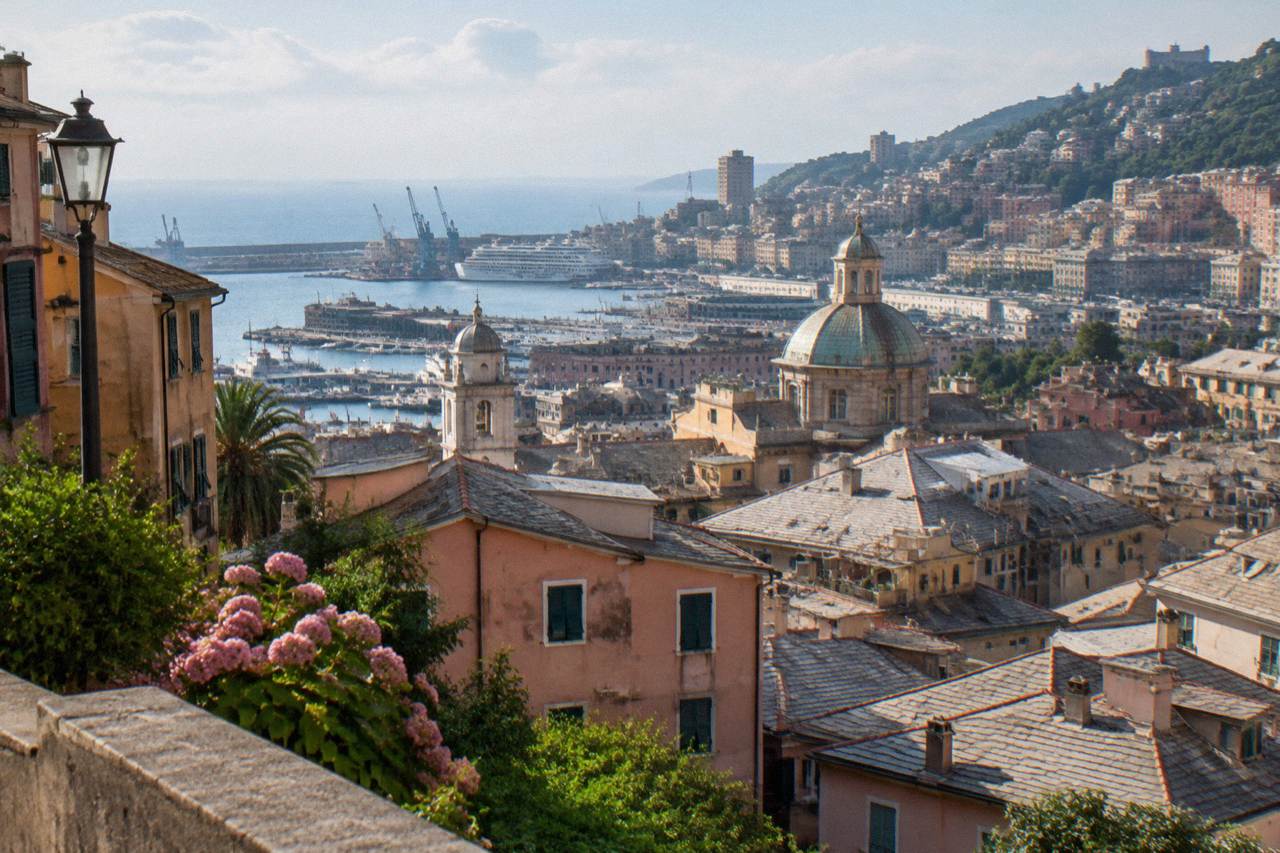
Spend day one in the historic centre: Piazza De Ferrari, the Cathedral of San Lorenzo, the caruggi and the Musei di Strada Nuova. Spend day two at the Porto Antico and the Aquarium of Genoa, then out along the coast to Boccadasse or Nervi. An AMT ticket is 2.00 EUR for 110 minutes and the Genoa Museum Card is 24 EUR for 24 hours.
Genoa rewards exactly this kind of visit: two days, one for the old city and one for the water. The city sits on the Ligurian Sea in Liguria, north-west Italy, squeezed between the coast and the Apennine hills, with a working ferry port, a UNESCO-listed system of aristocratic palaces and a medieval centre covering 113 hectares, described by the city's own tourism site as one of the largest medieval historic centres in Europe. This itinerary gives day one to the caruggi, the Cathedral of San Lorenzo and the Strade Nuove, and day two to the Porto Antico, the Aquarium of Genoa and the coast east or west of the centre. If you are still deciding on trip length, the question of how many days in Genoa is enough has its own answer, and there are shorter and longer plans in the one day in Genoa and three days in Genoa itineraries.

What Can You Realistically See In Genoa In Two Days?
Two days in Genoa cover the historic centre, the UNESCO Palazzi dei Rolli, the Cathedral of San Lorenzo, the Porto Antico with the Aquarium of Genoa, and one stretch of coast such as Boccadasse or Nervi, with room for a viewpoint from the Spianata Castelletto and an evening meal of pesto genovese and focaccia. Two days are not enough for Portofino and the Cinque Terre as well, unless one whole day is given over to a day trip.
That is the honest scope. Genoa is a city of 566,247 residents in the comune, 820,691 in the metropolitan city, and it stacks vertically: the old town at sea level, the rings of palaces above it, and hills reached by public lifts and the Zecca-Righi funicular. Trying to see the city and the Riviera villages in the same 48 hours thins both. The plan below keeps day one in the streets and day two near the water, which matches how the city is actually built.
Here is the shape of the two days before the detail:
| Slot | Day One: The Old City | Day Two: The Harbour And The Sea |
|---|---|---|
| Morning | Piazza De Ferrari, Cathedral of San Lorenzo, the caruggi | Porto Antico, Aquarium of Genoa or the Bigo lift |
| Midday | Lunch in the old town: focaccia, farinata, trofie with pesto | Galata Museo del Mare or the Lanterna, depending on energy |
| Afternoon | Musei di Strada Nuova on Via Garibaldi | Boccadasse or Nervi by bus or train |
| Evening | Via XX Settembre, dinner, a walk to Spianata Castelletto | Corso Italia promenade and dinner back in the centre |
How Do You Structure Day One In Genoa?
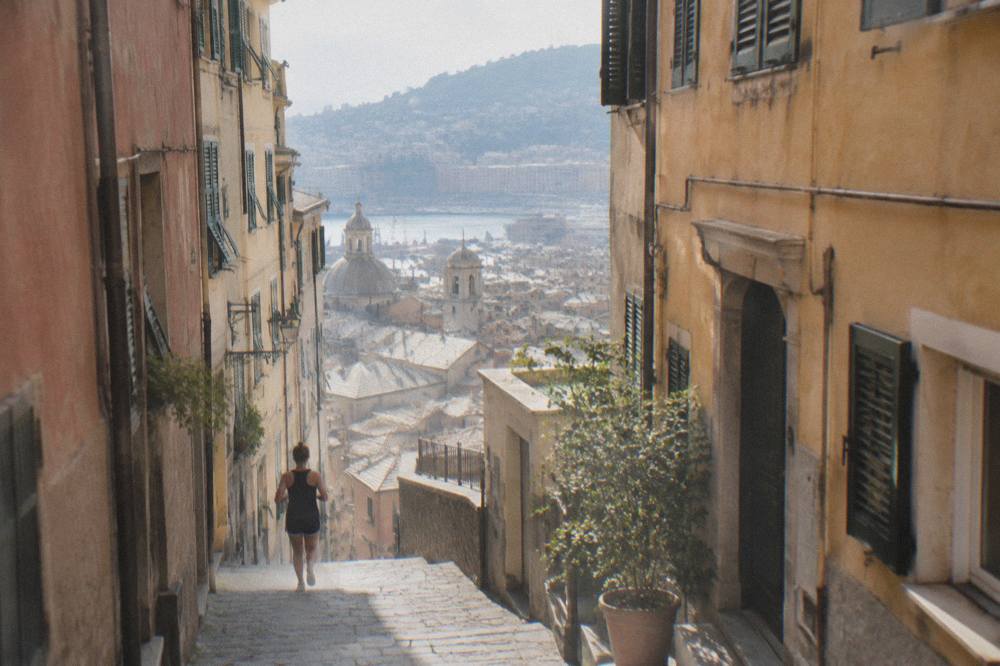
Start day one at Piazza De Ferrari, walk down to the Cathedral of San Lorenzo, spend the middle of the day in the caruggi lanes of the old town, give the afternoon to the Musei di Strada Nuova on Via Garibaldi, and finish with the view from the Spianata Castelletto, reached by the Castelletto Levante lift, which runs daily 06:40 to 24:00 and costs 1.20 EUR a ride. The whole day is walkable with one lift ride.
Piazza De Ferrari is the natural hinge of the city, with the Teatro Carlo Felice on one side and the streets fanning out toward the old town, Via XX Settembre and the harbour. From there the Cathedral of San Lorenzo is a short walk downhill. The cathedral itself is free to enter as a church; the Museo del Tesoro di San Lorenzo beside it keeps hours of 09:00 to 12:00 and 15:00 to 18:00 Monday to Saturday, closed Sunday. The treasury's own price page should be checked before you count on it.
The rest of the morning belongs to the caruggi of the old town, the narrow lanes that give the centre its density and its shade. The old town is the part of Genoa that rewards aimless walking, and a guided introduction helps decode it: the site's Genoa walking tour page covers the options. Midday is the time for the foods the city is known for: focaccia, farinata, trofie with pesto genovese and pansoti. The basil in proper pesto genovese is Basilico Genovese DOP, the protected cultivar grown in Liguria.
To decode the lanes and their history at your own pace, book a self-guided audio tour here.
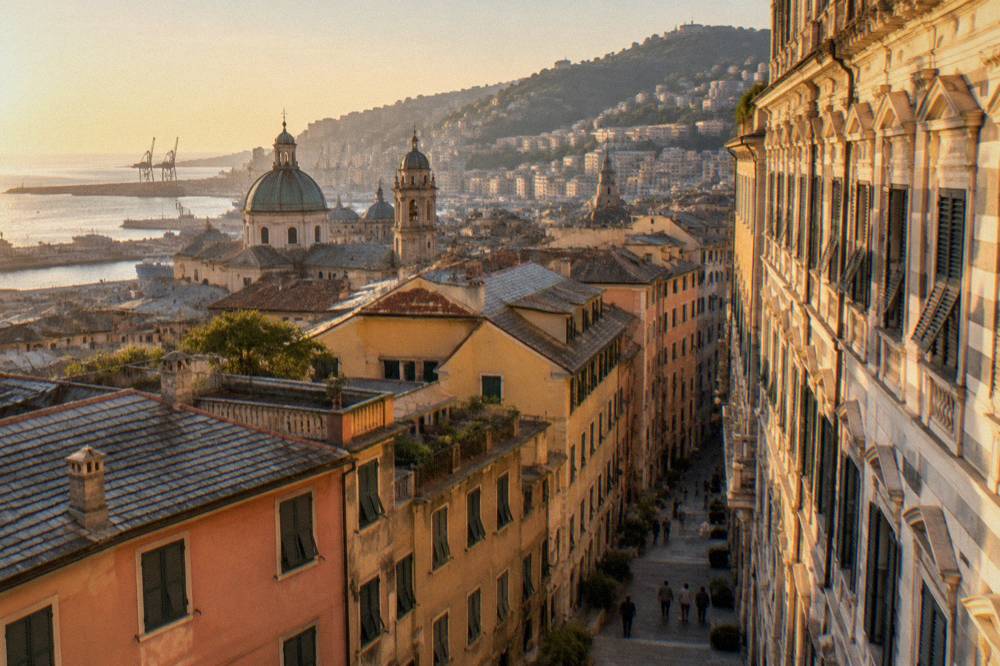
In the afternoon, Via Garibaldi and the Strade Nuove. The UNESCO inscription, "Genoa: Le Strade Nuove and the system of the Palazzi dei Rolli", covers 42 palaces that appeared on the Rolli lists of 1576, 1588, 1599, 1614 and 1664, inscribed in 2006. The three palace museums, Palazzo Rosso, Palazzo Bianco and Palazzo Doria-Tursi, sit together on Via Garibaldi, and Palazzo Doria-Tursi holds the violin called Il Cannone, built in Cremona in 1743 by Bartolomeo Giuseppe Guarneri and linked to Paganini. The combined ticket with the Museo di Sant'Agostino is 14 EUR full, 9 EUR reduced.
| Ticket | Price | Notes |
|---|---|---|
| Musei di Strada Nuova combined with Sant'Agostino | 14.00 EUR full, 9.00 EUR reduced | Winter timetable 28 Sep 2026 to 18 Apr 2027, daily 10:00 to 18:30, Monday only Palazzo Rosso |
| Genoa Museum Card, 24 hours | 24.00 EUR | 28 city museums, 19 municipal plus 9 others; bus variants only add transport |
| Genoa Museum Card, 48 hours | 45.00 EUR | Same 28 museums |
| Cathedral of San Lorenzo | Free to enter as a church | Treasury museum prices: check the venue's own page |
| Castelletto Levante lift | 1.20 EUR a ride | Daily 06:40 to 24:00 |
A good way to cover the UNESCO quarter when walking the hills has lost its appeal is the Segway tour of the Strade Nuove and the Rolli palaces. It runs across the world heritage streets with a guide, and the listing carries its own price and rating:
If a self-guided two hours suits you better after the palaces, Check availability for the Segway option before you leave home, since slots for guided products in the old town are set by group size. Whatever you choose for the afternoon, keep the last hour for the Spianata Castelletto: the public lift from Piazza Portello rises 57 m and puts the harbour and the rooftops below you.
Day one closes easily. Via XX Settembre is the shopping street if you need anything, and the evening version of the old town, with the lanterns on in the lanes, is a different place from the midday one. For later plans, the site's Genoa nightlife guide picks up where the itinerary stops.
What Should Day Two In Genoa Look Like?
Give day two to the Porto Antico and the sea: the Aquarium of Genoa, open 365 days a year with fixed-date adult tickets from 26.00 EUR, the Bigo panoramic lift at 6.00 EUR adult, then the afternoon at Boccadasse, about 4 km from Piazza De Ferrari, or Nervi, about 9 km, where ARPAL's 2026 bathing class is good. Take the coast east rather than west if swimming is the goal.
The Porto Antico is the renovated old harbour, redeveloped by Renzo Piano for the 1992 Columbus Expo, and it holds the Aquarium, the Biosfera and the Bigo lift in one walkable stretch. The Aquarium opened in 1992 and is open every day of the year. Its ticket page lists fixed-date adult tickets from 26.00 EUR, reduced from 20.00 EUR, children 4 to 12 from 16.00 EUR and under-4s free, with dynamic pricing, meaning the figure moves by date. The combined Aquarium, Biosfera and Bigo ticket starts from 37.00 EUR for an adult. The Bigo lift alone is listed at 6.00 EUR adult and 5.00 EUR reduced or for ages 4 to 12.
If marine life is covered quickly, the alternative midday stops are the Galata Museo del Mare, 12,000 m2 over five levels and 31 rooms, or the Lanterna, the lighthouse built in 1128 and rebuilt in 1543, 117 m above the sea and billed as the tallest lighthouse in the Mediterranean. Its opening days and prices for 2026 sit on the lighthouse's own site, and an entrance ticket for it is one of the bookable options later on this page.
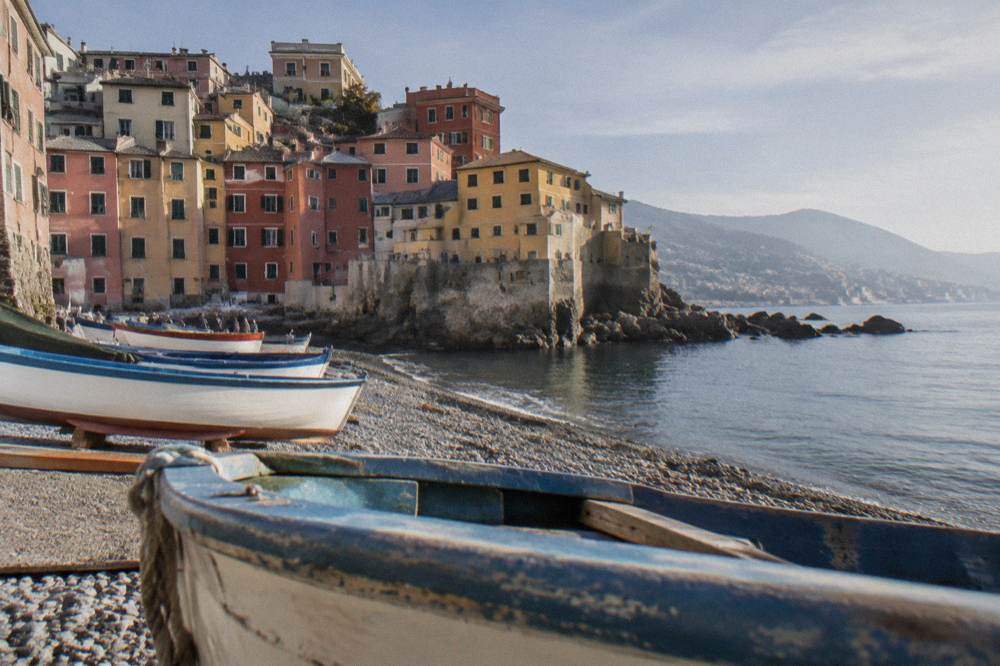
The afternoon belongs to the coast. Boccadasse is the old fishermen's village between Corso Italia and Capo Santa Chiara, with gozzo boats, nets and a small pebble beach, about 4 km from Piazza De Ferrari in a straight line. Corso Italia, the seaside promenade, runs about 2.5 km and links the Foce area to Boccadasse; the Foce and Albaro guide covers that stretch. For swimming, note the water quality split: ARPAL's 2026 classification for Boccadasse is Scarsa, poor, while Nervi's is Buona, good. Nervi, about 9 km out, adds the Passeggiata Anita Garibaldi, a cliff-top promenade of about 2 km, and the Parchi di Nervi, 9.2 hectares of parks with villas and museums; the Nervi parks guide set of pages maps the walk.
One honest note on planning: two days spent like this leaves Portofino, Camogli and the Cinque Terre out. If the Riviera villages are the reason you are flying into Genoa, trade the second city day for a boat day and accept that the Aquarium waits for a return trip. The Genoa to Portofino guide covers that trade.
How Do You Get Around Genoa In Two Days?
A single AMT ticket costs 2.00 EUR and is valid 110 minutes on the whole urban network, a 24-hour Met Daily costs 10.00 EUR and also covers the Volabus airport bus and line 782 toward Portofino, lifts and the Sant'Anna funicular cost 1.20 EUR a ride, and the metro runs 7 km from Brin to Brignole with 8 stations. Two days in the centre can honestly be done on two or three single tickets.
The fare table below is the whole system in miniature. Note that there is no separate Volabus fare: the airport bus requires the Met Daily ticket, and the airport taxi is a fixed 25 EUR per car to the centre, 30 EUR for more than four people, plus 2 EUR at night and on holidays.
| AMT ticket | Price | Validity |
|---|---|---|
| Ordinary single | 2.00 EUR | 110 minutes, whole network, excludes Volabus and Navebus |
| AMT plus Trenitalia integrated | 2.20 EUR | 110 minutes, urban plus limited Trenitalia |
| 5-hour ticket | 5.00 EUR | 5 hours |
| Carnet of 11 singles | 20.00 EUR | 11 x 110 minutes |
| Met Daily | 10.00 EUR | 24 hours, full network including Volabus and line 782 |
| Lifts and Sant'Anna funicular | 1.20 EUR | Single ride |
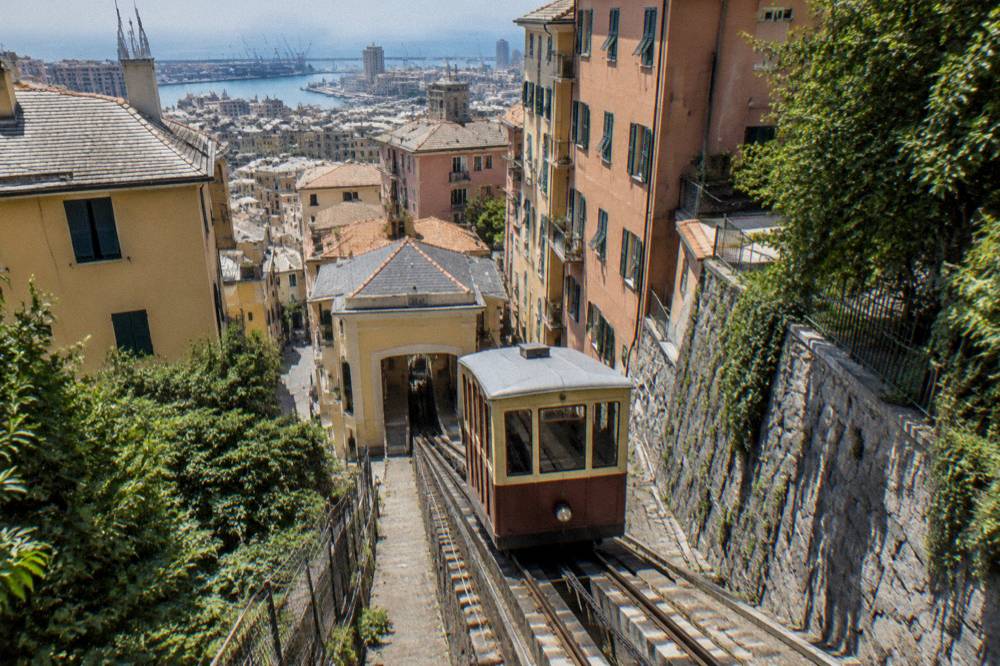
The vertical transport is the part visitors underestimate. The Zecca-Righi funicular runs daily 06:40 to 24:00 and AMT operates 14 public lifts across the city, including the Castelletto Levante lift used on day one of this itinerary. The metro's eight stations, Brin, Dinegro, Principe, Darsena, San Giorgio, Sant'Agostino, De Ferrari and Brignole, link the two main rail stations to the centre. Extensions to Canepari and Martinez are reported as targeted forJune 2027 and December 2028 respectively and are not open. For the wider logistics, including arriving by air or rail, see how to get to Genoa, and if your two days end with a late flight, the luggage storage guide solves the checkout gap.
What Should You Eat In Genoa On A Two-Day Trip?
Build the two days around the five named foods of the city: pesto genovese made with Basilico Genovese DOP, trofie and pansoti as the pasta shapes that carry it, focaccia as the all-day bread, and farinata, the chickpea pancake. Focaccia di Recco IGP, a different product made only in Recco, Camogli, Sori and Avegno, has held IGP status since 2015 and is the reason Recco appears as a lunch stop on coast days.
Day one's old-town lunch and day two's seaside stop are therefore different meals. In the caruggi the pattern is focaccia and farinata bought by the slice, then a seated plate of trofie al pesto or pansoti in walnut sauce. On the coast at Recco or Camogli the focaccia di Recco, filled and blistered, is the local speciality. The site's food pages go deeper: what to eat in Genoa sits under the main guide, and a guided tasting walk such as the Genoa food tour products covers the old town's food shops in one circuit.
Wine from Liguria has its own guide on the site if the evening meal needs a bottle. What the city's food culture does not need is a long checklist: two days, five foods, done well. Everything else covered here is indexed on Genoa Travel Guide.
What Does Two Days In Genoa Cost?
Count on 26.00 EUR and up for the Aquarium, 14.00 EUR full price for the Strada Nuova palace museums combined ticket, 24.00 EUR for a 24-hour Genoa Museum Card covering 28 museums, 2.00 EUR per public transport ride, and a city tourist tax of 2.00 to 5.00 EUR per person per night depending on the hotel category, charged for a maximum of 8 consecutive nights.
The Museum Card is worth arithmetic: at 24 EUR for 24 hours, it pays for itself against the palace combined ticket plus two more municipal museums, and it exists in a 45 EUR 48-hour version timed to exactly this kind of two-day stay. The card's bus variants are the only ones that include transport, and none of them covers Volabus, Navebus or trains. Booking the Aquarium is not the pattern here; book the Aquarium on its own dynamic calendar, where the from-price is a floor, not a promise.
| Item | Cost | Basis |
|---|---|---|
| Aquarium fixed-date adult | from 26.00 EUR | Dynamic pricing, open 365 days |
| Aquarium plus Biosfera plus Bigo | from 37.00 EUR adult | Combined ticket |
| Strada Nuova museums combined ticket | 14.00 EUR full, 9.00 EUR reduced | Includes Museo di Sant'Agostino |
| Genoa Museum Card 24h | 24.00 EUR | 28 museums |
| Genoa Museum Card 48h | 45.00 EUR | 28 museums |
| Tourist tax, 1-star hotel | 2.00 EUR per person per night | Max 8 consecutive nights, under-14s exempt |
| Tourist tax, 3-star / 4-star / 5-star | 3.00 / 4.00 / 5.00 EUR | Per person per night |
| Tourist tax, B&B and holiday flats | 4.00 EUR | Per person per night |
The tourist tax is the line item that surprises people: the comune of Genoa's tourist-tax page sets it by accommodation category, and it is charged at the property, not in the quoted room rate. Children under 14 are exempt. Beyond the tax, hotel rates themselves are not printed on this site; the where to stay in Genoa coverage and the main guide cover the areas instead.
When Is The Best Time To Spend Two Days In Genoa?
The official 1971-2000 climate normals for Genoa Sestri show mean daily highs of 27.7 C in August against 11.5 C in January, with October the rainiest month at 171.3 mm and July the least rainy at 24.2 mm, so late spring and early autumn pair warm days, 20.5 C in May and 20.0 C in October, with sea-adjacent sightseeing, while October itself carries the highest rain total of the year.
Read the table as a planning instrument rather than a forecast. October's 171.3 mm mean is the number that matters for an autumn city break, because day two of this itinerary, the harbour and the coast, is the half that rain interrupts. The full picture:
| Month | Mean High C | Mean Low C | Rain mm |
|---|---|---|---|
| Jan | 11.5 | 5.5 | 101.8 |
| Feb | 12.2 | 6.0 | 74.0 |
| Mar | 14.6 | 8.2 | 81.7 |
| Apr | 16.8 | 10.5 | 88.0 |
| May | 20.5 | 14.2 | 72.4 |
| Jun | 23.9 | 17.6 | 58.2 |
| Jul | 27.3 | 20.9 | 24.2 |
| Aug | 27.7 | 21.0 | 69.3 |
| Sep | 24.4 | 17.9 | 136.4 |
| Oct | 20.0 | 13.8 | 171.3 |
| Nov | 15.1 | 9.2 | 108.8 |
| Dec | 12.5 | 6.5 | 93.1 |
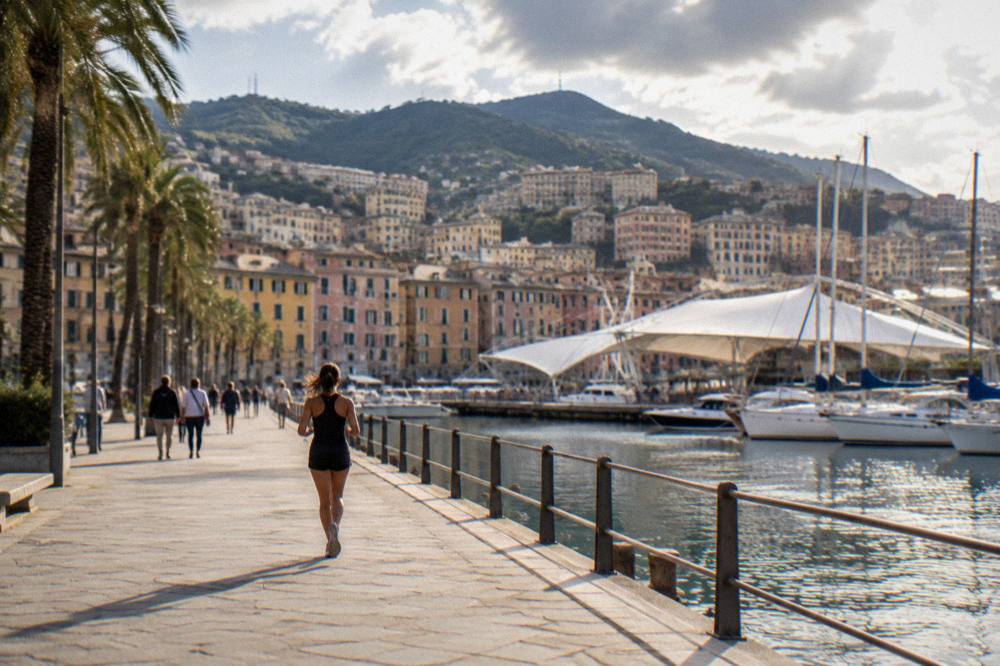
The calendar matters as much as the sky. The Salone Nautico boat show filled 1 to 6 October 2026 and returns 30 September to 5 October 2027; the Festival della Scienza ran 22 October to 1 November 2026. If your two days coincide with a major event, book the room first and the Aquarium second. For the seasonal variants of this same itinerary, the Genoa weather and Genoa in winter guides carry the detail, and the rainy day itinerary is the wet-weather fallback for day two.
Can You Swap Day Two For Portofino Or The Cinque Terre?
Yes, but only by giving the whole day to it: Portofino is about 25 km from Piazza De Ferrari in a straight line, Camogli about 18 km, San Fruttuoso about 22 km and the Cinque Terre about 67 km, and the practical routes are the train along the coast or a boat from the Porto Antico, with Golfo Paradiso's Two Gulfs tour running from Genoa Porto Antico on listed dates from March through 24 October 2026.
The boat is the better use of a short visit because it strings the coast together. The Two Gulfs tour calls at Camogli at 11:45 after an 11:00 departure, with crossings of about 30 minutes between Camogli, San Fruttuoso and Portofino, and full-day fares of about 29 EUR with half-day options at 21 to 26 EUR. There is no regular scheduled ferry from Genoa to the Cinque Terre; the Golfo Paradiso "Genoa - Cinque Terre" tour runs on set dates only. For the villages by rail, the Cinque Terre Treno Card costs 22.00 to 35.00 EUR for one adult day depending on date band, and the Via dell'Amore path is included with a booked time slot, open 29 March to 24 October 2026, 09:00 to 21:00.
| Place | Straight-line distance from Piazza De Ferrari | Notes |
|---|---|---|
| Corso Italia | about 4 km | Seaside promenade, about 2.5 km long |
| Boccadasse | about 4 km | 2026 bathing class reported poor |
| Nervi | about 9 km | 2026 bathing class reported good |
| Camogli | about 18 km | Two Gulfs boat stop; focaccia di Recco nearby at Recco, about 17 km |
| San Fruttuoso | about 22 km | FAI abbey, full entry 10.00 EUR |
| Portofino | about 25 km | ZTL for cars; line 782 included in Met Daily |
| Cinque Terre | about 67 km | Treno Card 22.00 to 35.00 EUR one day |
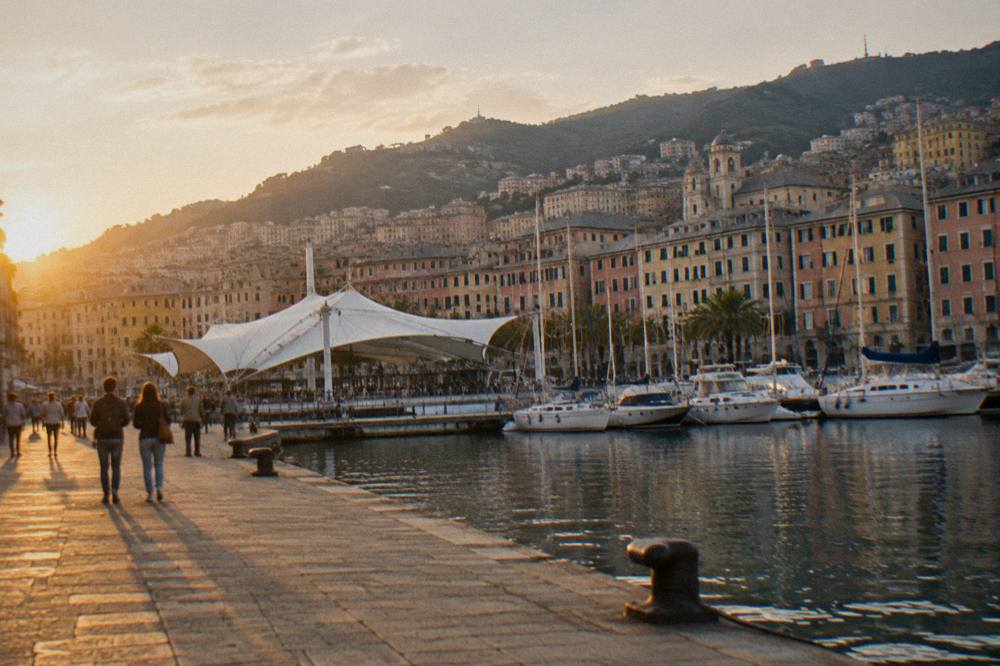
A private guide for the city half of the trip, before or after the coast day, keeps the old town legible:
And if the lighthouse is the one landmark you want beyond the itinerary above, its entrance ticket is bookable:
Two days with a Riviera swap becomes, in effect, one day of Genoa plus one day of coast. That is a legitimate trip. It is just not the same trip as the two-day city plan above, and pretending otherwise is how itineraries break.
Common Questions About Two Days In Genoa
Is two days in Genoa enough?
Two days cover the old town, the Strade Nuove palaces, the Cathedral of San Lorenzo, the Porto Antico and the Aquarium of Genoa, plus one coastal district such as Boccadasse or Nervi. They do not cover Portofino or the Cinque Terre without sacrificing the second city day.
What is the best split for 2 days in Genoa?
Day one for the historic centre and the Musei di Strada Nuova, day two for the Porto Antico, the Aquarium of Genoa and the coast. The split follows the geography: the dense old city first, the water second.
Do I need the Genoa Museum Card for two days?
The 48-hour card costs 45 EUR and covers 28 city museums. If the two days include three or more museums, including the Strada Nuova palaces, the 24-hour card at 24 EUR or the 48-hour version usually pays off. The card does not cover the Aquarium of Genoa.
Can you walk everywhere in Genoa in two days?
The centre is walkable but steep, and the vertical distances are solved by public lifts at 1.20 EUR a ride and the Zecca-Righi funicular, daily 06:40 to 24:00. An AMT single at 2.00 EUR for 110 minutes covers the horizontal gaps.
Should I visit Boccadasse or Nervi on day two?
Boccadasse is closer, about 4 km from Piazza De Ferrari, and is the more famous district. Nervi, about 9 km, has the cliff-top Passeggiata Anita Garibaldi and ARPAL's 2026 bathing class for its water is good, against Boccadasse's poor rating, so Nervi is the swimming choice.
Can I swim in Genoa on a two-day trip?
Yes, on the rocky and pebble accesses around Nervi and the small public beach at Boccadasse. ARPAL's 2026 classification for Nervi is Buona, good, while Boccadasse is classed Scarsa, poor. Sea temperatures and lifeguard seasons are not printed on this site; check locally on the day.