Genoa Food Tours And Pesto Classes
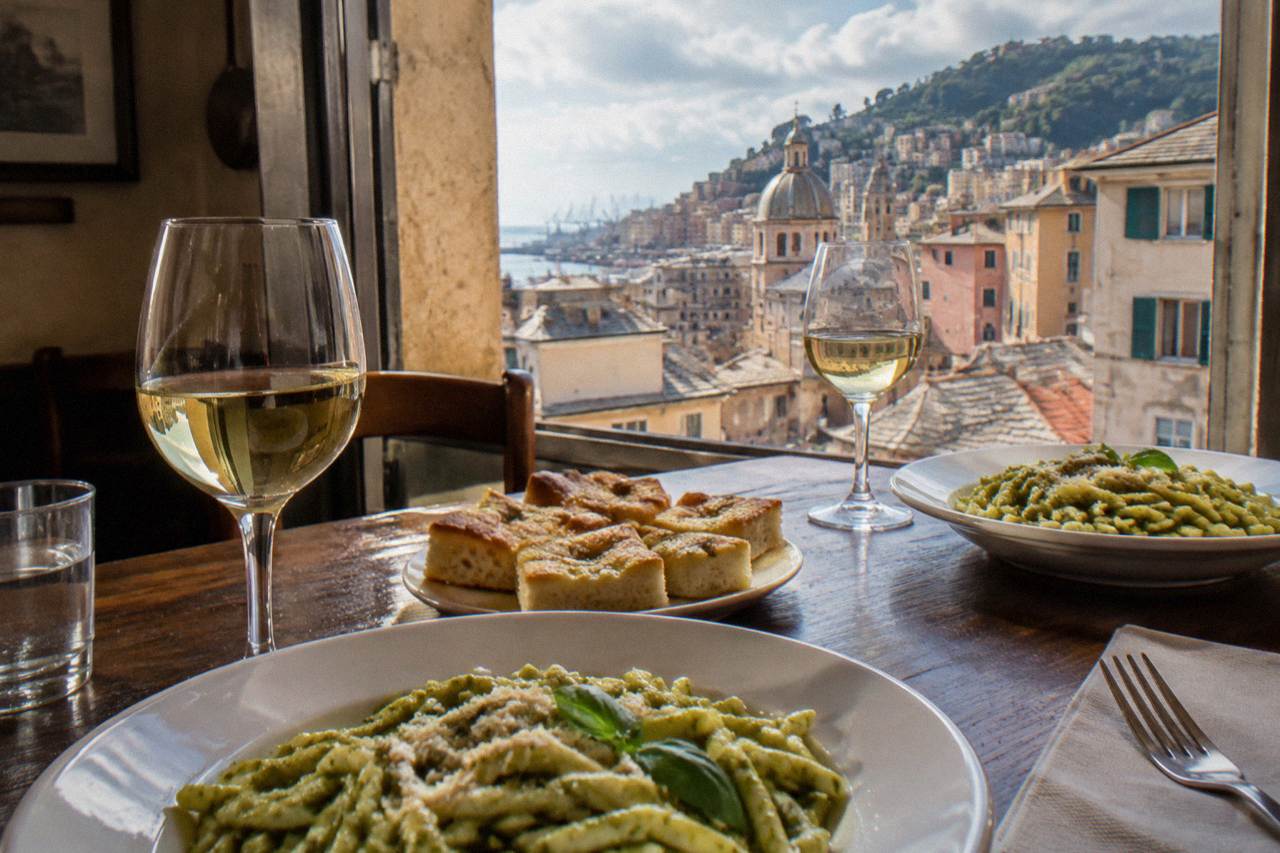
Genoa, the coastal city in Liguria on the Ligurian Sea, is the home of pesto genovese, focaccia, farinata, trofie and pansoti, and a guided food tour or a hands-on pesto class is one of the most direct ways into its old town.
Short answer
A Genoa food tour pairs the caruggi of the old town with tastings of pesto genovese, focaccia, farinata and local wine, while a cooking class teaches pesto and fresh pasta by hand. Both formats run year round, and the best choice depends on whether you want to taste or to cook.
Genoa, the coastal city in Liguria on the Ligurian Sea, built its cooking on basil, olive oil, pine nuts and the sea, and the dishes that came out of that pantry, pesto genovese, focaccia, farinata, trofie and pansoti, are the reason a Genoa food tour exists at all. The city's old town, described by the official tourism site as one of the largest medieval historic centres in Europe at 113 hectares, is a dense grid of narrow lanes where food and architecture share the same streets. Travelers can find out what a guided food walk actually covers, how a pesto class works, which formats suit which kind of trip, and how to fold eating into a visit that also takes in the Palazzi dei Rolli and the Aquarium of Genoa.
What Does A Genoa Food Tour Include?
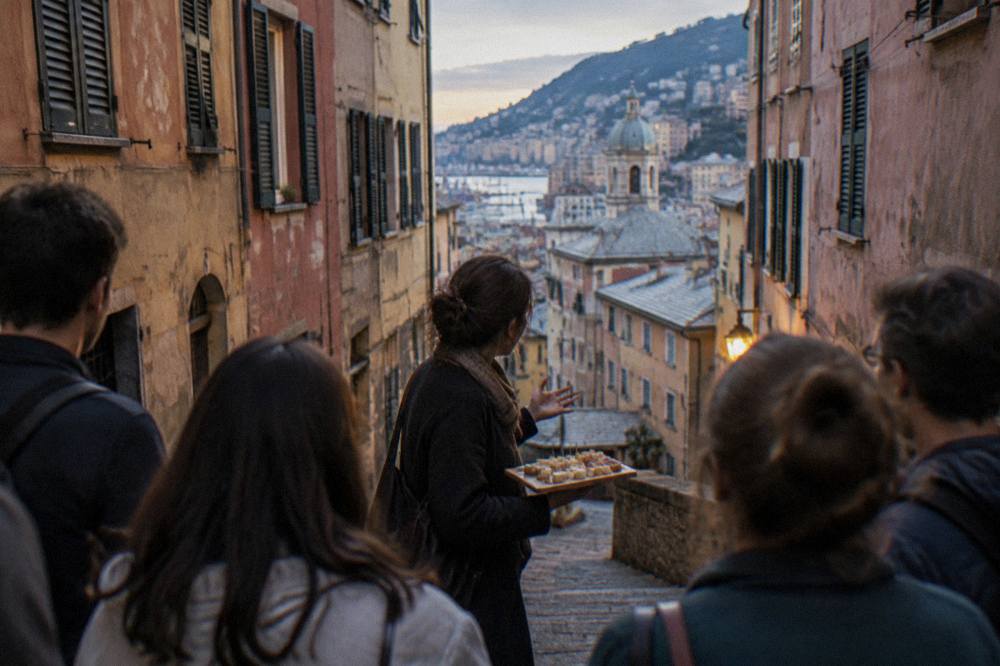
A typical guided food tour in Genoa walks a small group through the old town and the area around Via XX Settembre with stops for tastings: focaccia and farinata, pesto-based pasta such as trofie, local cheeses and cured meats, and Ligurian wine, with a local guide explaining each dish. Some tours build the stops into a full meal, others run as shorter tasting walks, and the common thread is food presented as part of the city's history rather than as a standalone snack.
The formats differ more than the food does. A full-meal tour sits you down for a sequence of courses across several stops, while a tasting walk moves faster and samples smaller portions in more places. Wine-focused versions build the route around tastings, and some walks pair the food stops with the main monuments so that sightseeing and eating happen in the same couple of hours.
What does not change is the subject matter. The site's guide to what to eat in Genoa covers the same five dishes in depth, and the answer to what food Genoa is famous for gives the short version: the basil-based sauce, the olive-oil flatbreads and the filled and twisted pastas that the region is known for. A tour compresses that list into a single walk with a guide answering questions as you go.
Which Dishes And Drinks Define Genoa Food?
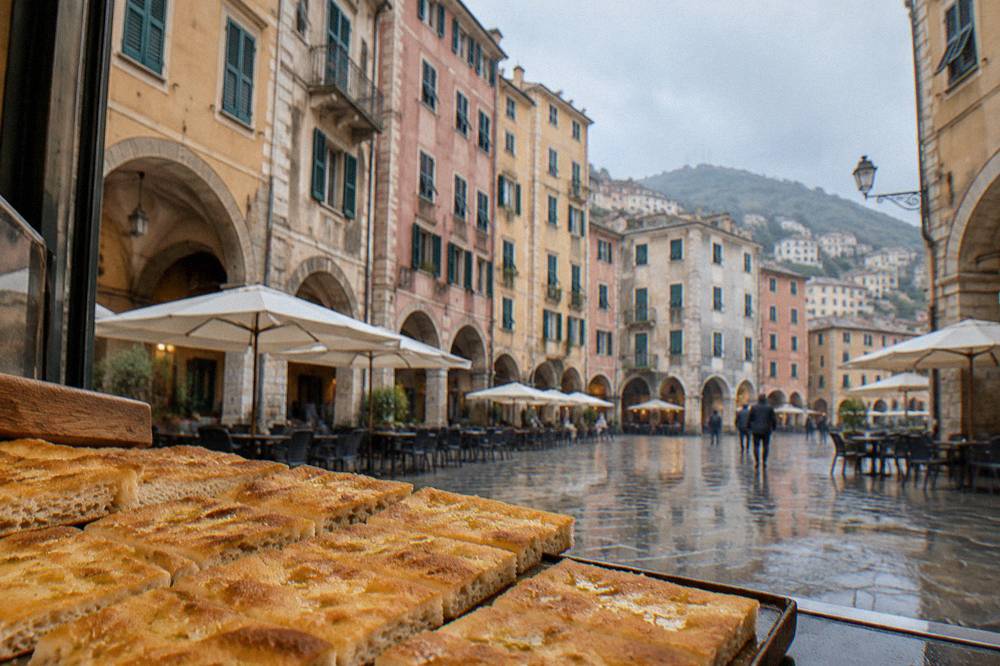
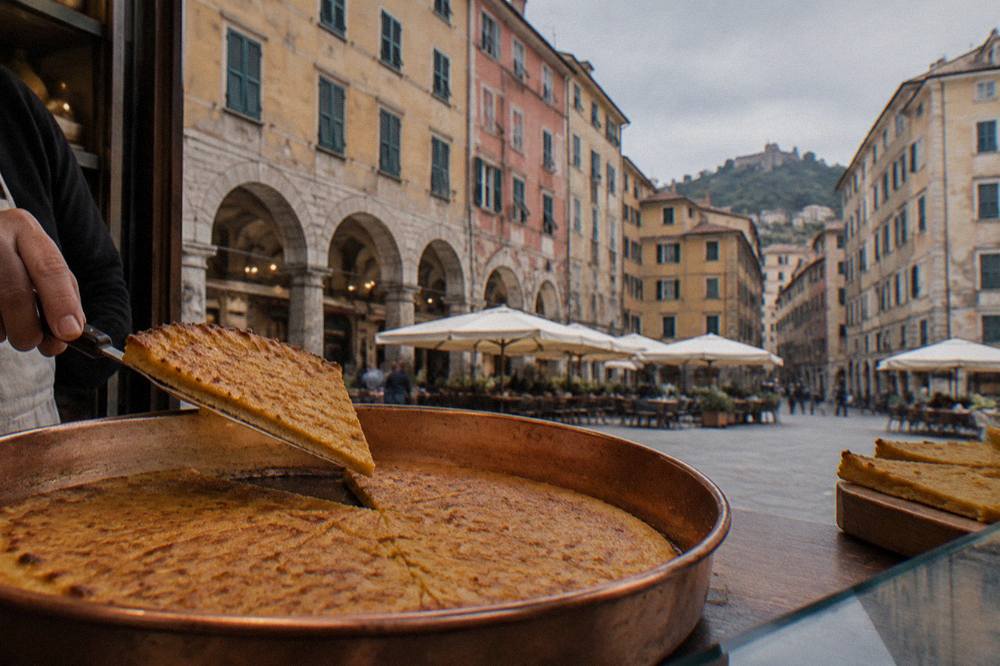
Five dishes define Genoese cooking: pesto genovese, the basil sauce made with Basilico Genovese PDO, the protected basil grown in Liguria; focaccia, the olive-oil flatbread; farinata, a savoury chickpea pancake; trofie, the small twisted pasta traditionally served with pesto; and pansoti, a filled pasta served with a walnut sauce. Focaccia di Recco, a thinner cheese-filled variant, has been an IGP product since 2015 and is made only in Recco, Camogli, Sori and Avegno east of the city.
The basil is the part worth understanding before you eat. Basilico Genovese PDO is a protected designation, and the consortium's own site identifies it as the basil for pesto genovese. A pesto class that uses a marble mortar teaches the technique that the sauce is named for, and the difference between a mortar-made pesto and a blended one is the single most discussed food topic in the city.
Wine in the tasting stops comes from the surrounding hills, and the site's Ligurian wine coverage sits alongside the dish guides for readers who want the full picture. The table below is the short reference for the five dishes and what to expect from each.
| Dish | What It Is | How It Is Served In Genoa |
|---|---|---|
| Pesto genovese | Basil sauce with Basilico Genovese PDO, pine nuts, cheese and olive oil | Tossed with trofie or another pasta |
| Focaccia | Olive-oil flatbread, salted | Cut in rectangles, eaten on its own or with cheese |
| Farinata | Chickpea-flour pancake baked in a wood oven | Sold by the slice, eaten warm |
| Trofie | Small hand-twisted pasta | With pesto genovese |
| Pansoti | Filled pasta, typically a herb and greens filling | With walnut sauce |
Focaccia di Recco is the outlier: it belongs to the towns of the eastern Riviera rather than the city itself, and a day trip that way is the natural way to try it at the source. The official IGP rules name only Recco, Camogli, Sori and Avegno as production areas.
Food Tour Or Cooking Class: Which Suits Your Trip?
A food tour suits a first visit or a short stay, because it covers ground in the old town and samples several dishes in one walk; a cooking class suits a second visit, a rainy day, a family or anyone who wants to return home able to make pesto and pasta by hand. The class is the deeper experience with fewer stops, the tour is the wider one with no cooking, and both are bookable as small-group or private formats.
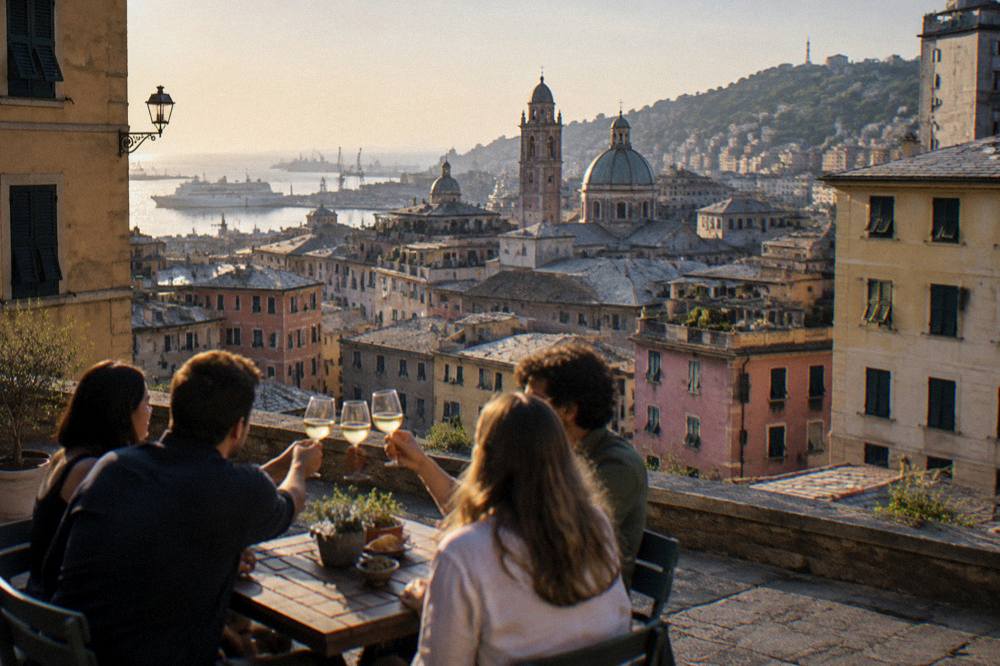
A class also solves a practical problem: Genoa's food is simple in ingredients and specific in technique, and the technique is exactly what a class teaches. Pesto in a marble mortar, pasta rolled and cut by hand, the order the ingredients go in. A rooftop or garden setting adds the view that the old town lanes cannot give.
The two are not exclusive either. A common pattern on a two or three day visit is a class on one afternoon and a shorter tasting walk on another, with the sightseeing anchors, Piazza De Ferrari, the Cathedral of San Lorenzo and Porto Antico, folded into the walks between stops. The site's Genoa in two days itinerary shows how the timing can work.
| Format | What You Do | Best For |
|---|---|---|
| Full-meal food tour | Guided walk, several stops, a complete meal across them | First visit, hungry arrivals, groups |
| Short tasting walk | Faster route, smaller samples, more stops in less time | Short stays, tight schedules |
| Wine-led walk | Tastings with food pairings | Wine-focused travellers |
| Pesto and pasta class | Hands-on cooking, then eating what you made | Families, rainy days, repeat visitors |
| Private cooking lesson | A class booked for your own group | Celebrations, dietary needs |
The rooftop pesto class is the one this site features, and the rooftop cooking class in Genoa page covers what it includes: pesto made by hand, fresh pasta, and wine as part of the session. If a rooftop setting is not what you had in mind, the same city has classes in private gardens and full culinary masterclass formats, and the listing for each states exactly what is covered.
Where Do Genoa Food Tours And Pesto Classes Take Place?
Most food tours in Genoa run through the caruggi, the narrow medieval lanes of the old town between the port and Via XX Settembre, with stops at bakeries, fry shops, cheese and cured-meat counters and small eateries; cooking classes sit in calmer settings above or outside that grid, in rooftop kitchens, private apartments and gardens, so that the cooking happens with space to work and the eating follows it.
The old town is the natural stage for a walk. The lanes are narrow, the shops are dense, and the route between the port and the main street passes the Mercato Orientale area on Via XX Settembre, the historic food market of the city. Guides use the lanes themselves as part of the telling: the same streets that carried the medieval Republic of Genoa, which lasted until 1797, carry the food trade today.
Classes do not need that density. What they need is a work surface, a stove and a table, which is why the formats cluster in private homes, terraces and dedicated kitchens rather than in shopfronts. Some class listings pair the cooking with a short walk first, so that the market or the old town still appears in the day.
How Does A Pesto Class In Genoa Work?
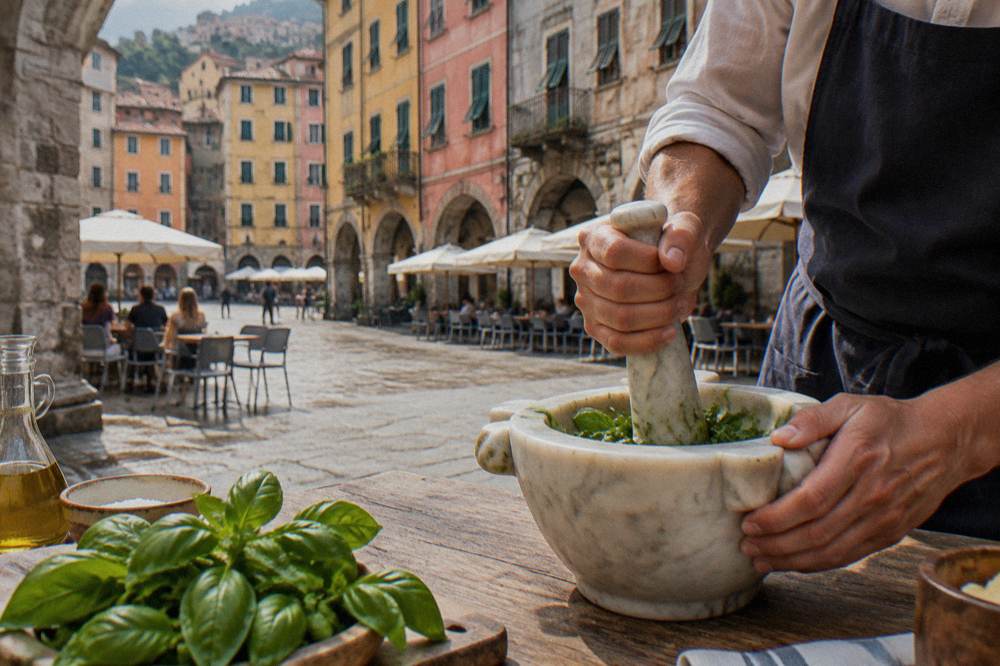
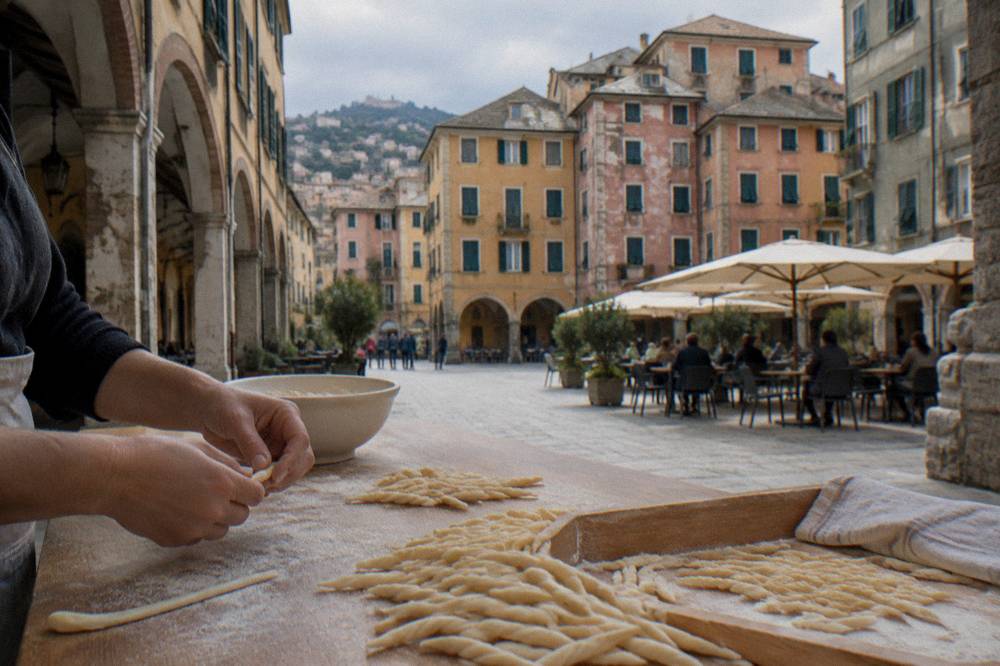
A pesto class in Genoa teaches pesto genovese the traditional way, with a marble mortar and a wooden pestle crushing Basilico Genovese PDO basil, garlic, pine nuts and cheese with olive oil, and pairs it with fresh pasta made by hand, usually trofie, before everyone sits down to eat the results with local wine; the whole session runs as a guided, hands-on lesson rather than a demonstration, and each listing states its exact format.
The mortar is the point. Machine-blended pesto and mortar pesto are different products, and the class exists because the technique is hard to learn from a recipe page. The same is true of the pasta: trofie are twisted by hand one at a time, and pansoti are filled and folded by hand, so the class format gives you the repetition that makes the shapes come out right.
The site's pesto genovese page covers the sauce itself in depth, including the role of the PDO basil, and it is the right reading before or after a class. The classes below are the live options, from the rooftop format this site features to a mortar lesson led by a world championship competitor.
For readers deciding between the class formats, the honest summary is that they share the same core, pesto by mortar and pasta by hand, and differ in setting, group size and what surrounds the cooking. One variant includes a full lunch on a terrace, another is built around a local menu with wine, and the rooftop version is the one to check first if the view matters. You can Check availability for the rooftop class while you compare.
Can You Combine A Genoa Food Tour With Sightseeing?
Yes, and it is the natural way to do the city: the old town food routes already pass the Cathedral of San Lorenzo, Piazza De Ferrari and the edges of the Strade Nuove UNESCO area, so a tasting walk functions as a guided visit to the historic centre at the same time, and separate walks exist that focus on the museums of Strada Nuova, the Rolli palaces or the harbour. The two kinds of tour cover the same streets with different narration.
The overlap matters for short visits. A cruise day or a single-day stop can carry one food walk and one monument, and the site's Genoa cruise port day and Genoa in one day pages show how the timing fits together. The walking-tour formats on this site, including the Genoa walking tour options and the Musei di Strada Nuova area walks, cover the monuments side if you would rather split the day.
One number is worth knowing when you plan any combined day: an AMT public transport ticket is 2.00 EUR and is valid for 110 minutes on the whole urban network, with the integrated AMT and Trenitalia version at 2.20 EUR. Lifts and the Sant'Anna funicular cost 1.20 EUR a ride, and the Met Daily 24-hour ticket is 10.00 EUR. The Genoa public transport page carries the full fare table.
| Ticket | Price | Validity |
|---|---|---|
| AMT ordinary | 2.00 EUR | 110 minutes, whole urban network |
| AMT + Trenitalia integrated | 2.20 EUR | 110 minutes, urban plus limited rail |
| Lift or Sant'Anna funicular ride | 1.20 EUR | Single ride |
| Met Daily | 10.00 EUR | 24 hours, full AMT network incl. Volabus |
What Food Day Trips Run From Genoa?
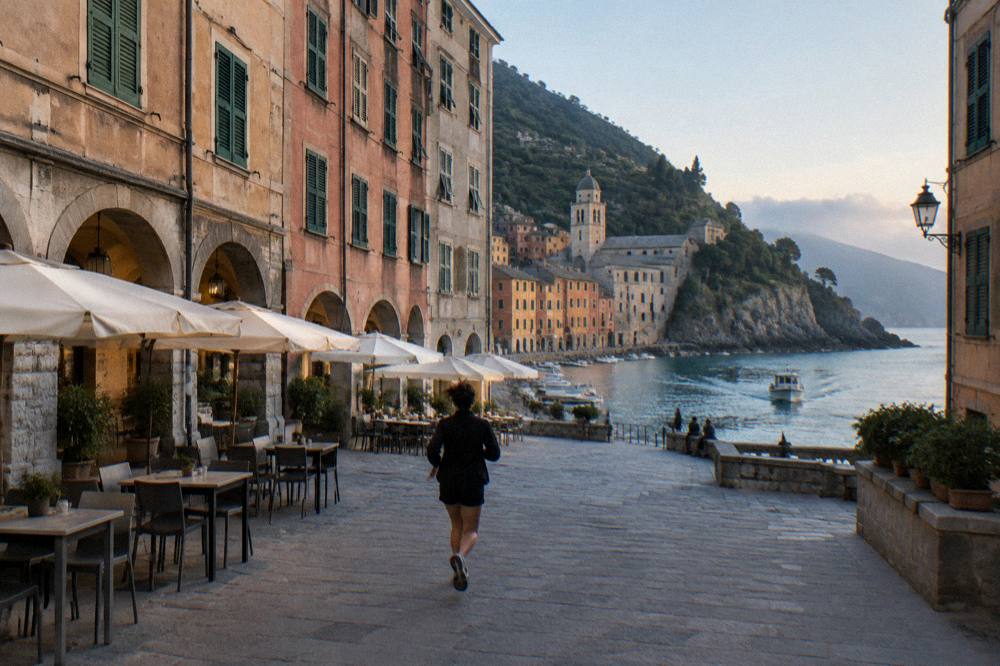
The classic food day trip from Genoa follows the coast east towards Recco, Camogli and Portofino, where focaccia di Recco IGP is made in the only four towns the rules allow, and boat day tours from Genoa's Porto Antico cover Camogli, San Fruttuoso and Portofino in one loop; Camogli sits about 18 km from Piazza De Ferrari in a straight line.
The Golfo Paradiso operator's Two Gulfs tour runs from March 2026 on listed dates, with the full-day return fare reported at about 29 EUR and half-day options at about 21 to 26 EUR.
San Fruttuoso adds a second food-adjacent stop in the sense that the abbey there is a FAI property with published entry, 10 EUR full and 5 EUR for visitors aged 6 to 18 and students up to 25, though the draw is the cove rather than the cooking. The Portofino boat tour from Genoa and Cinque Terre tour from Genoa pages cover the same coastline as bookable tours rather than independent ferries.
For readers who want the fuller picture of the coast, the site's Camogli and Recco guides cover the focaccia towns at source, and the Italian Riviera itinerary strings the whole stretch together.
When Should You Book A Genoa Food Experience?
Book a Genoa food tour or cooking class as soon as your travel dates are fixed, because the small-group and class formats have limited seats by design and the food-focused departures are the ones that fill first on a short city break; there is no seasonal closure to work around, since eating tours in a covered old town and indoor classes run through the winter, and the operator's live listing shows the dates each format actually runs.
The climate supports year-round eating. The official 1971-2000 normals for Genoa Sestri put the January mean maximum at 11.5 C and the August mean maximum at 27.7 C, so a walking tour is workable in any month and the indoor formats cover the wet ones. October carries the highest monthly rain total in the normals at 171.3 mm and July the lowest at 24.2 mm, which is a reason to have an indoor class as a backup in autumn rather than a reason to avoid the city.
The booking question is also a cancellation question. Most listings on this site allow cancellation and some allow payment later; the terms print on the operator's live listing, and reading them before booking is the one step that costs nothing.
What Should You Know Before Your First Genoa Food Tour?
Go hungry, wear shoes that handle cobbled lanes and slopes, tell the operator about allergies when you book rather than at the first stop, and expect the tour to move at the pace of the food rather than the pace of a monument walk; dietary restrictions are handled better the earlier they are flagged, the old town streets are narrow and stepped in places, and the classes are hands-on, so the clothing should be for cooking rather than only for eating.
A few Genoa-specific notes carry over from the rest of the site. The city's tourist tax applies per person per night and only to the first eight consecutive nights, at 2.00 EUR in one-star hotels, 2.50 EUR in two-star, and 4.00 EUR in bed and breakfasts, with the rates set by the comune's tourist-tax page. The emergency number is 112. And the street food in Genoa page lists the walk-up equivalents of what tours stop for, which is the fallback if a departure is full.
For the wider planning frame, the root things to do in Genoa page carries the full sightseeing list, and the Genoa Travel Guide homepage is the index to all of it.
Which Genoa Food Experience Should You Pick First?
Pick a full-meal small-group food tour if this is your first Genoa visit and you want the dishes and the old town explained in one walk; pick the rooftop pesto and pasta class if you want to come home with the technique; and add a wine-led tasting walk or a private lesson only after one of those two, because they cover the same ground with a narrower focus. The order is about depth, and every format on this page runs from the same five dishes.
The table below is the decision summary, and the picks band after it carries the three products this site pairs for most visitors: the featured rooftop class, the coastal day tour for the focaccia towns, and the hop-on hop-off pass for the sightseeing days around the food.
| If You Want | Book First | Then Add |
|---|---|---|
| The dishes and the old town in one walk | Full-meal small-group food tour | Rolli palaces guided walk |
| To cook pesto and pasta yourself | Rooftop pesto and pasta class | Mortar pesto lesson |
| Wine as the focus | Wine-led tasting walk | Ligurian wine reading |
| The coast and focaccia di Recco | Camogli, San Fruttuoso and Portofino day tour | Recco and Camogli guides |
| A day split between food and sights | Tasting walk plus hop-on hop-off pass | Museum Card for the museums |
The Genoa Museum Card, at 24 EUR for 24 hours and 45 EUR for 48 hours in the 2026 rates, covers 28 city museums and is the companion purchase for the sightseeing half of a food-first trip, with only the "+bus" variants including transport.
Common Questions About Genoa Food Tours
What is a Genoa food tour?
A guided walking tour of Genoa with food tastings at several stops, typically covering pesto genovese, focaccia, farinata, trofie and local wine, with formats ranging from short tasting walks to full-meal small-group tours through the old town.
Can you take a pesto class in Genoa?
Yes. Pesto classes teach pesto genovese with a marble mortar and fresh pasta by hand, often with wine and a shared meal, in formats including rooftop sessions, private garden lessons and masterclasses. Each listing states its exact format and inclusions.
What food is Genoa famous for?
Genoa is known for pesto genovese made with Basilico Genovese PDO basil, focaccia, farinata, trofie and pansoti. Focaccia di Recco, an IGP product since 2015, is made only in Recco, Camogli, Sori and Avegno east of the city.
Is a food tour or a cooking class better in Genoa?
A food tour is better for a first visit or short stay because it combines the old town with tastings; a cooking class is better if you want to learn the technique, or for a rainy day, since the class is indoors and hands-on.
Where do Genoa food tours go?
The routes run through the caruggi of the old town between the port and Via XX Settembre, with stops at bakeries, fry shops and small eateries, and some walks add the monuments, including the Cathedral of San Lorenzo and Piazza De Ferrari, along the way.
How much do Genoa food tours cost?
Prices print on the operator's live listing for each product, and this site renders them from listing data rather than restating them in prose. Check the live listing for the current from-price of any tour on this page.