Ligurian Wine: Vermentino, Pigato And Sciacchetrà
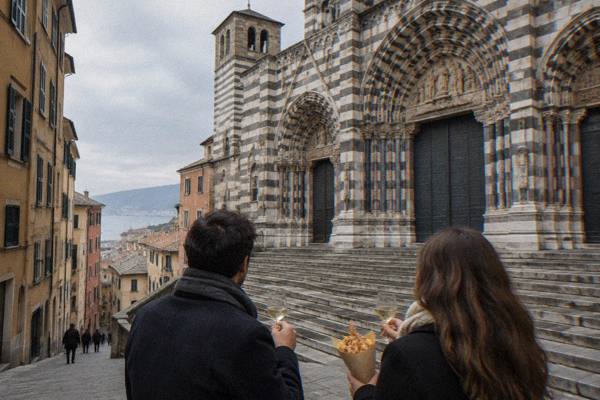
Ligurian wine is the coastal wine of the narrow strip Genoa sits on: crisp whites built for pesto and focaccia, a rare sweet wine from the Cinque Terre cliffs, and a tasting culture you can reach on foot from Piazza De Ferrari.
Short answer
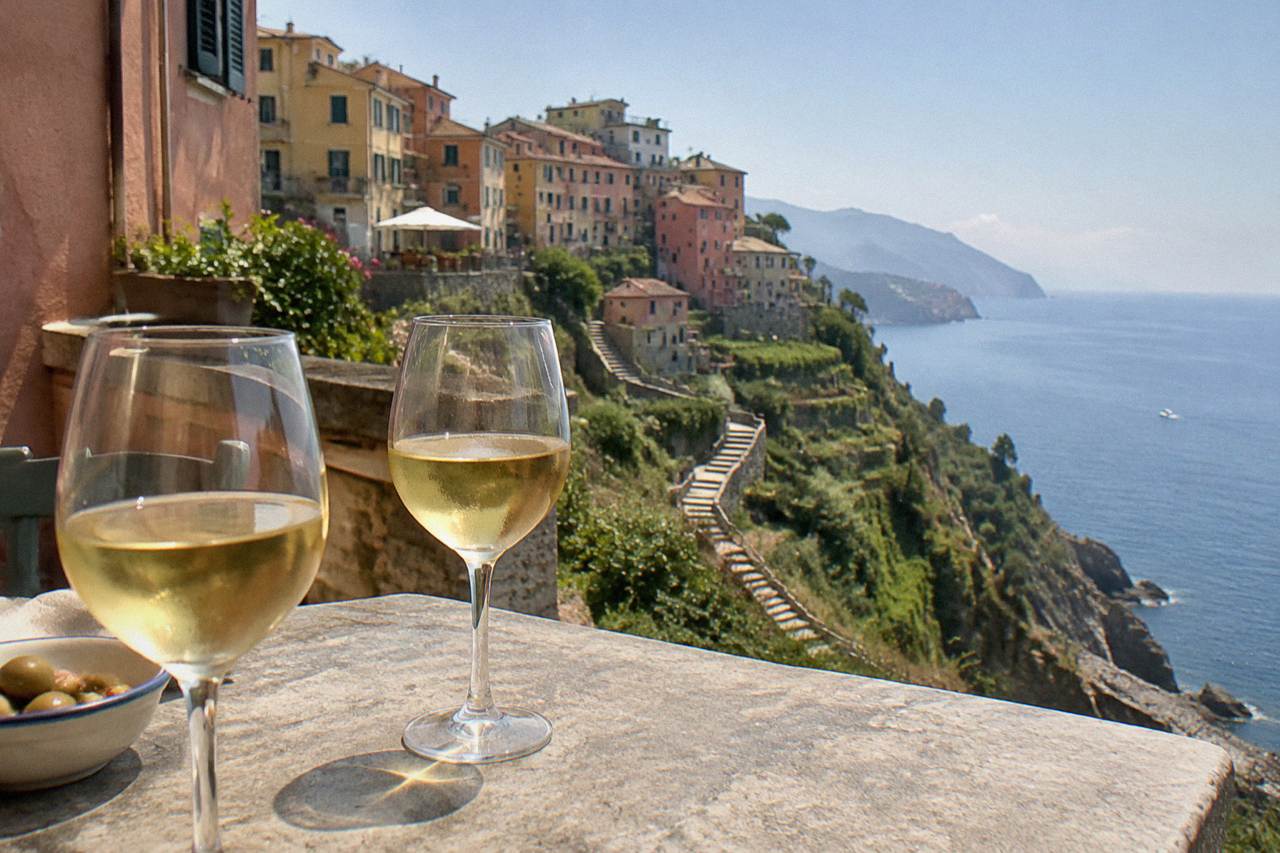
Ligurian wine means, above all, white wine: Vermentino and Pigato are the two coastal whites to try in Genoa, and Sciacchetrà is the passito sweet wine of the Cinque Terre. Taste them in Genoa on a food and wine walk or a cooking class, and pair them with pesto genovese, focaccia, farinata, trofie and pansoti.
Genoa is a coastal city in Liguria, north-west Italy, pressed between the Ligurian Sea and the Apennine hills, and the wine of its region reflects that squeeze: steep slopes, sea air, and whites that lean fresh and saline rather than heavy. Ligurian wine is not a single bottle but a family of coastal styles, and three names carry the region's reputation, Vermentino and Pigato among the whites and Sciacchetrà, the sweet passito of the Cinque Terre, at the far end of the spectrum. This guide covers what to drink in the city, how to pair it with the food Genoa is known for, and how to reach the wine country of the Riviera on a day trip.

What Is Ligurian Wine And Why Is It Different?
Ligurian wine is the wine of Italy's narrow coastal region between the French border and Tuscany, a strip so steep that vineyards are terraced into the hillsides above the sea, and its signature is fresh, aromatic white wine built for the region's basil, fish and olive oil rather than for cellaring. Vermentino and Pigato are the white grapes to know, and Sciacchetrà is the rare sweet wine made from dried grapes on the cliffs of the Cinque Terre, about 67 km from Piazza De Ferrari in a straight line. Genoa, the region's capital and largest city with 566,247 residents in the Comune di Genova at 1 January 2026, is the natural base for tasting all of it.
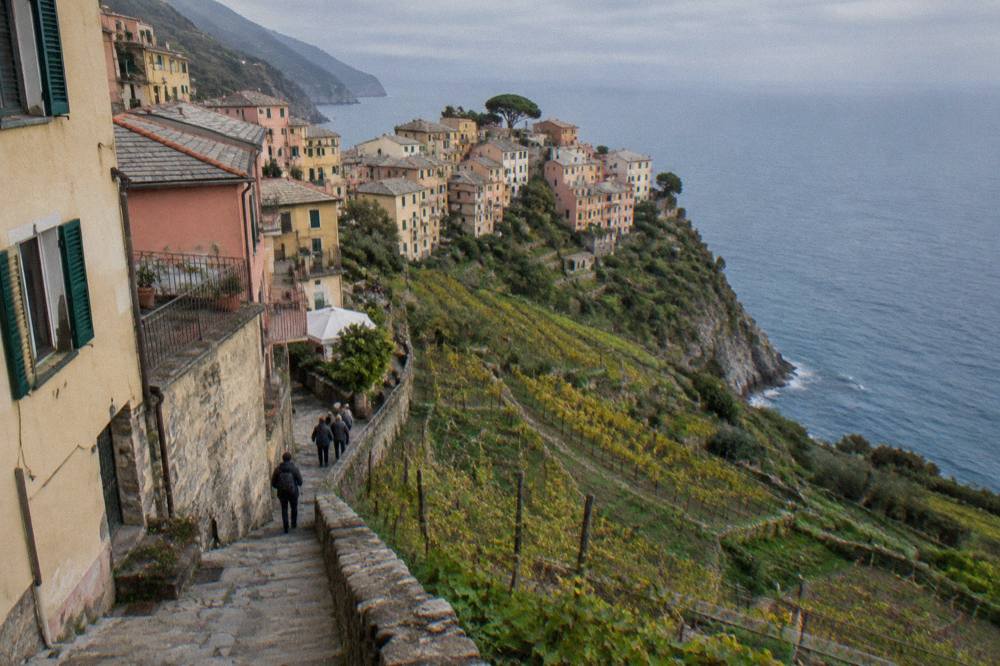
The geography does the explaining. Liguria is a long, thin region where the Apennine hills drop almost directly into the Ligurian Sea, and the vineyards that survive are worked on slopes that machinery cannot easily reach. That labour is one reason production stays small and much of it is drunk close to home, in the trattorie of Genoa's old town and the fishing villages of the Riviera. The sea moderates the climate: the official 1971-2000 normals for Genoa Sestri show a January mean high of 11.5 C and an August mean high of 27.7 C, a narrow swing for a European wine region.
What that adds up to in the glass is acidity. Ligurian whites are typically light-bodied, dry and aromatic, with the saline edge that coastal vineyards give. Reds exist, made from local grapes on the same terraces, but the region's identity sits firmly with the whites and with one celebrated sweet wine, and a visitor ordering by the glass in Genoa is usually ordering white.
Which Ligurian White Wines Should You Try In Genoa?
The two whites to ask for in Genoa are Vermentino and Pigato: Vermentino is the widely planted coastal white whose name appears on most Ligurian lists, and Pigato is the Riviera di Ponente white often treated as the same grape family under its western Ligurian name, fuller and more aromatic in style. Both are dry, both are made for seafood and pesto, and both sit at the centre of any Ligurian tasting in the city. Ordering either by name in a Genoese trattoria is the single easiest way to drink local.
The distinction is worth a sentence more. Vermentino is the grape's best-known name across the western Mediterranean, and in Liguria it is grown along both the Ponente coast west of Genoa, towards Varazze, Noli, Finale Ligure, Alassio and Sanremo, and the Levante coast east of the city, towards Camogli, Santa Margherita Ligure and the Cinque Terre. Pigato is the name used for the western plantings, and the debate over whether the two are one grape or two is a genuine local argument that no tasting in Genoa avoids for long.
Practically, the way to taste them is with food. A wine tasted alone tells you less in this region than a wine tasted against focaccia or a spoonful of pesto genovese, because these are wines designed for the table. The city's food tours and cooking classes are built around exactly that logic, and the tours below pair Ligurian wine with the dishes it was made to accompany.
The way to taste them is with food. Book a food and wine tasting walk here.
A quick orientation to the region's wine styles, and the food each is poured against in Genoa:
| Wine | Type | Typical character | Classic Genoese pairing |
|---|---|---|---|
| Vermentino | Dry white | Fresh, aromatic, saline | Focaccia, grilled fish, trofie with pesto |
| Pigato | Dry white | Fuller, aromatic, herb-scented | Farinata, fish stews, pansoti |
| Sciacchetrà | Sweet passito | Amber, dried-fruit, honeyed | Cheese, almond pastries, on its own |
| Local reds | Light red | Soft, low-tannin, sea-bright | focaccia di Recco, cured fish |
The reds row is the honest footnote: they exist, they are pleasant, and they are not why anyone crosses a border. If your time in Genoa is short, work through the whites first and leave Sciacchetrà for the end of a meal.
What Is Sciacchetrà And Where Does It Come From?
Sciacchetrà is Liguria's celebrated sweet passito wine, made from grapes dried partially on the vine and on racks before pressing, produced in tiny quantities on the terraced cliffs of the Cinque Terre, about 67 km from Piazza De Ferrari in a straight line, and it is the one Ligurian wine with a reputation that travels well beyond the region. It is amber, concentrated and honeyed, and because of how it is made it is scarce and priced accordingly. Tasting it in Genoa at the end of a meal is the easiest way to meet it.
The Cinque Terre are the five villages, Monterosso, Vernazza, Corniglia, Manarola and Riomaggiore, terraced into the coast east of Genoa, and their vineyards are the source. The same villages appear on this site as a day trip from Genoa by train, and the wine is a good reason to make the trip: what costs a premium by the glass elsewhere is poured at the source, next to the terraces it came from. The region can also be reached by boat on set dates, with Golfo Paradiso running a Genoa-Cinque Terre tour from Porto Antico on listed dates rather than a daily scheduled line.
A tasting note in plain terms: expect dried apricot, honey and a nutty finish, with enough acidity to keep it from being cloying. It is a wine for slow drinking, and a small glass after a long lunch is the local format. If you want to understand the whole region in one pour, this is the pour.
How Do You Pair Ligurian Wine With Genoese Food?
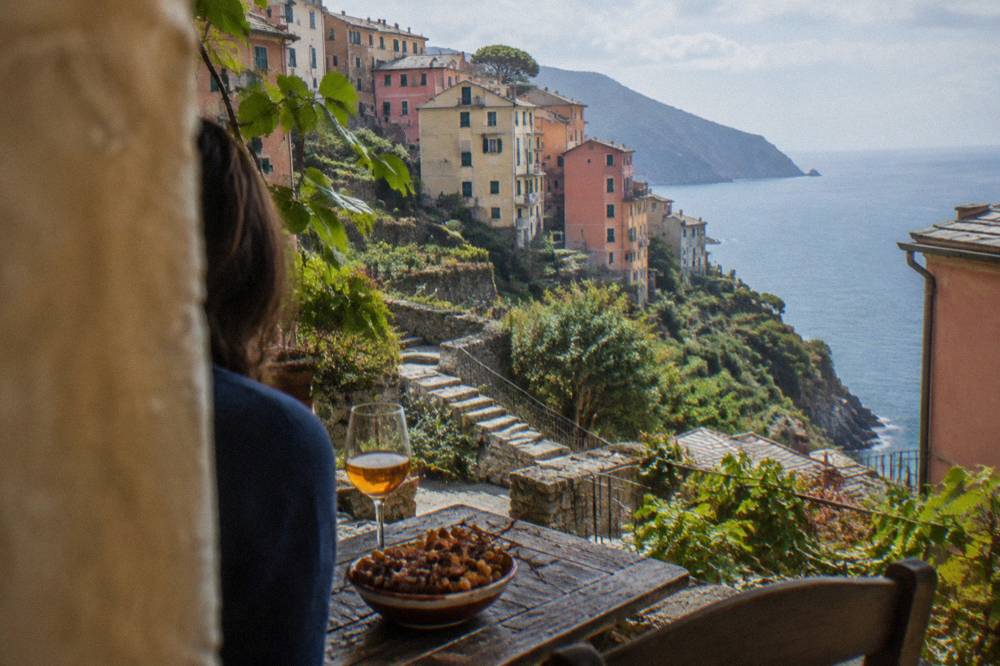
Pair Ligurian wine with the dishes Genoa is famous for and the match is nearly automatic: Vermentino and Pigato with pesto genovese on trofie, with focaccia, with farinata and with pansoti, and Sciacchetrà with cheese or dessert at the end of the meal. The region's kitchen is built on basil, olive oil, chickpea flour and seafood, and its whites are acidic and saline enough to cut through all four. Read the pairing guide to what to eat in Genoa alongside this one.
The logic is fat against acid. Pesto genovese is an emulsion of basil, cheese, pine nuts and oil, and by rule it uses Basilico Genovese PDO basil, the protected basil of the Genoese growing area. A spoonful of that on trofie needs a wine with lift, and Vermentino supplies it. Farinata, the chickpea-flour flatbread baked in a wood oven, is rich at the edges and salty underneath, which is exactly the slot Pigato fills. Pansoti, the walnut-and-cheese stuffed pasta of the Genoese repertoire, asks for the same whites.
The bread of the region deserves its own sentence. Focaccia genovese, the dimpled, oil-brushed flatbread, is the everyday partner of both whites, and focaccia di Recco, the cheese-filled version, has been IGP protected since 2015 and is made only in Recco, Camogli, Sori and Avegno, the cluster of towns east of Genoa. Recco is also a short day trip, and eating focaccia di Recco in Recco with a local white is one of the coast's cleanest food-and-wine experiences. Our pesto genovese guide and focaccia guide cover both in depth.
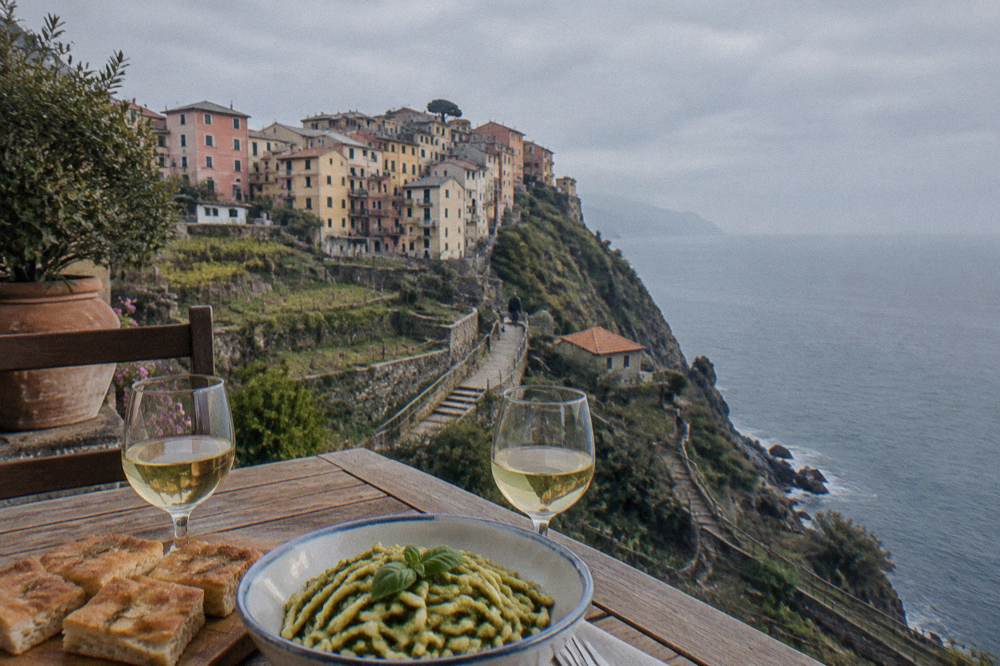
For visitors who want the pairing demonstrated rather than described, two formats work well in Genoa. A guided food and wine walk moves through the old town stopping at several venues, and a cooking class builds the meal first and then pours the wine against it. The class linked below covers pesto, fresh pasta and wine on a rooftop in the city, and it is the format where the pairing logic of the region becomes obvious fastest: Check availability.
Where Can You Taste Ligurian Wine In Genoa?
The practical answer is three ways: on a guided food and wine walk through the old town, at a cooking class where the wine arrives with the meal you cooked, and independently at trattorie and wine bars in the caruggi, the narrow lanes of the old town, which covers 113 hectares and is one of the largest medieval historic centres in Europe. Genoa needs no car for any of this: the historic centre sits behind the Porto Antico and Piazza De Ferrari, and the city's transport is cheap and frequent, a single AMT ticket costing 2.00 EUR for 110 minutes on the whole network.
The guided options reward the first-time visitor because the city is dense and the good addresses are not signposted in any language. A food and wine tasting walk pairs stops at several venues with the history of the lanes between them, and the storytelling walks do the same with the city's past as the connecting thread. Both formats end with a working map of the old town in your head, which is worth as much as the tasting itself. More of these guides are collected on Genoa Travel Guide.
The city's institutions make an easy half-day around a tasting. The Aquarium of Genoa is open 365 days a year, with fixed-date adult tickets from 26.00 EUR and dynamic pricing, and the combined Aquarium, Biosfera and Bigo ticket starts from 37.00 EUR for an adult. The Musei di Strada Nuova, Palazzo Rosso, Palazzo Bianco and Palazzo Doria-Tursi, hold Paganini's 1743 violin Il Cannone, and in the winter timetable from 28 September 2026 to 18 April 2027 open daily 10:00 to 18:30, with Mondays limited to Palazzo Rosso only. A museum card covering 28 city museums costs 24 EUR for 24 hours or 45 EUR for 48 hours under the 2026 rates, and our Genoa Museum Card guide works through the arithmetic.
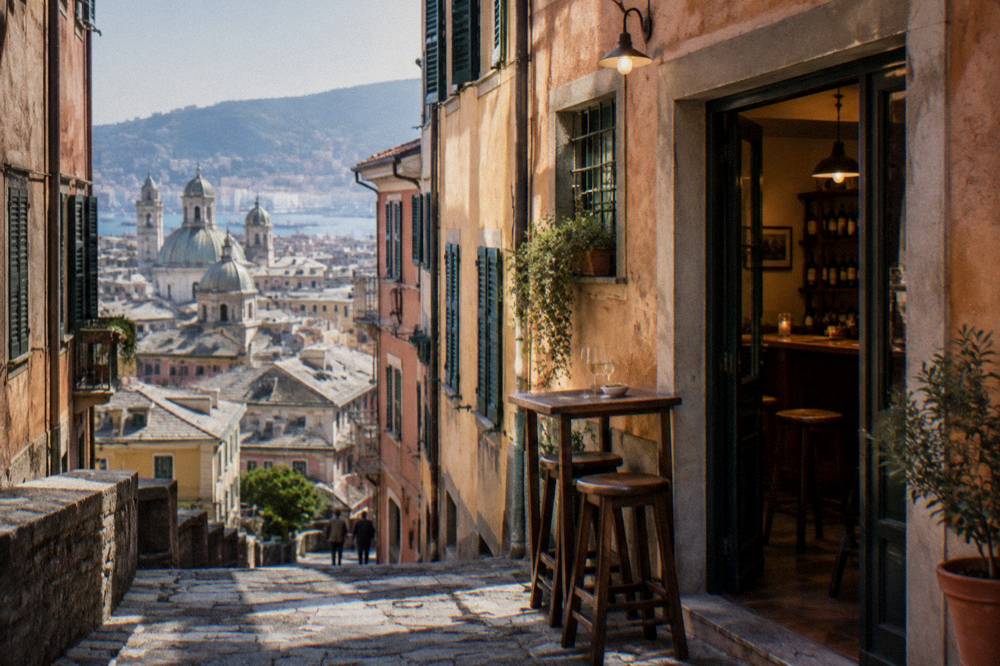
How Does The Ligurian Climate Shape The Wine?
The coast's climate, measured at the official station Genoa Sestri, runs from a January mean high of 11.5 C to an August mean high of 27.7 C, with rain concentrated in October at 171.3 mm against July's 24.2 mm, and that mild, rain-in-autumn pattern is what lets coastal vineyards ripen white grapes slowly while keeping their acidity. The numbers come from the Aeronautica Militare CLINO 1971-2000 normals for Genoa Sestri, the airport station about 7 km west of Piazza De Ferrari, and they describe a Mediterranean coastal regime rather than a continental one.
Here is the monthly picture those normals give:
| Month | Mean high C | Mean low C | Rain mm |
|---|---|---|---|
| Jan | 11.5 | 5.5 | 101.8 |
| Feb | 12.2 | 6.0 | 74.0 |
| Mar | 14.6 | 8.2 | 81.7 |
| Apr | 16.8 | 10.5 | 88.0 |
| May | 20.5 | 14.2 | 72.4 |
| Jun | 23.9 | 17.6 | 58.2 |
| Jul | 27.3 | 20.9 | 24.2 |
| Aug | 27.7 | 21.0 | 69.3 |
| Sep | 24.4 | 17.9 | 136.4 |
| Oct | 20.0 | 13.8 | 171.3 |
| Nov | 15.1 | 9.2 | 108.8 |
| Dec | 12.5 | 6.5 | 93.1 |
For a wine traveller the useful line is the autumn one. September still averages a 24.4 C mean high, and October's 171.3 mm of rain is the year's largest monthly total, which matters for harvest timing on the terraces. The same table shapes a wine trip's packing list: evenings drop to 5.5 C in January and sit near 21.0 C in August, so the coast is drinkable-outdoors for a long stretch of the year. Our Genoa weather guide and best time to visit guide take the planning further.
Can You Visit Wine Country On A Day Trip From Genoa?
Yes, and the wine country is the same coastline as the famous day trips: the Levante Riviera east of Genoa, Camogli, San Fruttuoso, Portofino, Santa Margherita Ligure and the Cinque Terre, holds the Sciacchetrà terraces, while the Ponente Riviera west of the city runs towards Varazze, Noli, Finale Ligure, Alassio and Sanremo, the Pigato side of the region. Straight-line distances from Piazza De Ferrari keep everything within a day: Camogli about 18 km, Portofino about 25 km, the Cinque Terre about 67 km.
The boats are part of the pleasure. Golfo Paradiso's Two Gulfs tour runs from Genoa Porto Antico from March on listed dates, calling at the coast's stops with about 30 minutes between Camogli and San Fruttuoso and between San Fruttuoso and Portofino, with full-day fares reported at about 29 EUR and half-day at 21 to 26 EUR, and Camogli to San Fruttuoso boats run year round. The Servizio Marittimo del Tigullio lines connect Rapallo, Santa Margherita Ligure, Portofino and the Cinque Terre in season. Our guides to Portofino from Genoa and the Cinque Terre from Genoa lay out the routes.
| Destination from Piazza De Ferrari | Straight-line distance |
|---|---|
| Boccadasse | about 4 km |
| Nervi | about 9 km |
| Camogli | about 18 km |
| San Fruttuoso | about 22 km |
| Portofino | about 25 km |
| Santa Margherita Ligure | about 24 km |
| Sestri Levante | about 40 km |
| Cinque Terre | about 67 km |
Trains thread the same coast on the Genova Piazza Principe and Genova Brignole lines, and regional services stop at the eastern towns on the way towards La Spezia. If the day's plan mixes a vineyard view with a swim, note the water: ARPAL's 2026 bathing classifications rate Nervi's water as good and Boccadasse's as poor, so the eastern coast is the swimming side. Line 782 between Santa Margherita Ligure and Portofino is included in the AMT Met Daily ticket, which costs 10.00 EUR for 24 hours across the whole network.
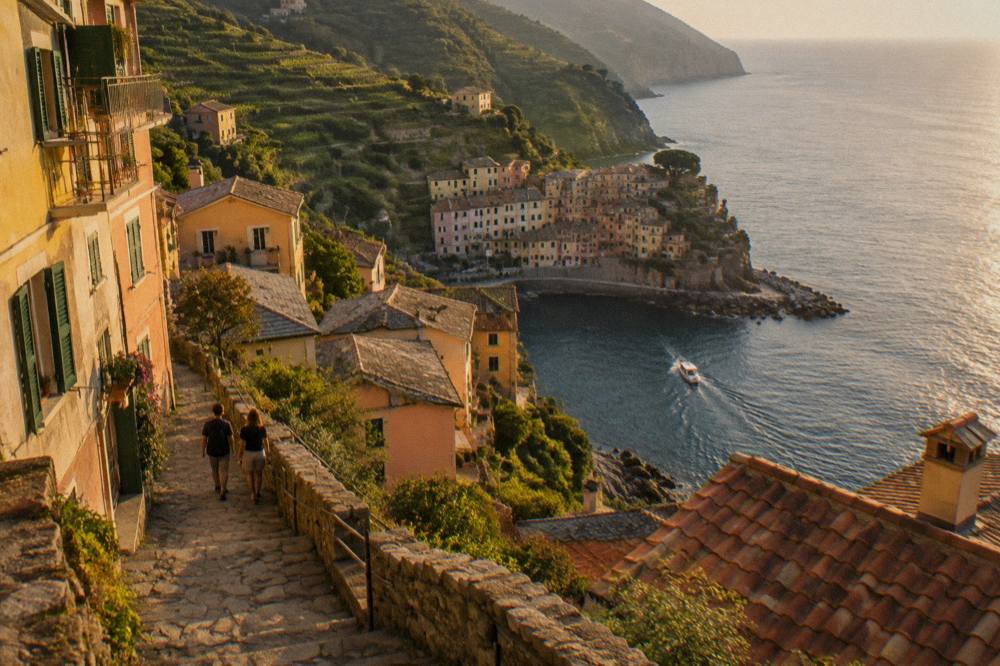
What Should A Wine-Focused Trip To Genoa Budget For?
Budget the wine traveller's Genoa around three numbers: 2.00 EUR for a 110-minute AMT ticket covering the whole urban network, 10.00 EUR for a Met Daily 24-hour ticket if a boat-and-bus day is planned, and 24 EUR for a 24-hour Genoa Museum Card covering 28 city museums if the culture between meals is part of the trip. Accommodation adds the tourist tax, set by the comune of Genoa's tourist-tax page at 2.00 EUR per person per night in 1-star hotels, 2.50 EUR in 2-star, 4.00 EUR in B&Bs and 2.00 EUR in hostels and campsites, for the first 8 consecutive nights.
The transport fares in full:
| AMT ticket | Price | Validity |
|---|---|---|
| Ordinary single | 2.00 EUR | 110 minutes, whole network |
| AMT + Trenitalia integrated | 2.20 EUR | 110 minutes, urban plus limited Trenitalia |
| 5-hour ticket | 5.00 EUR | 5 hours |
| Carnet 11 x 110 min | 20.00 EUR | 11 rides |
| Met Daily | 10.00 EUR | 24 hours, full network incl. Volabus and line 782 |
| Lift or Sant'Anna funicular ride | 1.20 EUR | single ride |
Two additions earn their column width. Volabus, the airport bus linking Genova Cristoforo Colombo airport with Genova Piazza Principe and Genova Brignole in about 30 minutes, has no single fare of its own and requires the Met Daily ticket. And the fixed taxi fare from the airport to the city centre is 25 EUR per car, 30 EUR for more than four people, plus 2 EUR at night and on holidays, so a group of three or four arriving with wine-buying plans may find the car the simple option.
The autumn calendar gives a wine trip a frame, if the dates align:
| Event | 2026 dates |
|---|---|
| Salone Nautico, 66th Genoa International Boat Show | 1 to 6 October |
| Rolli Days, autumn edition | 16 to 18 October |
| Festival della Scienza | 22 October to 1 November |
| Salone Nautico, 67th edition | 30 September to 5 October 2027 |
Rolli Days open the UNESCO-listed Palazzi dei Rolli, the 42 palaces of the Strade Nuove system inscribed in 2006, with free entry and booking required, so a wine trip in October can mix tastings with palace interiors that open rarely. The port itself keeps the scale of the city in view: 2.4 million cruise passengers and 2.6 million ferry passengers passed through in the latest figures the port publishes.
Common Questions About Ligurian Wine
What is Ligurian wine?
Ligurian wine is the wine of Italy's north-western coastal region, whose best-known names are the dry white grapes Vermentino and Pigato and the sweet passito Sciacchetrà from the Cinque Terre. The region's steep, terraced vineyards above the Ligurian Sea produce light, acidic, saline whites made for the local kitchen.
What is the difference between Vermentino and Pigato?
Vermentino is the widely used coastal name, planted on both sides of Genoa, while Pigato is the name used for the western Ligurian plantings on the Riviera di Ponente, typically fuller and more aromatic. Whether the two are distinct grapes or one grape under two names is a standing local debate, and both are dry whites that pair with the same food.
What is Sciacchetrà?
Sciacchetrà is Liguria's sweet passito, made from grapes partially dried before pressing on the terraced cliffs of the Cinque Terre, about 67 km from Piazza De Ferrari in a straight line. It is amber, honeyed and made in small quantities, and it is poured in small glasses at the end of a meal.
What food do you drink Ligurian wine with in Genoa?
Vermentino and Pigato go with pesto genovese on trofie, with focaccia, with farinata and with pansoti, and Sciacchetrà goes with cheese or dessert. The region's whites are acidic enough to cut the basil, oil and cheese that define the Genoese table.
Can you taste Ligurian wine in Genoa without leaving the city?
Yes. Guided food and wine walks move through the old town, cooking classes pour local wine with the meal cooked in the class, and the trattorie and wine bars of the caruggi pour Ligurian whites by the glass. The old town covers 113 hectares and is one of the largest medieval historic centres in Europe.
Is the Cinque Terre a good wine day trip from Genoa?
It is the definitive one, since the Cinque Terre terraces are where Sciacchetrà is made. Regional trains run along the coast from Genova Piazza Principe and Genova Brignole, and Golfo Paradiso runs a Genoa-Cinque Terre boat tour from Porto Antico on listed dates. The Via dell'Amore path is open with a booked time slot under the Cinque Terre Card.
A final planning note: the wines of Liguria are drunk where they are made, which means the best glass of Vermentino you will taste is as likely to be poured in a lane behind Piazza De Ferrari as on a terrace above the Cinque Terre, and both are within a single day of each other on this coast.