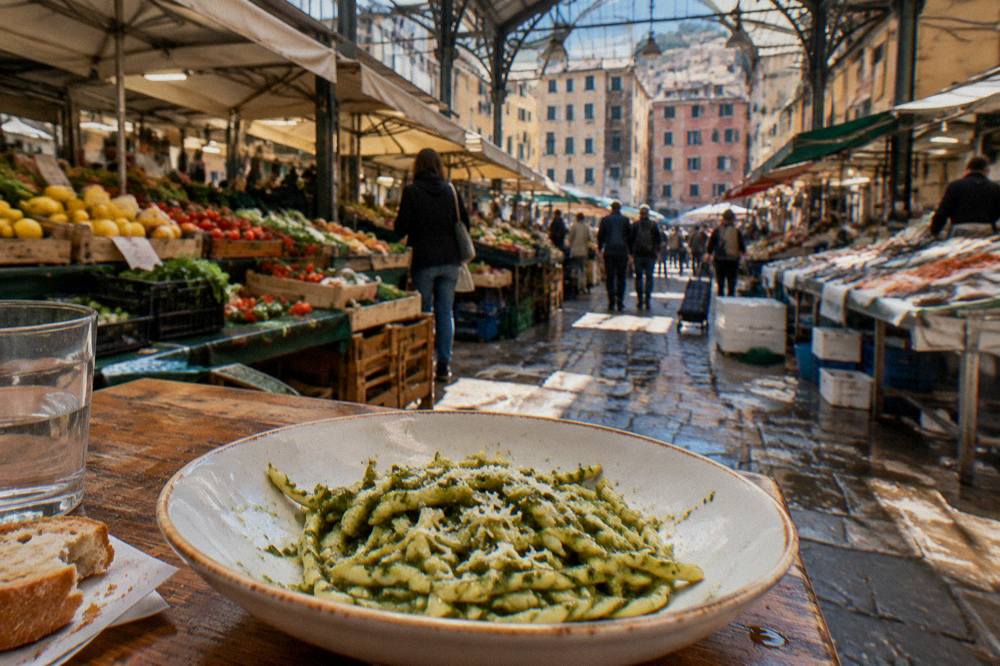
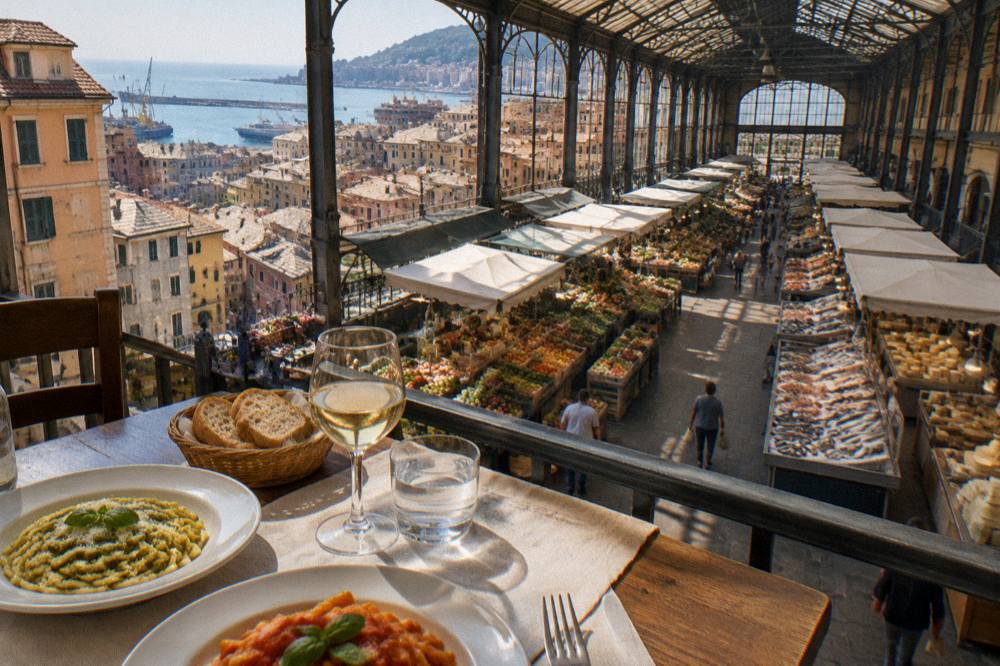
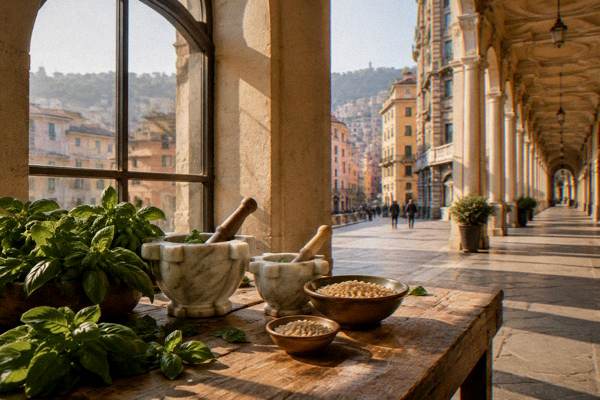
Pesto Genovese: Where To Eat It And What Makes It Genoese
Pesto genovese is Genoa's signature sauce, a cold emulsion of Basilico Genovese PDO basil, cheese, pine nuts, garlic and oil that the city treats as its own legal and culinary property.
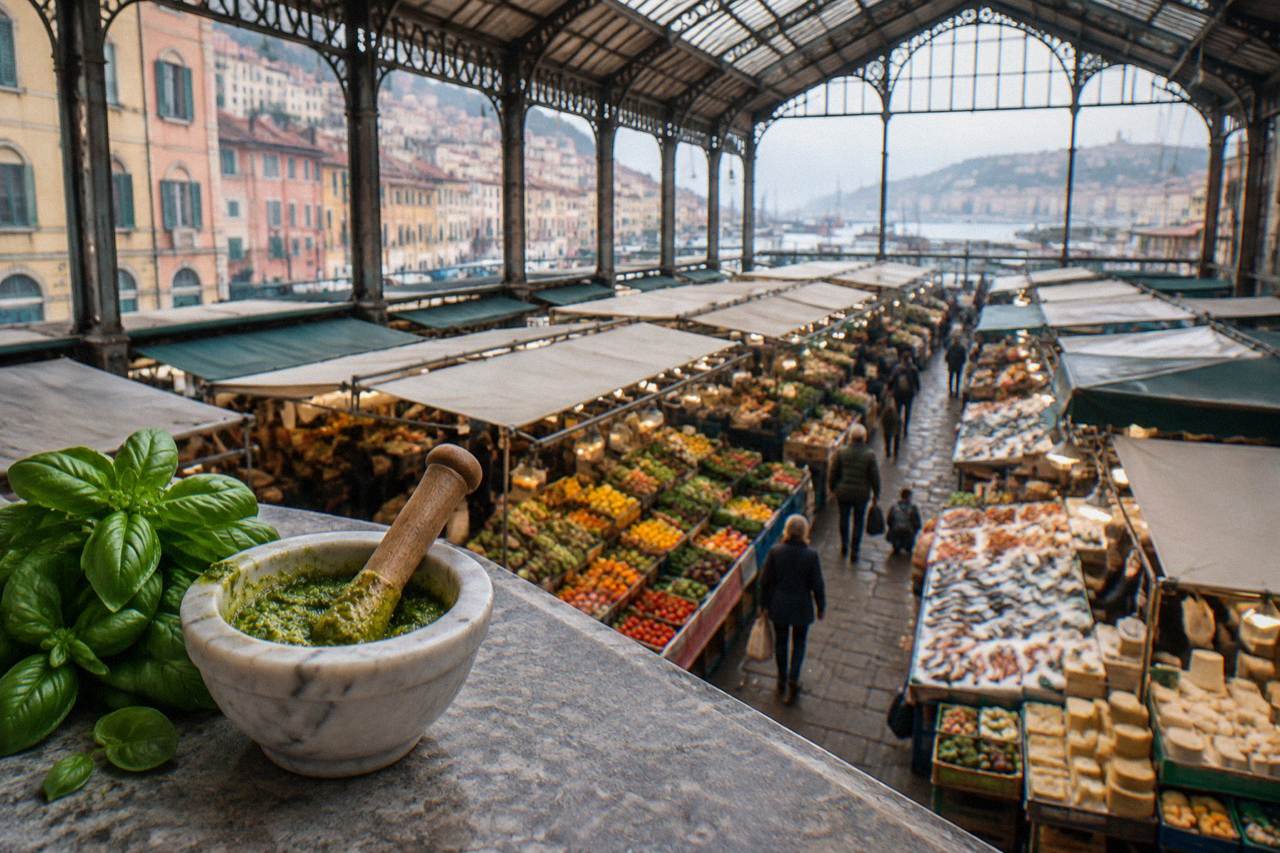
Short answer
Pesto genovese is the basil sauce of Genoa, a coastal city in Liguria on the Ligurian Sea. Its Genoese identity rests on Basilico Genovese PDO basil, the traditional mortar method, and pairings like trofie and focaccia. Eat it in the city's eateries, learn it in a pesto class, and read the rules below before you order.
Pesto genovese is the signature sauce of Genoa, the coastal city in Liguria, north-west Italy, on the Ligurian Sea, and it is treated there less as a recipe than as a regulated piece of local identity. The basil that defines it carries its own protected name, Basilico Genovese PDO, and the mortar method that produces the traditional sauce is taught in classes across the city. This page sets out what the protections actually say, where the sauce fits into the wider table of Genoa, and how to go from tasting it to making it.

What Is Pesto Genovese And Why Is It Genoa's Signature Sauce?
Pesto genovese is a cold basil sauce from Genoa, the port city on the Ligurian Sea, made by working Basilico Genovese PDO basil into cheese, pine nuts, garlic and olive oil without cooking. It is the sauce the city's name travels under, it is pounded rather than blended in the traditional method, and its basil is protected under the Basilico Genovese PDO scheme, which the consortium's own page confirms.
The name is a simple description: pesto from pestare, to pound, and genovese, Genoese. What separates the Genoese version from the general idea of green sauce elsewhere is the raw material. The basil used is Basilico Genovese, a protected designation of origin recognised for basil grown in Liguria under the consortium's rules, and the consortium's English page states plainly that this is the basil for pesto genovese. That single protected ingredient is the hinge on which the whole local claim turns.
The sauce belongs to a family of Genoese foods this site covers together. Focaccia, farinata, trofie and pansoti are the dishes the region is known for, and pesto is the condiment that ties several of them together. Trofie are the classic carrier, the twisted pasta shape that holds a thick sauce, and pansoti, the filled pasta of the region, come with their own walnut sauce rather than pesto, a distinction worth knowing before you order. The wider food picture, including where these dishes sit in a full day of eating, is in the guide to what to eat in Genoa.
Genoa's food reputation does not rest on the sauce alone, but the sauce is the one item on the table with a protected ingredient attached to its name. That is why it is the right place to start a food visit, and why the city's cooking classes, including the pesto lessons listed later on this page, begin with the basil rather than the technique.
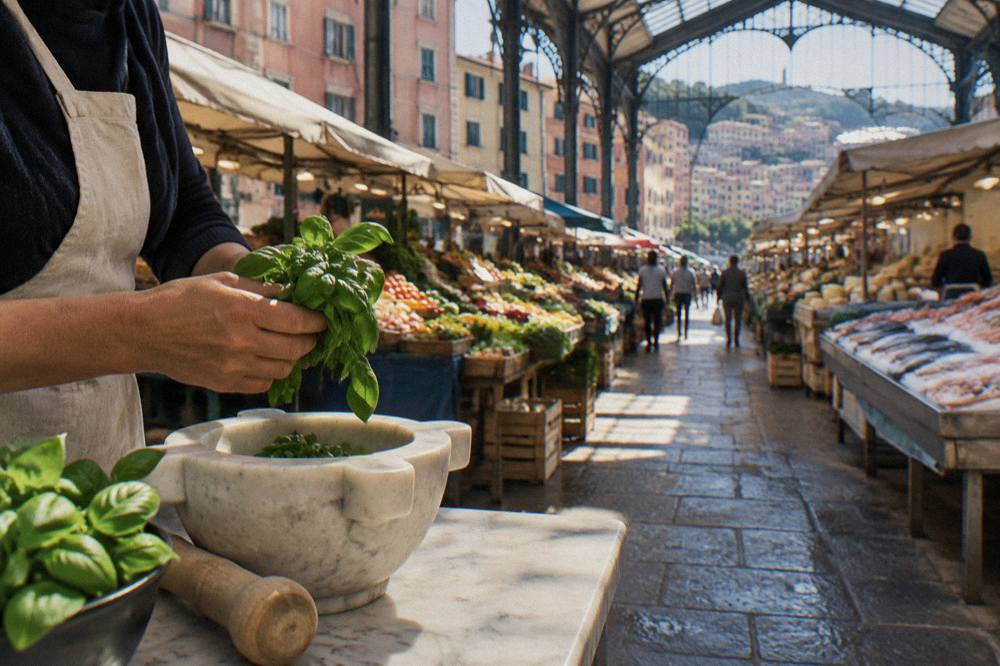
What Makes Pesto Genovese Genoese?
The Genoese identity of pesto genovese rests on two protected and verifiable things: the basil, which is Basilico Genovese PDO, a protected designation of origin held by the consortium at basilicogenovese.it, and the production rules that follow from that protection. The PDO system covers the basil, not the finished sauce, so the sauce's claim is an ingredient claim, and it is the strongest ingredient claim on the Ligurian table.
The distinction matters when you read menus or labels. A pesto made outside the recognised growing area with a different basil cultivar is still a basil sauce, but it is not made with Basilico Genovese PDO. The consortium's page for English readers states that pesto genovese uses this basil, which is the standard a visitor can hold a claim against. The neighbouring protected item on the coast works the same way: focaccia di Recco IGP, protected since 2015, may be produced only in Recco, Camogli, Sori and Avegno, a rule reported by the Riviera's own food pages. Two protections, one for an ingredient, one for a finished dish, and both tied to named places.
| Protected Food | Protection | Year Or Status | Places Or Rules |
|---|---|---|---|
| Basilico Genovese | PDO | In force for Ligurian-grown basil | The basil used for pesto genovese |
| focaccia di Recco | IGP | Protected since 2015 | Produced only in Recco, Camogli, Sori and Avegno |
The table shows the pattern: in this region, food names carry geography. The sauce itself has no PDO of its own, so the honest phrasing is that pesto genovese is defined by its protected basil and its Genoese tradition, not by a protected sauce name. When a class or a menu in Genoa invokes the mortar, that is the tradition being invoked, and the pesto lessons in the city teach exactly that method.
For planning a food-focused stay, the pairing decisions come next. Focaccia is the other pillar of Genoese baking and it has its own page, the guide to focaccia genovese, and the chickpea flatbread farinata sits alongside both, covered in farinata. Between the three pages you have the city's carbohydrate map.
Where To Eat Pesto Genovese In Genoa?
Pesto genovese is eaten across Genoa with trofie, the twisted pasta built to hold it, and with other Genoese dishes listed on menus citywide; no restaurant on this page is named or ranked, because a sourced ranking of individual eateries is not something this site prints. Instead, this section explains how the sauce appears on a Genoese menu and which pairings are the local ones, and points to the walking food tours that cover the ground.
On a menu, the phrase to look for is pesto alla genovese or simply pesto with a named pasta. Trofie al pesto is the standard pairing, and pansoti, the region's filled pasta, are the dish ordered when you want the walnut sauce instead. The sauce also reaches the street-food layer of the city: focaccia and farinata are the two baked items sold on their own, and the guide to Genoa street food covers where they fit in a day of eating. A food walk is the practical way to sample across several counters in one outing, and the guided options are listed below.
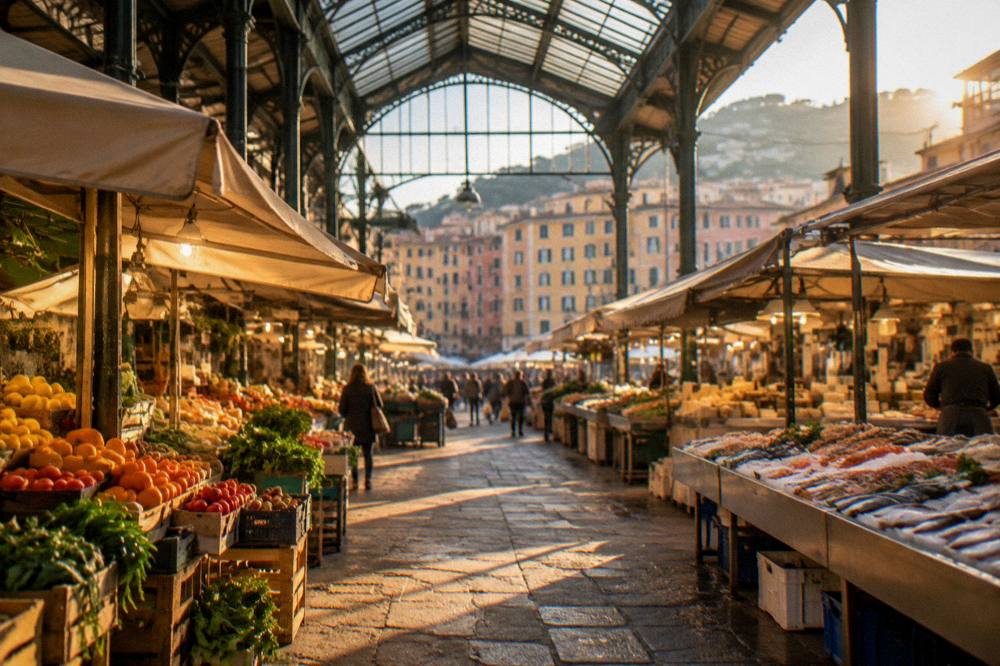
A food tour pairs naturally with the city's market culture. Mercato Orientale on Via XX Settembre is the city's name-market for produce, a place name this site uses without printing opening details, and it is where a food walk's ingredients story begins. For a first visit that stacks the food into a wider plan, the root guide to things to do in Genoa sequences the sights and the eating together, and the dedicated Genoa food tour page describes the walking format in detail. You can Check availability for the pesto lesson through the operator's live listing.
Want to taste these ingredients where locals shop? Book a small-group food tour here.
One curiosity worth answering before it becomes a search of its own: the city's food fame has drawn television attention, and readers ask where Stanley Tucci ate in Genoa, a question this site answers on its own page rather than in passing here.
How Is Pesto Genovese Made With A Mortar?
The traditional method, as taught in Genoa's pesto classes, pounds the ingredients in a mortar with a pestle rather than blade-chopping them in a blender, and the city's pesto lessons are built around that mortar technique. The pesto classes on this site's roster each describe the mortar method in their listings, and one is taught with a world pesto champion, a claim the operator's listing itself makes.
The reason a class is worth the time is that the mortar method is a technique, not just an ingredient list. The lessons offered in Genoa describe pounding the basil with the other components to build the sauce by hand, and the listings frame this as the difference between the traditional sauce and a machine-made one. The classes end with a pasta tasting, so the method and the pairing are learned in one sitting, and several include local wine, which the roster's own descriptions state.
| Class Or Tour | Decision Name | Kind |
|---|---|---|
| Genoese Pesto Lesson with Mortar, Pasta Tasting and Local Wine | Pesto Mortar Lesson, Local Wine | cooking-classes |
| Mortar Pesto Lesson with World Champion and Local Menu with Wine | World Champion Pesto Lesson | cooking-classes |
| Rooftop Cooking Class in Genoa: Pesto, Fresh Pasta and Wine | Rooftop Pesto and Pasta Class | cooking-classes |
| Genoa Culinary Masterclass by Do Eat Better | Hands-On Culinary Masterclass | cooking-classes |
What distinguishes them is format: a straight mortar lesson, a champion-taught lesson with a menu, a rooftop class that adds fresh pasta, and a wider masterclass that places pesto inside a full Genoese repertoire. The straight mortar lesson, this page's featured related tour, is the one to pick when the sauce itself is the point of the trip.
A class also answers the question a jar cannot: what the texture should be when the sauce is done by hand. The listings describe the lesson as hands-on, which means the answer is learned in the wrist rather than read on a label, and the pasta tasting at the end closes the loop between method and dish.
Can You Learn Pesto Genovese In A Cooking Class In Genoa?
Yes, and the cooking-class roster for Genoa on this site includes several pesto lessons, among them a mortar lesson with pasta tasting and local wine, a champion-taught mortar lesson with a menu, and a rooftop class covering pesto and fresh pasta together. The formats differ enough to choose by goal.
Choosing between them comes down to what you want to walk away with. The mortar lesson with pasta tasting and local wine is the focused option. The champion lesson adds a full local menu around the sauce. The rooftop class folds pesto into a broader pasta lesson, and the masterclass treats it as one station in a wider Genoese repertoire. A family or a group that wants the sauce plus the city around it might pair a class with a food walk; the wine-tasting walk in the picks band above covers the eating half of that plan. The full index of guides sits on Genoa Travel Guide.
| Lesson Format | What The Listing Says It Covers | Best For |
|---|---|---|
| Mortar lesson with wine | Pesto by mortar, pasta tasting, local wine | Visitors whose main goal is the sauce |
| Champion mortar lesson | Mortar pesto with a menu and wine | A longer food occasion |
| Rooftop class | Pesto, fresh pasta and wine on a rooftop | Combining sauce and pasta making |
| Culinary masterclass | A hands-on Genoese cooking session | A wider repertoire beyond pesto |
Booking is the simple part. Each listing holds its own live price, rating and availability, and this site never prints those figures into prose, so the blocks above and the inline check link earlier in this page are the places where the numbers appear. Any event dates should be confirmed on the official site.
When Is Basil Season Around Genoa?
Basil around Genoa grows in a Mediterranean coastal climate, and the official 1971-2000 climate normals for Genoa Sestri, the Aeronautica Militare station at the airport, record mean daily highs from 11.5 C in January to 27.7 C in August, with monthly rainfall peaking at 171.3 mm in October and falling to 24.2 mm in July. Those figures describe the growing conditions, not a harvest calendar, which no source here fixes.
The climate table is the honest way to talk about season on this page, because temperature and rain are the only seasonal figures the station publishes that this site is allowed to print. The Ligurian coast stays mild through winter, warm through summer, and carries a dry summer and a wet autumn, which is the backdrop to every herb grown between the sea and the hills. For planning a visit around weather rather than basil, the full picture is in Genoa weather and the broader best time to visit Genoa.
| Month | Mean High C | Mean Low C | Rain Mm |
|---|---|---|---|
| Jan | 11.5 | 5.5 | 101.8 |
| Feb | 12.2 | 6.0 | 74.0 |
| Mar | 14.6 | 8.2 | 81.7 |
| Apr | 16.8 | 10.5 | 88.0 |
| May | 20.5 | 14.2 | 72.4 |
| Jun | 23.9 | 17.6 | 58.2 |
| Jul | 27.3 | 20.9 | 24.2 |
| Aug | 27.7 | 21.0 | 69.3 |
| Sep | 24.4 | 17.9 | 136.4 |
| Oct | 20.0 | 13.8 | 171.3 |
| Nov | 15.1 | 9.2 | 108.8 |
| Dec | 12.5 | 6.5 | 93.1 |
Read the columns rather than the seasons. October, at 171.3 mm the month with the highest rain total in the normals, is also the month of the Salone Nautico boat show, which ran 1 to 6 October in 2026 and returns 30 September to 5 October 2027, so an October food trip shares the city with the maritime calendar. July, at 24.2 mm the month with the lowest total, sits inside the warm stretch where the mean high reaches 27.3 C. None of this predicts queues, crowds or class availability, and this site makes no such prediction.
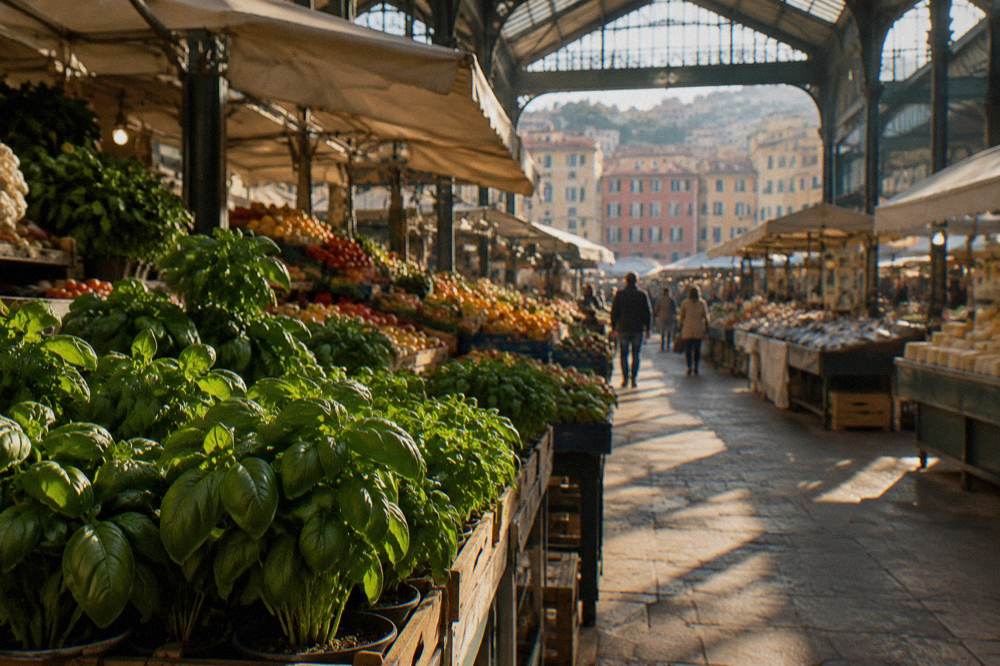
Which Food Day Trips From Genoa Pair With A Pesto Trip?
The pesto towns of the coast sit within easy reach of Genoa by boat and train, with Camogli about 18 km, San Fruttuoso about 22 km, Santa Margherita Ligure about 24 km and Portofino about 25 km from Piazza De Ferrari in straight-line kilometres, and Golfo Paradiso's own tour pages list the boat connections from Genoa Porto Antico, with the Two Gulfs tour running from March 2026 on listed dates.
The reason these towns matter to a food page is focaccia di Recco. The IGP rule limits its production to Recco, Camogli, Sori and Avegno, so the cheese-filled focaccia that shares the coast with pesto is a named-place food in exactly the way the basil is. A boat day from Genoa's Porto Antico can put you in that zone for lunch, and the Golfo Paradiso pages state the Two Gulfs itinerary with departures from Porto Antico at 11:00 and about 30 minutes of crossing between the stops after Camogli. Camogli to San Fruttuoso boats run year round, with Recco served from April to September, per the operator's own line pages.
| Destination | Straight-Line Km From Piazza De Ferrari | Connection Listed By Operators |
|---|---|---|
| Camogli | about 18 | Two Gulfs boat tour from Porto Antico |
| San Fruttuoso | about 22 | Two Gulfs tour and Camogli boats, year round |
| Santa Margherita Ligure | about 24 | Tigullio boat lines and regional trains |
| Portofino | about 25 | Two Gulfs tour, Tigullio lines |
| Sestri Levante | about 40 | Tigullio boat line 2 from Sestri Levante |
The pairing logic is simple. Spend the morning in Genoa at a pesto class or a food walk, then let the afternoon or the next day run down the coast to where the second protected food lives. The full day-trip mechanics, including the Portofino boat options from the city, are covered in the guides to Genoa to Portofino and Genoa to the Cinque Terre, and the wider regional plan is in the Italian Riviera itinerary's companion pages on getting around.
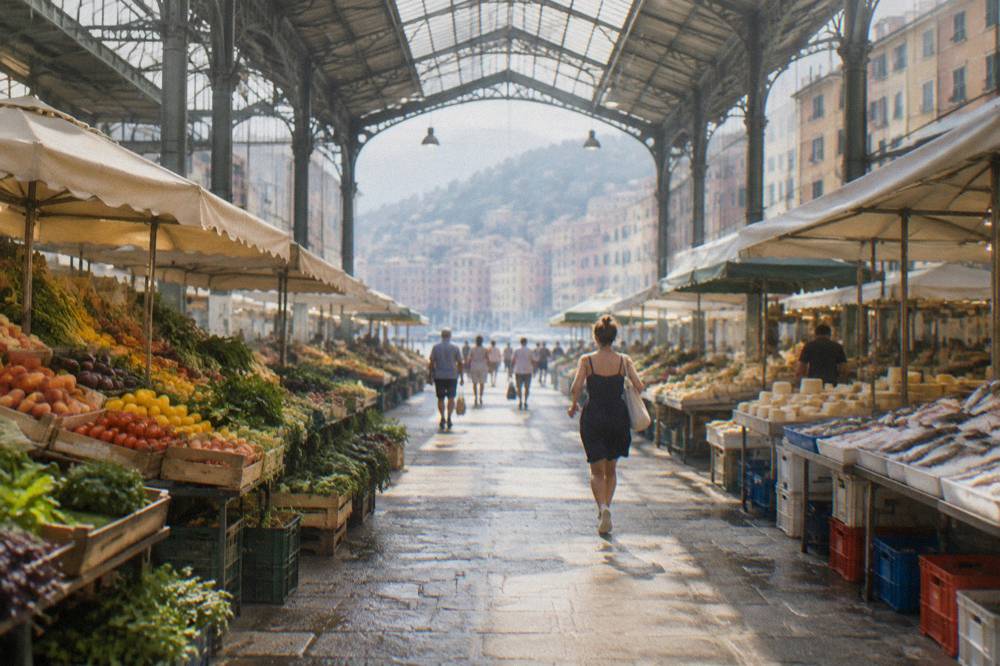
What Should You Plan Around A Pesto Visit To Genoa?
A pesto-centred visit to Genoa works as a two-day shape: one day for the city's food layer, a class and a walk through the old town and Mercato Orientale on Via XX Settembre, and one day for the coast where the focaccia di Recco IGP zone begins, using the boat tours listed from Porto Antico. Transport inside the city runs on an AMT ticket at 2.00 EUR for 110 minutes, and the Met Daily at 10.00 EUR covers the airport Volabus too.
Those two fares are the only transport numbers this site prints for the city, and they are the ones that matter for a food trip: the ordinary ticket for a day of short hops, and the Met Daily, which AMT's own pages state is the ticket Volabus requires, for the arrival day. The planning sequence, with the sights threaded between meals, is laid out in Genoa in two days's companion itinerary pages and the root things to do in Genoa guide, and the neighbourhood logic for staying near the eating is in the where-to-stay guide.
| Planning Item | Figure Or Rule | Source Basis |
|---|---|---|
| AMT ordinary ticket | 2.00 EUR, 110 minutes | AMT fare pages |
| Met Daily 24h, covers Volabus | 10.00 EUR | AMT fare pages |
| Museum Card 24 hours | 24 EUR, 28 city museums | 2026 rates on the museums' page |
| Museum Card 48 hours | 45 EUR | 2026 rates on the museums' page |
The museum card row is there because a food trip in Genoa tends to absorb a palace or two between meals, and the Strade Nuova museums sit on the food walk's route. In the winter timetable from 28 September 2026 to 18 April 2027 they open daily 10:00 to 18:30, with Monday visits limited to Palazzo Rosso, and the combined Strada Nuova ticket with Sant'Agostino is 14 EUR full and 9 EUR reduced. The card details are expanded in the Genoa Museum Card guide.
Common Questions About Pesto Genovese
What is pesto genovese?
A cold basil sauce from Genoa, made by pounding Basilico Genovese PDO basil with cheese, pine nuts, garlic and olive oil. The name comes from pestare, to pound, and genovese, Genoese, and the protected basil is what makes the Genoese claim specific.
What basil is used for pesto genovese?
Basilico Genovese PDO, the protected designation of origin for Ligurian-grown basil. The consortium's own page states this is the basil for pesto genovese, and it is the strongest protected claim on the city's table.
What pasta do you eat with pesto in Genoa?
Trofie, the twisted pasta shape that holds a thick sauce, is the classic pairing. Pansoti, the region's filled pasta, come with a walnut sauce instead, a distinction worth checking on the menu.
Can I take a pesto making class in Genoa?
Yes. The class listings on this page include a mortar lesson with pasta tasting and local wine, a champion-taught mortar lesson with a menu, and a rooftop class combining pesto and fresh pasta.
Is pesto genovese protected like focaccia di Recco?
The basil is protected, the sauce name is not. Basilico Genovese holds a PDO as an ingredient, while focaccia di Recco holds an IGP as a finished dish, protected since 2015 and producible only in Recco, Camogli, Sori and Avegno.
Where did pesto genovese come from?
Genoa, the coastal city in Liguria where the sauce's name and its protected basil are anchored. This site prints no invented recipe history beyond that: the verifiable claims are the PDO basil, the mortar tradition the city's classes teach, and the sauce's place in the Genoese repertoire alongside focaccia, farinata, trofie and pansoti.
The short version: eat the trofie, read the menu for the PDO claim, take the mortar class, and let the boat down the coast carry you to the second protected food of the same shoreline. That is a full Genoese food plan built on two protected names and one very good sauce.