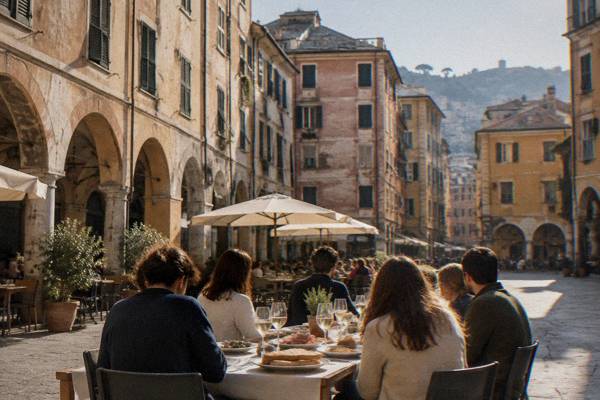
Best Restaurants In Genoa: Trattorie, Seafood And Where Locals Eat
This guide sets out what to order, which parts of the city to eat in, and what a food-focused visit costs.
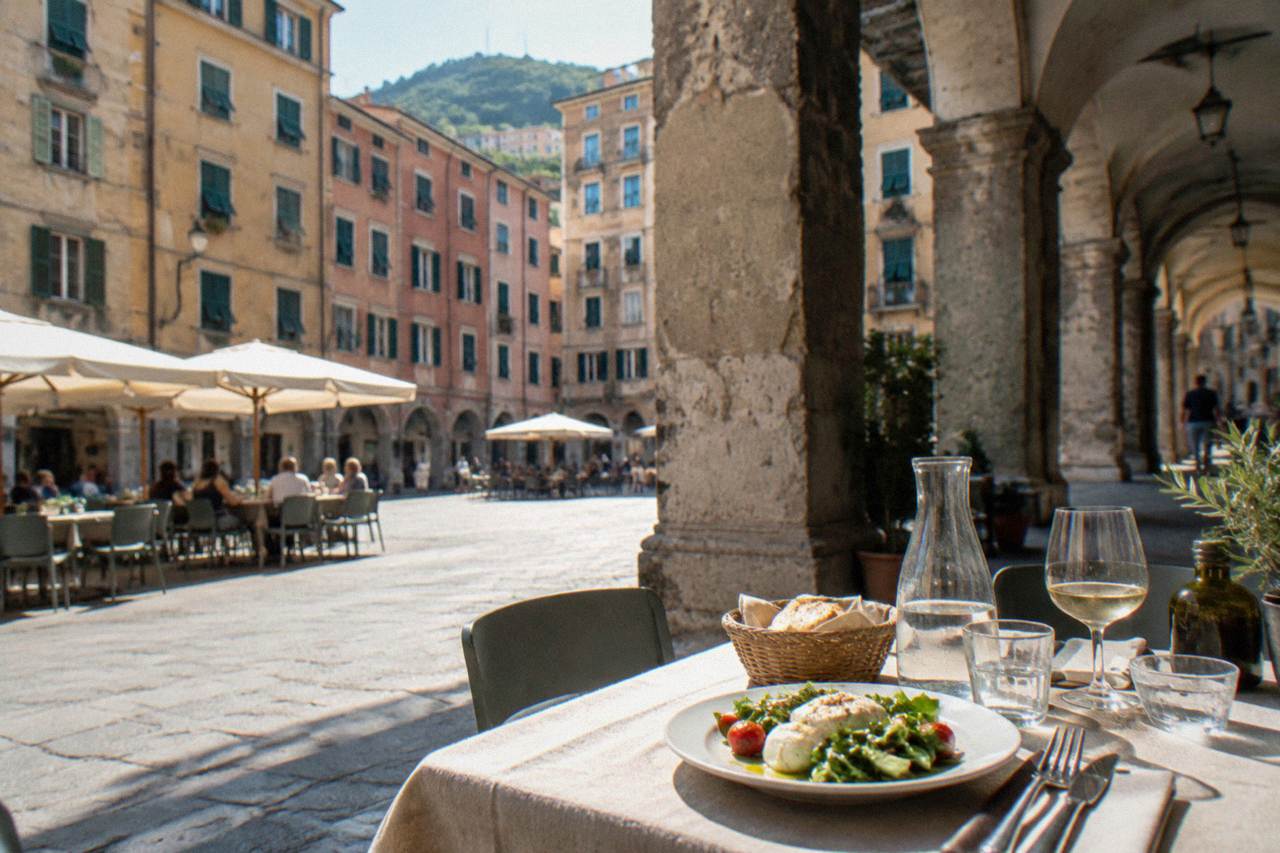
Short answer
Eat pesto genovese with trofie, focaccia, farinata and pansoti, and look for seafood near the old harbour and the eastern seafront. Book a food tour or cooking class for the first evening, use the 2.00 EUR AMT ticket to move between quarters, and pair the city with a Recco or Camogli day trip for focaccia di Recco IGP.
Genoa feeds itself from a narrow coastal strip in Liguria, north-west Italy, where the Ligurian Sea meets the Apennine hills and the kitchen answers with herbs, bread, pulses and fish rather than heavy meat. The city's eating culture is anchored by five dishes this site can name with confidence: pesto genovese, focaccia, farinata, trofie and pansoti. Around them sits a wider scene of trattorie and seafood kitchens spread through one of the largest medieval historic centres in Europe, the seafront at Boccadasse and Nervi, and the day-trip coast towards Recco and Camogli, where focaccia di Recco holds IGP status.
No restaurant, trattoria, café or bakery on this site carries a rating or a price, because none of those figures comes from a source the site can stand behind. What it does instead is give the structure of a food trip to Genoa in facts: the dishes and what defines them, the quarters of the city where eating happens, the food tours and cooking classes whose prices render live from the listings below, the licensed costs of moving around, and the calendar and climate that shape when to go. Start with what to eat in Genoa for the full dish-by-dish picture, then use this page to build the days around it.

What Should You Eat In Genoa?
The five dishes to order in Genoa are pesto genovese served with trofie, focaccia genovese, farinata, pansoti with walnut sauce, and fresh fish from the Ligurian Sea, and the single most place-specific fact on the plate is that authentic pesto genovese is made with Basilico Genovese, a basil protected by PDO status. Beyond those five, the regional identity runs through focaccia di Recco, a cheese-filled flatbread with IGP status since 2015, produced only in Recco, Camogli, Sori and Avegno. The port and the ferry terminals mean fish and seafood reach kitchens quickly, and the hills behind the city supply the herbs and nuts the cuisine is built on.
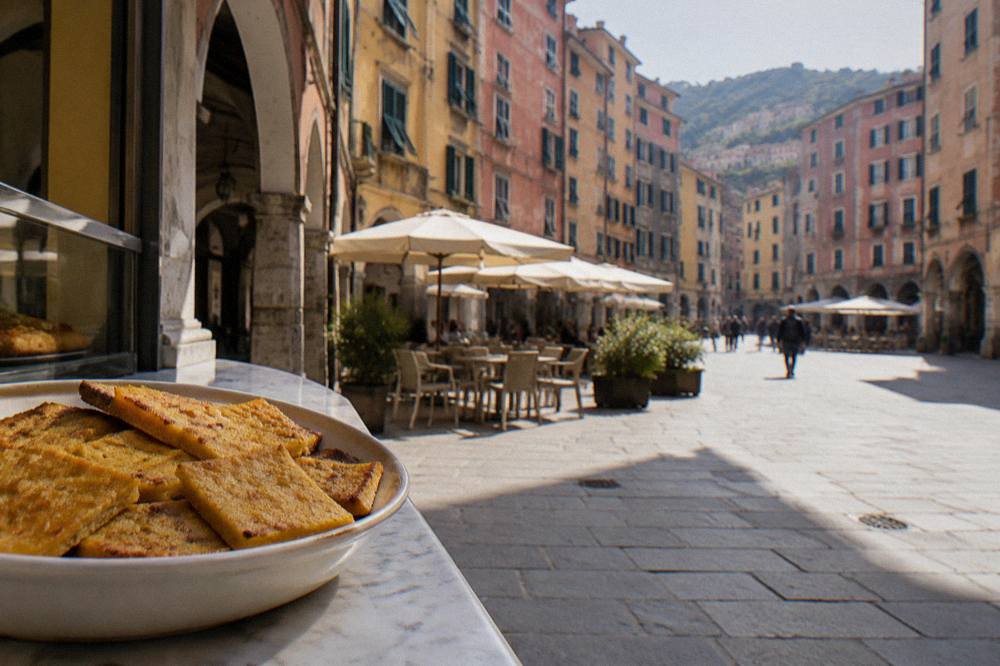
Pesto is the headline. The protected basil specification covers how Basilico Genovese is grown in the defined Ligurian area, and the sauce made from it, with pine nuts, garlic, cheese and oil, is the city's signature. Trofie are the twisted pasta that carries it, and pansoti are the filled pasta served with a walnut sauce that reflects the wooded inland. Farinata, a thin chickpea pancake baked in a wood oven, belongs to the same Ligurian tradition and appears across the city's bakeries and trattorie. The pesto genovese guide and the focaccia guide cover each in depth.
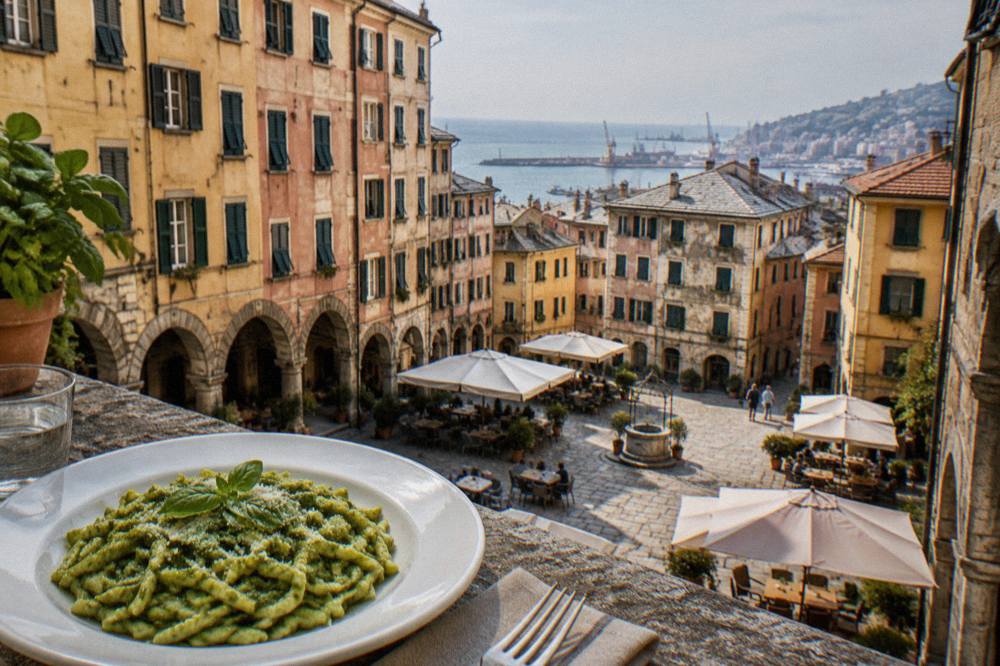
Seafood completes the picture. Genoa is a working port as well as a ferry hub, with 2.6 million ferry passengers a year passing through the Stazioni Marittime terminals, and the fish supply chain behind the restaurants reflects that coastal position. Order what the Ligurian Sea provides and let the kitchen choose, which is the honest way to eat fish in a port city.
| Dish | What It Is | Key Fact |
|---|---|---|
| Pesto genovese | Basil sauce with pine nuts, garlic, cheese and oil | Made with Basilico Genovese PDO basil |
| Trofie | Small twisted pasta | The classic partner for pesto |
| Pansoti | Filled pasta | Traditionally served with walnut sauce |
| Focaccia genovese | Salted, oiled flatbread | A Genoese staple across the city's bakeries |
| Farinata | Thin chickpea pancake | Baked in the Ligurian tradition |
| focaccia di Recco | Cheese-filled flatbread | IGP since 2015, made only in Recco, Camogli, Sori and Avegno |
Where Do Locals Eat In Genoa?
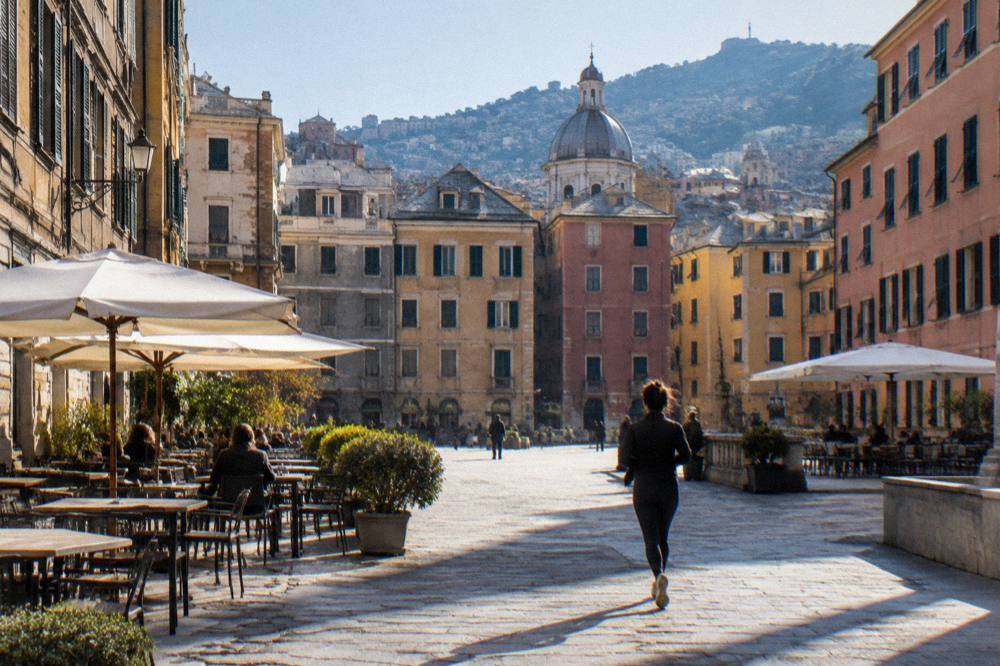
Eating in Genoa concentrates in four areas: the caruggi, the narrow lanes of the old town, a 113-hectare medieval centre described by the city's own tourism site as one of the largest in Europe, the Mercato Orientale area on Via XX Settembre, the seafront at Boccadasse and Nervi, and the Porto Antico waterfront redeveloped by Renzo Piano for the 1992 Columbus Expo. Each quarter carries a different food mood: the caruggi for small kitchens and bakery counters, Via XX Settembre for the market streets and the shop-lined spine of the modern city, the eastern seafront for fish and a promenade, and the old harbour for eating beside the Aquarium and the Bigo lift.
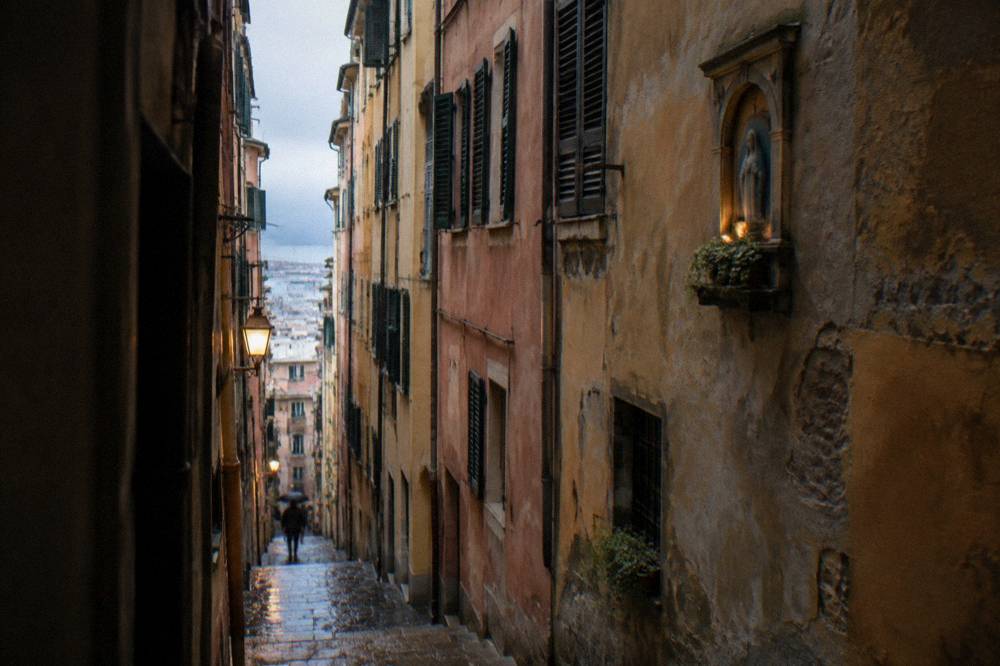
The old town is where the city's food identity is densest. The caruggi, the narrow medieval lanes, hold the bakeries that sell focaccia and farinata and the trattorie that serve trofie and pansoti. The Casa di Colombo, where Christopher Columbus lived between 1455 and 1470, stands in this same historic fabric, and the Strade Nuove and the Palazzi dei Rolli, the UNESCO World Heritage site inscribed in 2006 with 42 palaces, run immediately to its north along Via Garibaldi.
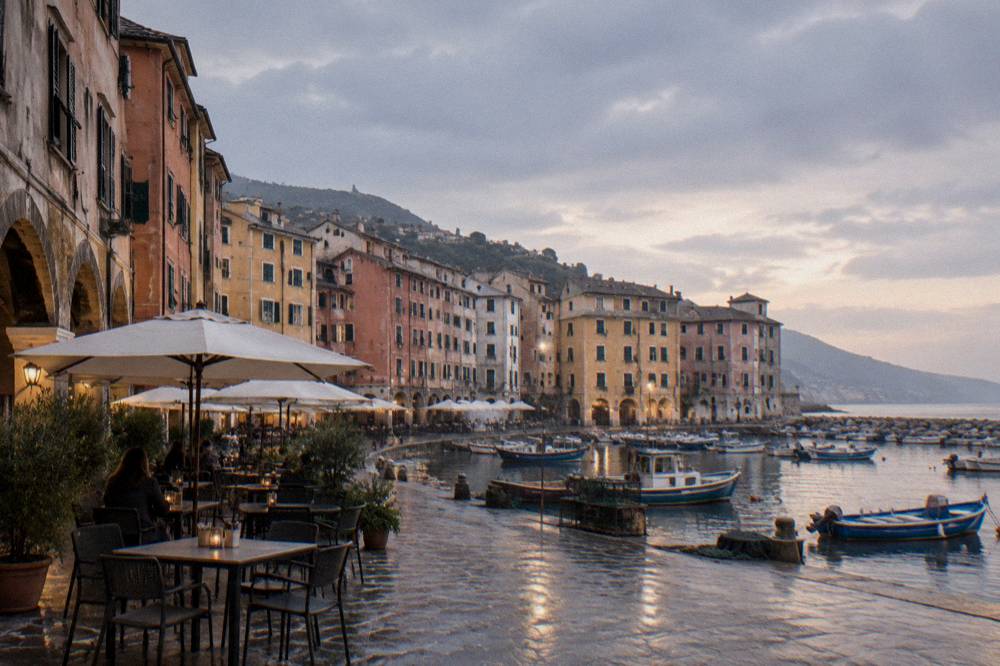
East along the coast, Boccadasse is the fishing village swallowed by the city, a small bay of coloured houses between Corso Italia and Capo Santa Chiara, about 4 km in a straight line from Piazza De Ferrari. Corso Italia, a seaside promenade of about 2.5 km, links it back towards the centre. Nervi, about 9 km out, adds the Passeggiata Anita Garibaldi cliff walk and the 9.2-hectare Parchi di Nervi. Both make a fish lunch straightforward to combine with a walk, and the ARPAL 2026 bathing classifications give the sea there a mixed picture: Boccadasse is classed SCARSA, or poor, while Nervi is BUONA, so swim at Nervi and eat at either.
A guided walk is one efficient way into the old town's food layer. The Genoa food, wine tasting and history walking tour moves through the historic centre with tastings along the route, and it can be checked for dates here: Check availability. For a wider first look at the city, things to do in Genoa lists the sights that pair with each eating quarter.
How Much Does A Food Trip To Genoa Cost?
The local costs that shape a food trip to Genoa are the 2.00 EUR AMT ticket valid 110 minutes on the whole urban network, the 10.00 EUR Met Daily 24-hour ticket that also covers the Volabus airport bus and line 782 towards Portofino, the fixed 25 EUR airport taxi to the centre, and the tourist tax, which runs from 2.00 EUR per person per night in 1-star hotels to 4.00 EUR in B&Bs, with only the first 8 consecutive nights taxed. Restaurant prices themselves are not quotable on this site, so plan the budget around transport, tax and the paid experiences whose live prices render in the blocks on this page.
Getting around is cheap and simple. A single AMT ticket covers 110 minutes across buses, the metro's 8 stations from Brin to Brignole, lifts and the Zecca-Righi funicular, which runs daily 06:40 to 24:00. The lift ride on the Castelletto Levante lift or the Sant'Anna funicular costs 1.20 EUR, and the Spianata Castelletto viewpoint at the top is one of the classic before-dinner stops. The full transport picture, including the integrated 2.20 EUR AMT-Trenitalia ticket and the 20.00 EUR carnet of 11 rides, sits in the Genoa public transport guide.
| Item | Verified Cost | Note |
|---|---|---|
| AMT single ticket | 2.00 EUR | 110 minutes, whole urban network |
| AMT and Trenitalia integrated | 2.20 EUR | 110 minutes with limited rail |
| Lifts and Sant'Anna funicular | 1.20 EUR | Per ride |
| Met Daily 24-hour | 10.00 EUR | Includes Volabus and line 782 |
| Airport taxi to centre | 25 EUR per car | 30 EUR over 4 people, plus 2 EUR at night |
| Tourist tax, 1-star hotel | 2.00 EUR | Per person per night |
| Tourist tax, B&B | 4.00 EUR | Per person per night |
Museum costs matter too if eating is only half the plan. The Genoa Museum Card costs 24 EUR for 24 hours and 45 EUR for 48 hours under the 2026 rates and covers 28 city museums, and the combined ticket for the Musei di Strada Nuova and the Museo di Sant'Agostino is 14 EUR full price, 9 EUR reduced. The Genoa Museum Card guide breaks down what the card includes and what it does not. For travellers watching every euro, Genoa on a budget collects the free layers of the city, from the caruggi themselves to the Spianata Castelletto.
Which Food Tours And Cooking Classes Can You Book In Genoa?
Genoa's bookable food experiences fall into three types: guided food walks with tastings, hands-on cooking classes centred on pesto and fresh pasta, and combination tours that mix food with city history, and every price and rating on this page renders live from the listings rather than being typed here. The tours below are the trio this site pairs with a restaurants-first trip, chosen because each covers a different slice of the eating culture: a guided walk, a full cooking masterclass, and a private city tour that leaves the evenings free for dinner.
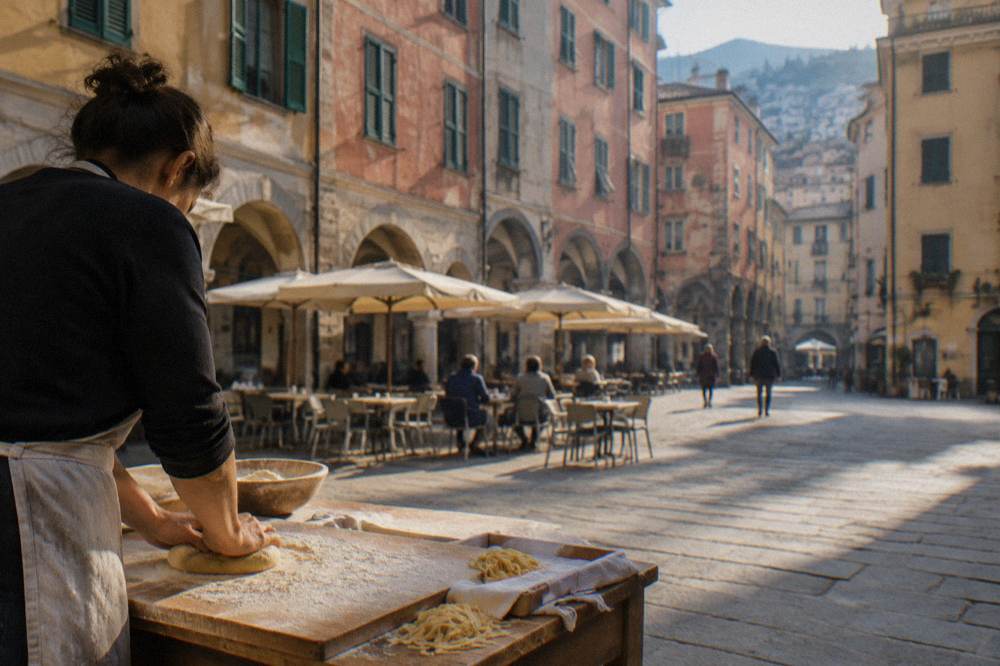
The food and wine walk suits a first evening. The culinary masterclass by Do Eat Better is the deeper option for cooks who want to make the dishes, not just eat them, and the private city tour with a local guide covers the city itself, which frees the rest of the day for the food quarters above. The listing prices, ratings and durations for all three render in the band above.
Two further options fill specific gaps. For a full meal in company rather than a class, there is this one:
For visitors whose priority is making pesto with a mortar, this class covers exactly that:
A rooftop setting adds the city view to the cooking:
Between tours, the Stanley Tucci effect has made Genoa's food scene a search topic of its own: the question of where Stanley Tucci ate in Genoa is answered separately in the site's answers section. For the evening layer, Genoa nightlife covers what the city offers after the kitchens close.
Can You Pair Genoa Restaurants With A Coastal Day Trip?
The strongest food day trips from Genoa are Recco and Camogli, because focaccia di Recco IGP has been produced only in Recco, Camogli, Sori and Avegno since receiving IGP status in 2015, and Golfo Paradiso runs boat tours from Genoa Porto Antico that call at Camogli, San Fruttuoso and Portofino, with the full-day Two Gulfs tour reported at about 29 EUR and half-day options at about 21 to 26 EUR. Camogli is about 18 km in a straight line from Piazza De Ferrari, Portofino about 25 km, and the boats run on listed dates from March through the season.
The Two Gulfs tour departs Porto Antico at 11:00 and reaches Camogli at 11:45, with crossings of about 30 minutes between Camogli, San Fruttuoso and Portofino, per the operator's own schedule page. Camogli to San Fruttuoso boats run year-round from Camogli. At San Fruttuoso the FAI-run abbey charges 10 EUR full entry, 5 EUR for visitors aged 6 to 18 and students up to 25, and under-5s go free, which makes the stop as much heritage as food. The full mechanics, including the Cinque Terre cards, are in the Genoa to Portofino guide and the Genoa to Cinque Terre guide.
| Destination | Straight-Line Distance From Piazza De Ferrari | Licensed Access Fact |
|---|---|---|
| Boccadasse | About 4 km | Corso Italia promenade, about 2.5 km |
| Nervi | About 9 km | Train to Genoa Nervi station beside the promenade |
| Camogli | About 18 km | Golfo Paradiso Two Gulfs tour stop, 11:45 arrival |
| San Fruttuoso | About 22 km | FAI abbey entry 10 EUR full, 5 EUR reduced |
| Portofino | About 25 km | ZTL in force, non-resident parking about 8 EUR per hour |
| Sestri Levante | About 40 km | On the Ligurian coast rail line |
Portofino needs a car-free plan: the village sits inside a limited-traffic zone where non-residents use paid parking reported at about 8 EUR per hour, and the Met Daily ticket covers AMT line 782 from Santa Margherita Ligure, which makes the bus-and-boat combination the practical route. A food trip that starts with focaccia in Recco, boats to San Fruttuoso for lunch and ends in Portofino for the afternoon is the fullest version of the coast, and the whole eastern Riviera chain is mapped in the site's Italian Riviera coverage.
Where Should You Stay To Be Near Genoa's Restaurants?
The tourist tax is the only lodging figure this site can state: from 2.00 EUR per person per night in 1-star hotels and hostels, 2.50 EUR in 2-star, 4.00 EUR in B&Bs and other extra-hotel accommodation, up to the reported 3 to 5 EUR range for 3-, 4- and 5-star hotels, charged on only the first 8 consecutive nights, with under-14s exempt, under tariffs effective 1 August 2026. Hotel names and nightly rates are outside what the site verifies, so the choice of area comes down to which eating quarter you want on the doorstep.
Staying inside or beside the old town puts the caruggi, the Cathedral of San Lorenzo and the Musei di Strada Nuova within walking distance, and the winter timetable there, from 28 September 2026 to 18 April 2027, opens the three palaces daily 10:00 to 18:30 with the Monday exception of Palazzo Rosso only. The eastern quarters towards Boccadasse and Nervi trade medieval density for the seafront, and the where to stay in Genoa guide maps the trade-offs area by area.
Cruise passengers have the shortest path of all: the terminals at Ponte dei Mille and Andrea Doria sit beside the Porto Antico, and the question can you walk into Genoa from a cruise port has a dedicated answer in the site's cruise coverage at Genoa cruise port. Arrivals by air land at Genova Cristoforo Colombo airport, about 7 km in a straight line from Piazza De Ferrari, connected by the Volabus to Genova Piazza Principe, De Ferrari and Genova Brignole in about 30 minutes with the Met Daily ticket. The Genoa airport guide has the detail.
| Lodging Category | Tourist Tax Per Person Per Night |
|---|---|
| 1-star hotels, hostels, campsites | 2.00 EUR |
| 2-star hotels | 2.50 EUR |
| 3-star hotels | 3 EUR (reported) |
| 4-star hotels | 4 EUR (reported) |
| 5-star hotels | 5 EUR (reported) |
| B&Bs and extra-hotel accommodation | 4.00 EUR |
When Is The Best Time To Eat Your Way Through Genoa?
The official 1971-2000 climate normals for Genoa Sestri show why the eating calendar matters: October carries the highest monthly rainfall at 171.3 mm while July carries the lowest at 24.2 mm, August has the highest mean daily high at 27.7 C and January the lowest mean daily low at 5.5 C, so terraces and focaccia walks belong to the warm dry months and the caruggi trattorie to any month at all. The city's food identity does not close for winter, and the autumn event calendar gives an October or early November visit a second layer beyond the table.
The 2026 autumn calendar is specific. The Salone Nautico, the Genoa International Boat Show, ran 1 to 6 October 2026 in its 66th edition, and the 67th runs 30 September to 5 October 2027. The autumn Rolli Days opened palaces from the UNESCO list across the city from Friday 16 to Sunday 18 October 2026, with free entry and booking required, marking 20 years since the 2006 inscription. The Festival della Scienza followed from Thursday 22 October to Sunday 1 November 2026 under the theme "Prospettive". Any of these gives a food trip a daytime spine while the evenings stay for dinner.
| Month | Mean High C | Mean Low C | Rainfall MM |
|---|---|---|---|
| January | 11.5 | 5.5 | 101.8 |
| March | 14.6 | 8.2 | 81.7 |
| May | 20.5 | 14.2 | 72.4 |
| July | 27.3 | 20.9 | 24.2 |
| September | 24.4 | 17.9 | 136.4 |
| October | 20.0 | 13.8 | 171.3 |
The full monthly table and the reasoning by season sit in the Genoa weather guide and the best time to visit Genoa guide. One planning note for seafood diners: ARPAL's 2026 bathing classifications rate the water at Nervi BUONA and Boccadasse SCARSA, which affects swimming plans rather than lunch plans, and the region-wide picture, 97 per cent of Ligurian sampling points classed excellent or good, is on the ARPAL balneazione pages.
How Do You Build A Full Eating Day In Genoa?
A workable eating day in Genoa runs focaccia from a caruggi bakery in the morning, the Mercato-adjacent streets around Via XX Settembre at midday, a viewpoint stop at the Spianata Castelletto reached by the 1.20 EUR lift, an afternoon in a museum or on the boats from Porto Antico, and trofie with pesto or fish in the evening, all held together by the 2.00 EUR AMT ticket's 110 minutes of travel. The Aquarium of Genoa, open 365 days a year with fixed-date adult tickets from 26.00 EUR per its own ticket page, sits at the Porto Antico end of the day and pairs naturally with a waterfront dinner.
The order can flex. A morning lift ride to the Spianata Castelletto costs 1.20 EUR on the Castelletto Levante lift, which runs daily 06:40 to 24:00, and the Zecca-Righi funicular serves the same hours on its 7-station line. The Musei di Strada Nuova, holding Paganini's 1743 violin "Il Cannone" at Palazzo Doria-Tursi, fill a rainy interval, and the Genoa museums guide tracks the full list the Museum Card unlocks. For a same-day structure already worked out, Genoa in one day sequences the sights around the meals.
Cooking your own lunch is the alternative structure, and a class turns the eating day into the souvenir. The masterclass option in the trio above covers the hands-on route, and the rooftop class in the solo block pairs pesto and fresh pasta with the city skyline. Whichever way the day is built, the emergency number in Italy is 112, and the tourist information offices at IAT Garibaldi, Via Garibaldi 12r, open daily 09:00 to 18:20, and IAT Porto Antico, Ponte Spinola, daily 10:00 to 17:00, are the walk-in points for printed guidance.
Common Questions About Eating Out In Genoa
Can this page recommend specific restaurants in Genoa?
No. This site prints no restaurant, trattoria, café or bakery names, ratings or dish prices, because none of those figures comes from a source it can verify. It covers the dishes, the eating quarters, the local costs and the bookable food tours whose prices render live from their listings.
What food is Genoa most known for?
Pesto genovese made with Basilico Genovese PDO basil, served with trofie, plus focaccia, farinata, pansoti and fresh Ligurian seafood. Focaccia di Recco, a cheese-filled flatbread with IGP status since 2015, comes from the coastal towns of Recco, Camogli, Sori and Avegno.
Where is the best area to eat in Genoa?
The caruggi of the old town, a 113-hectare medieval centre described as one of the largest in Europe, the area around Via XX Settembre and the Mercato Orientale, the seafront at Boccadasse and Nervi, and the Porto Antico waterfront each carry their own eating character.
How much does a food tour in Genoa cost?
Tour prices are never typed on this site: they render live from the listings in the blocks on this page, alongside current ratings and durations. The only fixed food-trip costs quoted here are local ones such as the 2.00 EUR AMT ticket and the 10.00 EUR Met Daily pass.
Is Genoa good for seafood?
Yes, by geography: it is a coastal port city on the Ligurian Sea with a working ferry terminal handling 2.6 million ferry passengers a year, and the fish kitchens of the old town, Boccadasse and Nervi draw on that supply. Note that ARPAL's 2026 bathing classification rates the water at Boccadasse as poor and at Nervi as good, which affects swimming rather than dining.
What day trip pairs best with eating in Genoa?
Recco and Camogli, for focaccia di Recco IGP in its registered production area. Golfo Paradiso's Two Gulfs boat tour from Porto Antico calls at Camogli, San Fruttuoso and Portofino, with the full-day return reported at about 29 EUR and the FAI abbey at San Fruttuoso charging 10 EUR full entry.
The eating structure of Genoa holds steady across seasons and budgets: five named dishes, protected basil and focaccia, a medieval centre of bakeries and trattorie, a fish coast to the east, and a boat line out to the villages where the flatbread was born. Pair this page with the Genoa Travel Guide home coverage to lock the itinerary, and book the food walk or the cooking class early in the trip so the rest of the days eat around it.