How To Get To Genoa By Air, Rail, Road And Sea
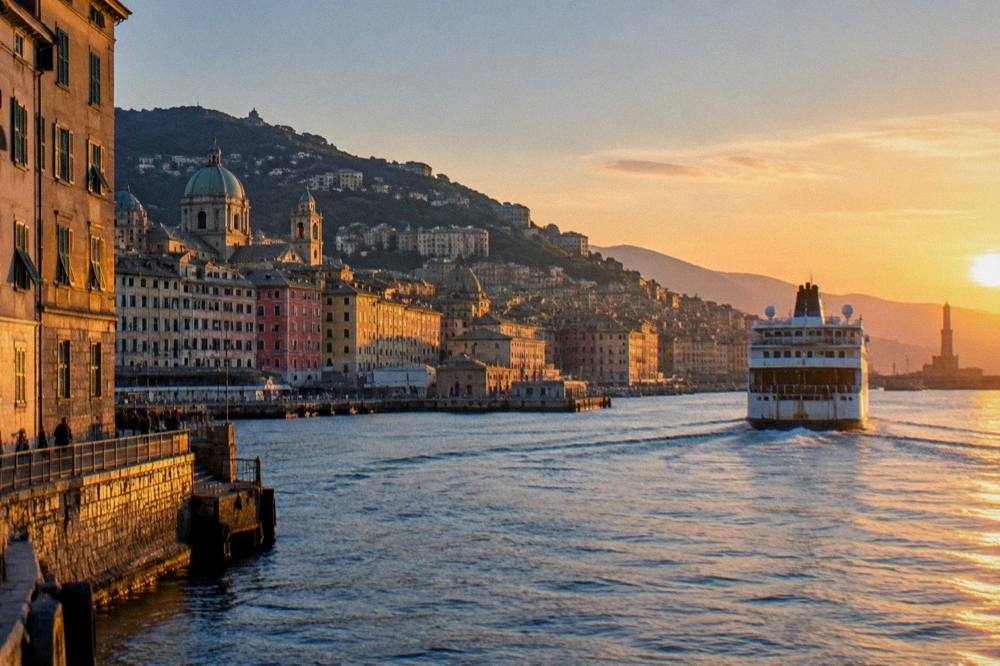
Genoa is a coastal city in Liguria, north-west Italy, on the Ligurian Sea, and it is reachable by air, rail, road and sea. This page sets out what the operators themselves publish: the airport bus and fixed taxi fare, the two main stations and the reported train times to Milan and Turin, the AMT ticket that covers the whole urban network, and the ferry and cruise terminals of a port that handles 2.4 million cruise passengers and 2.6 million ferry passengers a year.
Short answer
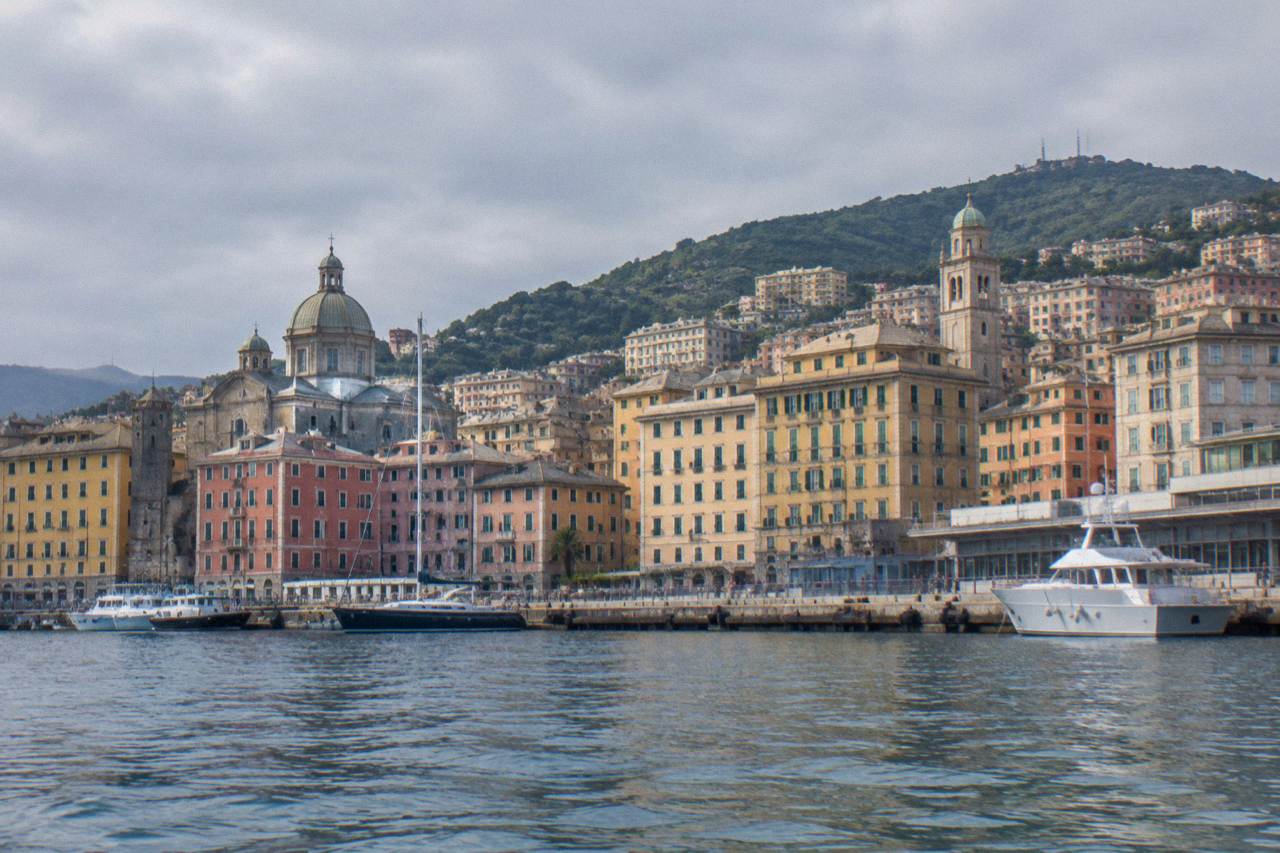
Fly into Genova Cristoforo Colombo airport and take the Volabus (with a 10.00 EUR Met Daily ticket) or the fixed 25 EUR airport taxi; arrive by train at Genova Piazza Principe or Genova Brignole; or sail in, since the ferry and cruise terminals sit within walking reach of the old town.
Genoa (Genoa in Italian) is a coastal city in Liguria, north-west Italy, squeezed between the Ligurian Sea and the Apennine hills, and its geography shapes every route in: the airport sits in the western strip, the two main stations sit in the narrow plain by the port, and the sea approaches end at a working harbour that handles ferries to Sardinia, Corsica, Sicily, Barcelona and Tunis alongside cruise calls. The port's own figures list 2.4 million cruise passengers, 2.6 million ferry passengers and 7,619 ship calls in its latest published totals. Straight-line distances from Piazza De Ferrari, the central square, give the scale of the arrival points: the airport is about 7 km away, the seaside promenade of Corso Italia about 4 km, and Boccadasse about 4 km.

This page gathers the published figures for each way in: the airport bus and its ticket, the fixed airport taxi fare, the train stations and reported journey times, the ferry terminals, and the AMT network that carries you once you have arrived. Where a figure is reported rather than printed on an operator page, it is attributed. The full things to do in Genoa rundown picks up where this page ends.
What Is The Best Way To Get To Genoa?
For travellers already in Italy or southern France, the train is the most direct route: Genoa's two main stations, Genova Piazza Principe and Genova Brignole, sit about 1.4 km and about 1 km respectively from Piazza De Ferrari in a straight line, and the port and airport complete a compact arrival system.
Genova Cristoforo Colombo airport is about 7 km west of the centre, the ferry terminals line the waterfront beside the old town, and the A7, A10 and A12 motorways converge on the city from Milan, Ventimiglia and Tuscany.
The honest answer is that the best way in depends on where you start. From Milan the train is reported at about 1 h 30 to 2 h with fares from about 11 EUR. From further afield the airport, small by the standards of Milan's hubs, lands you close to the centre. From the sea, the ferry and cruise terminals deposit arrivals within the city itself rather than at a distant satellite port.
Three numbers frame the decision: 25 EUR, the fixed taxi fare from the airport to the city centre per car; 10.00 EUR, the Met Daily ticket the Volabus airport bus requires; and 2.00 EUR, the ordinary AMT ticket valid 110 minutes across the whole urban network. Each of those figures comes from the operator's own published pages, and each is set out in its section below.
How Do You Fly Into Genoa And Reach The Centre?
Genova Cristoforo Colombo airport, about 7 km west of Piazza De Ferrari in a straight line, connects to the centre by the Volabus, which runs to Principe, De Ferrari and Brignole in about 30 minutes and requires the 10.00 EUR Met Daily 24-hour ticket, or by taxi at a fixed 25 EUR per car to the city centre, 30 EUR for more than four people, with 2 EUR added at night and on holidays.
The Volabus requires the 10.00 EUR Met Daily ticket, valid 24 hours across the full network. The airport's own transfer page and AMT's Volabus page both state that the airport bus is covered by the Met Daily ticket, 10.00 EUR for 24 hours on the full AMT network, including Volabus, the lifts, the funiculars and even line 782 towards Portofino. That makes the airport transfer double as a day's city transport: one ticket covers the ride in and the metro, buses and public lifts afterwards.
The taxi alternative is a published fixed fare, not a metered estimate. The airport page sets 25 EUR per car to the city centre, 30 EUR when the party is larger than four people, plus 2 EUR at night and on holidays. Shared per-person rates to the individual stations are also published: 8 EUR per person to Brignole with a minimum of three passengers, and 7 EUR per person to Principe with a minimum of three, or 6 EUR per person with a minimum of four.
The summer 2026 route list on the airport's own pages includes KLM to Amsterdam with up to eight weekly flights, Vueling to Barcelona with up to seven weekly, ITA to Rome Fiumicino, and a new Aeroitalia route to Alghero at two weekly from 5 June. Ryanair, Volotea, Wizz and Lufthansa group carriers fill out the network with destinations across Europe.
| Route from the airport | Operator / ticket | Published fare |
|---|---|---|
| Airport to city centre | Fixed taxi fare per car | 25 EUR |
| Airport to centre, over 4 people | Fixed taxi fare per car | 30 EUR |
| Night and holiday supplement | Taxi | plus 2 EUR |
| Airport to Principe or De Ferrari or Brignole | Volabus, Met Daily 24 h | 10.00 EUR |
| Airport to Brignole, per person, min 3 | Taxi shared rate | 8 EUR |
| Airport to Principe, per person, min 3 | Taxi shared rate | 7 EUR |
More detail on the terminals, airlines and transfer options sits on the Genoa airport page, and if the flight lands with a day to spare, the two-day Genoa itinerary shows how to spend it.
Which Train Stations Serve Genoa?
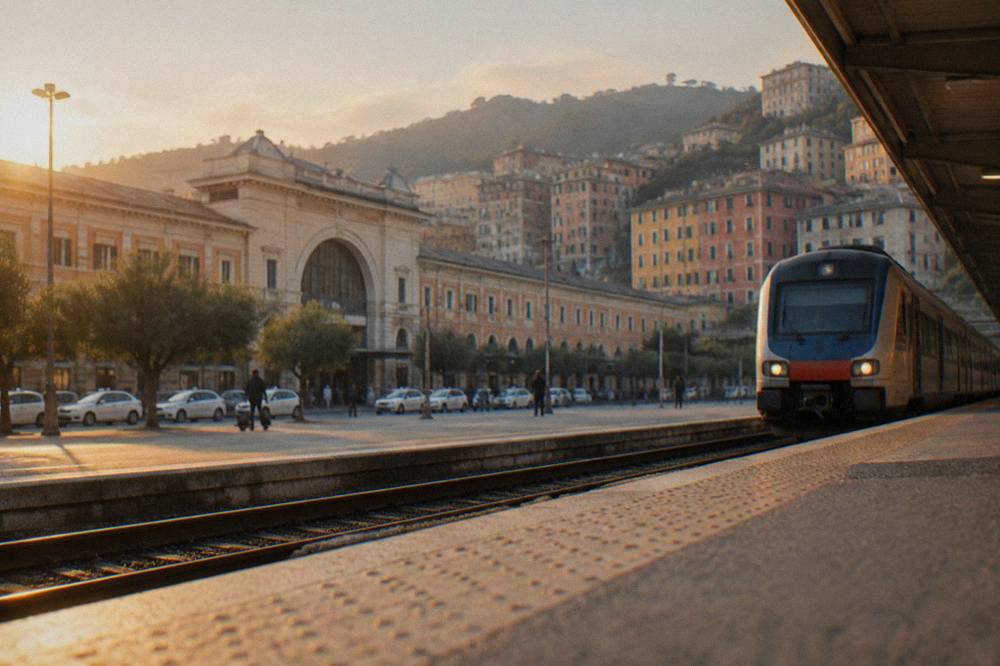
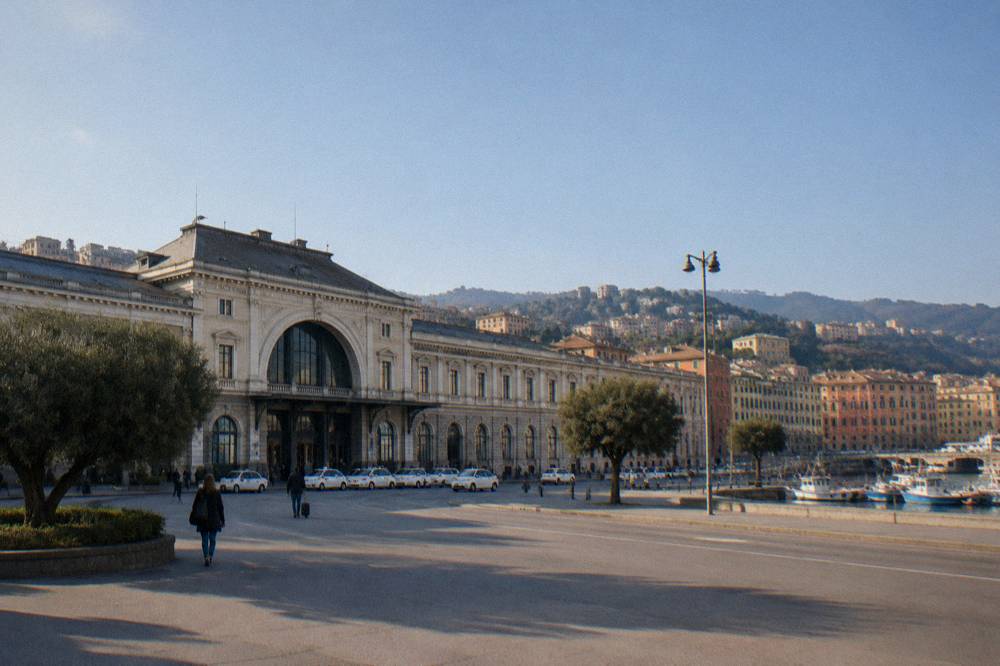
Genoa's rail traffic runs through Genova Piazza Principe, about 1.4 km from Piazza De Ferrari in a straight line, and Genova Brignole, about 1 km, with long-distance services to Milan reported at about 1 h 30 to 2 h and fares from about 11 EUR, and Turin at about 1 h 36 to 2 h 18. Both stations sit on the AMT urban network, so a 2.00 EUR ticket valid 110 minutes covers the onward ride into the centre.
Principe, whose full name appears on tickets as Genova Piazza Principe, handles the western approaches: trains from Milan, Turin, the French Riviera and the airport side of the city. Brignole, Genova Brignole, serves the eastern side, the coastal line towards the Riviera di Levante and many regional services. The metro links the two, running Brin to Brignole over 7 km and eight stations: Brin, Dinegro, Principe, Darsena, San Giorgio, Sant'Agostino, De Ferrari and Brignole.
The reported long-distance times deserve attribution: aggregators drawing on Trenitalia's own listings put Genoa to Milan at about 1 h 30 to 2 h direct, with fares from about 11 EUR, and Genoa to Turin at about 1 h 36 to 2 h 18. Fares are dynamic and the operators' booking pages carry the live figures. Frequency, platform assignments and any engineering works are best checked at booking.
For arrivals with luggage, the practical sequence is simple. Step off the train, buy a 2.00 EUR AMT ticket or validate a contactless card, and ride the metro or a bus for up to 110 minutes anywhere on the urban network. The carnet alternative, 11 tickets for 20.00 EUR, suits a longer stay, and the integrated AMT-Trenitalia ticket at 2.20 EUR covers a short regional hop plus the urban leg.
| Station | Straight-line distance to Piazza De Ferrari | Metro link | Typical services |
|---|---|---|---|
| Genova Piazza Principe | about 1.4 km | Principe station | Milan, Turin, Riviera di Ponente, airport side |
| Genova Brignole | about 1 km | Brignole terminus | Regional services, Riviera di Levante |
The Genoa train stations page expands on both, and the Milan to Genoa route guide covers Italy's most-used corridor into the city.
Can You Drive To Genoa, And Where Do You Park?
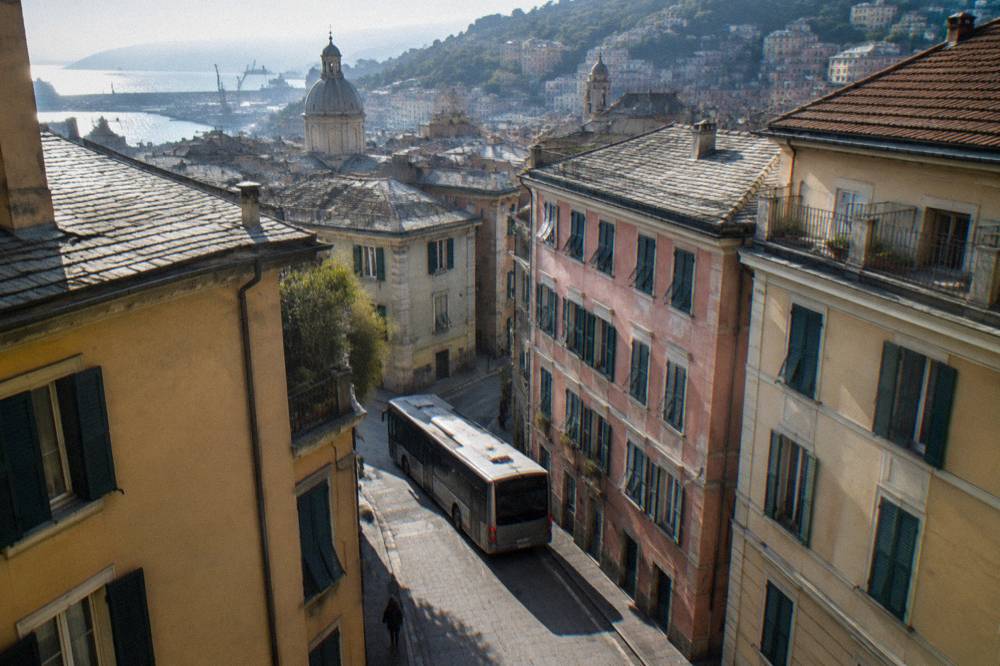
Genoa is reachable by motorway from Milan, from the French border at Ventimiglia and from Tuscany, but the historic centre sits inside limited-traffic zones (ZTL) covering the Centro Storico, the Molo and other areas, often active around the clock, so driving the final leg into the old town requires an authorisation that visitors do not have. The practical pattern is a car park outside the ZTL, then the AMT network at 2.00 EUR for 110 minutes, or the metro from Principe or De Ferrari.
The comune's own disciplinare, updated by deliberation 74 of 2025, defines the zones and their access rules, and it is the reference document rather than any secondhand map. The rules exist because Genoa's old town, 113 hectares and described on the official tourism site as one of the largest medieval historic centres in Europe, is a fabric of narrow caruggi never designed for cars.
The published transport figures make the park-and-ride arithmetic easy. A single AMT ticket is 2.00 EUR for 110 minutes on the whole Città Metropolitana network; a 5-hour ticket is 5.00 EUR; the carnet of eleven 110-minute tickets is 20.00 EUR; and the Met Daily at 10.00 EUR opens the full network for 24 hours, including the lifts and the funiculars. The lifts and the Sant'Anna funicular cost 1.20 EUR a ride on their own.
Drivers arriving from the west should also know that the airport strip is close: Genova Cristoforo Colombo is about 7 km west of Piazza De Ferrari in a straight line, so a western approach passes it before the city proper. Car hire pickup and return at the airport is covered on the transfer pages of the airport's own site.
| AMT ticket | Price | Validity |
|---|---|---|
| Ordinary single | 2.00 EUR | 110 minutes, whole urban network |
| AMT + Trenitalia integrated | 2.20 EUR | 110 minutes, urban plus limited regional rail |
| 5-hour ticket | 5.00 EUR | 5 hours |
| Carnet of 11 tickets | 20.00 EUR | eleven 110-minute rides (22.00 integrated) |
| Met Daily | 10.00 EUR | 24 hours, full network incl. Volabus and line 782 |
| Lifts and Sant'Anna funicular | 1.20 EUR | single ride |
Further practicalities, including the ZTL maps, sit on the pages for Genoa public transport and parking.
Can You Arrive In Genoa By Ferry Or Cruise Ship?
Yes: the port of Genoa is one of the Mediterranean's major passenger ports, with cruise operations at Ponte dei Mille and Andrea Doria and ferry services from Calata Chiappella, Ponte Caracciolo and Ponte Colombo, carrying a published 2.4 million cruise passengers and 2.6 million ferry passengers a year. Grandi Navi Veloci, Moby, Tirrenia and Co.Tu.Nav operate routes including Palermo, Porto Torres, Tunis and Marseille, so a car-free arrival by sea is entirely routine.
The terminals line the waterfront beside the city rather than at a distant satellite port. The port authority's own passenger-terminals page assigns cruises primarily to Ponte dei Mille and Andrea Doria, and ferries to Calata Chiappella, Ponte Caracciolo and Ponte Colombo. From the Stazioni Marittime live departures table, the operators seen running include GNV, Moby, Tirrenia, Co.Tu.Nav for Tunis, and MSC cruise calls. The wider set of guides lives on Genoa Travel Guide.
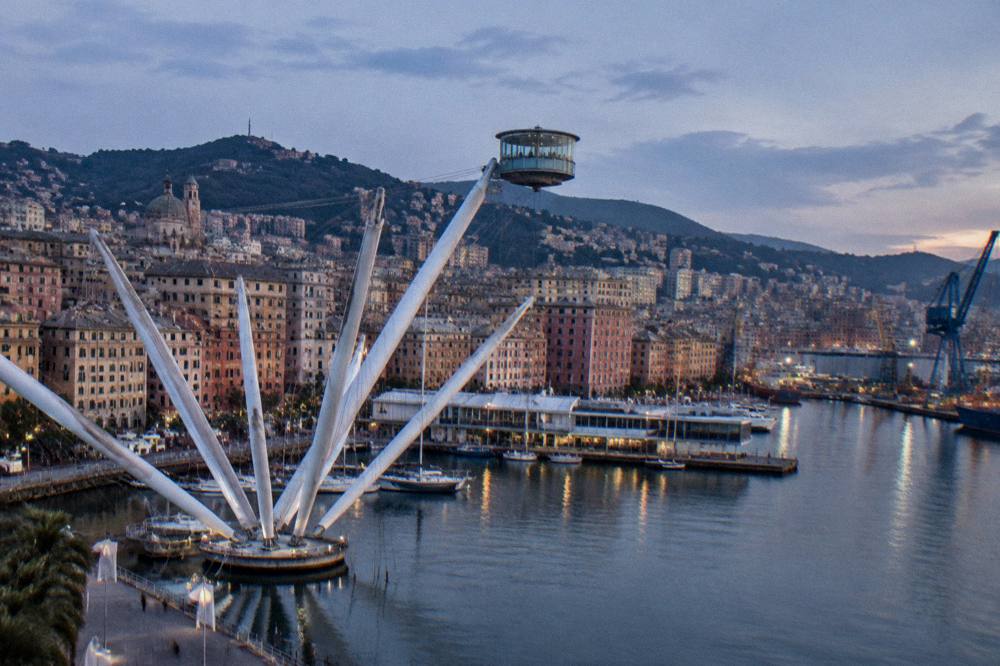
For cruise arrivals, the geography is favourable: the old town and the Porto Antico, redeveloped by Renzo Piano for the 1992 Columbus Expo according to his practice's own project pages, sit adjacent to the waterfront, and Piazza De Ferrari is a short urban hop inland. The Genoa cruise port and Genoa ferries pages carry the detail, and a dedicated plan exists for a single day ashore in Genoa.
Ferry travellers with a car should note the ZTL rules above before driving out of the terminal area, and foot passengers arriving at Calata Chiappella can step straight onto the AMT network with the ordinary 2.00 EUR ticket.
How Do You Get Around Genoa Once You Have Arrived?
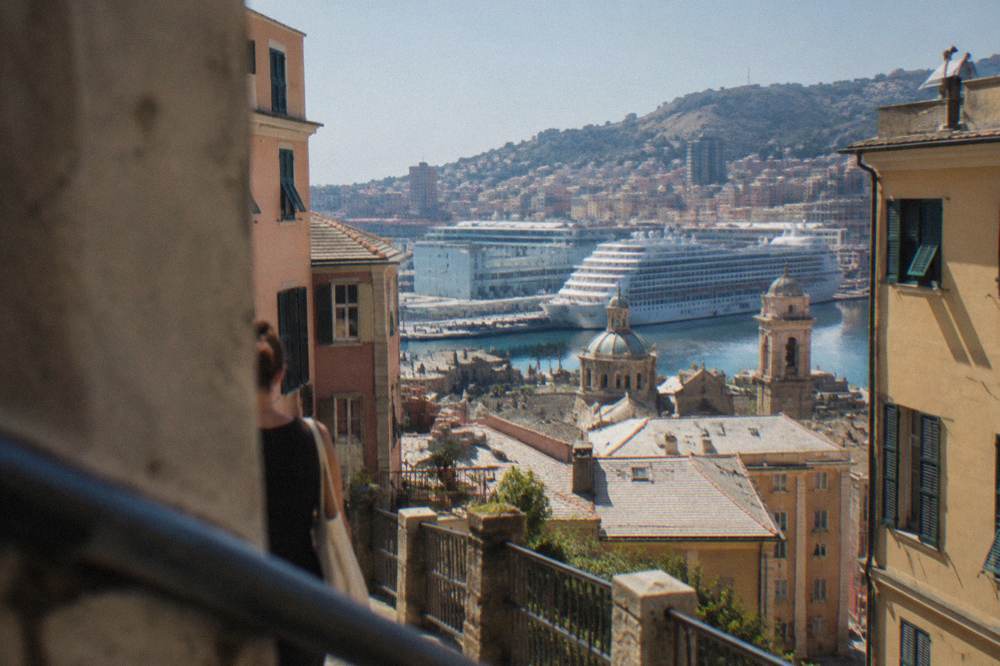
Genoa's AMT network of buses, metro, two funiculars and fourteen public lifts runs on a 2.00 EUR ticket valid 110 minutes across the whole system, with the metro covering 7 km from Brin to Brignole in eight stations, the Zecca-Righi funicular and the Castelletto Levante lift running daily 06:40 to 24:00, and the Met Daily at 10.00 EUR unlocking 24 hours of everything including the airport Volabus.
The vertical transport is what marks Genoa apart. The city climbs from the sea into the hills, and AMT runs fourteen public lifts plus the Zecca-Righi funicular, which takes about 12 minutes through seven stations on its way up to Righi, and the Sant'Anna funicular, reopened after maintenance per AMT's own page, running roughly 07:00 to 00:30. The Castelletto Levante lift rises 57 m from Piazza Portello to the Spianata Castelletto viewpoint, daily 06:40 to 24:00.
The metro's current extent matters for planning: eight stations from Brin to Brignole, including Principe, Sant'Agostino and De Ferrari. Reports tracked in the local press put the Canepari extension at June 2027 and Martinez at December 2028, so neither is an option now, and itineraries should be built on the eight open stations.
A museum-heavy stay can bundle transport with culture. The Genoa Museum Card, at 24 EUR for 24 hours or 45 EUR for 48 hours under the rates effective from 1 January 2026, covers 28 city museums, 19 municipal plus 9 others. Only the card variants that include bus travel cover AMT rides, and no card variant covers Volabus, Navebus or trains. The full workings are on the Genoa Museum Card page.
| Line or service | Extent | Published hours or figure |
|---|---|---|
| Metro | Brin to Brignole, 8 stations, 7 km | 2.00 EUR ordinary ticket |
| Zecca-Righi funicular | 7 stations, about 12 min | daily 06:40 to 24:00 |
| Sant'Anna funicular | single track | roughly 07:00 to 00:30, 1.20 EUR |
| Castelletto Levante lift | 57 m rise, Portello to Spianata Castelletto | daily 06:40 to 24:00, 1.20 EUR |
| Genoa Museum Card | 28 museums | 24 h 24 EUR, 48 h 45 EUR |
Once oriented, the classic first outing is the old town lanes, and a guided option exists: the Segway tour of the caruggi covers the medieval street fabric with a guide. Check availability if that suits your arrival day.
Which Day Trips Are Easy Once You Are Based In Genoa?
The straight-line distances from Piazza De Ferrari tell the story: Camogli about 18 km, San Fruttuoso about 22 km, Santa Margherita Ligure about 24 km, Portofino about 25 km, and the Cinque Terre about 67 km, all reachable by coastal rail, while the Golfo Paradiso boat tour from Genoa Porto Antico links Nervi, Recco, Camogli, San Fruttuoso and Portofino in one day from March 2026 on listed dates.
The train is the backbone eastward. Regional services along the coast stop at Camogli, Santa Margherita Ligure and Rapallo before reaching the Cinque Terre, and the Genoa to Portofino and Genoa to the Cinque Terre pages carry the route detail. A curious ticket fact: the Met Daily, the same 10.00 EUR ticket required for the airport Volabus, also covers AMT line 782 from Santa Margherita Ligure to Portofino, tying a Riviera day trip into the ordinary city ticket.
By boat, Golfo Paradiso's Two Gulfs tour departs Genoa Porto Antico at 11:00 with a Camogli call at 11:45, and about 30 minutes of crossing each from Camogli to San Fruttuoso and on towards Portofino, with fares reported at about 29 EUR for the full day and 21 to 26 EUR for a half day. The San Fruttuoso abbey itself, run by FAI, charges 10 EUR full entry, 5 EUR for visitors aged 6 to 18 and students to 25, and 26 EUR for a family ticket.
In the other direction, Milan is about 119 km straight-line and Turin about 123 km, with Nice and Monaco about 141 km, so all three work as rail excursions on the reported times above. West along the Ligurian coast, Varazze, Savona, Noli and Finale Ligure string out along the regional line towards the airport and beyond.
| Destination | Straight-line distance from Piazza De Ferrari | Typical approach |
|---|---|---|
| Corso Italia | about 4 km | bus or walk |
| Boccadasse | about 4 km | bus |
| Nervi | about 9 km | coastal rail or bus |
| Camogli | about 18 km | coastal rail, or Golfo Paradiso tour |
| San Fruttuoso | about 22 km | boat from Camogli |
| Santa Margherita Ligure | about 24 km | coastal rail |
| Portofino | about 25 km | train plus bus 782 or boat |
| Cinque Terre | about 67 km | coastal rail |
| Milan | about 119 km | train |
| Turin | about 123 km | train |
| Nice and Monaco | about 141 km | train via Ventimiglia |
When Is The Best Time To Arrive In Genoa?
The official 1971 to 2000 climate normals for Genoa Sestri put July and August mean daily highs at 27.3 C and 27.7 C, with October precipitation at 171.3 mm and July at 24.2 mm, so spring and early autumn combine the mild temperatures of a Mediterranean coastal city with the full summer boat season on the water. Genoa is a year-round city, and its museums, port and old town do not close for winter.
The normals, from the Aeronautica Militare's climate atlas for the Genoa Sestri station, give January a mean high of 11.5 C and a mean low of 5.5 C, rising to August means of 27.7 C and 21.0 C. September still averages a 24.4 C high but carries 136.4 mm of rain, and October's 171.3 mm is the annual peak, a fact worth weighing against the autumn event calendar, which in 2026 included the Rolli Days from 16 to 18 October and the Festival della Scienza from 22 October to 1 November.
Event dates can anchor an arrival. The Salone Nautico, the Genoa International Boat Show, ran 1 to 6 October in 2026 and its 67th edition is announced for 30 September to 5 October 2027, the only confirmed 2027 date in the city's calendar. The best time to visit Genoa and Genoa weather pages carry the full breakdown.
| Month | Mean high C | Mean low C | Rain mm |
|---|---|---|---|
| January | 11.5 | 5.5 | 101.8 |
| April | 16.8 | 10.5 | 88.0 |
| July | 27.3 | 20.9 | 24.2 |
| August | 27.7 | 21.0 | 69.3 |
| October | 20.0 | 13.8 | 171.3 |
Source: official Aeronautica Militare CLINO 1971-2000 normals, Genoa Sestri station.
Where Should You Stay On Arrival In Genoa?
The city's accommodation is taxed by the comune's imposta di soggiorno at 2.00 EUR per person per night in 1-star hotels, 2.50 EUR in 2-star, 4.00 EUR in B&Bs and other extra-hotel lodging, and reported rates of 3 to 5 EUR in 3- to 5-star hotels, charged on only the first 8 consecutive nights with under-14s exempt, so anywhere on the AMT network, within a 2.00 EUR, 110-minute ticket, works well.
The central and eastern districts suit a first visit: the old town for the caruggi and the Porto Antico, the Foce and Albaro side for Corso Italia and Boccadasse, both about 4 km from Piazza De Ferrari. The Foce and Albaro area page and the wider where to stay in Genoa guide set out the options, and the budget guide covers the cheaper end of the scale.
Arrival day itself can end with food rather than logistics. Genoa's kitchen runs on pesto genovese, made with Basilico Genovese PDO basil per the consortium's own specification, focaccia, farinata and trofie, and the what to eat in Genoa and pesto genovese pages open that door.
Common Questions About Getting To Genoa
How do I get from Genoa airport to the city centre?
The Volabus runs from Genova Cristoforo Colombo to Principe, De Ferrari and Brignole in about 30 minutes and requires the 10.00 EUR Met Daily 24-hour ticket, which then covers the whole AMT network for the rest of the day. The fixed taxi fare is 25 EUR per car to the centre, 30 EUR for more than four people, plus 2 EUR at night and on holidays.
Is there a train from the airport?
There is no rail link at the airport itself. The airport page lists the Volabus and taxis as the published transfer options, with the Volabus reaching both main stations in about 30 minutes. The metro then connects Principe and Brignole through the city in eight stations.
Which Genoa station should I arrive at?
Genova Piazza Principe, about 1.4 km from Piazza De Ferrari in a straight line, serves the western and long-distance approaches including trains from Milan and Turin. Genova Brignole, about 1 km, serves the eastern coastal line towards the Riviera. Both sit on the metro, 2.00 EUR for 110 minutes.
Can you arrive in Genoa by ferry?
Yes. The port's ferry terminals at Calata Chiappella, Ponte Caracciolo and Ponte Colombo host GNV, Moby, Tirrenia and Co.Tu.Nav services including routes to Palermo, Porto Torres, Tunis and Marseille, and the port publishes 2.6 million ferry passengers a year alongside 2.4 million cruise passengers at Ponte dei Mille and Andrea Doria.
Do I need a car in Genoa?
No. The historic centre sits inside limited-traffic zones covering the Centro Storico and other areas, and the AMT network of buses, metro, funiculars and lifts runs on a 2.00 EUR ticket valid 110 minutes, with the 10.00 EUR Met Daily covering 24 hours including the airport bus. The caruggi are pedestrian-scale lanes in any case.
How far is Genoa from Milan?
Milan is about 119 km from Piazza De Ferrari in a straight line, and the train is reported at about 1 h 30 to 2 h with fares from about 11 EUR on Trenitalia listings. Turin is about 123 km straight-line, reported at about 1 h 36 to 2 h 18 by train.
Every figure above traces to an operator page or an attributed report: the AMT fare table, the airport's transfer page, the port authority's passenger statistics, and the official 1971-2000 normals for Genoa Sestri. Confirm live times and fares at booking, since train fares in particular are dynamic, and the boat calendar runs on listed dates.