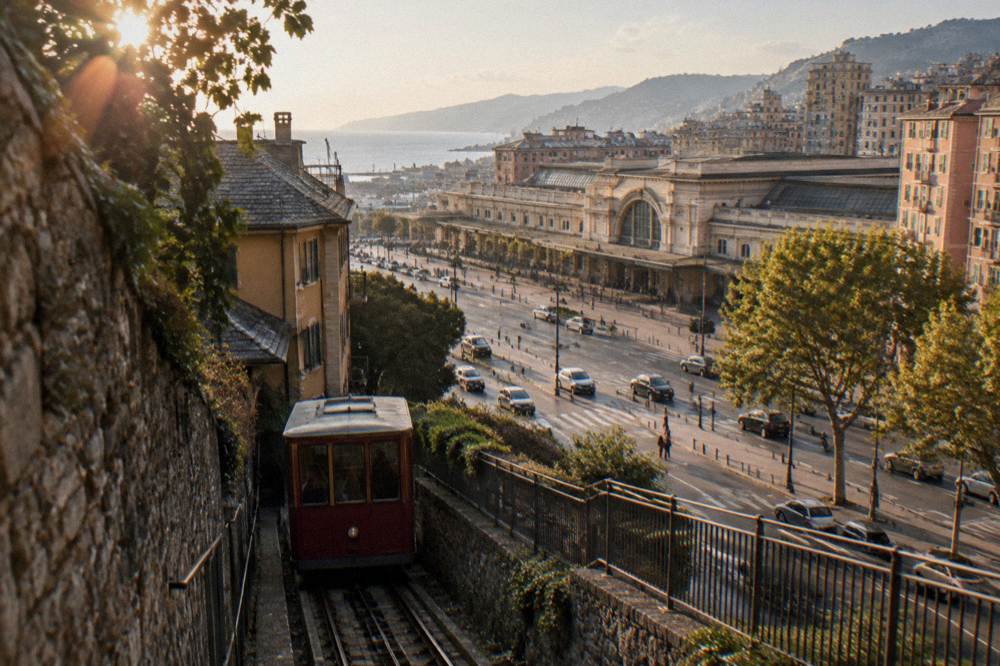
Genoa Ferries: Sardinia, Sicily, Corsica And Barcelona
Genoa runs one of the busiest passenger ferry ports in the Mediterranean, with overnight ships to Sardinia, Sicily, Corsica, Barcelona and Tunis leaving from piers a short hop from the old town.
Short answer
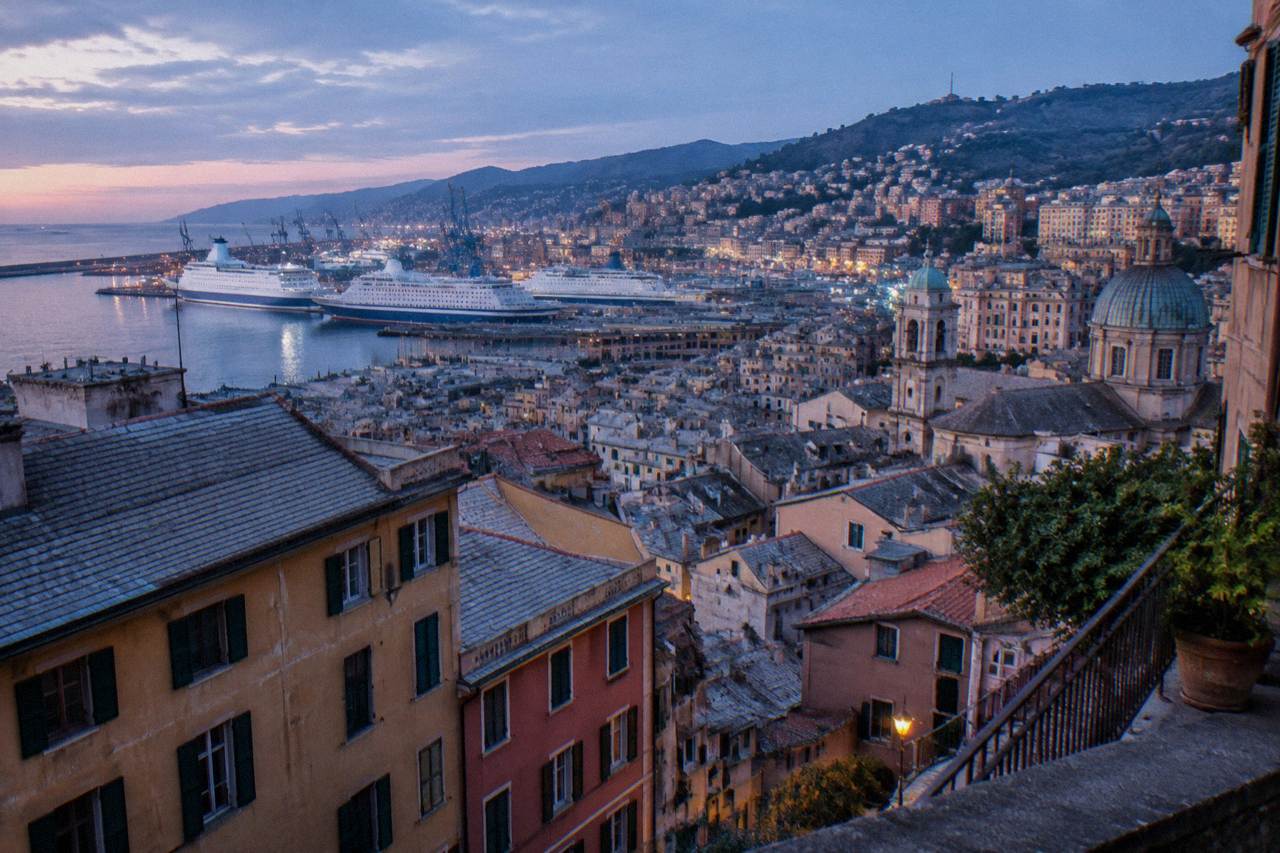
The Genoa ferry terminal (Calata Chiappella, Ponte Caracciolo and Ponte Colombo) sits about 2 km straight-line from Piazza De Ferrari and handles 2.6 million ferry passengers a year on routes run by GNV, Moby, Tirrenia and Co.Tu.Nav to Sardinia, Sicily, Tunisia and Spain.
Genoa, the coastal city in Liguria on the Ligurian Sea, is one of the Mediterranean's working ferry capitals, and the numbers back that up: the port's own statistics count 2.6 million ferry passengers and 2.4 million cruise passengers a year, across 7,619 ship calls. A ferry traveller needs to know where the Genoa ferry terminal is, which operators and routes leave from it, how to reach the piers by public transport or taxi, and what the boat alternatives look like when an overnight crossing is more than the trip needs. For the wider picture of arriving in the city by air, rail or sea, see the companion guide to getting to Genoa.

Where Is The Genoa Ferry Terminal?
The Genoa ferry terminal occupies three piers on the western edge of the port: Calata Chiappella, Ponte Caracciolo and Ponte Colombo, about 2 km in a straight line from Piazza De Ferrari. Cruise ships use Ponte dei Mille and Ponte Andrea Doria, roughly 1.4 km from the square. Both clusters sit within the same Stazioni Marittime complex, a walkable distance from Genova Piazza Principe station and the old town's western edge.
Those straight-line figures are computed distances, not walking times, but the geography matters for planning: the ferry piers and the cruise piers are neighbours, not separate ports. The Stazioni Marittime terminal building serves both, and its live departures table is the place to confirm which pier your ship leaves from on the day, because operators shift between Calata Chiappella, Ponte Caracciolo and Ponte Colombo depending on the sailing. The port also handles the cargo and shipyard activity of a working harbour, so the approach road runs through industrial piers rather than a promenade.
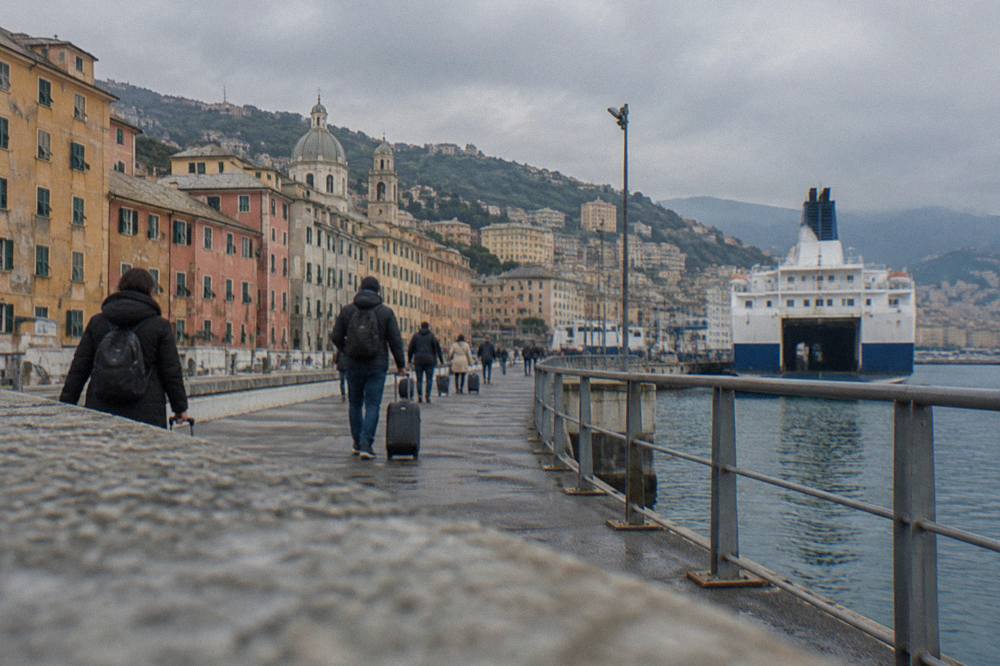
The split between ferry and cruise facilities is worth understanding before you arrive, because taxi drivers and signage use the two clusters differently.
| Terminal cluster | Piers | Traffic | Straight-line distance from Piazza De Ferrari |
|---|---|---|---|
| Ferry terminals | Calata Chiappella, Ponte Caracciolo, Ponte Colombo | GNV, Moby, Tirrenia, Co.Tu.Nav ferries | about 2 km |
| Cruise terminals | Ponte dei Mille, Ponte Andrea Doria | Cruise ships including MSC | about 1.4 km |
| Porto Antico | Calata Mandraccio | Day-trip boats and harbour cruises | inside the old harbour, west of the square |
If your ship is a cruise ship rather than a ferry, the dedicated Genoa cruise port guide covers that side of the waterfront in detail.
Which Ferry Routes Run From Genoa?
Genoa's ferry terminal is served by Grandi Navi Veloci (GNV), Moby Lines, Tirrenia and Co.Tu.Nav, with routes seen on the terminal's live departures table including Palermo, Porto Torres, Tunis and Marseille. Together they link Genoa with Sardinia, Sicily, Tunisia and Spain, including Barcelona, and GNV also runs services towards Corsica on its Mediterranean network. Sailing times, fares and timetables change by season and are only reliable on each operator's own booking site.
The four operators divide the work differently. GNV is the large overnight operator with the widest network, running big cruise-ferries with cabins, restaurants and vehicle decks. Moby Lines and Tirrenia compete on the Sardinia corridor in particular, with Porto Torres the Sardinian port named on the terminal's departure board. Co.Tu.Nav connects Genoa with Tunis, the one North African route in the mix. Marseille appears on the live board as a French destination, and Barcelona is the standard Spanish destination from Genoa on GNV's network.
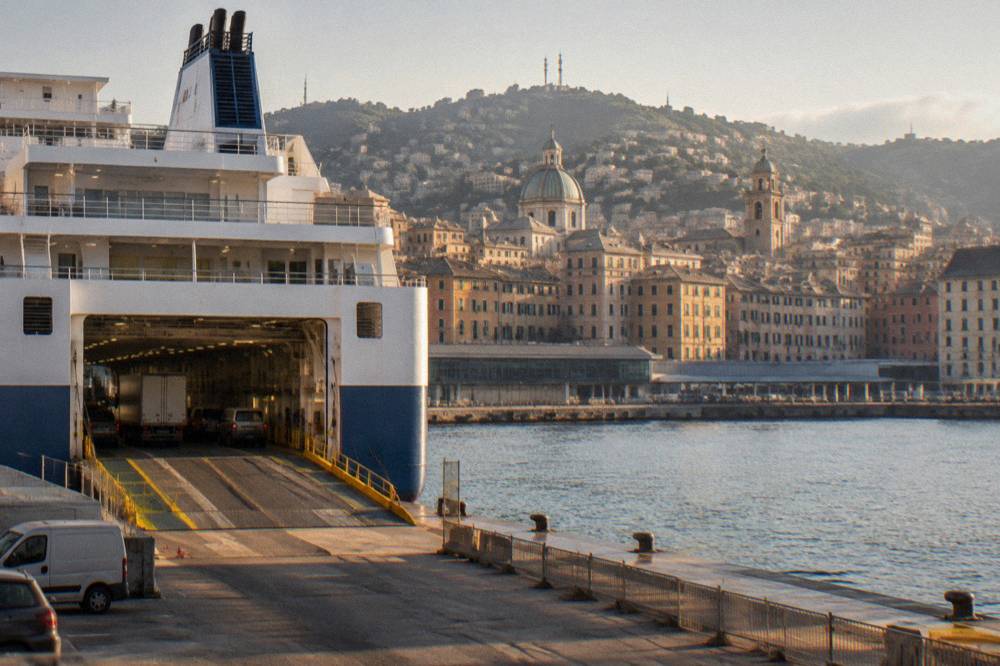
A practical way to read the offer is by destination rather than by company, because on corridors like Genoa to Sardinia more than one operator sells tickets for the same crossing.
| Destination | Region or country | Operator(s) seen at the Genoa terminal | Typical use |
|---|---|---|---|
| Porto Torres | Sardinia, Italy | Moby Lines, GNV | Car and passenger ferry, overnight |
| Palermo | Sicily, Italy | GNV, Tirrenia | Long overnight crossing with cabin |
| Barcelona | Spain | GNV | Overnight international ferry |
| Tunis | Tunisia | Co.Tu.Nav | International ferry, passport conditions apply |
| Marseille | France | Seen on the live departures table | International ferry |
Book directly with the operator or through a ferry aggregator, and re-check the pier and departure time a day before sailing: the Stazioni Marittime live table is the terminal's own source for which ship is at which pontoon. Fares swing with season, cabin class and whether a vehicle travels with you, so no single figure would stay true for long. What stays fixed is the port itself: 2.6 million ferry passengers a year pass through these piers, which is why the terminal has full check-in halls, vehicle marshalling and long-stay arrivals infrastructure rather than a simple dock.
How Do You Check In And Board A Ferry In Genoa?
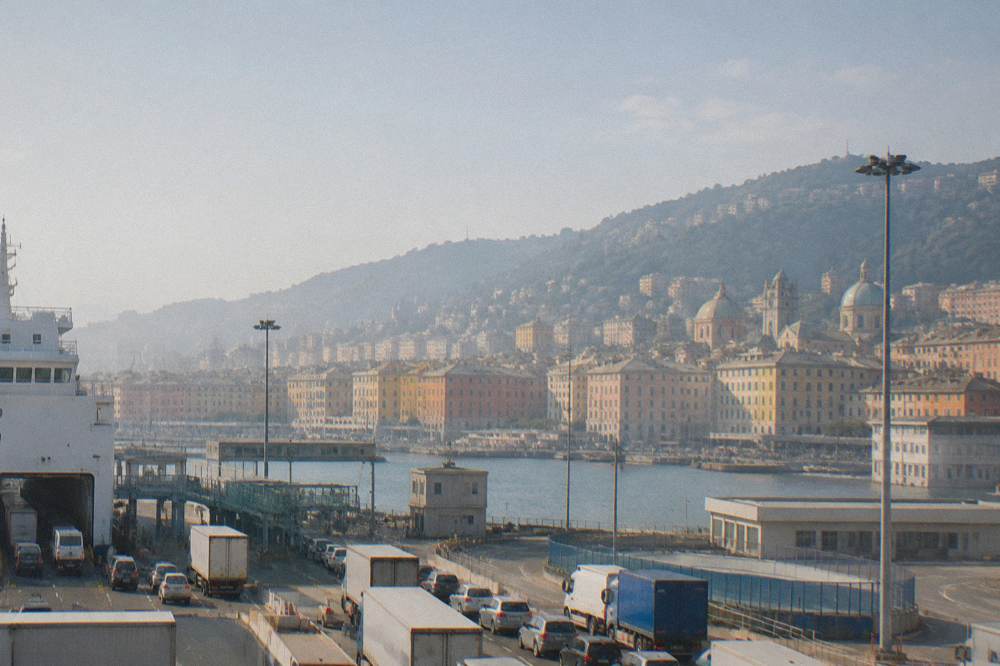
Check-in at the Genoa Stazioni Marittime terminal works like an airport lite: you present your booking at the operator's desk at Calata Chiappella, Ponte Caracciolo or Ponte Colombo, foot passengers pass through security and passport control where the destination requires it, and vehicle drivers are marshalled into loading lanes well before departure. The terminal advises arriving ahead of the sailing time on your ticket, and the exact margin is set by each operator at booking.
What that means in practice: have your booking reference and identity documents ready, since Tunis and other non-Schengen destinations involve border checks, and even domestic sailings to Sardinia or Sicily require document checks against the passenger manifest. If you are travelling with a car, the vehicle lanes are the pacing item; the boarding sequence puts commercial trucks and cars on the lower decks first and foot passengers board via the gangways later. The terminal building itself has waiting areas and the departures board that lists every sailing by pier.
Three practical points shape a smooth boarding in Genoa:
- Confirm the pier on the Stazioni Marittime live table the day before, because sailings move between Calata Chiappella, Ponte Caracciolo and Ponte Colombo.
- Carry the same identity document for every passenger that you used at booking, including children.
- If you are sailing to Tunis, allow for border-formality time that domestic Italian routes do not have.
While the ferry terminal handles the long crossings, the city's shorter water experiences sell out on different rhythms, and booking ahead for same-day boat trips is the safer pattern in the busy sailing season.
For travellers whose sea plans are day trips rather than overnight crossings, the rest of this page covers the coastal boat network, because that is where the majority of Genoa's waterfront variety actually sits.
How Do You Get To The Genoa Ferry Terminal?
An AMT public transport ticket costs 2.00 EUR and is valid 110 minutes on the whole urban network, including the metro, whose Principe station is the stop nearest the ferry piers; Genova Piazza Principe is the rail gateway for connections from Milan and the French Riviera. A taxi from Genova Cristoforo Colombo airport to the city centre is a fixed 25 EUR per car, 30 EUR for more than four people, plus 2 EUR at night and on holidays.
The metro line runs 7 km from Brin to Brignole with eight stations, and Principe is the one that serves the Stazioni Marittime side of the port. From Genova Brignole, on the eastern side of the centre, a single 110-minute ticket covers a metro ride across to Principe plus any bus connection. The Met Daily 24-hour ticket at 10.00 EUR covers the full AMT network for a day, which suits ferry travellers who plan to move around the city on arrival or departure day. The full fare picture, including the integrated AMT-Trenitalia ticket at 2.20 EUR, is in the Genoa public transport guide.
| Option | Fare | Notes |
|---|---|---|
| AMT single ticket | 2.00 EUR | 110 minutes, whole urban network |
| AMT + Trenitalia integrated | 2.20 EUR | 110 minutes, includes limited rail segments |
| Met Daily 24-hour | 10.00 EUR | Full network for one person for a day |
| Airport taxi to centre | 25 EUR per car | Fixed fare, 30 EUR over 4 people, +2 EUR night and holidays |
| Lifts and Sant'Anna funicular | 1.20 EUR a ride | Vertical network, useful on the hilly east side |
Rail arrivals work well for ferry departures because both major stations feed the same network: passengers coming from Milan on the roughly 1.5 to 2 hour rail corridor arrive at Principe or Brignole and transfer with the same 110-minute ticket. The Genoa train stations guide maps which services stop where. If you are overnighting before an early sailing, the where to stay in Genoa guide covers the areas closest to the piers.
Can You Take A Ferry From Genoa To The Cinque Terre?
No regular scheduled ferry runs from Genoa to the Cinque Terre: the operator Golfo Paradiso is reported to run a Genoa to Cinque Terre tour on set dates only, not a daily line. The reliable sea route to the five villages is by train to the Ligurian coast and then the Cinque Terre ferry network that operates between the villages, Portovenere and Lerici in the sailing season. For that reason the standard advice is train, not ferry, for a Genoa to Cinque Terre day trip.
The distinction matters because the phrase "ferry to the Cinque Terre" appears in many search results, but what exists from Genoa is an occasional tour product with fixed calendar dates, while the scheduled passenger boats start further east. Golfo Paradiso's regular day-trip network from Genoa Porto Antico covers the Two Gulfs route towards Camogli, San Fruttuoso and Portofino instead, which is the closest thing to a scheduled boat excursion from the city itself. The dedicated page on whether a ferry runs from Genoa to the Cinque Terre unpacks the full answer, and the Genoa to Cinque Terre guide covers the rail and card options, including the Cinque Terre Treno Card at 22.00 to 35.00 EUR for one adult day by date band in the 2026 high season.
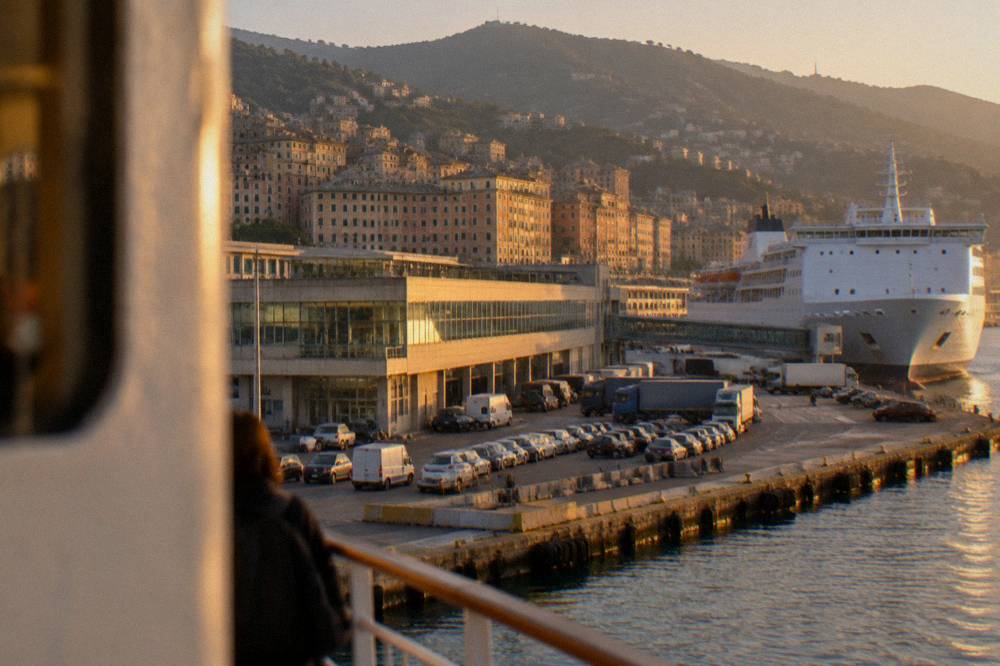
For a same-day boat adventure closer to home, the sea off Genoa itself has options that need no ferry terminal at all. A guided snorkeling trip that the listing places a short distance from the city centre puts you in the water with equipment and a guide, and it pairs naturally with a ferry-arrival day. Check availability if a swim beats another hour of check-in halls.
What Boat Day Trips Leave From Genoa?
Golfo Paradiso runs its Two Gulfs day trip from Genoa Porto Antico, departing at 11:00 with a Camogli connection at 11:45 and roughly 30-minute crossings between Camogli, San Fruttuoso and Portofino, on listed dates from March 2026; reported full-day fares are about 29 EUR and half-day fares 21 to 26 EUR. Camogli to San Fruttuoso boats run year round, and the Servizio Marittimo del Tigullio network connects Rapallo, Santa Margherita Ligure, Portofino, Sestri Levante and the Cinque Terre on seasonal lines.
This is the network to use when the goal is coastline, not crossing. The Porto Antico departure point, Calata Mandraccio, sits inside the redeveloped old harbour by the Aquarium and the Bigo lift, which makes a boat morning easy to combine with the waterfront sights on the same ticket-free stretch of quay. Full fare detail and itinerary ideas for the eastern Riviera are in the Genoa to Portofino guide, and the FAI-run abbey at San Fruttuoso charges 10 EUR full entry, 5 EUR for visitors aged 6 to 18 and students to 25, under 5 free, with a family ticket at 26.00 EUR.
| Boat service | Route | Season or status | Fare detail |
|---|---|---|---|
| Golfo Paradiso Two Gulfs | Porto Antico to Camogli, San Fruttuoso, Portofino | Listed dates from March 2026 | reported about 29 EUR full day, 21 to 26 EUR half day |
| Camogli to San Fruttuoso shuttle | Camogli to the abbey beach | Year round from Camogli | reported about 12 EUR return |
| Tigullio line 1 | Rapallo, Santa Margherita, Portofino, San Fruttuoso | Seasonal | time-slot schedules on the operator site |
| Tigullio Super Cinque Terre | Tigullio ports to the five villages | Seasonal | reported 47 EUR adult return |
| Genoa to Cinque Terre tour | Porto Antico to the villages | Set dates only, reported | confirm dates with the operator |
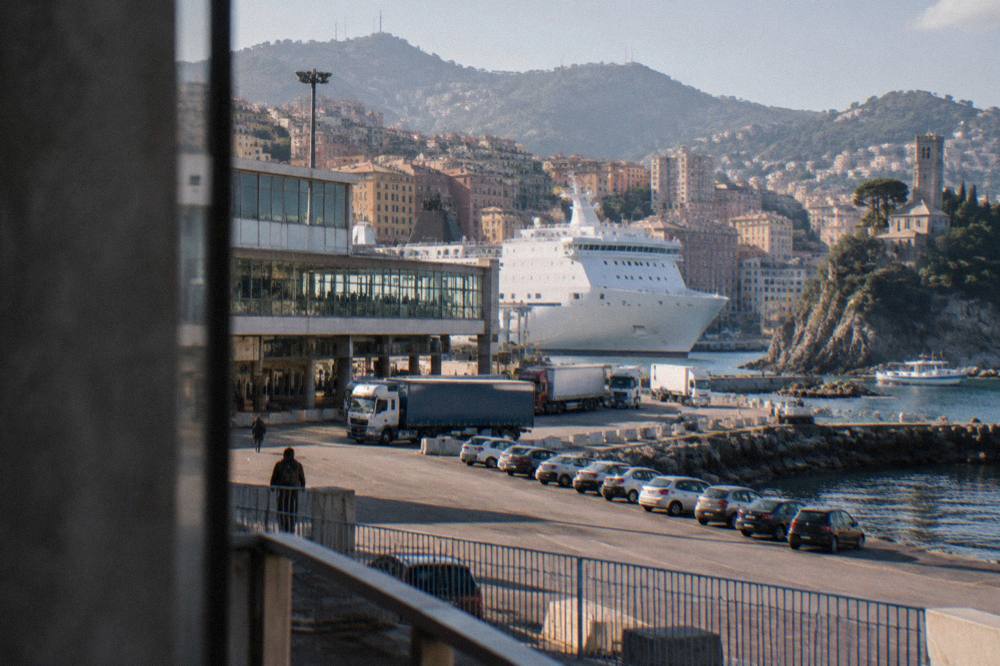
Note the pattern in that table: the moment your destination is east of Genoa, the practical hub shifts from the ferry terminal to trains and the Tigullio boat network, while the big overnight ships from Calata Chiappella all point south and west, to the islands and to Spain. West of the city, the coast towards Savona is rail country too, covered in the Savona day trip guide.
When Is The Best Time Of Year To Sail From Genoa?
The official 1971-2000 climate normals for Genoa Sestri show why the sailing calendar leans on summer: July averages a 27.3 C daily high against 24.2 mm of rain, while October, at a milder 20.0 C high, is the month with the heaviest rainfall in the table at 171.3 mm. August is the peak-temperature month at a 27.7 C mean high, and January the coolest, with an 11.5 C high and a 5.5 C low.
For a ferry traveller those numbers translate directly into deck time and sea state expectations. Summer crossings to Sardinia or Barcelona happen in warm, dry conditions on average, while autumn and winter sailings coincide with the wetter half of the year, when September carries 136.4 mm of average rain and November 108.8 mm. None of this predicts any individual sailing, and operators run year round regardless, but it frames when an outside deck and a cabin window are doing different jobs. The Genoa weather guide has the full monthly table.
| Month | Mean daily high C | Mean daily low C | Average rain mm |
|---|---|---|---|
| Jan | 11.5 | 5.5 | 101.8 |
| Mar | 14.6 | 8.2 | 81.7 |
| May | 20.5 | 14.2 | 72.4 |
| Jul | 27.3 | 20.9 | 24.2 |
| Sep | 24.4 | 17.9 | 136.4 |
| Oct | 20.0 | 13.8 | 171.3 |
The port does not close for winter, and the 2.6 million annual ferry passengers spread across the whole calendar, but the boat day-trip network described above is different: its operators publish seasonal calendars, and the Golfo Paradiso Two Gulfs trip runs on listed dates from March, which is the pattern to check when planning a spring or autumn visit. The best time to visit Genoa guide weighs the same data for the city as a whole.
What Is Near The Ferry Terminal Before You Sail?
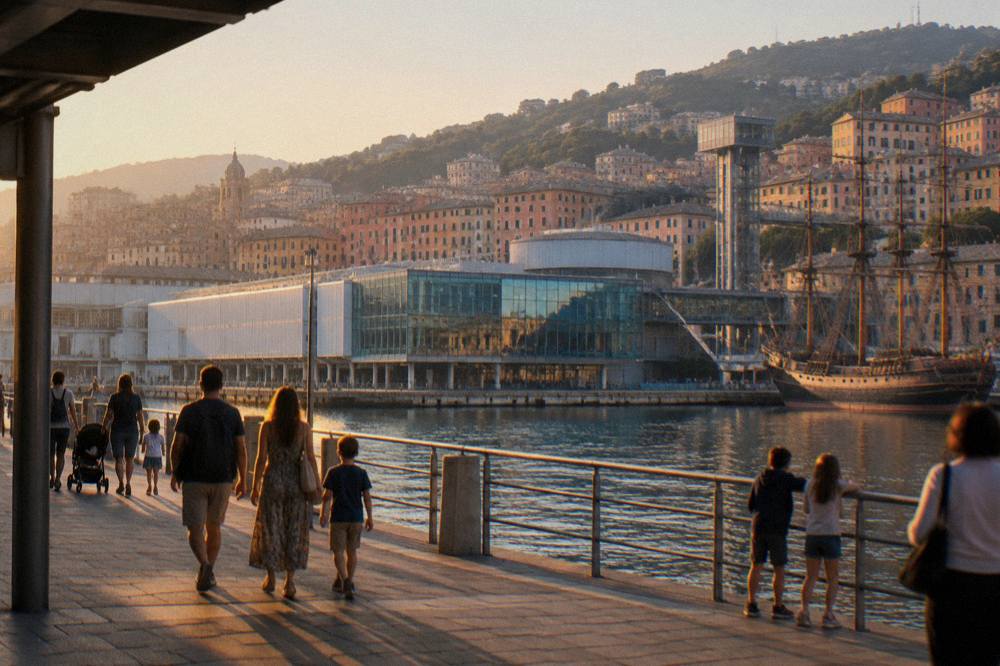
The Porto Antico, the Aquarium of Genoa and the Bigo panoramic lift all sit inside the old harbour redevelopment a short walk east of the ferry piers, and the Aquarium's own ticket page lists fixed-date adult tickets from 26.00 EUR, children 4 to 12 from 16.00 EUR, under 4 free, with the combined Aquarium, Biosfera and Bigo ticket from 37.00 EUR for an adult. The Lanterna lighthouse, built 1128 and rebuilt 1543, stands 117 m above the sea on the port's western approach.
A pre-sailing afternoon therefore needs no transport at all: the walkable band between the Stazioni Marittime and the old town contains the Aquarium (open 365 days a year, opened originally in 1992), the Biosfera, the Bigo lift, the Galata Museo del Mare on the same quay, and the entrance to the caruggi of the old town, one of the largest medieval historic centres in Europe at 113 hectares. The caruggi side of that stretch is covered in the things to do in Genoa overview.
| Attraction | Position relative to the ferry piers | Entry figures |
|---|---|---|
| Aquarium of Genoa | Old harbour, a short walk east | adult from 26.00 EUR, 4 to 12 from 16.00 EUR, under 4 free |
| Combined Aquarium, Biosfera, Bigo | Old harbour, a short walk east | adult from 37.00 EUR |
| Galata Museo del Mare | On the same harbour stretch | confirm current pricing on the venue's page |
| Lanterna | Port's western approach | confirm opening days on the venue's page |
| Old town (caruggi) | East of the piers, past Porto Antico | open streets, no ticket |
Museum-heavy plans justify the Genoa Museum Card, which at the 2026 rates costs 24 EUR for 24 hours or 45 EUR for 48 hours and covers 28 city museums; the Genoa Museum Card guide details what the card includes. Ticket details for the Aquarium are unpacked separately in the Aquarium tickets guide.
Common Questions About Genoa Ferries
How far is the Genoa ferry terminal from the city centre?
The ferry piers at Calata Chiappella, Ponte Caracciolo and Ponte Colombo are about 2 km in a straight line from Piazza De Ferrari, and the cruise piers at Ponte dei Mille and Ponte Andrea Doria are about 1.4 km. Genova Piazza Principe station is the nearest rail and metro interchange.
Which companies operate ferries from Genoa?
Grandi Navi Veloci (GNV), Moby Lines, Tirrenia and Co.Tu.Nav operate from the Stazioni Marittime terminal, with routes seen on the live departures table including Palermo, Porto Torres, Tunis and Marseille, and Barcelona on the GNV network.
Can you take a ferry from Genoa to the Cinque Terre?
No regular scheduled ferry runs that route. Golfo Paradiso is reported to run a Genoa to Cinque Terre tour on set dates only, and the scheduled boat network between the villages starts from the Tigullio ports and from within the Cinque Terre itself. The train is the standard connection.
How do you get from Genoa airport to the ferry terminal?
A taxi from Genova Cristoforo Colombo airport to the city centre is a fixed 25 EUR per car, 30 EUR for more than four people, plus 2 EUR at night and on holidays. By public transport, the Volabus airport service requires the 10.00 EUR Met Daily 24-hour ticket and connects the airport with Principe, De Ferrari and Brignole in about 30 minutes.
Do you need a passport for ferries from Genoa?
Sailings to Tunis leave the European Union's border-free area and involve border checks, so a passport is required. Domestic sailings to Sardinia and Sicily still involve identity checks against the passenger manifest, so carry the document used at booking for every traveller.
How many passengers does the port of Genoa handle?
The port's own figures count 2.4 million cruise passengers, 2.6 million ferry passengers and 7,619 ship calls in the latest published statistics, making the Stazioni Marittime one of the busiest passenger complexes in the western Mediterranean.
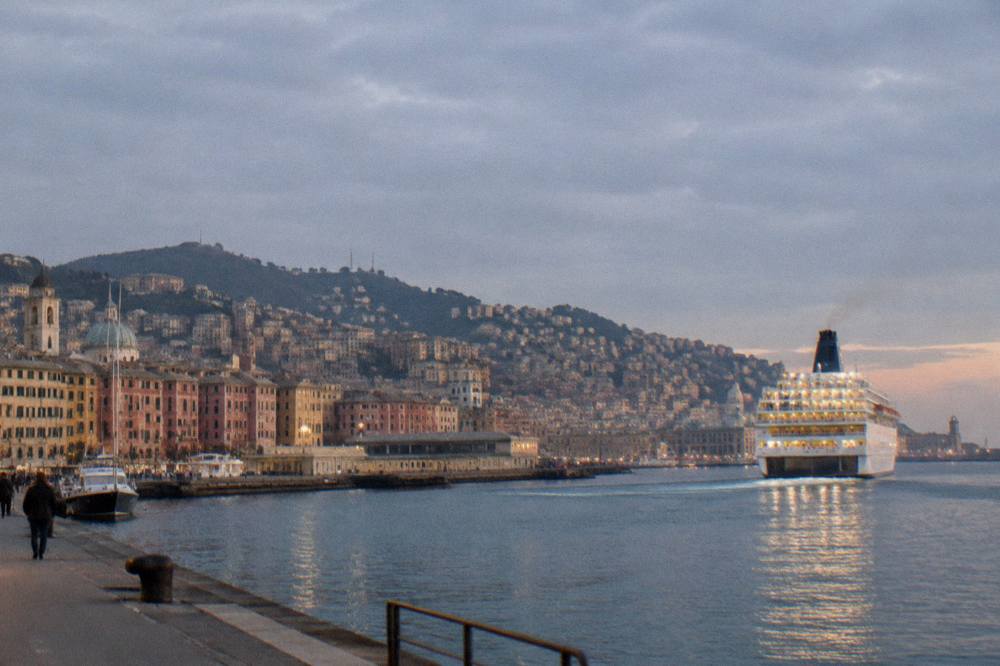
However you combine them, the overnight ships to Sardinia, Sicily, Barcelona and Tunis and the day boats of the Ligurian coast run from the same stretch of waterfront, and the Genoa Travel Guide covers every side of it.