Where To Stay In Genoa: Areas, Hotels And What Each Costs
Genoa is a long, narrow coastal city squeezed between the Ligurian Sea and the Apennine hills, and the neighbourhood you sleep in changes the trip more than in most cities. Here is what each area offers, what the tourist tax adds per night, and how the transport fares connect it all.
Short answer
Stay in the Old Town or near Piazza De Ferrari for a first visit on foot, at Principe or Via Balbi if you arrive by train or ferry, in Castelletto for views and quiet, and in Boccadasse or Nervi for the sea. The tourist tax runs from 2.00 EUR to 5.00 EUR per person per night by property category, charged on the first 8 nights.
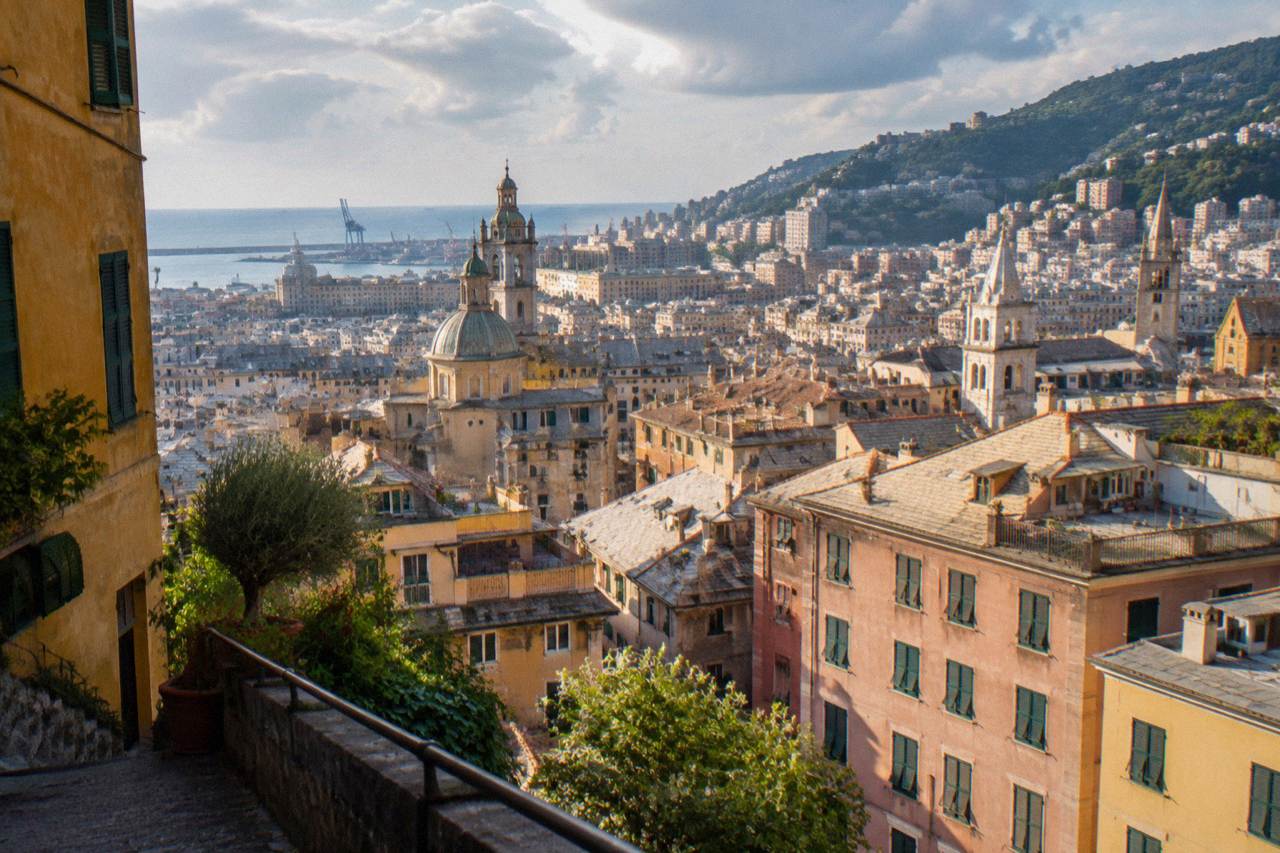
Genoa spreads along the Ligurian Sea as a thin strip between the water and the Apennine hills, and that shape is the single most important fact about choosing where to stay. The historic centre is dense and vertical, the district around Via XX Settembre sits a little inland, and the seaside quarters of Boccadasse and Nervi are kilometres apart down the coast. A single AMT ticket costs 2.00 EUR and covers 110 minutes on the whole network, so no area is cut off, but the walkability of each one differs sharply. This page from the Genoa Travel Guide sets out the areas this site covers, the official 2026 tourist-tax rates, and the fares and distances that connect them, so the choice can be made on figures rather than guesswork.

Where To Stay In Genoa: Which Area Fits Your Trip?
The practical answer is that first-time visitors sleep best in the Old Town, the caruggi or the blocks around Piazza De Ferrari, train and ferry arrivals save time at Principe and Via Balbi, anyone who wants views and calm chooses Castelletto, and the sea-focused stay goes to Boccadasse or Nervi. Each choice is real and distinct: the historic centre is one of the largest medieval historic centres in Europe, while Nervi lies about 9 km away down the coast.
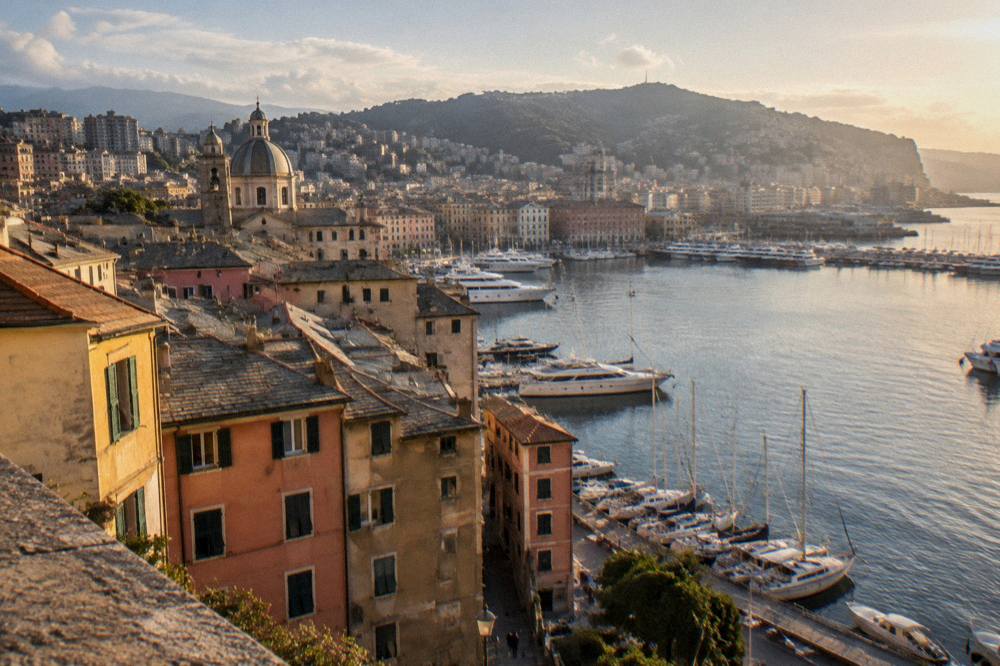
The city's geography does the sorting for you. The old harbour, the Aquarium of Genoa and the Porto Antico sit at sea level on the western edge of the centre. From there the caruggi, the narrow lanes of the old town, climb east and uphill towards Piazza De Ferrari, the Opera House and Via XX Settembre. Behind and above the centre, Castelletto sits on a shoulder of the hills, reached by public lifts and the Zecca-Righi funicular. West along the coast lie Principe station, Via Balbi and, further out, Pegli at about 10 km. East lie the Foce and Albaro quarters, Corso Italia at about 4 km, Boccadasse at about 4 km and Nervi at about 9 km, all measured in a straight line from Piazza De Ferrari.
| Area | Straight-line distance from Piazza De Ferrari | Character | Best for |
|---|---|---|---|
| Old Town and the caruggi | In the centre | Medieval lanes, dense, vertical | First visit, food, atmosphere |
| Piazza De Ferrari and Via XX Settembre | In the centre | Wide shop streets near the centre | Central base, arrivals by metro |
| Principe and Via Balbi | About 1 km west | Stations, port, university quarter | Train, ferry and cruise arrivals |
| Castelletto | Above the centre | Hillside terraces, residential | Views, quiet, lifts and funicular |
| Foce and Albaro | About 2 to 3 km east | Leafy quarters near Corso Italia | Seaside promenade stays |
| Boccadasse | About 4 km east | Former fishermen's village | Sea, small-scale stay |
| Nervi | About 9 km east | Parks and cliff promenade | Greenery, calm, long stays |
| Pegli | About 10 km west | Western coastal suburb | Airport-side, relaxed |
For a fuller sight-by-sight plan once the bed is chosen, the site's root guide to things to do across Genoa lists the attractions in every one of these areas, and how to get to Genoa covers the arrivals themselves.
Is The Old Town A Good Place To Stay In Genoa?
Yes, the Old Town is the strongest choice for a first visit, because the caruggi put the Cathedral of San Lorenzo, the UNESCO Palazzi dei Rolli, Palazzo Ducale and the city's food culture within a short walk of each other, and the AMT network covers anything beyond walking range with a 2.00 EUR ticket valid 110 minutes. The trade-off is a dense, noisy, vertical district: lanes are narrow, and the historic centre covers 113 hectares of them.
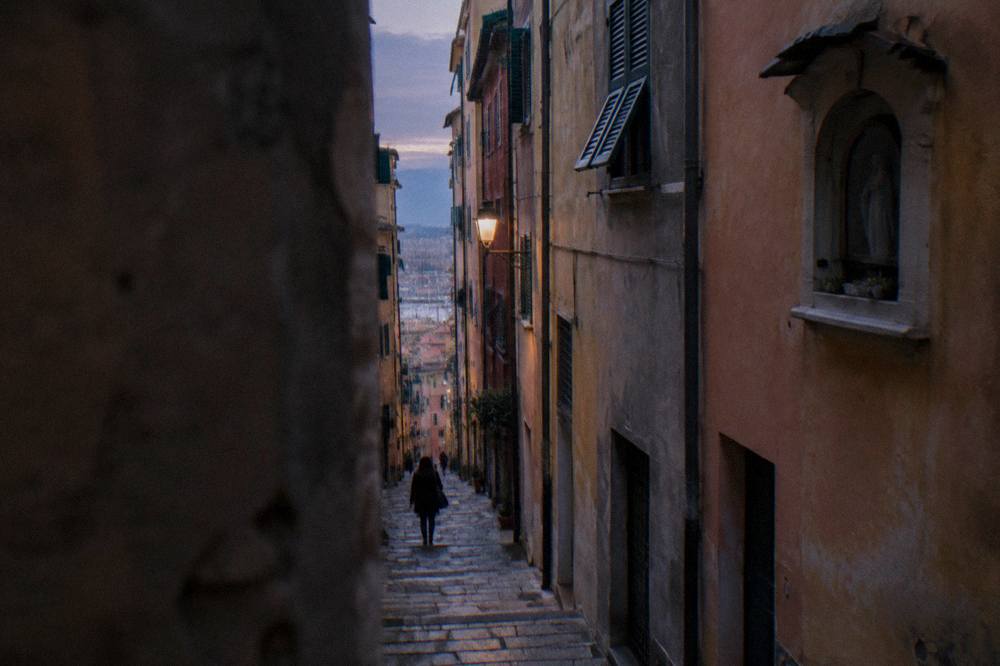
The old town is where Genoa's identity is densest. The Strade Nuove and the Palazzi dei Rolli, inscribed by UNESCO in 2006 as "Genoa: Le Strade Nuove and the system of the Palazzi dei Rolli" with 42 palaces, line Via Garibaldi at the district's northern edge. The Cathedral of San Lorenzo, Palazzo Ducale and the daily food culture of the Mercato Orientale area all sit inside the same fabric. The city's tourism office runs an information point at Via Garibaldi 12r, open daily 09:00 to 18:20, which is useful on a first day of orientation.
Two figures matter for museum-goers sleeping here. The Genoa Museum Card costs 24 EUR for 24 hours and 45 EUR for 48 hours at the 2026 rates, covers 28 city museums, and the "+bus" variants add AMT transport. Separately, the Strada Nuova museums, Palazzo Rosso, Palazzo Bianco and Palazzo Doria-Tursi, run a winter timetable from 28 September 2026 to 18 April 2027 with daily opening 10:00 to 18:30, but on Mondays only Palazzo Rosso can be visited. Those details are on the site's Genoa Museum Card and Via Garibaldi museums pages.
The historic centre and other central zones are ZTL limited-traffic areas under a city regulation updated in 2025. Driving into the zone to unload luggage is restricted, and the hours and authorisation rules sit in the city's own disciplinare. Anyone arriving by car should plan to park outside the zone and walk or take transport in.
Where To Stay Near The Aquarium And Porto Antico?
The Porto Antico side, on the old harbour at the western edge of the centre, suits families and anyone whose trip is built around the Aquarium of Genoa, which is open 365 days a year with fixed-date adult tickets from 26.00 EUR, children 4 to 12 from 16.00 EUR and under-4s free, with dynamic pricing, per the Aquarium's own ticket page. The combined Aquarium, Biosfera and Bigo ticket starts from 37.00 EUR for an adult.
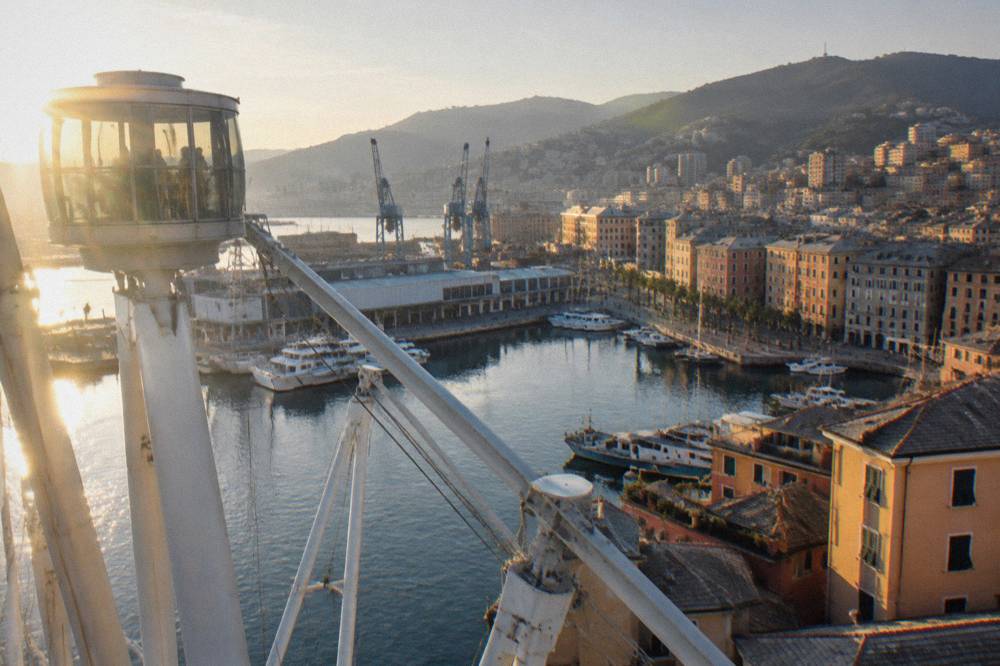
Staying within reach of the Porto Antico also puts the Bigo panoramic lift, the Galata Museo del Mare and the Lanterna-side of the waterfront close. The Aquarium opened in 1992 as part of the redevelopment of the old harbour by Renzo Piano for the Columbus Expo, and the Bigo lift belongs to the same project. Tickets for the Aquarium side are covered in detail on the site's Aquarium of Genoa tickets page, including the combined options.
The family angle is worth stating plainly. The Aquarium's own ticket page lists reduced tickets from 20.00 EUR for military visitors, over-65s and disabled visitors, and the site's Genoa with kids guide covers the rest of the child-facing city. For a stay built around the sea rather than tanks, the Cinque Terre from Genoa and Portofino from Genoa day-trip pages explain the boat and train options east.
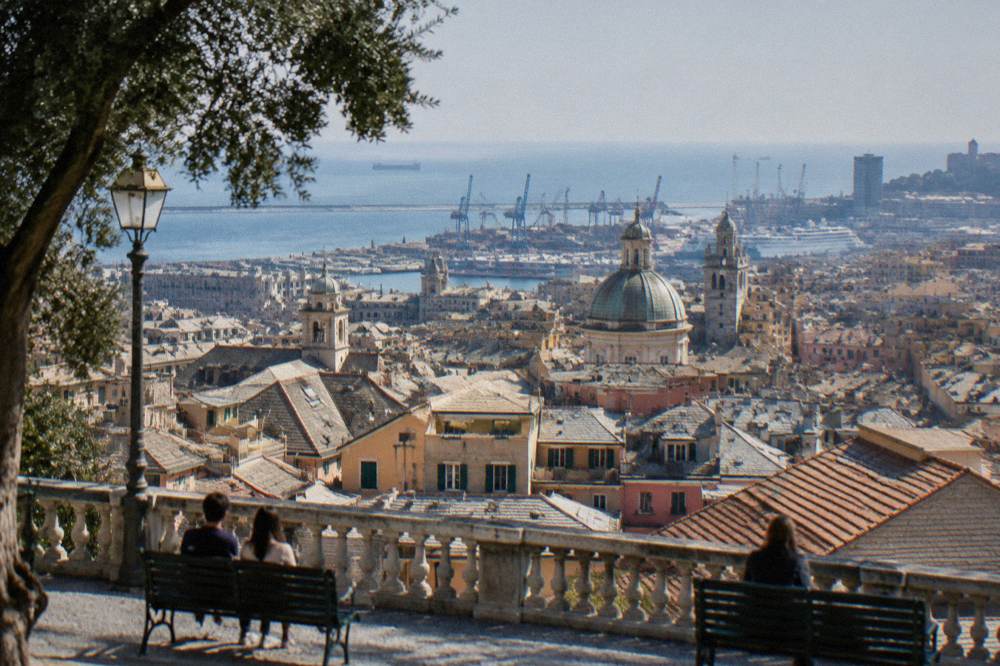
Is Castelletto A Good Base For Views Over Genoa?
Castelletto, the hillside quarter above the centre, is the view-and-quiet option: the Spianata Castelletto terrace looks over the rooftops and the sea, and the quarter is served by the Castelletto Levante lift, which runs daily 06:40 to 24:00 and costs 1.20 EUR a ride, or the Zecca-Righi funicular on the same hours, so the centre stays reachable without a long climb.
The lift and funicular network is what makes upper Genoa livable. AMT runs 14 public lifts across the city, and a single vertical ride on any of them, or on the Sant'Anna funicular, costs 1.20 EUR. The ordinary AMT ticket at 2.00 EUR for 110 minutes also covers the network. The site's lifts and funiculars and Spianata Castelletto pages cover the mechanics in full.
| Way up to Castelletto | Hours | Fare |
|---|---|---|
| Castelletto Levante lift | Daily 06:40 to 24:00 | 1.20 EUR single ride |
| Zecca-Righi funicular | Daily 06:40 to 24:00 | 1.20 EUR vertical, or AMT ticket |
| Sant'Anna funicular | Daily service | 1.20 EUR single ride |
| Ordinary AMT ticket | Valid 110 minutes | 2.00 EUR, whole network |
For a first evening in the city, an orientation walk pairs well with the quarter's terraces. The Genoa walking tour page describes the route options, and the related self-guided option with audio and written commentary can be checked via the operator's live listing: Check availability.
Want someone to turn the quarter into a map on day one? Book a guided walking tour here.
Where To Stay Near The Station: Principe And Via Balbi?
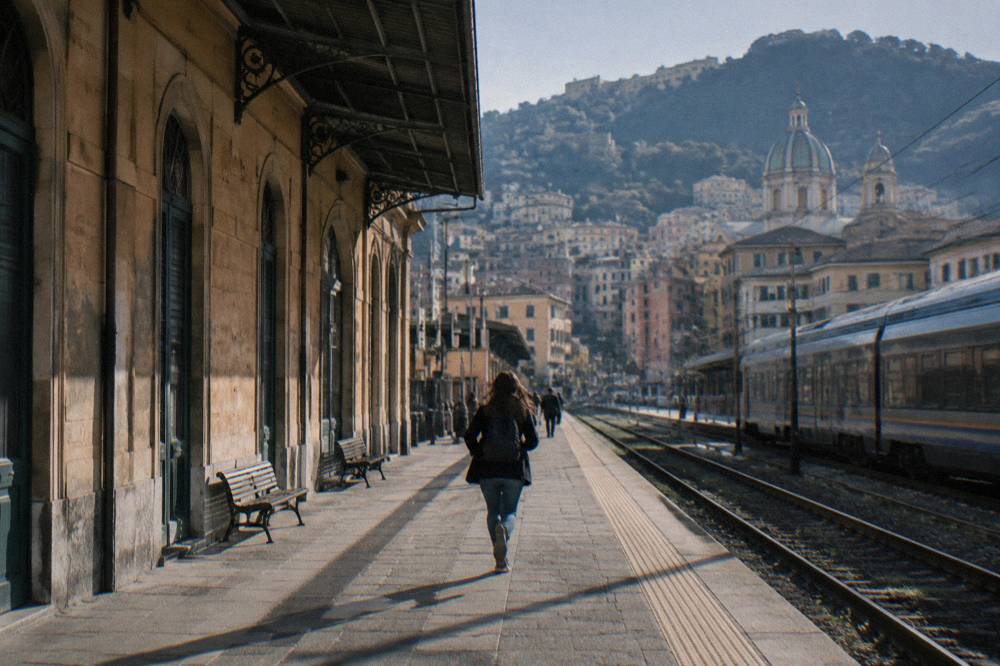
Principe and Via Balbi are the arrival-friendly choice: Genova Piazza Principe is one of the city's two main stations, the metro runs from it through Sant'Agostino and De Ferrari to Genova Brignole, and the Volabus airport shuttle reaches Principe, De Ferrari and Brignole from Genova Cristoforo Colombo airport in about 30 minutes. The airport taxi is a fixed 25 EUR per car to the centre, 30 EUR for over four people, plus 2 EUR at night and on holidays.
This is also the district for ferry and cruise passengers. The port's passenger terminals sit close by: Ponte dei Mille and Andrea Doria primarily for cruises, Calata Chiappella, Ponte Caracciolo and Ponte Colombo primarily for ferries, with GNV, Moby, Tirrenia and Co.Tu.Nav operating routes to Sardinia, Corsica, Sicily, Barcelona and Tunis. The port's own figures record 2.4 million cruise passengers and 2.6 million ferry passengers a year. The site's Genoa cruise port, Genoa ferries and train stations pages carry the detail.
One transport figure matters more than any other here: the Volabus requires the 10.00 EUR Met Daily ticket, valid for 24 hours across the full network. The airport shuttle requires the Met Daily 24-hour ticket at 10.00 EUR, which then covers the whole AMT network including line 782 towards Portofino. The site's Genoa airport and public transport pages unpack the options.
Via XX Settembre And Piazza De Ferrari: Where To Stay In Central Genoa?
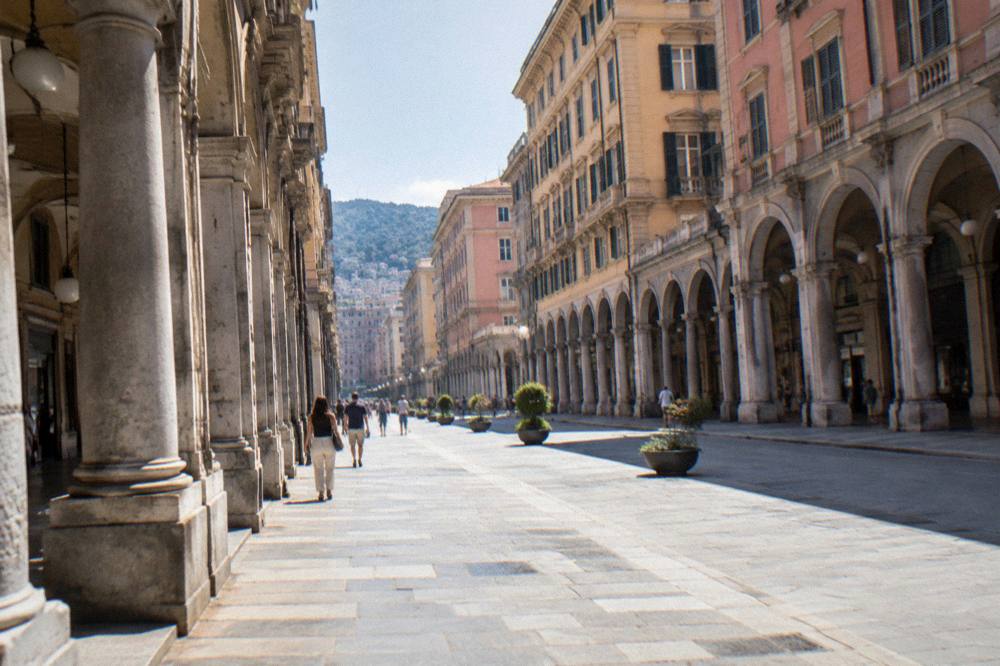
The district around Via XX Settembre and Piazza De Ferrari is the flat, formal centre of the city, tied to the Old Town at one end and to the Foce quarter at the other, with the metro's De Ferrari stop underground and the Mercato Orientale on the street's inland side. It suits travellers who want wider pavements, shop streets and a short walk down into the caruggi without sleeping inside them.
Piazza De Ferrari is the reference point for every straight-line distance on this site, which says something about its centrality. The Genoa Museum Card's "+bus" variants cover AMT transport from here, and the metro line, 7 km long with 8 stations from Brin to Brignole, passes through De Ferrari and Sant'Agostino. Two extensions are under construction but not open in October 2026: Canepari is reported as targeted forJune 2027 and Martinez for December 2028. The wider set of guides lives on Genoa Travel Guide.
For eating, the what to eat in Genoa guide covers pesto genovese, made with Basilico Genovese PDO basil, focaccia, farinata, trofie and pansoti, and the dedicated pesto and foccacia-style pages go deeper. The market itself is covered on the Mercato Orientale page.
Should You Stay In Boccadasse Or Nervi?
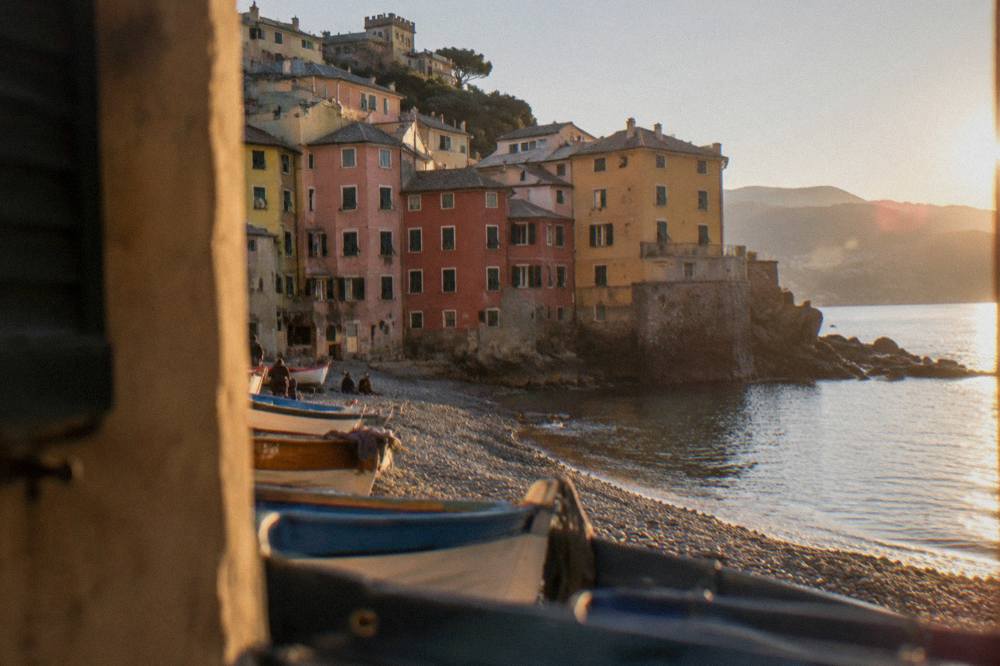
Boccadasse, about 4 km east of the centre, is the small-scale sea option, a former fishermen's village between Corso Italia and Capo Santa Chiara with colourful houses, gozzo fishing boats and nets on a small pebble beach; Nervi, about 9 km east, is the green option, with the roughly 2 km cliff-top Passeggiata Anita Garibaldi and the 9.2-hectare Parchi di Nervi around four historic villas. Boccadasse suits a short, sea-focused stay; Nervi suits a calmer, longer one.
One water-quality fact belongs in any honest comparison. ARPAL's 2026 bathing classification for the Ligurian coast grades Boccadasse as SCARSA, poor, while Nervi's Passeggiata point grades BUONA, good. ARPAL's network covers 380 sampling points in classes from Eccellente to Scarsa, so these are official classifications, not impressions. Swimming plans should follow them, and the site's Genoa beaches, Boccadasse and Nervi pages carry the context.
Getting east is simple. Corso Italia, the seaside promenade, runs about 2.5 km from the Foce area to Boccadasse, and Nervi has its own railway station adjacent to the promenade. A single AMT ticket at 2.00 EUR covers the bus network for 110 minutes, and the integrated AMT-Trenitalia version at 2.20 EUR covers selected regional trains too. For day trips further along this coast, Camogli at about 18 km, Santa Margherita Ligure at about 24 km and Portofino at about 25 km are the classic trio, and the site's comparison of Santa Margherita versus Portofino addresses the sleep-east question directly.
How Does Genoa's Tourist Tax Work?
Genoa's imposta di soggiorno is charged per person per night, and only the first 8 consecutive nights are taxed: 1-star hotels 2.00 EUR, 2-star hotels 2.50 EUR, hostels, agriturismo, marina resorts and campsites 2.00 EUR, and case per ferie, affittacamere and B&Bs 4.00 EUR, per the comune of Genoa's tourist-tax page, with the extra-hotel tariffs effective from 1 August 2026. Rates reported for 3-, 4- and 5-star hotels are 3, 4 and 5 EUR: confirm at booking.
The tax is small but real, and it scales with the category of the property rather than the nightly rate. A family of four in a B&B for three nights should check the official site for the amount added to the bill; the same family in a hostel should also check the official site. Children under 14 are reported to be exempt, which should also be confirmed at booking, and holiday apartments are reported at 5.00 EUR, or 4.00 EUR in Municipi IV, V and VI.
| Property type | Tourist tax, EUR per person per night | Tier |
|---|---|---|
| 1-star hotel | 2.00 | Verified |
| 2-star hotel | 2.50 | Verified |
| 3-star hotel | 3.00 | Reported |
| 4-star hotel | 4.00 | Reported |
| 5-star hotel | 5.00 | Reported |
| Hostel, agriturismo, marina resort, campsite | 2.00 | Verified |
| B&B, affittacamere, case per ferie | 4.00 | Verified |
| Holiday apartment (AAUT) | 5.00, or 4.00 in Municipi IV, V, VI | Reported |
Hotel nightly rates and hotel names are outside what this site publishes; the budget side of a Genoa trip is better planned through the Genoa on a budget and free things to do in Genoa guides, which list what costs nothing and what everything else costs.
What Does It Cost To Get Around From Each Area?
A single AMT ticket costs 2.00 EUR and is valid 110 minutes on the whole urban network; the integrated AMT-Trenitalia version is 2.20 EUR, a 5-hour ticket is 5.00 EUR, a carnet of 11 tickets is 20.00 EUR, and the Met Daily 24-hour ticket is 10.00 EUR and is the only ticket valid on the Volabus airport shuttle. Lifts and the Sant'Anna funicular cost 1.20 EUR a ride.
Where you sleep determines how many of those tickets you burn. A stay in the Old Town or near Piazza De Ferrari can run on foot with a handful of tickets for the Aquarium, the viewpoints and the coast. A stay in Nervi leans on the train or bus for every visit to the centre. The Met Daily earns its price quickly on an arrival day that includes the airport shuttle.
| AMT ticket | Price | Validity |
|---|---|---|
| Ordinary single | 2.00 EUR | 110 minutes, urban network |
| Integrated with Trenitalia | 2.20 EUR | 110 minutes, urban plus selected trains |
| 5-hour ticket | 5.00 EUR | 5 hours |
| Carnet of 11 | 20.00 EUR | 11 x 110 minutes |
| Met Daily | 10.00 EUR | 24 hours, full network incl. Volabus |
| Lift or Sant'Anna funicular | 1.20 EUR | Single ride |
Day-trip distances from Piazza De Ferrari, straight-line, give the sense of scale: Camogli about 18 km, San Fruttuoso about 22 km, Santa Margherita Ligure about 24 km, Portofino about 25 km, and the Cinque Terre about 67 km. Trains to Milan take about 1h30 to 2h from fares of about 11 EUR, which is why the Milan to Genoa route is a common way in.
When Is The Best Time To Book A Stay In Genoa?
The official Aeronautica Militare CLINO 1971-2000 normals for Genoa Sestri show July means of 27.3 C high and 20.9 C low with only 24.2 mm of rain, and October the highest monthly rain total at 171.3 mm, so summer is the dry, warm window and autumn the wet one; January means sit at 11.5 C high and 5.5 C low. No availability or crowd prediction follows from any of this: the numbers describe the climate, not the booking calendar.
Two dated events do shift the lodging picture. The Salone Nautico, the Genoa International Boat Show, ran 1 to 6 October 2026 in its 66th edition and returns 30 September to 5 October 2027; the Festival della Scienza ran 22 October to 1 November 2026. Anyone whose dates overlap an edition of either should book with those in mind. The best time to visit Genoa, Genoa weather and Genoa events pages carry the full calendars.
| Month | Mean high C | Mean low C | Rain mm |
|---|---|---|---|
| Jan | 11.5 | 5.5 | 101.8 |
| Apr | 16.8 | 10.5 | 88.0 |
| Jul | 27.3 | 20.9 | 24.2 |
| Aug | 27.7 | 21.0 | 69.3 |
| Oct | 20.0 | 13.8 | 171.3 |
| Nov | 15.1 | 9.2 | 108.8 |
Official Aeronautica Militare CLINO 1971-2000 normals, Genoa Sestri station.
Whichever area wins, the first day is better spent orienting than commuting. A guided walk or a self-guided audio route turns the neighbourhood into a map, and a food walk with wine tasting does the same through the things on the plate. The trio below covers entry-level options for exactly that purpose.
Common Questions About Staying In Genoa
Where to stay in Genoa for a first visit?
The Old Town and the caruggi, or the blocks around Piazza De Ferrari and Via XX Settembre, put the Cathedral of San Lorenzo, Palazzo Ducale, the Palazzi dei Rolli and the food lanes within walking range, with the metro's De Ferrari stop for anything further out.
Where to stay in Genoa near the sea?
Boccadasse, about 4 km from the centre, and Nervi, about 9 km, are the sea-facing options, linked to the centre by Corso Italia, AMT buses and, for Nervi, a railway station by the promenade. ARPAL's 2026 classes grade Nervi BUONA and Boccadasse SCARSA for bathing water.
How much is the tourist tax in Genoa?
Per person per night, on the first 8 consecutive nights: 2.00 EUR at 1-star hotels and hostels, 2.50 EUR at 2-star hotels, 4.00 EUR at B&Bs, affittacamere and case per ferie, with 3-, 4- and 5-star hotel rates of 3, 4 and 5 EUR reported. Confirm the final figure at booking.
Is it better to stay near Genova Piazza Principe or Genova Brignole?
Principe sits beside the port, the ferry terminals and Via Balbi, and the Volabus airport shuttle stops there in about 30 minutes from the airport. Brignole serves the eastern side and the metro's other end. Arrivals by ferry, cruise or western train save time at Principe; the choice matters less once a 2.00 EUR, 110-minute AMT ticket is in hand.
Can you walk everywhere from a central Genoa hotel?
The centre, the caruggi, the Porto Antico and the Aquarium are walkable from a central base, but Genoa is vertical: Castelletto sits above the centre and is reached by the 1.20 EUR lifts or the Zecca-Righi funicular, and the coastal quarters need a bus, a train or comfortable shoes along Corso Italia.
Is Genoa a good base for day trips?
Yes. Camogli, Santa Margherita Ligure, Portofino, the Cinque Terre, Milan, Turin and Nice are all reachable by train or boat, with straight-line distances from Piazza De Ferrari of about 18, 24, 25, 67, 119, 123 and 141 km respectively, and Milan about 1h30 to 2h by train from fares of about 11 EUR.