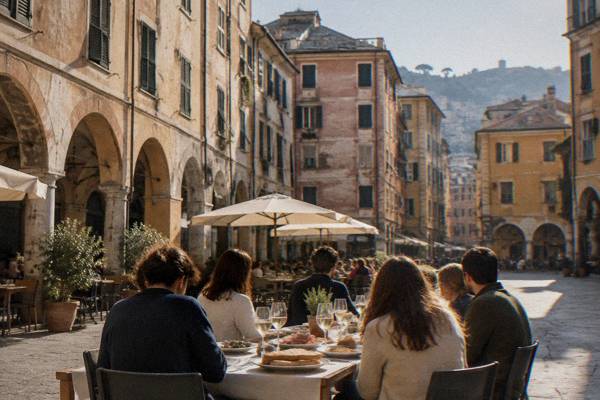
What Food Is Genoa Famous For?
Genoa is famous for pesto genovese, focaccia, farinata, trofie and pansoti. Here is what the PDO and IGP rules actually say, and how to taste each one.
Genoa, the coastal city in Liguria on the Ligurian Sea, is famous above all for pesto genovese, the basil sauce made with Basilico Genovese PDO, and for the baked goods and pasta shapes that grew up around it: focaccia, farinata, trofie and pansoti. The entire food Genoa Travel Guide desk can state this plainly because the labels themselves are the proof: the basil carries a protected designation of origin, and the focaccia of nearby Recco carries a protected geographical indication. These are not marketing nicknames but registered European schemes with rules, and they anchor everything on this page.
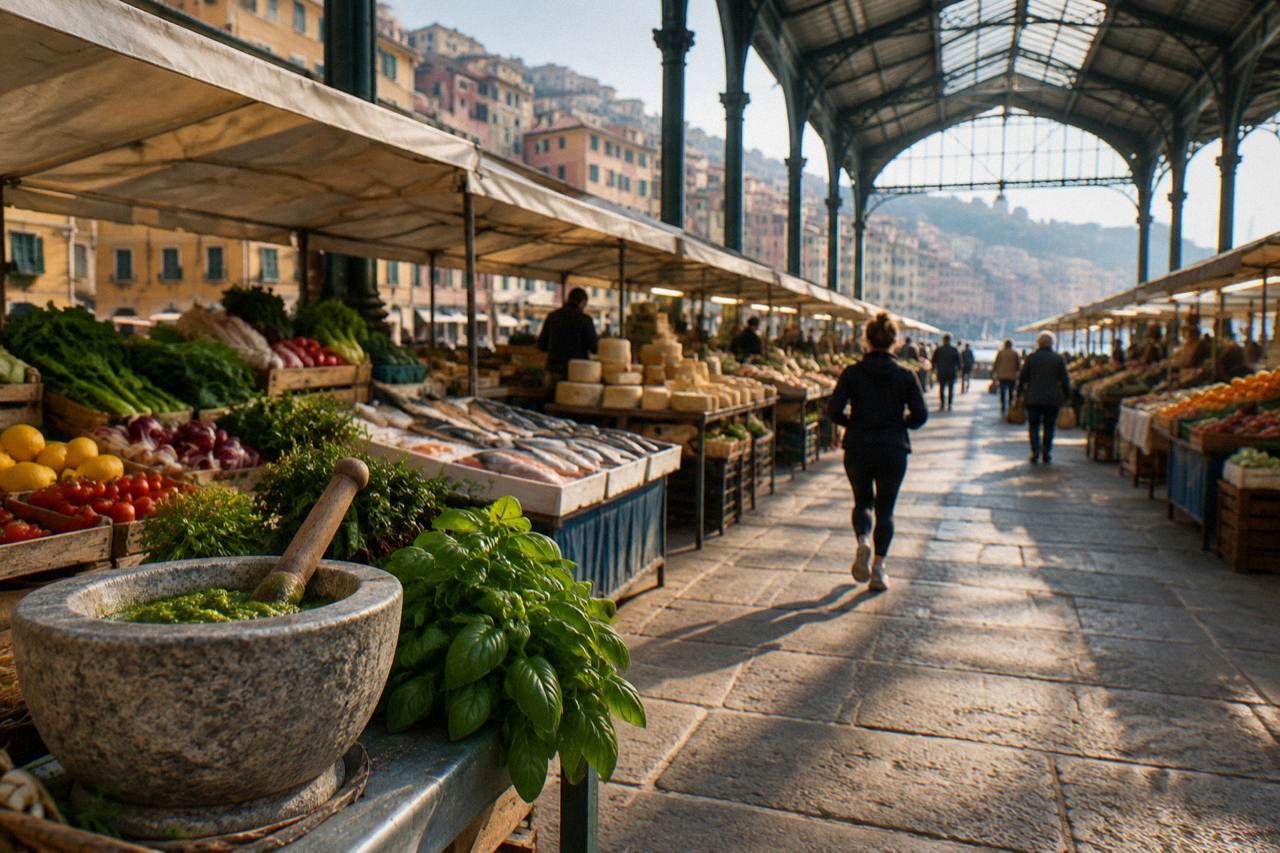
What Food Is Genoa Famous For?
Genoa is famous for five foods above all: pesto genovese, the basil sauce whose basil must be Basilico Genovese PDO; focaccia, the olive-oil flatbread of the Ligurian coast; farinata, a savoury chickpea pancake; trofie, the small hand-rolled pasta twists traditionally dressed with pesto; and pansoti, a filled pasta served with a walnut sauce. Recco's focaccia, made only in Recco, Camogli, Sori and Avegno, has been IGP protected since 2015.
The list is short because it is real. Each of these five foods belongs to the narrow strip of coast and hills between the Ligurian Sea and the Apennines, where basil, olive oil, chickpea flour and pine nuts were the local pantry. The wider story of the city's fame, from the Republic that lasted until 1797 to the UNESCO palaces, is covered in why Genoa is famous; this page stays on the plate.
A note on names: the Italian spellings stay Italian. Pesto genovese, not "Genoese pesto sauce"; pansoti, sometimes spelled pansotti; trofie, sometimes trofiette. The protected labels use these exact names, and so does this site. Keeping them exact matters more than it sounds, because a label only protects the name it registers, and the registered names here are the Italian ones.
Why Is Pesto Genovese The City's Signature?
Pesto genovese is Genoa's signature because its defining ingredient is protected by law: the basil must be Basilico Genovese PDO, a registered European protected designation of origin, grown in the Ligurian growing area under the scheme's rules. The sauce takes its name from the city itself, and the PDO specification ties the basil, and therefore the authentic sauce, to this stretch of the Ligurian coast rather than to basil from anywhere else.
The protected designation is the verifiable fact at the centre of the dish. Basilico Genovese PDO has its own consortium and specification, and pesto made with that basil is what the name genovese refers to. The traditional method uses a mortar and pestle, which is where the word pesto itself comes from, the Italian verb pestare, to pound or crush.
Two practical notes for visitors. First, this site prints no restaurant names, no "best of" lists and no dish prices; the what to eat in Genoa guide covers the same dishes with the same discipline. Second, if you want the technique rather than just the taste, cooking classes in the city teach pesto by mortar alongside fresh pasta, and a guided tasting walk pairs the dishes with the streets they come from. Both formats have their place: the class sends you home with the method, the walk sends you home with the map.
If you want the technique rather than just the taste, book a pesto cooking class here.
What Role Does Focaccia Play In Genoa?
Focaccia is the everyday bread of Genoa and the whole Ligurian coast: an olive-oil flatbread, dimpled and salted, that belongs to the city's street-food culture the way the caruggi belong to its old town. Its most protected form is focaccia di Recco, a thin cheese-filled version which has held IGP status since 2015 and which, under the specification, is produced only in four communes: Recco, Camogli, Sori and Avegno.
The IGP detail is the one worth carrying with you. Recco lies about 18 km in a straight line from Piazza De Ferrari, on the eastern Riviera, and its focaccia is a different product from the plain city loaf: two paper-thin layers of dough with soft cheese between them. The IGP registration means the name is tied to those four communes, so a visitor deciding where to try it has a legal definition rather than a slogan.
Plain Genoese focaccia, by contrast, is made everywhere in the city, and no single bakery can be recommended here. What can be said is structural: it is the classic morning food of the caruggi, eaten on its own or used, in the local habit, as the bread in a sandwich. The Genoa street food guide expands on how the baked goods and the old-town lanes fit together.
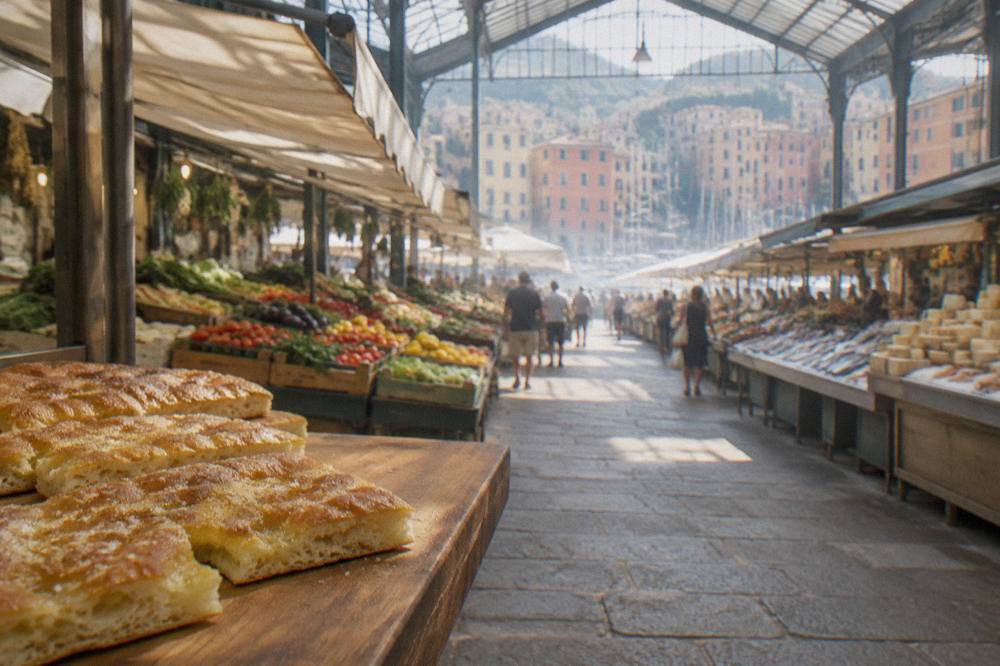
What Are Farinata, Trofie And Pansoti?
Farinata is a savoury baked pancake of chickpea flour, olive oil and water, cooked in a hot oven until the edges crisp; trofie are small hand-rolled pasta twists whose traditional partner is pesto genovese; and pansoti are a filled pasta, the filling based on greens and cheese, served with a walnut sauce rather than pesto. Together with pesto and focaccia they complete the five dishes Genoa is famous for.
Each of the three solves an old Ligurian pantry problem with what the coast and hills produced. Chickpea flour keeps without refrigeration and made farinata a food of the port. Hand-rolled pasta needed no machine, only patience, and trofie are small enough that a pesto coating clings to every twist. Pansoti turn wild greens and walnuts into a main dish, with the walnut sauce standing in for the tomato sauces of southern Italy, which arrived late in the northern pantry.
None of these dishes carries a dated origin story on this page, because the sources here supply none. What they do supply is the protected-label context, and that is the honest scaffolding for the whole cuisine: a small number of ingredients, tightly bound to a small amount of coastline. That economy is the common thread, and it explains why the five dishes pair with each other so easily on one plate or one short walk.
Which Protected Labels Apply To Genoese Food?
Two registered European labels attach directly to the food Genoa is famous for: Basilico Genovese PDO, the protected designation of origin for the basil used in pesto genovese, and focaccia di Recco IGP, the protected geographical indication registered in 2015 for the cheese-filled focaccia produced only in Recco, Camogli, Sori and Avegno. The PDO is the stronger protection, tying the basil to a defined growing area; the IGP ties the focaccia to four defined communes.
The difference between the two schemes is worth one paragraph. A PDO (protected designation of origin) requires every production step to happen in the defined area; an IGP (protected geographical indication) requires at least one defining step, here the production of the focaccia in its four home communes. For a traveller, both labels work the same way: they tell you the name means something specific.
| Label | Food | Scheme | Registered | Area of production |
|---|---|---|---|---|
| Basilico Genovese | Basil for pesto genovese | PDO | in force (V) | Ligurian growing area per the specification |
| focaccia di Recco | Cheese-filled focaccia | IGP | 2015 (R) | Recco, Camogli, Sori, Avegno only |
How Do You Taste All Five Foods In Genoa?
The honest way to taste all five foods in Genoa is to spread them across the places that sell them: a bakery for focaccia and farinata, a pasta maker or trattoria for trofie with pesto and pansoti with walnut sauce, and a market, the Mercato Orientale on Via XX Settembre, to see the raw ingredients, including the PDO basil, on sale. A guided food tour compresses the same five stops into one walk with a local expert alongside.
The market deserves its sentence. The Mercato Orientale sits on Via XX Settembre, one of the city's main streets, and it is where the city's cooks have always bought their greens, herbs and cheese. Around it, the old town's 113 hectares, described as one of the largest medieval historic centres in Europe, hold the bakeries and pasta shops where the five dishes are made daily.
For a visitor who wants the machinery explained as well as the food eaten, the traditional food and drinks tour of the city is the direct option, and its live listing carries the current price and dates: Check availability. A hands-on cooking class is the alternative route, teaching the pesto mortar and the pasta rolling rather than just the eating. How long to allow for the city itself is a separate question, answered in how many days in Genoa is enough.
| Dish | What it is | Classic partner | Protected label attached |
|---|---|---|---|
| Pesto genovese | Basil, pine nut and cheese sauce pounded in a mortar | Trofie | Basilico Genovese PDO |
| Focaccia | Olive-oil flatbread, dimpled and salted | Eaten alone or as sandwich bread | focaccia di Recco IGP for the Recco version |
| Farinata | Baked chickpea-flour pancake | Eaten hot from the oven | None stated in the sources |
| Trofie | Small hand-rolled pasta twists | Pesto genovese | None stated in the sources |
| Pansoti | Green- and cheese-filled pasta | Walnut sauce | None stated in the sources |
Common Questions About Food In Genoa
What Food Is Genoa Famous For?
Genoa is famous for pesto genovese, focaccia, farinata, trofie and pansoti. The basil in authentic pesto must be Basilico Genovese PDO, and the cheese-filled focaccia di Recco has been IGP protected since 2015, produced only in Recco, Camogli, Sori and Avegno.
Is pesto really from Genoa?
The name is: pesto genovese takes its name from the city, and the basil in the authentic version is Basilico Genovese PDO, a protected designation tied to the Ligurian growing area. The word pesto itself comes from pestare, to crush, after the mortar used to make it.
What is the difference between focaccia and focaccia di Recco?
Plain Genoese focaccia is a dimpled olive-oil flatbread made throughout the city. Focaccia di Recco is a different product: two thin layers of dough with soft cheese between them, protected by an IGP registered in 2015 and produced only in Recco, Camogli, Sori and Avegno.
What pasta shapes should you order in Genoa?
Trofie and pansoti. Trofie are small hand-rolled twists traditionally served with pesto genovese; pansoti are a filled pasta with a greens-and-cheese filling, served with a walnut sauce.
Where can you buy the ingredients in Genoa?
The Mercato Orientale on Via XX Settembre is the city's historic food market, named here as a place only; this site prints no stall names, hours or prices for it. Bakeries and pasta shops across the old town sell the finished dishes.
The five foods hold together for one reason: everything in them grows or is made within a short distance of the city, and two of them now carry the paperwork to prove it. Start with the pesto, work outward to the focaccia and the filled pasta, and read the labels the way the city's cooks do, as a guarantee rather than a slogan.