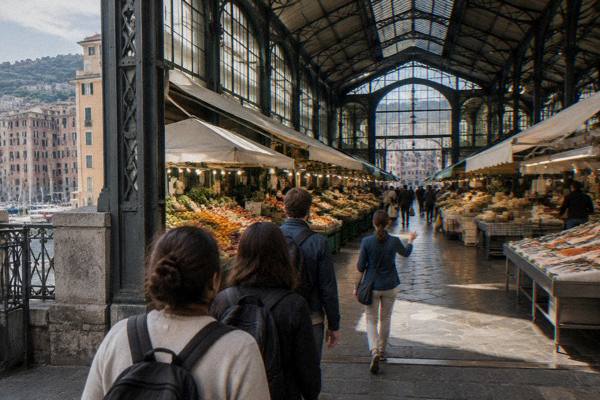
Genoa Street Food: Friggitorie, Focaccerie And Fried Fish Cones
Genoa's street food runs on fryers, ovens and market counters: focaccia, farinata, fried fish cones and the old town's friggitorie, eaten standing between the caruggi.
Short answer
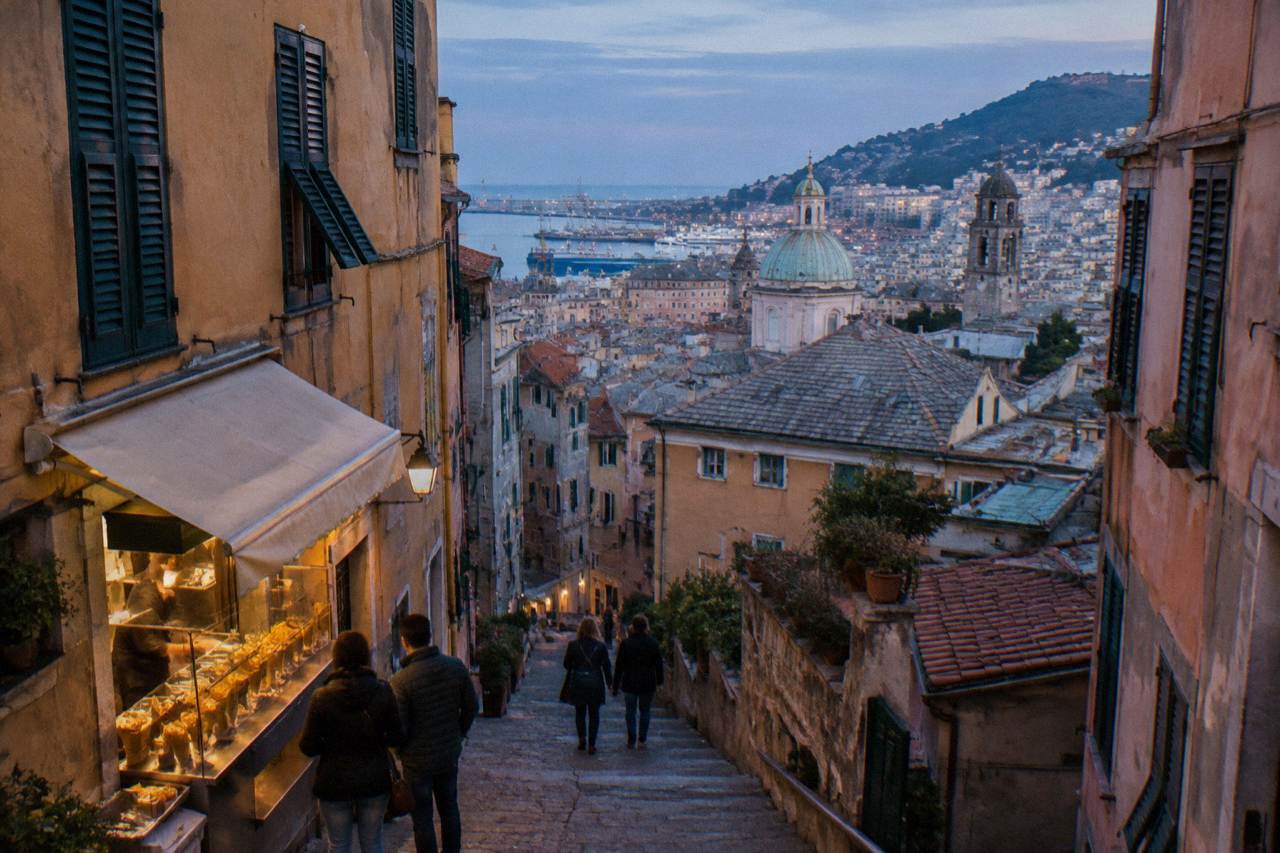
Genoa street food means the fried and baked snacks of the old town: focaccia from the focaccerie, chickpea farinata, and friggitorie selling fried fish and vegetables in paper cones, plus the market food around Via XX Settembre.
Genoa, the coastal city in Liguria on the Ligurian Sea, eats a large share of its food standing up. The old town, a dense web of lanes called the caruggi and described by the city's own tourism site as one of the largest medieval historic centres in Europe at 113 hectares, has fed itself for centuries from small counters rather than grand dining rooms: fryers selling cones of fish and vegetables, bakeries pulling flat focaccia from the oven, and market stalls around Via XX Settembre where the shopping happens between bites. This page is a guide to that food: what the dishes are, where the categories of shop sit in the city, and how to fold them into a visit. For the full table-side picture, start with What To Eat In Genoa and the answer page What Food Is Genoa Famous For?; this site's Genoa Travel Guide covers the rest of the city.

What Is Genoa Street Food?
Genoa street food is the snack culture of the old town and the market streets: focaccia sold by weight or by the slice from focaccerie, chickpea farinata cut from wide copper pans, and the fried cones of fish, vegetables and rice that the city's friggitorie hand across their counters, all of it designed to be eaten within a few steps of where it is cooked. It is a working port's food, built around portability and cheap ingredients done well, and it maps almost perfectly onto the parts of Genoa a visitor walks anyway: the caruggi between Piazza De Ferrari and the Porto Antico, and the market end of Via XX Settembre. Nothing on this list needs a reservation, a table or much planning, which is exactly why the category fills the gaps between the Aquarium, the Palazzi dei Rolli and the seafront.
The vocabulary is small and worth learning before you go. A friggitoria is a shop whose main machine is a deep fryer. A focacceria is its oven-based counterpart. Farinata is a thin savoury pancake of chickpea flour, oil and water baked in an open pan. These three words cover the majority of what you will be offered through a hatch in Genoa.
What holds it together is the geography. The old town's lanes are narrow, the city rises steeply from the harbour into the Apennine hills, and the historic centre is one of the largest medieval historic centres in Europe, so the eating has always been compressed into small units. A food walk that joins several counters in one loop is the natural shape of a visit, and the wider Things To Do In Genoa list can be built around exactly that rhythm.
Where Do You Find The Friggitorie And Focaccerie In Genoa?
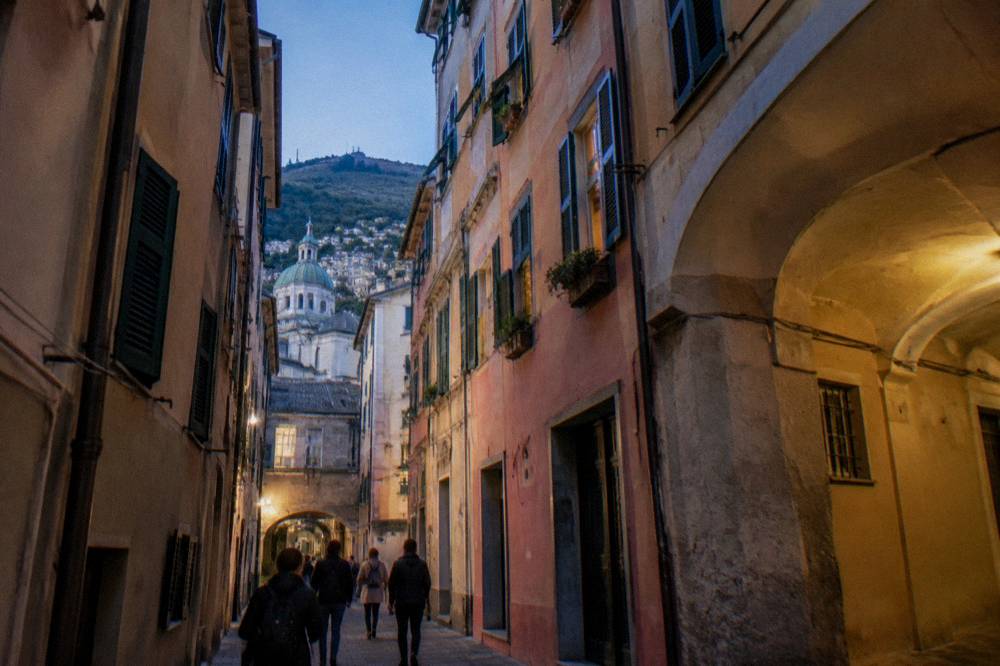
The friggitorie and focaccerie cluster where the old town is densest: the caruggi between Piazza De Ferrari, the Cathedral of San Lorenzo and the Porto Antico, plus the market streets around Via XX Settembre and the Mercato Orientale, whose stalls and surrounding counters supply the market-food side of Genoa street food. The old town is a grid of lanes that the city measures at 113 hectares, and almost any route you walk through it passes a counter selling something fried or baked. Via XX Settembre, the broad shopping street, is the other anchor: the Mercato Orientale sits on it, and the streets feeding the market carry the bakeries and fryers that serve the shoppers.
A simple structure for a food-focused wander is to start at Piazza De Ferrari, drop downhill through the caruggi past the Cathedral of San Lorenzo toward the Porto Antico, and eat at whatever hatch has a line of locals at it. That single descent crosses the whole historic centre. The return leg can climb via Via XX Settembre to close the loop at the market.
Two practical notes from the transport table below apply to food walkers. The whole centre is walkable, and the lifts and funiculars that carry you up the hillside, such as the Castelletto Levante lift, run daily 06:40 to 24:00, so a food walk that ends high up need not end with a long climb down. The Genoa Public Transport guide has the full fare picture.
The tables below keep the page anchored in real figures rather than impressions: what the dishes are, what the onward transport costs, and what the weather does across the year, since a food walk in Genoa is an outdoor activity.
| Dish or shop type | What it is | Where it fits a walk |
|---|---|---|
| Focaccia | Flat oven-baked bread, oily and salted, the city's everyday snack | Focaccerie across the old town and Via XX Settembre |
| Farinata | Thin savoury bake of chickpea flour, olive oil and water | Sold from bakery counters, often by the slice |
| Friggitoria | Counter serving fried food in paper cones | Densets in the caruggi near the port |
| Fried fish cone | Mixed small fish and seafood, fried to order | The classic port snack, eaten within steps of the fryer |
| Trofie | Small twisted pasta, the traditional pairing for pesto genovese | A sit-down dish, but sold cooked at market counters |
| Pansoti | Filled pasta with a walnut sauce | Market and takeaway pasta counters |
Why Is Fried Food Sold In Cones In Genoa?
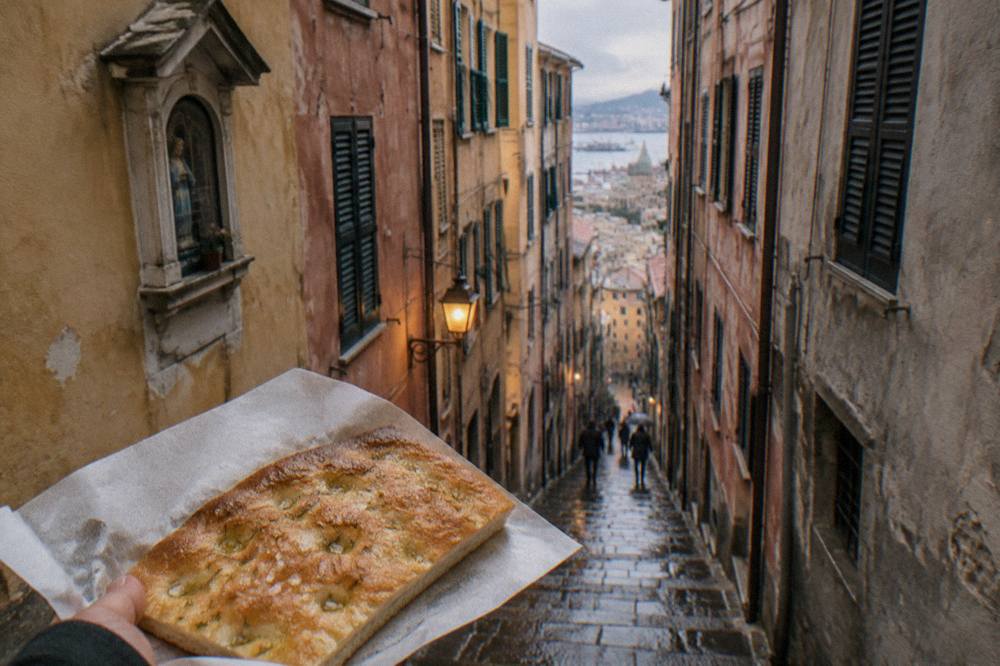
Fried food in paper cones is the port-city answer to eating without a table: small fish, squid, vegetables and rice croquettes go from the fryer straight into a paper wrapper, so the friggitorie of the caruggi can serve a walking crowd at a counter with no plates, no seating and no delay, and the cone has simply become the standard packaging for that trade. Genoa is a working and ferry port, and the snack culture that grew around the harbour favoured anything a dockworker or fisherman could eat one-handed. The fried fish cone is the best known version of the format, but the same counters fry vegetables, and the principle is constant: order, pay, walk, eat within a few minutes while the coating is still crisp.
The quality test in a friggitoria is turnover, not decor. A fryer that is constantly cooking is a fryer that is constantly serving. The counters are easy to spot from the street, and the smell does the advertising.
This is also where a guided walk earns its keep, because the fryers are scattered through lanes that do not follow an obvious grid. The Check availability link leads to the operator's live listing for a street food walk that strings the old town's counters together, and the same tour appears in the band above.
Prefer someone to lead you from counter to counter? Book a guided food tour here.
How Do Focaccia And Farinata Fit Into Genoa Street Food?
Focaccia and farinata are the two oven bakes at the centre of Genoa street food: focaccia is the city's flat, oily, salted bread eaten at any hour from the focaccerie, while farinata is a chickpea-flour bake cut from a wide pan and sold by the slice, and both are sold by weight or the piece across the old town with no table required. They are the carbohydrate backbone of the cuisine, and each has its own protected story in the wider region. The full background sits on Focaccia Genovese, including why the Recco version is a different thing entirely.
The distinction matters when you order. Focaccia genovese is the everyday city bread, dimpled and soaked with olive oil. Focaccia di Recco is a different product: cheese-filled and blistered, protected with an IGP status held since 2015, and made only in Recco, Camogli, Sori and Avegno, four towns on the coast east of Genoa that are straightforward day trips. If you eat it in Genoa you are eating a dish whose home is down the coast, and the Recco and Camogli pages cover the source towns.
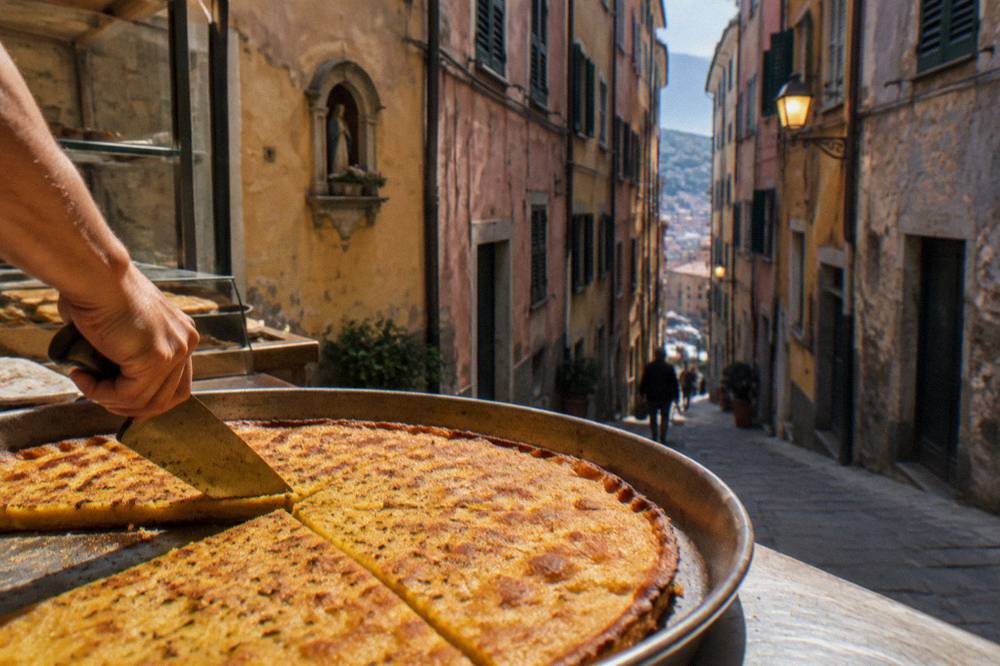
Farinata is the quieter half of the pair. Chickpea flour, water, olive oil and salt, baked fast in an open copper pan until the edges crisp, then portioned with a flat blade. It is gluten-free by ingredient, though a shared oven is a shared oven, so anyone with a strict allergy should ask at the counter rather than assume.
| Bake | Base | Status or note |
|---|---|---|
| Focaccia genovese | Wheat dough, olive oil, salt | The city's everyday street bake |
| focaccia di Recco | Thin dough filled with fresh cheese | IGP since 2015, produced only in Recco, Camogli, Sori and Avegno |
| Farinata | Chickpea flour, water, olive oil | Sold by the slice from bakery counters |
What Role Do Markets Play In Genoa Street Food?
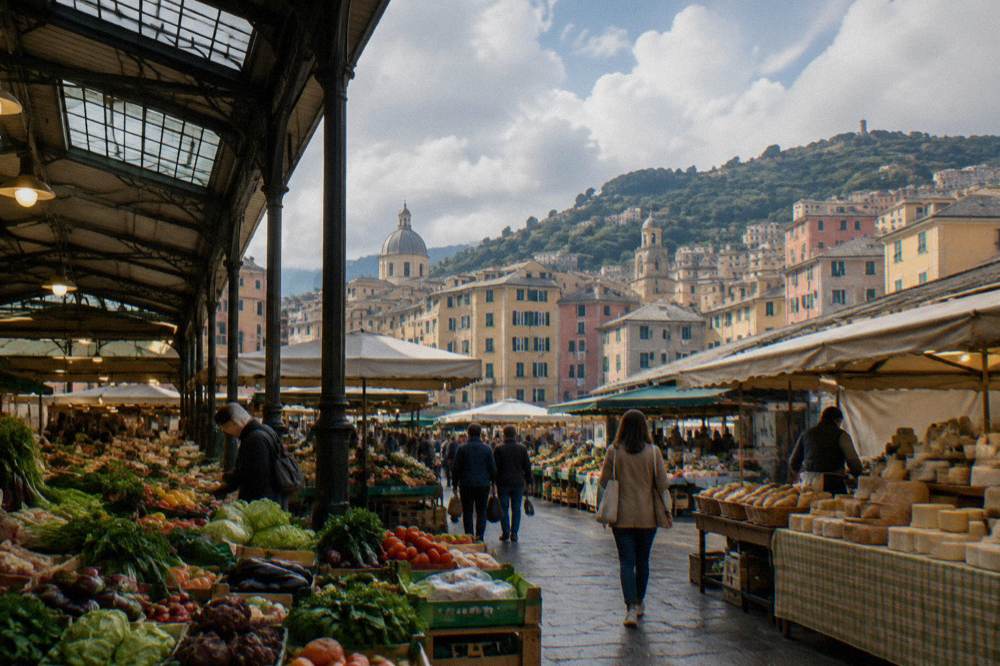
Markets supply the sit-down-half of Genoa street food: the Mercato Orientale on Via XX Settembre is the city's central market, and the stalls and counters around it sell prepared food, cheese, bread and the raw ingredients of the cuisine, so the market streets function as an open-air extension of the friggitorie and focaccerie rather than a separate food world. Via XX Settembre is the broad artery of the shopping district, and the market gives the street's food culture its weight: a visitor walking it can assemble a full meal from counters without ever sitting at a table. The street itself has its own page on Via XX Settembre.
The market is also where the city's most famous export is at its most visible. Pesto genovese, the basil sauce that carries a PDO for its basil, Basilico Genovese PDO, is the sauce the whole region eats with trofie pasta, and the ingredients pass through the market stalls daily. The deep dive is on Pesto Genovese.
For planning, treat the market streets as the morning half of a food day and the caruggi as the afternoon half. The two zones sit within the same walkable band of the city centre, connected by the lanes that drop from Piazza De Ferrari toward the port.
What Should You Know About Prices And Getting Around While Eating?
A single AMT public transport ticket in Genoa costs 2.00 EUR and is valid for 110 minutes on the whole urban network, a 24-hour Met Daily costs 10.00 EUR, and the lifts and the Sant'Anna funicular charge 1.20 EUR a ride, so the cost of moving between food stops is small and fixed while the food prices themselves are set at each counter and should be checked where you buy. Dish prices belong to individual shops and change; the transport side, by contrast, is published and stable, and it matters because the best eating is spread across a centre that climbs a hillside.
The pattern is simple. Everything in the old town and along Via XX Settembre is walkable in one loop. The lifts and the Zecca-Righi funicular, running daily 06:40 to 24:00, are the tools for the vertical legs, and the Spianata Castelletto at the top gives the city view that ends a food walk well.
| Ticket | Price | Validity |
|---|---|---|
| AMT ordinary single | 2.00 EUR | 110 minutes, whole urban network |
| AMT plus Trenitalia integrated | 2.20 EUR | 110 minutes, urban plus limited rail |
| 5-hour ticket | 5.00 EUR | Five hours from validation |
| Met Daily | 10.00 EUR | 24 hours, full AMT network incl. Volabus |
| Carnet | 20.00 EUR | 11 x 110-minute tickets |
| Lifts and Sant'Anna funicular | 1.20 EUR | Single ride |
If museums share the day with the eating, the Genoa Museum Card covers 28 city museums at 24 EUR for 24 hours or 45 EUR for 48 hours in the 2026 rates, and only the "+bus" variants include buses; the details are on Genoa Museum Card. The Aquarium Of Genoa Tickets page covers the other big Porto Antico draw, whose adult fixed-date entry starts from 26.00 EUR with dynamic pricing.
When Is The Best Season For A Genoa Street Food Walk?
The official 1971-2000 climate normals for Genoa Sestri show why spring and autumn suit a walking-and-eating day: mean daily highs run 20.0 C in October and 20.5 C in May against 27.7 C in August, while October carries the year's heaviest rainfall at 171.3 mm and July the lightest at 24.2 mm, so the trade-off is between heat and rain rather than between good and bad months. A street food walk is an outdoor activity with short indoor hops, which makes the shoulder months comfortable, but the fryers and ovens run year-round and the tables below let you judge the rain risk yourself.
| Month | Mean high C | Mean low C | Rain mm |
|---|---|---|---|
| Jan | 11.5 | 5.5 | 101.8 |
| Feb | 12.2 | 6.0 | 74.0 |
| Mar | 14.6 | 8.2 | 81.7 |
| Apr | 16.8 | 10.5 | 88.0 |
| May | 20.5 | 14.2 | 72.4 |
| Jun | 23.9 | 17.6 | 58.2 |
| Jul | 27.3 | 20.9 | 24.2 |
| Aug | 27.7 | 21.0 | 69.3 |
| Sep | 24.4 | 17.9 | 136.4 |
| Oct | 20.0 | 13.8 | 171.3 |
| Nov | 15.1 | 9.2 | 108.8 |
| Dec | 12.5 | 6.5 | 93.1 |
Read the table before generalising: October records 171.3 mm of rain, July records 24.2 mm, while August has the highest mean daily high at 27.7 C and January the lowest mean daily low at 5.5 C. For timing a whole trip around it, see Genoa Weather and Best Time To Visit Genoa. If rain closes in anyway, the indoor options are covered on Genoa In The Rain.
Can You Chase Street Food Beyond Genoa On A Day Trip?
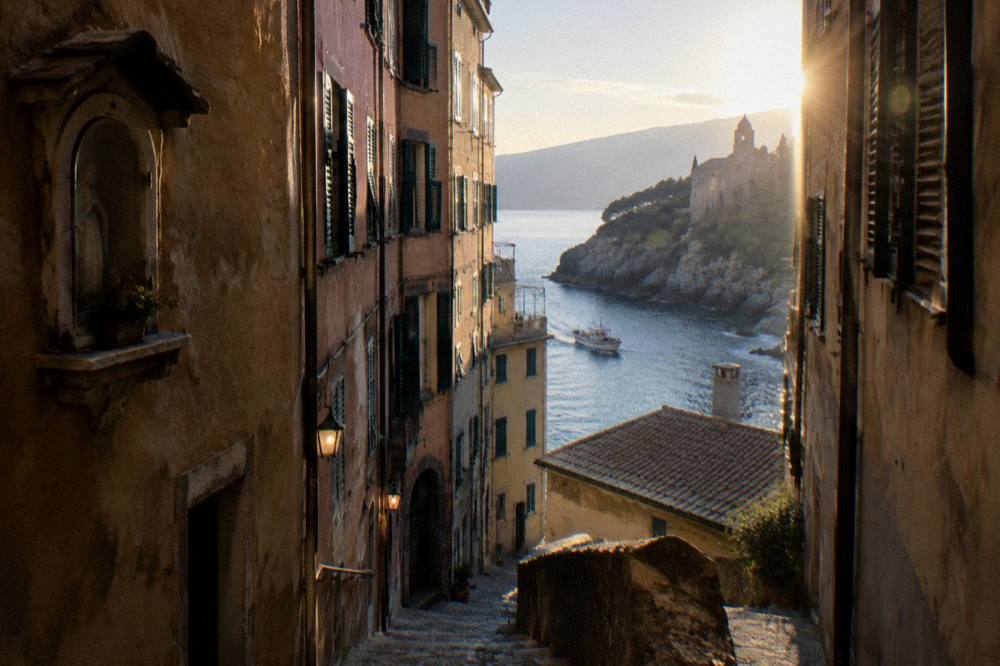
Yes, and the coastal towns east of the city are the natural extension, because the Golfo Paradiso boat operator runs its Two Gulfs tour from Genoa Porto Antico on listed dates from March 2026, calling at Camogli, San Fruttuoso and Portofino with crossings of about 30 minutes between stops, while the focaccia di Recco IGP towns of Recco and Camogli sit on the same coast and trains run to them along the shore. The full-day boat version costs about 29 EUR return and the half-day about 21 to 26 EUR, and the Camogli to San Fruttuoso boat runs year-round from Camogli at about 12 EUR return, so the food day trip can be built around the same towns that make the coast famous.
The food logic is specific: focaccia di Recco carries an IGP held since 2015 that restricts production to Recco, Camogli, Sori and Avegno, so eating the cheese-filled version in its home towns is the purist's move. The planning pages for the coast are Genoa To Portofino and Genoa To Cinque Terre, and the inland big-city option is covered on Milan To Genoa.
Should You Take A Guided Street Food Tour In Genoa?
A guided street food tour is worth it when you want the caruggi's counters decoded in one pass rather than found by trial, because the fryers, focaccerie and market stalls are scattered through lanes that reward local knowledge, and the city's bookable food walks, cooking classes and market visits cover that ground with a guide who orders, translates and explains as the route moves. The trade-off is money against time: an independent walker with this page and a map can assemble the same foods over a day or two, while a tour compresses it into a single loop and adds context the counters themselves do not supply.
The tour below is this site's featured pick for the street food theme: a guided walk built around the old town's hidden corners and its food counters. The full category, including sit-down food tours and cooking classes where you make the pesto and the pasta yourself, is on Genoa Food Tour.
For a full-meal version rather than a walking snack route, the small-group food tour in the band above covers a complete meal with a local food expert, and the rooftop cooking class turns the same ingredients into a hands-on session. Booking conditions and live pricing sit on the operator's live listing for each.
How Do You Build A Full Day Around Genoa Street Food?
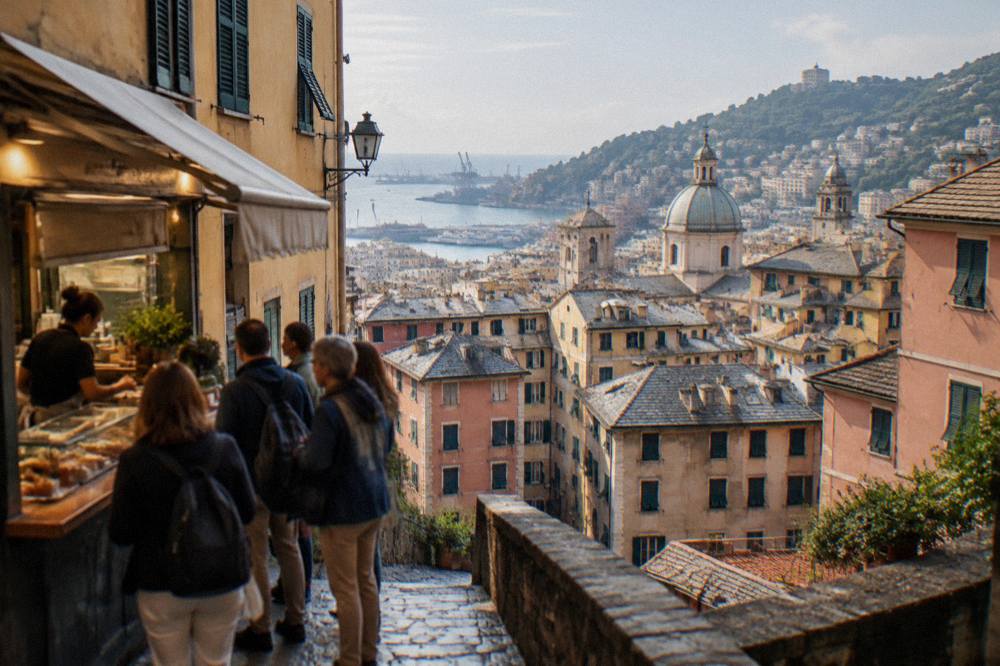
A full street food day in Genoa runs from the market to the port: start at the Mercato Orientale on Via XX Settembre in the morning, eat focaccia and farinata through the caruggi at midday, take a fried fish cone near the Porto Antico in the afternoon, and finish with the view from the Spianata Castelletto, reached by the Castelletto Levante lift at 1.20 EUR a ride, with the whole route walkable and the AMT network at 2.00 EUR a ticket if a leg needs wheels. The shape works because the food map and the sightseeing map are the same map: the lanes between the market, the Cathedral of San Lorenzo and the harbour hold the fryers, the museums and the UNESCO-listed Palazzi dei Rolli at once.
To widen it into a weekend, the itinerary pages Genoa In One Day and Genoa In Two Days sequence the sights, and the sit-down side of the cuisine, from trofie al pesto to pansoti, is covered on Best Restaurants In Genoa. Arriving by plane, the airport sits about 7 km from Piazza De Ferrari in a straight line and the Genoa Airport page covers the transfer; the fixed airport taxi to the centre is 25 EUR per car.
Common Questions About Genoa Street Food
What is Genoa street food?
Genoa street food is the counter food of the old town: focaccia from the focaccerie, farinata cut from the pan, and the fried fish and vegetable cones sold by the friggitorie of the caruggi, plus the prepared foods around the Mercato Orientale on Via XX Settembre.
Where can I eat street food in Genoa?
Concentrate on the caruggi between Piazza De Ferrari, the Cathedral of San Lorenzo and the Porto Antico, and on the market streets around Via XX Settembre. Both zones are walkable and hold the fryers, the bakeries and the market counters between them.
What is farinata?
Farinata is a thin savoury bake of chickpea flour, olive oil and water, cooked in a wide open pan and sold by the slice from bakery counters. It is one of the two oven bakes at the core of Genoese street eating, alongside focaccia.
What is a friggitoria?
A friggitoria is a small shop whose main equipment is a deep fryer, selling fried fish, seafood, vegetables and croquettes in paper cones to be eaten standing, a format suited to the narrow lanes of the old town and the port's working history.
Is focaccia di Recco the same as Genoese focaccia?
No. Focaccia genovese is the city's everyday flat bread. Focaccia di Recco is a cheese-filled, blistered bake protected by an IGP held since 2015 and produced only in Recco, Camogli, Sori and Avegno, four coastal towns east of Genoa.
How much does public transport cost while food walking in Genoa?
An AMT single ticket costs 2.00 EUR and is valid 110 minutes on the whole urban network, a Met Daily 24-hour ticket costs 10.00 EUR, and the public lifts and the Sant'Anna funicular cost 1.20 EUR a ride. Food prices themselves are set at each counter.