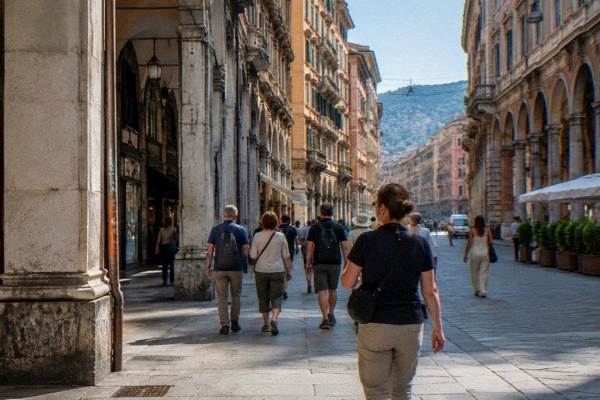
Via XX Settembre: Genoa's Arcaded Shopping Street
Via XX Settembre is Genoa's main modern shopping street, a straight arcaded avenue running east from the Piazza De Ferrari area toward the Foce district, lined with chain stores, cafés and the Mercato Orientale food market.
Short answer
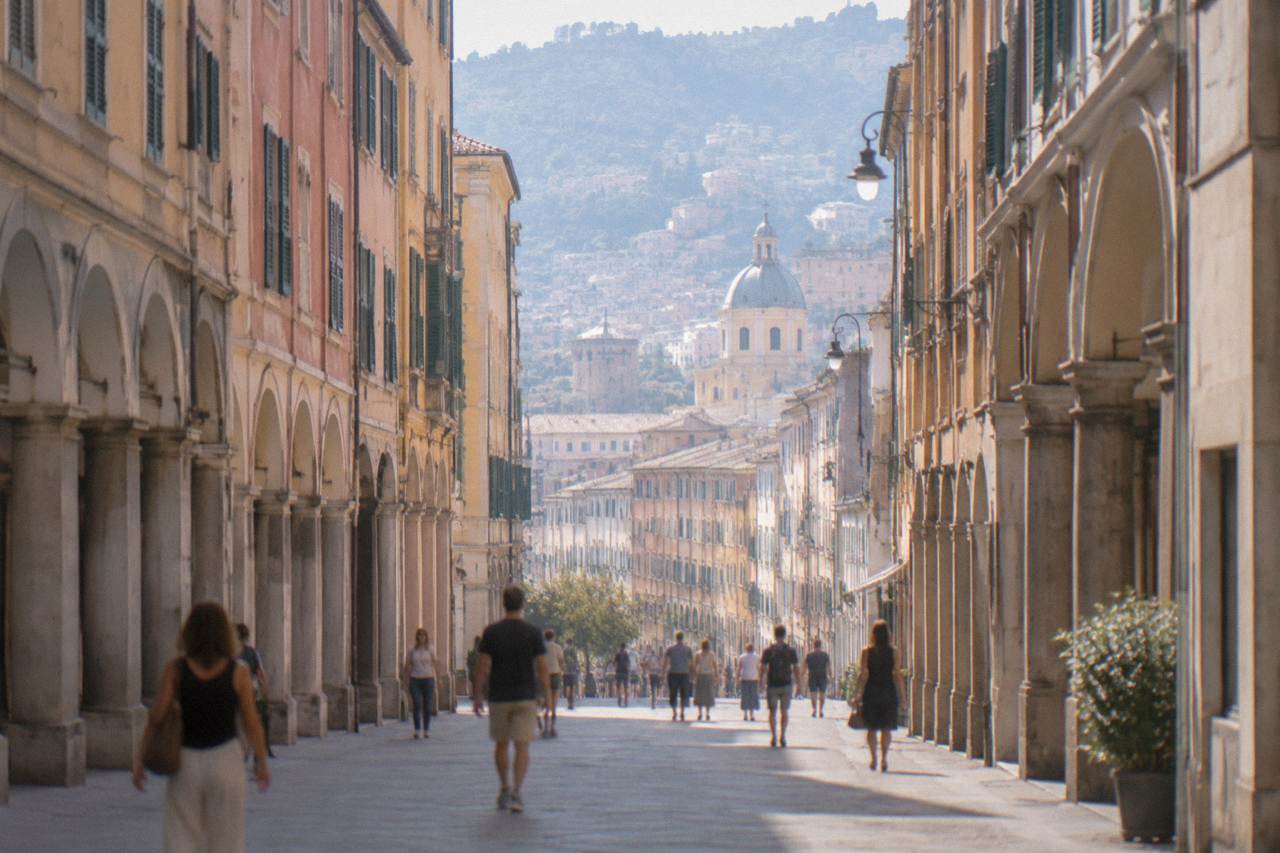
Via XX Settembre is Genoa's principal modern shopping street, an arcaded avenue a short walk from Piazza De Ferrari and the old town. An AMT ticket costs 2.00 EUR and is valid 110 minutes on the whole network, the metro stops at De Ferrari and Brignole nearby, and the street sits inside the ZTL limited-traffic zone, so public transport or walking is the practical way in.
Via XX Settembre is Genoa's main modern shopping street, a broad, straight, arcaded avenue in the coastal city of Genoa, Liguria, north-west Italy, running east from the Piazza De Ferrari area toward the Foce district. Where the caruggi of the old town are narrow and twisting, this avenue is the city's measured, orderly counterpoint: rows of arcades, shopfronts and cafés set on a flat, walkable line between the historic centre and the expansion toward the seafront at Corso Italia. The street belongs to the segment of the city that connects Piazza De Ferrari, the Teatro Carlo Felice quarter and the old town on one side with the Foce and Albaro residential belt on the other, and it works equally well as a shopping destination in its own right or as the natural route between the two halves of central Genoa.
This page covers what the street is, how the grid around it is laid out, what you pass along it, how to reach it by metro, bus or funicular with the current AMT fares, and what else sits within range once you are there. The figures that matter are the 2.00 EUR AMT ticket valid 110 minutes, the 10.00 EUR Met Daily that also covers Volabus, and the 2026 Genoa Museum Card rates for anyone pairing shopping with the city's museums.
What Is Via XX Settembre In Genoa?
Via XX Settembre is Genoa's principal modern shopping avenue, a wide arcaded street that forms the spine of the city's expansion east of the old town, running between the Piazza De Ferrari area and the Foce district toward the seafront. It is flat, straight and continuous, lined on both sides with shops, cafés and the Mercato Orientale, and it is the street Genoa's own tourism site groups with Piazza De Ferrari as one of the city's central areas.
The contrast with the old town is the whole point of the street's position on a visit. Genoa's historic centre covers 113 hectares and is described on the official tourism site as one of the largest medieval historic centres in Europe, a dense weave of caruggi squeezed between the harbour and the hills. Via XX Settembre belongs to a different Genoa: the planned, regular city grid laid out when the city pushed east beyond the old walls. Its arcades give covered pavements, its width gives light, and its straight line gives an orientation that the old town deliberately withholds.
Practically, the street functions as Genoa's main address for mainstream shopping, and it is the natural corridor between the sights clustered around Piazza De Ferrari and Palazzo Ducale and the seafront promenade at Corso Italia, which lies about 4 km away in a straight line toward Boccadasse. Nothing about the street demands a ticket or a timetable. It is public space, open at all hours, and it earns its place on an itinerary precisely because it sits between almost everything else.
The street also anchors the area this site groups as Via XX Settembre and Piazza De Ferrari, one of the named central zones alongside the Old Town and the caruggi, Principe and Via Balbi, Foce and Albaro, Boccadasse, Nervi, Pegli and Castelletto. For orientation purposes, that grouping is the useful one: arriving at Piazza De Ferrari by metro, the avenue is the road that carries you east.
Where Does Via XX Settembre Run And What Surrounds It?
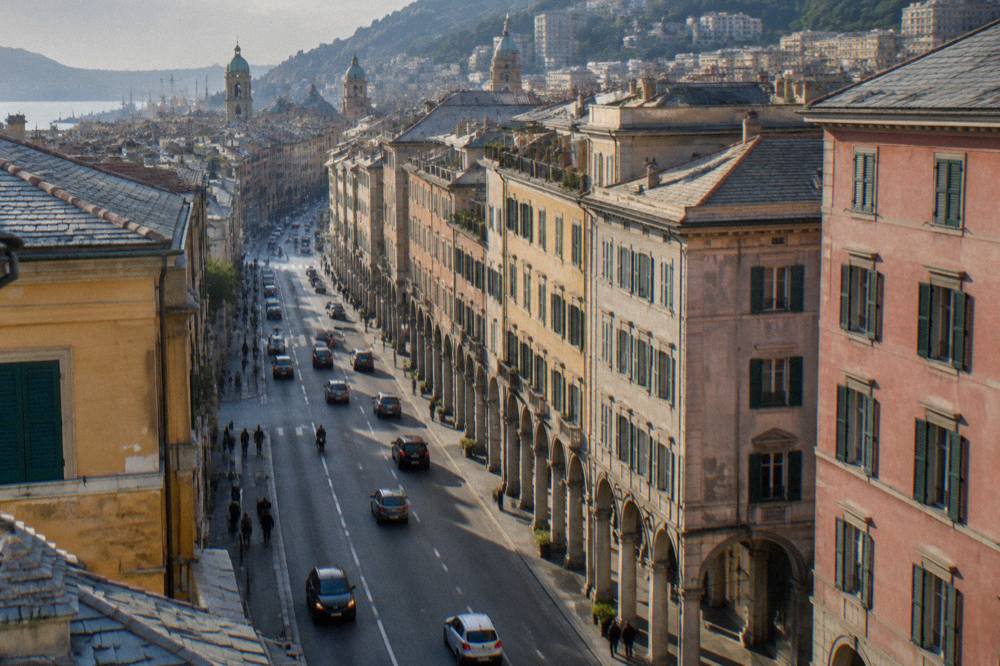
Via XX Settembre runs roughly east from the Piazza De Ferrari end of central Genoa into the Foce district, with the old town behind it and the modern city grid ahead, toward the seafront at Corso Italia about 4 km straight-line away. The avenue marks the boundary between the medieval city and the modern one, and its side streets step down toward the port on one side and up toward the hills on the other.
The surrounding areas, in this site's terms, are these:
| Area of Genoa | Direction from Via XX Settembre | Character |
|---|---|---|
| Old Town and the caruggi | West, behind Piazza De Ferrari | Medieval lanes, 113 hectares, one of the largest historic centres in Europe |
| Principe and Via Balbi | North-west, toward Genova Piazza Principe station | Port quarter, Via Balbi, the Strade Nuove museums beyond |
| Foce and Albaro | East and south-east | Residential belt toward the seafront |
| Castelletto | North, uphill | Hill district above the centre, reached by the Castelletto Levante lift |
| Boccadasse | East along the coast, about 4 km straight line | Former fishermen's village on Corso Italia |
| Nervi | Further east, about 9 km straight line | Parks, promenade, museums |
Distances are straight-line kilometres from the central reference points in this site's place data; no drive times are given because the pack does not license them. The geography matters for planning because Genoa is a narrow strip between the Ligurian Sea and the Apennine hills: the city runs along the shore, and the streets that matter sit in that strip. Via XX Settembre occupies the flat central part of it, which is exactly why the avenue works for anyone with mobility in mind: no funicular, no lift, no climb.
The Genoa Museum Card is worth knowing about at this point if a shopping day is going to be a sightseeing day too. The 2026 rates are 24 EUR for 24 hours and 45 EUR for 48 hours, and the card covers 28 city museums, 19 municipal plus 9 others. Only the "+bus" variants include AMT buses, and none covers Volabus, Navebus or trains. The detail is that the card and the street share a natural pairing: the Strada Nuova museums are one grid over to the north-west, and the card is the cheapest structured way to see them.
| Genoa Museum Card 2026 | Price | Covers |
|---|---|---|
| 24-hour | 24 EUR | 28 city museums (19 municipal + 9 others) |
| 48-hour | 45 EUR | Same 28 museums |
| Annual | 60 EUR | Same museums, residents 50, students 25 |
The three options above are the ones this site pairs with a central-Genoa day: a guided walk through the street's surroundings and the lanes behind it, the entry ticket for the Lanterna lighthouse down at the port end of the city, and a short snorkeling trip that runs from close to the centre. Each has its own page with dates and live pricing.
What Will You Actually Pass Along Via XX Settembre?
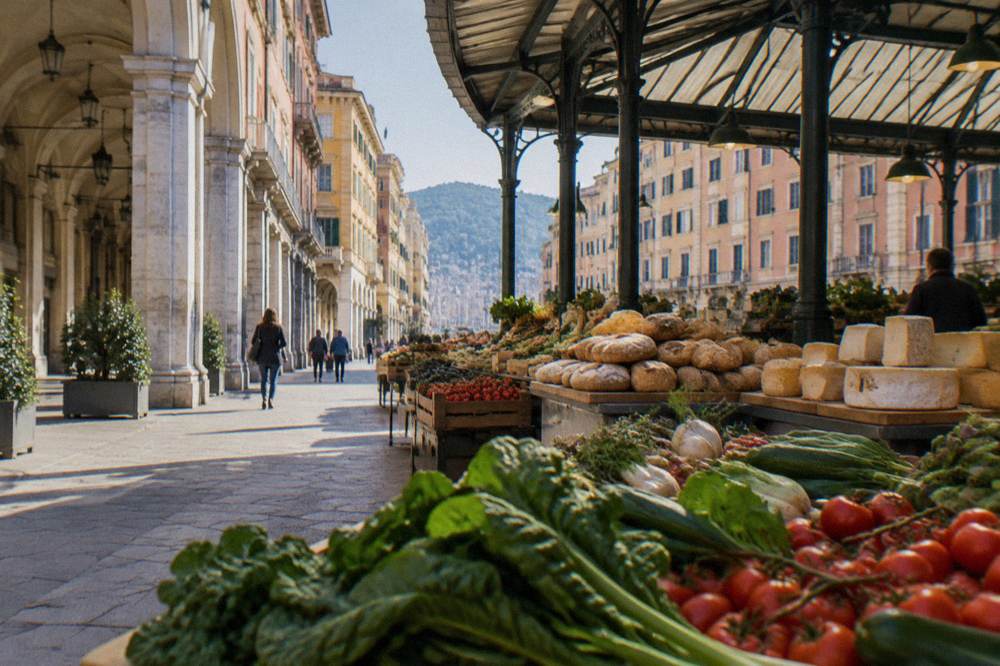
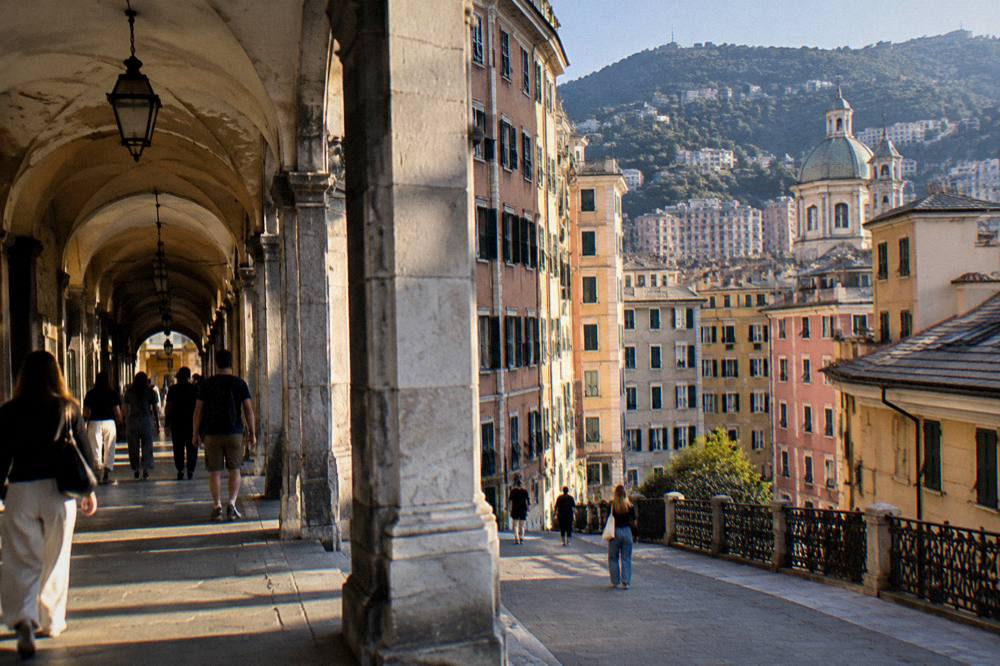
The street's own fabric is the attraction: continuous arcades, the shopfronts of Genoa's main mainstream shopping drag, café terraces under the arches, and the Mercato Orientale, the covered food market that sits directly on the avenue and is the street's single most distinctive stop. Beyond the retail frontage, the avenue's western end delivers you to Piazza De Ferrari, Palazzo Ducale and the Teatro Carlo Felice quarter within minutes on foot.
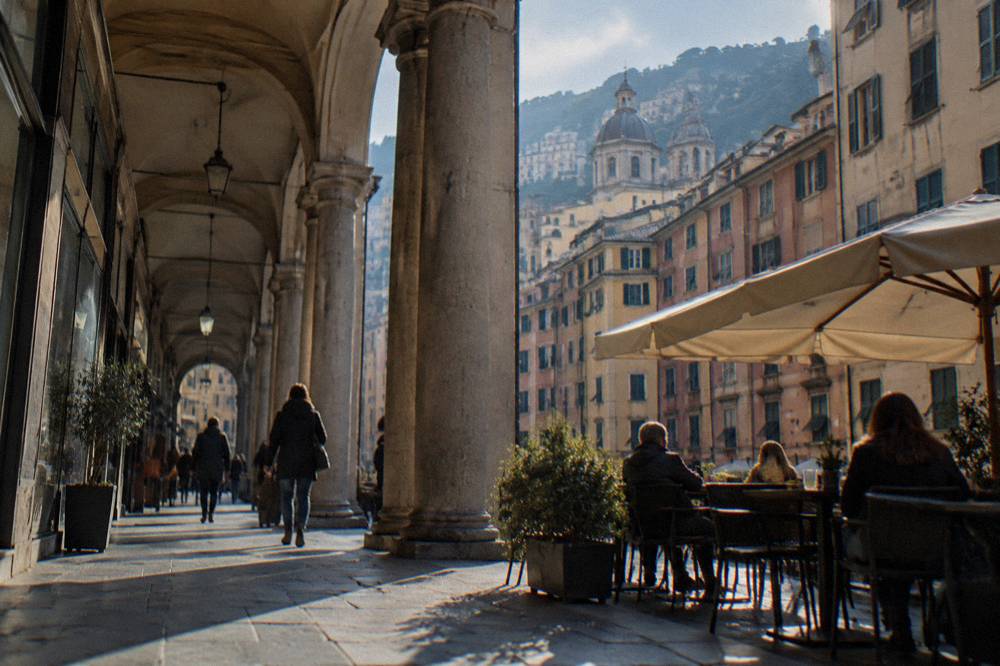
The Mercato Orientale deserves its own paragraph even though the pack carries no opening hours or stall lists for it: this site gives it a dedicated page at the Mercato Orientale attraction guide, and it is the place on the avenue where the city's food culture concentrates. Genoa's food identity is specific and documented: pesto genovese made with Basilico Genovese PDO basil, focaccia, farinata, trofie and pansoti are the dishes this site names for the city. A market hall on the main shopping street is where those ingredients exist as produce rather than as menu items, and the Genoa street food guide and the farinata guide cover the dishes themselves in detail.
The retail stretch is best understood as Genoa's mainstream layer rather than its craft layer. For shopping strategy, the split across the city is roughly this:
| Where To Shop In Genoa | What It Is | Where It Sits |
|---|---|---|
| Via XX Settembre | Mainstream arcaded shopping avenue, chain and department retail, cafés | Between Piazza De Ferrari and Foce |
| The caruggi of the old town | Narrow medieval lanes, small independent shops | West of Piazza De Ferrari |
| Via Garibaldi and the Strade Nuove | The grand palace street, museums, upscale frontage | North-west, toward Principe |
| Mercato Orientale | Covered food market | Directly on Via XX Settembre |
The Genoa shopping guide carries the broader strategy. What this page adds is the spatial fact: the four layers above are all within the same compact central strip, and Via XX Settembre is the flat, fast corridor that links them.
From the avenue's western end, the sightseeing sequence is short. Palazzo Ducale sits behind Piazza De Ferrari and is running two major exhibitions into late 2026 and beyond: World Press Photo to 8 December 2026, and a Renoir, Monet, Toulouse-Lautrec and Cézanne exhibition that opened 15 October 2026. The Cathedral of San Lorenzo lies deeper in the old town. The Palazzi dei Rolli, the 42 palaces of the UNESCO inscription "Genoa: Le Strade Nuove and the system of the Palazzi dei Rolli", begin a few blocks north-west.
A guided walk is one way to bind the avenue to the lanes behind it, since the street's story is really the story of the whole grid it anchors. The tour above covers the principal sights together with the less obvious corners of the centre; live dates and pricing are on the operator's listing.
How Do You Get To Via XX Settembre By Metro, Bus Or Train?
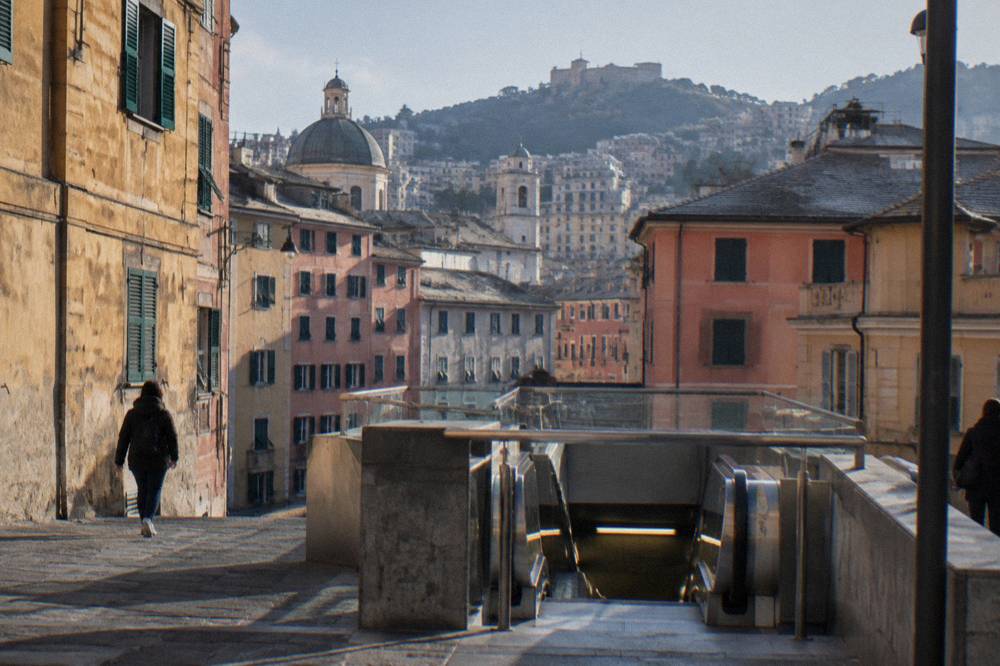
The metro is the direct answer: the line runs 7 km from Brin to Brignole with 8 stations, and De Ferrari station sits at the avenue's western end, with Brignole at the eastern edge of the centre, so one or the other serves the whole street. An AMT ticket costs 2.00 EUR and is valid 110 minutes on the whole Città Metropolitana network; an integrated AMT plus Trenitalia ticket is 2.20 EUR, and the 24-hour Met Daily is 10.00 EUR.
The full fare table from AMT Genova is worth having in one place, because the ticket you buy shapes what else the day can hold:
| AMT Ticket | Price | Validity |
|---|---|---|
| Ordinary single | 2.00 EUR | 110 minutes, whole urban network |
| AMT + Trenitalia integrated | 2.20 EUR | 110 minutes, urban plus limited Trenitalia |
| 5-hour ticket | 5.00 EUR | 5 hours |
| Carnet of 11 singles | 20.00 EUR | 11 x 110 minutes (22.00 EUR integrated) |
| Met Daily 24h | 10.00 EUR | Full network 24 hours, including Volabus |
| Lifts and Sant'Anna funicular | 1.20 EUR | Single ride |
Two notes on that table. Volabus, the airport bus that runs from Genova Cristoforo Colombo airport to Principe, De Ferrari and Brignole in about 30 minutes, requires the 10.00 EUR Met Daily ticket, valid for 24 hours on the full network. And the metro stations in the current line are Brin, Dinegro, Principe, Darsena, San Giorgio, Sant'Agostino, De Ferrari and Brignole; the extensions to Canepari and Martinez are not open, with Canepari reported as targeted for June 2027 and Martinez for December 2028.
Rail travellers arrive at either Genova Piazza Principe or Genova Brignole. Principe connects to the metro at its own station for the two-stop ride to De Ferrari. Brignole is already on the metro line and within the eastern end of the street's orbit. Anyone arriving by cruise ship can follow the central Genoa orientation rather than a separate transfer, since the port lies within the same central strip.
Drivers should note that the historic centre and other central zones are ZTL limited-traffic areas under a city regulation updated in 2025, and the practical consequence is that a car is a liability on this street's doorstep. Drivers should check ZTL hours, fines and car-park tariffs on the official city site. The airport taxi fixed fare, for completeness, is 25 EUR per car to the centre, 30 EUR for more than four people, plus 2 EUR at night and on holidays.
Is Via XX Settembre A Good Base For Seeing The Rest Of Genoa?
It is one of the two most practical bases in the city, because the avenue sits on the flat central strip with the metro under it, the old town at its western end, the seafront to the east and the hill districts overhead on public lifts: Spianata Castelletto via the Castelletto Levante lift, the Zecca-Righi funicular line, and the museums of the Strade Nuove within a short hop to the north-west. The street is a corridor first and a destination second, and that is its strength.
The vertical city is the part first-time visitors underuse. Genoa climbs its hills fast, and AMT runs 14 public lifts plus two funiculars to cope with that. The Castelletto Levante lift rises 57 m from Piazza Portello to the Spianata Castelletto viewpoint and runs daily 06:40 to 24:00; the Zecca-Righi funicular covers its line in about 12 minutes across 7 stations on the same daily hours. Each ride on a lift or on the Sant'Anna funicular is 1.20 EUR, or it is covered by the ordinary urban ticket. The Spianata Castelletto page covers the viewpoint itself.
Westward and downhill, the port cluster stacks up along the water: Porto Antico with the Aquarium of Genoa, the Bigo panoramic lift and the Galata Museo del Mare. The Aquarium's own ticket page lists fixed-date adult tickets from 26.00 EUR, reduced from 20.00 EUR, children 4 to 12 from 16.00 EUR and under-4s free, with dynamic pricing; the combined Aquarium, Biosfera and Bigo ticket starts from 37.00 EUR for an adult. The Bigo lift alone is 6 EUR adult, 5 EUR reduced, per the Aquarium site.
| Sight Near The Avenue's Orbit | Straight-Line Direction | Entry Figure |
|---|---|---|
| Aquarium of Genoa | West, at Porto Antico | Adult from 26.00 EUR, dynamic |
| Aquarium + Biosfera + Bigo | Same | Adult from 37.00 EUR |
| Bigo panoramic lift | Same | Adult 6 EUR |
| Strada Nuova museums | North-west | Combined with Sant'Agostino 14 EUR full, 9 EUR reduced |
| Palazzo Ducale exhibitions | At Piazza De Ferrari | Show-dependent, venue page |
| Spianata Castelletto | Uphill via lift | Free public space, lift 1.20 EUR |
The Strada Nuova museums, Palazzo Rosso, Palazzo Bianco and Palazzo Doria-Tursi, carry a winter timetable from 28 September 2026 to 18 April 2027: open daily 10:00 to 18:30, but on Mondays only Palazzo Rosso can be visited. Palazzo Doria-Tursi holds Paganini's violin "Il Cannone", built in Cremona in 1743 by Bartolomeo Giuseppe Guarneri. The Via Garibaldi and Musei di Strada Nuova guide covers the palace street in full.
Down at the western, port-facing end of the city stands the Lanterna, Genoa's lighthouse: built in 1128, rebuilt in 1543, a 77 m tower on a 40 m rock, 117 m above the sea and billed as the tallest lighthouse in the Mediterranean, with 172 steps to the first terrace. Opening days and prices for a visit are on the lighthouse's own page; the ticket block above is the bookable entry option, with live dates on the operator's listing. More of these guides are collected on Genoa Travel Guide.
What About Food And Day Trips From The Via XX Settembre Area?
Food is the street's second language after retail: the Mercato Orientale sits on the avenue itself, pesto genovese, focaccia, farinata, trofie and pansoti are the city's signature dishes, and the coastal day-trip belt begins at Camogli, about 18 km straight-line, with San Fruttuoso about 22 km, Santa Margherita Ligure about 24 km and Portofino about 25 km from the centre. The integrated 2.20 EUR AMT-Trenitalia ticket exists precisely for hopping between the city network and the coastal railway.
The eating angle splits into the market, the dishes and the coast. The market is the Mercato Orientale. The dishes are covered across this site's food pages, and the one fact worth repeating here is that Basilico Genovese PDO is the basil of pesto genovese, a protected denomination that ties the city's most famous sauce to its home territory. Focaccia di Recco carries IGP status since 2015 and is produced only in Recco, Camogli, Sori and Avegno, which makes the Recco-Camogli stretch of coast a food destination as much as a scenic one. The Camogli day-trip guide covers that stretch.
For the coast, the practical figures are these: Golfo Paradiso runs its "Two Gulfs" tour from Genoa Porto Antico from March 2026 on listed dates, calling at Camogli, San Fruttuoso and Portofino, with about 30 minutes each for the Camogli to San Fruttuoso and San Fruttuoso to Portofino legs, and full-day fares reported around 29 EUR with half-day at 21 to 26 EUR. Camogli to San Fruttuoso boats run year round. There is no regular scheduled ferry from Genoa to the Cinque Terre; Golfo Paradiso's "Genoa - Cinque Terre" tour runs on set dates only.
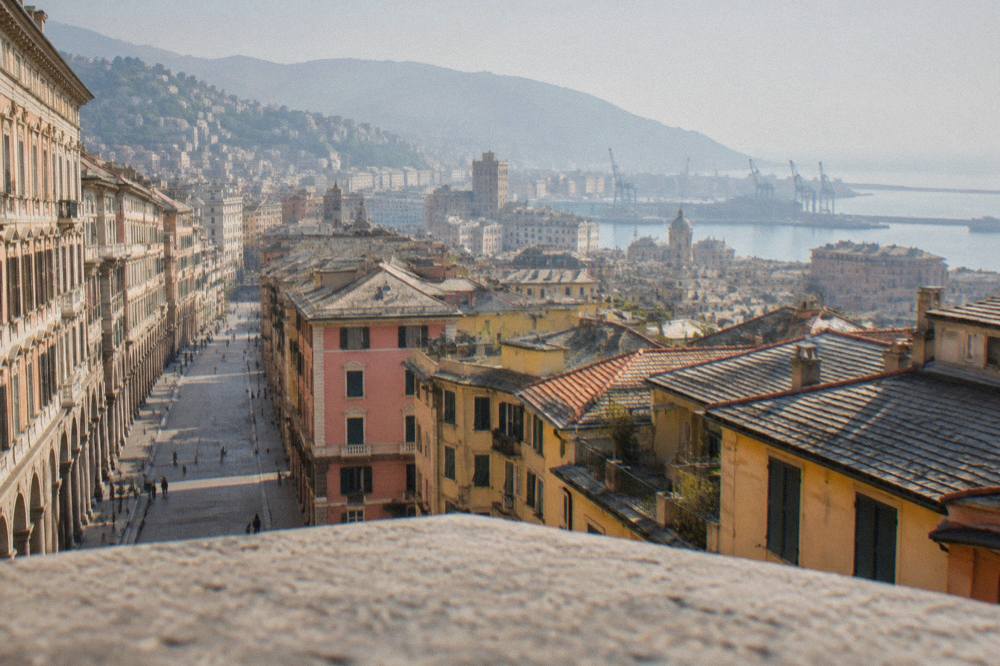
Back on the avenue, the planning question is rhythm. A day that starts with the old town's lanes, surfaces at Piazza De Ferrari, walks the arcades east with a market stop, then drops to Porto Antico for the Aquarium, uses the street exactly as the city's geography intends: as the flat seam between the medieval hill-and-harbour city and the modern seaside one. For anyone who wants that sequence narrated, Check availability on the guided walking tour that covers the principal sights and the hidden corners around this grid.
If you would like a route that ties those stops together, book a self-guided audio tour here.
The sea itself is closer than the shopping street suggests: the snorkeling trip above runs from near the centre, and the port cluster at Porto Antico puts the water a few minutes' walk downhill from the avenue's western end.
How Does The Weather Shape A Day On Via XX Settembre?
The street's climate is Genoa's coastal climate: the official 1971-2000 normals for Genoa Sestri show January means of 11.5 C high and 5.5 C low, August means of 27.7 C and 21.0 C, July rainfall of just 24.2 mm and October rainfall of 171.3 mm, so the arcades earn their keep both against summer sun and against autumn rain.
The full monthly picture, from the Aeronautica Militare CLINO 1971-2000 station normals for Genoa Sestri, the official series this site uses for all temperatures and rainfall:
| Month | Mean High C | Mean Low C | Rain mm |
|---|---|---|---|
| Jan | 11.5 | 5.5 | 101.8 |
| Feb | 12.2 | 6.0 | 74.0 |
| Mar | 14.6 | 8.2 | 81.7 |
| Apr | 16.8 | 10.5 | 88.0 |
| May | 20.5 | 14.2 | 72.4 |
| Jun | 23.9 | 17.6 | 58.2 |
| Jul | 27.3 | 20.9 | 24.2 |
| Aug | 27.7 | 21.0 | 69.3 |
| Sep | 24.4 | 17.9 | 136.4 |
| Oct | 20.0 | 13.8 | 171.3 |
| Nov | 15.1 | 9.2 | 108.8 |
| Dec | 12.5 | 6.5 | 93.1 |
The annual rainfall total is 1079.2 mm, spread with a clear autumn concentration: September, October and November together carry more than a third of it. What that means for the avenue specifically is covered walking: the arcades that define the street also shelter it, and the dense indoor cluster around its western end, from Palazzo Ducale's exhibition halls to the Strada Nuova palaces, gives a rain plan that involves almost no rerouting, with details best confirmed on the official pages.
What Else Sits Within Easy Reach Of Via XX Settembre?
The street's reach within the central strip includes the UNESCO Strade Nuove palaces, Castello d'Albertis on its hill, the Parco delle Mura forts on the ridge, Villa del Principe near the Principe station quarter, and the whole port cluster from the Lanterna to the Galata Museo del Mare, with Staglieno, the monumental cemetery opened to the public on 1 January 1851 after works begun in 1844, on the inland side of the city.
Each of those has its own page on this site: Castello d'Albertis, reached by the Montegalletto lift at 1.20 EUR a ride, the Parco delle Mura and forts on the high ring, Villa del Principe in the west, Galata Museo del Mare, open 10:00 to 19:00 with 12,000 square metres over five levels and 31 rooms, and Staglieno cemetery inland. The pattern to notice is that Genoa rewards exactly the kind of day the avenue enables: a flat shopping corridor at the centre, and lifts, funiculars, boats and short railway hops radiating out of it in every direction.
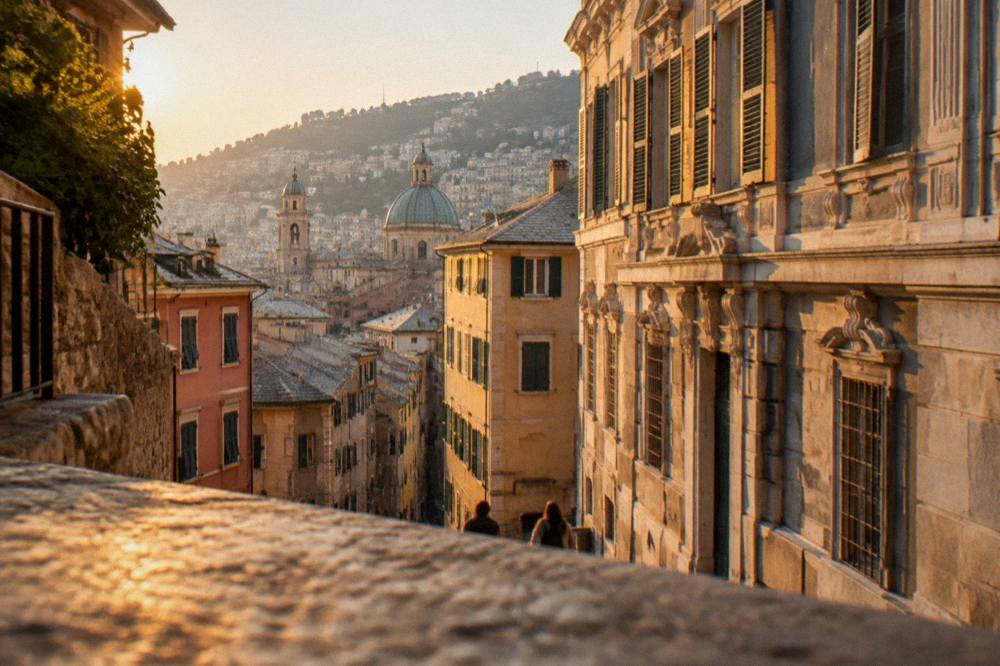
History sits under the whole grid. The Republic of Genoa lasted until 1797; the Strade Nuove and the Palazzi dei Rolli entered the UNESCO World Heritage List in 2006 as "Genoa: Le Strade Nuove and the system of the Palazzi dei Rolli", an area containing the 42 palaces named on the Rolli lists of 1576, 1588, 1599, 1614 and 1664. Christopher Columbus lived at the Casa di Colombo between 1455 and 1470, and the Columbus in Genoa guide traces that story through the city he left. None of it is more than a flat walk or a single metro hop from the avenue's western end.
Common Questions About Via XX Settembre In Genoa
What is Via XX Settembre in Genoa?
It is Genoa's main modern shopping street: a wide, arcaded avenue running east from the Piazza De Ferrari area into the Foce district, lined with shops, cafés and the Mercato Orientale food market.
How do I get to Via XX Settembre by public transport?
The metro's De Ferrari station serves the western end and Brignole the eastern side; the line runs 7 km from Brin to Brignole with 8 stations. An AMT ticket costs 2.00 EUR and is valid 110 minutes on the whole network.
Is Via XX Settembre walkable?
Yes. The avenue is flat, straight and continuous, with covered arcades along much of its length, which distinguishes it from the steep lanes of the old town and the hill districts above the centre.
Can I drive to Via XX Settembre?
The central zones, including the historic centre, are ZTL limited-traffic areas under a city regulation updated in 2025, so access by car is restricted. The metro and bus network, plus the airport's Volabus on the 10.00 EUR Met Daily ticket, are the practical alternatives.
What is near Via XX Settembre?
Piazza De Ferrari, Palazzo Ducale, the old town, the Strada Nuova museums, Porto Antico with the Aquarium of Genoa and the Bigo lift, and the Castelletto Levante lift to the Spianata Castelletto viewpoint, all sit within the same central strip.
Where does Via XX Settembre fit in a Genoa itinerary?
It works as the connecting corridor between the medieval city and the seafront at Corso Italia, and as a shopping and market stop in its own right, typically paired with Piazza De Ferrari, the old town and Porto Antico in a single day.