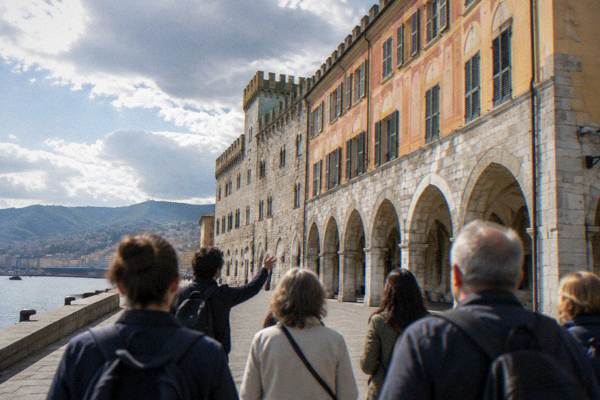
Christopher Columbus In Genoa: The Sailor's City And Its Claims
Genoa, the coastal city in Liguria on the Ligurian Sea, documents Christopher Columbus as a resident of the Casa di Colombo between 1455 and 1470. Here is what the city itself shows, what it claims and how to see it.
Short answer
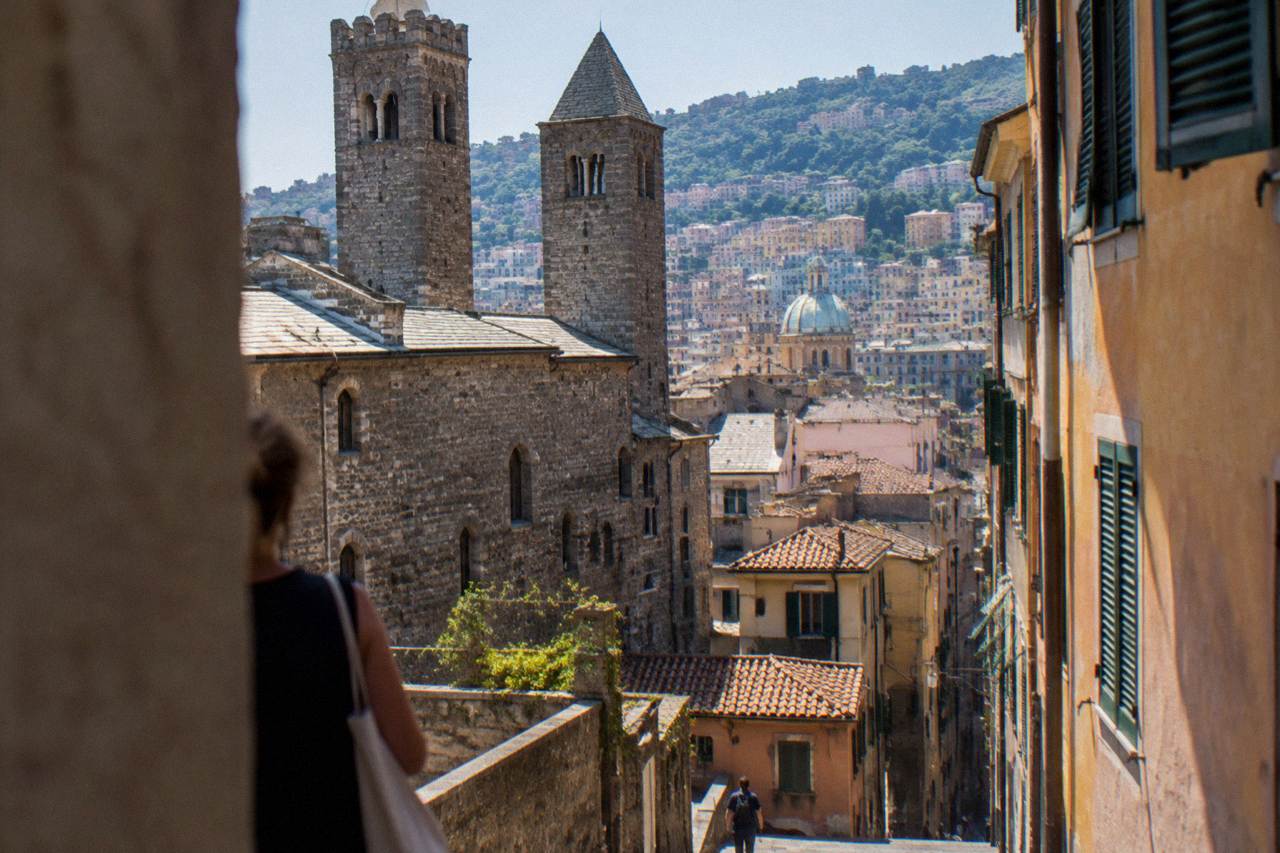
The Casa di Colombo is the site Genoa presents as the house where Christopher Columbus lived between 1455 and 1470, after his family moved in when he was four. The building standing there today is a reconstruction on the original site, standing beside twin medieval towers at the edge of the old town.
Genoa is a coastal city in Liguria, north-west Italy, squeezed between the Ligurian Sea and the Apennine hills, and it is the city whose own records place Christopher Columbus at a house in its old town between 1455 and 1470. The claim is unusually specific for a figure of this kind: the city's tourism authority states that the family moved into the Casa di Colombo in 1455, when he was four years old, and that he lived there until about 1470. This page sets out what Genoa Travel Guide can report from the city's own published material: the house, its documentation, the Columbus-era city that survives around it, and the later monuments Genoa has raised to the name.

Who Was Christopher Columbus In Genoa?
In Genoa's own documentation, Christopher Columbus is a resident of the city's old town: the Casa di Colombo is presented as the house where he lived from 1455 to 1470, after his family moved there when he was four, and the building visitors see today is a reconstruction standing on the original site. The city claims him as a native son, and the claim rests on that documented residence rather than on legend.
The republic he was born into was an aristocratic state that lasted until 1797, when Napoleonic occupation ended it and the Ligurian Republic took its place. That is a span of centuries of maritime power, and the Columbus family's years in the house fall in the middle of it. Genoa's old town, the dense warren of caruggi around the site, covers 113 hectares and is described by the city's own tourism site as one of the largest medieval historic centres in Europe. That description is the city's, and it is the wording worth repeating.
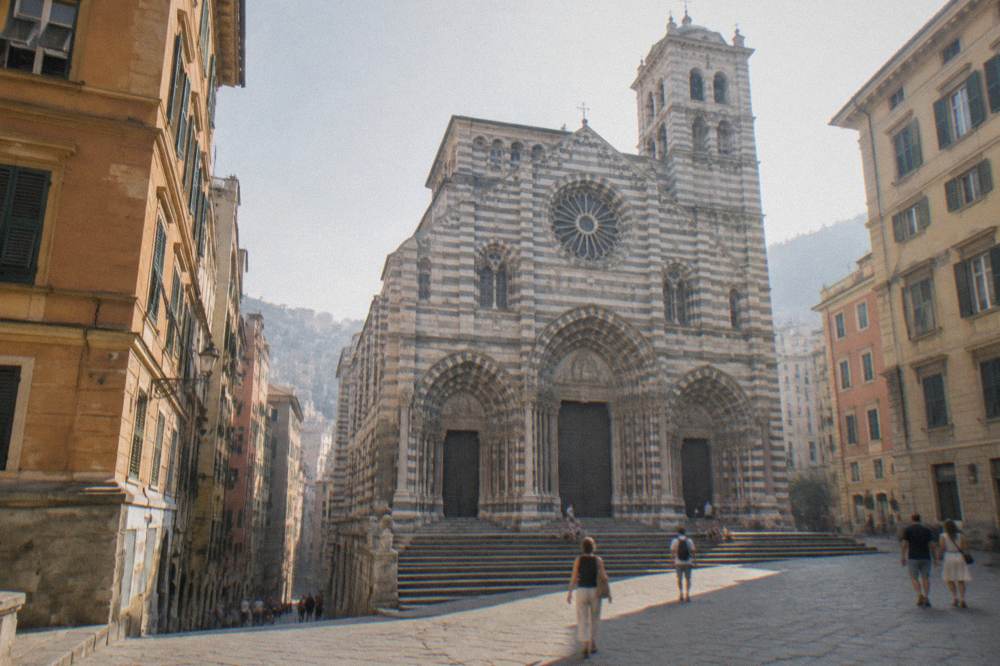
What Genoa does not do is dress the claim up. The house at the centre of it is a reconstruction, and the city says so plainly. The twin towers of the old city gate and the cloister of Sant'Andrea stand beside it, and together the group forms the nucleus of what the city calls the Columbus itinerary. The Columbus house and the old gate page on this site covers the group in detail.
The dates matter because they are what the city can support. Between 1455 and 1470 the family lived at the house; beyond that window, this page reports only what Genoa's published material states, and the constraint is worth respecting. Where a claim exists but sits on thinner ground, the sections below say so.
Where Can You See Columbus Sites In Genoa Today?
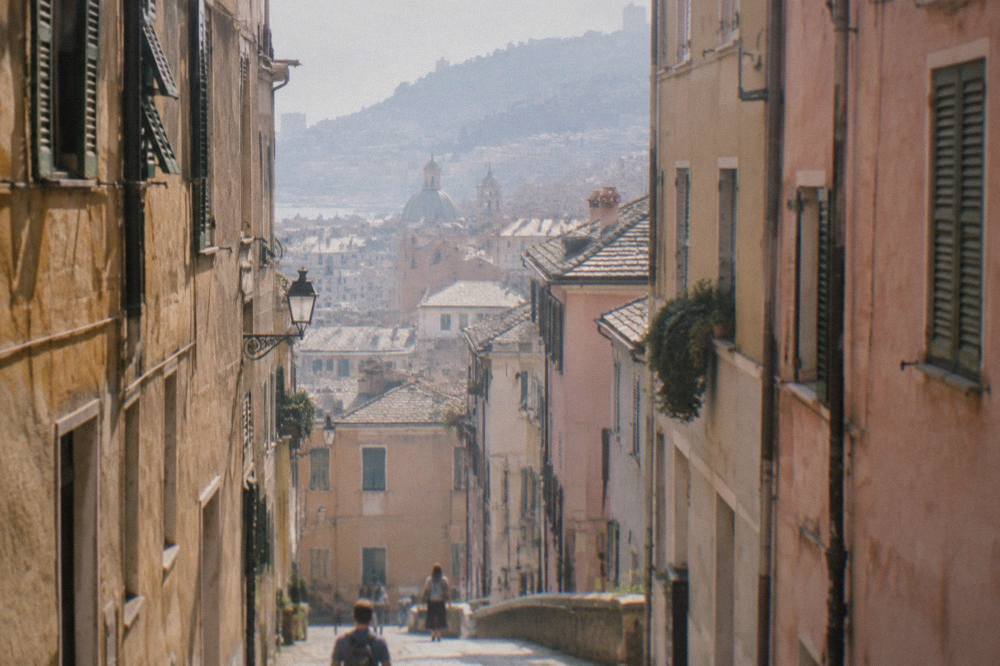
The Columbus sites in Genoa cluster at one edge of the old town: the Casa di Colombo with the twin towers of the old city gate and the cloister of Sant'Andrea form a single group reached from Piazza De Ferrari, while the wider Columbus-era city survives in the 113-hectare medieval centre around them. The house itself is the reconstruction of the building the family occupied between 1455 and 1470.
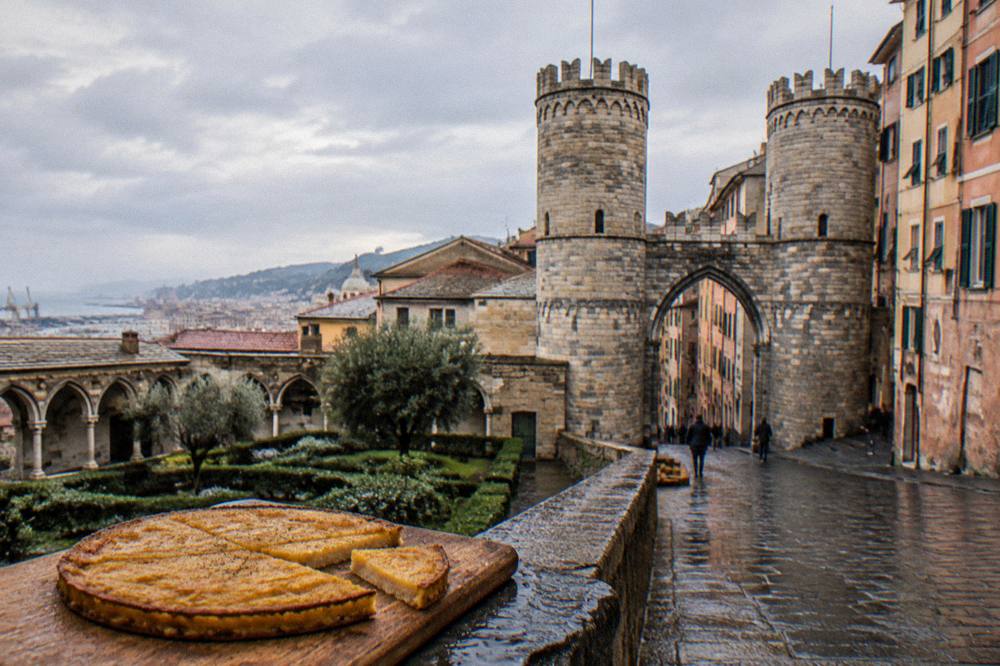
The starting point is the house. The city presents it as the boyhood home, with the reconstruction standing on the original site, and the twin towers of the medieval gate beside it marking a former opening in the city walls. The cloister of Sant'Andrea completes the group. All three sit together, so the visit is compact.
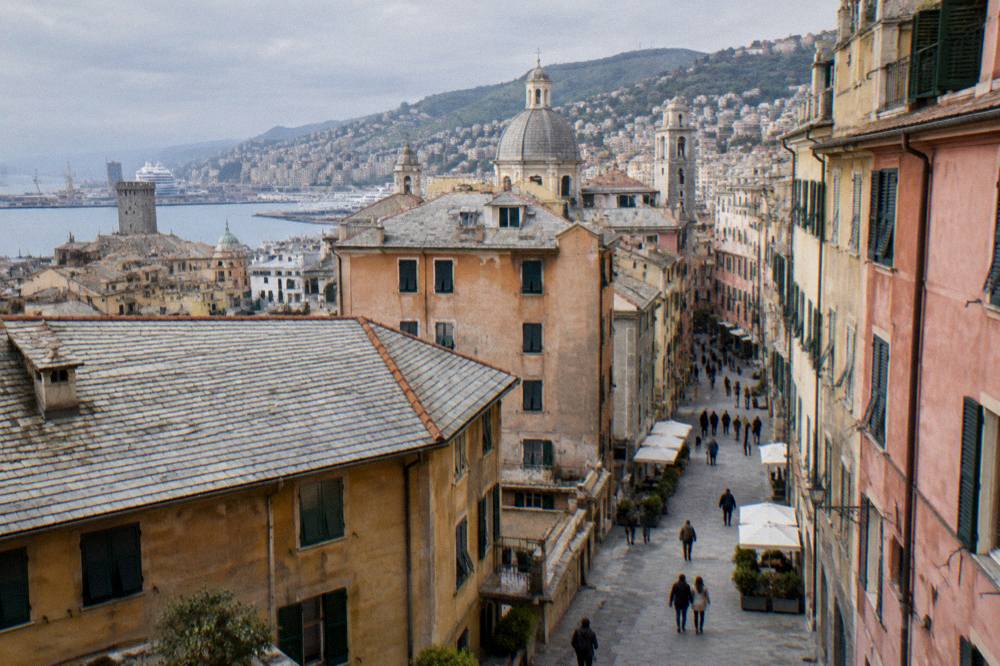
Around them spreads the old town. Its caruggi, the narrow lanes that give the medieval centre its character, contain the bulk of what remains from the period. Further out, the Lanterna, first built in 1128 and rebuilt in 1543, standing 117 m above the sea on its rock and billed as the tallest lighthouse in the Mediterranean, was already the port's landmark when the Columbus family moved in. The lighthouse's 77 m tower rises from a 40 m rock, and 172 steps lead to the first terrace.
The table below gathers the sites with the facts the city attaches to each.
| Site | What Genoa documents | Link on this site |
|---|---|---|
| Casa di Colombo | Family residence 1455 to 1470; reconstruction on the original site | /attractions/columbus-house-and-porta-soprana/ |
| Twin towers of the old city gate | Former opening in the medieval walls, beside the house | /attractions/columbus-house-and-porta-soprana/ |
| The old town (caruggi) | 113 hectares, one of the largest medieval historic centres in Europe | old town guide |
| The Lanterna | Built 1128, rebuilt 1543, 117 m above the sea, 172 steps to the first terrace | /attractions/lanterna-lighthouse/ |
A guided walk is one way to hold the medieval city together, since the sites sit inside lanes that reward orientation. The tours above cover three different angles on the city, from the Renaissance palaces to the port's aquarium to the food of the old town.
To find your bearings in the medieval lanes around the Columbus sites, book a self-guided audio tour here.
What Does The Casa Di Colombo Actually Claim?
The Casa di Colombo claims to be the house where Christopher Columbus lived as a boy, from the family's arrival in 1455, when he was four, until about 1470, and the city states that the building standing on the site today is a later reconstruction rather than the original fabric. It is a claim of site and residence, not of preserved rooms or possessions.
That distinction is the honest reading of what the city publishes. Visitgenoa, the official tourism site, presents the house as the place the family lived and states the reconstruction history plainly. Nothing in the city's own material asks visitors to believe they are looking at walls that predate the reconstruction, and the value of the site lies elsewhere: in the specificity of the dates, in the towers beside it, and in the documented fact that the medieval city around it is real and vast.
The cloister of Sant'Andrea, part of the same group, is the quietest piece of the ensemble. The three elements together take a short visit, and the Porto Antico redevelopment by Renzo Piano for the 1992 Columbus Expo lies downhill toward the water, a reminder that the city has marked the Columbus anniversary in modern architecture as well as in medieval stone.
How Does Genoa Mark Its Columbus Connection?
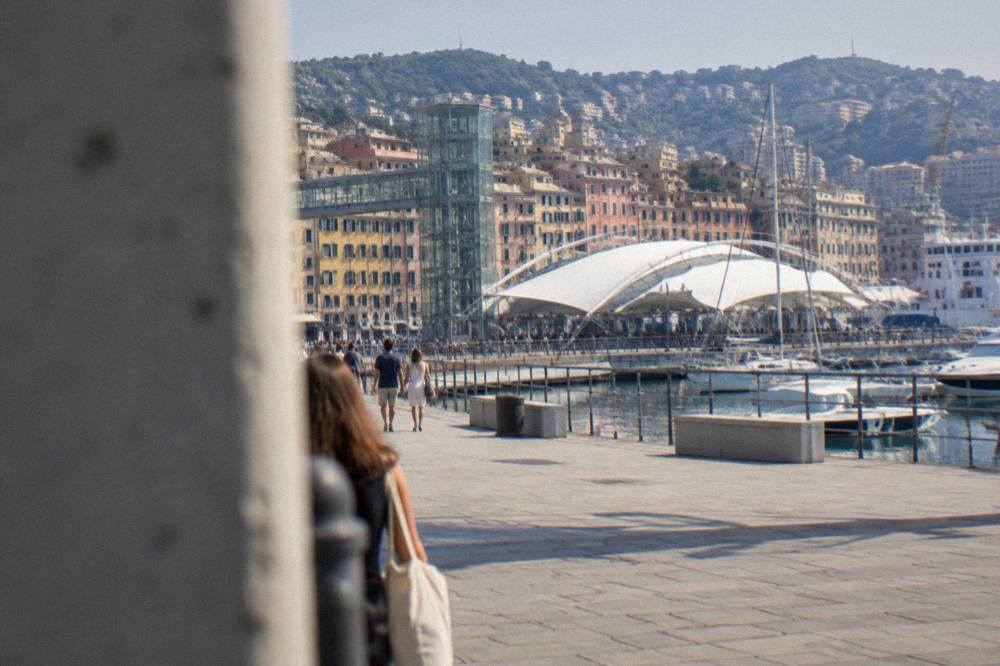
Genoa marks the connection in three ways: the preserved house site beside the twin towers of the old city gate, the modern Porto Antico redevelopment built by Renzo Piano for the 1992 Columbus Expo, and the naming of the city's airport, Genova Cristoforo Colombo, after him. The Aquarium of Genoa, opened in 1992 for the same Expo, is part of that anniversary legacy.
The 1992 Expo is the key modern date. The redevelopment of the old harbour for that event gave the city the Porto Antico visitors know today, including the Bigo, the panoramic lift whose adult ticket is listed at 6 EUR, with reduced and 4-to-12 tickets at 5 EUR, and the Aquarium, which opened in 1992 and now opens 365 days a year. The Bigo panoramic lift has its own page on this site.
The airport carries the name as well. Genova Cristoforo Colombo airport sits about 7 km west of Piazza De Ferrari in a straight line, and the Volabus links it to Genova Piazza Principe, Piazza De Ferrari and Genova Brignole in about 30 minutes, using the Met Daily 24-hour ticket at 10.00 EUR. A fixed taxi fare covers the run to the centre, and travellers should check the official airport site for the current rates and any surcharges.
| Columbus-era and anniversary marker | Date or figure | Where |
|---|---|---|
| Family residence at the Casa di Colombo | 1455 to 1470 | Edge of the old town, at the medieval gate towers |
| Lanterna rebuilt | 1543 | Port area |
| Porto Antico redevelopment and Aquarium, Columbus Expo | 1992 | Old harbour |
| Aquarium combined ticket with Biosfera and Bigo, adult | from 37.00 EUR | Porto Antico |
| Genova Cristoforo Colombo airport | about 7 km from Piazza De Ferrari, straight line | West of the centre |
What Else From That Period Survives In Genoa?
Beyond the house itself, the surviving fabric of the Columbus years is the medieval old town as a whole, 113 hectares of it, described by the city as one of the largest medieval historic centres in Europe, together with the Lanterna, first built in 1128, and the street plan of caruggi that has not been redrawn since. The Renaissance palaces of the Strade Nuove came later, inscribed by UNESCO in 2006.
The old town is the main inheritance. Its lanes predate the family's arrival and were already old when they moved in, and the city's own measure of the centre, 113 hectares, gives a sense of the scale. Walking it is the practical way to understand the Genoa Christopher Columbus left.
The Lanterna is the other survivor. Built in 1128 and rebuilt in 1543, it stood over the port throughout the family's years in the house and stands over it still, at 117 m above the sea. The UNESCO inscription, "Genoa: Le Strade Nuove and the system of the Palazzi dei Rolli", with its 42 palaces and its Rolli lists of 1576, 1588, 1599, 1614 and 1664, belongs to the aristocratic republic that came after, the same state that lasted until 1797.
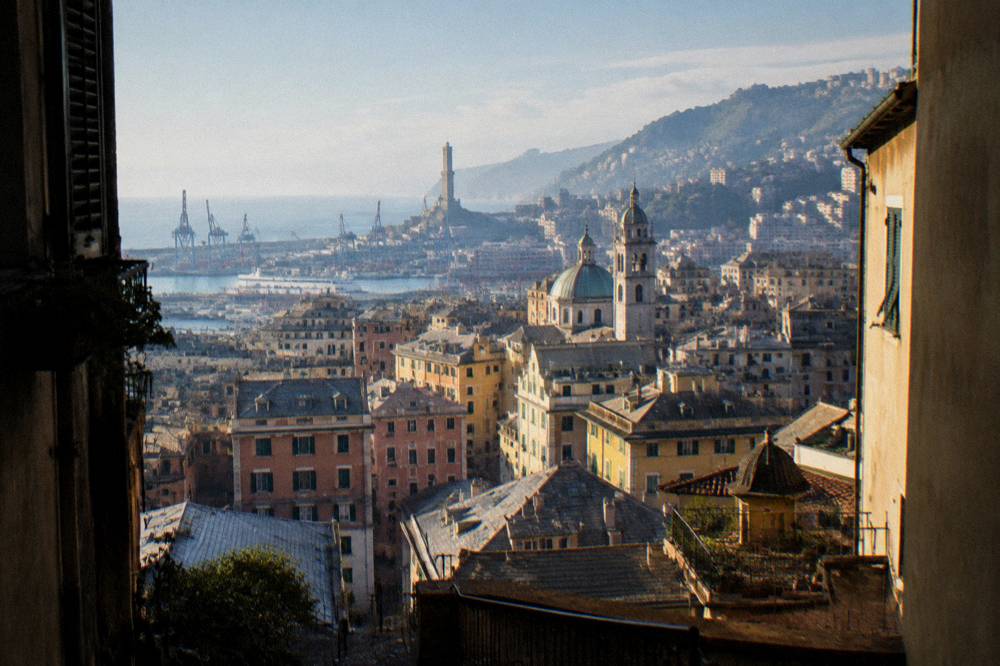
A structure for the visit helps. The Spianata Castelletto viewpoint, reached by the Castelletto Levante lift, whose single ride costs 1.20 EUR on the AMT vertical ticket and which runs daily 06:40 to 24:00, gives the overview of the whole dense city and the sea beyond it.
How Do You Plan A Columbus-Themed Day In Genoa?
A Columbus-themed day in Genoa works as a walk from Piazza De Ferrari to the Casa di Colombo and the twin towers of the old gate, onward through the caruggi toward the Lanterna and the Porto Antico, with an AMT ticket at 2.00 EUR valid for 110 minutes covering any bus or metro leg, and the Genoa Museum Card at 24 EUR for 24 hours adding 28 city museums to the day.
The transport arithmetic is simple and fixed. An ordinary AMT ticket costs 2.00 EUR and lasts 110 minutes across the whole network; the integrated AMT-Trenitalia version is 2.20 EUR; a 5-hour ticket is 5.00 EUR; a carnet of 11 tickets is 20.00 EUR. The Met Daily at 10.00 EUR covers 24 hours including Volabus, and the metro runs 7 km with 8 stations from Brin to Brignole. Lifts and the Sant'Anna funicular cost 1.20 EUR a ride.
| Ticket | Price | Validity |
|---|---|---|
| AMT ordinary | 2.00 EUR | 110 minutes, whole network |
| AMT + Trenitalia integrated | 2.20 EUR | 110 minutes, urban plus limited Trenitalia |
| 5-hour ticket | 5.00 EUR | 5 hours |
| Carnet of 11 | 20.00 EUR | 11 x 110 minutes |
| Met Daily | 10.00 EUR | 24 hours, full AMT network incl. Volabus |
| Lifts and Sant'Anna funicular | 1.20 EUR | Single ride |
| Genoa Museum Card 24 hours | 24 EUR | 28 city museums, 2026 rates |
| Genoa Museum Card 48 hours | 45 EUR | 28 city museums, 2026 rates |
For the day itself, the sequence runs: Piazza De Ferrari, the Columbus house group at the medieval gate towers, the caruggi westward, the Lanterna at the port, then the Porto Antico. The Aquarium's own ticket page lists fixed-date adult tickets from 26.00 EUR, reduced from 20.00 EUR, children 4 to 12 from 16.00 EUR and under-4s free, with dynamic pricing, and the combined Aquarium, Biosfera and Bigo ticket from 37.00 EUR for an adult.
Which Columbus Stories Should You Treat With Care?
Treat with care any story that goes beyond the documented dates: the city supports a residence from 1455 to 1470 at a reconstructed house, and it supports nothing else on this page's constraints, so claims about jeans, legends of the family's circumstances or the young Columbus's work belong to neither the city's material nor this guide. The published record is short, specific and worth keeping that way.
One popular story, the "bleu de Gênes" origin of jeans, has no authoritative source. Founding legends and family anecdotes fall into the same category. What can be reported is narrow and, because of that, reliable: the move in 1455, the residence to 1470, the reconstruction, the towers, the cloister.
The honest visit is built on that narrow base. Stand at the house, read the dates, then walk into the medieval centre that produced them. The city around the site is the evidence, and it is generous: 113 hectares of it, a lighthouse rebuilt in 1543, a republic that ran until 1797, and a modern port that still moves 2.4 million cruise passengers and 2.6 million ferry passengers a year, figures the port authority itself publishes.
Where Does The Columbus Story Sit In Wider Genoa History?
The Columbus years sit in the middle of the aristocratic Republic of Genoa, the state that lasted until 1797 when Napoleonic occupation replaced it with the Ligurian Republic, and the city's later landmarks frame those years from both sides: the Lanterna rebuilt in 1543 after the family's residence, and the Strade Nuove palaces, UNESCO-inscribed in 2006, rising in the generations after.
The timeline below uses only dates this site's reporting supports. It gives the shape of the story without adding anything to it.
| Year | Event |
|---|---|
| 1128 | The Lanterna is first built |
| 1455 | The Columbus family moves into the house; Christopher Columbus is four |
| 1470 | His documented residence at the house ends |
| 1543 | The Lanterna is rebuilt, 77 m tower on a 40 m rock |
| 1576 to 1664 | The Rolli lists are drawn up, in 1576, 1588, 1599, 1614 and 1664 |
| 1797 | The Republic of Genoa ends under Napoleonic occupation |
| 1992 | The Porto Antico redevelopment and the Aquarium open for the Columbus Expo |
| 2006 | UNESCO inscribes the Strade Nuove and the Palazzi dei Rolli, 42 palaces |
For readers who want the food that grew out of the same Ligurian soil, the city's staples are pesto genovese, made with Basilico Genovese PDO basil, focaccia, farinata, trofie and pansoti. The farinata guide on this site covers one of them, and the farinata of the neighbouring coast is its own tradition: focaccia di Recco has held IGP status since 2015 and is produced only in Recco, Camogli, Sori and Avegno.
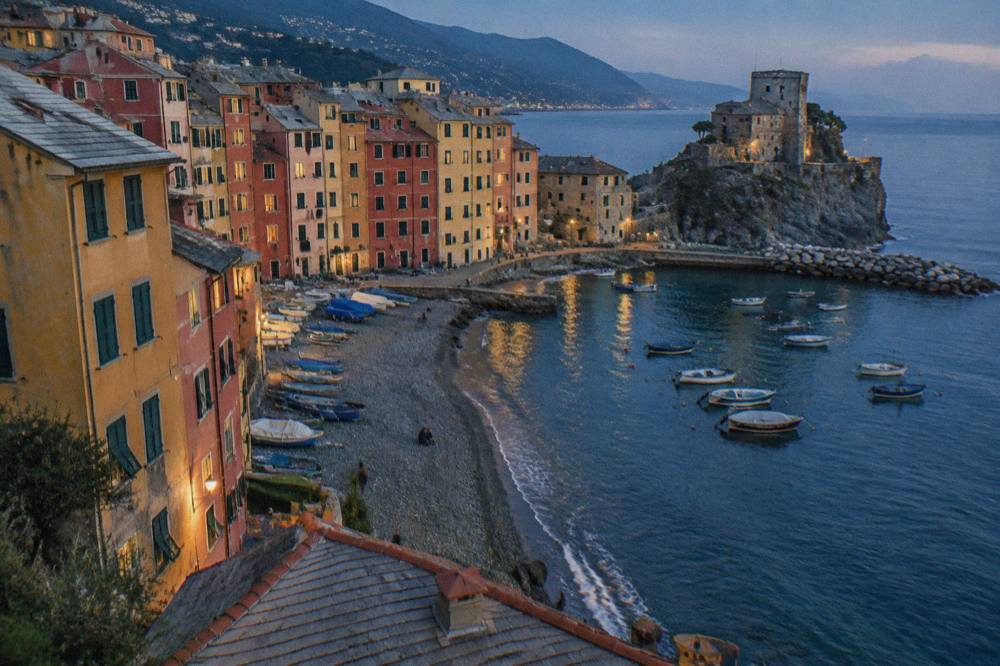
Day trips extend the story geographically. Camogli lies about 18 km from Piazza De Ferrari in a straight line, Portofino about 25 km, the Cinque Terre about 67 km, Milan about 119 km. The Camogli day-trip guide covers the nearest of them, a fishing town on the same Ligurian coast whose boats and focaccia carry the region's maritime character forward.
When Is A Good Time To Follow The Columbus Trail In Genoa?
The official 1971-2000 climate normals for Genoa Sestri give the planning frame: mean daily highs run from 11.5 C in January to 27.7 C in August, October carries 171.3 mm of rain against July's 24.2 mm, and the trail itself is mostly compact walking between the house, the caruggi and the port, so the shoulder months with moderate temperatures and moderate rainfall suit it well.
The full picture from the official Aeronautica Militare CLINO 1971-2000 normals for Genoa Sestri, the station at the airport about 7 km west of Piazza De Ferrari:
| Month | Mean high C | Mean low C | Rain mm |
|---|---|---|---|
| Jan | 11.5 | 5.5 | 101.8 |
| Feb | 12.2 | 6.0 | 74.0 |
| Mar | 14.6 | 8.2 | 81.7 |
| Apr | 16.8 | 10.5 | 88.0 |
| May | 20.5 | 14.2 | 72.4 |
| Jun | 23.9 | 17.6 | 58.2 |
| Jul | 27.3 | 20.9 | 24.2 |
| Aug | 27.7 | 21.0 | 69.3 |
| Sep | 24.4 | 17.9 | 136.4 |
| Oct | 20.0 | 13.8 | 171.3 |
| Nov | 15.1 | 9.2 | 108.8 |
| Dec | 12.5 | 6.5 | 93.1 |
October, averaging 171.3 mm in the normals, is also the month of the Rolli Days, whose 2026 autumn edition ran 16 to 18 October, and of the Festival della Scienza, 22 October to 1 November 2026. The Strada Nuova museums run a winter timetable from 28 September 2026 to 18 April 2027, open daily 10:00 to 18:30, with only Palazzo Rosso visitable on Mondays. The combined Strada Nuova and Sant'Agostino ticket is 14 EUR full, 9 EUR reduced. For depth on the seasons, see the Genoa weather and best time to visit Genoa guides.
Between the museums, the port and the food of the old town, these three tours cover the Genoa that surrounds the Columbus sites, and each can be checked against a day built around the house and the caruggi.
Common Questions About Christopher Columbus In Genoa
Where is the Christopher Columbus house in Genoa?
The Casa di Colombo stands beside the twin towers of the old city gate and the cloister of Sant'Andrea at the edge of the old town, a short walk from Piazza De Ferrari. The city presents it as the house where Christopher Columbus lived from 1455 to 1470, and the building there today is a reconstruction on the original site.
Is the Columbus house in Genoa the original building?
No. Genoa's own tourism authority states that the structure visitors see is a reconstruction standing on the original site. The documented claim is one of site and residence, from the family's arrival in 1455, when Christopher Columbus was four, to about 1470.
What can I see near the Columbus house in Genoa?
The twin towers of the old city gate and the cloister of Sant'Andrea form a single group with the house. From there the 113-hectare medieval old town spreads west, the Lanterna, rebuilt in 1543, stands at the port, and the Porto Antico redevelopment from the 1992 Columbus Expo, including the Aquarium opened that year, lies toward the water.
Was Christopher Columbus born in Genoa?
Genoa's tourism site claims the Casa di Colombo as the house where he lived as a boy, with the family moving in during 1455 and the residence documented to about 1470. This page reports the city's own claim with its dates and does not add to it.
How do I get to the Columbus sites in Genoa by public transport?
The sites sit within walking distance of Piazza De Ferrari and the metro stations on the 7 km Brin to Brignole line. An AMT ordinary ticket costs 2.00 EUR and is valid 110 minutes on the whole network; the Met Daily at 10.00 EUR covers 24 hours including Volabus from Genova Cristoforo Colombo airport.
Do the jeans really come from Genoa?
This site does not print the "bleu de Gênes" story. No authoritative source for the claim was located in this site's reporting, and the page sticks to what Genoa's own published material supports about Christopher Columbus and the city.
The documented Columbus of Genoa is a boy in a house by a city gate, in a port republic that would run for another three centuries, and the city he lived in is still standing around the site in greater volume than almost anywhere else in Europe. Walk from the gate towers into the caruggi, out to the Lanterna, and back along the Porto Antico, and the record explains itself.