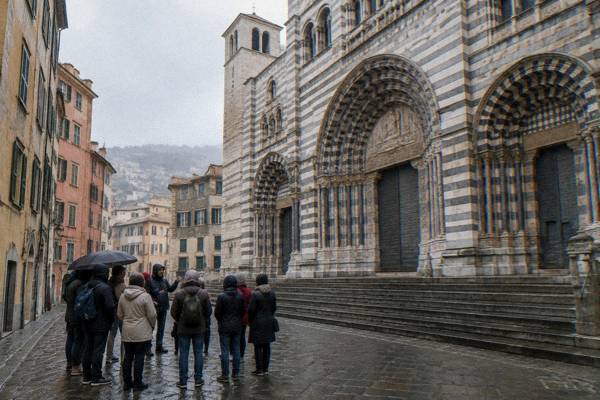
Porta Soprana And The Columbus House
Porta Soprana and the Columbus House stand side by side in Genoa's old town, one a survivor of the medieval city walls, the other the claimed boyhood home of Christopher Columbus, who lived there between 1455 and 1470.
Short answer
The Columbus House in Genoa is the claimed boyhood home of Christopher Columbus, who lived there between 1455 and 1470 after his family moved in when he was four. It stands beside Porta Soprana, a medieval gate in the old town, and both are free to view from outside on any walk through the caruggi.
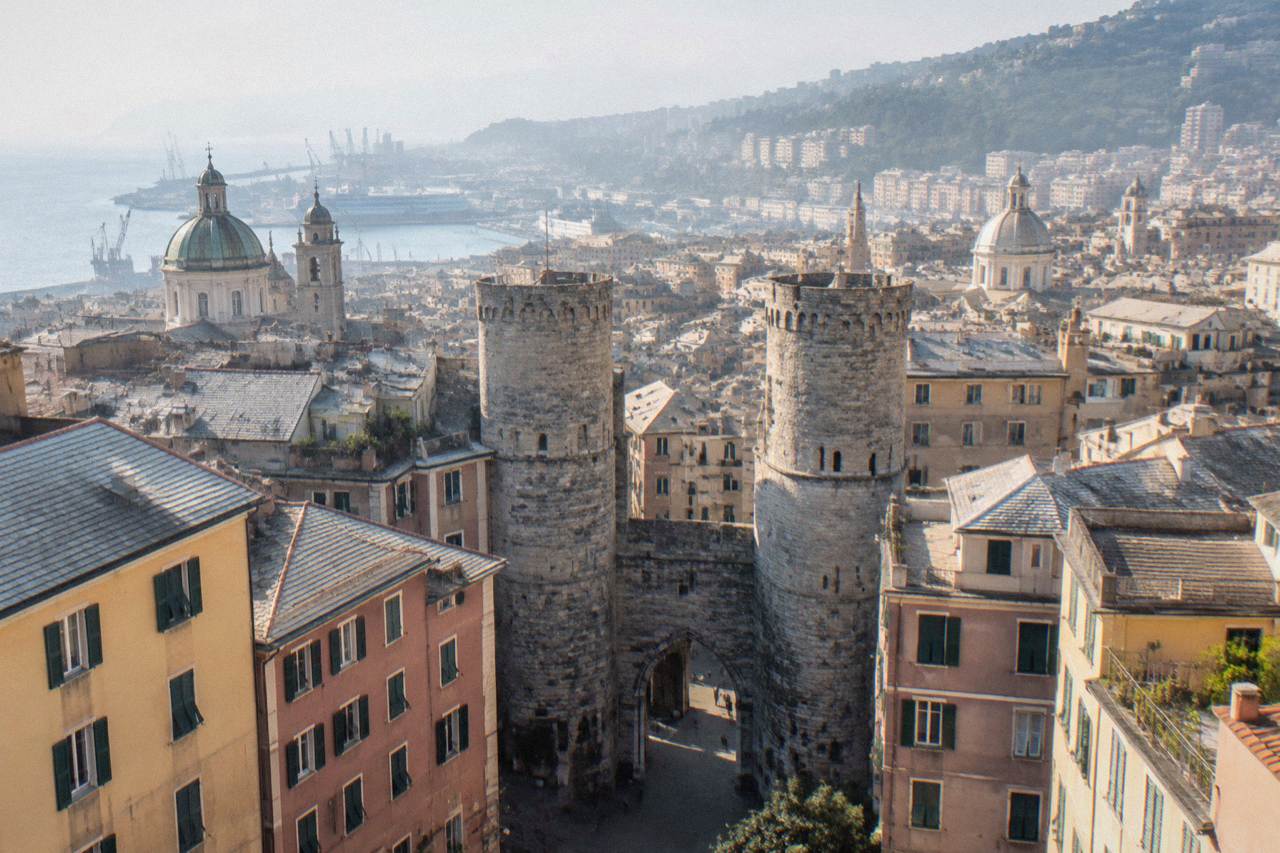
Porta Soprana and the Columbus House stand next to each other in Genoa, the coastal city in Liguria, north-west Italy, where the caruggi of the old town meet the line of the medieval walls. One is a stone gate flanked by two towers, a survivor of the defences that once enclosed the city. The other is the claimed boyhood home of Christopher Columbus, and the sources are precise about the dates: the official tourism site records that Columbus lived at the Casa di Colombo between 1455 and 1470, and that his family moved there in 1455, when he was four. Together they form one of the most compact historical stops in a city whose old town covers 113 hectares and is described by the tourism authority as one of the largest medieval historic centres in Europe.
Genoa handles this pair of sights differently from its big ticketed museums. There is no Aquarium-style pricing structure here, and no Palace-style exhibition calendar. What there is instead is a specific, documented set of dates tied to one of history's most argued-over biographies, set inside a working neighbourhood of the old town. This page sets out what the sources say about the house, the gate, how to reach them, and what sits within walking distance, and it points to the guided walks that tie the Columbus story into the rest of the city.
What Is The Porta Soprana And The Columbus House In Genoa?
The Columbus House is the building presented as the boyhood home of Christopher Columbus in Genoa, where the official tourism site records he lived from 1455 to 1470 after his family moved in when he was four, and Porta Soprana is the medieval stone gate with two towers that stands beside it, marking a former entrance through the city walls on the edge of the old town. The two sights are visited together in a single stop.
The pairing is not accidental. The house and the gate sit at the same point in the city, where the dense lanes of the historic centre run up against the old defensive perimeter, so a visitor standing at one is standing at the other. The gate belongs to the layer of medieval Genoa that survives inside the modern street plan, and the house belongs to the story the city tells about its most famous son. The Republic of Genoa, the aristocratic state that ruled the city until 1797, was the power Columbus was born under, and the sights of this corner of the old town all belong to that era of the city's past.
What the sources are careful about, and what this page is careful about too, is the word "claimed". The official Genoa tourism listing for the Casa di Colombo, the Chiostro di Sant'Andrea and the towers of Porta Soprana presents the house as the place where Columbus lived as a boy, on the basis of the documented dates 1455 to 1470. The building on the site today is an 18th-century reconstruction on the original footprint, a fact the tourism site states plainly. That is a more honest position than many cities manage with their famous sons, and it is the position a visitor should carry into the visit.
For readers building a full itinerary around the city's headline sights, the wider list lives at things to do across Genoa, and the deeper biography of the man himself is covered on the Christopher Columbus in Genoa guide.
Where Is The Columbus House In Genoa And How Do You Get There?
The Columbus House and Porta Soprana sit on the eastern edge of Genoa's old town, in the historic centre between Piazza De Ferrari and the caruggi, reachable with a standard AMT ticket at 2.00 EUR valid 110 minutes on the whole urban network, or by the metro, whose eight stations run from Brin to Brignole and include De Ferrari and Sant'Agostino.
The transport arithmetic is simple and cheap. A single AMT ordinary ticket costs 2.00 EUR and is valid for 110 minutes across the whole Città Metropolitana network, which covers the metro, buses, lifts and funiculars. The Met Daily 24-hour ticket at 10.00 EUR covers the full network for a day. The metro line is 7 km long with 8 stations, Brin, Dinegro, Principe, Darsena, San Giorgio, Sant'Agostino, De Ferrari and Brignole, and the Sant'Agostino and De Ferrari stations are the ones that serve the old town side of the city where the Columbus sights stand.
| Transport option in Genoa | Price | Validity or coverage |
|---|---|---|
| AMT ordinary ticket | 2.00 EUR | 110 minutes, whole urban network |
| AMT + Trenitalia integrated | 2.20 EUR | 110 minutes, urban plus limited rail |
| 5-hour ticket | 5.00 EUR | 5 hours on the network |
| Carnet of 11 tickets | 20.00 EUR | 11 x 110-minute tickets |
| Met Daily 24h | 10.00 EUR | Full network for one day |
| Metro line | included in AMT fares | 7 km, 8 stations, Brin to Brignole |
Visitors arriving at the two main rail hubs will find the old town between them. Genova Piazza Principe and Genova Brignole are both on the metro line, and the historic centre sits in the band of territory that separates them. The tourist information office at IAT Garibaldi, at Via Garibaldi 12r, is open daily 09:00 to 18:20 and is the place to ask for an old town map before setting off into the lanes. For anyone flying in, the Volabus links Genova Cristoforo Colombo airport with Principe, De Ferrari and Brignole in about 30 minutes, and it requires the 10.00 EUR Met Daily ticket, valid for 24 hours on the full network.
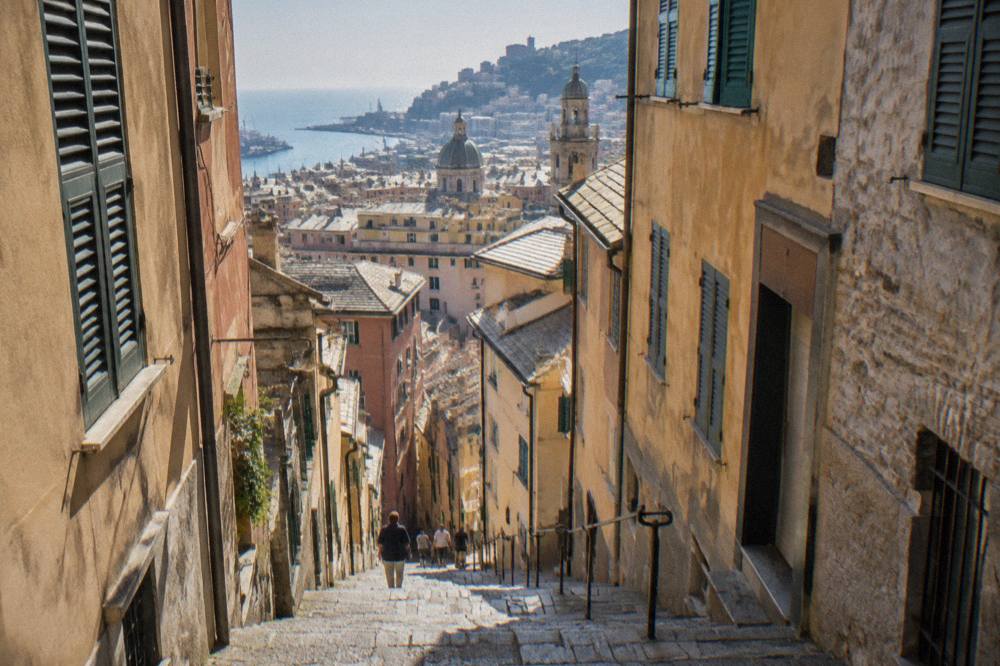
Walking is the other option, and in a city built on a strip between the sea and the hills it is often the pleasant one. The old town's 113 hectares are the context for the whole visit: the Columbus House sits inside that fabric, not in a purpose-built quarter, and the approach on foot through the caruggi is part of what the sight is. The trade-off is terrain, since Genoa rises quickly from the waterfront, and the public lifts and the Zecca-Righi funicular, daily 06:40 to 24:00, exist precisely because of it.
For a walk that tells the story as you go, book a self-guided audio tour here.
What Can You See At The Columbus House In Genoa?
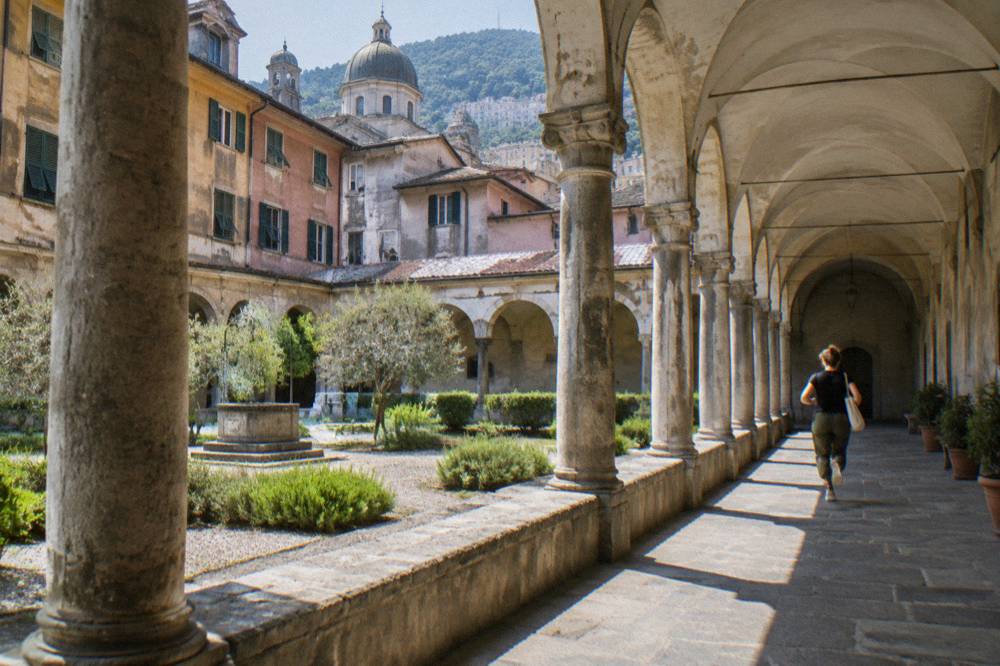
What you see at the Casa di Colombo is the reconstructed building on the documented site of the boyhood home, presented together with the Chiostro di Sant'Andrea and the towers of Porta Soprana as a single listed complex by the official Genoa tourism site, which records that Columbus lived there between 1455 and 1470 and that the present structure is an 18th-century rebuilding on the original site.
The listing on the tourism site bundles three elements under one entry: the house, the cloister of Sant'Andrea, and the gate towers. That bundle is the practical unit of a visit. The house itself carries the dates, the cloister carries the monastic layer of the neighbourhood's past, and the towers carry the military one. None of the three is a large museum in the mould of the Palazzo Ducale or the Musei di Strada Nuova; they are fragments, and their value is documentary, tied to the biography of one man and the topography of one gate.
The comparison with the city's ticketed sights is worth making because it shapes expectations. The Cathedral of San Lorenzo, the Palazzo Ducale and the Strada Nuova palaces are covered in depth on their own pages, and the Genoa Cathedral guide and the Palazzo Ducale guide set out their hours and ticket structures. The Columbus complex belongs to a different category of sight, one whose interest is concentrated in its address and its dates rather than in a gallery of contents, and the visitor who arrives with that framing gets more from it.
The dates themselves deserve a sentence more. The family moved into the house in 1455, when Columbus was four, and he lived there until 1470. That is a fifteen-year span of a boyhood and youth spent in this specific place in the old town, under a republic that would last another three centuries before ending in 1797. Whatever position a reader takes on the larger debates about Columbus, the local record of where he grew up is the thing Genoa documents, and documents precisely.
What Is The History Behind Porta Soprana In Genoa?
Porta Soprana is a medieval gate in Genoa's former city walls, flanked by two towers, and it survives as one of the visible reminders of the defensive perimeter that once enclosed the old town, a centre that today covers 113 hectares and is described by the city's tourism authority as one of the largest medieval historic centres in Europe, from the era of the Republic of Genoa that lasted until 1797.
The gate's interest is structural rather than biographical. Where the Columbus House answers a question about a person, the gate answers a question about the city: where did medieval Genoa end, and what did its defences look like? The two towers define the old entrance, and their survival inside a living neighbourhood is the kind of thing that happens in cities whose historic fabric was never comprehensively rebuilt. Genoa's old town is exactly that fabric, and the gate is one of its fixed reference points. Everything else covered here is indexed on Genoa Travel Guide.
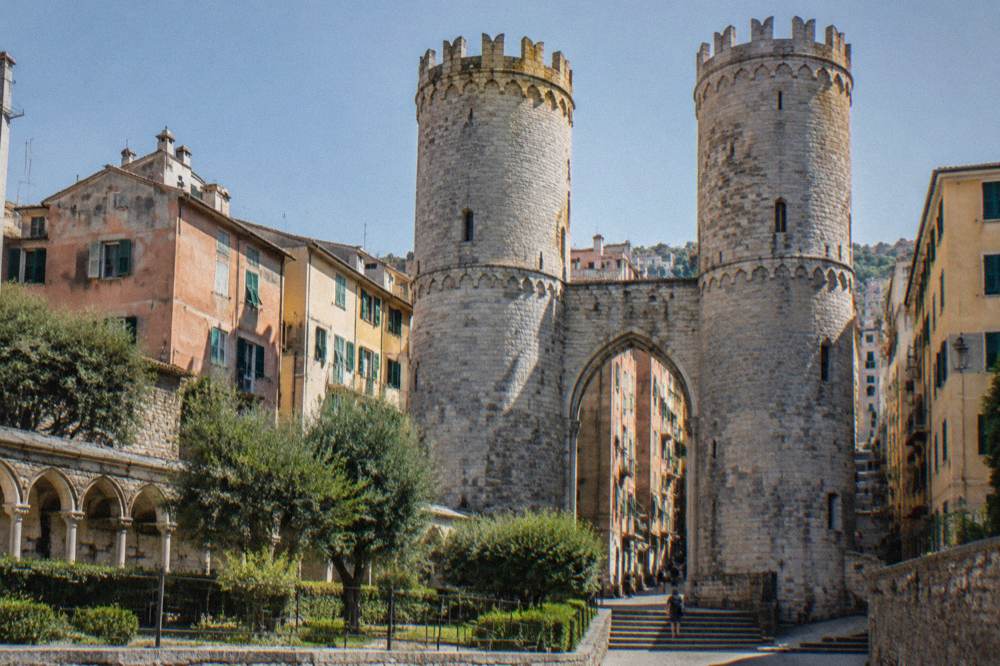
The republic that built and defended this perimeter was an aristocratic state, and it lasted until 1797, when Napoleonic occupation ended it and the Ligurian Republic took its place. Every medieval stone in this quarter belongs to that long political story, and the gate is the most legible piece of it a visitor can stand in front of. The city's later history, including the Ponte Morandi collapse of 14 August 2018 and the opening of Renzo Piano's Ponte San Giorgio on 3 August 2020, belongs to other pages, but the sweep from a walled medieval republic to a modern port city is the arc the old town as a whole narrates.
| Dated fact about the Columbus quarter and its era | Year or dates | Source basis |
|---|---|---|
| Columbus family moves into the Casa di Colombo, when he is four | 1455 | official Genoa tourism listing |
| Columbus lives at the Casa di Colombo | 1455 to 1470 | official Genoa tourism listing |
| Republic of Genoa ends with Napoleonic occupation | 1797 | Treccani encyclopaedia |
| Present building rebuilt on the original site | 18th-century reconstruction | official Genoa tourism listing |
| Old town measured extent | 113 hectares | official Genoa tourism site |
| Ponte Morandi collapse | 14 August 2018 | contemporary reports |
| Ponte San Giorgio opens | 3 August 2020 | contemporary reports |
How Much Time Do You Need For The Columbus House And Porta Soprana?
Allow a short stop for the Columbus House and Porta Soprana themselves, since the complex is a single listed site of a house, a cloister and two towers rather than a full museum, and plan half a day or more for the surrounding old town, whose 113 hectares contain the caruggi, the Cathedral of San Lorenzo, Piazza De Ferrari and the Porto Antico, all connected on foot and on a 2.00 EUR AMT ticket valid 110 minutes.
The honest sizing is this: the sights themselves are a waypoint, the neighbourhood is the destination. A visitor who treats the gate and the house as a pause on a longer walk through the historic centre has the right plan. The old town's lanes run continuously from the Porto Antico side through to Piazza De Ferrari, and the Columbus complex sits on that axis, so the natural route collects several of the city's headline sights in one loop without any backtracking.
| Sight on an old town walking loop | Type | Guide on this site |
|---|---|---|
| Columbus House and Porta Soprana | Historical complex | this page |
| Piazza De Ferrari | City square | Piazza De Ferrari guide |
| Cathedral of San Lorenzo | Cathedral | Genoa Cathedral guide |
| Porto Antico | Waterfront district | Porto Antico guide |
| Palazzo Ducale | Palace and exhibitions | Palazzo Ducale guide |
| Caruggi of the old town | Historic lanes | this old town context |
Guided formats change the arithmetic, because a guide compresses the documentary background into the walk itself. The city's guided historical walks, including the private rickshaw historical tour of Genoa, cover the Columbus quarter among the old town's sights, and the hop-on hop-off bus pass suits visitors who want the city's districts linked without walking the hills. For anyone weighing a guided option against an independent walk, the live listings carry current prices and availability, and the desk's view is simply that the Columbus story benefits from a guide who can hold the dates and the debates together; Check availability on the operator's live listing before committing.
What Else Is Near Porta Soprana In Genoa?
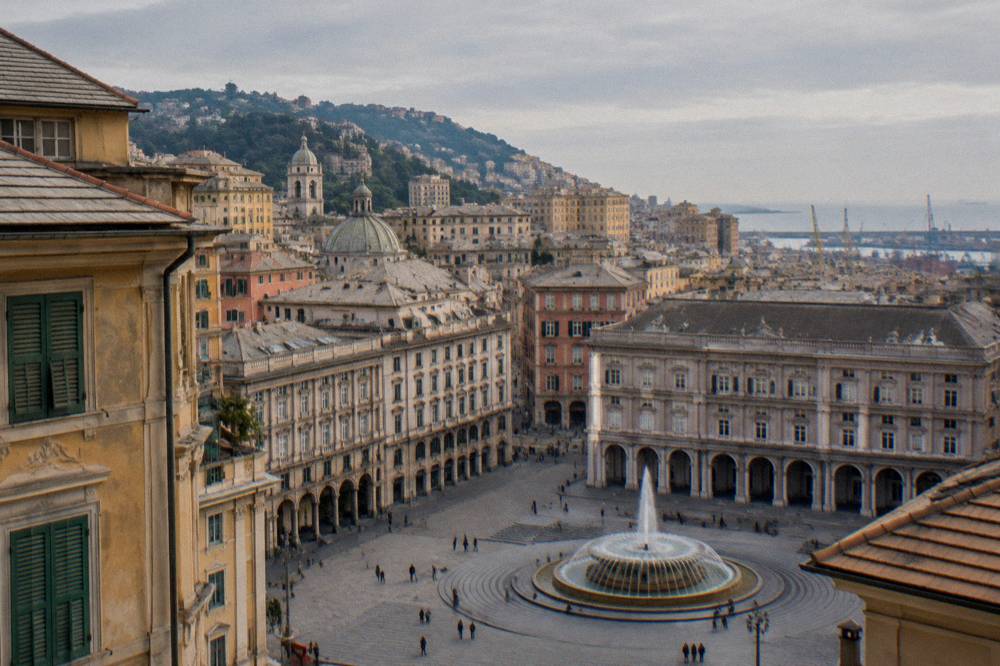
Near Porta Soprana in Genoa's old town are Piazza De Ferrari, the Cathedral of San Lorenzo, the Palazzo Ducale, the Musei di Strada Nuova on the Strade Nuove, and the Porto Antico waterfront with the Aquarium and the Bigo, all within the historic centre or on its edge, and all reachable on foot or on a single 2.00 EUR AMT ticket valid 110 minutes across the metro, buses, lifts and funiculars.
The density is the argument for basing a day around this quarter. The old town is not a museum district set apart from the modern city; it is the city's core, with the commercial spine of Via XX Settembre and the ceremonial heart of Piazza De Ferrari on one side and the restored waterfront on the other. A visitor who starts at the Columbus complex can walk outward in any direction and collect major sights, and the cost of the transport fallback should be checked on the official site.
Two of the near neighbours deserve special mention because they deepen the same story. The Galata Museo del Mare, covered in the Galata Museo del Mare guide, is the city's maritime museum, 12,000 square metres over five levels and 31 rooms, and it picks up the seafaring thread that the Columbus House only implies. And the Palazzo Ducale, the seat of the republic's government, carries the political history that the gate's towers defended. Between them, the maritime and republican context surrounds the small documented fact of where the navigator grew up.
Food is the other near neighbour. The old town is where the city's food tours concentrate, around pesto genovese, made with Basilico Genovese PDO basil, focaccia and farinata, and a walk that ends at a tasting table is a common shape for a day here. The Genoa small-group food tour with a full meal is the listing the desk points to for that shape of afternoon, and its live listing carries the current price and dates.
Is The Columbus House In Genoa Worth Visiting?
The Columbus House and Porta Soprana are worth visiting for the documented dates, 1455 to 1470 for Columbus's residence there, and for the survival of a medieval gate inside one of the largest medieval historic centres in Europe, and they suit any visitor with an interest in the city's most famous son, though they are a compact stop rather than a half-day museum, so the value depends on pairing them with the surrounding old town.
The judgement call is about framing. A visitor who arrives expecting a full biographical museum will leave quickly; a visitor who arrives knowing that this is a reconstructed house on a documented site, beside a gate, inside a working medieval quarter, will get the thing itself. The dates are the substance, and the dates are solid: a fifteen-year boyhood and youth at this address, recorded by the city's own tourism authority, inside a republic that would endure to 1797.
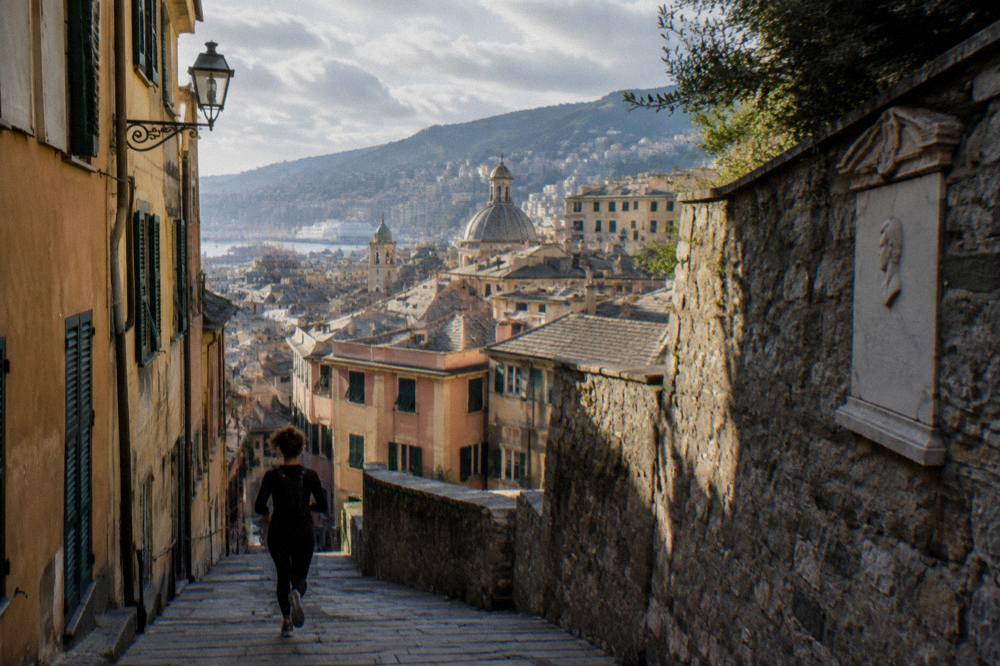
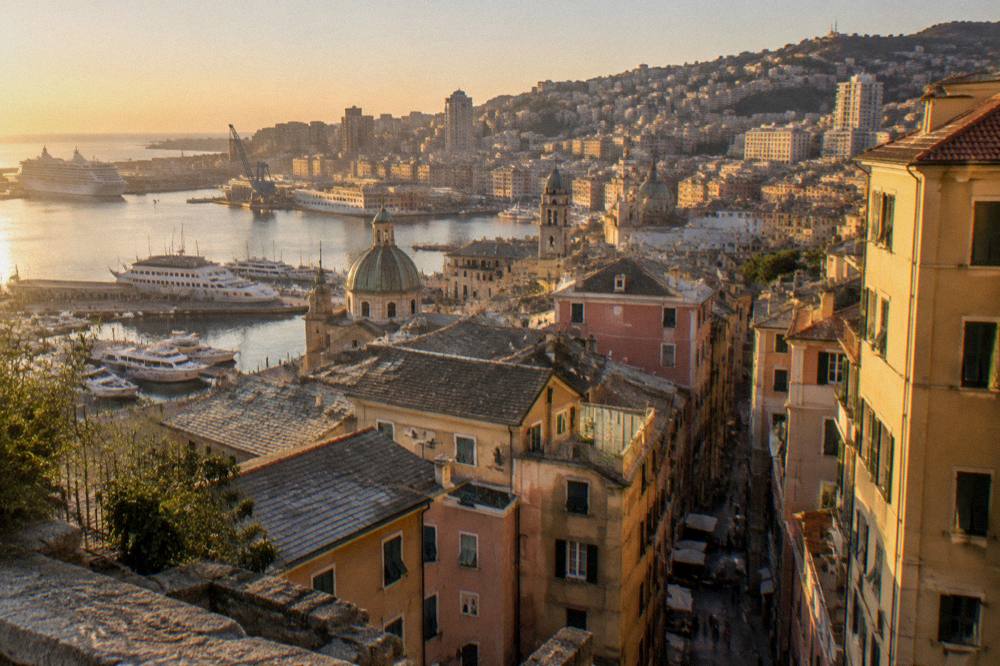
For the reader planning a first trip, the sequence the desk suggests is simple: the Christopher Columbus in Genoa guide for the biography, this page for the sights, and the wider things to do in Genoa roundup for everything else the city holds. Genoa is a coastal port city on the Ligurian Sea, and its history is a maritime one, so the Columbus quarter, the maritime museum and the Porto Antico belong to a single storyline that a well-planned day can follow from the walls down to the water.
Common Questions About The Columbus House In Genoa
Did Christopher Columbus live in the Columbus House in Genoa?
The official Genoa tourism site records that Columbus lived at the Casa di Colombo between 1455 and 1470, and that his family moved there in 1455, when he was four. The building standing today is an 18th-century reconstruction on the original site, as the listing itself states.
What is Porta Soprana in Genoa?
Porta Soprana is a medieval gate in Genoa's former city walls, marked by two towers, surviving on the edge of the old town beside the Columbus House. It is listed together with the Casa di Colombo and the Chiostro di Sant'Andrea as a single complex by the city's tourism site.
How do I get to the Columbus House in Genoa?
The complex sits in the old town between the caruggi and Piazza De Ferrari. A 2.00 EUR AMT ticket is valid 110 minutes on the whole urban network, including the metro, whose 8 stations run from Brin to Brignole with stops at Sant'Agostino and De Ferrari serving this side of the centre.
Is the Columbus House in Genoa a museum?
It is a compact historical complex rather than a large museum: a reconstructed house on a documented site, a cloister and two gate towers. The surrounding old town, which covers 113 hectares, is where the rest of a visit's time goes, with the Cathedral of San Lorenzo, Piazza De Ferrari and the Porto Antico all on the same walking axis.
When did the Republic of Genoa end?
The aristocratic Republic of Genoa lasted until 1797, ending with Napoleonic occupation and the Ligurian Republic, per the Treccani encyclopaedia entry on the subject. Columbus's boyhood at the Casa di Colombo, 1455 to 1470, falls within that long republican era.
Are there guided tours of the Columbus sights in Genoa?
Yes. Private historical tours of Genoa cover the Columbus quarter together with the old town's other sights, and the hop-on hop-off bus links the districts for visitors who prefer not to walk the hills. Live prices, dates and availability sit on the operators' listings, and the desk's tour picks on this page carry the current details.
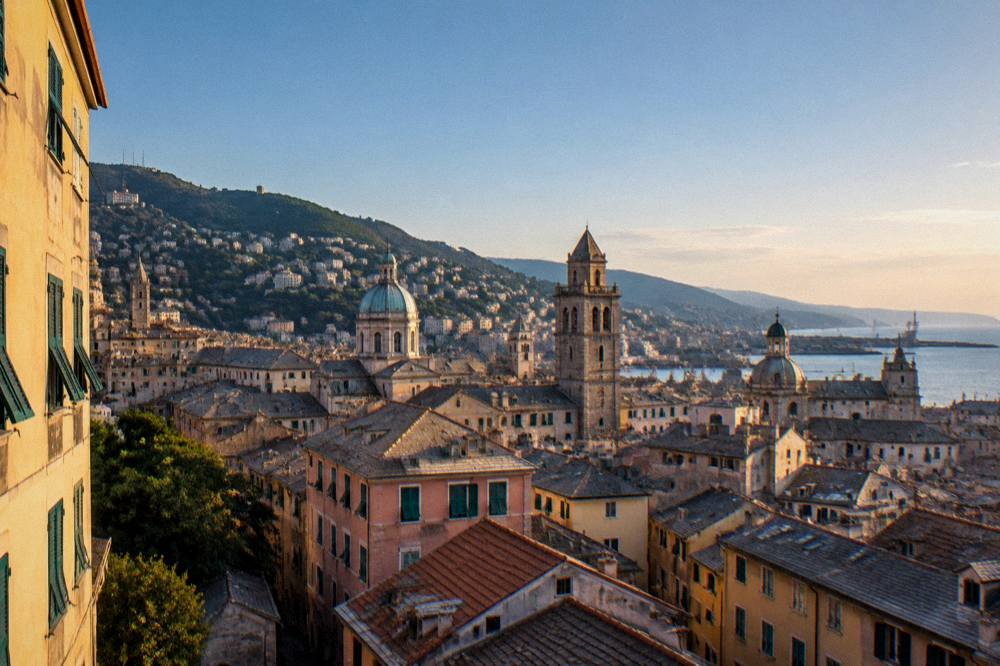
Porta Soprana and the Columbus House reward exactly the amount of attention their sources support: a documented address, a set of dates, and a medieval gate, all embedded in one of Europe's great surviving historic centres. Walk to them through the caruggi, read the dates, then keep going, because in Genoa the famous sight is always a doorway into a larger old town, and this one opens onto the whole story of a republic that raised the navigator and kept the gate he walked through.