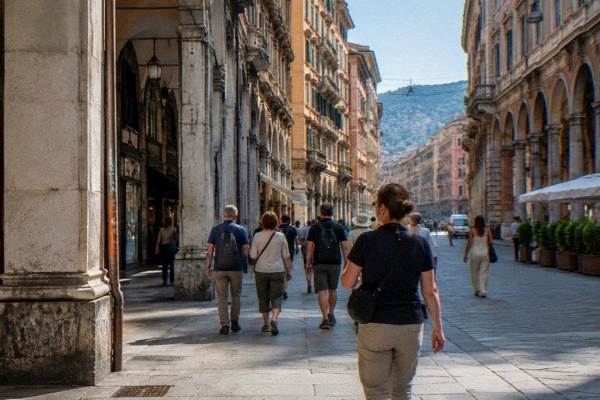
Palazzo Ducale: The Doges' Palace On Piazza Matteotti
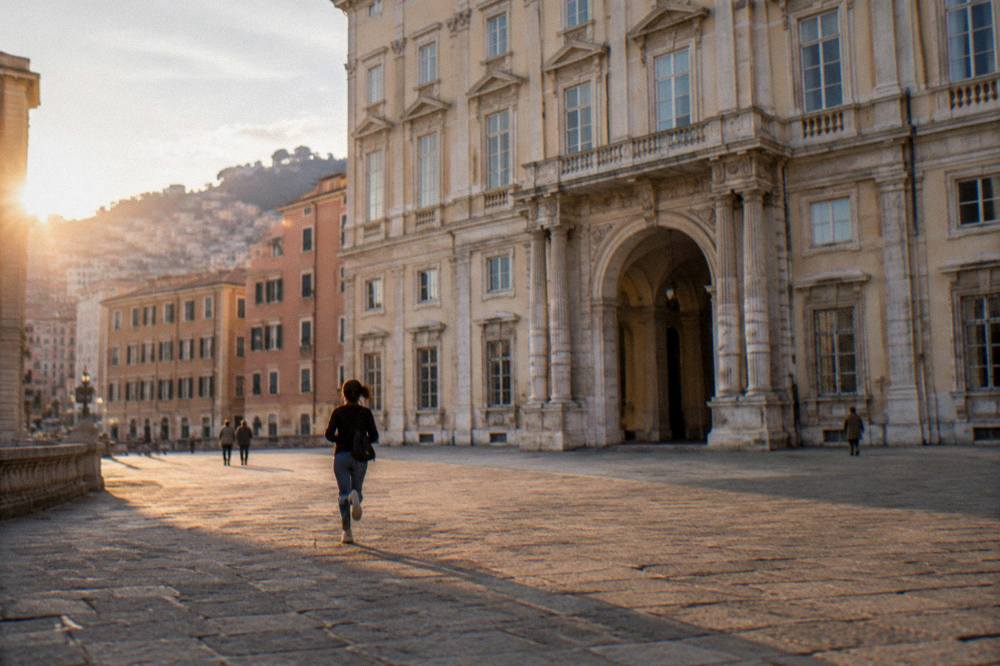
Palazzo Ducale is Genoa's former doges' palace, the historic seat of the Republic of Genoa's government, and today the city's main venue for major exhibitions, standing beside Piazza De Ferrari on the edge of the old town.
Short answer
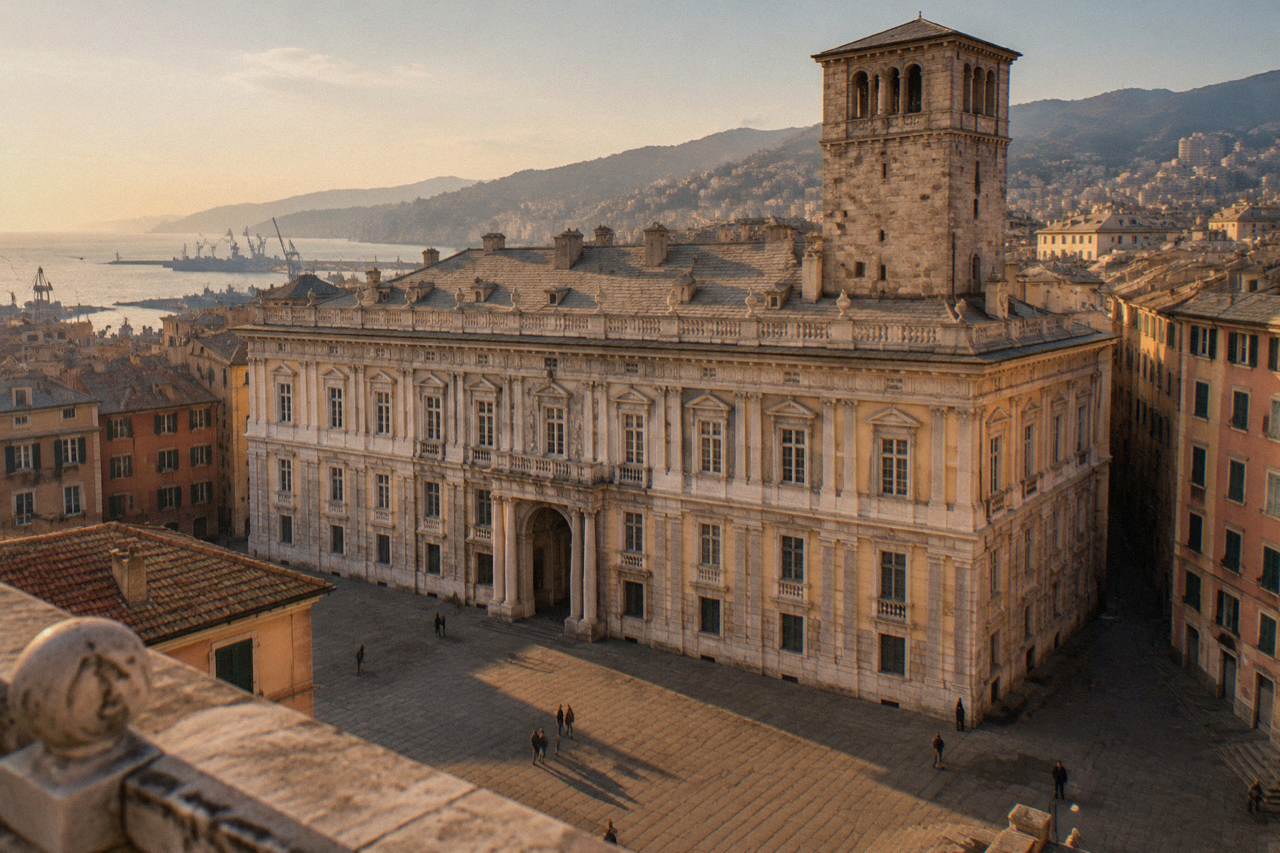
Palazzo Ducale in Genoa is the former seat of government of the Republic of Genoa and now the city's principal exhibition palace. World Press Photo 2026 runs there to 8 December 2026, and the exhibition Renoir, Monet, Toulouse-Lautrec, Cezanne opened on 15 October 2026. Hours and tickets are set per exhibition on the palace's own booking pages.
Palazzo Ducale stands in the heart of Genoa, the coastal city in Liguria, north-west Italy, a narrow strip of land between the Ligurian Sea and the Apennine hills. It was the seat of government of the aristocratic Republic of Genoa, the state that lasted until 1797, and its walls held the doge, the councils and the machinery of a maritime power. Today the palace is the city's flagship exhibition venue, a few steps from Piazza De Ferrari, and its 2026 and 2027 programme is one of the strongest reasons to build a day around it. This guide sets out what the palace was, what runs there now, how the hours and tickets work, and how to reach it.
What Is Palazzo Ducale In Genoa?
Palazzo Ducale in Genoa is the former palace of the doges, the historic seat of government of the Republic of Genoa, the aristocratic republic that lasted until 1797 when Napoleonic occupation brought the Ligurian Republic into being. The palace stands beside Piazza Matteotti, a short walk from Piazza De Ferrari, and today it functions as the city's principal venue for major temporary exhibitions rather than as a single collection museum.
The Republic of Genoa governed itself through councils and an elected doge, and the palace was the container for that government. When the republic ended in 1797 the building kept its name and its ceremonial weight, and the city later gave it a second life as a cultural venue. That second life is what a visitor meets now: the World Press Photo 2026 exhibition runs there to 8 December 2026, and the exhibition "Renoir, Monet, Toulouse-Lautrec, Cezanne" opened on 15 October 2026, with a closing date of 2 May 2027 reported by the palace's programme.
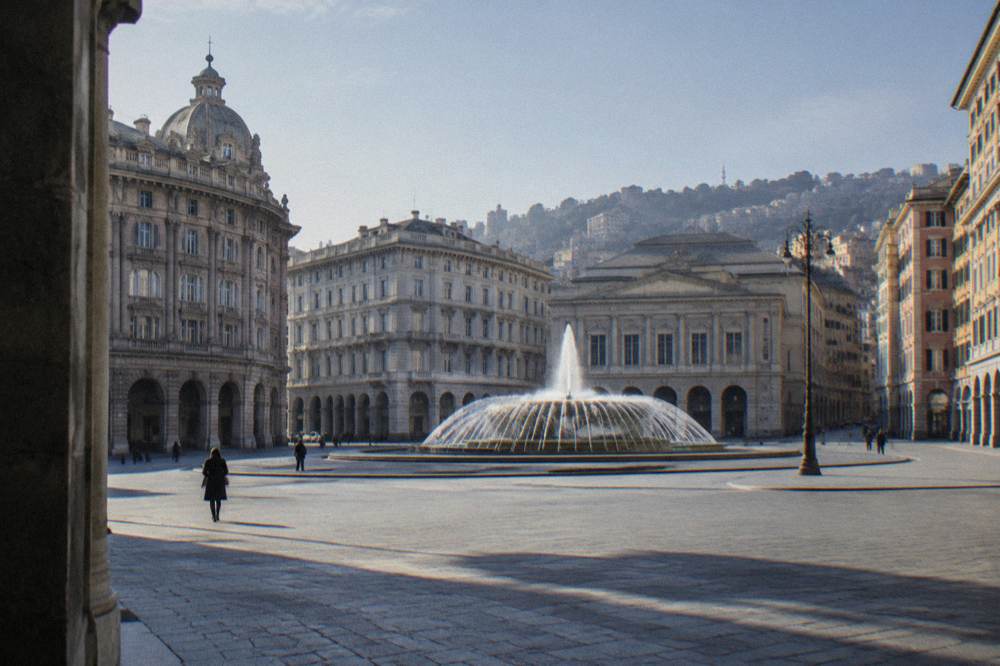
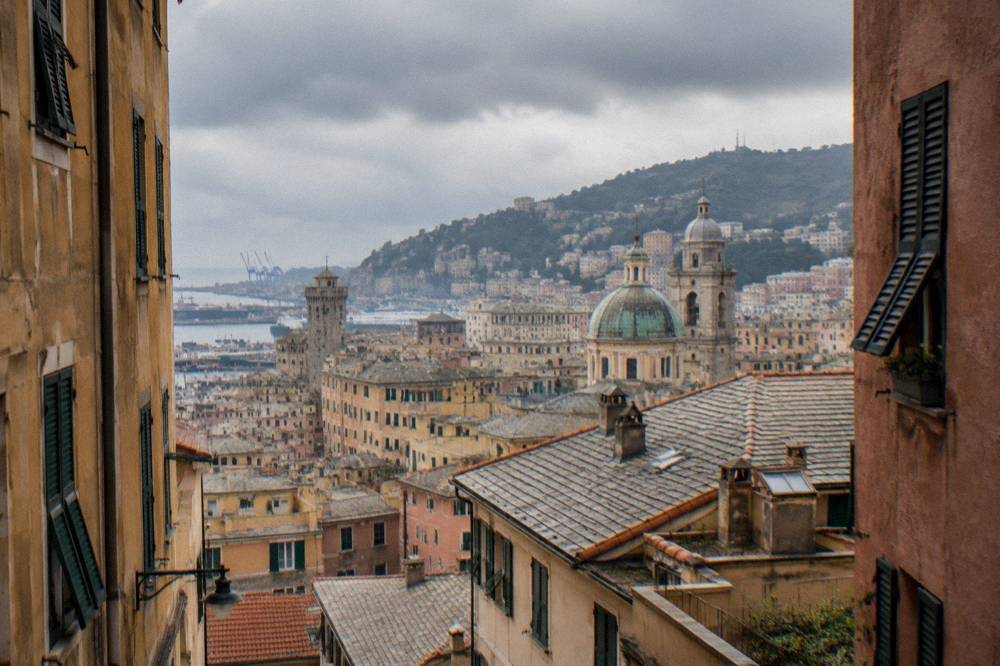
The palace sits at a natural junction of the city. Behind it rise the caruggi, the narrow lanes of an old town that covers 113 hectares and is described by the city's own tourism site as one of the largest medieval historic centres in Europe. Ahead of it lies Piazza De Ferrari, the fountain square that acts as Genoa's civic centre, and beyond that the shopping street Via XX Settembre. A visit slots easily into a walk that takes in the Cathedral of San Lorenzo and the Strade Nuove.
Genoa's wider context helps place the palace. The comune counted 566,247 residents at 1 January 2026, with 820,691 in the metropolitan city, and the UNESCO site "Genoa: Le Strade Nuove and the system of the Palazzi dei Rolli", inscribed in 2006, covers the 42 palaces that were on the Rolli lists of 1576, 1588, 1599, 1614 and 1664. Palazzo Ducale belongs to the older, governmental layer of the city rather than to that UNESCO system, and the two stories sit within ten minutes of each other on foot.
What Can You See At Palazzo Ducale In 2026 And 2027?
Two headline exhibitions anchor the palace's current programme: World Press Photo 2026, which runs to 8 December 2026, and "Renoir, Monet, Toulouse-Lautrec, Cezanne", which opened on 15 October 2026 with a reported closing date of 2 May 2027. Beyond the exhibitions, the palace itself is the sight, with its courtyard, its staircases and its tower forming the ceremonial core of the old Republic's seat of government.
The exhibition programme is the palace's main draw. The Renoir show pairs names that rarely share a building outside Paris, and the World Press Photo exhibition brings the year's awarded photojournalism to Genoa. Each exhibition sets its own hours on the palace's pages, and the exhibition pages also carry the ticket options, so the practical step before any visit is a check of the listing for the specific show running on the date.
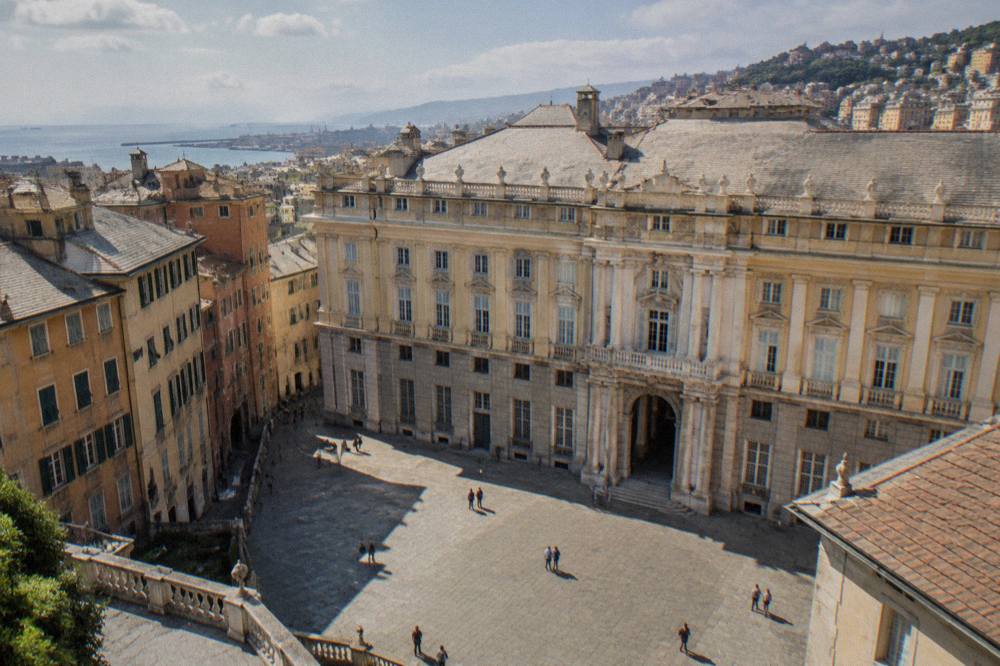
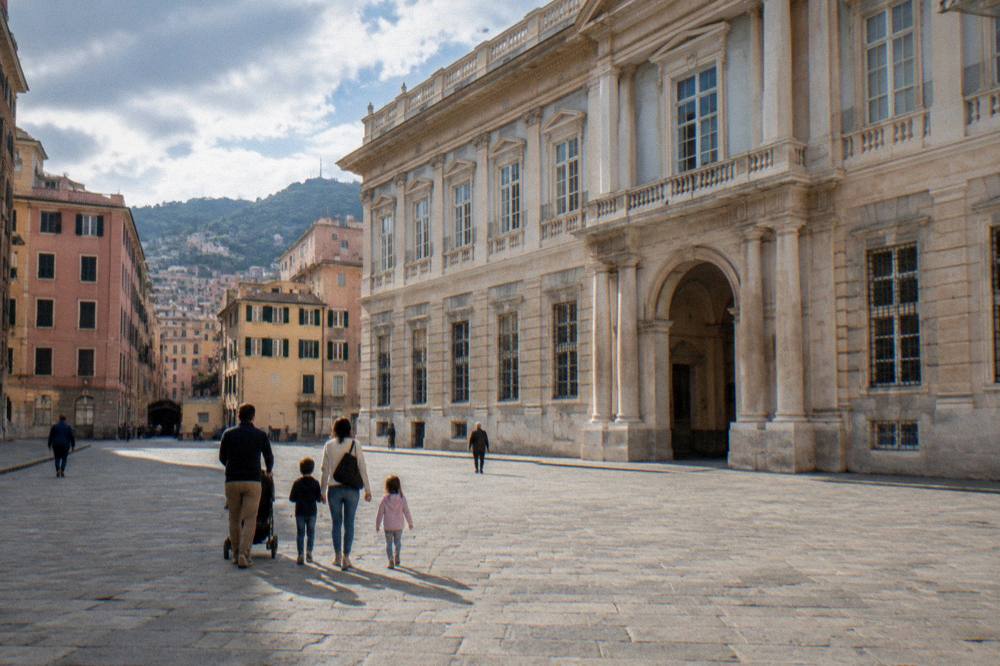
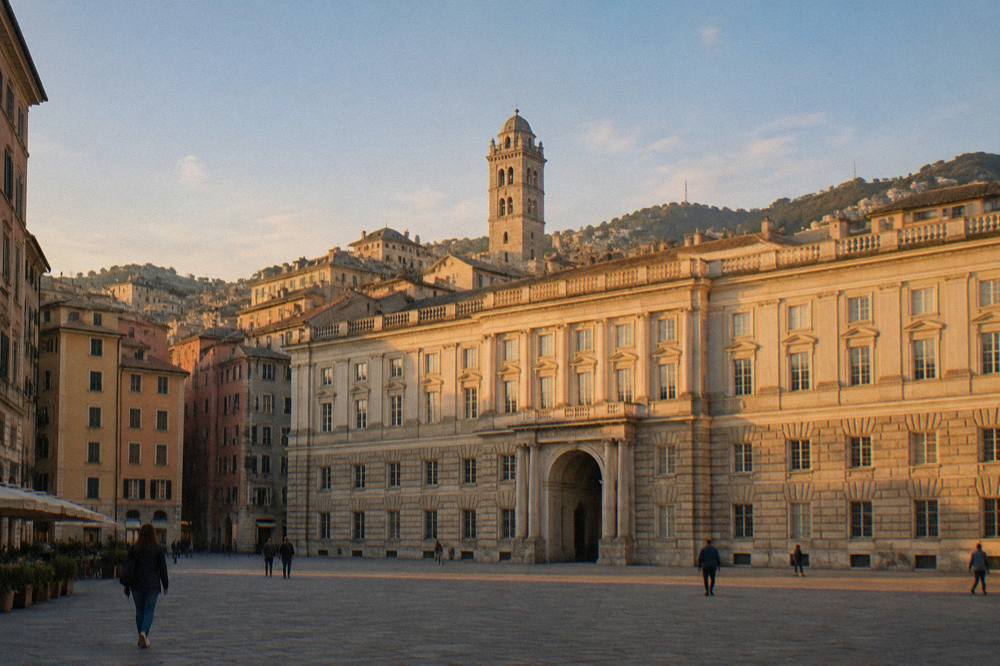
The palace as architecture rewards attention in its own right. This was the building where the doge lived and where the republic's councils met, and its public spaces carry that scale. The tower above the roofline is the palace's landmark feature on the skyline between the old town and the modern centre, and the courtyard works as an entrance sequence that separates the street noise of the centre from the exhibition floors.
For depth on the governmental story, the nearby Palazzo San Giorgio page covers the other great institutional building of the republic, the one tied to Genoa's maritime banking power. Between them, the two palaces explain how a small coastal republic governed an empire of ports and fleets until 1797.
The Palace's 2026 To 2027 Programme At A Glance
| Exhibition | Opening | Closing | Source |
|---|---|---|---|
| World Press Photo 2026 | 2026 season | 8 December 2026 | Running |
| Renoir, Monet, Toulouse-Lautrec, Cezanne | 15 October 2026 | 2 May 2027 (reported) | Running |
How Much Do Palazzo Ducale Tickets Cost?
Tickets for Palazzo Ducale are sold per exhibition rather than as a single palace entry, and prices are set on the palace's own booking pages for each show, so the figure to trust is the one on the booking page for the exhibition running on the date of the visit. The Genoa Museum Card, at 24 EUR for 24 hours and 45 EUR for 48 hours under the 2026 rates, covers 28 city museums and is the one fixed city-wide pass to compare against a single exhibition ticket.
The per-exhibition model matters because the palace is not a single-collection museum with one permanent price. A World Press Photo ticket and a Renoir ticket are separate products with separate pricing, and bundled or reduced options, where they exist, appear on the exhibition's own booking page. Checking that page is the reliable way to compare a single-show ticket against the card.
The Genoa Museum Card is the city-wide alternative. The 2026 rates are 24 EUR for the 24-hour card, 45 EUR for the 48-hour card, 60 EUR annual, 50 EUR for residents and 25 EUR for students, and the card covers 28 city museums, 19 municipal and 9 others. Only the "+bus" variants of the card include buses, and no card variant covers Volabus, Navebus or trains, so transport and museums are priced separately unless the specific variant says otherwise.
For visitors planning several museums in one or two days, the arithmetic is straightforward: list the museums, compare their individual tickets where published, and set that total against 24 or 45 EUR. The card pairs naturally with the Musei di Strada Nuova, whose own combined ticket with the Museo di Sant'Agostino is 14 EUR full and 9 EUR reduced, and with the city's other civic museums described in the things to do in Genoa overview.
What Are The Opening Hours At Palazzo Ducale?
Opening hours at Palazzo Ducale follow the exhibition timetable rather than one fixed palace schedule: the Renoir exhibition's listed hours run Monday 14:30 to 19:30, Tuesday to Thursday and Sunday 10:00 to 19:30, and Friday and Saturday 10:00 to 20:00, and each show's hours appear on its own exhibition page, so the day of the week decides both the opening time and the evening extension.
The pattern to plan around is the Friday and Saturday extension. On those two days the Renoir show lists a 20:00 close, an hour later than the midweek norm, which turns a palace visit into an evening option after a day in the old town or the Porto Antico. Monday is the short day, with the listed afternoon opening at 14:30, so Monday morning belongs elsewhere in the city.
The Monday habit has a wider use in Genoa. The Musei di Strada Nuova run their winter timetable from 28 September 2026 to 18 April 2027, open daily 10:00 to 18:30, but on Mondays only Palazzo Rosso can be visited, and they close on a RED weather alert. A Monday itinerary therefore works best built around Palazzo Ducale's afternoon opening, the Cathedral of San Lorenzo and the outdoor city.
Timetables are seasonal things in Genoa, and exhibition-driven venues change hours with each show. The practical rule is to read the listing for the exhibition dated on the ticket, not a general palace page, and to note that the last entry can sit well before the closing time on some timed-entry exhibitions.
A Monday To Sunday Planning Frame For A Palace Visit
| Day | Renoir exhibition hours (listed) | Best paired sight |
|---|---|---|
| Monday | 14:30 to 19:30 | Musei di Strada Nuova, Palazzo Rosso only in winter |
| Tuesday to Thursday | 10:00 to 19:30 | Cathedral of San Lorenzo and the caruggi |
| Friday | 10:00 to 20:00 | Via XX Settembre and the evening city |
| Saturday | 10:00 to 20:00 | Piazza De Ferrari and the old town |
| Sunday | 10:00 to 19:30 | Parchi di Nervi or the seafront |
How Do You Get To Palazzo Ducale?
Palazzo Ducale sits behind Piazza De Ferrari in central Genoa, reachable on the AMT network with the 2.00 EUR ticket valid 110 minutes across the whole metropolitan network, with the metro stations De Ferrari and San Giorgio both listed stops on the 7 km, 8-station Brin to Brignole line, and with the two main rail terminals, Genova Piazza Principe and Genova Brignole, feeding the centre from either side.
The AMT ordinary ticket is the basic unit of city transport: 2.00 EUR for 110 minutes on the whole Citta Metropolitana network, 2.20 EUR integrated with Trenitalia, 5.00 EUR for a 5-hour ticket and 20.00 EUR for a carnet of eleven. The lifts and the Sant'Anna funicular charge 1.20 EUR a ride. There is no single Volabus fare from the airport: the airport bus requires the Met Daily 24-hour ticket at 10.00 EUR, which covers the full AMT network.
The metro line is short but well placed for the palace. The line runs 7 km with 8 stations, Brin, Dinegro, Principe, Darsena, San Giorgio, Sant'Agostino, De Ferrari and Brignole, and the extensions beyond both ends are not yet open in October 2026, with Canepari reported as targeted forJune 2027 and Martinez for December 2028. De Ferrari station puts a visitor a short walk from both the fountain square and the palace.
Arriving by train, the choice is between Genova Piazza Principe and Genova Brignole, both on the metro line, and the Genoa train stations guide covers the trade-offs. From the airport, the fixed taxi fare to the city centre is 25 EUR per car, 30 EUR for over four people, plus 2 EUR at night and on holidays, while the Volabus connects the airport with Principe, De Ferrari and Brignole in about 30 minutes on the Met Daily ticket.
Getting To The Palace: Fares That Apply
| Option | Fare | Notes |
|---|---|---|
| AMT ordinary ticket | 2.00 EUR | 110 minutes, whole network |
| AMT + Trenitalia integrated | 2.20 EUR | 110 minutes, includes limited rail |
| Met Daily 24h | 10.00 EUR | Full network incl. Volabus, required for the airport bus |
| Lifts and Sant'Anna funicular | 1.20 EUR | Per ride |
| Airport taxi to centre | 25 EUR per car | 30 EUR over 4 people, +2 EUR night/holiday |
A hop-on hop-off bus ticket is the alternative that links the palace with the rest of the city in one loop. The City Sightseeing bus circles the centre and the seafront, and its listing carries the current price and availability, Check availability for the dates of a visit.
What Was The Republic Of Genoa, And Why Does It Matter Here?
The Republic of Genoa was an aristocratic republic that governed the city and its maritime empire until 1797, when Napoleonic occupation replaced it with the Ligurian Republic, and Palazzo Ducale was the seat of that government, housing the doge and the councils that ran the state. The republic's other institutional monument, Palazzo San Giorgio, grew from the commune's debt office into one of the medieval world's great banking powers.
The dates frame everything. The republic's end in 1797 is the fixed point: after it, Genoa passed through the Ligurian Republic into the French orbit and eventually into united Italy. The palace survived each transition as the symbolic centre of the city's self-government, which is why it carries the adjective "ducale" and why its ceremonial rooms were built to impress visiting envoys as much as to house daily administration. The wider set of guides lives on Genoa Travel Guide.
Genoa's later ceremonial history is thin on the ground by comparison. The city was European Capital of Culture in 2004, shared with Lille, and European Capital of Sport in 2024. Its modern identity rests on the port, which handles 2.4 million cruise passengers and 2.6 million ferry passengers a year in the latest port figures, and on the 1992 redevelopment of the Porto Antico by Renzo Piano, which produced the Aquarium and the Bigo lift.
The republic's legacy is visible in two registers: the governmental architecture around Palazzo Ducale, and the aristocratic residential architecture of the Strade Nuove, where the Palazzi dei Rolli lined the lists drawn up between 1576 and 1664 for state visits. The UNESCO inscription of 2006 recognised the second register, and the Palazzi dei Rolli page unpacks the system.
How Does Palazzo Ducale Compare With Genoa's Other Palaces?
Palazzo Ducale is the political palace, the seat of the republic's government, while Genoa's other great palaces divide between the aristocratic residences of the Strade Nuove, the Musei di Strada Nuova among them, and the later royal and princely houses such as Palazzo Reale and Villa del Principe, so the comparison is one of function rather than rank: government, residence and display each got their own building.
The Strade Nuove group, Palazzo Rosso, Palazzo Bianco and Palazzo Doria-Tursi, now houses the civic art collections, with Paganini's violin "Il Cannone", built in Cremona in 1743 by Bartolomeo Giuseppe Guarneri, displayed at Palazzo Doria-Tursi. Their winter timetable runs daily 10:00 to 18:30 from 28 September 2026 to 18 April 2027, Mondays limited to Palazzo Rosso, with a combined ticket of 14 EUR full and 9 EUR reduced including the Museo di Sant'Agostino.
Palazzo Reale, on Via Balbi, is the royal house of the city's later story, and Villa del Principe, the Villa del Principe page covers it, was the Doria seat of display and power. Each answers a different question about how Genoa's elites lived, governed and impressed, and none duplicates the Ducale's role as the state's own building.
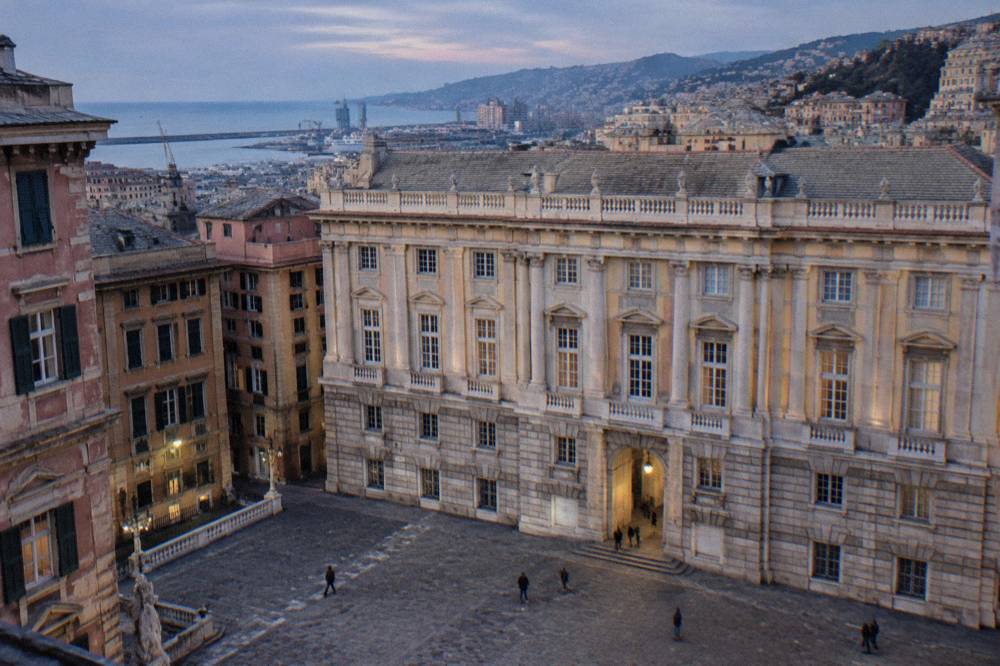
A palace itinerary would put the Ducale exhibition visit on its exhibition hours, the Strada Nuova museums on a non-Monday in winter, and Palazzo Reale on a check of its official site, without stated hours or prices, before visiting. The distances involved are small: everything in this comparison sits within the central strip between the old town and the Strade Nuove.
What Else Is Near Palazzo Ducale?
The sights within a short radius of Palazzo Ducale include Piazza De Ferrari directly ahead, the Cathedral of San Lorenzo and the caruggi behind, the Strade Nuove and the Musei di Strada Nuova uphill, and the Porto Antico with the Aquarium of Genoa, the Bigo lift and the Galata Museo del Mare toward the water, a cluster dense enough that the palace anchors a full day without transport beyond a single AMT ticket.
The ecclesiastical core comes first behind the palace. The Cathedral of San Lorenzo, with its Museo del Tesoro open Monday to Saturday 09:00 to 12:00 and 15:00 to 18:00 and closed Sunday, sits inside the old town's 113 hectares of lanes. The Columbus story is in the same quarter: the Casa di Colombo is the house where Columbus lived between 1455 and 1470, the family having moved in when he was four.
Downhill lies the sea. The Porto Antico holds the Aquarium of Genoa, open 365 days a year with fixed-date adult tickets from 26.00 EUR under dynamic pricing, children 4 to 12 from 16.00 EUR and under-4s free, and the combined Aquarium, Biosfera and Bigo ticket from 37.00 EUR for an adult. The Bigo panoramic lift alone is listed at 6.00 EUR adult and 5.00 EUR reduced, and the Galata Museo del Mare, open 10:00 to 19:00, covers 12,000 square metres over five levels and 31 rooms.
Up from the centre, the view points complete the circle. The Spianata Castelletto is reached by the Castelletto Levante lift, running daily 06:40 to 24:00 at 1.20 EUR a ride, and the Zecca-Righi funicular runs the same daily hours. The whole set is legible from above before it is walked below.
A One-Walk Sequence From The Palace To The Sea
| Stop | Sight | What It Holds |
|---|---|---|
| 1 | Piazza De Ferrari | The fountain square, Genoa's civic centre |
| 2 | Cathedral of San Lorenzo | Treasury museum, closed Sunday |
| 3 | The caruggi | 113 hectares of medieval old town |
| 4 | Porto Antico | Aquarium, Biosfera, Bigo lift |
| 5 | Galata Museo del Mare | 12,000 m2 over 5 levels and 31 rooms |
When Is The Best Time To Visit Palazzo Ducale?
The best time to visit Palazzo Ducale is tied to its exhibition calendar rather than to the weather: World Press Photo 2026 runs to 8 December 2026 and the Renoir, Monet, Toulouse-Lautrec, Cezanne exhibition is reported to run to 2 May 2027, while the official 1971-2000 normals for Genoa Sestri put October's mean rainfall at 171.3 mm against July's 24.2 mm, which makes the palace's indoor programme especially useful in the October to November rain peak.
The climate record gives the frame. The official 1971-2000 normals for Genoa Sestri, the Aeronautica Militare station at the airport about 7 km west of Piazza De Ferrari, give mean daily highs of 27.7 C in August against 11.5 C in January, and a rain pattern that peaks in October at 171.3 mm and bottoms in July at 24.2 mm, with September at 136.4 mm and November at 108.8 mm either side of the peak. An exhibition palace is the natural answer to those autumn months.
The events calendar reinforces autumn. The Festival della Scienza ran 22 October to 1 November 2026 with about 250 events under the keyword "Prospettive", and the autumn Rolli Days ran 16 to 18 October 2026 with free entry to palaces that normally require booking. The Salone Nautico filled 1 to 6 October 2026, and its 67th edition is set for 30 September to 5 October 2027. The next Euroflora is 2028.
Spring works on the same logic in reverse: the Renoir exhibition's reported run to May 2027 overlaps the milder months, when mean highs move from 14.6 C in March to 20.5 C in May, letting a visitor pair an exhibition morning with the parks of Nervi or the Corso Italia promenade in the afternoon.
Monthly Climate At Genova Sestri (Official 1971-2000 Normals)
| Month | Mean High C | Mean Low C | Rain mm |
|---|---|---|---|
| Jan | 11.5 | 5.5 | 101.8 |
| Feb | 12.2 | 6.0 | 74.0 |
| Mar | 14.6 | 8.2 | 81.7 |
| Apr | 16.8 | 10.5 | 88.0 |
| May | 20.5 | 14.2 | 72.4 |
| Jun | 23.9 | 17.6 | 58.2 |
| Jul | 27.3 | 20.9 | 24.2 |
| Aug | 27.7 | 21.0 | 69.3 |
| Sep | 24.4 | 17.9 | 136.4 |
| Oct | 20.0 | 13.8 | 171.3 |
| Nov | 15.1 | 9.2 | 108.8 |
| Dec | 12.5 | 6.5 | 93.1 |
Can You Visit Palazzo Ducale With Kids?
Yes, Palazzo Ducale works as a family visit because it is an exhibition venue in the middle of the city rather than a remote site, and its position next to Piazza De Ferrari puts it on the natural route between the old town and the Aquarium of Genoa, which is open 365 days a year with children aged 4 to 12 from 16.00 EUR and under-4s free, making a palace-plus-aquarium day the standard family combination.
The pairing logic is simple. The palace delivers an hour or two of paintings or photography in a grand container, the aquarium delivers the guaranteed child pleaser, and both sit within the central strip. The Aquarium of Genoa page carries the full ticket detail, including the Open Flexi one-year-validity option reported at 38 EUR adult, 35 EUR reduced and 30 EUR for 4 to 12s, which suits families whose dates are not fixed.
The transport arithmetic stays flat for children in arms of the same tickets: one 2.00 EUR AMT ticket covers 110 minutes of network, and the Met Daily at 10.00 EUR covers a full day including the Volabus from the airport. The Castelletto Levante lift at 1.20 EUR a ride makes a quick panorama an inexpensive add-on to a palace visit, and the funiculars hold the same appeal for children who like vehicles as much as art.
Rain days bend the plan toward the palace. Genoa's indoor offer is unusually deep for a city of its size: the Strada Nuova museums, the Galata Museo del Mare with its 31 rooms, the Museo del Tesoro at the cathedral and the palace exhibitions together cover several wet afternoons, and October's 171.3 mm mean rain in the official normals makes that depth count.
How Does A Palace Visit Fit Into A Day Trip To Genoa?
A Palazzo Ducale visit fits a Genoa day trip as the cultural anchor between arrival and the old town, because the palace sits between the two rail terminals' catchments, keeps exhibition hours that include evening openings on Friday and Saturday until 20:00, and pairs with either the Piazza De Ferrari quarter or the Porto Antico without another ticket beyond a single 2.00 EUR AMT ride or a walk.
Day-trippers arrive from two directions. From Milan the train takes about 1 hour 30 to 2 hours with fares from about 11 EUR, and from Turin about 1 hour 36 to 2 hours 18. The port adds its own traffic: 2.4 million cruise passengers a year in the latest port figures, with terminals at Ponte dei Mille and Andrea Doria for cruises and Calata Chiappella, Ponte Caracciolo and Ponte Colombo for ferries.
The shape of a day is the same from either source. A morning exhibition slot at the palace, an early afternoon in the caruggi and the cathedral, and a late afternoon at the Porto Antico or the Spianata Castelletto covers the centre without rushing. Cruise passengers on a tighter clock trim the list to the palace, the cathedral and one viewpoint, which is why the guided walking options on the site are built around that sequence.
For those planning around the boat show, the Salone Nautico's 67th edition runs 30 September to 5 October 2027, and the palace's exhibition programme continues in parallel, so an autumn 2027 visit can hold both. The things to do in Genoa roundup carries the full day-trip framing.
Day-Trip Anchors Around The Palace
| Arriving From | Journey Time | Fares From | Palace Role |
|---|---|---|---|
| Milan | About 1h30 to 2h | About 11 EUR | Morning exhibition slot |
| Turin | About 1h36 to 2h18 | Low teens EUR | Morning exhibition slot |
| Cruise terminal | Walk or one AMT ride | 2.00 EUR | Midday anchor |
| Airport (Volabus) | About 30 min | Met Daily 10.00 EUR | First stop after arrival |
What Should You Know Before You Go?
Before visiting Palazzo Ducale, check the exhibition listing for the show running on the date, because hours, last entry and tickets are set per exhibition, and remember the fixed figures that catch visitors out: the airport taxi is 25 EUR per car to the centre, and the Genoa Museum Card runs at 24 EUR for 24 hours and 45 EUR for 48 hours under the 2026 rates.
The tourist-tax line on the hotel bill is worth knowing too. The comune of Genoa's tourist-tax page sets 2.00 EUR per person per night at 1-star hotels, 2.50 EUR at 2-star, 4.00 EUR at B&Bs and other extra-hotel accommodation and 2.00 EUR at hostels and campsites, with 3, 4 and 5-star rates reported at 3, 4 and 5 EUR, and only the first eight consecutive nights taxed. Minors under 14 are exempt.
The city's information desks help on arrival. The IAT Garibaldi at Via Garibaldi 12r opens daily 09:00 to 18:20, and the IAT Porto Antico at Ponte Spinola daily 10:00 to 17:00. The emergency number across Italy is 112. The old town around the palace is a walking environment of lanes rather than a grid of avenues, and the Mercato Orientale near Via XX Settembre is the food stop en route.
Two seasonal notes close the practical list. Genoa's bathing-water picture is posted by ARPAL, whose 2026 classification reports Boccadasse as poor and Nervi as good, so swimming plans follow the posted classes rather than assumptions. And the Lanterna, the lighthouse built in 1128 and rebuilt in 1543, standing 117 m above the sea and billed as the tallest lighthouse in the Mediterranean, leaves visitors to check its official site before planning a visit.
Common Questions About Palazzo Ducale In Genoa
What is Palazzo Ducale in Genoa?
It is the former palace of the doges and the historic seat of government of the Republic of Genoa, the state that lasted until 1797. Today it is the city's principal venue for major temporary exhibitions, including World Press Photo 2026 to 8 December 2026 and the Renoir, Monet, Toulouse-Lautrec, Cezanne exhibition that opened on 15 October 2026.
How much do Palazzo Ducale tickets cost?
Tickets are sold per exhibition and priced on the palace's own booking pages for each show, so the figure depends on the exhibition running on the date. The Genoa Museum Card, at 24 EUR for 24 hours and 45 EUR for 48 hours under the 2026 rates, covers 28 city museums and is the fixed city-wide pass to compare against a single ticket.
What are the Palazzo Ducale opening hours?
Hours follow the exhibition timetable. The Renoir exhibition lists Monday 14:30 to 19:30, Tuesday to Thursday and Sunday 10:00 to 19:30, and Friday and Saturday 10:00 to 20:00, and each show's hours appear on its own exhibition page.
How do I get to Palazzo Ducale?
The palace sits behind Piazza De Ferrari in central Genoa. A 2.00 EUR AMT ticket is valid 110 minutes on the whole network, the metro's De Ferrari and San Giorgio stations sit on the 8-station Brin to Brignole line, and both rail terminals, Genova Piazza Principe and Genova Brignole, feed the centre.
Is Palazzo Ducale worth visiting with kids?
Yes, as an exhibition venue in the middle of the city it pairs easily with the Aquarium of Genoa, open 365 days a year with children aged 4 to 12 from 16.00 EUR and under-4s free, making a palace-plus-aquarium day the standard family combination.
What is near Palazzo Ducale?
Piazza De Ferrari, the Cathedral of San Lorenzo, the caruggi of the 113-hectare old town, the Strade Nuove museums and the Porto Antico with the Aquarium, the Bigo lift and the Galata Museo del Mare all sit within the central strip around the palace.