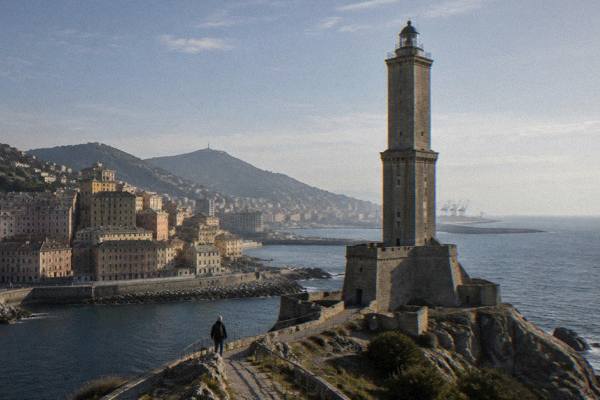
La Lanterna: Genoa's 1543 Lighthouse And Its Museum
A 77 m stone tower on a 40 m rock at the western edge of Genoa's port, rebuilt in 1543 and billed as the tallest lighthouse in the Mediterranean.
Short answer
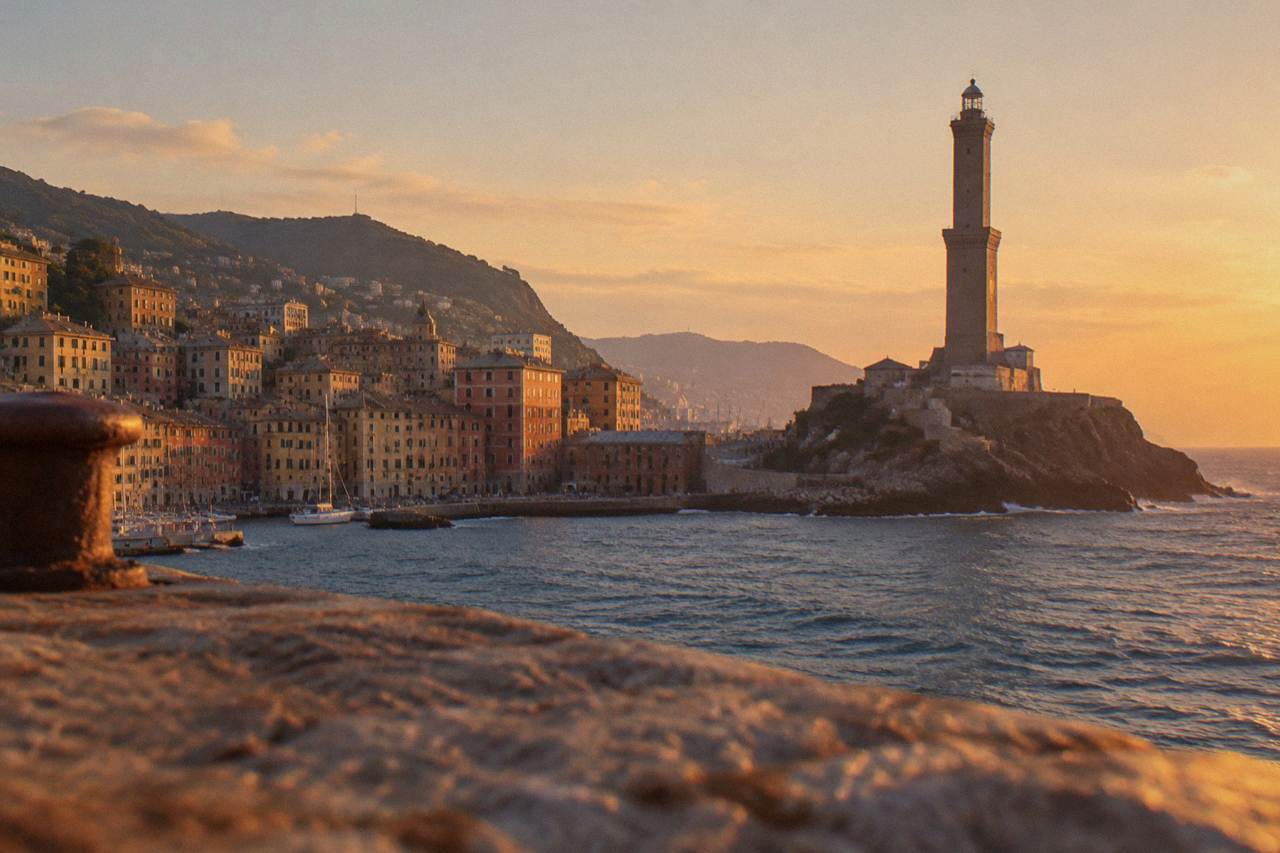
The Lanterna is Genoa's lighthouse, first built in 1128 and rebuilt in 1543. Its tower is 77 m tall on a 40 m rock, 117 m above the sea, with 172 steps to the first terrace, and it is billed as the tallest lighthouse in the Mediterranean.
The Lanterna is the lighthouse of Genoa, the coastal city in Liguria, north-west Italy, standing at the edge of its working port on the Ligurian Sea. It is a 77 m tower raised on a 40 m rock, so that its light sits 117 m above the sea. First built in 1128 and rebuilt in 1543, it is billed as the tallest lighthouse in the Mediterranean, and it remains the symbol the city prints on its own identity. This page gathers what is documented about the tower, its history, its small museum and the practical context for a visit, in the words of the sources that record them.
Genoa is a long, narrow strip of city wedged between the sea and the Apennine hills, with a major working and ferry port running along its waterfront. The Lanterna closes that waterfront to the west, where the port meets the open Ligurian Sea. The city counts 566,247 residents in the comune at 1 January 2026, with 820,691 in the metropolitan city, and the port and its lighthouse sit at the hinge between the two halves of that population. For orientation across the rest of the city, the things to do in Genoa overview maps the sights from the Porto Antico inland.
How Tall Is The Lanterna In Genoa?
The Lanterna's tower is 77 metres tall and stands on a rock about 40 metres high, which puts the structure 117 metres above the sea. There are 172 steps up to the first terrace. It is billed as the tallest lighthouse in the Mediterranean, a description carried on the city's own tourism pages rather than a ranking this site awards. First built in 1128, the tower took its present form in the 1543 rebuild.
Those figures are the ones the sources state plainly. The 77 m measurement is the tower itself. The 40 m is the rock of San Benigno it stands on. Add them and you get the 117 m that the tourism site gives as the height above the sea. The 172 steps lead to the first terrace, which is the level visits are written about.
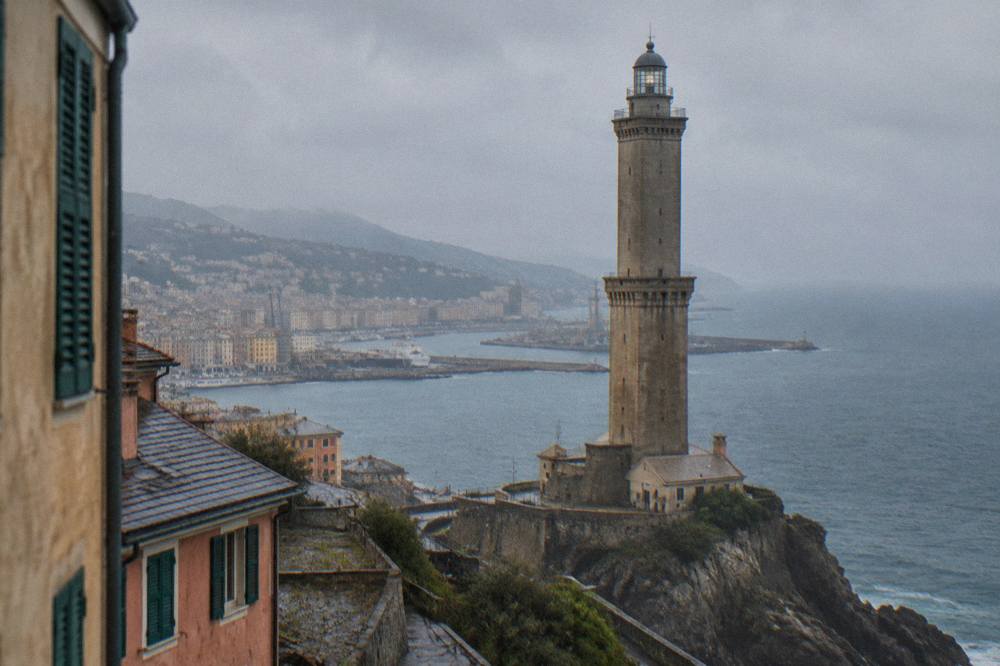
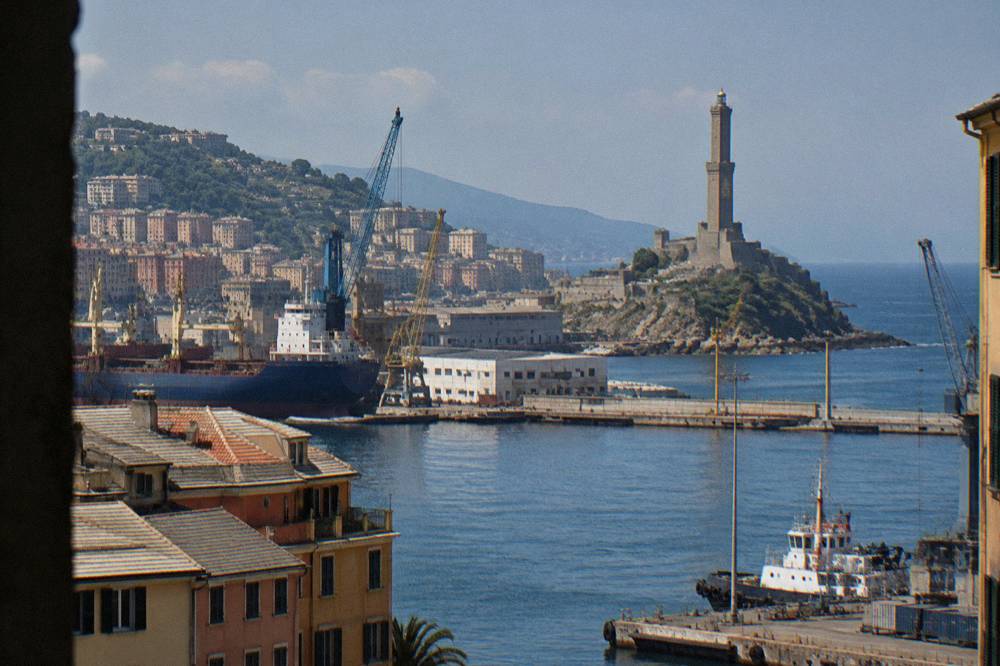
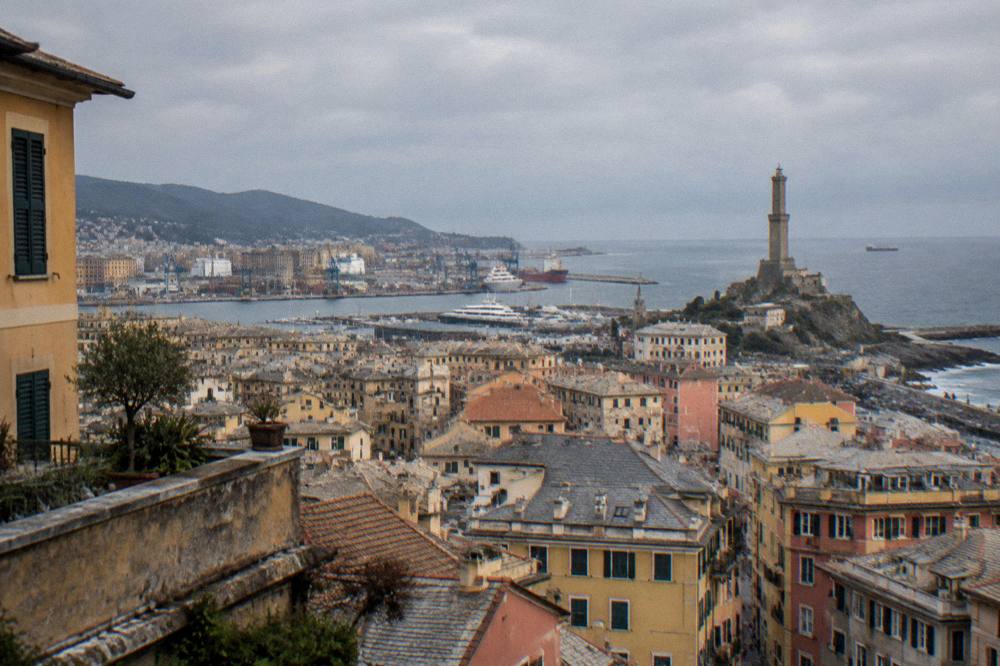
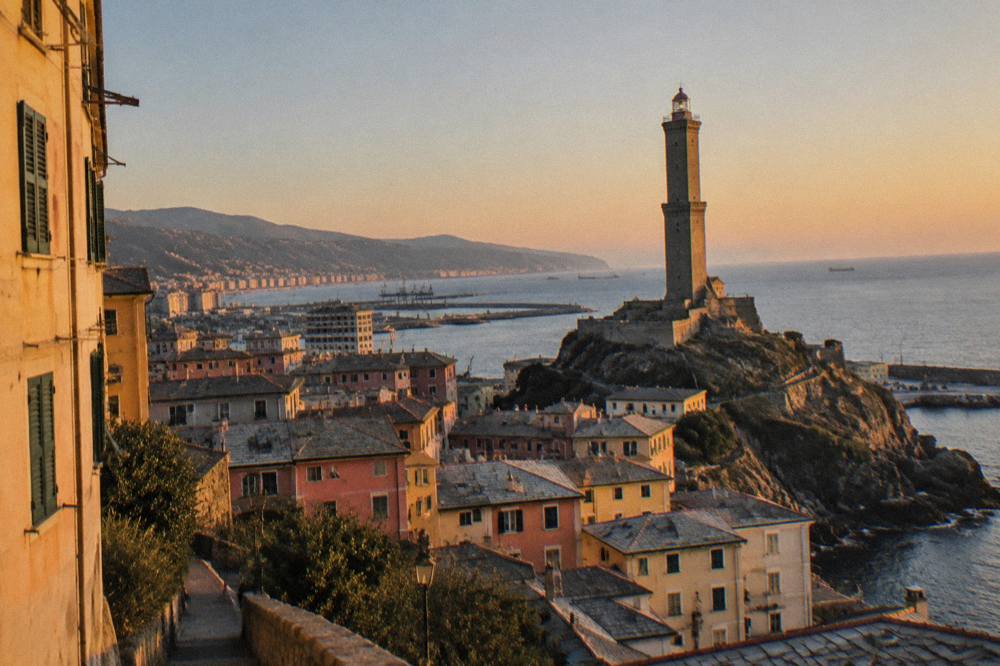
What the numbers mean in practice is that the Lanterna reads as two structures stacked: rock, then tower. The profile this produces is the silhouette that appears on Genoa's football club crest, on souvenirs and in the city's own branding, and it is the reason the tower is treated as the emblem of Genoa rather than merely a navigation aid. The rock and the tower together are what you see from ships entering the port, from the ferry terminals at Ponte dei Mille, and from points along the waterfront east of it. Few landmarks in any port city announce themselves this way, as a single stacked form visible from every approach by sea.
| Measurement | Figure |
|---|---|
| Tower height | 77 m |
| Height of the rock | 40 m |
| Total height above the sea | 117 m |
| Steps to the first terrace | 172 |
| First built | 1128 |
| Rebuilt | 1543 |
When Was The Lanterna Built And Rebuilt?
The Lanterna was first built in 1128 and rebuilt in 1543, and those two dates frame every documented chapter of its story. The tower that stands today is the 1543 structure, raised on the rock of San Benigno at the western approach to the port. The city's own tourism pages record both dates and both figures, together with the 117 m height and the 172 steps.
The date 1128 makes the Lanterna one of the earliest documented lighthouses on this coast, though the sources this site reports do not dwell on superlatives beyond the "tallest in the Mediterranean" billing. What they record is the sequence: a tower from 1128, and the rebuilt tower of 1543 that survives. Between those dates sits the whole span of the Republic of Genoa, the aristocratic republic that lasted until 1797, whose shipping needed the light at the port mouth.
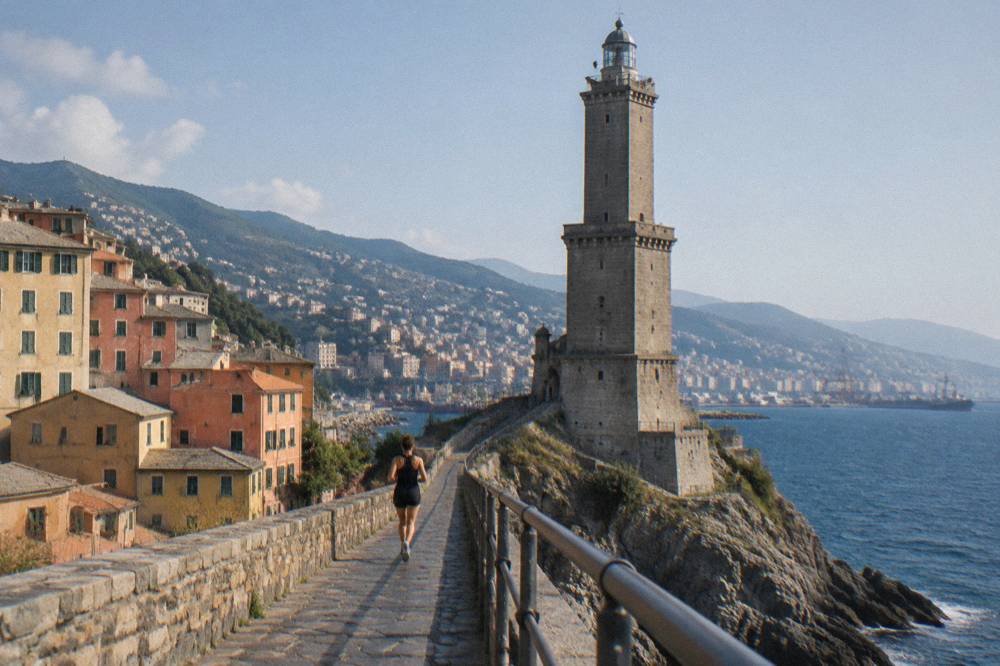
The 1543 rebuild belongs to a Genoa that was still a republic with a merchant fleet across the Mediterranean. The port the tower guarded has since become a modern working and ferry port, with cruise passengers numbering 2.4 million a year in the port's own published figures and ferry passengers 2.6 million, but the light still marks the same western entry it marked for the republic's galleys. For more on the city behind the tower, the history of Genoa page sets out the republic's story through its most famous resident.
The tower is not the only 1128-or-later structure on the waterfront worth tracing. The Porto Antico, redeveloped by Renzo Piano for the 1992 Columbus Expo, sits at the other end of the port from the Lanterna, and the Galata Museo del Mare covers 12,000 square metres over 5 levels and 31 rooms on the sea theme. Read together, the lighthouse at one end and the sea museum at the other bracket the whole maritime story of the city between them.
What Can You See At The Lanterna And Its Museum?
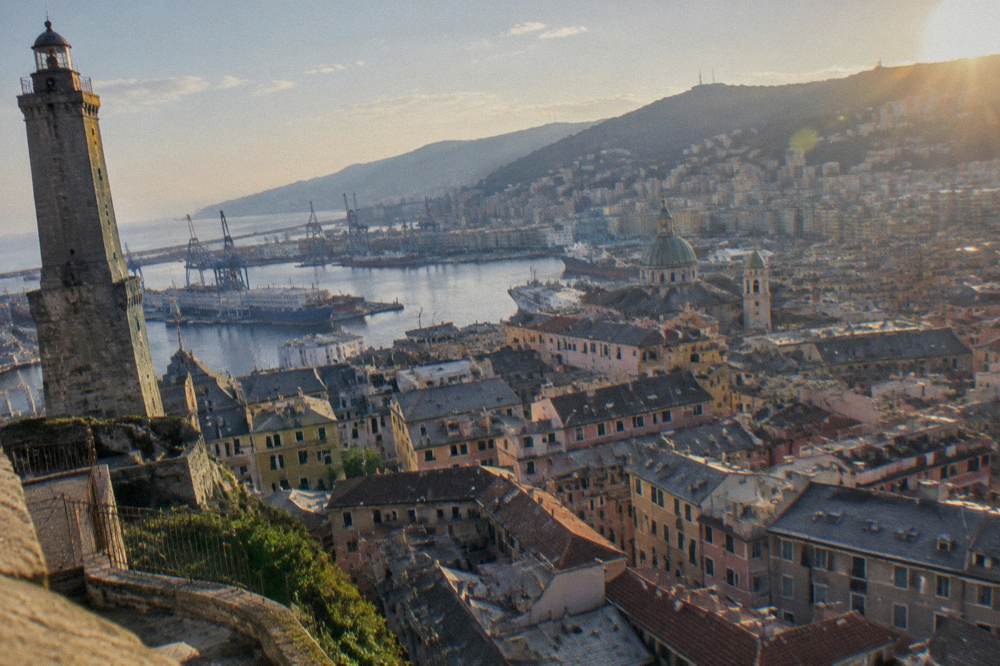
The documented visit to the Lanterna centres on the tower itself, the 172 steps to the first terrace, and the small museum at its base that tells the lighthouse's history. What the sources describe is a monument visit rather than a long museum day: the tower, the terrace view over the port and the city, and the museum's displays on the light and those who kept it. The tower and museum together are managed as one visitor attraction.
The museum at the foot of the tower covers the history of the Lanterna and of lighthouse keeping in Genoa. The visit climbs the tower's stair to the first terrace, from which the view takes in the port, the city stretched along the coast, and on clear days the coastline toward the west. The exact opening days and hours, and the admission prices, change with the season and with events, so confirm them on the attraction's own page before setting out.
An entry ticket for the Lanterna can also be booked ahead through the operator's live listing: Check availability. Booking ahead is one way around checking opening days at the gate, since a prebooked slot carries its own date. The listing states its own terms.
For visitors building a fuller port-and-city day, the Lanterna pairs naturally with sights along the same waterfront. The Bigo panoramic lift at the Porto Antico lifts an adult 6 EUR for a shorter ride with harbour views, and the Spianata Castelletto terrace gives the classic panorama over the rooftops from the hills side instead of the sea side. Doing the Lanterna in the morning and the Porto Antico after leaves the afternoon for the museums inland.
To link the waterfront sights without the walking, book a hop-on hop-off tour ticket here.
| Sight on the waterfront | What it is | Documented figure |
|---|---|---|
| Lanterna | Lighthouse tower with museum at its base | 77 m tower, 117 m above the sea, 172 steps |
| Bigo panoramic lift | Lift at the Porto Antico, part of the 1992 Piano redevelopment | Adult 6 EUR, reduced 5 EUR |
| Porto Antico | Redeveloped old harbour by Renzo Piano, 1992 Columbus Expo | 1992 |
| Aquarium of Genoa | Open 365 days a year, dynamic pricing | Adult fixed-date from 26.00 EUR |
Where Is The Lanterna And How Do You Reach It?
The Lanterna stands on the rock of San Benigno at the western edge of Genoa's port, about 7 km in a straight line from the airport and roughly opposite end of the waterfront from the Porto Antico. It is reached on foot along the waterfront walkway, by metro to the Dinegro side of the port, or as part of a port-side visit combined with the ferry terminals.
The straight-line distances recorded for Genoa put the airport about 7 km from the city centre, Pegli about 10 km and Boccadasse about 4 km in the other direction. The metro runs 7 km with 8 stations from Brin to Brignole, and Dinegro is the station that serves the western port area where the Lanterna stands. A single AMT ticket costs 2.00 EUR and is valid 110 minutes on the whole network, which covers a metro ride plus a connecting bus within the same journey window.
Coming from the airport, the Volabus links the terminal with Genova Piazza Principe, De Ferrari and Genova Brignole in about 30 minutes. There is no single Volabus fare: the service requires the Met Daily 24-hour ticket at 10.00 EUR, which then covers the whole AMT network for the day. A taxi from the airport to the centre is a fixed 25 EUR per car, 30 EUR for more than four people, plus 2 EUR at night and on holidays. These are the airport figures the sources give; for the last leg to the tower itself, the metro and the waterfront walkway are the documented routes.
| Route or ticket | Figure | Notes |
|---|---|---|
| AMT single ticket | 2.00 EUR | Valid 110 minutes, whole network |
| AMT + Trenitalia integrated | 2.20 EUR | 110 minutes |
| Met Daily 24h | 10.00 EUR | Required for Volabus, covers full network |
| Airport taxi to centre, fixed | 25 EUR per car | 30 EUR over 4 people, +2 EUR night/holiday |
| Metro line | 7 km, 8 stations | Brin to Brignole, via Dinegro and Principe |
How Does The Lanterna Compare With Genoa's Other Landmarks?
The Lanterna is the tallest documented structure on Genoa's waterfront at 117 m above the sea, and the only one of the city's landmarks that is a working lighthouse. The Bigo lift, the Spianata Castelletto terrace and the Zecca-Righi funicular all give panoramas from different sides of the same city, but the Lanterna alone combines the climb with the port-side position at the water's edge.
Each viewpoint in Genoa offers a different axis. The Lanterna looks east along the port toward the city. The Spianata Castelletto, reached by the Castelletto Levante lift from Piazza Portello, looks down over the rooftops to the sea from the hills. The Bigo at the Porto Antico rises over the old harbour itself. The Zecca-Righi funicular, running daily 06:40 to 24:00 with seven stations over about 12 minutes, climbs to the high city behind the centre. A single ride on the lifts or the Sant'Anna funicular costs 1.20 EUR.
The comparison also runs historically. The tower's 1128 origin places it far earlier than the Strade Nuove and the system of the Palazzi dei Rolli, the UNESCO inscription of 42 palaces recognised in 2006, whose via Garibaldi and Musei di Strada Nuova page covers the palace side of the city. The Palazzo Ducale and the Cathedral of San Lorenzo carry the medieval and republic-era city inland, while the Lanterna carries its port. A Museum Card at 24 EUR for 24 hours or 45 EUR for 48 hours covers 28 city museums, which suits the palace-and-museum half of a stay, and the lighthouse visit stands separately from it.
| Genoa landmark | Type | Documented figure |
|---|---|---|
| Lanterna | Working lighthouse with museum | 117 m above the sea, 172 steps |
| Bigo panoramic lift | Harbour lift at the Porto Antico | Adult 6 EUR |
| Spianata Castelletto | Hillside terrace over the rooftops | Castelletto Levante lift, 57 m rise |
| Zecca-Righi funicular | Hillside funicular, 7 stations | Daily 06:40 to 24:00, about 12 min |
| Rolli palaces system | UNESCO World Heritage since 2006 | 42 palaces |
What Is The Weather Like Around The Lanterna?
The official 1971-2000 climate normals for Genoa Sestri, the station at the airport about 7 km west of the city, show mean daily highs from 11.5 C in January to 27.7 C in August, with the year's heaviest rain in October at 171.3 mm and the lightest in July at 24.2 mm. These are the station's published normals, and they describe the coast the Lanterna watches over.
The same table shows September wet at 136.4 mm and November at 108.8 mm, with the drier stretch running from June through August. Rain matters more on a tower climb than elsewhere in the city, and the port area closes its waterfront walkways on red weather alerts, as the Strada Nuova museums do for their own sites. The numbers below are the monthly means; a given day will sit either side of them.
| Month | Mean high C | Mean low C | Rain mm |
|---|---|---|---|
| Jan | 11.5 | 5.5 | 101.8 |
| Feb | 12.2 | 6.0 | 74.0 |
| Mar | 14.6 | 8.2 | 81.7 |
| Apr | 16.8 | 10.5 | 88.0 |
| May | 20.5 | 14.2 | 72.4 |
| Jun | 23.9 | 17.6 | 58.2 |
| Jul | 27.3 | 20.9 | 24.2 |
| Aug | 27.7 | 21.0 | 69.3 |
| Sep | 24.4 | 17.9 | 136.4 |
| Oct | 20.0 | 13.8 | 171.3 |
| Nov | 15.1 | 9.2 | 108.8 |
| Dec | 12.5 | 6.5 | 93.1 |
Can You Combine The Lanterna With Day Trips Along The Coast?
The Lanterna sits at the western gate of a coast that runs east to Camogli at about 18 km in a straight line, Portofino at about 25 km and the Cinque Terre at about 67 km, and west toward Pegli at about 10 km. Day trips in both directions start from Genoa's stations and ferry terminals, so the lighthouse works either as a first stop on arrival day or a last stop before departure.
East of the city, the Golfo Paradiso "Two Gulfs" tour runs from Genoa Porto Antico on listed dates through the season, stopping at Camogli, San Fruttuoso and Portofino, with fares reported at about 29 EUR for the full day and 21 to 26 EUR for a half day. The Camogli to San Fruttuoso boat runs year round. West of the city, the day trip options from Genoa cover the Riviera di Ponente towns, and Turin and Portofino round out the rail-linked choices. A morning at the tower still leaves an afternoon boat or train along either stretch of this coast.
| Destination from Genoa | Straight-line distance |
|---|---|
| Boccadasse | about 4 km |
| Airport (Genova Cristoforo Colombo) | about 7 km |
| Nervi | about 9 km |
| Pegli | about 10 km |
| Camogli | about 18 km |
| San Fruttuoso | about 22 km |
| Portofino | about 25 km |
| Cinque Terre | about 67 km |
For a fuller run through the city's food alongside the sightseeing, the tours below pair the old town with tastings, while a Genoa food and wine walk covers the edible side of the same streets on the site's dedicated pages.
What Should You Know Before Visiting The Lanterna?
The practical essentials are these: confirm the tower's opening days and hours on its own page before you go, since they vary and are not published as a fixed annual calendar; book an entry ticket ahead if you want a guaranteed slot; wear shoes that can manage 172 steps; and check the weather, because the port side of the city reacts to alerts. The visit pairs well with the Porto Antico or a meal stop in the city.
The Lanterna's hours and prices change, which is why this page prints the tower's documented facts, its height and history, and leaves the calendar to the attraction's own channels. The Genoa Travel Guide site carries the rest of the planning picture, from Genoa's old town caruggi to the Castello d'Albertis, the hilltop museum that looks back across the port toward the lighthouse.
A final note on the climb: the 172 steps run to the first terrace, not the lantern, and the terrace view over the port and the Ligurian Sea is the documented reward. The tower has watched this coast since 1128 in one form and 1543 in the form standing today, and a visit puts you at the exact western edge of the city the light has marked ever since.
Common Questions About The Lanterna In Genoa
How tall is the Lanterna in Genoa?
The tower is 77 m tall and stands on a 40 m rock, putting it 117 m above the sea. There are 172 steps to the first terrace. It is billed as the tallest lighthouse in the Mediterranean.
When was the Lanterna built?
It was first built in 1128 and rebuilt in 1543. The tower standing today is the 1543 structure.
Can you climb the Lanterna?
Yes, the documented visit climbs 172 steps to the first terrace, and a small museum at the base covers the lighthouse's history. Opening days and hours vary, so confirm them on the attraction's own page before you go.
Where is the Lanterna located?
It stands on the rock of San Benigno at the western edge of Genoa's port, on the Ligurian Sea, at the opposite end of the waterfront from the Porto Antico.
How do you get to the Lanterna?
The metro serves the western port area via Dinegro on the 7 km, 8-station Brin to Brignole line. A single AMT ticket is 2.00 EUR and is valid 110 minutes. From the airport, Volabus runs to Genova Piazza Principe and beyond in about 30 minutes with the 10.00 EUR Met Daily ticket.
Is the Lanterna the symbol of Genoa?
The tower appears on the city's crest and branding and is treated as Genoa's emblem, alongside its role as a working lighthouse at the port mouth.