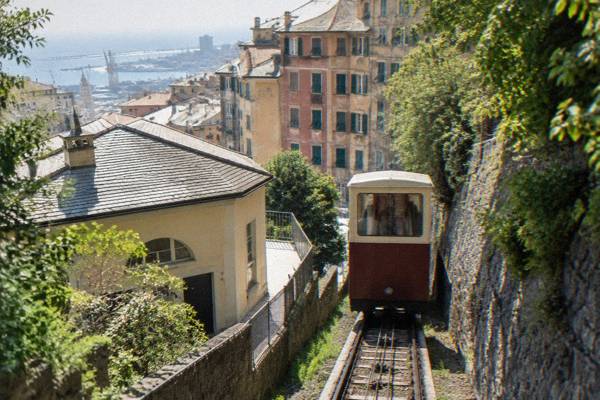
Parco Delle Mura: Genoa's Walls And Hilltop Forts
The Parco delle Mura wraps the hills above Genoa in a ring of walls and forts, reached by the Zecca-Righi funicular and the city's public lifts. Here is what the transport, climate and access facts say.
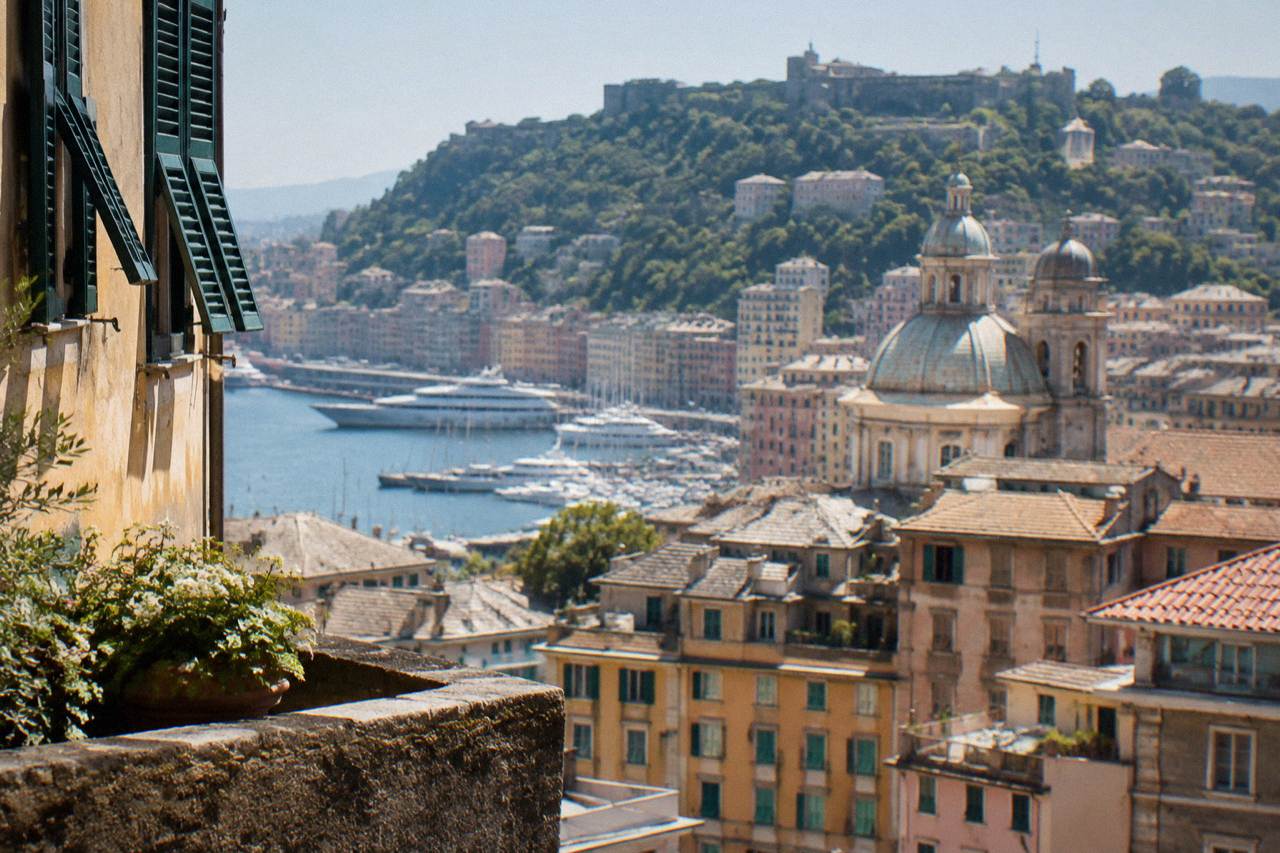
Short answer
The Parco delle Mura is the walled hill park above Genoa in Liguria, reached by the Zecca-Righi funicular (daily 06:40 to 24:00) or the Castelletto Levante lift at 1.20 EUR a ride, with an ordinary AMT ticket at 2.00 EUR for 110 minutes covering the whole urban network.
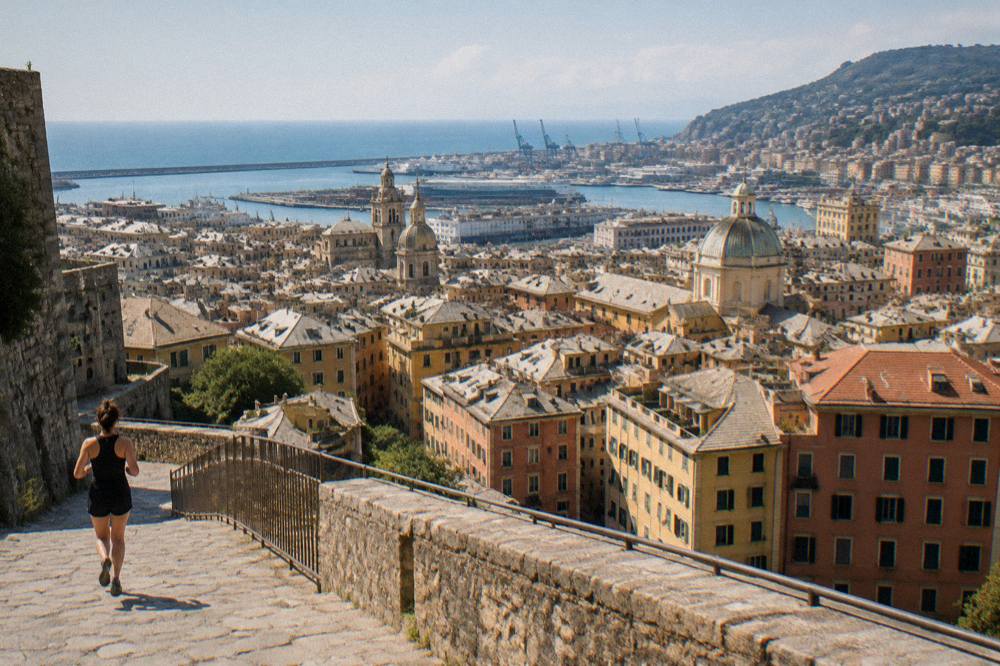
Genoa sits as a narrow strip between the Ligurian Sea and the Apennine hills, and the Parco delle Mura is the belt of walls and hilltop forts that closes the city from above. The park's fortifications were built to defend a republic that lasted until 1797, and today they frame the widest views available of the port city below, from the Lanterna to the eastern suburbs and out over the sea toward Portofino. This page sets out what the transport, fare and climate facts say about getting up there, moving around the ring, and choosing a day for it.
What Is The Parco Delle Mura In Genoa?
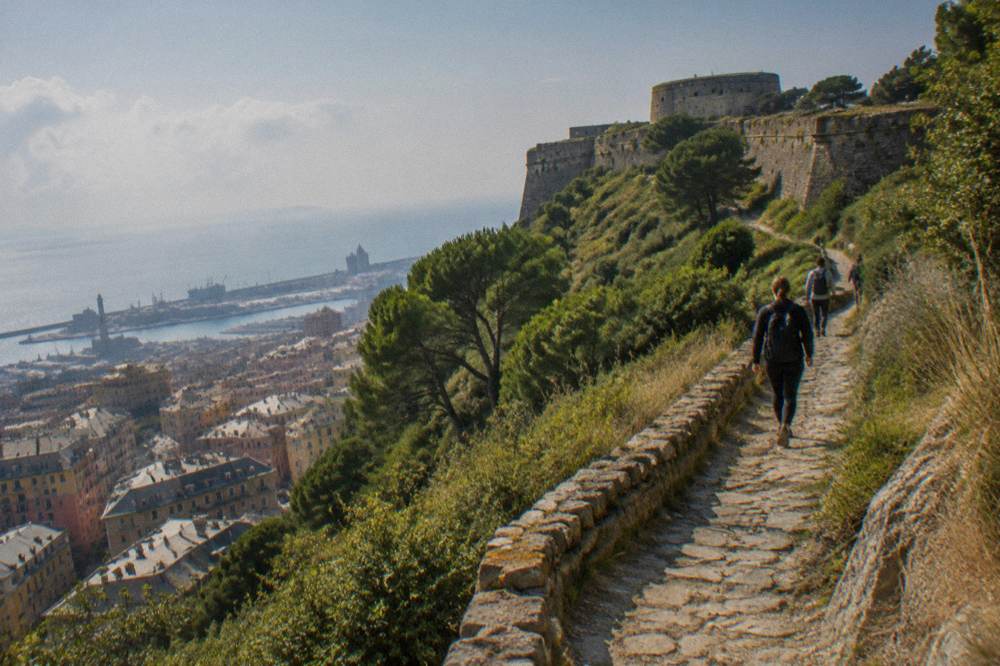
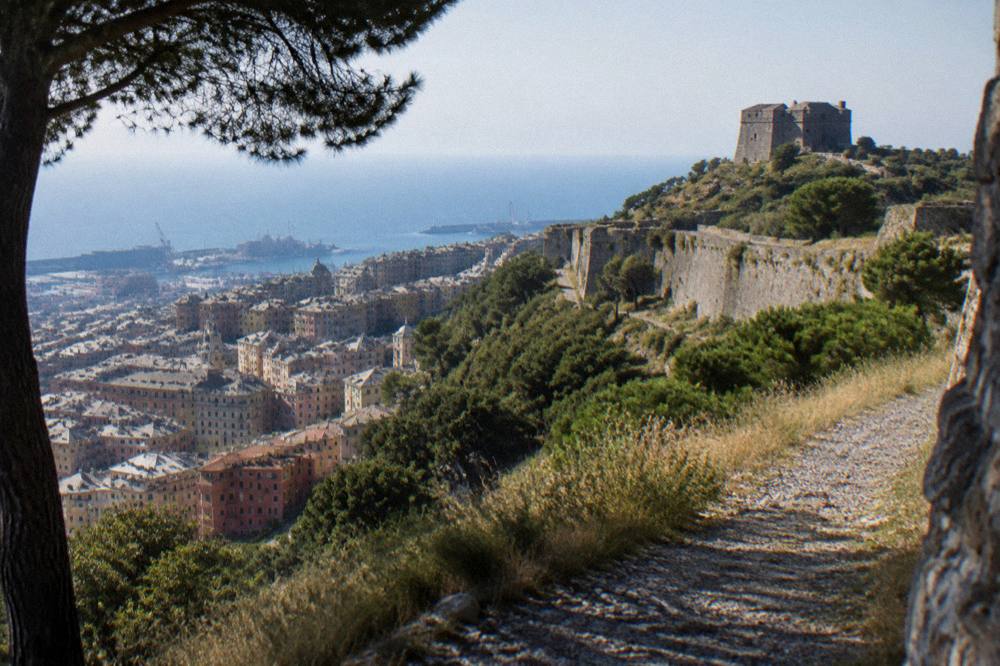
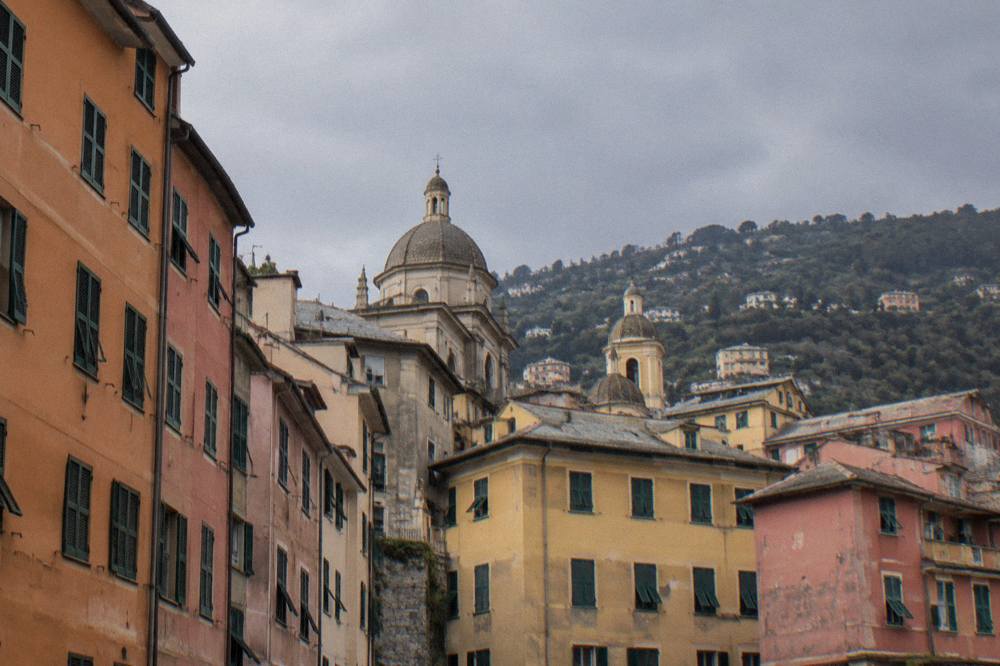
The Parco delle Mura is the system of defensive walls and hilltop forts that encircles the heights above Genoa, the coastal city in Liguria on the Ligurian Sea, protecting a republic that lasted until 1797. The walls and their forts sit on the Apennine slopes that press directly against the city, so the park doubles as the city's biggest panoramic terrace. The old town below, at 113 hectares, is described by the city's own tourism site as one of the largest medieval historic centres in Europe.
The city's geography explains the park. Genoa has no plain to spread across: the Porto Antico and the working ferry port sit at sea level, and the ground climbs steeply behind them into the hills. Fortifications on those ridges commanded every land approach, which is why the republic that governed Genoa until 1797 invested in walls on this scale. What was once a military perimeter is now hillside terrain, wooded in parts, open in others, with the masonry of the forts still marking the skyline above the rooftops.
The relationship between the heights and the city below runs through everything on this site. The Genoa Travel Guide covers the sea-level sights in depth, from the Porto Antico to the Lanterna, and this page is the counterpart for the ring above them. The two levels are connected by some of the most unusual public transport in Italy, a network of funiculars and public lifts that the AMT fare table prices like ordinary buses.
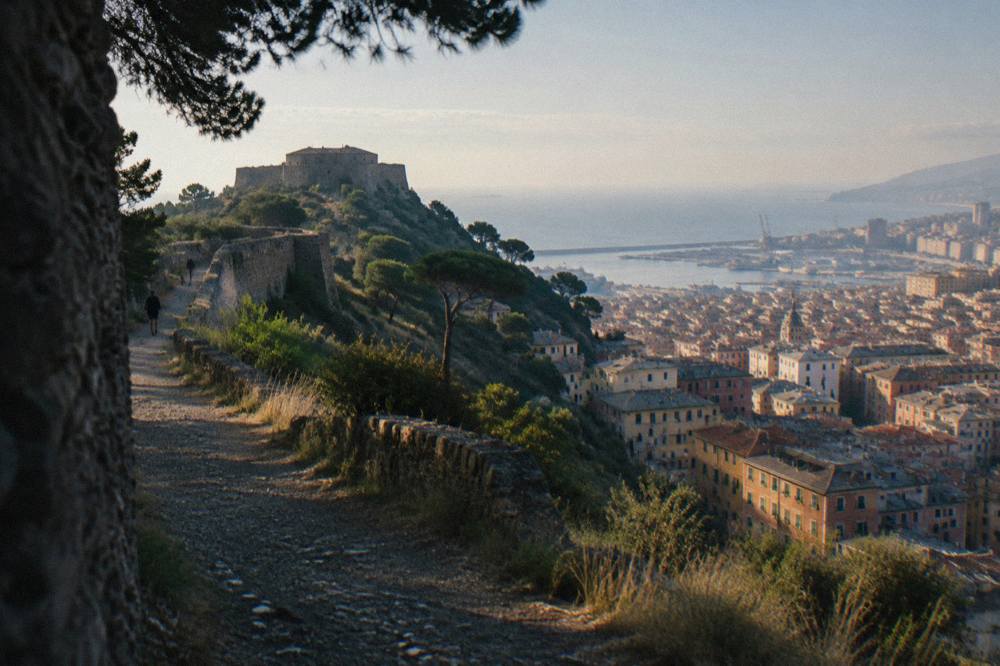
How Do You Get Up To The Genoa Walls And Forts?
The Zecca-Righi funicular runs daily from 06:40 to 24:00 and is the main lift into the heights, with an ordinary AMT ticket at 2.00 EUR valid 110 minutes on the whole urban network; lifts and the Sant'Anna funicular cost 1.20 EUR a ride. The Castelletto Levante lift, daily 06:40 to 24:00, rises 57 m from Piazza Portello to the Spianata Castelletto. The metro's 8 stations run from Brin to Brignole and connect at Principe, Sant'Agostino and De Ferrari.
The funicular is the practical answer to Genoa's vertical geography. AMT Genova, the operator, runs the Zecca-Righi line daily with the hours above, and the same ticket that covers a bus covers the ride: 2.00 EUR for 110 minutes, or 2.20 EUR for the integrated AMT and Trenitalia version. A carnet of 11 ordinary tickets costs 20.00 EUR, the integrated carnet 22.00 EUR, and the 5-hour ticket 5.00 EUR. The full fare picture for reaching the heights:
| AMT ticket or pass | Price | What it covers |
|---|---|---|
| Ordinary ticket | 2.00 EUR | 110 minutes, whole Città Metropolitana network |
| AMT + Trenitalia integrated | 2.20 EUR | 110 minutes, urban plus limited Trenitalia |
| 5-hour ticket | 5.00 EUR | Five hours on the urban network |
| Carnet 11 tickets | 20.00 EUR | Eleven 110-minute ordinary tickets |
| Lifts and Sant'Anna funicular | 1.20 EUR | One ride on a lift or the Sant'Anna funicular |
| Met Daily 24h | 10.00 EUR | Full AMT network for one person, 24 hours |
The Volabus, the airport bus, requires the Met Daily ticket at 10.00 EUR, which also covers the rest of the network. The metro itself is 7 km long with 8 stations, Brin, Dinegro, Principe, Darsena, San Giorgio, Sant'Agostino, De Ferrari and Brignole, and it does not yet reach Canepari or Martinez. Anyone timing a day around the heights should also read the dedicated pages on the Zecca-Righi funicular and the Spianata Castelletto.
A guided option can carry the orientation problem for you. The storyteller-led walks and transport passes below are the products on this site that fit a hill-and-city day:
What Can You See From The Genoa Forts?
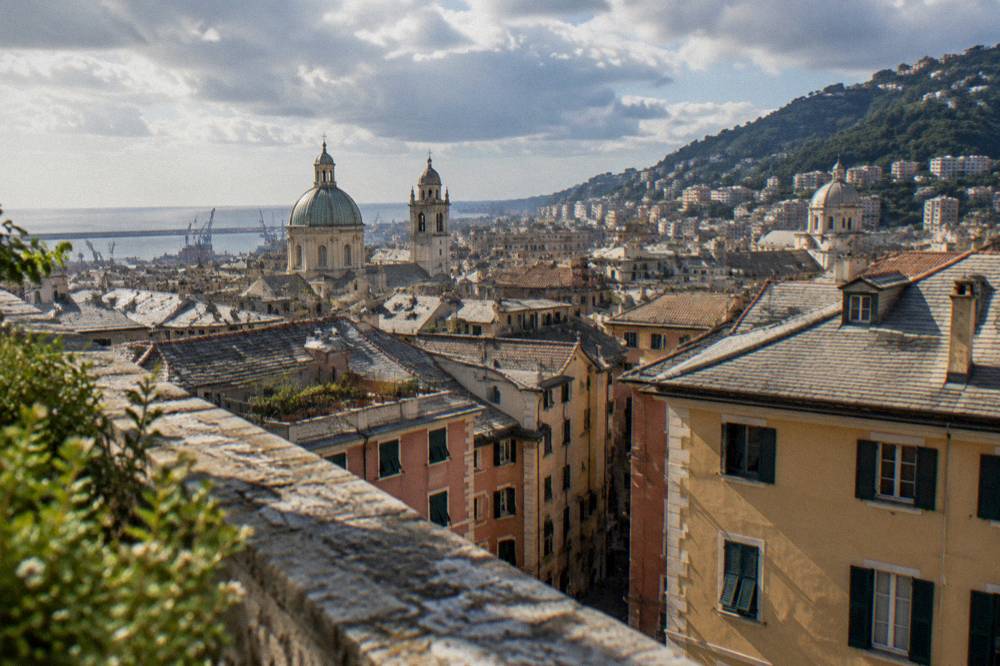
From the forts the view spans the whole of Genoa below: the Porto Antico with the Bigo lift and the Aquarium, the Lanterna lighthouse billed as the tallest in the Mediterranean at 117 m above the sea, the towers of the Cathedral of San Lorenzo, and the Ligurian Sea curving away toward the Portofino promontory, which lies about 25 km in a straight line from Piazza De Ferrari. The Spianata Castelletto, reached by a 57 m lift, gives the same panorama without the climb.
The vertical city rewards the ascent in every direction. Looking down, the port infrastructure reads clearly: the cruise terminals at Ponte dei Mille and Andrea Doria, the ferry piers that handled 2.6 million ferry passengers in the latest port figures, and the 2.4 million cruise passengers who passed through the same port in the year counted. Looking out to sea, the coastline runs east toward Nervi and the Passeggiata Anita Garibaldi, and west toward Pegli. On clear ground the eye reaches the ridges where Portofino and San Fruttuoso sit, about 25 and 22 km in a straight line respectively.
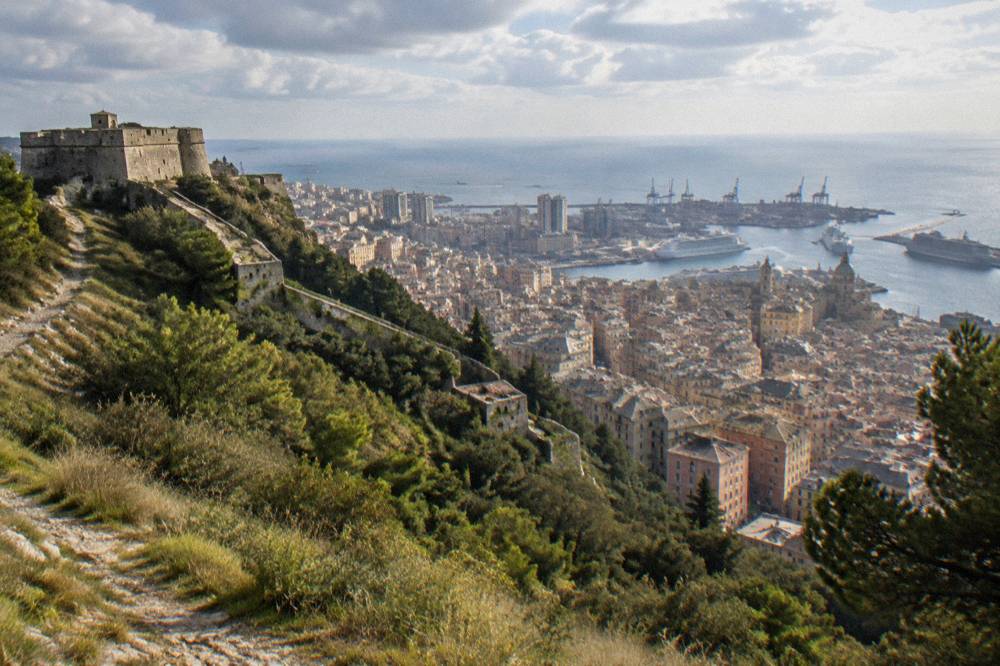
The same height that gives the forts their view once gave them their job, and the sea-level sights they guarded are the ones visitors come down to: the Palazzi dei Rolli, the UNESCO site of 42 palaces inscribed in 2006, the Palazzo Ducale and the Cathedral of San Lorenzo. A day that pairs the walls in the morning with the Strade Nuove museums in the afternoon uses the funicular twice and nothing else.
The heights are not the only way to see Genoa from above, and the comparison is worth planning around. The Bigo panoramic lift at the Porto Antico costs 6.00 EUR adult, reduced 5.00 EUR, children 4 to 12 at 5.00 EUR, under 4 free, and forms part of the combined Aquarium, Biosfera and Bigo ticket from 37.00 EUR adult.
| Viewpoint in Genoa | How it is reached | Verified cost |
|---|---|---|
| Parco delle Mura forts | Paths and the funicular network | AMT ticket 2.00 EUR |
| Spianata Castelletto | Castelletto Levante lift, 57 m rise | 1.20 EUR a ride |
| Bigo panoramic lift | Porto Antico, by the Aquarium | 6.00 EUR adult |
| Lanterna first terrace | 172 steps to the first terrace | On the lighthouse's own page |
| Zecca-Righi funicular | Seven stations into the hills | 2.00 EUR ticket |
Sea level has its own appeal after a morning of climbing, and the coast is closer than the elevation suggests. The snorkeling trip below runs from the city's own waterfront:
The inline link for the same trip sits here in prose: Check availability alongside the boat-based day trips covered on the Camogli page, where the Golfo Paradiso boats run about 30 minutes from Camogli to San Fruttuoso.
How Hard Is The Walking On The Genoa Walls?
The park sits on Apennine slopes that rise directly behind Genoa's narrow coastal strip, so walking inside the Parco delle Mura means sustained gradients on hill terrain, and the funicular and lift network exists precisely because the city is vertical rather than flat. The Zecca-Righi funicular covers the climb in about 12 minutes across 7 stations, running daily 06:40 to 24:00, and the Castelletto Levante lift rises 57 m. The emergency number in Italy is 112.
Genoa's hills are the reason its transport looks the way it does. AMT runs 14 public lifts across the city alongside two funiculars, an infrastructure no flat city would build, and the hills that push the city upward are the same hills the walls crown. The Castelletto Levante lift runs daily 06:40 to 24:00, as does the Zecca-Righi funicular; the Montegalletto lift, serving the Castello d'Albertis side, runs weekdays roughly 07:10 to 19:50 and holidays 07:15 to 20:55 at 1.20 EUR a ride. The Castello d'Albertis page covers that side of the ridge.
For walkers who want hills as the main event rather than the backdrop, the site's hiking near Genoa guide collects the routes further afield, and the Genoa forts ring is the in-city version of the same terrain. Sturdy shoes, water and the 112 emergency number are the practical baseline; the hills are steep by any standard and the funicular exists for good reason.
What Does A Day On The Genoa Forts Cost?
Transport is the main cost: an ordinary AMT ticket is 2.00 EUR for 110 minutes, a Met Daily 24 hours is 10.00 EUR, and lifts and the Sant'Anna funicular are 1.20 EUR a ride, so a day combining metro, funicular and lift costs no more than the Met Daily at 10.00 EUR. The Genoa Museum Card, 24 EUR for 24 hours or 45 EUR for 48 hours in the 2026 rates, covers 28 city museums, with buses only on the +bus variants.
The fare arithmetic depends on how many vertical rides a day includes. Two funicular rides alone cost less than two ordinary tickets only if the 110-minute window covers both directions; beyond that the Met Daily at 10.00 EUR caps a full day of hopping between metro, buses, lifts and funiculars, and it is also the ticket Volabus requires. The Museum Card is a different product: its 24 EUR and 45 EUR 2026 prices buy 28 museums, 19 municipal plus 9 others, and only the +bus variants add urban transport. The comparison:
| Product | 2026 price | Museums | AMT transport |
|---|---|---|---|
| Genoa Museum Card 24h | 24 EUR | 28 city museums | Not included |
| Genoa Museum Card +bus 24h | On the museum network's page | 28 city museums | Included |
| Met Daily 24h | 10.00 EUR | None | Full AMT network |
| Ordinary AMT ticket | 2.00 EUR | None | 110 minutes |
| Lift or Sant'Anna ride | 1.20 EUR | None | One ride |
For a forts-only day the Met Daily is the ceiling and a single ordinary ticket the floor. For a day that adds the Musei di Strada Nuova, whose combined ticket with Sant'Agostino costs 14 EUR full and 9 EUR reduced under the winter timetable running 28 September 2026 to 18 April 2027, the Museum Card math changes, since the three palaces are among the 28 covered.
When Is The Best Weather For The Genoa Forts?
The official 1971-2000 normals for Genoa Sestri show the warmest mean daily high in August at 27.7 C with a low of 21.0 C, the coolest mean low in January at 5.5 C with a high of 11.5 C, the highest monthly rainfall in October at 171.3 mm and the lowest in July at 24.2 mm, so early summer is a dry walking window on the normals.
Those normals come from the Aeronautica Militare climate station at Genoa Sestri, at the airport about 7 km west of Piazza De Ferrari, and they are the only temperature and rainfall series this site quotes. Read month by month, they describe a Mediterranean coastal regime: rain every month of the year, a dry midsummer, and an autumn peak. The monthly detail:
| Month | Mean high C | Mean low C | Rain mm |
|---|---|---|---|
| Jan | 11.5 | 5.5 | 101.8 |
| Feb | 12.2 | 6.0 | 74.0 |
| Mar | 14.6 | 8.2 | 81.7 |
| Apr | 16.8 | 10.5 | 88.0 |
| May | 20.5 | 14.2 | 72.4 |
| Jun | 23.9 | 17.6 | 58.2 |
| Jul | 27.3 | 20.9 | 24.2 |
| Aug | 27.7 | 21.0 | 69.3 |
| Sep | 24.4 | 17.9 | 136.4 |
| Oct | 20.0 | 13.8 | 171.3 |
| Nov | 15.1 | 9.2 | 108.8 |
| Dec | 12.5 | 6.5 | 93.1 |
For the walls specifically, the numbers that matter are the rainfall column and the low temperatures: hill walking in January at a 5.5 C mean low is a different proposition from the sea-level promenade, and October's 171.3 mm makes a weather check part of the plan. The city's own climate detail is on the Genoa weather page and the wider seasonal picture on best time to visit Genoa. The Strada Nuova museums close on red weather alerts under their winter timetable, a reminder that Ligurian weather can shut hill and museum plans alike.
How Do The Genoa Forts Connect To The Rest Of The City?
The forts look down on every major quarter of Genoa: Piazza De Ferrari and Via XX Settembre in the centre, the Porto Antico and the Aquarium at sea level, and the Galata Museo del Mare along the waterfront with its 12,000 m2 spread over 5 levels and 31 rooms. The Zecca-Righi funicular and the lift network tie the ring to those quarters in minutes, and the metro links Principe, Sant'Agostino, De Ferrari and Brignole stations along the 7 km line.
A forts day slots into the rest of a Genoa itinerary at the funicular stations. Down at Piazza De Ferrari, the Via XX Settembre shopping street and the Palazzo Ducale exhibitions, including World Press Photo 2026 to 8 December 2026 and the Renoir, Monet, Toulouse-Lautrec and Cézanne show opening 15 October 2026, fill the hours between ascents. The old town's caruggi and the Columbus story covered under Christopher Columbus in Genoa, with the Casa di Colombo documenting the years 1455 to 1470, sit on the walk between De Ferrari and the funicular's lower end. On the waterfront itself, the Galata Museo del Mare carries the maritime history of the port the forts once watched over.
The sea-level pair to the heights is the Aquarium of Genoa, open 365 days a year, with fixed-date adult tickets from 26.00 EUR, reduced from 20.00 EUR, children 4 to 12 from 16.00 EUR and under 4 free under dynamic pricing. Its combined ticket with the Biosfera and the Bigo starts from 37.00 EUR adult, which folds the panoramic lift into a sea-level day. Food closes the loop: the city's focaccia and farinata tradition travels well up a hill.
What Else Sits Near The Genoa Forts?
Near the ring stand the Spianata Castelletto terrace, reached by a 57 m lift at 1.20 EUR a ride; the Castello d'Albertis side of the ridge served by the Montegalletto lift; and, further along the heights, the Staglieno Monumental Cemetery, whose works began in 1844 and which opened to the public on 1 January 1851. Straight-line distances from Piazza De Ferrari put Nervi about 9 km away and Pegli about 10 km, with Boccadasse about 4 km along the coast.
The wider hill and coast geography, measured in straight-line kilometres from Piazza De Ferrari, frames every side trip off the walls:
| Place from Piazza De Ferrari | Straight-line distance |
|---|---|
| Boccadasse | about 4 km |
| Nervi | about 9 km |
| Pegli | about 10 km |
| Camogli | about 18 km |
| San Fruttuoso | about 22 km |
| Portofino | about 25 km |
Staglieno deserves the detour from the heights: the cemetery on the eastern side of the city opened to the public on 1 January 1851 after works that began in 1844, and its own guide page collects what the municipal pages state. Westward, the Villa del Principe and Palazzo Reale carry the aristocratic Genoa that the walls once protected, and the Genoa in one day itinerary shows how a single funicular ride can anchor a compressed visit, with opening hours and prices best confirmed on the official site.
Can You Combine The Genoa Forts With The Sea?
Yes: the same AMT network that lifts you to the walls runs back down to the waterfront, where the Aquarium of Genoa is open 365 days a year from 26.00 EUR adult, and boat trips run from Genoa Porto Antico on the Golfo Paradiso Two Gulfs tour toward Camogli, San Fruttuoso and Portofino, from March 2026 on listed dates with a full-day return at about 29 EUR. The Golfo Paradiso listing shows the Porto Antico departure at 11:00 and Camogli at 11:45.
The vertical and the maritime are one network in Genoa. A Met Daily ticket at 10.00 EUR covers a morning on the funicular and an afternoon ride to the coast; the Two Gulfs boat, priced by the operator at about 29 EUR for the full day and 21 to 26 EUR for a half day, adds the sea view of the same skyline the forts command from above. There is no regular scheduled ferry from Genoa to the Cinque Terre; Golfo Paradiso runs a Genoa to Cinque Terre tour on set dates only, so the coast east of Portofino is a train matter, covered on the Genoa to Cinque Terre guide.
Swimming closer to home has a caveat worth printing: ARPAL's 2026 classification for the sampling point at Boccadasse is SCARSA, poor, while Nervi is BUONA, so the eastern end of the city's coast is the one the regional agency rates well. The agency's 2026 network covers 380 sampling points on the Ligurian coast in four classes from Eccellente down to Scarsa.
For booking any guided element of a split day, the same three products fit the hill-and-sea plan:
Common Questions About The Genoa Forts
How do I get to the Parco delle Mura in Genoa?
The Zecca-Righi funicular runs daily 06:40 to 24:00 with an ordinary AMT ticket at 2.00 EUR valid 110 minutes on the whole urban network. Lifts and the Sant'Anna funicular cost 1.20 EUR a ride, and the Castelletto Levante lift, daily 06:40 to 24:00, rises 57 m from Piazza Portello.
What does the AMT ticket cover in Genoa?
The ordinary ticket costs 2.00 EUR and is valid 110 minutes on the whole Città Metropolitana network. The integrated AMT and Trenitalia version costs 2.20 EUR, a carnet of 11 tickets 20.00 EUR, and the Met Daily 24-hour ticket 10.00 EUR, which is also the ticket Volabus requires.
Is the Parco delle Mura walk difficult?
The park sits on the Apennine slopes that rise directly behind Genoa, so walking means sustained gradients on hill terrain. The funicular and the city's 14 public lifts exist for exactly that reason, and the emergency number in Italy is 112.
When is the best time of year for the Genoa forts?
The official 1971-2000 normals for Genoa Sestri show July with the lowest monthly rainfall at 24.2 mm and October with the highest at 171.3 mm, and January with the lowest mean low at 5.5 C against August's mean high of 27.7 C. On the normals, early summer offers a dry walking window.
Can I combine the Genoa forts with the Aquarium?
Yes. The Aquarium of Genoa is open 365 days a year, with fixed-date adult tickets from 26.00 EUR under dynamic pricing, and the same AMT network serves both the funicular and the waterfront. The combined Aquarium, Biosfera and Bigo ticket starts from 37.00 EUR adult.
Does the metro reach the Genoa hills?
The metro runs 7 km with 8 stations from Brin to Brignole, linking Principe, Darsena, San Giorgio, Sant'Agostino, De Ferrari and Brignole, but it serves the lower city. The heights are reached by the funiculars and lifts, and the metro does not yet reach Canepari or Martinez.