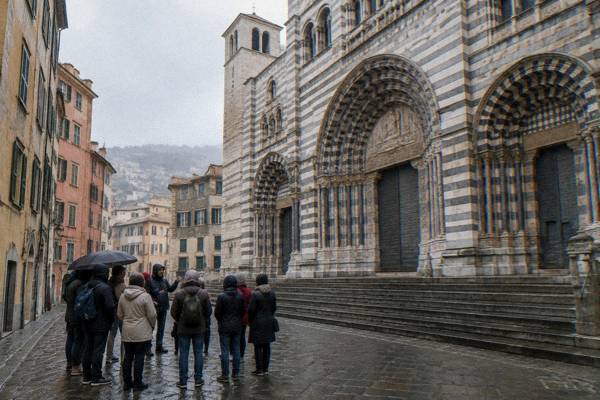
Genoa Shopping: Via XX Settembre, Old Town Shops And Souvenirs
Genoa, the coastal city in Liguria on the Ligurian Sea, shops along two axes: the arcades of Via XX Settembre and the caruggi of one of the largest medieval historic centres in Europe. This guide covers both, plus the food souvenirs the city is known for and the transport that connects it all.
Short answer
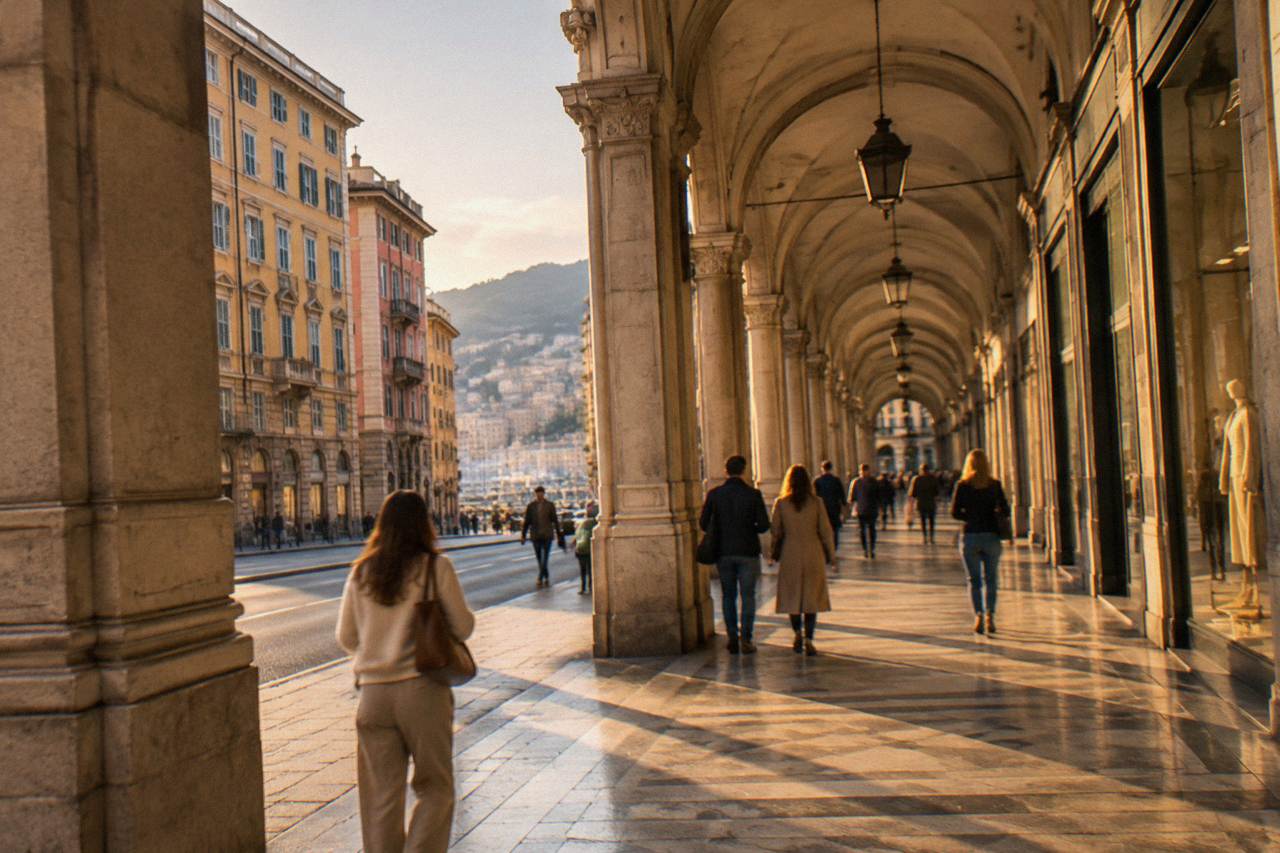
The main shopping streets in Genoa are Via XX Settembre, the wide arcaded avenue near Piazza De Ferrari, and the caruggi of the old town, a 113-hectare medieval centre. A single AMT ticket costs 2.00 EUR and is valid 110 minutes, enough to move between both on buses, the metro or the public lifts.
Genoa, the coastal port city in Liguria on the Ligurian Sea, compresses its shopping into a remarkably narrow strip between the sea and the Apennine hills. The city's retail geography runs along two axes: Via XX Settembre, the arcaded avenue that connects Piazza De Ferrari uphill toward the Foce district, and the caruggi, the narrow lanes of a medieval historic centre that the city's own tourism site describes as 113 hectares and one of the largest medieval historic centres in Europe. Between them sit the museums of the Strade Nuove, the Porto Antico and the food shops that sell the products this city is known for: pesto genovese, focaccia, farinata, trofie and pansoti.

The purpose of this page on Genoa Travel Guide is practical: what each shopping area offers, what to carry home, and what the transport and tickets cost for the day. Distances below are straight-line kilometres from Piazza De Ferrari. For a broader sightseeing frame, see things to do in Genoa.
Where Are The Main Shopping Areas In Genoa?
Genoa's shopping splits between Via XX Settembre and Piazza De Ferrari in the centre, the caruggi lanes of the old town, the Principe and Via Balbi quarter to the west, and the Porto Antico waterfront by the Aquarium. Each sits within roughly 2 straight-line kilometres of Piazza De Ferrari, so a single 2.00 EUR AMT ticket, valid 110 minutes on the whole network, covers a move between any two of them.
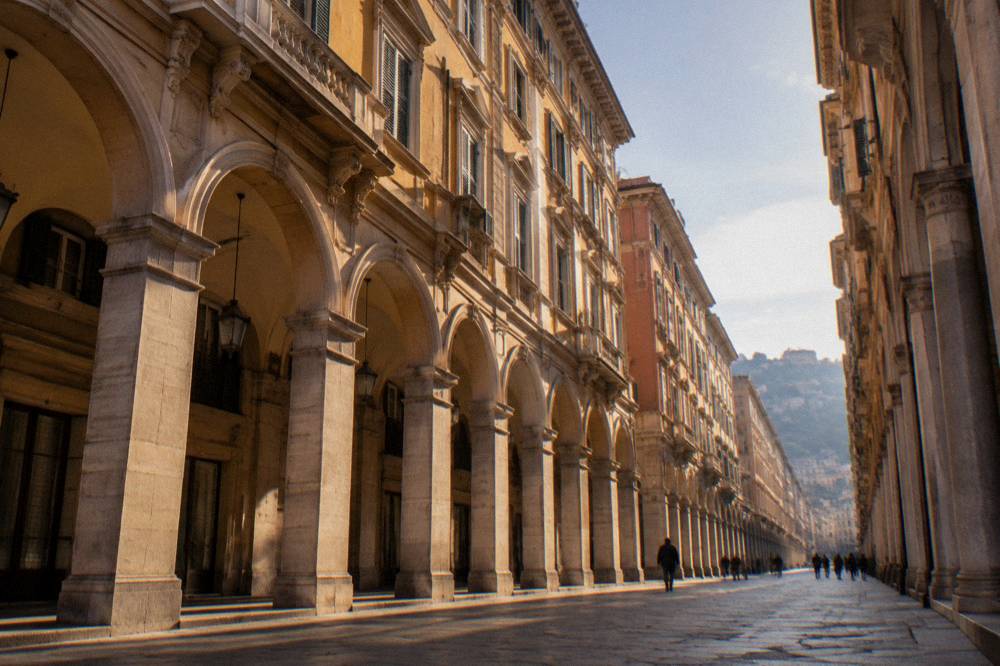
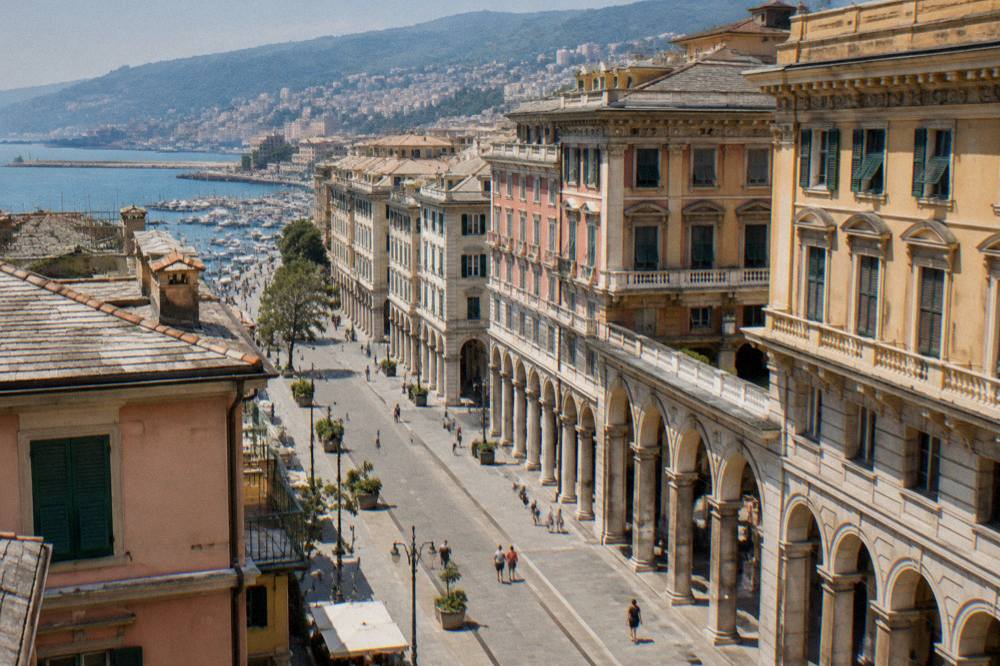
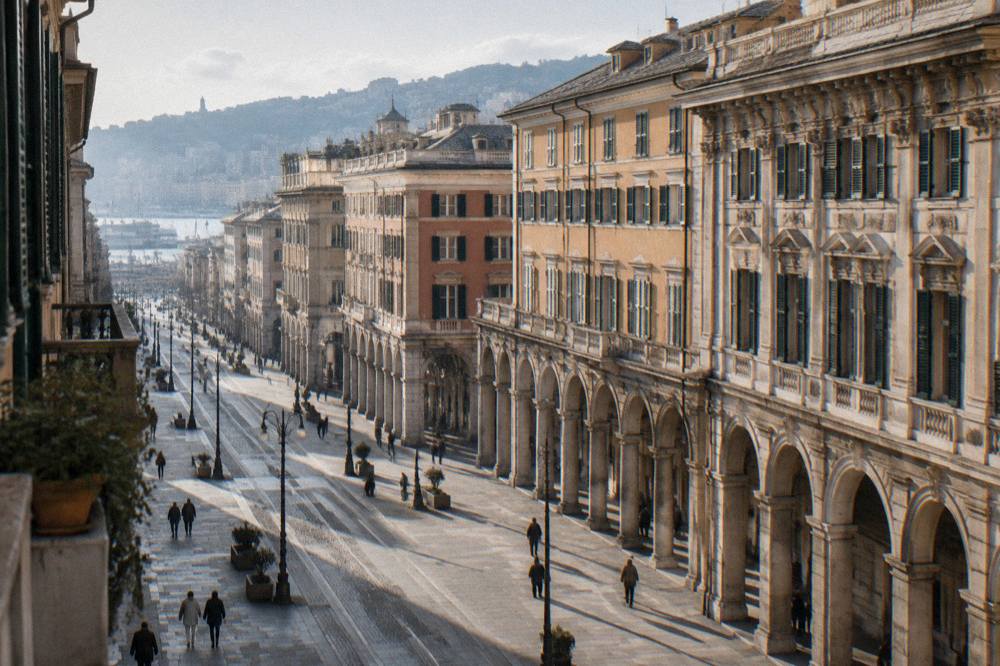
Via XX Settembre is the city's principal modern shopping avenue, an arcaded street built wide enough for the port city's late-nineteenth-century ambitions. It runs from Piazza De Ferrari toward the Foce district and Corso Italia, and its arcades mean the street stays walkable in the rain that the official 1971-2000 normals for Genoa Sestri record at 171.3 mm for October alone. The department stores and chain shops sit here.
The old town is the counterweight. The caruggi are narrow medieval lanes, and the tourism site's 113-hectare figure gives a sense of the scale: this is a full district of small shops, food sellers and workshops rather than a single street. The old town caruggi area guide covers the lanes in detail.
| Area | Character | Straight-line distance from Piazza De Ferrari |
|---|---|---|
| Via XX Settembre | Arcaded avenue, chain shops and department stores | Adjacent, runs from the piazza |
| Old Town caruggi | Narrow medieval lanes, small and specialist shops | Immediately west and north of the piazza |
| Principe and Via Balbi | Quarter around Genova Piazza Principe station | About 2 km north-west |
| Porto Antico | Waterfront redevelopment with the Aquarium and Bigo | About 1.5 km south |
The Principe and Via Balbi area is worth a stop for anyone arriving at or leaving from Genova Piazza Principe, one of the city's two main rail terminals. The Porto Antico pairs shopping-adjacent wandering with the Aquarium of Genoa, which the Aquarium's own site says is open 365 days a year.
Is Via XX Settembre The Best Shopping Street In Genoa?
Via XX Settembre is the main modern shopping street in Genoa, running from Piazza De Ferrari toward the Foce district, and it carries the department stores, chain shops and arcaded frontages that a city-centre shopping day needs. It is not the only street: the medieval lanes west of Piazza De Ferrari hold the city's specialist and food shops, and the two sit a few minutes' walk apart.
The avenue's arcades are its practical feature. Genoa's climate normals, the official 1971-2000 normals for Genoa Sestri, record mean monthly rainfall from 24.2 mm in July to 171.3 mm in October, and the covered walkways keep the street usable in the wetter months. The Via XX Settembre attraction page covers the street's layout, and the Genoa weather guide explains what the normals mean for planning.
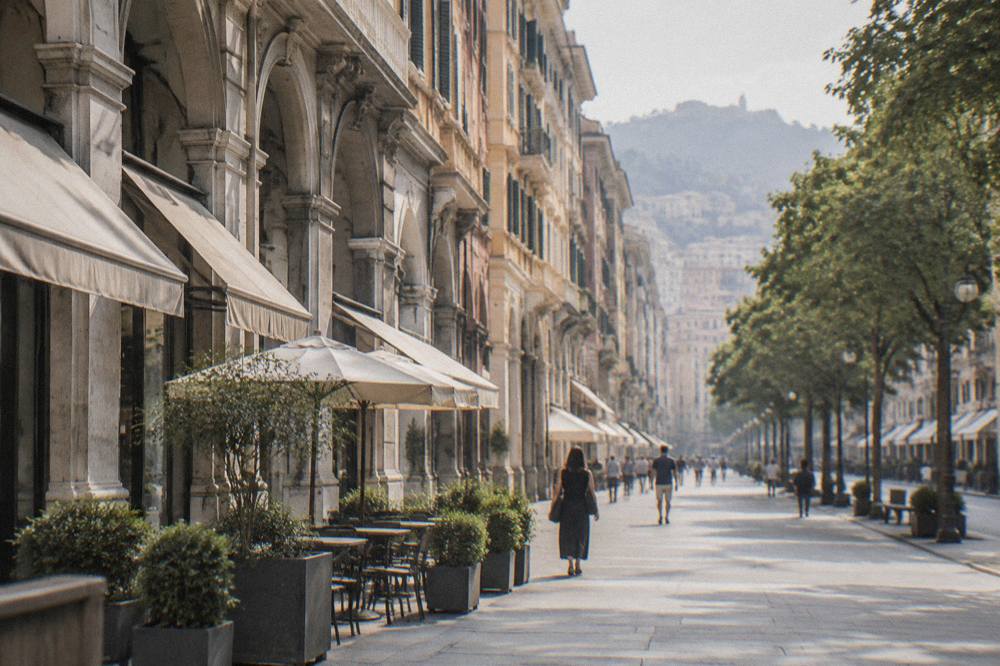
From a shopping standpoint the street's usefulness is positional. It starts at Piazza De Ferrari, the city's central square, and ends within reach of Corso Italia, the seaside promenade that the tourism site measures at about 2.5 km, linking the Foce area to Boccadasse. A shopping walk can therefore end at the sea, about 4 straight-line kilometres from the centre as measured to Boccadasse.
What Can You Buy In The Old Town Caruggi?
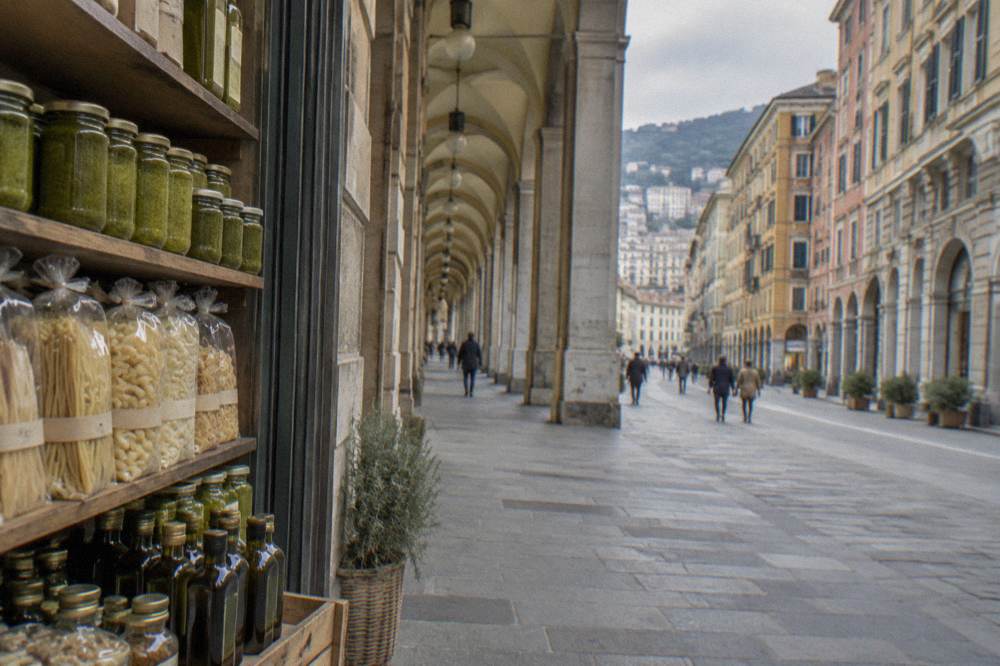
The old town caruggi of Genoa specialise in food and small specialist shops: pesto genovese and its Basilico Genovese DOP basil, focaccia, farinata, dried pasta shapes such as trofie and pansoti, and the workshop trades of a medieval quarter. The district's scale, 113 hectares described by the city's tourism site as one of the largest medieval historic centres in Europe, means the shops spread across dozens of connected lanes rather than one street.
Food is the reason to shop here. Basilico Genovese DOP is the protected basil used in pesto genovese, and jars of pesto, jars of the basil itself and the dried pasta shapes it dresses, trofie and pansoti among them, travel well. Focaccia di Recco, a filled flatbread with IGP status since 2015, is produced only in Recco, Camogli, Sori and Avegno, all within the metropolitan area, and is a cheese-filled variant distinct from the plain focaccia sold across the city. It is a fresh product, so it suits eating on the day rather than carrying home.
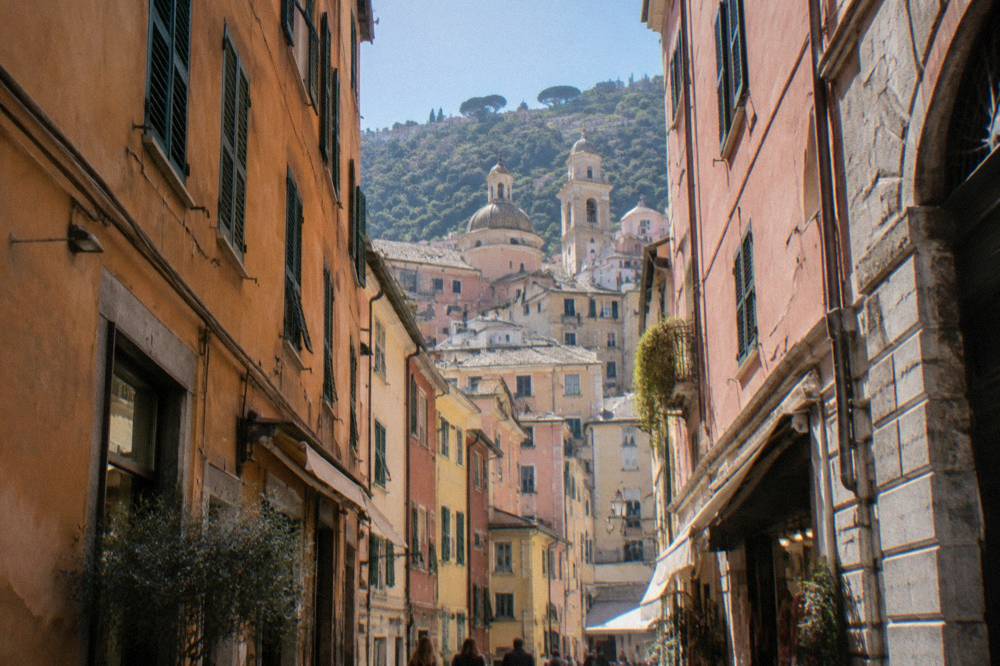
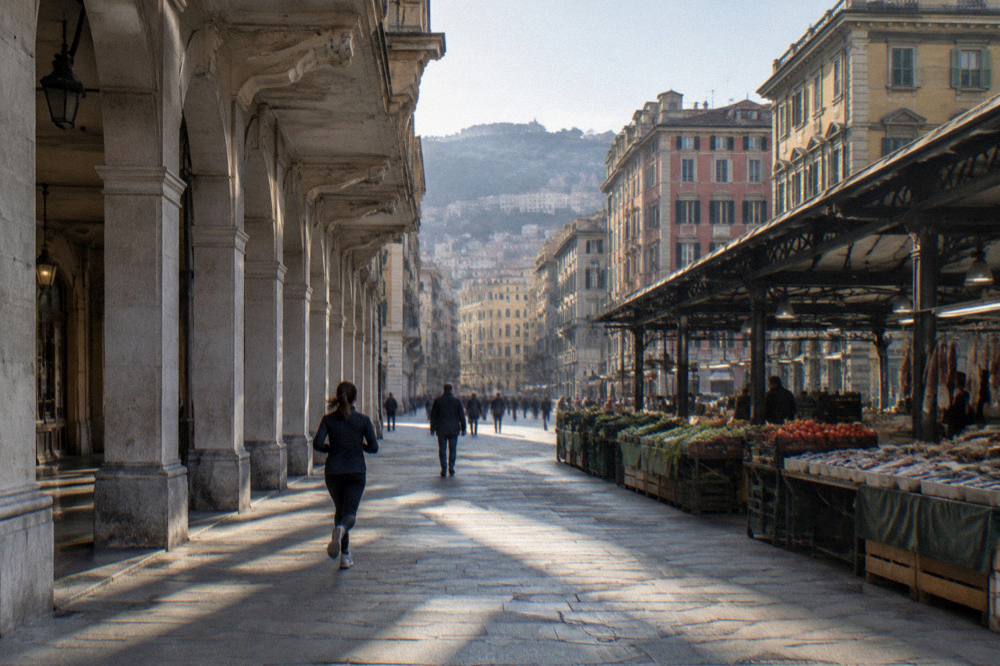
The lanes also hold the city's market culture. The Mercato Orientale sits by Via XX Settembre and is the city's principal covered food market. Check locally for its opening hours before planning a visit around it.
A word on logistics: the caruggi are narrow, stone-paved lanes, and the sensible plan is to buy heavy items such as jars and wine late in the day. The Genoa luggage storage guide covers the storage services near the rail stations for anyone shopping between a hotel checkout and a departure.
The related walk on this site, the Genoa walking tour, moves through exactly this territory, and the fuller listing Check availability covers the sights and hidden lanes between the shops.
To wander the lanes with the stories behind them, book a self-guided audio tour here.
What Souvenirs From Genoa Travel Well?
The souvenirs from Genoa that travel best are jars of pesto genovese made with Basilico Genovese DOP, dried pasta shapes such as trofie and pansoti, farinata chickpea flour for making the local flatbread at home, and small food goods from the old town shops. Fresh focaccia and focaccia di Recco, which holds IGP status and is made only in Recco, Camogli, Sori and Avegno, are for eating on the day.
The distinction that matters at the till is fresh versus shelf-stable. Pesto, dried pasta, chickpea flour, olive oil and wine all survive a journey in checked luggage. Fresh basil, fresh focaccia and the filled focaccia di Recco do not, and the IGP rules that tie that product to four towns near the city make it a local dish more than an export. The food guide on this site covers what to eat while in the city rather than carry away.
| Product | Type | Travels well? |
|---|---|---|
| Pesto genovese (Basilico Genovese DOP) | Jarred sauce | Yes |
| Trofie, pansoti | Dried or fresh pasta | Dried yes, fresh poorly |
| Farinata flour | Chickpea flour | Yes |
| Focaccia | Fresh baked | Same day only |
| focaccia di Recco IGP (Recco, Camogli, Sori, Avegno) | Fresh filled flatbread | Same day only |
Non-food souvenirs connect to the city's trades. Genoa is a port and a maritime city, the home of the Galata Museo del Mare and the Lanterna, the lighthouse built in 1128, rebuilt in 1543 and standing 117 m above the sea, billed as the tallest lighthouse in the Mediterranean. Nautical and print souvenirs drawing on that heritage circulate in the old town shops, and the Genoa map guide helps pin down which lanes to work through.
Is Shopping In Genoa Expensive?
Shopping in Genoa costs what the current ticket and transport prices suggest: an AMT ticket is 2.00 EUR valid 110 minutes, the Genoa Museum Card is 24 EUR for 24 hours or 45 EUR for 48 hours covering 28 city museums, and Aquarium of Genoa fixed-date adult tickets start from 26.00 EUR with dynamic pricing. Goods prices vary by shop.
What can be stated with figures is the cost of the framework around a shopping day: moving, entry and cards. The transport table below comes from the AMT fare pages, and the museums table from the museums' own sites.
| AMT ticket | Price | Validity |
|---|---|---|
| Ordinary single | 2.00 EUR | 110 minutes, whole network |
| AMT + Trenitalia integrated | 2.20 EUR | 110 minutes |
| 5-hour ticket | 5.00 EUR | 5 hours |
| Carnet of 11 tickets | 20.00 EUR | 11 x 110 minutes |
| Met Daily | 10.00 EUR | 24 hours, full network incl. Volabus |
| Lifts and Sant'Anna funicular | 1.20 EUR | Single ride |
The Met Daily matters for shoppers flying in or out: there is no separate Volabus airport bus fare, the airport link requires the 10.00 EUR Met Daily ticket, and the airport sits about 7 straight-line kilometres from Piazza De Ferrari. A fixed taxi fare of 25 EUR per car, 30 EUR for over four people plus 2 EUR at night and on holidays, is the alternative. The Genoa airport guide covers the connections.
| Entry or card | Price | Source note |
|---|---|---|
| Genoa Museum Card 24h | 24 EUR | 28 city museums (19 municipal + 9 others) |
| Genoa Museum Card 48h | 45 EUR | Same coverage |
| Aquarium fixed-date adult | from 26.00 EUR | Dynamic pricing, open 365 days |
| Aquarium reduced (military, over 65, disabled) | from 20.00 EUR | Dynamic pricing |
| Aquarium children 4-12 | from 16.00 EUR | Under 4 free |
| Aquarium + Biosfera + Bigo adult | from 37.00 EUR | Combined ticket |
The Genoa Museum Card guide explains the card's coverage and its bus variants. Note that only the "+bus" variants include buses, and none covers Volabus, Navebus or trains.
How Does A Shopping Day Fit With Museums And Sightseeing?
A shopping day in Genoa combines naturally with the museums because the distances are short: the Strada Nuova museums and the Via Garibaldi palaces sit immediately north of the shopping axis, the Porto Antico and Aquarium about 1.5 km south, and the 24 EUR Museum Card covers 28 city museums for a full day. The winter timetable from 28 September 2026 to 18 April 2027 opens the Strada Nuova museums daily 10:00 to 18:30, with only Palazzo Rosso open on Mondays.
The Strada Nuova museums, Palazzo Rosso, Palazzo Bianco and Palazzo Doria-Tursi, sit along the Via Garibaldi and Musei di Strada Nuova street that the UNESCO inscription "Genoa: Le Strade Nuove and the system of the Palazzi dei Rolli" covers, 42 palaces inscribed in 2006 on the basis of the Rolli lists of 1576, 1588, 1599, 1614 and 1664. The combined ticket with the Museo di Sant'Agostino is 14 EUR full, 9 EUR reduced. Palazzo Doria-Tursi holds Paganini's violin "Il Cannone", built in Cremona in 1743 by Bartolomeo Giuseppe Guarneri.
Palazzo Ducale adds exhibitions: World Press Photo 2026 runs to 8 December 2026, and a show of Renoir, Monet, Toulouse-Lautrec and Cézanne opened 15 October 2026. Both sit within the shopping district, which makes the practical pattern simple: lanes in the morning, a museum or palace in the early afternoon, and the arcades of Via XX Settembre afterwards. The Genoa in two days itinerary sequences exactly this mix.
For cruise visitors the constraint is the ship: the Genoa cruise port guide covers the walk from the terminals into the centre, and the passenger terminals themselves, Ponte dei Mille and Andrea Doria for cruise calls, sit at the eastern edge of the same waterfront.
What Markets Should A Shopper Know About In Genoa?
The market a shopper in Genoa should know is the Mercato Orientale by Via XX Settembre, the city's principal covered food market, sitting directly on the main shopping avenue and supplied by the port city's fish and produce trade. Plan around a check of the official site rather than a printed timetable for opening hours.
Genoa's market culture follows from its geography. The city is a working port with ferry passengers counted at 2.6 million in the port authority's latest published figures, and its fish trade feeds both markets and restaurants. The foods to look for in a market visit are the basil behind Basilico Genovese DOP, the chickpea flour for farinata, and the pasta shapes, trofie and pansoti, that carry pesto.
Beyond the market, the shopping-adjacent evening options sit in the same districts. The Genoa nightlife guide covers the old town and waterfront bars, and the pastry shops have their own page. A day that starts with market shopping can end on the waterfront without crossing the city twice.
Can You Combine Shopping In Genoa With Day Trips?
Shopping in Genoa combines with day trips because the coastal towns around it, Camogli at about 18 straight-line kilometres, Santa Margherita Ligure at about 24 and Portofino at about 25, plus the Cinque Terre at about 67, are reachable by train and boat: the Camogli to San Fruttuoso boat runs year round at about 12 EUR return, and the Cinque Terre Treno Card costs 22.00 to 35.00 EUR for one day by date band.
The logic for shoppers is food souvenirs. Focaccia di Recco IGP is made only in Recco, Camogli, Sori and Avegno, and Recco sits about 17 straight-line kilometres from Piazza De Ferrari, a regional train ride down the coast. Camogli, beyond its own shops, is the departure point for the boats to San Fruttuoso, where the FAI abbey charges 10 EUR full entry, 5 EUR for ages 6 to 18 and students to 25, under 5 free.
| Day trip | Straight-line distance from Piazza De Ferrari | Verified fare or card |
|---|---|---|
| Recco | About 17 km | Regional train, fare on the operator's site |
| Camogli | About 18 km | Regional train; boat to San Fruttuoso about 12 EUR return |
| San Fruttuoso | About 22 km | FAI abbey 10 EUR full, 5 EUR reduced, under 5 free |
| Santa Margherita Ligure | About 24 km | Bus 782 to Portofino included in Met Daily |
| Portofino | About 25 km | ZTL, paid car park about 8 EUR/hour |
| Cinque Terre | About 67 km | Treno Card 1 day 22.00 to 35.00 EUR |
The Golfo Paradiso operator's Two Gulfs tour runs from Genoa Porto Antico on listed dates from March through the season, calling at Camogli, San Fruttuoso and Portofino, with fares reported at about 29 EUR for the full day and 21 to 26 EUR for a half day. The Genoa ferries guide covers the longer ferry routes to Sardinia, Corsica, Sicily and Barcelona from the same port area.
What Should You Know About Transport And Driving When Shopping?
Shopping transport in Genoa rests on the AMT network: 2.00 EUR for a 110-minute ticket, 10.00 EUR for a 24-hour Met Daily, a 7 km metro line with 8 stations from Brin to Brignole, 14 public lifts at 1.20 EUR a ride and the Zecca-Righi funicular running daily 06:40 to 24:00. Driving is constrained: the historic centre and other zones are limited-traffic ZTL areas under a city regulation updated in 2025.
The lifts matter more in Genoa than in flatter cities. The Castelletto Levante lift rises 57 m from Piazza Portello to the Spianata Castelletto viewpoint, at 1.20 EUR a ride, and the Zecca-Righi funicular covers its line with urban tickets. A heavy shopping bag changes the calculus of hills quickly, and the lifts are the sanctioned workaround. The metro's 8 stations include Principe, Darsena, San Giorgio, Sant'Agostino, De Ferrari and Brignole, threading the shopping axis end to end; the extensions toward Canepari and Martinez are not open, reported as targeted forJune 2027 and December 2028 respectively.
| Transport fact | Figure |
|---|---|
| Metro line | 7 km, 8 stations, Brin to Brignole |
| Castelletto Levante lift | 57 m rise, 1.20 EUR single, daily 06:40 to 24:00 |
| Zecca-Righi funicular | Daily 06:40 to 24:00 |
| AMT public lifts | 14, 1.20 EUR a ride |
| ZTL status | Historic centre and other zones, regulation updated 2025 |
The ZTL point deserves emphasis for anyone considering a hire car to reach the shopping streets: the limited-traffic zones cover the historic centre, and enforcement details, hours and car-park tariffs vary, so the how to get to Genoa guide and a check of the city's own ZTL pages are the right preparation. The Genoa cruise port guide covers arrival by sea.
When Is A Good Time Of Year For A Shopping Trip To Genoa?
A shopping trip to Genoa suits the drier months on the climate record: the official 1971-2000 normals for Genoa Sestri show July at 24.2 mm of rain, June at 58.2 mm and May at 72.4 mm, against October at 171.3 mm, September at 136.4 mm and November at 108.8 mm. Mean daily highs run from 27.7 C in August down to 11.5 C in January, so the choice is between warmth and rain cover.
The arcades of Via XX Settembre change that arithmetic somewhat, since covered walkways carry a shopper through rain that the open lanes of the old town take directly. The autumn has its own draws that pair with shopping: the Salone Nautico boat show ran 1 to 6 October in its 66th edition, the Festival della Scienza ran 22 October to 1 November 2026 under the theme "Prospettive", and the autumn Rolli Days opened palaces 16 to 18 October 2026.
| Month | Mean high C | Mean low C | Rain mm |
|---|---|---|---|
| January | 11.5 | 5.5 | 101.8 |
| April | 16.8 | 10.5 | 88.0 |
| July | 27.3 | 20.9 | 24.2 |
| October | 20.0 | 13.8 | 171.3 |
The best time to visit Genoa guide works through the full seasonal picture, and the where to stay in Genoa guide places the lodging areas against the shopping districts. The city's tourist tax applies per person per night by category, 2.00 EUR in one-star hotels, 2.50 EUR in two-star, 4.00 EUR in B&Bs and 2.00 EUR in hostels and campsites, for the first eight consecutive nights.
Common Questions About Shopping In Genoa
What is the main shopping street in Genoa?
Via XX Settembre is the main modern shopping street, an arcaded avenue running from Piazza De Ferrari toward the Foce district. The caruggi of the old town hold the specialist and food shops.
What souvenirs is Genoa known for?
Jars of pesto genovese made with Basilico Genovese DOP, dried pasta shapes such as trofie and pansoti, farinata chickpea flour, and fresh focaccia. Focaccia di Recco, IGP since 2015 and made only in Recco, Camogli, Sori and Avegno, is best eaten on the day.
How much is public transport in Genoa?
An AMT ordinary ticket is 2.00 EUR, valid 110 minutes on the whole network. A 24-hour Met Daily is 10.00 EUR, and lifts and the Sant'Anna funicular are 1.20 EUR a ride.
Is the old town good for shopping?
Yes. The caruggi form a 113-hectare medieval centre described by the city's tourism site as one of the largest in Europe, filled with small shops and food sellers rather than chain stores.
Can you shop in Genoa on a cruise stop?
Yes. The cruise terminals sit at the eastern edge of the waterfront, the Porto Antico is about 1.5 straight-line kilometres from Piazza De Ferrari, and the shopping axis of Via XX Settembre and the caruggi is walkable from the centre.
Are shops in Genoa open on Sundays?
For Sunday trading rules, check with the specific shop or the tourist information offices: IAT Garibaldi at Via Garibaldi 12r is open daily 09:00 to 18:20, and IAT Porto Antico at Ponte Spinola daily 10:00 to 17:00.