Genoa Cafés And Pastry Shops: Historic Rooms And Pandolce
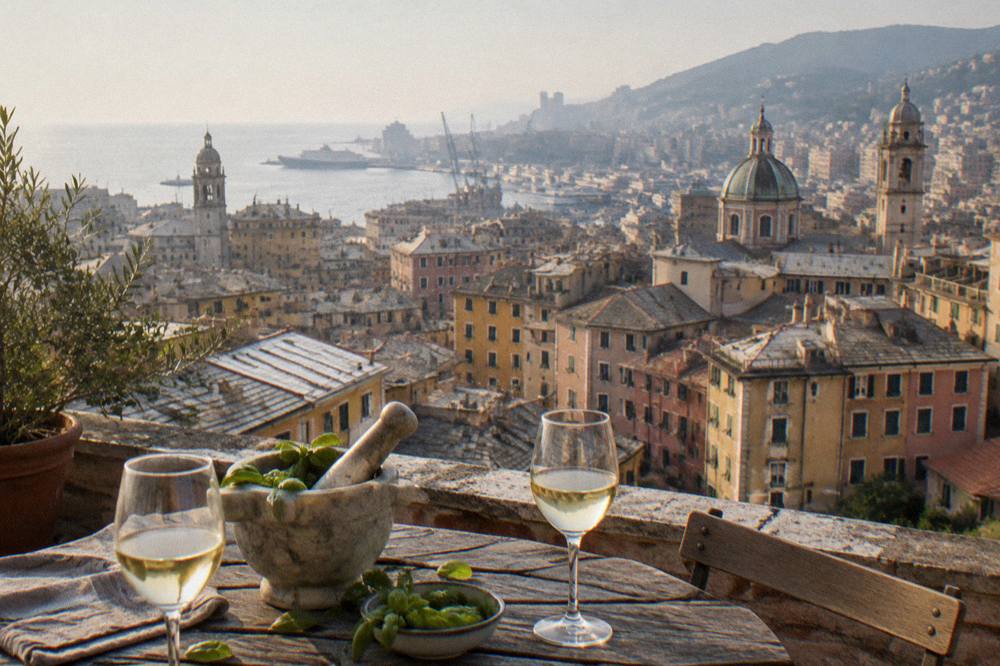
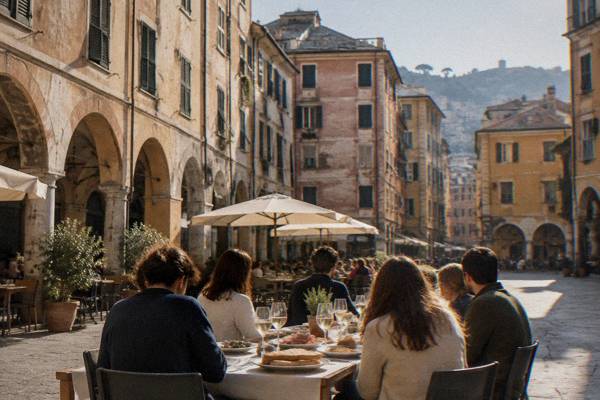
Genoa's café culture runs from mirrored historic rooms near Piazza De Ferrari to focaccia counters in the caruggi, and the city's own sweet, pandolce, anchors the pastry calendar.
Short answer
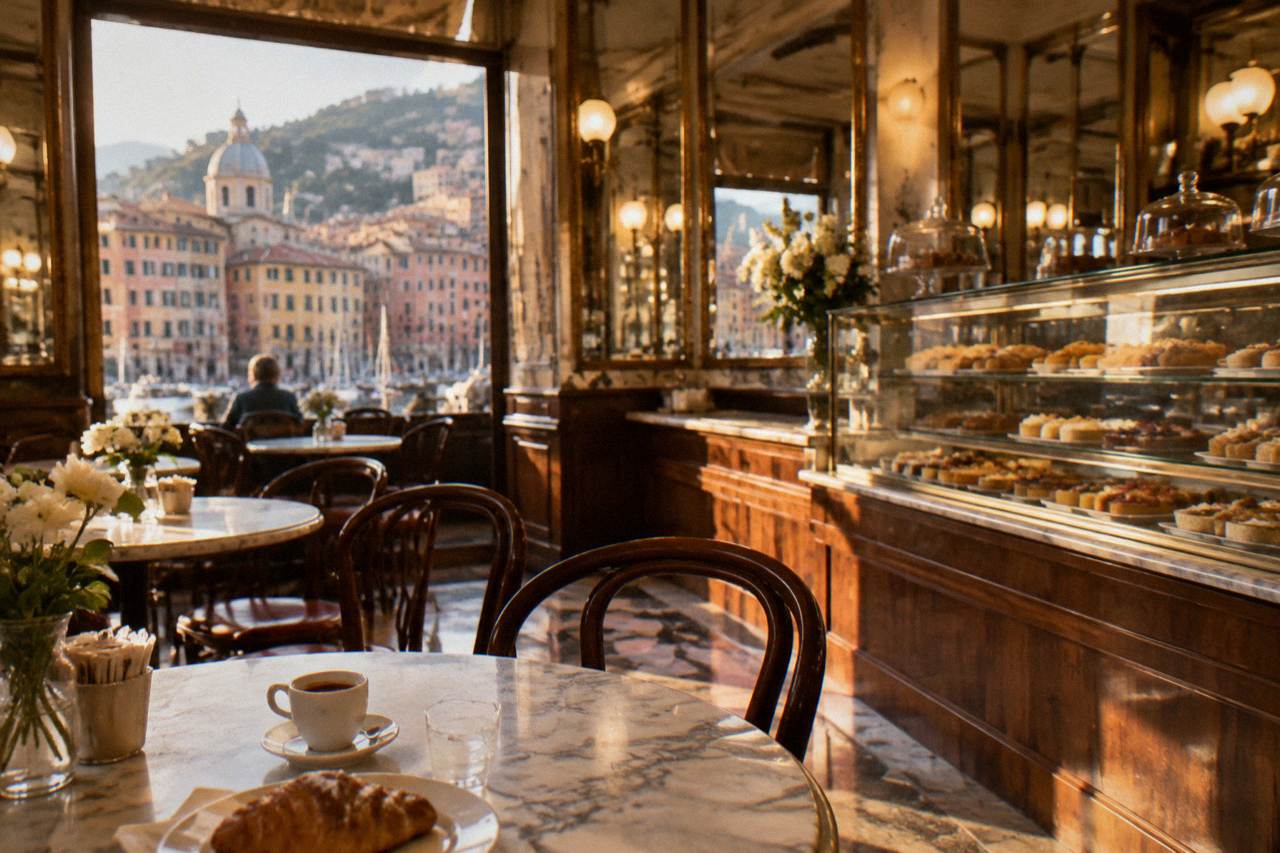
Genoa cafés divide into historic rooms around the centre, neighbourhood pastry shops, and focaccia bakeries across the old town; order standing at the bar, look for pandolce in the colder months, and pair café stops with the Aquarium, the Strada Nuove museums or a boat day trip.
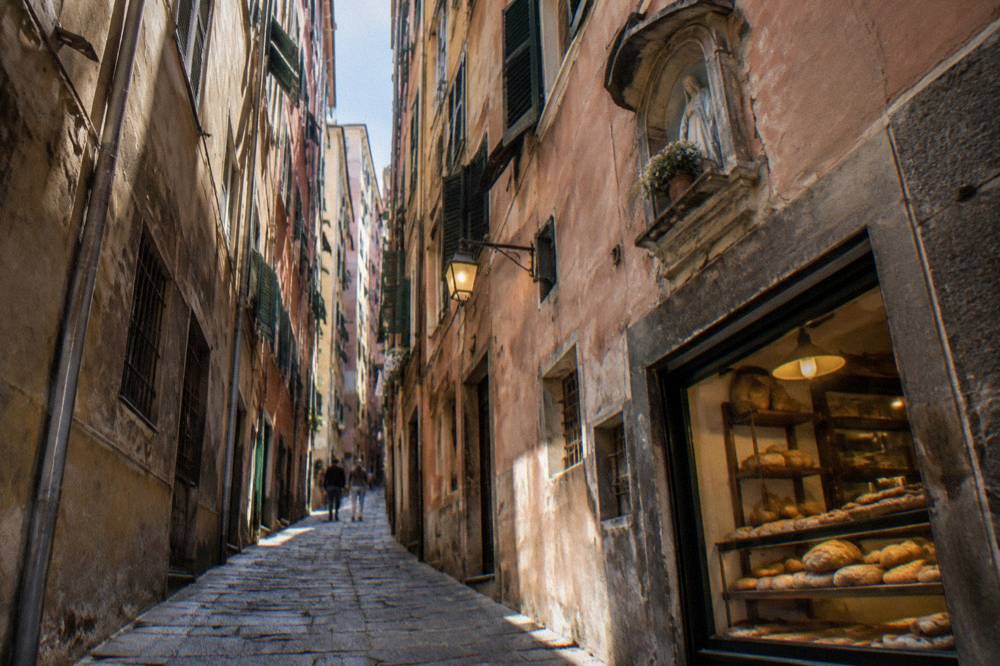
Genoa, the coastal city in Liguria on the Ligurian Sea, keeps a café culture that has less in common with the tourist squares of other Italian cities and more with the working rhythm of a port. The historic centre, 113 hectares and described by the city's own tourism site as one of the largest medieval historic centres in Europe, is threaded with caruggi, the narrow lanes where focaccia bakeries sell by the sheet and coffee is drunk standing at the bar. Around Piazza De Ferrari and along Via XX Settembre the tone shifts to mirrored rooms, marble tables and pastry counters piled with the city's own sweet, pandolce. Knowing what to order, how the customs work, where the rooms and counters cluster, and how café stops fit the rest of a Genoa itinerary, from the museums to the boat day trips along the coast, makes the city's café culture easier to read.

What Should You Order In A Genoa Café?
The short answer is focaccia in the morning, a standing espresso at the bar at any hour, and pandolce when it appears in the colder months. The five dishes this site can name with confidence are pesto genovese, focaccia, farinata, trofie and pansoti, and of those, focaccia and farinata are the two that live in the bakery and café ecosystem rather than at the dinner table.
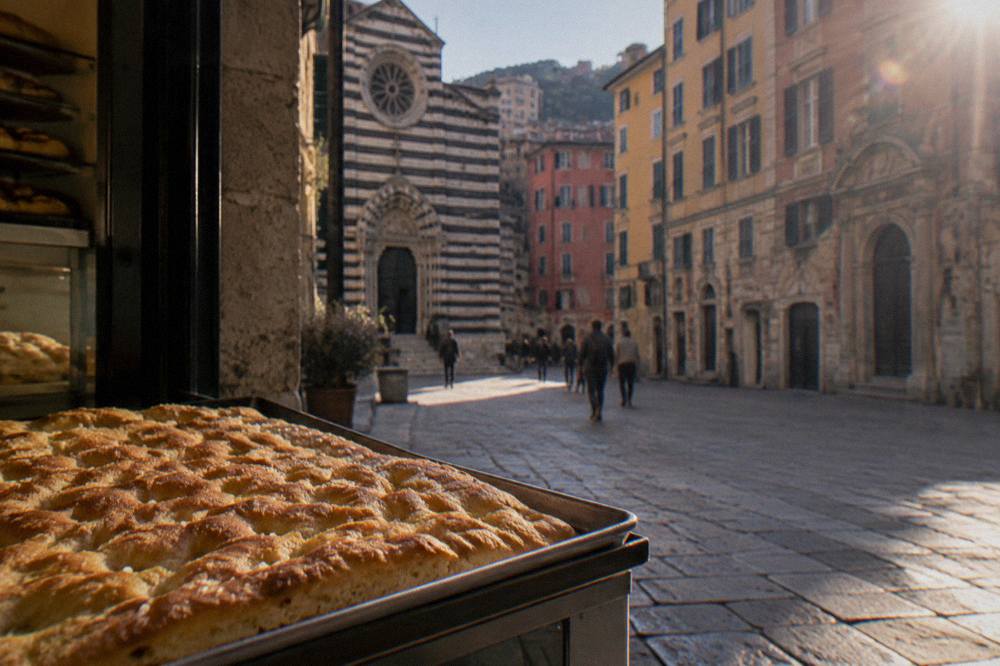
Focaccia is the city's everyday carbohydrate. The Genoese version is the plain, oil-rich flat bread eaten at breakfast, mid-morning or as a snack, and it is distinct from focaccia di Recco, which has been an IGP product since 2015 and is made only in Recco, Camogli, Sori and Avegno, the cluster of towns about 17 to 18 km from the centre. Recco itself is close enough that a half-day trip for the genuine article is realistic. The focaccia guide covers the bread in detail.
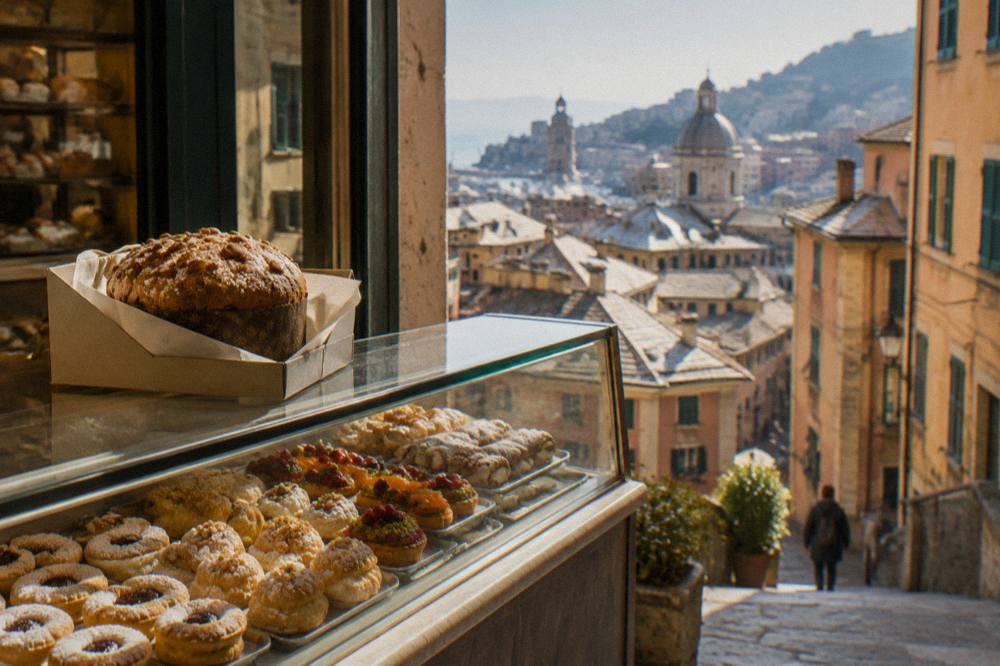
Farinata, a thin chickpea flat baked in a wood oven, sits in the same category of savoury counter food, and pansoti, a filled pasta in walnut sauce, belongs to the restaurant side of the Genoa food scene. Pandolce, the dense sweet bread studded with candied fruit and pine nuts, is the pastry to look for by name. It belongs to the Christmas season, so the Christmas in Genoa page is the natural companion read for a winter visit.
How Do Coffee Customs Work In Genoa?
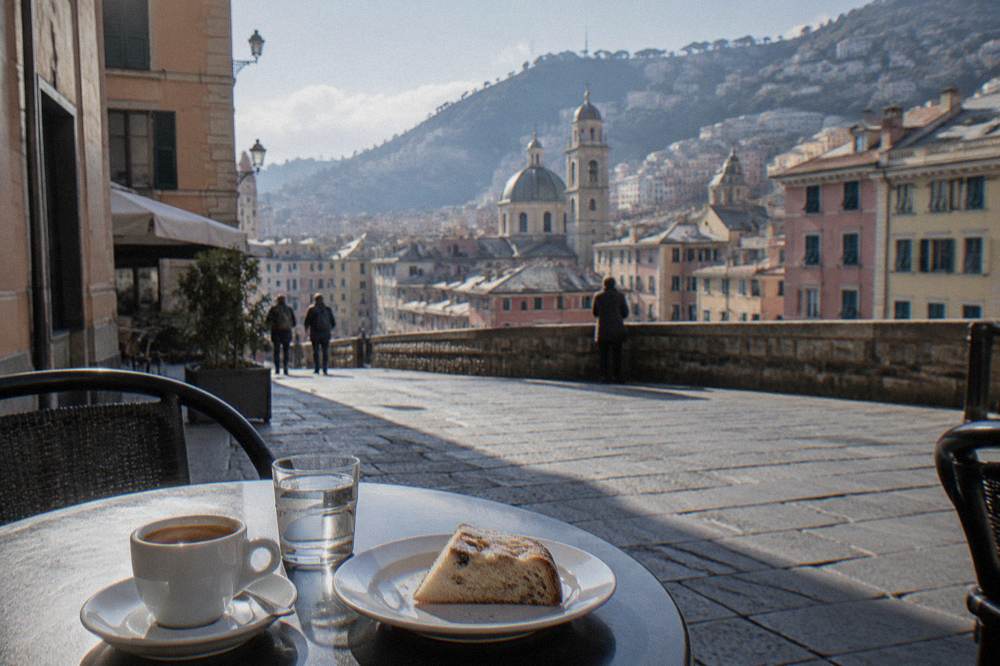
Coffee in Genoa follows the standard Italian bar pattern: you order at the till, take the receipt to the counter, drink standing, and pay bar prices rather than table prices. A cappuccino after mid-morning marks you as a visitor, and the Genoese variation worth knowing about is the humble espresso order, which the bar pours fast and short. Sitting at a table outside costs more than standing inside at the same bar.
Prices for a coffee, a cappuccino or a pastry in Genoa are best checked at the bar. What can be said is structural. The bar is the unit of Genoese café life. Pastry shops, pasticcerie, sell the sweet side: pandolce in season, and a counter of small pastries that changes through the year. Bakeries sell the savoury side, focaccia above all.
A practical way to learn the customs fast is to walk them with someone who orders for a living. The site's featured food tour, the Genoa guided food tour with wine tastings, moves through the city's counters with a guide who handles the ordering; Check availability on the operator's live listing.
Where Do Genoa Cafés And Pastry Shops Cluster?
The historic rooms sit around the centre: near Piazza De Ferrari, along Via XX Settembre and inside the caruggi of the old town between the Cathedral of San Lorenzo and the Porto Antico. Beyond the centre, Boccadasse about 4 km away, Nervi about 9 km and Pegli about 10 km each carry their own seafront café strip, and the Mercato Orientale on Via XX Settembre anchors the shopping side of the same street.
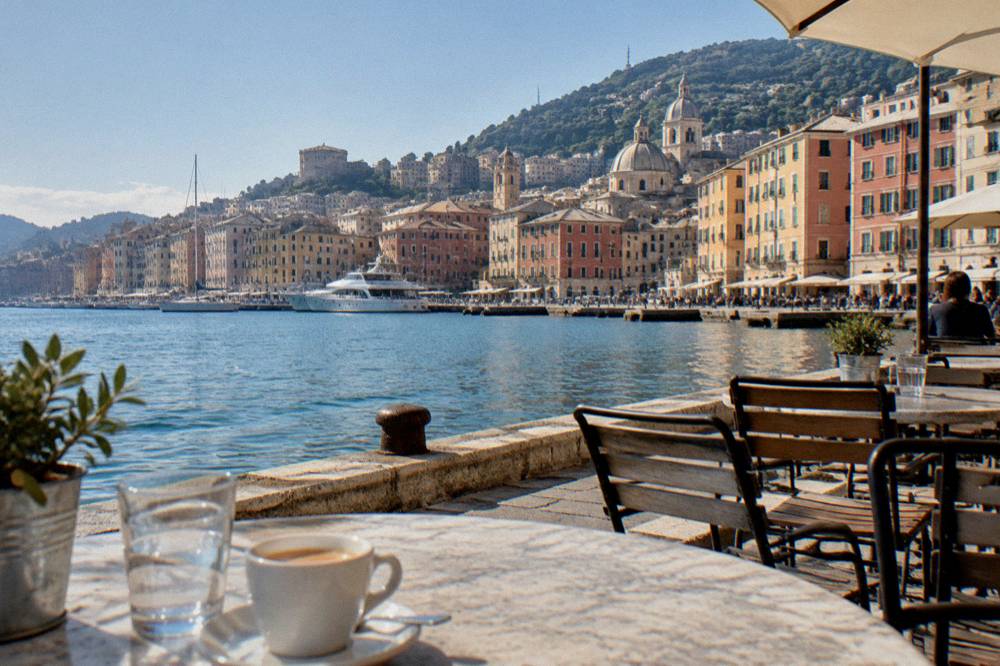
The geography matters because Genoa is a long, narrow city squeezed between the sea and the Apennine hills. A café morning in the caruggi and a café afternoon on the Corso Italia seafront, about 4 km long as a promenade, are two different experiences joined by an AMT bus ride. The city's public transport makes the hops cheap: an AMT ticket is 2.00 EUR and is valid 110 minutes on the whole network, and the Met Daily at 10.00 EUR covers 24 hours including the Volabus airport service. The Genoa public transport guide has the full fare table.
| Area | Straight-line distance from the centre | Character of the café strip |
|---|---|---|
| Old Town caruggi | In the centre | Focaccia bakeries and small bars in medieval lanes |
| Via XX Settembre and Piazza De Ferrari | In the centre | Historic rooms, pastry shops, the Mercato Orientale |
| Boccadasse | About 4 km | Seafront village cafés beside a small beach |
| Corso Italia | About 4 km | Promenade cafés along a seaside walk |
| Nervi | About 9 km | Cliff-top strip near the Passeggiata Anita Garibaldi |
| Pegli | About 10 km | Western seafront, reached by train or bus |
What Is Pandolce And When Is It Eaten?
Pandolce is Genoa's own sweet, a dense, domed bread made with candied fruit, pine nuts and raisins, and it belongs to the Christmas season: the counters that carry it fill from late autumn, and by January it disappears again. Details for the Christmas markets should be confirmed on the official site, but pandolce's own season is a matter of the bakery calendar rather than an event listing.
The name simply means sweet bread, and its texture is closer to a firm fruit-studded loaf than to a soft panettone. Two uses matter to a visitor. First, it travels: a boxed pandolce keeps well and is a standard gift to carry home from a Genoa trip, which connects to the Genoa shopping guide. Second, it pairs with the dessert course of a Genoese Christmas meal, and pastry shops in the weeks before 25 December build window displays around it.
Outside the season, the pastry counters turn to other items, and the honest position for this page is to describe that rotation without naming individual shops or prices. What can be planned around is the calendar of the city itself. The Festival della Scienza ran 22 October to 1 November 2026, the Salone Nautico ran 1 to 6 October 2026 and returns 30 September to 5 October 2027, and each pulls visitors through the centre past the same counters.
Can You Pair Genoa Cafés With Sightseeing?
Yes, and the pairing is largely a matter of geography: the historic rooms sit within walking distance of the Cathedral of San Lorenzo, the Palazzo Ducale and the Musei di Strada Nuova, while the focaccia bakeries thread the same lanes you walk anyway. The Genoa Museum Card at 24 EUR for 24 hours or 45 EUR for 48 hours covers 28 city museums and turns a café-and-museum day into a single circuit.
The Strada Nuova museums, Palazzo Rosso, Palazzo Bianco and Palazzo Doria-Tursi, open daily 10:00 to 18:30 in the winter timetable running 28 September 2026 to 18 April 2027, with the caveat that on Mondays only Palazzo Rosso can be visited. Palazzo Doria-Tursi holds Paganini's violin Il Cannone, built in Cremona in 1743. The Via Garibaldi and Musei di Strada Nuova guide covers the palaces, and the Genoa Museum Card page works through the pass arithmetic.
| Sightseeing stop | Nearest café terrain | Ticket figure from this site's sources |
|---|---|---|
| Aquarium of Genoa and Porto Antico | Caruggi and the old harbour edge | Adult from 26.00 EUR, dynamic |
| Musei di Strada Nuova | Strada Nuova and the centre | Combined ticket with Sant'Agostino 14 EUR full |
| Palazzo Ducale exhibitions | Old Town lanes | Show pages list per exhibition |
| Cathedral of San Lorenzo | Caruggi | Cathedral entry free or donation |
| Spianata Castelletto | Castelletto, above the centre | Castelletto Levante lift 1.20 EUR a ride |
The Spianata Castelletto viewpoint deserves the pairing logic. The lift from Piazza Portello, a 57 m rise, runs daily 06:40 to 24:00 and costs 1.20 EUR, and from the terrace the whole city and its harbour sit below: a morning that rises for the view and descends into the caruggi for focaccia uses Genoa's vertical geography exactly as built. The Spianata Castelletto guide has more.
Which Day Trips Pair With A Pastry Stop?
The strongest pastry-driven day trip is Recco, about 17 km east, the home of focaccia di Recco IGP, made only in Recco, Camogli, Sori and Avegno since the 2015 registration. Camogli at about 18 km, San Fruttuoso at about 22 km and Portofino at about 25 km extend the same coast, and the Golfo Paradiso Two Gulfs boat tour from Genoa Porto Antico stops at Camogli, San Fruttuoso and Portofino.
The boat leaves from Porto Antico at 11:00 and reaches Camogli at 11:45, with crossings of about 30 minutes between Camogli and San Fruttuoso and between San Fruttuoso and Portofino. Fares reported for the tour run about 29 EUR for the full day and 21 to 26 EUR for a half day with one stop, figures to confirm on the operator's own page. From Camogli, boats to San Fruttuoso run year round, and the FAI-run abbey there costs 10 EUR full, 5 EUR for visitors aged 6 to 18, and admits under-5s free.
| Day trip | Straight-line distance | Getting there |
|---|---|---|
| Recco | About 17 km | Regional train along the coast |
| Camogli | About 18 km | Regional train or Two Gulfs boat |
| San Fruttuoso | About 22 km | Boat from Camogli, about 30 minutes |
| Santa Margherita Ligure | About 24 km | Train, then bus 782 to Portofino |
| Portofino | About 25 km | Boat, or bus 782 on a Met Daily |
| Sestri Levante | About 40 km | Regional train |
The Genoa to Portofino and Genoa to Cinque Terre guides carry the full transport detail, and there is no regular scheduled ferry from Genoa to the Cinque Terre: the operator runs a Genoa-Cinque Terre tour on set dates only, a point the ferry FAQ page covers directly.
When Is Terrace Season For Genoa Cafés?
The official 1971-2000 climate normals for Genoa Sestri show why the terrace and the indoor counter trade places through the year: July and August carry mean daily highs of 27.3 and 27.7 C, while January sits at 11.5 C with a mean nightly low of 5.5 C. Rain peaks in October at 171.3 mm and bottoms out in July at 24.2 mm, so the dry outdoor months and the pandolce months are not the same months.
| Month | Mean daily high C | Mean nightly low C | Rain mm |
|---|---|---|---|
| Jan | 11.5 | 5.5 | 101.8 |
| Mar | 14.6 | 8.2 | 81.7 |
| May | 20.5 | 14.2 | 72.4 |
| Jul | 27.3 | 20.9 | 24.2 |
| Sep | 24.4 | 17.9 | 136.4 |
| Oct | 20.0 | 13.8 | 171.3 |
| Dec | 12.5 | 6.5 | 93.1 |
The planning conclusion is straightforward. A summer visit leans on the seafront strip: the Corso Italia promenade, Boccadasse and Nervi, where the cliff-top Passeggiata Anita Garibaldi runs about 2 km from the harbour to Capolungo. A winter visit leans on the historic rooms and the pandolce counters, with the museums as the rain plan, and the Genoa in the rain and best time to visit Genoa pages do that arithmetic in full. Sea swimming is a separate question: ARPAL's 2026 bathing-water classification rates the Boccadasse point poor and the Nervi point good, so a dip and a coffee do not automatically share a beach.
How Do You Bring Genoa Pastry Skills Home?
The city's cooking classes are the bridge between eating the pastry counter and reproducing it, and Genoa's strongest version of this is the pesto lesson: pesto genovese is made with Basilico Genovese PDO basil, and classes teach the mortar technique that machine blending replaces. The rooftop pesto and fresh pasta classes and the mortar lesson with a world-champion instructor both end with a full tasting rather than a takeaway box.
The pesto story is protected at both ends. The basil is a PDO product with its own consortium, and the dish is covered in the pesto genovese guide. Class formats vary: some run on rooftops, some in private gardens with lunch, some in home kitchens, and the roster on this site lists each with its own page, rating and from-price rendered from live data rather than typed here.
What About A Full Café-And-Sightseeing Day?
A one-day pattern that works on paper: morning focaccia in the caruggi, the Aquarium of Genoa at the Porto Antico, an espresso stop near Piazza De Ferrari, the afternoon in the Strada Nuova museums or the Spianata Castelletto viewpoint, and an evening passeggiata along Via XX Settembre. The Genoa in one day itinerary sequences exactly this kind of day, and a 24-hour Museum Card at 24 EUR covers the museum legs.
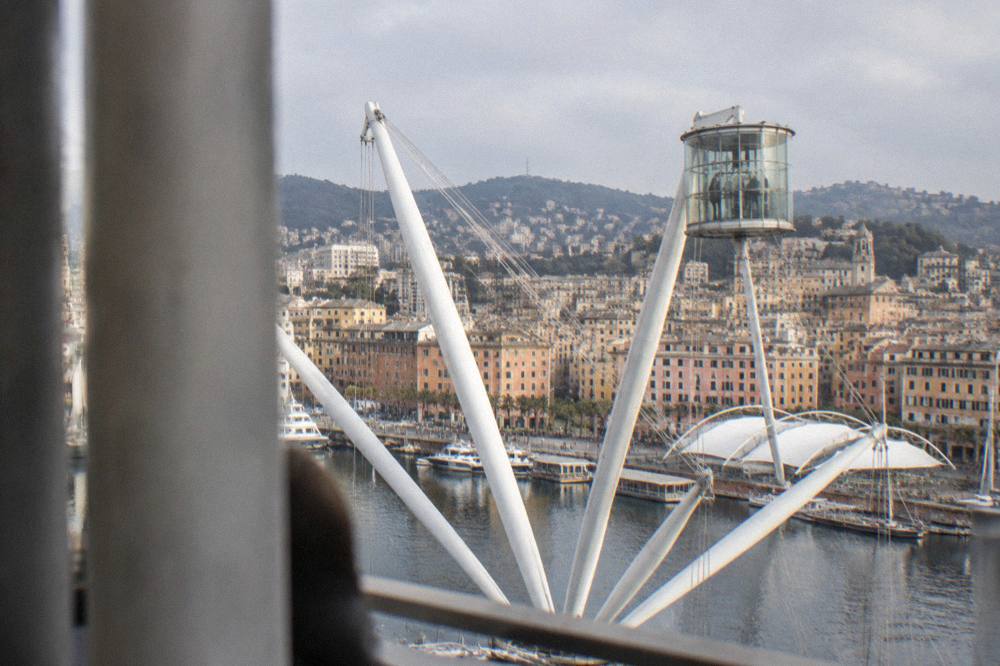
The Aquarium anchors the harbour end. It is open 365 days a year, with fixed-date adult tickets starting from 26.00 EUR under dynamic pricing, children aged 4 to 12 from 16.00 EUR, and under-4s free; the combined ticket with the Biosfera and the Bigo lift starts from 37.00 EUR for an adult. The Aquarium tickets page explains the pricing behaviour, and the Porto Antico guide covers the wider waterfront, redeveloped by Renzo Piano for the 1992 Columbus Expo.
For a longer stay the Genoa in two days and Genoa in three days itineraries add Nervi, Staglieno, which opened to the public on 1 January 1851 after works begun in 1844, and the Lanterna, built in 1128, rebuilt in 1543 and billed as the tallest lighthouse in the Mediterranean at 117 m above the sea. Arriving and departing are covered too: the airport sits about 7 km from the centre, and the how to get to Genoa page collects the train, plane and ferry options in one place.
Common Questions About Genoa Cafés
What is pandolce?
Pandolce is Genoa's traditional sweet bread, a dense loaf with candied fruit, pine nuts and raisins, tied to the Christmas season. Pastry shops carry it from late autumn, and it keeps well enough to travel home as a gift.
Do Genoa cafés serve focaccia?
Yes, focaccia is the everyday savoury item across the city's bakeries and bars, eaten at breakfast or as a snack. The distinct focaccia di Recco, an IGP product since 2015, is made only in Recco, Camogli, Sori and Avegno.
Is coffee expensive at a table in Genoa?
That depends on the café. The structural point holds everywhere in Italy: standing at the bar costs less than sitting at a table in the same establishment.
Can you walk between Genoa cafés and the main sights?
Yes. The historic rooms near Piazza De Ferrari, the caruggi around the Cathedral of San Lorenzo and the Porto Antico are all inside the compact centre, and the Castelletto Levante lift at 1.20 EUR a ride connects the centre to the Spianata Castelletto viewpoint.
Which day trip is best for pastry lovers?
Recco, about 17 km east, is the home of focaccia di Recco IGP. Camogli, San Fruttuoso and Portofino extend the same coast by train or by the Golfo Paradiso boat tour from the Porto Antico.
When is pandolce season?
The colder months, building to Christmas. Christmas market details in Genoa should be checked on the official site.
The pattern that holds the whole subject together is simple: Genoa runs its café culture at bar speed, in historic rooms and bakery lanes that sit inside the same walkable centre as the UNESCO-listed Strade Nuove and the Palazzi dei Rolli, inscribed in 2006 across 42 palaces. Eat the focaccia in the morning, order standing, save pandolce for winter, and let the Genoa Travel Guide itineraries do the sequencing for everything else the city and its coast have on the calendar.