Why Is Genoa Famous?
Why is Genoa famous? The coastal Ligurian port city is known for its medieval republic, UNESCO Palazzi dei Rolli, the Aquarium, pesto genovese and the Lanterna lighthouse.
Genoa is a coastal city in Liguria, north-west Italy, squeezed between the Ligurian Sea and the Apennine hills, and its fame rests on two foundations: centuries as one of the great maritime republics of the Mediterranean, and a modern identity built around UNESCO-listed Renaissance palaces, the largest aquarium in Italy, an old town of narrow alleys known as caruggi, and a food tradition that gave the world pesto genovese. The comune counted 566,247 residents at 1 January 2026, reported from ISTAT data, and the port still moves 2.4 million cruise passengers and 2.6 million ferry passengers a year, per the port authority's own figures. What the city is actually known for, and what each claim rests on, is examined section by section.
Why Is Genoa Famous?
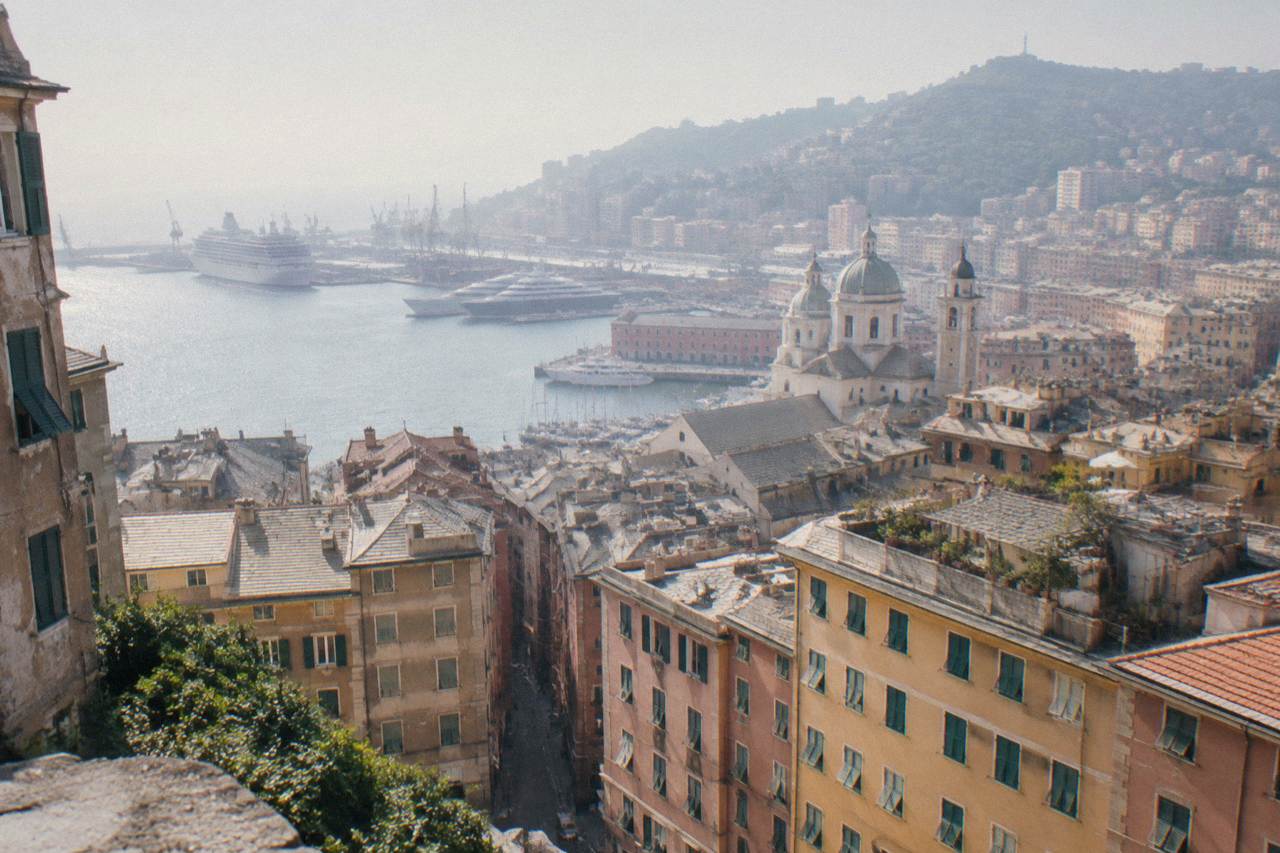
Genoa is famous as the capital of a merchant republic that lasted until 1797, as the city whose Strade Nuove and Palazzi dei Rolli were inscribed by UNESCO in 2006, as the birthplace of Christopher Columbus, whose boyhood home on Via di Porta Soprana is a visited site, and as the home of pesto genovese, focaccia and one of the largest medieval historic centres in Europe, covering 113 hectares of caruggi between the port and the modern streets.
Each of those claims has a primary source behind it, which is what separates a famous city from a hyped one. The Republic of Genoa was an aristocratic state that ended with Napoleonic occupation and the Ligurian Republic in 1797, per the Treccani encyclopedia's entry on the republic. The UNESCO inscription, "Genoa: Le Strade Nuove and the system of the Palazzi dei Rolli", covers 42 palaces that appeared on the Rolli lists of 1576, 1588, 1599, 1614 and 1664, according to the UNESCO documentation and the city's own UNESCO office. The old town figure, 113 hectares and the wording "one of the largest medieval historic centres in Europe", comes from the city's official tourism site.
The fame is not only historical. Genoa was European Capital of Culture in 2004, shared with Lille, reported in contemporary coverage of the year, and was European Capital of Sport in 2024. The Aquarium of Genoa opened in 1992 for the Columbus Expo and has run 365 days a year since, with the Renzo Piano redevelopment of the Porto Antico, including the Bigo lift, dated to the same 1992 project by Piano's own practice. Readers who want the practical side can start with what Genoa is worth visiting for before going deeper.
Why Is The Old Republic Part Of Genoa's Fame?
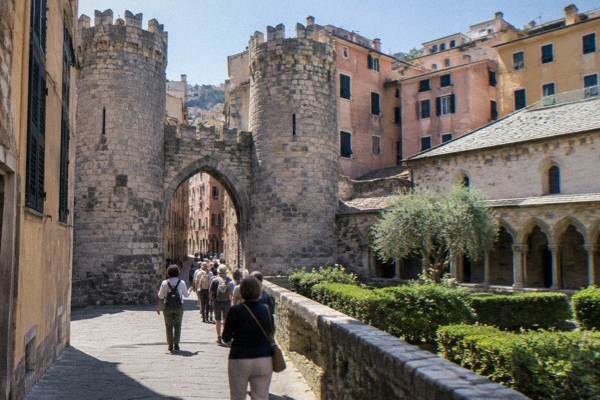
Genoa's fame as a republic comes from a state run by merchant aristocrats that endured until 1797, when Napoleonic occupation replaced it with the Ligurian Republic, and from the physical evidence that survives: the 113-hectare medieval old town, the Lanterna lighthouse first built in 1128 and rebuilt in 1543, and the Casa di Colombo, where Christopher Columbus lived between 1455 and 1470 after his family moved in when he was four years old.
The republic's longevity is the headline. Very few European states survived from the late eleventh century to 1797 under continuous self-government, and Treccani's encyclopedia entry traces exactly that span. The wealth that government protected paid for the city's fabric, which is why the old town still reads as a medieval merchant city rather than a rebuilt one.
Three dated anchors carry the story for a visitor:
| Famous landmark | Date in the record | What the source says |
|---|---|---|
| Lanterna | Built 1128, rebuilt 1543 | A 77 m tower on a 40 m rock, 117 m above the sea, billed as the tallest lighthouse in the Mediterranean, per the city's tourism site |
| Casa di Colombo | 1455 to 1470 | The house where Columbus lived as a boy, per visitgenoa.it |
| Staglieno cemetery | Works from 1844, opened 1 January 1851 | Opened to the public on that date, per the comune's own Staglieno page |
The Lanterna deserves its own note because it is the emblem visitors recognise from the sea. The figures above come from the official tourism site, and the lighthouse has a dedicated entrance ticket route covered elsewhere on this site, alongside the question of what the symbol of Genoa actually is.
The famous sights cluster tightly, which is why walking tours are the standard way to see them. The city's historical centre is compact enough that a guided walk can cover the Cathedral of San Lorenzo, Piazza De Ferrari and the caruggi in a single loop, and readers deciding how long to stay should read how many days in Genoa is enough before booking anything.
The sights sit close enough to explore at your own pace. Book a self-guided audio tour here.
Why Are The Palazzi Dei Rolli UNESCO-Famous?
The Palazzi dei Rolli are famous because UNESCO inscribed "Genoa: Le Strade Nuove and the system of the Palazzi dei Rolli" in 2006, covering 42 palaces that were listed on the Rolli of 1576, 1588, 1599, 1614 and 1664, public registers in which Genoese aristocratic palaces were ranked for hosting state visits, a system the UNESCO documentation describes as unique among European cities of the period.
The Strade Nuove, today's Via Garibaldi and parallel streets, were the address of that system, and three of the palaces now house the Musei di Strada Nuova: Palazzo Rosso, Palazzo Bianco and Palazzo Doria-Tursi. The museums run a winter timetable from 28 September 2026 to 18 April 2027, open daily 10:00 to 18:30, with the restriction that on Mondays only Palazzo Rosso can be visited, per the museums' own page. Palazzo Doria-Tursi also holds Paganini's violin "Il Cannone", built in Cremona in 1743 by Bartolomeo Giuseppe Guarneri, per the museums' Paganini rooms page.
The practical lever for palace-heavy visits is the Genoa Museum Card, which at the 2026 rates costs 24 EUR for 24 hours or 45 EUR for 48 hours and covers 28 city museums, 19 municipal plus 9 others, per the museums' own conditions page. Twice a year the palaces open more broadly: the Rolli Days ran their autumn 2026 edition from 16 to 18 October, with free entry to palaces and booking required, per the official Rolli Days page. The full palace story is on this site's guide to the Palazzi dei Rolli.
What Food Is Genoa Famous For?
Genoa is famous for pesto genovese, made with Basilico Genovese DOP basil per the basil's own consortium, for focaccia and farinata baked across the city, and for trofie and pansoti as the pasta shapes that carry those sauces, a tradition documented on this site's food pages and anchored by the focaccia di Recco, which has held IGP status since 2015 and is produced only in Recco, Camogli, Sori and Avegno.
The basil claim is the load-bearing one. The Basilico Genovese DOP consortium specifies that pesto genovese uses the protected basil grown in Liguria, which is why the sauce's name and the leaf's name travel together. The focaccia di Recco IGP, reported by the Riviera's tourism sources, ties a second famous bread to four named towns a short train ride down the coast. The rest of the planning pages sit on Genoa Travel Guide.
For visitors, the fastest way into that fame is a guided tasting. The Check availability link beside this site's walking tour page is one option; the food question itself, with dishes and where they came from, is answered in full at what food is Genoa famous for.
What Sights Is Genoa Famous For Today?
Genoa is famous today for the Aquarium of Genoa, open 365 days a year since 1992 with fixed-date adult tickets from 26.00 EUR, for the Bigo panoramic lift and Biosfera at the Renzo Piano-redeveloped Porto Antico, for the Galata Museo del Mare's 12,000 square metres over five levels, and for Boccadasse and Nervi on the coast, all figures from the venues' own pages.
The Aquarium anchors the modern fame. Its ticket page lists dynamic fixed-date pricing, adult from 26.00 EUR, reduced from 20.00 EUR, children 4 to 12 from 16.00 EUR and under-4s free, plus a combined Aquarium, Biosfera and Bigo ticket from 37.00 EUR for an adult. The Bigo lift alone is listed at 6.00 EUR adult, per the Aquarium's own site.
The coastal names complete the picture:
| Famous place in Genoa | Distance from Piazza De Ferrari (straight line) | Claim to fame per the official tourism site |
|---|---|---|
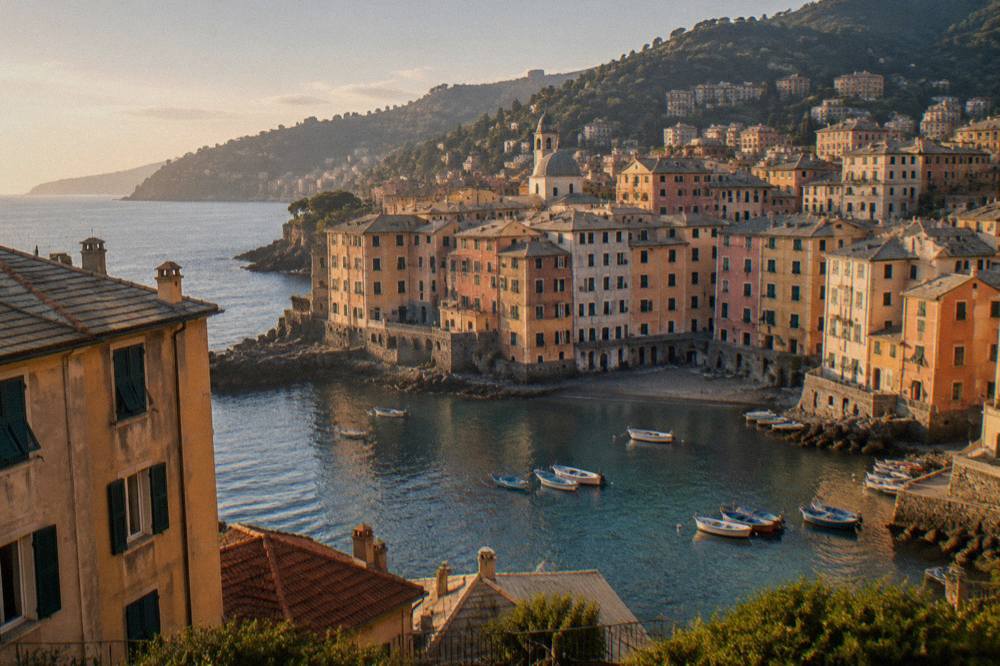
| Boccadasse | about 4 km | An old fishermen's village between Corso Italia and Capo Santa Chiara |
| Nervi | about 9 km | The Passeggiata Anita Garibaldi cliff walk and the Parchi di Nervi, 9.2 hectares |
| Lanterna | within the city | Built 1128, rebuilt 1543, 117 m above the sea |
| Porto Antico | within the city | Renzo Piano redevelopment dated 1992 by his practice |
One caution belongs here: ARPAL's 2026 bathing-water classification, reported from the region's official register, rates the Boccadasse sampling point as poor (SCARSA) and Nervi as good (BUONA), so swimming fame and scenery fame are different things. The swimming question is covered at can I swim in Genoa topics elsewhere on this site, and the wider walkability of Genoa is a separate answer.
Is Genoa Famous As A Gateway To Portofino And The Cinque Terre?
Genoa is famous as the transport hub of the Italian Riviera, sitting about 25 km from Portofino, about 24 km from Santa Margherita Ligure, about 18 km from Camogli, about 40 km from Sestri Levante and about 67 km from the Cinque Terre in straight-line terms, with AMT's Met Daily ticket at 10.00 EUR covering the whole network including line 782 to Portofino, per the AMT fare table.
That geography is why so many Riviera itineraries start here. The Golfo Paradiso operator runs its Two Gulfs tour from Genoa Porto Antico on listed dates from March through 24 October 2026, per the operator's own route page, and the Tigullio maritime service runs boat lines from Rapallo and Santa Margherita Ligure toward Portofino, San Fruttuoso and the Cinque Terre. There is no regular scheduled ferry from Genoa to the Cinque Terre in the sources; the operator's own listing shows a tour on set dates only, and that question has its own answer at is there a ferry from Genoa to the Cinque Terre.
For readers weighing the two names against each other, whether it is better to go to Genoa or Portofino settles it with the train and boat facts rather than adjectives.
Common Questions About Genoa's Fame
Why Is Genoa Famous?
Genoa is famous for its merchant republic that lasted until 1797, its UNESCO-inscribed Strade Nuove and Palazzi dei Rolli, Christopher Columbus's boyhood home, the Aquarium of Genoa, pesto genovese and the Lanterna lighthouse, a combination of history, sights and food few Italian cities can match.
What famous person is from Genoa?
Christopher Columbus lived at the Casa di Colombo between 1455 and 1470, per the city's tourism site. The violinist Niccolò Paganini is tied to the city through his 1743 Guarneri violin "Il Cannone", preserved at Palazzo Doria-Tursi. More names are listed at what famous person is from Genoa.
Is Genoa famous for pesto?
Yes. Pesto genovese is made with Basilico Genovese DOP, per the basil consortium's own site, and the sauce is the city's best-known food export alongside focaccia and farinata.
Why is the old town famous?
The historic centre covers 113 hectares and is described by the city's official tourism site as one of the largest medieval historic centres in Europe, a web of caruggi running from the port inland.
Is the port still part of Genoa's fame?
Yes. The port authority's own figures report 2.4 million cruise passengers and 2.6 million ferry passengers a year, with cruise ships at Ponte dei Mille and Andrea Doria and ferries at Calata Chiappella, Ponte Caracciolo and Ponte Colombo.
Was Genoa ever a capital of culture?
Genoa was European Capital of Culture in 2004, shared with Lille, and European Capital of Sport in 2024, both reported in contemporary coverage.