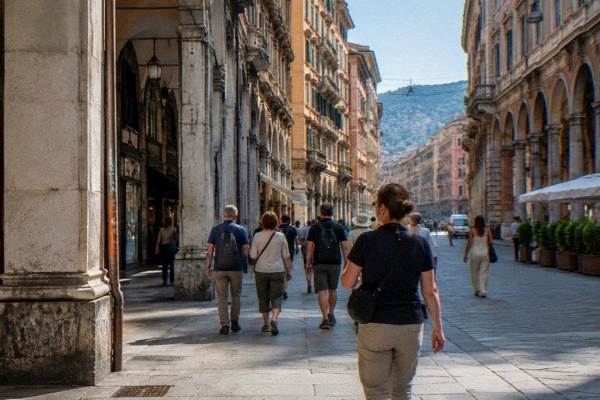
Is Genoa Worth Visiting?
A clear answer to whether Genoa is worth visiting, with ticket prices, transport costs, climate data and day-trip distances, based on what the official sources say.
Genoa, the coastal city in Liguria on the Ligurian Sea, rarely appears on a first-time Italy itinerary, and that is exactly why the question deserves a straight answer rather than a brochure. The city sits on a narrow strip between the sea and the Apennine hills, holds a UNESCO World Heritage inscription, an old town of 113 hectares that the official tourism site describes as one of the largest medieval historic centres in Europe, and a port that handled 2.4 million cruise passengers and 2.6 million ferry passengers in its latest published figures. This page reports what the primary sources say the city contains, what it costs to see it, and where it fits compared with the famous towns down the coast.
Is Genoa Worth Visiting?
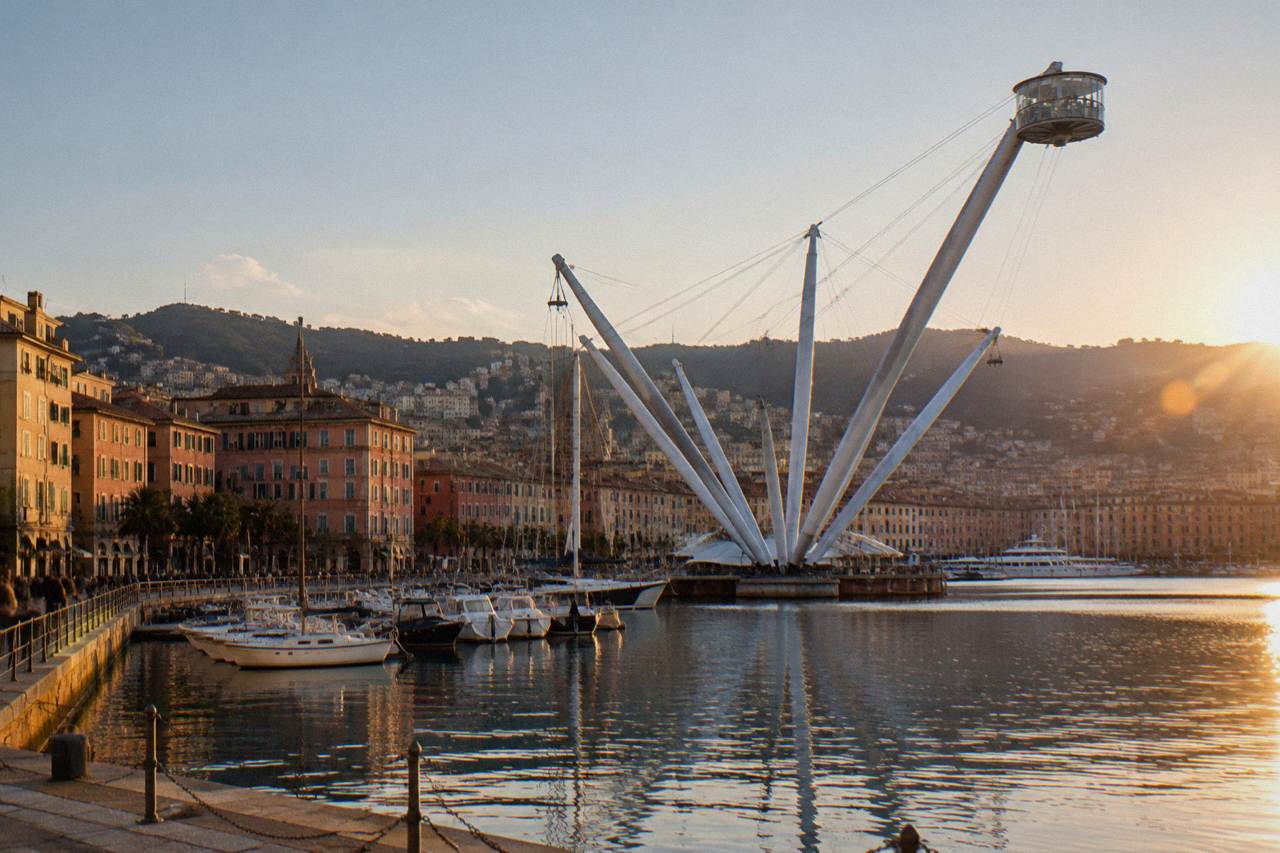
Yes, for a traveller whose interests run to dense history, museums, food and a working port city rather than resort beaches, Genoa is worth visiting: it has one UNESCO site covering 42 Rolli palaces, an Aquarium open 365 days a year, a medieval old town of 113 hectares, and a museum ticket system that starts at 14 EUR for the Strada Nuova palaces, all in a city of 566,247 residents that costs 2.00 EUR to cross by bus and metro. The honest qualifier is that Genoa is a lived-in port and administrative city, not a polished open-air museum. That difference is precisely what some travellers want and others do not.
The UNESCO inscription, "Genoa: Le Strade Nuove and the system of the Palazzi dei Rolli", covers the late Renaissance palaces of Via Garibaldi and the surrounding system, inscribed in 2006. The palaces were distributed across lists drawn up in 1576, 1588, 1599, 1614 and 1664 for state visits, and 42 of them form the inscribed property. The Musei di Strada Nuova sit inside three of them: Palazzo Rosso, Palazzo Bianco and Palazzo Doria-Tursi, the last of which holds Paganini's violin "Il Cannone", built in Cremona in 1743 by Bartolomeo Giuseppe Guarneri. Under the winter timetable running 28 September 2026 to 18 April 2027, the three museums open daily 10:00 to 18:30, with the restriction that on Mondays only Palazzo Rosso can be visited. A combined ticket with the Museo di Sant'Agostino costs 14 EUR full price, 9 EUR reduced.
Beyond the palaces, the sight list is long for a city of this size. Palazzo Ducale runs major exhibitions, with World Press Photo 2026 to 8 December 2026 and a show of Renoir, Monet, Toulouse-Lautrec and Cézanne from 15 October 2026. The Cathedral of San Lorenzo anchors the old town, the Aquarium of Genoa at the Porto Antico opened in 1992 and stays open every day of the year, the Lanterna lighthouse, built in 1128 and rebuilt in 1543, stands 117 m above the sea and is billed as the tallest lighthouse in the Mediterranean, and Staglieno cemetery is a monument in its own right, with visitors advised to check the official site for details. For the full rundown, the site's things to do in Genoa page lists the sights in detail.
To trace the palaces and the old town at your own pace, book a self-guided audio tour here.
What Does A Day In Genoa Actually Cost?
A sightseeing day in Genoa can run from about 16 EUR in entry fees to about 45 EUR per person: the AMT bus and metro ticket is 2.00 EUR for 110 minutes, the Strada Nuova combined museum ticket is 14 EUR full price, the Genoa Museum Card is 24 EUR for 24 hours covering 28 museums, and a fixed-date adult Aquarium ticket starts from 26.00 EUR, with the Aquarium, Biosfera and Bigo combined ticket from 37.00 EUR. Add the city's tourist tax on lodging, set by the comune of Genoa at 2.00 EUR per person per night in a 1-star hotel and 4.00 EUR in a bed and breakfast, for the first eight nights.
The Museum Card is the value pivot for a museum-heavy visit. The 2026 rates are 24 EUR for 24 hours and 45 EUR for 48 hours, and the card covers 28 city museums, 19 municipal plus 9 others. Only the "+bus" variants include AMT transport, and no card variant covers the Volabus airport bus, the Navebus or trains. The Aquarium prices are dynamic, so the starting figures move with the date; children aged 4 to 12 enter from 16.00 EUR and under-4s go free.
| Item | Price | Notes |
|---|---|---|
| AMT single ticket | 2.00 EUR | Valid 110 minutes, whole urban network |
| Met Daily 24h | 10.00 EUR | Full AMT network, required for Volabus |
| Lifts and Sant'Anna funicular | 1.20 EUR | Per ride |
| Strada Nuova combined ticket | 14 EUR full, 9 reduced | Three palaces plus Sant'Agostino |
| Genoa Museum Card 24h | 24 EUR | 28 museums, 2026 rate |
| Genoa Museum Card 48h | 45 EUR | 28 museums, 2026 rate |
| Aquarium adult, fixed date | from 26.00 EUR | Dynamic pricing, open 365 days |
| Aquarium plus Biosfera plus Bigo | from 37.00 EUR | Adult, dynamic |
| Airport taxi to centre | 25 EUR per car | Fixed fare, 30 EUR over 4 people |
Getting in from Genova Cristoforo Colombo airport has one detail worth knowing in advance: the Volabus requires the 10.00 EUR Met Daily ticket, valid 24 hours across the full network. The airport bus requires the Met Daily ticket at 10.00 EUR, which then covers the whole AMT network for 24 hours, and it reaches Genova Piazza Principe, Piazza De Ferrari and Genova Brignole in about 30 minutes. The fixed taxi fare to the centre is 25 EUR per car.
For a first pass over the city on foot, the related tour on this page covers the old town with an audio and written guide. It suits a low-commitment first day, and you can Check availability alongside the site's Genoa walking tour guide.
Is Genoa Easy To Reach And Get Around?
Genoa is straightforward to reach and compact to explore: the airport is about 7 km west of Piazza De Ferrari with the Volabus covering the run in about 30 minutes, trains reach Milan in a reported 1h30 to 2h, the metro runs 7 km through 8 stations from Brin to Brignole, and the AMT network of buses, lifts and funiculars sells a single 2.00 EUR ticket valid 110 minutes across the whole system. The city's vertical geography is handled by 14 public lifts and two funiculars, including the Castelletto Levante lift, which rises 57 m from Piazza Portello to the Spianata Castelletto viewpoint and runs daily 06:40 to 24:00.
The Zecca-Righi funicular shares the same daily hours, 06:40 to 24:00, and each lift or funicular ride costs 1.20 EUR. On the climate side, the official 1971-2000 normals for Genoa Sestri show a Mediterranean coastal pattern: mean daily highs of 11.5 C in January rising to 27.7 C in August, mean lows of 5.5 C in January and 21.0 C in August, and annual rainfall totalling 1079.2 mm, with October rainfall at 171.3 mm and July at 24.2 mm. That October rainfall figure matters for trip timing more than any temperature does. The rest of the planning pages sit on Genoa Travel Guide.
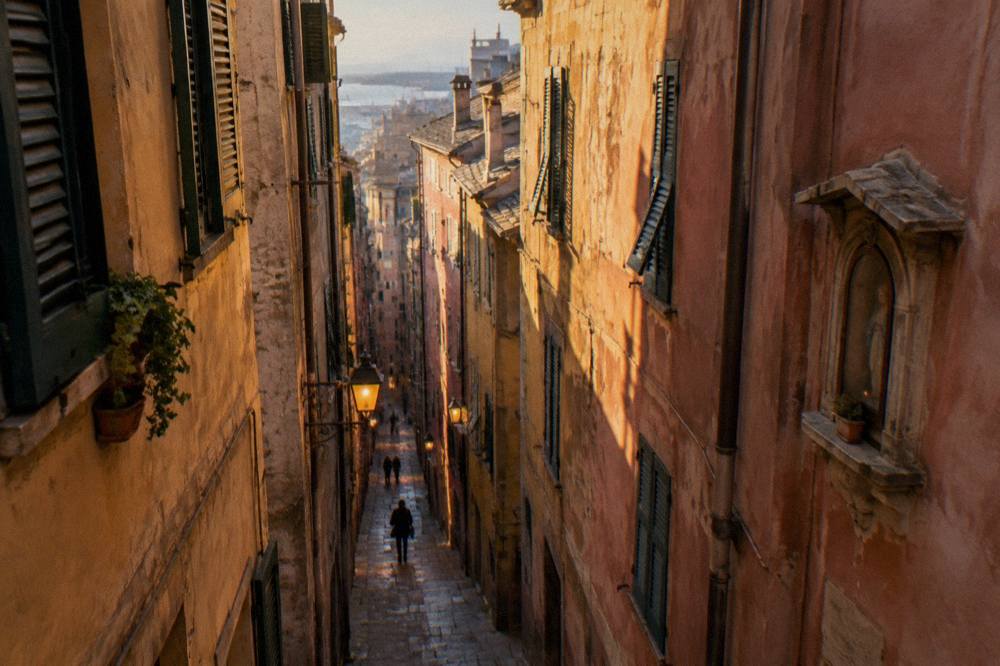
One planning caution: Genoa is famously steep and layered, and its walking surfaces in the old town are narrow and paved in old stone. The question of how walkable the city really is has its own answer at is Genoa a walkable city, and how long to allow has its own at how many days in Genoa is enough.
What About The Food?
Genoa's food case rests on pesto genovese, made with Basilico Genovese PDO basil, focaccia, farinata, trofie and pansoti, plus focaccia di Recco, which has been IGP protected since 2015 and is produced only in Recco, Camogli, Sori and Avegno a short way down the coast. The city is the capital of this cuisine, not a satellite of it, and the food is embedded in the old town's daily commerce rather than staged for visitors.
The food question is big enough that this site gives it a dedicated answer at what food is Genoa famous for. What a short visit report can add is the structure: pesto genovese is bound to its PDO basil by the consortium's own rules, and the Recco focaccia's IGP status since 2015 ties the name to four named production towns of which Camogli and Recco are both practical day trips from Genoa. Eating in Genoa therefore connects directly to the geography around it.
Guided food experiences are one of the deepest categories of bookable product in the city, spanning tastings, full meals and pesto made with a mortar. The fuller category is worth browsing for anyone planning the trip around the table.
Is Genoa A Good Base For Day Trips?
Genoa works well as a base for the Ligurian coast: Portofino is about 25 km away in a straight line, Camogli about 18 km, Santa Margherita Ligure about 24 km, the Cinque Terre about 67 km, Portovenere about 82 km, Milan about 119 km and Nice and Monaco about 141 km, with trains to Milan reported at 1h30 to 2h and a boat tour from the Porto Antico reaching Portofino with free time ashore. The city sits at the centre of the coast it is usually bypassed in favour of.
The Golfo Paradiso operator runs its Two Gulfs tour from Genoa Porto Antico on listed dates from March, calling at Nervi, Recco, Camogli, San Fruttuoso and Portofino, with the Camogli to San Fruttuoso and San Fruttuoso to Portofino legs each about 30 minutes. The San Fruttuoso abbey, run by FAI, charges 10 EUR full entry. On the eastern side, the Cinque Terre Treno Card runs 22.00 to 35.00 EUR for one adult day depending on date band, and the Via dell'Amore path, open 29 March to 24 October 2026 from 09:00 to 21:00, is included in the card with a booked time slot.
| Day trip from Genoa | Straight-line distance | Sourced connection |
|---|---|---|
| Camogli | about 18 km | Two Gulfs boat tour, listed dates |
| Portofino | about 25 km | Boat tour with free time ashore |
| Santa Margherita Ligure | about 24 km | Regional train along the coast |
| San Fruttuoso | about 22 km | Boat from Camogli, about 30 min |
| Cinque Terre | about 67 km | Regional train, Treno Card 22.00 to 35.00 EUR |
| Portovenere | about 82 km | Ferry connections from the gulf |
| Milan | about 119 km | Train reported at 1h30 to 2h |
| Turin | about 123 km | Train reported at 1h36 to 2h18 |
| Nice and Monaco | about 141 km | Train via Ventimiglia |
Comparisons with the famous names nearby are inevitable. The question of whether to give the days to the city or to the peninsula has its own treatment at is it better to go to Genoa or Portofino, and the Milan day-trip question at is Genoa worth a day trip from Milan. One further honest note on the sea: ARPAL's 2026 bathing-water classification assigns Boccadasse the class SCARSA, reported as poor, while Nervi is classed BUONA. Genoa rewards a sea view; swimming is better done with the classifications in hand.
Common Questions About Visiting Genoa
Is Genoa Worth Visiting?
For history, museums, food and a working port atmosphere, yes: the city has a UNESCO inscription covering 42 Rolli palaces, an old town of 113 hectares, an Aquarium open 365 days a year and a 24 EUR museum card covering 28 museums, all reachable on a 2.00 EUR transit ticket.
Is Genoa cheaper than other Italian cities?
This page can only report what the sources state for Genoa itself: 2.00 EUR transit, 14 EUR Strada Nuova combined ticket, 24 EUR museum card, Aquarium from 26.00 EUR and a city tax of 2.00 to 4.00 EUR per night by lodging category. No comparison with other cities' costs is sourced here.
How many days does Genoa need?
The dedicated answer lives at how many days in Genoa is enough. The sight count, one UNESCO system, three Strada Nuova museums, Palazzo Ducale exhibitions, the Aquarium, Staglieno and the coast villages, supports at least two full days before day trips begin.
Does Genoa have good beaches?
Boccadasse has a small public pebble beach and Nervi has rock access along the Passeggiata Anita Garibaldi. ARPAL's 2026 classification rates Boccadasse SCARSA, reported as poor, and Nervi BUONA, so swimmers should check the current classification before choosing where to enter the water.
Can you visit Portofino and the Cinque Terre from Genoa?
Yes. Boat tours run from the Porto Antico to Portofino with free time ashore, the Two Gulfs tour calls at Camogli, San Fruttuoso and Portofino on listed dates, and regional trains reach the Cinque Terre, about 67 km away in a straight line, with the Treno Card at 22.00 to 35.00 EUR for one adult day.
Is Genoa safe for tourists?
Safety statistics and street-by-street ratings are outside what this site's sources support, and the dedicated page on the question avoids them too. Standard city caution applies, and the emergency number in Italy is 112.
The verdict, stated plainly: Genoa rewards travellers who want a real city with layered history, serious food and a strategic base on the Ligurian coast, and it underdelivers for anyone expecting a resort. The sources above, ticket pages, the UNESCO listing, the climate normals and the comune's own tariff tables, describe a place that is cheaper to see than its fame suggests and denser with sights than its reputation admits.