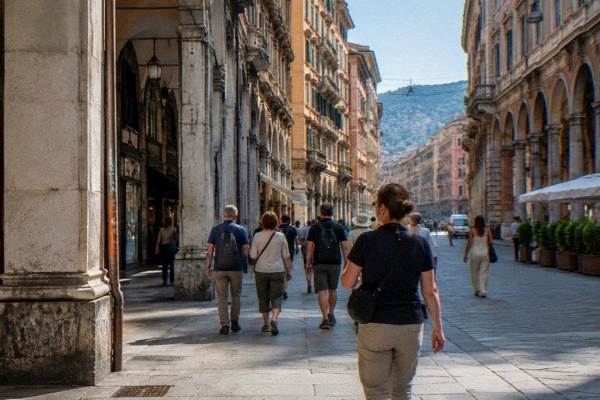
Is Genoa A Walkable City?
Yes, Genoa is a walkable city for its centre, old town and seafront, with lifts and a funicular handling the hills. Here is what the sources say about walking in Genoa.
Genoa, the coastal city in Liguria on the Ligurian Sea, is genuinely a walkable city, with one large qualification: the flat, compact part you can cross on foot sits at the bottom of steep hills, and the city runs fourteen public lifts and two funiculars to deal with exactly that. The old town covers 113 hectares and is described by the city's own tourism site as one of the largest medieval historic centres in Europe, yet the whole strip of land between the sea and the Apennine hills is narrow, which keeps the main sights close together. This page sets out what the published figures say about walking in Genoa, where the terrain intervenes, and how the lifts, the funicular and the rest of the AMT network fit around a trip built on foot.
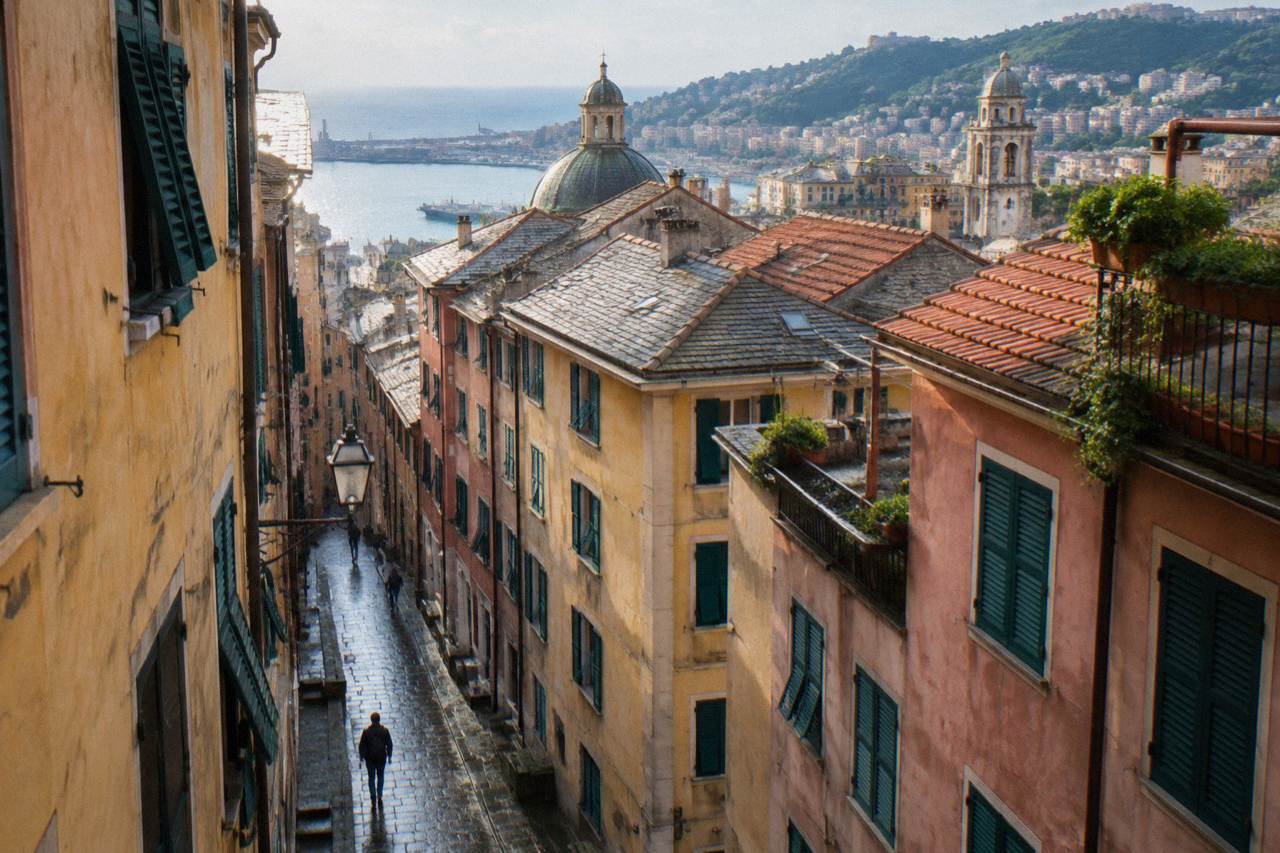
Is Genoa A Walkable City?
Yes, Genoa is a walkable city for the parts travellers come to see: the old town and its caruggi, the Porto Antico, Piazza De Ferrari, Via XX Settembre and the Strade Nuove all sit in a compact strip along the water, and the seaside promenades of Corso Italia and the Passeggiata Anita Garibaldi are pedestrian by design.
The catch is vertical: Genoa climbs hillside immediately behind the centre, so the city's own transport agency operates fourteen public lifts and the Zecca-Righi funicular to make the upper districts reachable without a car.
The horizontal geometry works in a walker's favour. Genoa developed as a port city squeezed between the Ligurian Sea and the hills, so the historic centre, the main squares and the two major stations, Genova Piazza Principe and Genova Brignole, all line up along the shore rather than spreading inland. The metro reflects the same shape: it runs 7 km with 8 stations from Brin to Brignole, a single line following the flat axis of the city.
What that means practically is that the standard tourist geography of Genoa, from the Porto Antico and the Aquarium through the caruggi to Piazza De Ferrari and the Musei di Strada Nuova, is a walking geography. The city's tourist information office at IAT Garibaldi, Via Garibaldi 12r, open daily 09:00 to 18:20, sits at the centre of it, on the street that gives the UNESCO-listed Strade Nuove area its name. For a broader picture of what the city offers, see things to do in Genoa, and for whether the city merits the trip at all, the companion page is Genoa worth visiting covers the case for and against.
Want someone to guide you through that walking geography? Book a self-guided audio tour here.
How Walkable Are The Caruggi And The Old Town?
The caruggi, the narrow lanes of Genoa's medieval old town, are walkable by definition and closed to most through traffic: the historic centre spans 113 hectares of lanes, and the city operates a limited traffic zone, the ZTL, over the Centro Storico and other zones under rules set by the comune. The lanes are narrow, paved and频繁 stepped in places, so the district rewards sturdy shoes, and the limited traffic zone means a rental car is close to useless inside it anyway.
The old town is the part of Genoa where walking is not just possible but the only sensible mode. The comune's disciplinare on the ZTL, updated by DGC 74-2025, restricts access to the limited traffic zones, which in practice leaves the caruggi to pedestrians for everyday purposes. The district's scale, 113 hectares, makes it one of the largest medieval historic centres in Europe in the words of the city's tourism site, and its street pattern predates any attempt to flatten it.
Two sights inside or beside this fabric anchor a walking day. The Cathedral of San Lorenzo stands at the old town's edge, and the Museo del Tesoro di San Lorenzo, its treasury museum, keeps hours of 09:00 to 12:00 and 15:00 to 18:00 Monday to Saturday, closed Sunday, per the listing. The Casa di Colombo, the house where Columbus lived from 1455 to 1470 according to the city's tourism site, sits by the Porta Soprana towers. Neither demands more of a walker than the lanes themselves do.
The Strada Nuova museums sit at the top of the old town's western edge, and their published winter timetable, 28 September 2026 to 18 April 2027, opens Palazzo Rosso, Palazzo Bianco and Palazzo Doria-Tursi daily 10:00 to 18:30, with the single exception that on Mondays only Palazzo Rosso can be visited. Palazzo Doria-Tursi holds Paganini's violin "Il Cannone", built in Cremona in 1743 by Bartolomeo Giuseppe Guarneri, per the museums' own page.
What About Genoa's Hills And The Views From Above?
Genoa's hills are the one part of the city where plain walking gives out, and the city's answer is public vertical transport: AMT runs fourteen lifts plus the Zecca-Righi funicular, with a single ride on the lifts or the Sant'Anna funicular costing 1.20 EUR, and the Castelletto Levante lift rising 57 m from Piazza Portello to the Spianata Castelletto, running daily 06:40 to 24:00. The Zecca-Righi funicular runs the same daily hours, 06:40 to 24:00.
The Spianata Castelletto, the panoramic terrace above the centre, is the classic example of how Genoa handles its own terrain. Rather than a long uphill walk, the published route is the Castelletto Levante lift from Piazza Portello, a 57 m rise covered by the standard 1.20 EUR single ride, with service daily from 06:40 to 24:00. The funicular to Righi keeps the same daily span. Both accept the ordinary AMT ticket, 2.00 EUR for 110 minutes on the whole network, so a walker can ride up, take in the view, and walk back down through the city.
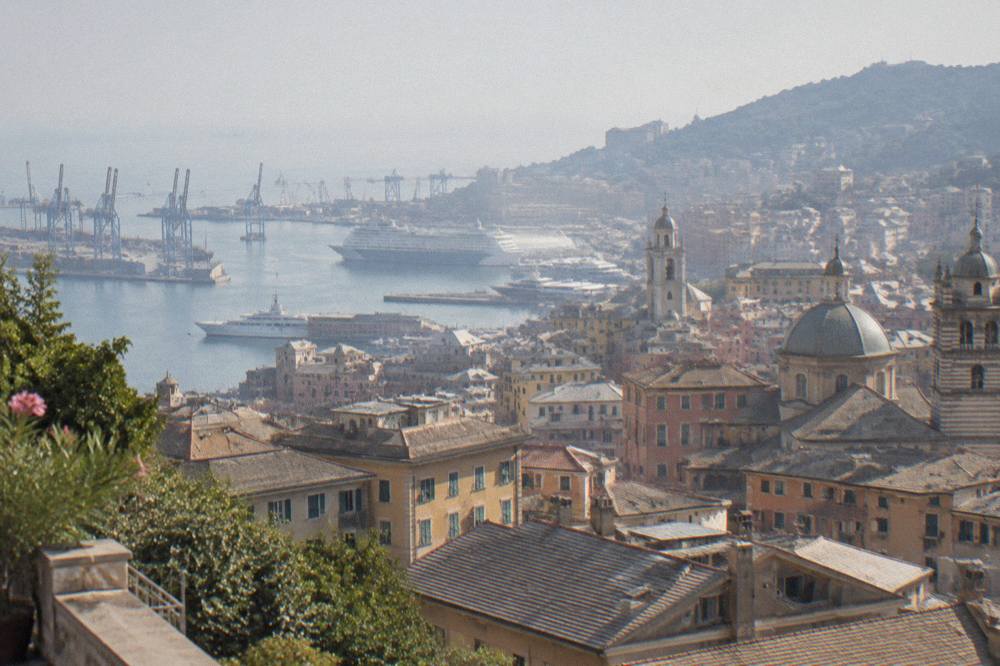
The vertical network is not a curiosity bolted onto the transport system; it is part of it, run by AMT Genova and listed alongside the metro and the buses. The Montegalletto lift serves the Castello d'Albertis on weekdays from about 07:10 to 19:50 and on holidays from about 07:15 to 20:55, per the agency's lift pages. For walkers, the useful summary is that Genoa's hills are reachable by machine and best descended on foot, which is the opposite of how the city was built but suits a visit well.
Can You Walk Between Genoa's Main Sights And Along The Sea?
The main sights of Genoa cluster close together, and the published straight-line distances from Piazza De Ferrari put the whole core within an easy radius: Boccadasse lies about 4 km away, Nervi about 9 km, and the airport about 7 km, so the city centre itself is a walking scale while the outer seaside districts are a bus, train or taxi matter.
Along the shore, Corso Italia is a seaside promenade of about 2.5 km linking the Foce area to Boccadasse, and the Passeggiata Anita Garibaldi at Nervi runs about 2 km along the cliffs.
The seafront is where Genoa's walking credentials are strongest. Corso Italia, laid out in the early years of the twentieth century, is a promenade of about 2.5 km ending at Boccadasse, the former fishermen's village with its small public pebble beach, colourful houses and gozzi fishing boats drawn up on the shore, as the tourism site describes it. At the eastern end of the city, the Passeggiata Anita Garibaldi runs about 2 km from Nervi's little harbour to Capolungo along the cliff tops, with views toward Portofino, and the Parchi di Nervi cover 92,000 square metres of gardens behind it. Everything else covered here is indexed on Genoa Travel Guide.
| From Piazza De Ferrari | Straight-line distance |
|---|---|
| Boccadasse | about 4 km |
| Nervi | about 9 km |
| Pegli | about 10 km |
| Genova Cristoforo Colombo airport | about 7 km |
The distances above are straight-line figures, not walking routes, and the hills between the centre and the outer districts mean a walker heading to Nervi is better served by the train to Genoa Nervi station, which sits by the promenade. Within the centre, the same table tells the opposite story: the Aquarium, the Porto Antico, the Duomo and Piazza De Ferrari are all inside a belt measured in hundreds of metres, not kilometres.
One caveat belongs to the water itself. ARPAL's 2026 bathing-water classification for the Ligurian coast rates the sampling point at Boccadasse as SCARSA, the poorest of its four classes, while the Passeggiata di Nervi point is rated BUONA, so swimmers should pick their stretch of sea accordingly, and confirm current classifications with ARPAL before relying on them.
Is Genoa Walkable For Cruise Passengers?
Yes, cruise passengers can walk into Genoa from the port: the cruise terminals at Ponte dei Mille and Andrea Doria sit at the water's edge beside the Porto Antico, and the city's aquarium, old town and main squares begin immediately inland of them, which is why the question of walking in from the ship answers itself. The Stazioni Marittime terminal complex also handles the ferry lines, so foot passengers arriving from Sardinia, Corsica, Sicily or Barcelona land in the same walkable position.
The port of Genoa recorded 2.4 million cruise passengers and 2.6 million ferry passengers in its latest published figures, and every one of them arrives within walking range of the centre. The dedicated page on walking into Genoa from a cruise port covers the terminal detail, and a full plan is laid out in the Genoa cruise port day itinerary.
For a shore day built on foot, the sensible arc runs from the terminal through the Porto Antico, where the Aquarium of Genoa, open 365 days a year, sells fixed-date adult tickets from 26.00 EUR with dynamic pricing per its own ticket page, then up through the caruggi to the Cathedral of San Lorenzo and Piazza De Ferrari. A short day is the main constraint, and the question of how many days in Genoa is enough is worth reading before deciding between a rushed circuit and a single deep cut into the old town.
Do You Still Need Public Transport In Genoa?
A visitor walking Genoa's centre needs public transport mainly for the airport, the hills and the outer districts, and the fares are fixed and published: an AMT ticket costs 2.00 EUR and is valid 110 minutes on the whole network, the Met Daily 24-hour ticket costs 10.00 EUR and covers the full network including Volabus to the airport, and a single ride on a lift or the Sant'Anna funicular costs 1.20 EUR.
The integrated AMT plus Trenitalia ticket costs 2.20 EUR for the same 110 minutes.
The ticket that matters to a walker is the ordinary one. At 2.00 EUR for 110 minutes across the whole Città Metropolitana network, it covers a lift ride up to the Spianata Castelletto and a bus back down, or a hop along the metro's 7 km line, within a single validation. There is no separate Volabus fare: the airport bus requires the 10.00 EUR Met Daily ticket, which then covers the entire network for 24 hours, a point worth knowing since the fixed airport taxi fare to the centre is 25 EUR per car, 30 EUR for more than four people, plus 2 EUR at night and on holidays.
| AMT ticket | Price | What it covers |
|---|---|---|
| Ordinary single | 2.00 EUR | 110 minutes, whole urban network |
| AMT + Trenitalia | 2.20 EUR | 110 minutes, urban plus limited Trenitalia |
| Lift or Sant'Anna funicular ride | 1.20 EUR | One vertical ride |
| Met Daily 24h | 10.00 EUR | Full network for 24 hours, including Volabus |
The metro, a single 7 km line with 8 stations from Brin to Brignole, serves the flat axis and is of limited use to a walker already covering it on foot. The extensions to Canepari and Martinez are not open in October 2026, with Canepari reported as targeted for June 2027 and Martinez for December 2028, so the line's reach is exactly its published eight stations for now.
Walking Tours In Genoa: When A Guide Earns The Fee
A walking tour in Genoa solves the two problems an independent walker hits, the maze of the caruggi and the slope of the hills. The site's featured option is a private city tour with a local guide that runs two to eight hours and is priced per person. A food and wine tasting walking tour covers the old town's edible side, and both let someone else own the route-finding.
The private tour pairs naturally with a walking-first visit because the guide carries the terrain knowledge: which lanes climb gently, where the lifts shortcut the hills, and how the Strada Nuove palaces connect to the harbour below. It runs from two to eight hours per the listing, and the price and current rating render on Check availability rather than being guessed here. The tour has its own page at private city tour with a local guide.
Genoa's food walks make an equally good case, in a city whose name is attached to pesto genovese, made with Basilico Genovese DOP basil, and to focaccia. The pairing of streets and food is covered at length on what food is Genoa famous for.
Where Walking In Genoa Gets Hard
Walking in Genoa gets hard in three specific places: the hills above the centre, where lanes turn into stairs and the lifts take over; the outer districts such as Nervi and Pegli, which sit about 9 and 10 km straight-line from Piazza De Ferrari and belong to the train or bus; and the working port fringes, where the ferry and cruise terminals meet roads built for vehicles rather than feet. None of these undo the city's walkability; they define its edges.
The hills are the honest answer to the question this page asks. A city built as a strip between the sea and the Apennines cannot be flat, and Genoa's answer, fourteen public lifts, the Zecca-Righi funicular and the Sant'Anna funicular, is more developed than most, but a walker with mobility limits should plan around the vertical network rather than pretend it away. Inside the caruggi, the lanes are narrow and the paving uneven in the ordinary way of medieval streets.
The limitation cuts both ways for itinerary planning. Because the centre is walkable, days there can be long on foot and short on tickets; because the outskirts are not adjacent, the day trips to Portofino, Camogli and the Cinque Terre are train and boat matters, with Camogli about 18 km and Portofino about 25 km straight-line from Piazza De Ferrari. The trade-off between the city and its famous neighbour is weighed in is it better to go to Genoa or Portofino.
Common Questions About Walking In Genoa
Is Genoa A Walkable City?
Yes. The old town, the Porto Antico, Piazza De Ferrari and the Strade Nuove sit in a compact strip along the shore, and the seafront promenades of Corso Italia and Nervi are pedestrian by design. The hills above the centre are the exception, handled by fourteen public lifts and the Zecca-Righi funicular at 1.20 EUR a ride.
Can You Walk Everywhere In Genoa?
No, and no one should try. Nervi sits about 9 km and Pegli about 10 km straight-line from Piazza De Ferrari, and the hills in between make the train or bus the sensible choice for the outer districts. The centre itself, from the Aquarium to Piazza De Ferrari, is entirely a walking scale.
Is The Genoa Old Town Flat?
Largely walkable but not flat. The caruggi cover 113 hectares of narrow lanes, closed to most through traffic by the ZTL, and the ground rises steadily toward the hills, where stairs replace lanes. The Castelletto Levante lift, daily 06:40 to 24:00, skips the climb to the Spianata Castelletto.
How Much Does Public Transport Cost If Walking Gets Tiring?
An AMT ticket is 2.00 EUR and valid 110 minutes on the whole network, a lift or Sant'Anna funicular ride is 1.20 EUR, and the Met Daily 24-hour ticket is 10.00 EUR, which is also the required ticket for the Volabus airport bus. The Volabus requires the 10.00 EUR Met Daily ticket, valid 24 hours across the full network.
Can Cruise Passengers Explore Genoa On Foot?
Yes. The cruise terminals at Ponte dei Mille and Andrea Doria stand beside the Porto Antico, with the Aquarium and the caruggi starting immediately inland, so a walking day in the centre needs no transport at all.
Are There Guided Walking Tours In Genoa?
Yes, including a private city tour with a local guide running two to eight hours, plus food and wine tasting walks through the old town. The tour pages on this site describe what each one covers.
Genoa is a walkable city with a mountain attached, and the published fares, hours and distances above are the toolkit for walking it well.