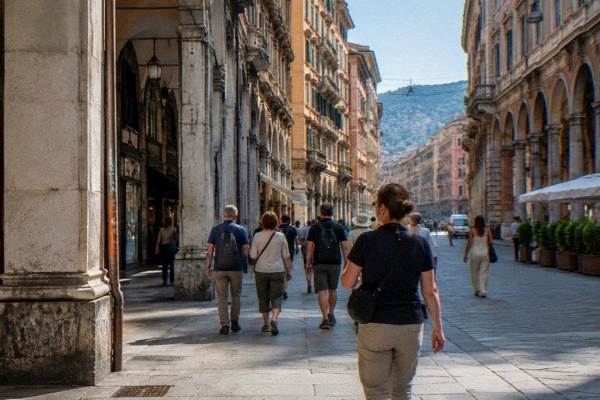
Parchi Di Nervi: Villa Gardens, Roses And The Modern Art Gallery
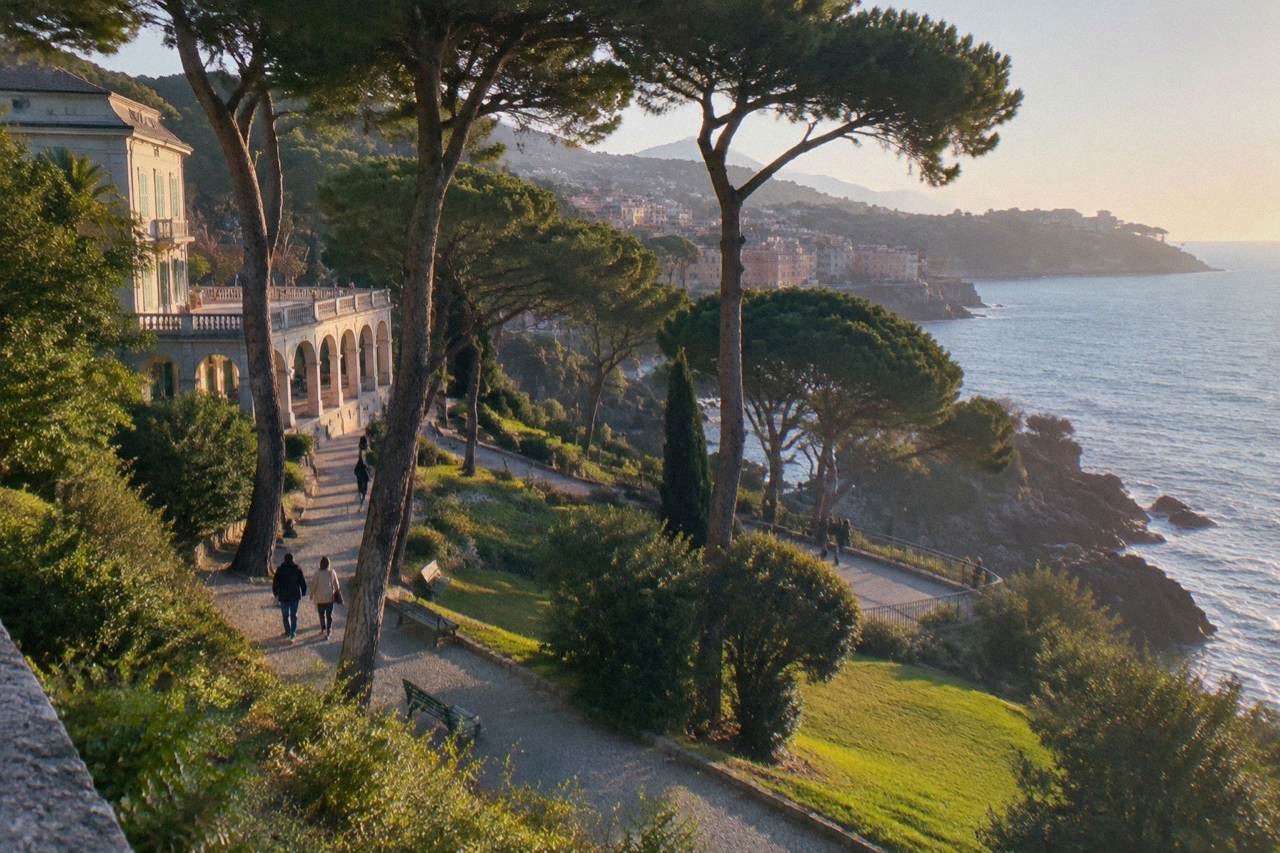
The Parchi di Nervi are Genoa's garden quarter: 92,000 square metres of villa parks above the Ligurian Sea, a two kilometre cliff walk, and four villas turned into museums at the city's eastern edge.
Short answer
The Parchi di Nervi are a 92,000 square metre park between Via Aurelia and the sea in the Nervi district of Genoa, about 9 km east of Piazza De Ferrari in a straight line, containing the villas Gropallo, Saluzzo Serra, Grimaldi Fassio and Luxoro, a rose garden with more than 200 varieties, and the Passeggiata Anita Garibaldi cliff walk. Reach them by train to Genoa Nervi station.
Genoa keeps its grandest gardens at the far eastern end of the city, where the districts give way to the rocky Ligurian coast. The Parchi di Nervi are a chain of villa parks covering 92,000 square metres, about 9.2 hectares, laid out between Via Aurelia and the sea in the Nervi district, and they hold four historic villas, a rose garden with more than 200 varieties, roughly 100 botanical species and five monumental trees. A two kilometre cliff-top promenade, the Passeggiata Anita Garibaldi, runs from the Nervi harbour to Capolungo with views along the coast toward Portofino. This page covers what the parks contain, which museums sit inside them, how to reach them by train, and when the climate normals say the weather cooperates. The wider district is covered separately in the Nervi area guide.
What Are The Parchi Di Nervi?
The Parchi Di Nervi are a 92,000 square metre park, about 9.2 hectares, stretching between Via Aurelia and the Ligurian Sea in the eastern Genoa district of Nervi, roughly 9 km from Piazza De Ferrari in a straight line. The park joins the grounds of four villas, Gropallo, Saluzzo Serra, Grimaldi Fassio and Luxoro, and combines gardens, museums and a cliff-top walk in one continuous green space.
The parks exist because Nervi grew up as a resort village rather than as part of the dense port city, and its grand houses came with grounds rather than courtyards. When those villas passed into public and museum use, their gardens were linked into a single stretch of parkland that today runs down to the rocks. The visitor information published by the city's tourism office describes the complex as lying between Via Aurelia and the sea, with the villas set inside it and the promenade skirting the waterline below. For context on how the city itself grew around its medieval core, the Genoa history guide covers the republic that lasted until 1797.
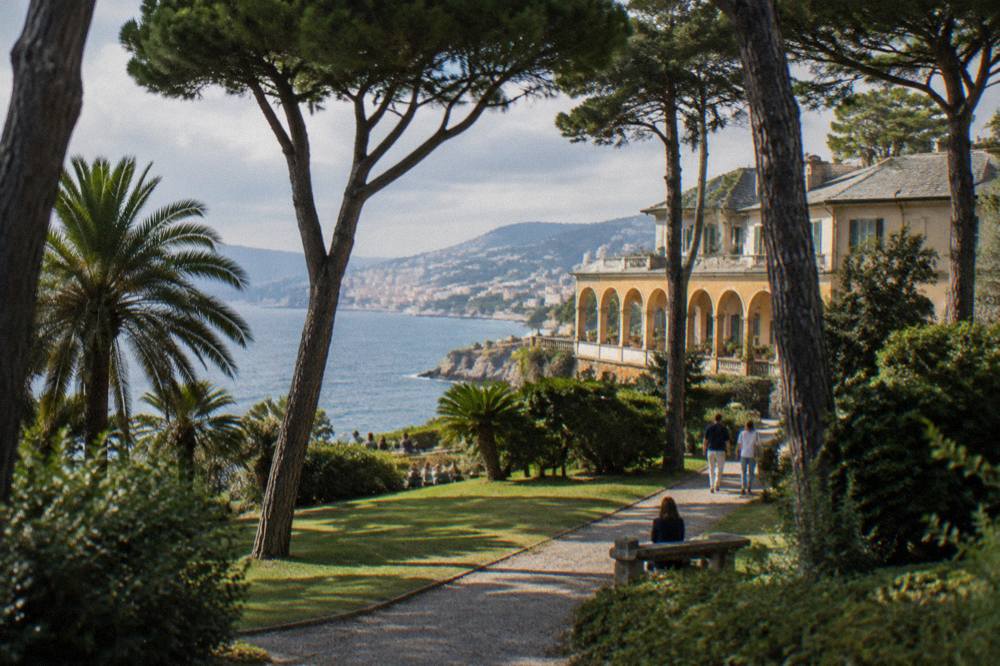
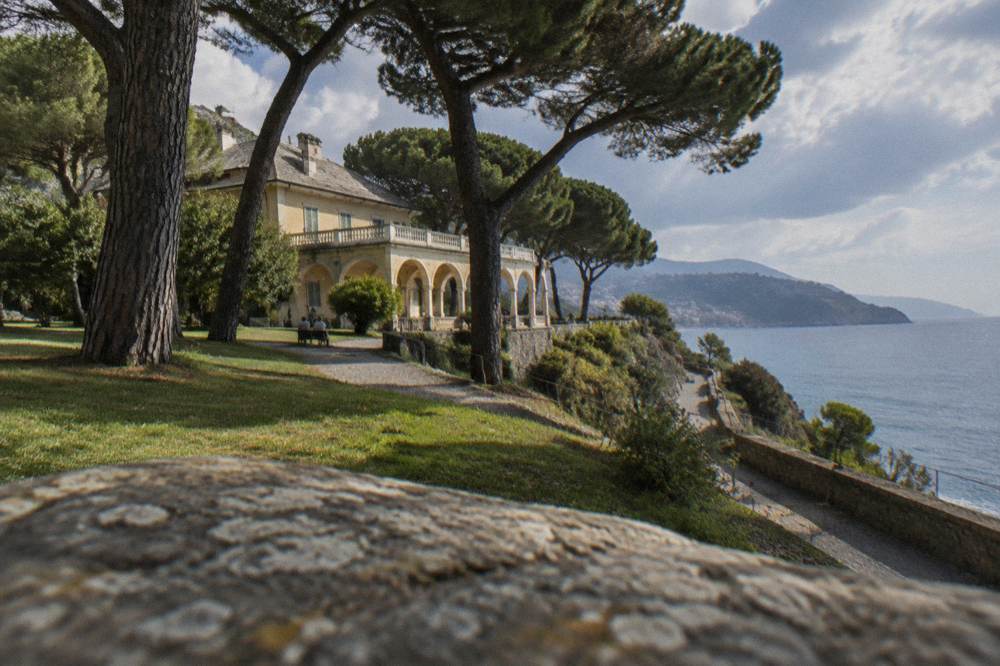
The planting is the draw for many readers. The tourism office lists about 100 botanical species across the parks, including palms and cedars, and five trees classed as monumental. The Roseto Luigi Viacava, the rose garden inside the grounds, holds more than 200 rose varieties. What that means in practice is a park that changes character through the year rather than offering one fixed view, and one whose scale, at just over nine hectares, is walkable in a morning without exhausting anyone.
The Park's Numbers At A Glance
| Feature | Figure |
|---|---|
| Total park area | 92,000 square metres (9.2 hectares) |
| Botanical species listed | About 100 |
| Monumental trees | 5 |
| Rose varieties in the Roseto Luigi Viacava | More than 200 |
| Passeggiata Anita Garibaldi length | About 2 km |
| Distance from Piazza De Ferrari | About 9 km straight line |
Genoa rewards this kind of slow, green visit in a way its steep centre does not always allow, and the parks sit naturally in a longer stay. The things to do in Genoa overview places Nervi among the city's headline sights alongside the Aquarium and the Palazzi dei Rolli, and an active way to see the whole stretch of coast and hills in one outing is the e-bike tour this site features for the area, described further down this page.
What Will You See In The Parchi Di Nervi Gardens?
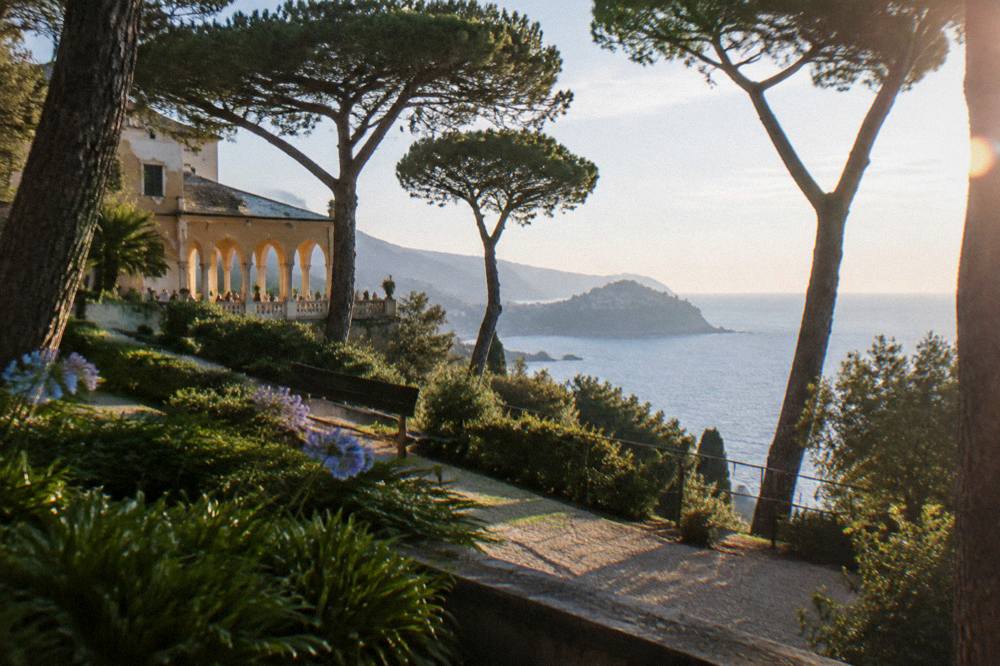
You will see linked villa gardens with palms, cedars and about 100 botanical species, five monumental trees, the Roseto Luigi Viacava rose garden with more than 200 varieties, views over the Ligurian Sea from the terrace lawns, and, along the waterline below, the Passeggiata Anita Garibaldi cliff walk of about 2 km running from the Nervi harbour to Capolungo.
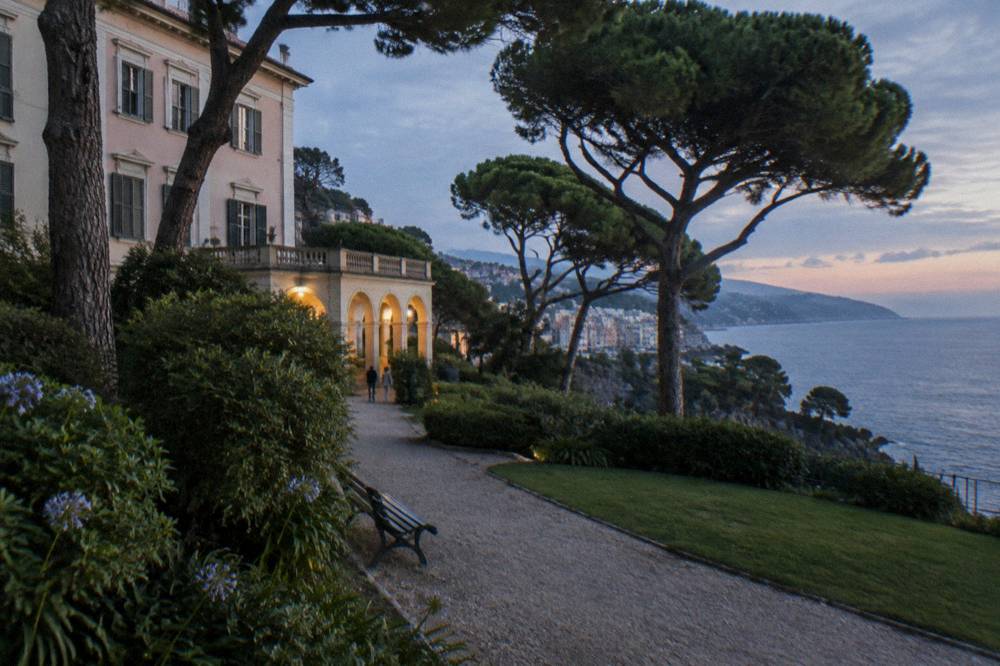
The parks read as a sequence rather than a single formal garden. Each villa keeps its own grounds, and the whole is stitched together by paths that carry you between shaded groves, open lawns and the terraces that look directly down at the sea. The species list the tourism office publishes, roughly 100 botanical species with palms and cedars named among them, points to a planting tradition that treated the grounds as an arboretum as much as a garden. Five individual trees carry monumental classification.
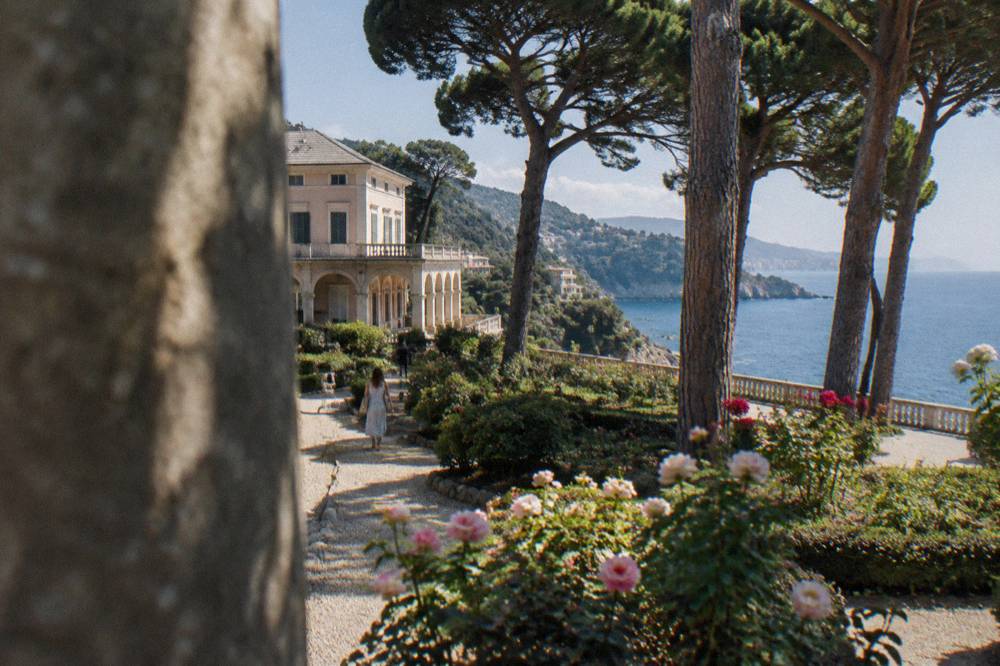
The rose garden deserves its own paragraph. The Roseto Luigi Viacava holds more than 200 varieties, which places it among the significant public rose collections of the region. Roses bloom in cycles, so the character of the garden shifts across the season without any single week being the only one worth visiting. Nothing in the published material ties the rose garden to a fixed festival or event, and no entry fee is listed for the parks themselves, so treat the gardens as open green space and confirm any ticketed situation locally on arrival.
The promenade below is the parks' second act. The Passeggiata Anita Garibaldi runs about 2 km, sometimes described as about 1.8 km in the tourism office's own text, from the Nervi harbour, the porticciolo, to Capolungo, cut into the cliff above the water with the coast toward Portofino in view. It is pedestrian, it hugs the rocks, and it connects directly to the parks above, so the natural circuit is gardens on the way out and promenade on the way back, or the reverse.
For readers planning a wider visit, these tours pair well with the gardens:
Which Museums Sit Inside The Parchi Di Nervi?
Four museum sites sit inside or beside the parks: the Galleria D'Arte Moderna in Villa Saluzzo Serra, the Raccolte Frugone in Villa Grimaldi Fassio, the Wolfsoniana, and the museum house Villa Luxoro, together forming the Polo Museale di Nervi. The villas themselves, including Villa Gropallo, are the historic buildings around which the 92,000 square metre park was assembled.
The museum quarter is what turns the parks from a garden visit into a half-day cultural one. The tourism office lists the Galleria D'Arte Moderna, known as GAM, in Villa Saluzzo Serra, holding the city's modern art collections; the Raccolte Frugone in Villa Grimaldi Fassio; the Wolfsoniana, with its decorative and modern collections; and Villa Luxoro presented as a museum house. Ticket prices and opening calendars for these individual museums are not carried on this page, so check each museum's own information before setting an itinerary around them.
| Museum | Villa | Focus as described by the tourism office |
|---|---|---|
| Galleria D'Arte Moderna (GAM) | Villa Saluzzo Serra | Modern art collections |
| Raccolte Frugone | Villa Grimaldi Fassio | Frugone collections |
| Wolfsoniana | Within the museum pole | Decorative and modern collections |
| Villa Luxoro | Villa Luxoro | Museum house |
| Villa Gropallo | Villa Gropallo | Historic villa in the park grounds |
One city-wide pass is worth mentioning here even though its coverage of individual Nervi museums should be confirmed before you rely on it: the Genoa Museum Card's 2026 rates are 24 EUR for 24 hours and 45 EUR for 48 hours, covering 28 city museums, 19 municipal plus 9 others. Only the "+bus" variants of the card include buses, and none covers Volabus, Navebus or trains, so a Nervi museum day reached by rail is a matter of separate train tickets. The card's conditions page lists exactly which institutions participate.
If a garden-and-museum day sounds like only half of what the city can do, the taller cultural stops are covered in dedicated pages: the Musei di Strada Nuova and the Palazzo Ducale, where the "Renoir, Monet, Toulouse-Lautrec, Cézanne" exhibition opened 15 October 2026, with a reported closing date of 2 May 2027.
How Long Is The Passeggiata Anita Garibaldi?
The Passeggiata Anita Garibaldi is a pedestrian cliff-top promenade of about 2 km, with some official descriptions giving about 1.8 km, running from the Nervi harbour, the porticciolo, to Capolungo along the waterline below the parks, with views that reach toward the Portofino headland on clear days.
The walk is the piece of Nervi that appears in nearly every photograph of the district, and its appeal is structural: it is carved at sea level along a rocky stretch of coast, so the water is immediately below the railing and the parks rise directly above. The tourism office describes it as running from the harbour to Capolungo and notes the views of Portofino from its length. Because it begins where the park grounds end, the standard visit is a loop, down one way and up the other, with the gardens and the promenade together occupying a leisurely morning or afternoon.
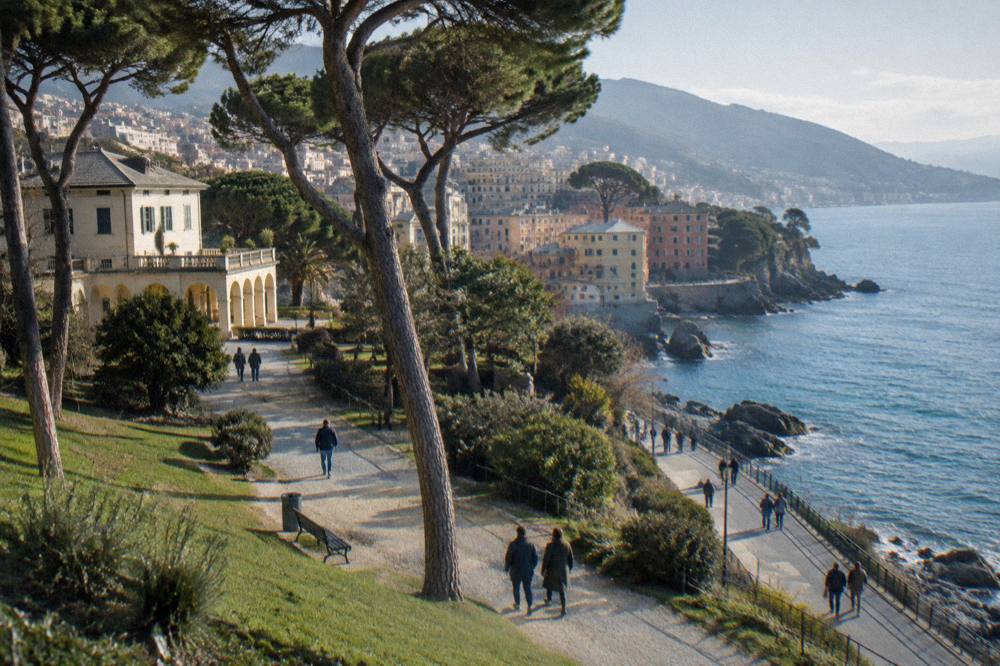
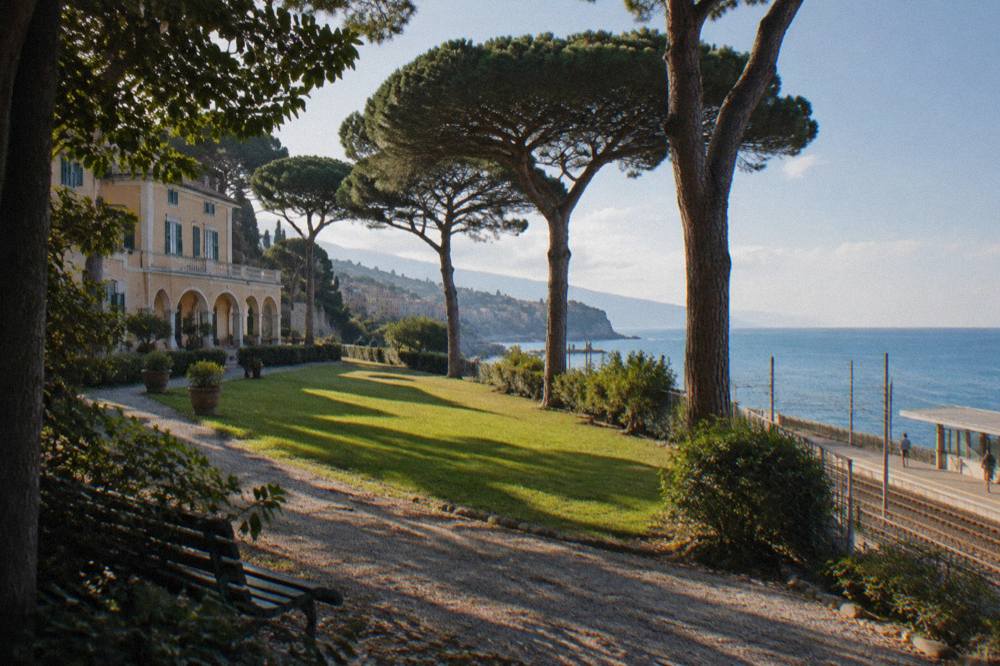
Treat the promenade as a public walkway and check locally for any seasonal restriction, opening schedule or fee. What the material does give is geography: the walk sits below the parks, beside the harbour at one end, and the train station at Genoa Nervi is described as adjacent to the promenade, which matters for planning, because it puts the walk within a short arrival of the rail line.
Can You Swim At Nervi?
Swimming from the rocks at Nervi is possible, with public access to the scogli, the rock platforms, along the Passeggiata Anita Garibaldi and at Capolungo, and ARPAL's 2026 bathing classification for the Nervi sampling point is reported as BUONA, good. ARPAL classes Liguria's coast at 380 sampling points as Eccellente, Buona, Sufficiente or Scarsa, and the report is the authority to check before swimming.
The honest framing is that Nervi is a rock-and-platform bathing place rather than a sandy beach resort. The tourism material notes public rock access along the promenade, some of it without lifeguard cover and seasonal in character. The water-quality picture comes from ARPAL, the regional environment agency, whose 2026 network covers 380 sampling points on the Ligurian coast; Nervi's point is reported as BUONA, while Boccadasse on the other side of the city is reported as SCARSA in the same classification, so the two should not be treated alike. The wider swimming picture around the city, including the pebble beach at Boccadasse, is covered in the Genoa beaches guide.
| Bathing point | ARPAL 2026 class (reported) |
|---|---|
| Nervi, Passeggiata di Nervi | BUONA |
| Boccadasse | SCARSA |
| Ligurian coast network | 380 sampling points, four classes |
Lifeguard seasons, sea temperatures and beach-club prices are not listed, so plan around the rocks themselves and check conditions on the day. The parks make a natural base for a swim visit because they give shade, walking and somewhere to sit within a few minutes of the water.
How Do You Get To Nervi From Central Genoa?
Nervi is about 9 km east of Piazza De Ferrari in a straight line, and the practical rail access is the regional train to Genoa Nervi station, which the tourism office describes as adjacent to the promenade and the parks. Within the city, an AMT ticket costs 2.00 EUR and is valid 110 minutes on the whole network, and the Met Daily 24-hour ticket costs 10.00 EUR.
The train is the mode the geography favours. The city's rail spine runs east along the coast, and Genoa Nervi station sits beside the sea at the district's edge, with the promenade adjacent to it and the park entrances a short way above. Regional trains on the coastal line stop at Nervi from both Genova Piazza Principe and Genova Brignole, and fares are dynamic, so check the operator's own timetable and pricing when booking. For city transport around the rest of Genoa, the fare structure is flat and simple: 2.00 EUR for 110 minutes, an integrated AMT-Trenitalia version at 2.20 EUR, a 5-hour ticket at 5.00 EUR, a carnet of 11 tickets at 20.00 EUR, and the Met Daily at 10.00 EUR.
| Ticket | Price | Validity |
|---|---|---|
| AMT ordinary | 2.00 EUR | 110 minutes, whole network |
| AMT + Trenitalia integrated | 2.20 EUR | 110 minutes |
| 5-hour ticket | 5.00 EUR | 5 hours |
| Carnet | 20.00 EUR | 11 x 110 minutes |
| Met Daily | 10.00 EUR | 24 hours, full network incl. Volabus |
| Lifts and Sant'Anna funicular | 1.20 EUR | Single ride |
Distances to the places you might combine with Nervi, measured in straight lines from Piazza De Ferrari, are worth having in mind. Recco is about 17 km, Camogli about 18, San Fruttuoso about 22, Santa Margherita Ligure about 24, and Portofino about 25. Those towns are day trips in their own right, and the boat and rail options for reaching them are covered in the site's dedicated pages. Straight-line figures say nothing about road times.
An alternative to the train that suits readers who want the coast and the city's hills in one guided outing is the e-bike tour of Genoa. The operator's listing describes a guided ride varying by group size, and the full details, pricing and availability render on its own page: Check availability. The same tour is the one this page features, and it fits Nervi planning for anyone who prefers wheels to rail timetables.
When Is The Best Time Of Year For The Parchi Di Nervi?
The climate normals for Genoa Sestri, the official Aeronautica Militare 1971-2000 series, show mean daily highs rising from 12.2 C in February to 27.7 C in August and falling to 12.5 C in December, with monthly rainfall from 24.2 mm in July to 171.3 mm in October, so the gardens sit in a mild coastal climate whose rain peaks in autumn and whose summer rainfall stays low.
The table below is the official station series, and it is the only temperature and rainfall basis this site uses. Read it for what it is: long-run averages from the Genoa Sestri station, which sits at the airport about 7 km west of Piazza De Ferrari, on the same coastal strip as Nervi.
| Month | Mean high C | Mean low C | Rain mm |
|---|---|---|---|
| Jan | 11.5 | 5.5 | 101.8 |
| Feb | 12.2 | 6.0 | 74.0 |
| Mar | 14.6 | 8.2 | 81.7 |
| Apr | 16.8 | 10.5 | 88.0 |
| May | 20.5 | 14.2 | 72.4 |
| Jun | 23.9 | 17.6 | 58.2 |
| Jul | 27.3 | 20.9 | 24.2 |
| Aug | 27.7 | 21.0 | 69.3 |
| Sep | 24.4 | 17.9 | 136.4 |
| Oct | 20.0 | 13.8 | 171.3 |
| Nov | 15.1 | 9.2 | 108.8 |
| Dec | 12.5 | 6.5 | 93.1 |
Two features of the series matter for a garden visit. First, the winter is mild: January's mean high of 11.5 C keeps the parks green and walkable year round, and the palms, cedars and monumental trees are permanent fixtures rather than seasonal ones. Second, October carries a monthly rainfall total in the series of 171.3 mm, with September at 136.4 mm, and July at 24.2 mm. Those are averages, not forecasts, and no month is closed to a visit; they simply describe where the rain concentrates.
The rose garden's more than 200 varieties bloom across the warm months, and the promenade is enjoyable whenever the weather holds. For readers pairing the parks with the rest of the city, the seasonal overview on Genoa Travel Guide's best-time page goes into month-by-month detail.
What Else Is Near The Parchi Di Nervi?
East of Nervi along the coast sit Recco at about 17 km from Piazza De Ferrari, Camogli at about 18 km, San Fruttuoso at about 22 km, Santa Margherita Ligure at about 24 km and Portofino at about 25 km, all straight-line distances, reachable by rail or boat depending on the town, while west of Nervi the city itself holds the Porto Antico, the Aquarium and the caruggi of the old town.
The eastern Riviera is the natural extension of a Nervi day. Camogli and San Fruttuoso are connected by Golfo Paradiso boats, which run the crossing year round from Camogli with additional sailings from Recco between April and September, and the abbey at San Fruttuoso is a FAI property with adult entry at 10 EUR, reduced at 5 EUR for visitors aged 6 to 18 and students up to 25, and family entry at 26.00 EUR. The Golfo Paradiso "Two Gulfs" tour departs Genoa Porto Antico on listed dates from March 2026 and calls at Camogli, San Fruttuoso and Portofino, with reported fares of about 29 EUR for the full day and 21 to 26 EUR for a half day.
| Place | Straight-line distance from Piazza De Ferrari |
|---|---|
| Corso Italia | About 4 km |
| Boccadasse | About 4 km |
| Nervi | About 9 km |
| Pegli | About 10 km |
| Recco | About 17 km |
| Camogli | About 18 km |
| San Fruttuoso | About 22 km |
| Santa Margherita Ligure | About 24 km |
| Portofino | About 25 km |
Back inside the city, the headline sights remain the Aquarium of Genoa, open 365 days a year with fixed-date adult tickets from 26.00 EUR under dynamic pricing, and the UNESCO-listed Palazzi dei Rolli, 42 palaces inscribed as "Genoa: Le Strade Nuove and the system of the Palazzi dei Rolli". A garden morning in Nervi and an afternoon among the Rolli palaces or the caruggi is a realistic single-day shape for the city, and the rail line puts both within reach without a car. Drivers should note that Portofino operates a limited traffic zone with paid parking reported at about 8 EUR per hour, one more argument for the train-and-boat pattern.
Before the closing questions, here again are the tours that pair best with the parks and the coast:
Common Questions About The Parchi Di Nervi
Are the Parchi di Nervi free to enter?
The parks are public green space and no entry fee is charged for the gardens. The museums inside the park grounds, the GAM, the Raccolte Frugone, the Wolfsoniana and Villa Luxoro, are separate institutions with their own tickets, so check each museum's own information and the Genoa Museum Card conditions before visiting.
How far is Nervi from central Genoa?
Nervi is about 9 km east of Piazza De Ferrari in a straight line. The practical access is the regional train to Genoa Nervi station, which the tourism office describes as adjacent to the promenade and the parks.
How long is the Passeggiata Anita Garibaldi?
About 2 km, with some official descriptions giving about 1.8 km, running from the Nervi harbour to Capolungo below the park grounds, with views toward Portofino.
Can you swim at Nervi?
Public rock access for swimming exists along the promenade and at Capolungo, some sections seasonal and without lifeguard cover. ARPAL's 2026 classification for the Nervi sampling point is reported as BUONA, good, within a regional network of 380 sampling points.
What museums are in the Parchi di Nervi?
The Polo Museale di Nervi comprises the Galleria D'Arte Moderna in Villa Saluzzo Serra, the Raccolte Frugone in Villa Grimaldi Fassio, the Wolfsoniana and the museum house Villa Luxoro. Confirm current opening calendars on each museum's own channels before planning a visit around them.
When do the roses bloom in the Roseto Luigi Viacava?
The rose garden holds more than 200 varieties that bloom in cycles across the warm months of the mild coastal climate. The official 1971-2000 normals for Genoa Sestri show mean highs above 20 C from May through September, the stretch of the year the warmest blooms fall within; no single festival date is published for the garden.