Genoa History: From Maritime Republic To Modern Port
Genoa's history runs from a merchant republic that ended in 1797 to a UNESCO-listed palace system and a modern port handling 2.4 million cruise passengers, and this guide traces it with dated, sourced facts.
Short answer
Genoa is a coastal city in Liguria whose aristocratic Republic lasted until 1797; its old town covers 113 hectares, its Strade Nuove and Palazzi dei Rolli joined UNESCO in 2006, and its port today handles 2.4 million cruise and 2.6 million ferry passengers a year.
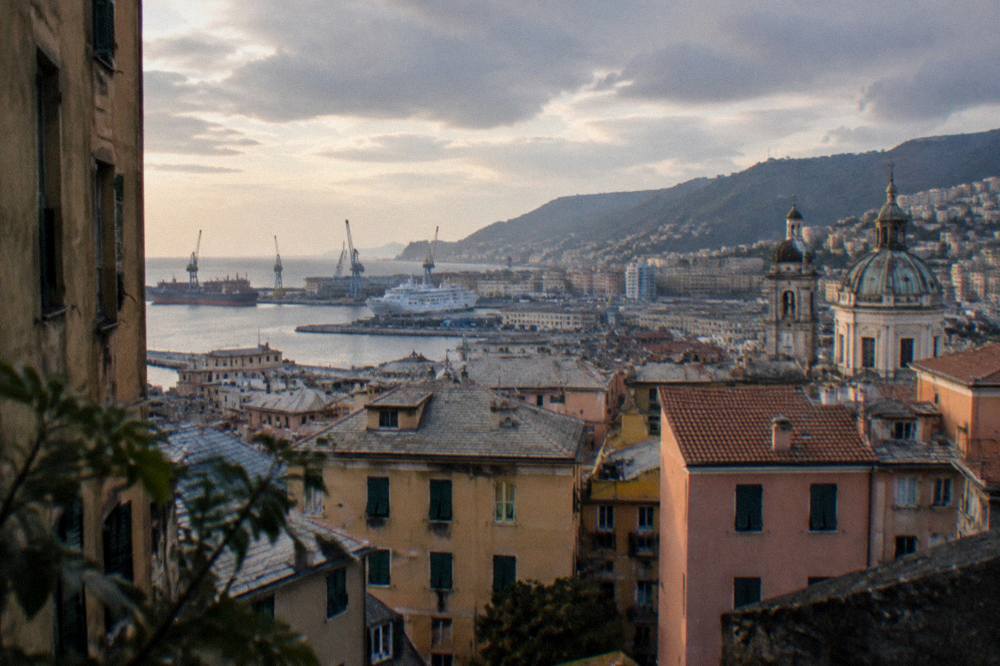
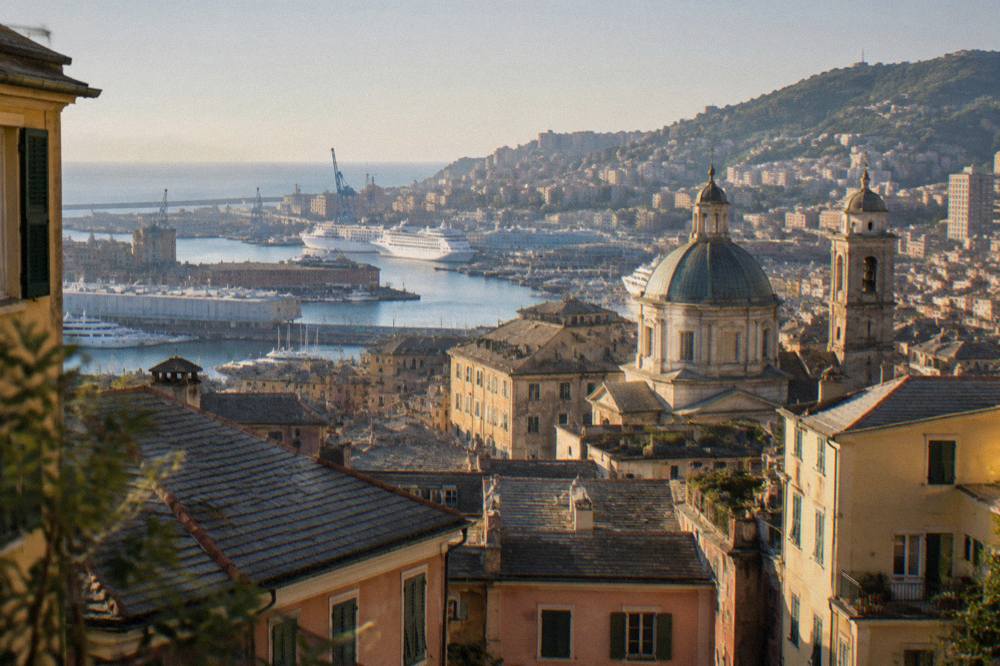
Genoa is a coastal city in Liguria, north-west Italy, pressed between the Ligurian Sea and the Apennine hills, and its whole history is written in that geography: a strip of land with no room to expand inland, so the city grew upward, seaward and, for centuries, outward into the Mediterranean as a trading power. The Republic of Genoa lasted until 1797, when Napoleonic occupation ended it and the Ligurian Republic took its place, as the Treccani encyclopedia records. What the republic left behind is still legible in the city's stones: an old town of 113 hectares described by the city's own tourism site as one of the largest medieval historic centres in Europe, a Renaissance palace system inscribed by UNESCO in 2006, and a lighthouse first built in 1128 that still marks the harbour entrance. The Genoa Travel Guide desk assembles the dated record here, from the republic's end to the port's present numbers.

What Is The Story Of Genoa In One Page?
Genoa's history compresses into four dated chapters: an aristocratic merchant Republic that endured until 1797; a golden age of palace-building along the Strade Nuove, recognised by UNESCO in 2006; an industrial and port city that rebuilt its harbour around the 1992 Expo; and a modern ferry and cruise hub handling 2.4 million cruise passengers, 2.6 million ferry passengers and 7,619 ship calls in the port's latest published figures.
Each chapter left physical traces a visitor can still walk through. The caruggi, the narrow lanes of the old town, hold the 113 hectares the tourism site measures. The Strade Nuove hold the Palazzi dei Rolli, 42 palaces inscribed on the UNESCO World Heritage List under the exact name "Genoa: Le Strade Nuove and the system of the Palazzi dei Rolli". The Porto Antico holds the Aquarium, which opened in 1992, and the Bigo lift, both part of the Renzo Piano redevelopment of the old harbour for that year's Columbus Expo. And the working port beyond it holds the ferry berths at Calata Chiappella, Ponte Caracciolo and Ponte Colombo, with GNV, Moby, Tirrenia and Co.Tu.Nav vessels among the lines seen at the Stazioni Marittime terminal. The republic is gone; the port never stopped.
Want those traces narrated as you walk? Book a self-guided audio tour here.
How Old Is Genoa And What Survives In The Old Town?
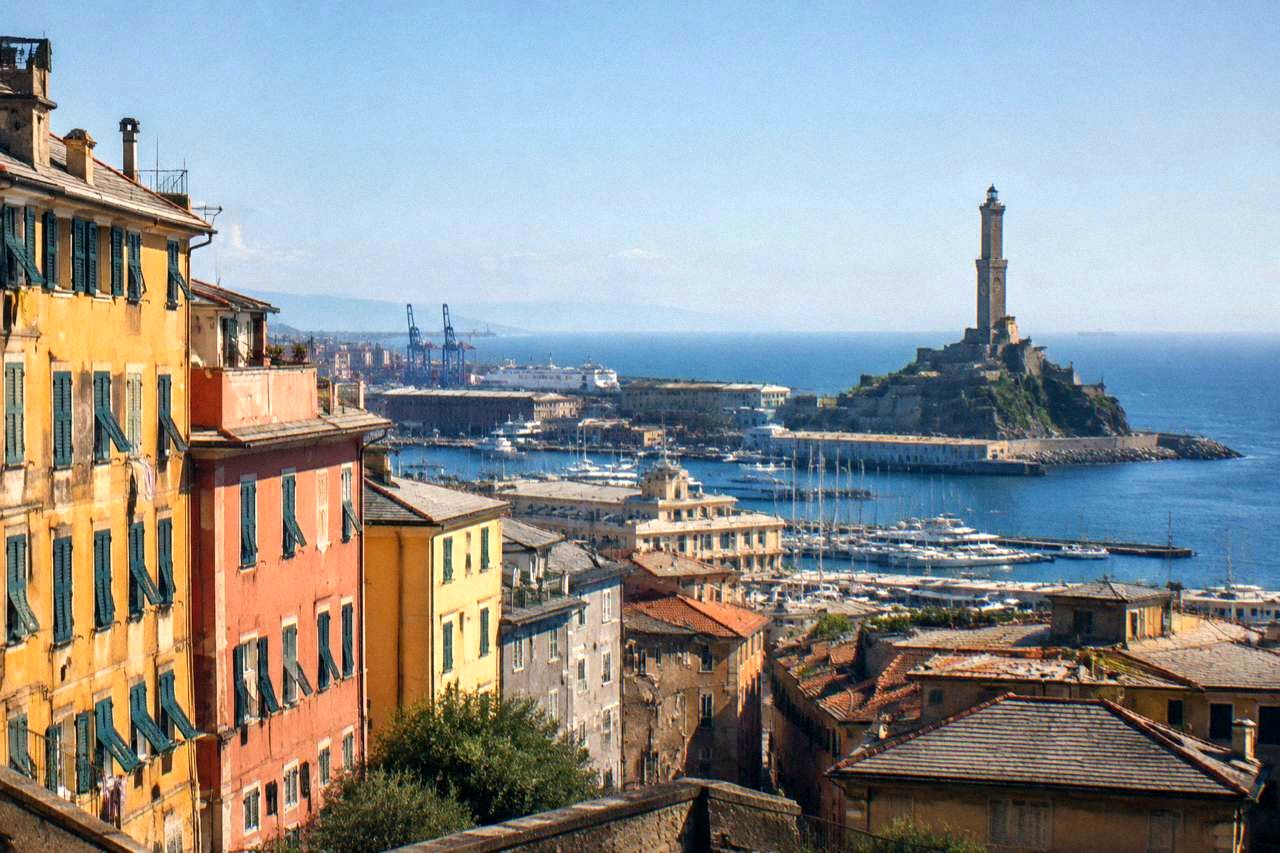
The Lanterna lighthouse carries Genoa's earliest firm date: first built in 1128, rebuilt in 1543, and standing today as a 77 m tower on a 40 m rock, 117 m above the sea, billed as the tallest lighthouse in the Mediterranean. The old town around it covers 113 hectares and is described on the city's official tourism site as one of the largest medieval historic centres in Europe.
The lighthouse numbers come from the tourism site's own page on the Lanterna, which also counts 172 steps to the first terrace. It is the structure that has watched every later chapter: the republic's fleets, the ferries to Sardinia and Corsica, and today's cruise ships at Ponte dei Mille. Its opening days and prices are listed on the operator's own site when visits are possible, so check there before planning a climb.
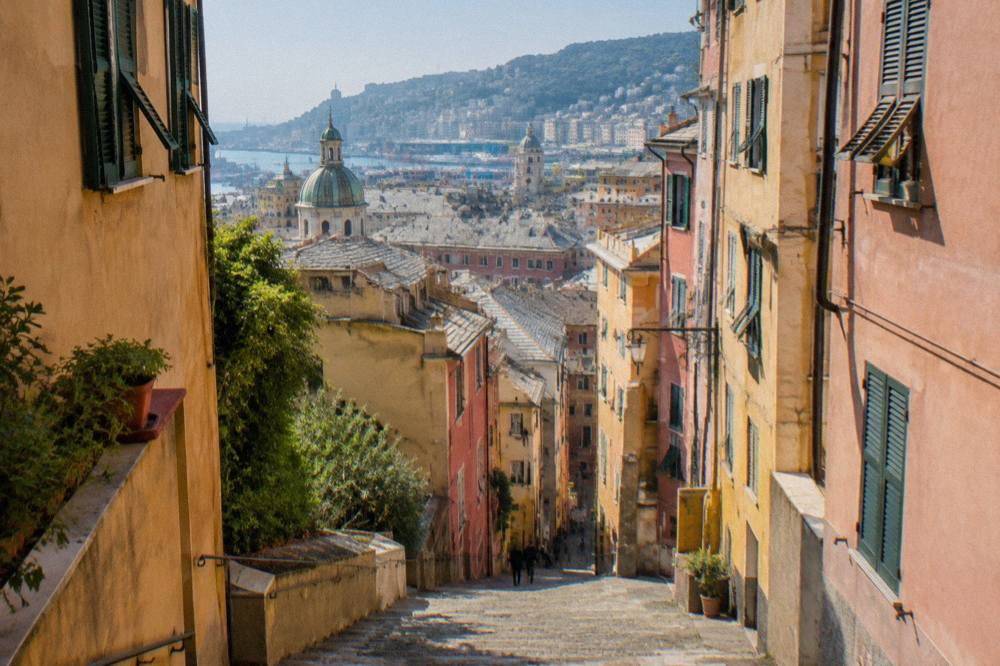
The old town's caruggi are the other survivor. The date of individual lanes is unknown: what is measured is the whole, 113 hectares of lanes and squares that the tourism site qualifies carefully, one of the largest in Europe, never the largest. Within it stand the Cathedral of San Lorenzo, whose Treasury museum keeps hours of 09:00 to 12:00 and 15:00 to 18:00 Monday to Saturday, closed Sunday, per the tourism office listing. The Casa di Colombo on that same circuit claims the house where the family of Christopher Columbus lived, a claim the tourism site dates precisely: the family moved in 1455, when he was four, and he lived there until about 1470, in an 18th-century reconstruction standing on the original site.
What Was The Republic Of Genoa?
The Republic of Genoa was an aristocratic republic governed by its merchant families, and the Treccani encyclopedia dates its end to 1797, when Napoleonic occupation dissolved it into the Ligurian Republic. Its wealth came from sea trade and finance, and it left the city its two defining monuments of power: the Palazzo Ducale, seat of government, and the Rolli system of palaces used to lodge state visitors, later inscribed by UNESCO.
The republic's constitutional detail is outside the dated record this page works from, so the honest frame is the one Treccani gives: an aristocratic republic, ended by Napoleon in 1797. What can be added with dates is what the republic built. The Rolli were public lists of palaces, drawn up in 1576, 1588, 1599, 1614 and 1664, in which the city's noble houses were ranked for hosting distinguished guests; the city's UNESCO office reports those five lists. UNESCO inscribed the resulting urban system in 2006 under the name "Genoa: Le Strade Nuove and the system of the Palazzi dei Rolli", a property containing 42 palaces.
The Palazzo Ducale carries the civic side of that story and keeps a living exhibition programme: the World Press Photo 2026 exhibition runs to 8 December 2026, and a show billed as "Renoir, Monet, Toulouse-Lautrec, Cézanne" opened 15 October 2026, with the venue's own site listing the exhibition hours. A second way in is the museum network: the Genoa Museum Card costs 24 EUR for 24 hours or 45 EUR for 48 hours at the 2026 rates, and covers 28 city museums, 19 municipal plus 9 others. The Genova Museum Card guide breaks down what the card includes.
The three museums of the Strada Nuova and the palace system around them are also the single best pairing with a guided walk of the historical centre, and the options below cover both layers of the city's record.
Before committing to a full day, one shorter question is worth settling: whether the sea itself belongs on a history itinerary. For a city that was a maritime republic, it does, and the box below is the quickest way to add it.
Why Are The Strade Nuove And Palazzi Dei Rolli UNESCO Listed?
UNESCO inscribed "Genoa: Le Strade Nuove and the system of the Palazzi dei Rolli" in 2006 because the property preserves a deliberate Renaissance urban scheme: a property of 42 palaces, drawn from the Rolli lists of 1576, 1588, 1599, 1614 and 1664, lining the Strade Nuove where the republic's ruling families relocated their residences.
The inscription year 2006 is on the UNESCO listing itself, and the 42-palace count comes from the nomination documents. The city marked the twentieth anniversary of the inscription during the 2026 Rolli Days, the autumn edition of which ran 16 to 18 October 2026 with the theme "Abitare il cambiamento", opening palaces to the public with booking required at most of them. It is the one moment when the system works as it was designed to: palaces receiving visitors.
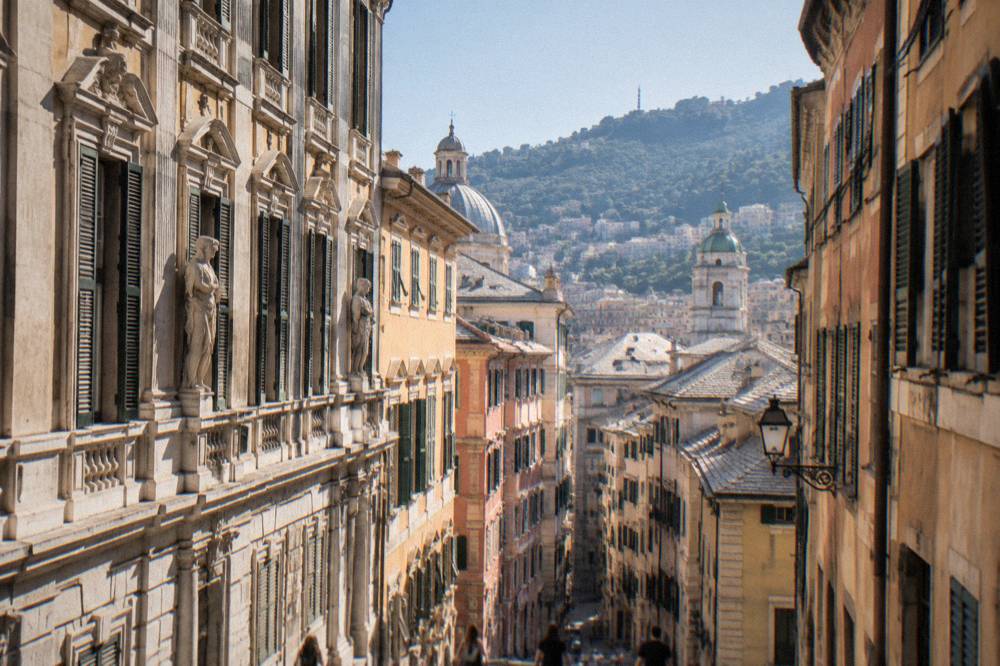
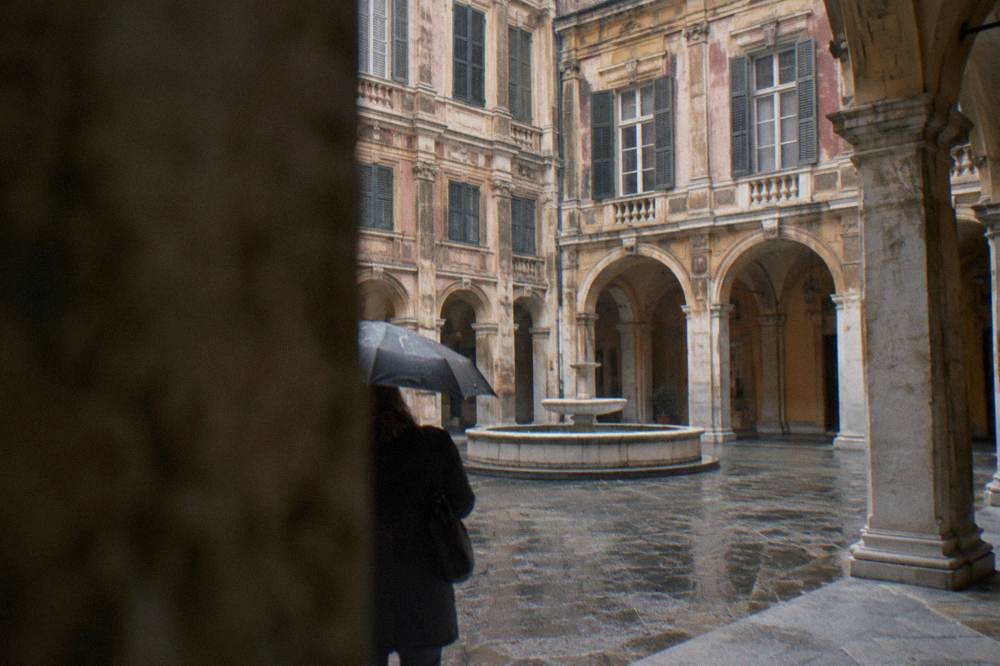
The three Musei di Strada Nuova, Palazzo Rosso, Palazzo Bianco and Palazzo Doria-Tursi, sit inside the same system and carry one of the city's specific treasures: the violin of Niccolò Paganini, "Il Cannone", built in Cremona in 1743 by Bartolomeo Giuseppe Guarneri, displayed at Palazzo Doria-Tursi per the city museums' own page. Under the winter timetable, 28 September 2026 to 18 April 2027, the museums open daily 10:00 to 18:30, but on Mondays only Palazzo Rosso can be visited, and they close on red weather alerts. The combined ticket with the Museo di Sant'Agostino is 14 EUR full, 9 EUR reduced.
Where Does Christopher Columbus Fit Into Genoa History?
The documented Genoa connection of Christopher Columbus is a house and a decade: per the city's tourism site, the family moved into the Casa di Colombo in 1455 when he was four, and he lived there until about 1470, next to the cloister of Sant'Andrea and the towers of Porta Soprana.
That is the whole dated record this page stands behind. The tourism site's own wording is "claimed as the house where Columbus lived as a boy", and the dates 1455 to 1470 are its dates. Everything beyond that, voyages, biography, motive, belongs to other pages and other archives. What Genoa itself did with the memory is datable: the 1992 redevelopment of the Porto Antico, with the Aquarium and the Bigo lift, was built by Renzo Piano for the Columbus Expo of that year, the quincentenary programme, as the Piano practice's own project page records. The Aquarium, Europe-scale in ambition for a city of this size, opened in 1992 for that same Expo, per its own institutional page, and still opens 365 days a year with adult fixed-date tickets from 26.00 EUR and dynamic pricing, as its ticket page lists.
The Expo chapter matters because it redirected the city's relationship with its waterfront. Before 1992 the old harbour was a working zone closed to the city; after it, the Porto Antico became the public threshold between the old town and the sea, with the Bigo lift rising 40 m above it for a panoramic view of the basin. The Aquarium tickets guide covers current prices and combinations, including the Aquarium, Biosfera and Bigo combined ticket, and visitors should check the official site for current prices.
How Did Genoa Become A City Of Memory: Staglieno And The Post-Republic Era?
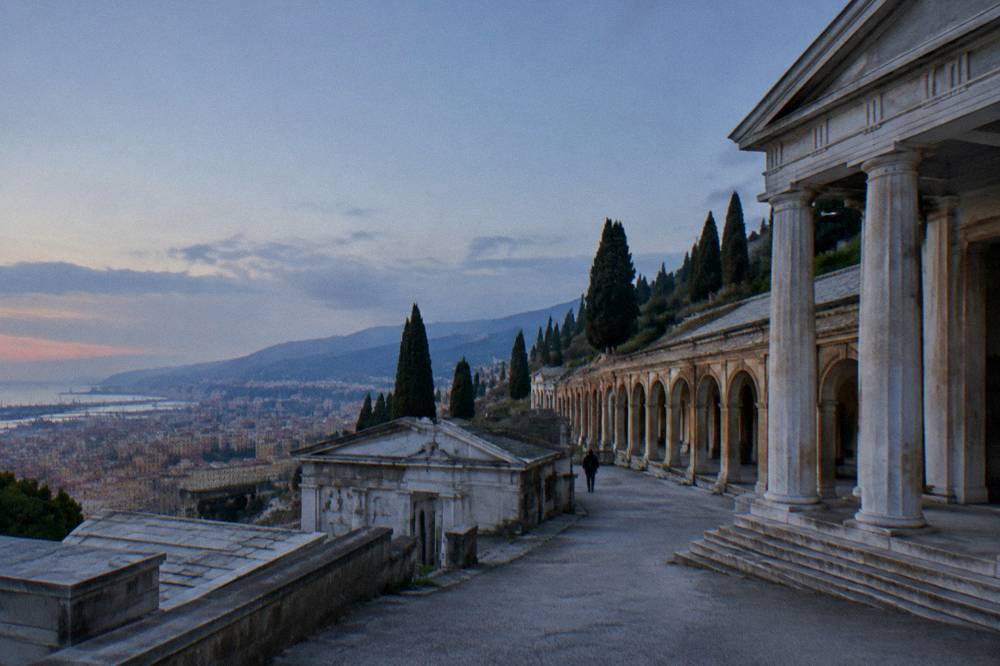
After the Republic ended in 1797, Genoa's great monument of remembrance is the Staglieno Monumental Cemetery: works began in 1844 and it opened officially to the public on 1 January 1851, per the cemetery's own municipal page, becoming the city's vast open-air gallery of funerary sculpture.
Staglieno is the clearest proof that the city's creative energy did not stop in 1797. The dates are the municipality's: 1844 for the start of works, 1 January 1851 for the public opening. The site closes on weather alerts by municipal notice, so check its page before a visit; entry conditions are listed there.
The same era rebuilt the city's commercial frame. The tourism site records Corso Italia as a seaside promenade of about 2.5 km linking the Foce area to Boccadasse, and the Parchi di Nervi as 92,000 square metres of parks between Via Aurelia and the sea, with the Passeggiata Anita Garibaldi, a cliff-top walk of about 2 km from the Nervi harbour to Capolungo. These are the promenade layers a history walk crosses without noticing: the medieval town, the Renaissance Strade Nuove, and the seaside city built for a port bourgeoisie. The parks of Nervi carry that chapter in detail.
How Did The Modern Port Take Shape?
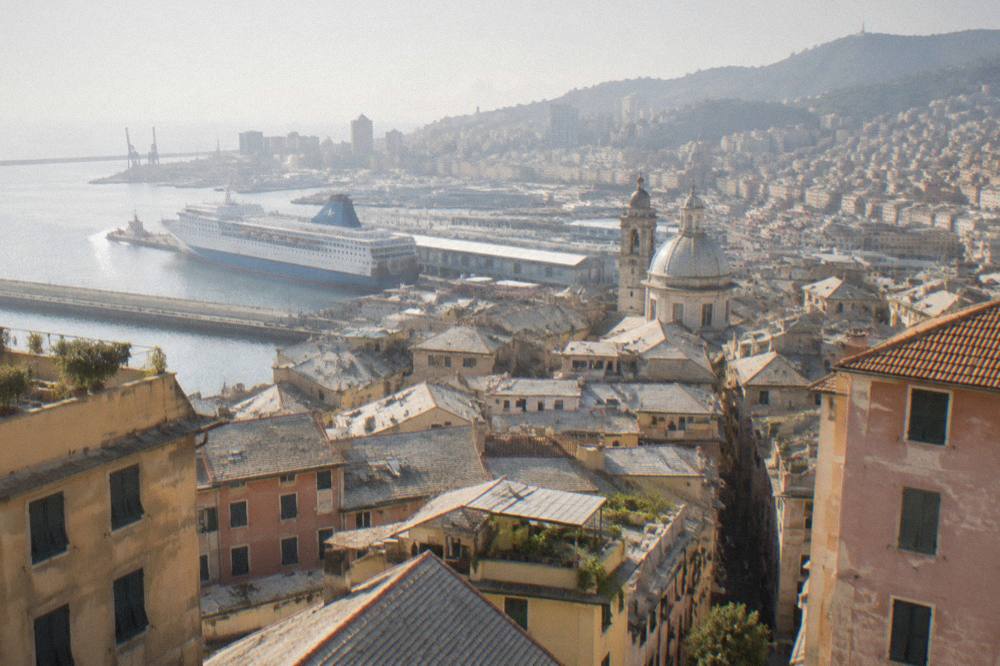
The port's own numbers page lists the scale of today's operation: 2.4 million cruise passengers, 2.6 million ferry passengers and 7,619 ship calls, with cruise terminals at Ponte dei Mille and Ponte Andrea Doria and ferry berths at Calata Chiappella, Ponte Caracciolo and Ponte Colombo. GNV, Moby, Tirrenia and Co.Tu.Nav operate from the Stazioni Marittime, with routes seen including Palermo, Porto Torres, Tunis and Marseille.
In a straight line, the ferry terminal sits about 2 km from Piazza De Ferrari and the cruise terminal about 1.4 km, so the port is not beside the history, it is the history, continuing. The Genoa ferries guide lists operators and destinations in detail, and the cruise port guide covers arrival logistics.
Two further chapters are dated and nothing more should be inferred from them. The Ponte Morandi collapsed on 14 August 2018, and Renzo Piano's replacement, the Ponte San Giorgio, was inaugurated on 3 August 2020. On the water side, the Waterfront di Levante remains a construction site, with the Centro del Mare targeted for 2028, per project reporting. Genoa is one of the rare European ports still actively reshaping its own edge: the city that rebuilt its harbour for 1992 is doing it again.
What Recent History Changed Genoa's Standing?
Genoa was European Capital of Culture in 2004, shared with Lille, and European Capital of Sport in 2024, both reported honours that bracket two decades of repositioning; the UNESCO inscription of 2006, the 1992 Porto Antico redevelopment, the Ponte San Giorgio of 3 August 2020 and the Waterfront works targeting 2028 complete the dated sequence of a city repeatedly remaking itself.
The honours deserve their attribution kept intact: the Capital of Culture year 2004 is reported in connection with Lille, and the Capital of Sport title is 2024, not later. The remaking is physical and ongoing. The old harbour's Bigo and Aquarium date to 1992; the Strade Nuove joined the World Heritage List in 2006; the Morandi bridge fell on 14 August 2018 and the Ponte San Giorgio rose on 3 August 2020; and the Centro del Mare on the Waterfront di Levante is targeted for 2028. The city's population frame, reported at 566,247 in the comune and 820,691 in the metropolitan city at 1 January 2026, makes it Italy's significant mid-sized port metropolis rather than a museum town.
For a timeline you can scan, the dated record assembles like this:
| Year | Event | Source tier |
|---|---|---|
| 1128 | Lanterna first built | V |
| 1455 to 1470 | Columbus lives at the Casa di Colombo | V |
| 1543 | Lanterna rebuilt after damage | V |
| 1576, 1588, 1599, 1614, 1664 | The five Rolli lists drawn up | R |
| 1743 | Paganini's "Il Cannone" built in Cremona | V |
| 1797 | Republic ends, Ligurian Republic under Napoleon | V |
| 1844 and 1851 | Staglieno works begin, cemetery opens 1 January | V |
| 1992 | Porto Antico redevelopment and Aquarium open for the Columbus Expo | V |
| 2004 | European Capital of Culture, with Lille | R |
| 2006 | UNESCO inscribes Strade Nuove and Palazzi dei Rolli | V |
| 2018 and 2020 | Morandi collapse 14 August, Ponte San Giorgio 3 August | R |
| 2024 | European Capital of Sport | R |
How Do You Explore Genoa History Today?
The practical route runs through four access points: the Musei di Strada Nuova, open daily 10:00 to 18:30 in winter with Palazzo Rosso only on Mondays; the Genoa Museum Card at 24 EUR for 24 hours or 45 EUR for 48 hours covering 28 museums; AMT transport at 2.00 EUR for 110 minutes across the whole network; and the port's own terminals, from which boat tours reach the coastline the republic once ruled.
The museum core is the Strada Nuova trio plus the Palazzo Ducale's exhibition programme. The Card math is on the museum card page: against a 14 EUR combined Strada Nuova and Sant'Agostino ticket, the 24-hour card at 24 EUR pays for itself somewhere around three visits, and only the "+bus" variants of any card include transport, never Volabus, Navebus or trains. Moving between the old town, the Strade Nuove and the waterfront is an AMT matter: a single ticket is 2.00 EUR valid 110 minutes, lifts and the Sant'Anna funicular are 1.20 EUR a ride, and the Zecca-Righi funicular and the Castelletto Levante lift to the Spianata Castelletto viewpoint both run daily 06:40 to 24:00. Full transport detail is on the public transport guide.
The sea completes it. The republic was a maritime state, and the direct sensory link to that is the water itself: a cruise into the Pelagos Sanctuary, the marine protected area in the Ligurian Sea, puts the city's historic relationship with its sea in plain view, and Check availability on the operator's live listing for current sailings. The things to do in Genoa overview collects the full range of options.
| Access point | Key figure | Notes |
|---|---|---|
| Musei di Strada Nuova | Combined ticket 14 EUR full, 9 EUR reduced | With Museo di Sant'Agostino; winter hours 10:00 to 18:30, Monday Palazzo Rosso only |
| Genoa Museum Card | 24 EUR / 24 h, 45 EUR / 48 h | 28 museums; only +bus variants include AMT |
| Aquarium of Genoa | Adult from 26.00 EUR, dynamic | Open 365 days; combined with Biosfera and Bigo from 37.00 EUR |
| AMT single ticket | 2.00 EUR, 110 minutes | Whole network; lifts and Sant'Anna funicular 1.20 EUR |
| Lanterna | 117 m above the sea, 172 steps to first terrace | Opening days on the operator's own site |
| Port element | Detail |
|---|---|
| Cruise terminals | Ponte dei Mille, Ponte Andrea Doria |
| Ferry berths | Calata Chiappella, Ponte Caracciolo, Ponte Colombo |
| Operators seen at terminal | GNV, Moby, Tirrenia, Co.Tu.Nav, MSC cruises |
| Routes seen | Palermo, Porto Torres, Tunis, Marseille |
| Latest port figures | 2.4 mln cruise pax, 2.6 mln ferry pax, 7,619 calls |
Common Questions About Genoa History
When did the Republic of Genoa end?
The Republic of Genoa ended in 1797 with Napoleonic occupation and the creation of the Ligurian Republic, as the Treccani encyclopedia records.
What is Genoa's UNESCO World Heritage Site?
It is "Genoa: Le Strade Nuove and the system of the Palazzi dei Rolli", inscribed in 2006, a property containing 42 palaces drawn from the Rolli lists of 1576, 1588, 1599, 1614 and 1664.
How old is the Lanterna lighthouse?
The Lanterna was first built in 1128 and rebuilt in 1543. It stands 77 m tall on a 40 m rock, 117 m above the sea, and is billed as the tallest lighthouse in the Mediterranean.
Did Christopher Columbus live in Genoa?
The city's tourism site records that the Columbus family moved into the Casa di Colombo in 1455, when he was four, and that he lived there until about 1470, in an 18th-century reconstruction standing on the original site.
What happened to the Morandi bridge?
The Ponte Morandi collapsed on 14 August 2018. Renzo Piano's replacement, the Ponte San Giorgio, was inaugurated on 3 August 2020.
When did the Aquarium of Genoa open?
The Aquarium opened in 1992 for the Columbus Expo, as part of the Renzo Piano redevelopment of the Porto Antico, and it now opens 365 days a year.
Genoa's history did not stop when the republic did in 1797; it rebuilt its harbour in 1992, joined the World Heritage List in 2006, replaced a fallen bridge in 2020 and is extending its waterfront toward 2028. Walk the caruggi, buy the card, ride a funicular to the Spianata Castelletto, and the layered record of the city is visible in a single afternoon.