Genoa In Winter: Mild Days, Short Queues And Christmas Lights
Genoa in winter runs on mild coastal temperatures, daily museum openings and a food culture built for cold weather. Here is what the official figures and calendars say.
Short answer
Genoa in winter is mild for a northern Italian city: the official 1971-2000 climate normals for Genova Sestri put January at a mean maximum of 11.5 C, and the major museums, the Aquarium and the transport network all run daily through the season.
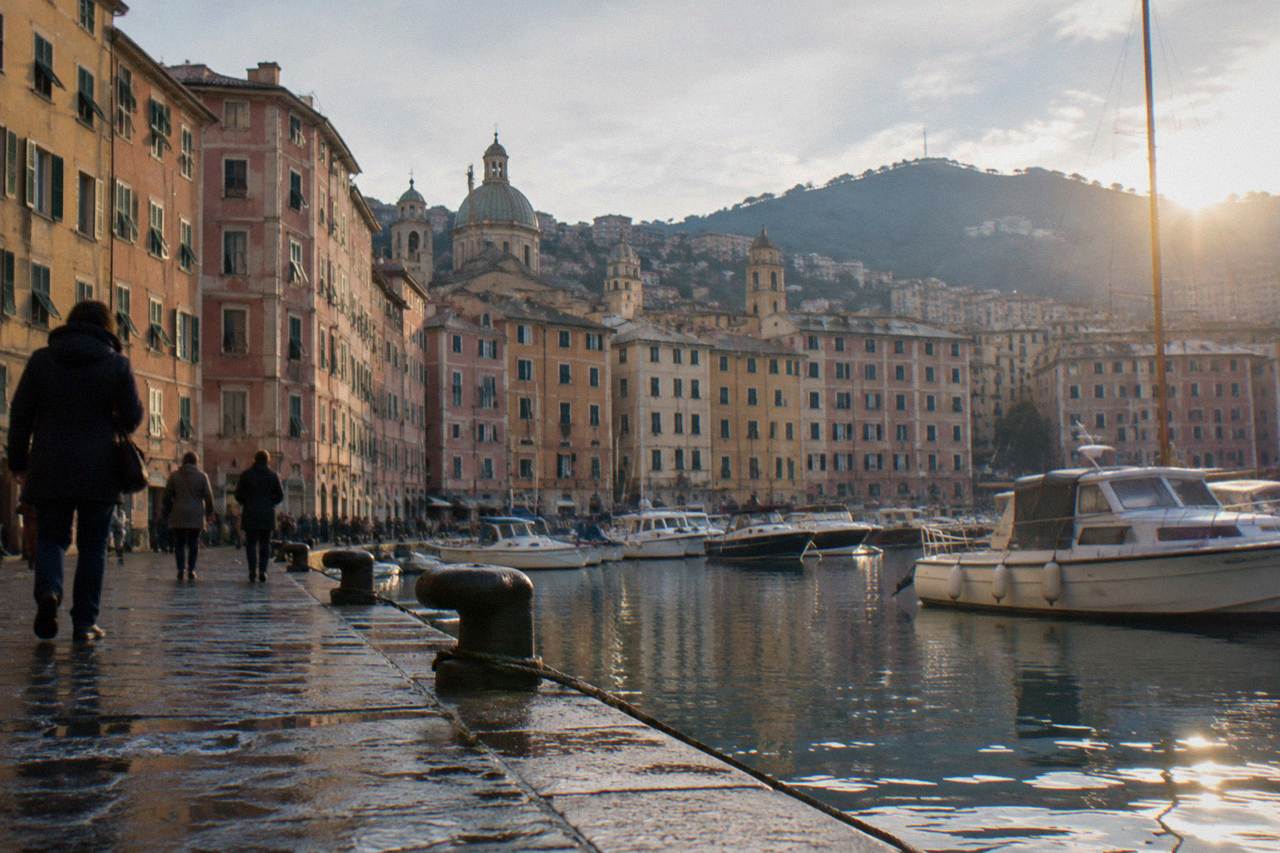
Genoa in winter is a mild, coastal proposition: a city squeezed between the Ligurian Sea and the Apennine hills, where the official Aeronautica Militare CLINO 1971-2000 normals for Genova Sestri record a January mean maximum of 11.5 C against a mean minimum of 5.5 C. The port keeps working, the Aquarium of Genoa opens 365 days a year, and the Strada Nuova museums run a dedicated winter timetable. This page assembles what the figures say about weather, museums, food, Christmas and day trips between December and February, with the prices and calendars that are actually published.

What Is Winter Weather Like In Genoa?
Winter in Genoa is mild by day and cool at night: the official Aeronautica Militare CLINO 1971-2000 normals for Genova Sestri give December a mean maximum of 12.5 C and a mean minimum of 6.5 C, January 11.5 C by day and 5.5 C by night, and February 12.2 C by day and 6.0 C by night, with December recording 93.1 mm of rain.
Those numbers come from the weather station at Genova Sestri, which sits 3 m above sea level at the airport about 7 km west of Piazza De Ferrari, so they describe the coastal strip rather than the hillside districts above the city. The normals are the official Aeronautica Militare series and are the only temperature figures used on this site. The summer half of the same table, for comparison, gives August a mean maximum of 27.7 C, which shows how narrow the annual swing is on a Ligurian shore.
Rain is the planning variable. The CLINO table puts October at 171.3 mm, the highest monthly total of the year, and September at 136.4 mm, while July sits at 24.2 mm with 2.8 rain days. Winter itself is wet but not extreme: 93.1 mm in December, 101.8 mm in January and 74.0 mm in February. A packed layer and an indoor backup list matter more here than heavy insulation, and the city has enough museums to fill several rainy afternoons.
| Month | Mean max C | Mean min C | Rain mm |
|---|---|---|---|
| December | 12.5 | 6.5 | 93.1 |
| January | 11.5 | 5.5 | 101.8 |
| February | 12.2 | 6.0 | 74.0 |
| March | 14.6 | 8.2 | 81.7 |
| July (comparison) | 27.3 | 20.9 | 24.2 |
| October (comparison) | 20.0 | 13.8 | 171.3 |
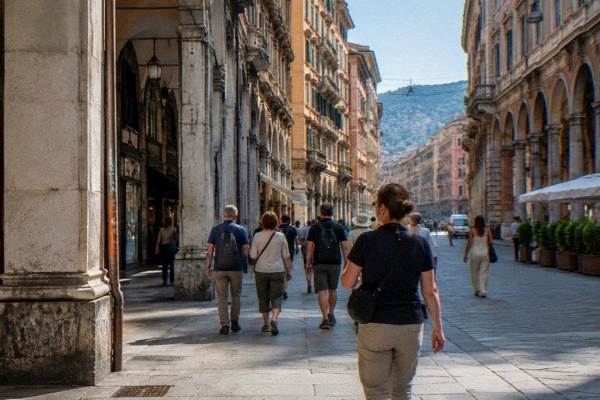
Daylight is short, as it is anywhere at this latitude in December, but the city compensates with a dense centre. The caruggi of the old town, an area the tourism office describes as one of the largest medieval historic centres in Europe at 113 hectares, are narrow covered-feeling lanes where wind and rain matter less than on the open seafront. The Genoa weather guide carries the full monthly table, and the best time to visit Genoa compares the seasons against these same normals.
What Can You Do In Genoa In Winter?
The core sights all run through winter in Genoa: the Aquarium of Genoa opens 365 days a year with fixed-date adult tickets from 26.00 EUR, the Strada Nuova museums keep a daily winter timetable from 28 September 2026 to 18 April 2027 (10:00 to 18:30, with only Palazzo Rosso visitable on Mondays), and the Zecca-Righi funicular and the Castelletto Levante lift both operate daily from 06:40 to 24:00. Winter days are short, so indoor anchors carry the itinerary.
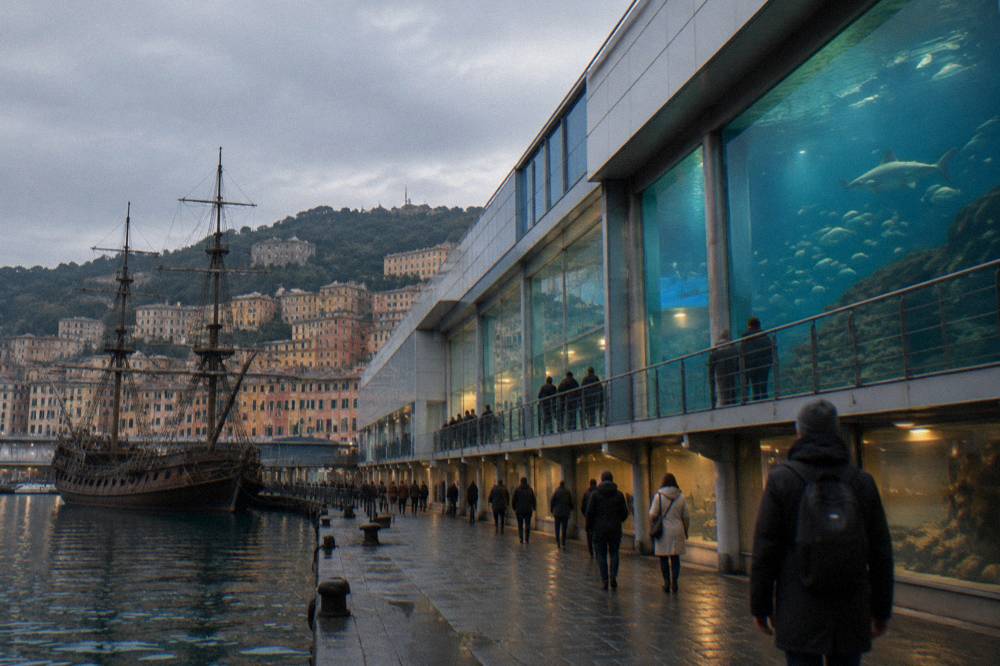
The Aquarium is the single most reliable winter booking in the city. Its own ticket page lists dynamic pricing with adult fixed-date entry from 26.00 EUR, reduced tickets from 20.00 EUR, children aged 4 to 12 from 16.00 EUR and under-4s free, plus a combined Aquarium, Biosfera and Bigo ticket from 37.00 EUR for an adult. The venue opened in 1992 as part of the Columbus Expo transformations of the Porto Antico, and the Renzo Piano redevelopment of that old harbour area remains the city's waterfront backbone.
Above the old town, the vertical city still functions in cold weather. The Zecca-Righi funicular runs daily 06:40 to 24:00 across its seven stations, and a single ride on the lifts or the Sant'Anna funicular costs 1.20 EUR. The Spianata Castelletto viewpoint, reached by the Castelletto Levante lift from Piazza Portello, gives the classic panorama over the rooftops to the sea, a view that needs no warm weather to work.
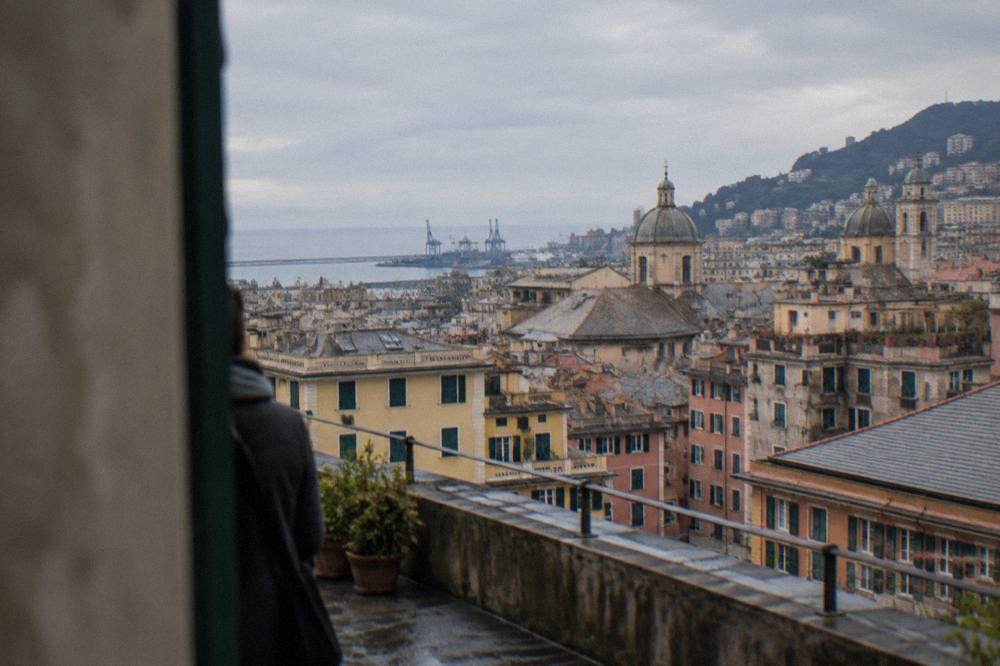
The old town itself is the winter asset. San Lorenzo Cathedral, the Palazzo Ducale with its exhibition programme (World Press Photo to 8 December 2026, and a Renoir, Monet, Toulouse-Lautrec and Cézanne exhibition opening 15 October 2026), Piazza De Ferrari and the Lanterna, built in 1128 and rebuilt in 1543, 117 m above the sea, can all be strung together on foot. For the full checklist across the seasons, see things to do in Genoa.
A storyteller-led walk is one way to cover the lanes when daylight is limited: the site's featured storyteller secrets walk moves through the old town with a guide who frames the city's history in narrative form, and you can Check availability alongside the listing.
Which Museums And Palaces Are Open In Genoa In Winter?
In winter the Strada Nuova museums (Palazzo Rosso, Palazzo Bianco and Palazzo Doria-Tursi) open daily 10:00 to 18:30 under the timetable running 28 September 2026 to 18 April 2027, with the exception that on Mondays only Palazzo Rosso can be visited, and the combined ticket with the Museo di Sant'Agostino costs 14 EUR full price or 9 EUR reduced. The Genova Museum Card, at the 2026 rates of 24 EUR for 24 hours or 45 EUR for 48 hours, covers 28 city museums.
The Monday rule is the detail to plan around. Under the published winter timetable the three palaces keep daily hours, but a Monday visit is a Palazzo Rosso visit. The museums also close on red weather alerts, which matters in a city where rain is common in October and November. Palazzo Doria-Tursi holds Paganini's violin "Il Cannone", built in Cremona in 1743 by Bartolomeo Giuseppe Guarneri, and the palaces together form the Musei di Strada Nuova on the street renamed Via Garibaldi.
The Genova Museum Card is the economical route when several museums share an itinerary. The 2026 rates are 24 EUR for 24 hours and 45 EUR for 48 hours, and the card covers 28 museums, 19 municipal plus 9 others. Only the "+bus" card variants include AMT transport, and none of them covers Volabus, Navebus or trains, so a museum marathon and an airport transfer are separate purchases. The Genoa Museum Card guide and the Via Garibaldi and Musei di Strada Nuova guide break the coverage down.
| Museum | Winter timetable | Ticket |
|---|---|---|
| Palazzo Rosso, Palazzo Bianco, Palazzo Doria-Tursi | Daily 10:00 to 18:30, Monday only Palazzo Rosso | 14 EUR full combined with Sant'Agostino, 9 EUR reduced |
| Museo del Tesoro di San Lorenzo | Monday to Saturday 09:00 to 12:00 and 15:00 to 18:00, closed Sunday | Check the venue's own page |
| Galata Museo del Mare | 10:00 to 19:00 | Check the venue's own page |
| Palazzo Ducale exhibitions | Varies by exhibition | Check the venue's own page |
| Lanterna | Check the venue's own page | Check the venue's own page |
State museums are a separate system from the civic ones: the free first-Sunday scheme reported for Italy's state museums, Domenica al museo, applies to state sites such as Palazzo Reale rather than to the municipal network. The Genoa museums overview lists which institutions sit in which system.
Is The Aquarium Of Genoa Worth It In Winter?
The Aquarium of Genoa is one of the few Genoa attractions with a guaranteed daily winter schedule, open 365 days a year, and its dynamic pricing means fixed-date adult entry starts from 26.00 EUR, reduced tickets from 20.00 EUR, children 4 to 12 from 16.00 EUR and under-4s free, according to the Aquarium's own ticket page. The combined Aquarium, Biosfera and Bigo ticket starts from 37.00 EUR for an adult.
Because pricing is dynamic, the published figures are starting points that move with date and demand, and the venue's booking calendar is the place to see the actual number for a chosen day. The Aquarium opened in 1992 for the Columbus Expo and anchors the Porto Antico, where the Bigo panoramic lift, part of the same Renzo Piano redevelopment, sells adult rides at 6 EUR with reduced and 4-to-12 tickets at 5 EUR, per the Aquarium's site.
The Bigo lift adds the weather-proof view: an enclosed ascent over the harbour that works in December drizzle as well as in July sun. The combined ticket bundles the Aquarium, the Biosfera and the Bigo, which turns a wet afternoon into a full Porto Antico circuit. Booking pages and current details are covered in the Aquarium of Genoa tickets guide.
What Should You Eat In Genoa In Winter?
Winter eating in Genoa leans on the city's anchored dishes, pesto genovese made with Basilico Genovese PDO basil, focaccia, farinata and pasta shapes such as trofie and pansoti, and the cold months are when a guided food tour with wine tastings or a cooking class moves the meal indoors. The PDO specification for Genovese basil is the legal anchor of the city's signature sauce.
The sourcing story is documented. The Basilico Genovese PDO consortium regulates the basil that defines pesto genovese, grown in the Ligurian coastal municipalities under the protected designation. Focaccia di Recco, the cheese-filled flatbread, has held IGP status since 2015 and is produced only in Recco, Camogli, Sori and Avegno, all of them day-trip distance down the coast. Farinata, the chickpea-flour bake, completes the winter trio of street foods this site names.
A guided option converts the food culture into an indoor activity. The food tour with wine tastings pairs tastings with a walk through the centre, and the pesto classes on the roster, including the rooftop cooking class and the mortar pesto lesson, teach the sauce with a mortar and pestle as the tradition prescribes. The dish-by-dish detail is available in the site's food guides.
| Dish | What it is | Winter relevance |
|---|---|---|
| Pesto genovese | Basil sauce with PDO Genovese basil, pounded traditionally in a mortar | Fresh basil is regulated by PDO rules |
| Focaccia | Olive-oil rich flatbread, the city's everyday bake | Baked year round |
| focaccia di Recco IGP | Cheese-filled double-crust flatbread | IGP since 2015, made only in Recco, Camogli, Sori and Avegno |
| Farinata | Chickpea-flour bake cooked in a wood oven | A cold-weather street food |
| Trofie and pansoti | Hand-rolled pasta and herb-filled pasta shapes | The standard carriers for pesto and walnut sauce |
Is Christmas A Good Time To Be In Genoa?
Christmas in Genoa means lights and markets rather than a fixed published calendar: the city's confirmed winter events with published dates are the ones already listed, and Christmas market dates for 2026 had not been announced, so the reliable anchors are the permanent sights plus the Palazzo Ducale exhibition programme, which includes World Press Photo to 8 December 2026. The dedicated Christmas guide collects what is known about the season.
The exhibition calendar carries the cultural winter. At Palazzo Ducale the World Press Photo 2026 show runs to 8 December 2026, and the Renoir, Monet, Toulouse-Lautrec and Cézanne exhibition opens 15 October 2026. The Teatro Carlo Felice programmes its autumn and winter season across the same months. These are dated, ticketed events that hold regardless of weather.
The religious calendar gives the season its shape. The patron saint, San Giovanni Battista, is marked on 24 June, outside the winter window, but the standard Italian public holidays of 8 December, 25 December and 26 December, plus 1 January and 6 January, all fall inside it, and museum timetables can shift around them. Checking each venue's own page for the specific holiday date is the safe approach, and the Christmas in Genoa guide collects the season's detail.
Can You Take Day Trips From Genoa In Winter?
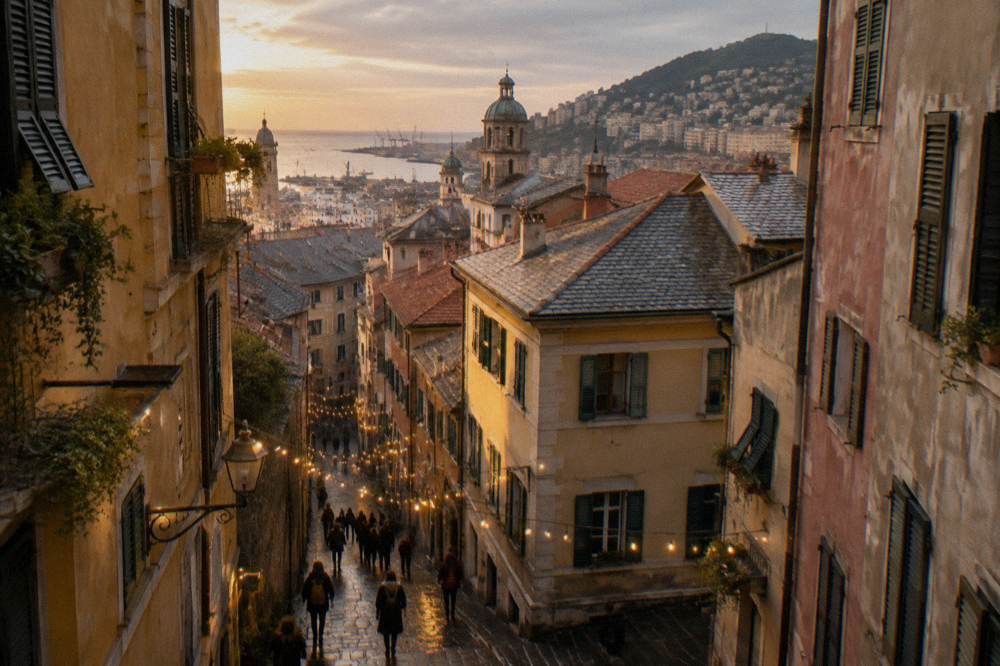
Day trips from Genoa in winter are mainly train trips: Milan is about 1h30 to 2h by direct train from about 11 EUR, Turin about 1h36 to 2h18, and the coastal line runs to Camogli, Santa Margherita Ligure and the Cinque Terre, while the Golfo Paradiso boat tours from Porto Antico ran on listed dates through 24 October 2026, so the sea options narrow once the season closes.
The coast by rail is the winter workhorse. Regional trains serve the Riviera di Levante stations, and the Cinque Terre Treno Card, priced 22.00 to 35.00 EUR for one adult day depending on date band, covers both the trains and the paid trails, with low-season rates applying 2 November 2026 to 12 March 2027. The Via dell'Amore path between Riomaggiore and Manarola is included in the card with a booked time slot, running 09:00 to 18:00 with last entry 17:30 from 25 October 2026 to 27 March 2027.
Straight-line distances from Piazza De Ferrari are about 4 km to Boccadasse, about 18 km to Camogli and about 25 km to Portofino, so the nearer coastal targets stay in reach even on a short winter afternoon. The boats are seasonal. Golfo Paradiso's Two Gulfs tour from Genova Porto Antico to Camogli, San Fruttuoso and Portofino ran from March 2026 on listed dates with the season ending 24 October 2026, and the Camogli to San Fruttuoso boats run year round. A "Genova - Cinque Terre" tour runs on set dates only, per the operator, and no regular scheduled ferry line between Genoa and the Cinque Terre is listed. The Genoa to Cinque Terre and Genoa to Portofino pages carry the full mechanics.
| Destination | Straight-line km from Piazza De Ferrari | Winter access |
|---|---|---|
| Boccadasse | about 4 | City transport |
| Nervi | about 9 | Train or city bus |
| Camogli | about 18 | Regional train |
| San Fruttuoso | about 22 | Boat from Camogli, year round |
| Portofino | about 25 | Train to Santa Margherita Ligure plus bus 782 |
| Cinque Terre | about 67 | Regional train, Treno Card |
| Milan | about 119 | Direct train about 1h30 to 2h |
| Turin | about 123 | Direct train about 1h36 to 2h18 |
Bus 782 from Santa Margherita Ligure to Portofino is included in the AMT Met Daily ticket, which links the coast trip to the city transport system described below. Portofino itself restricts car access to a ZTL for residents, with paid silos parking reported at about 8 EUR per hour, so the train-and-bus route is the practical one in any season.
How Do You Get Around Genoa In Winter?
Getting around Genoa in winter runs on the AMT network: an ordinary ticket costs 2.00 EUR and is valid 110 minutes across buses, metro, lifts and funiculars, the Met Daily 24-hour ticket costs 10.00 EUR and includes the Volabus airport link, and the metro line runs 7 km with 8 stations from Brin to Brignole. The airport taxi into the centre is a fixed 25 EUR per car, 30 EUR for more than four people, plus 2 EUR at night and on holidays.
The ordinary ticket is the base unit of a Genoa visit. At 2.00 EUR for 110 minutes it covers the whole Città Metropolitana network except Volabus and a few special services, and the integrated AMT-Trenitalia version at 2.20 EUR adds limited Trenitalia segments. A carnet of 11 tickets costs 20.00 EUR. The metro's 8 stations include Principe, Sant'Agostino, De Ferrari and Brignole, tying the rail hubs to the centre, and the extension to Canepari is reported as targeted forJune 2027, so those stations are not yet in service.
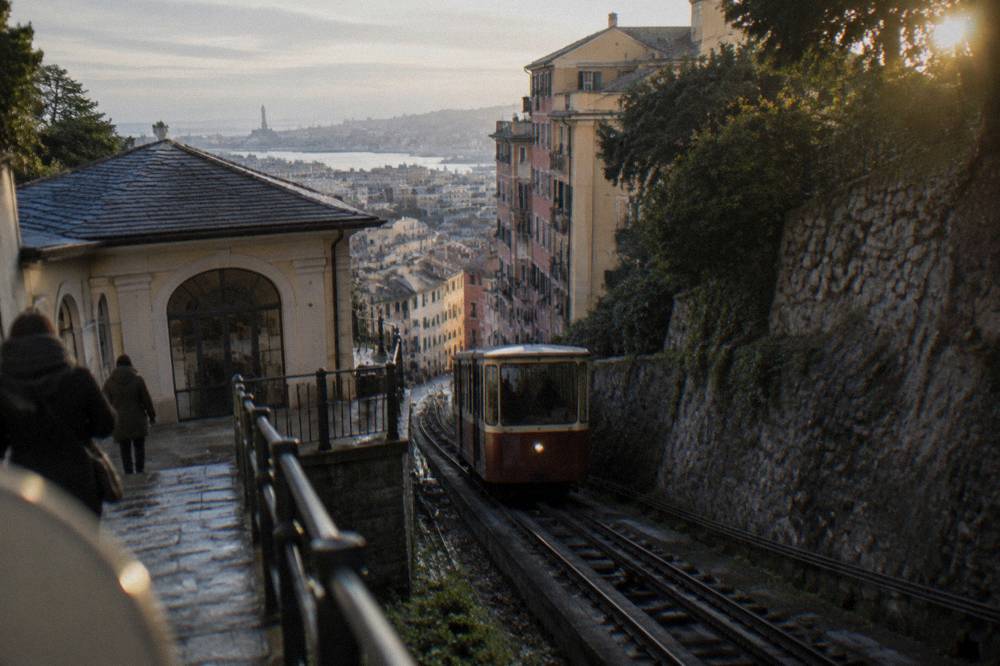
The vertical network is the winter convenience. The Zecca-Righi funicular and the Castelletto Levante lift both run daily 06:40 to 24:00, and single rides on lifts and the Sant'Anna funicular cost 1.20 EUR. With rain in the forecast, the lifts beat the stair streets. The Genoa public transport and Genoa lifts and funiculars pages give the full fare table.
| AMT product | Price | Validity |
|---|---|---|
| Ordinary ticket | 2.00 EUR | 110 minutes, whole network |
| AMT + Trenitalia integrated | 2.20 EUR | 110 minutes with limited Trenitalia |
| Carnet 11 tickets | 20.00 EUR | 11 x 110 minutes |
| 5-hour ticket | 5.00 EUR | 5 hours |
| Met Daily | 10.00 EUR | 24 hours, full network including Volabus |
| Lift or Sant'Anna funicular ride | 1.20 EUR | Single ride |
From Genova Cristoforo Colombo airport, the Volabus connects to Genova Piazza Principe, Piazza De Ferrari and Genova Brignole in about 30 minutes, and it requires the Met Daily ticket rather than a single fare. The fixed taxi price to the centre is 25 EUR per car. Arrival planning, including the Milan to Genoa and Genoa train stations routes, is covered in the dedicated guides, and Genoa Travel Guide collects all of it.
Where Should You Stay In Genoa In Winter?
Winter accommodation in Genoa carries a tourist tax layered by category: the comune's imposta di soggiorno sets 2.00 EUR per person per night at 1-star properties, 2.50 EUR at 2-star, and 4.00 EUR at B&Bs and similar extra-hotel lodging, with only the first 8 consecutive nights taxed and under-14s exempt. Reported rates for 3, 4 and 5-star hotels are 3, 4 and 5 EUR respectively, and these are paid at the property.
The tax is the only lodging figure published in a form this site can print. The exemption list runs beyond children: the comune's rules also exempt certified disabled guests, enrolled local students and several other categories, and the tariff applies per person per night rather than per room.
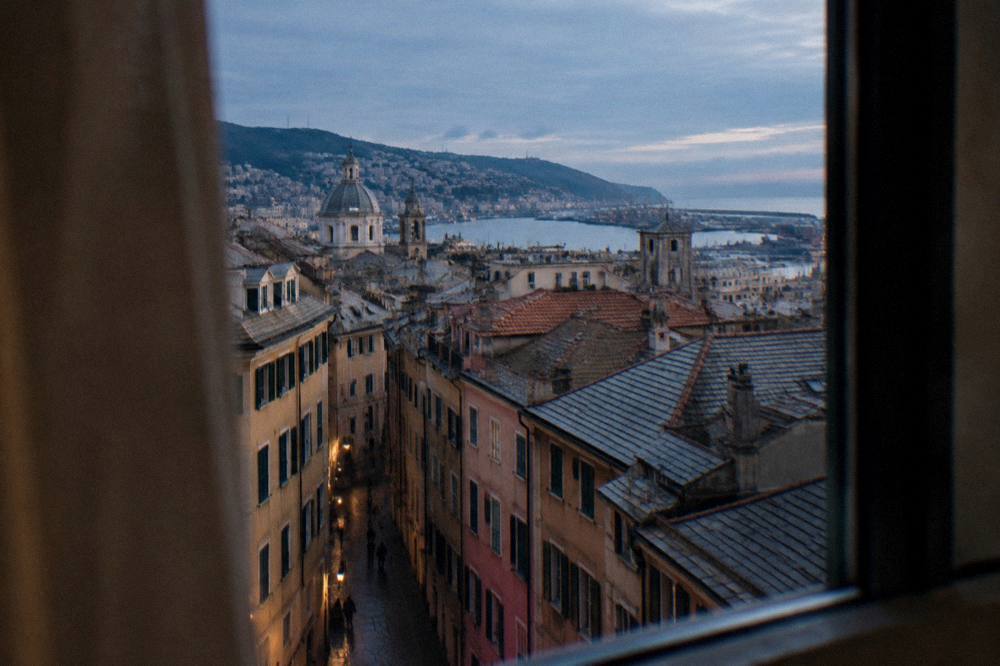
Location matters more in winter, when short daylight rewards a base within walking distance of the centre. The where to stay in Genoa page maps the districts against the transport facts above, and the itinerary pages, from Genoa in one day to Genoa in three days, show how much of the city sits inside a walkable radius.
What Does The Sea Look Like From Genoa In Winter?
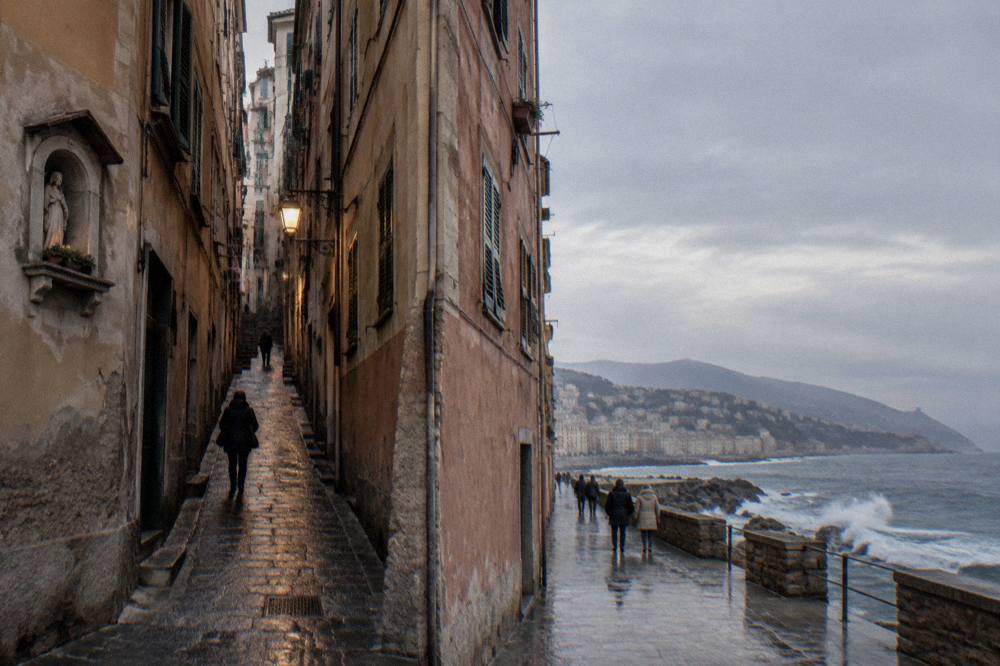
The sea stays part of the winter city: the port's passenger terminals, Ponte dei Mille and Andrea Doria for cruise ships and Calata Chiappella, Ponte Caracciolo and Ponte Colombo for ferries, run through the season with ferry lines to Sardinia, Corsica, Sicily, Barcelona and Tunis, and the port's own figures record 2.4 million cruise passengers and 2.6 million ferry passengers. ARPAL's 2026 bathing classification puts Nervi's water at good and Boccadasse's at poor.
The bathing classes come from ARPAL's 2026 network of 380 sampling points on the Ligurian coast, graded from eccellente down to scarsa. Swimming in December is a different question from water quality, and this page prints no sea temperatures. What the winter sea offers instead is the shoreline itself: the about 2 km Passeggiata Anita Garibaldi cliff walk at Nervi, and Boccadasse's small pebble beach about 4 km straight-line from Piazza De Ferrari, both reachable by city transport.
The working port frames the view. The Lanterna, built in 1128 and rebuilt in 1543, stands 117 m above the sea at the western harbour mouth, billed as the tallest lighthouse in the Mediterranean, and Staglieno, the monumental cemetery opened to the public on 1 January 1851, sits above the Bisagno valley. The Genoa ferries page covers the winter sailings from the terminals.
How Many Days Do You Need For Genoa In Winter?
A winter visit to Genoa works in two to four days depending on the day-trip load: the city core, the old town, the Strada Nuova museums, the Aquarium and the Porto Antico fills two days on the published timetables, and each coastal or inland day trip, the Cinque Terre, Portofino, Milan or Turin, adds a day, with the dedicated itinerary answer mapping the options. The winter timetable's Monday rule means palace-heavy days belong Tuesday to Sunday.
The sequencing logic is simple. Day one belongs to the old town and the seafront, day two to the museums and the Aquarium, and the pattern extends naturally with the Genoa in two days and Genoa in three days frameworks. In winter the short afternoons argue for indoor anchors after about 15:00 and for lifting the closing hour of each venue into the plan.
Winter also compresses the packing list. Layers for a 5.5 C night and an 11.5 C afternoon, something waterproof for the winter rain totals in the CLINO table, and comfortable shoes for the stair streets are the working kit. The Genoa in the rain page extends the wet-day plan.
Common Questions About Genoa In Winter
Is Genoa cold in winter?
The official Aeronautica Militare CLINO 1971-2000 normals for Genova Sestri give January a mean maximum of 11.5 C and a mean minimum of 5.5 C, with December at 12.5 C by day. Days are mild for northern Italy and nights are cool.
Does it rain a lot in Genoa in winter?
The CLINO normals record 93.1 mm in December, 101.8 mm in January and 74.0 mm in February. The autumn months carry more, with October at 171.3 mm, the highest monthly total in the table.
Are Genoa museums open in winter?
The Strada Nuova museums open daily 10:00 to 18:30 in the winter timetable from 28 September 2026 to 18 April 2027, but on Mondays only Palazzo Rosso can be visited. The Aquarium of Genoa opens 365 days a year.
Can you swim in Genoa in winter?
ARPAL's 2026 classification grades Nervi's bathing water as good and Boccadasse's as poor. Swimming in December is a separate question from water quality.
Is Christmas a good time to visit Genoa?
Christmas lights and markets shape the season, but their 2026 dates had not been announced, while the Palazzo Ducale exhibitions, including World Press Photo to 8 December 2026, and the permanent sights run through the holidays.
Can you visit the Cinque Terre from Genoa in winter?
Yes, by regional train. The Cinque Terre Treno Card costs 22.00 to 35.00 EUR for one adult day by date band, with low-season rates from 2 November 2026 to 12 March 2027, and boats from Genoa to the Cinque Terre run on set dates only.