Entering Italy As A US Visitor: Passports, ETIAS And Schengen Days
Italy is in the Schengen area and the eurozone, so a US visit to Genoa is border-check-free once you are inside, but the paperwork still starts before you fly: a passport that meets Schengen validity rules, the ETIAS travel authorisation once it takes effect, and a running count of your 90 days.

Short answer
US citizens may enter Italy for up to 90 days in any 180-day period without a visa, under Schengen rules. Your passport must be valid for at least three months beyond your planned departure from Schengen and issued within the last ten years. Once ETIAS becomes effective, an online travel authorisation must be approved before boarding. Italy uses the euro, and Genoa charges a city tourist tax on the first eight nights.
Genoa is a coastal city in Liguria, north-west Italy, on the Ligurian Sea, and for a US visitor it sits inside the same border regime as Rome, Paris or Amsterdam: the Schengen area. There is no separate Italian visa queue and no passport stamp when you cross from France into Liguria on a regional train. The rules that matter are decided at the outer edge of Schengen, before you board in the United States, and they are about your passport, a travel authorisation called ETIAS, and how many of your 90 Schengen days you have already spent. This page sets out those rules and then follows the traveller all the way into the city: the airport taxi at a fixed 25 EUR per car, the Volabus, the stations, the cruise terminals and the tourist tax the comune of Genoa adds to your hotel bill. For the wider picture of the city itself, start with things to do in Genoa or the planning pages on how to get to Genoa and where to stay in Genoa.

Do US Citizens Need A Visa To Visit Genoa?
No. US citizens do not need a visa for tourism in Italy or anywhere in the Schengen area for stays of up to 90 days in any 180-day period. The 90 days are counted across the whole Schengen area, not per country, so days spent in France or Switzerland before arriving in Genoa come off the same allowance, and border officers can ask about the purpose and funding of the trip.
That 180-day clock is the detail that catches returning travellers. It is a rolling window: on any given day, you look back 180 days and count how many days you were physically present in the Schengen area. A two-week spring trip to Nice and Monaco, which lie about 141 km in a straight line from Piazza De Ferrari, plus a long autumn stay in Genoa can together eat a large share of the allowance without either trip feeling long. Time in Croatia, Greece or Iceland counts too, because they are all Schengen states even outside the eurozone. Italy itself is both Schengen and eurozone, which is why every price on this site is in EUR and never converted. The absence of a visa is not the absence of conditions: the passport rules and, once in force, the ETIAS authorisation still apply.

For a first visit of ordinary length, the arithmetic is simple. The questions worth answering before departure are the passport ones, the ETIAS one and the money one, summarised below.
| Question | Short answer for US citizens |
|---|---|
| Visa for tourism under 90 days | Not required |
| Maximum stay | 90 days in any 180-day period, Schengen-wide |
| Passport validity needed | Valid at least 3 months beyond departure from Schengen |
| Passport age rule | Issued within the previous 10 years |
| Travel authorisation | ETIAS, once in force, approved before boarding |
| Currency | Euro (EUR) |
| City tourist tax in Genoa | Charged per person per night, first 8 nights only |
| Emergency number | 112 |
The 90-day allowance covers tourism, family visits and short business trips. Study, work or stays beyond the limit need a national visa issued by an Italian consulate, which is a separate process with its own timelines, and anyone in that position should apply well ahead through the consulate serving their state.
What Are The Passport Rules For Italy?
A US passport must be valid for at least three months beyond the day you plan to leave the Schengen area, and it must have been issued within the previous ten years. Those two clocks are separate, so a passport issued eleven years ago that still has months of validity left does not meet the second rule. Italy applies the Schengen-wide standard rather than a lighter national one, and airlines check it at check-in, before anyone in Europe looks at the document at all.
The three-month buffer is measured from your intended departure from Schengen, not from your arrival in Genoa. A traveller planning to leave Europe on 30 June needs validity past the end of September, even for a one-week trip. The ten-year rule bites US passports issued more than a decade earlier that were renewed with long validity extensions; the issue date printed in the document is what counts. In practice, renewing a passport that is approaching either limit removes the only common reason US travellers are turned away at the gate.
Nothing else about the document is special for Italy. A standard adult passport book is what the rules contemplate; the US passport card is not valid for air travel to Europe. Keep the passport on your person or in a secure pocket in transit, because you may be asked to show it at hotel check-in in Genoa, as Italian law requires hotels to register guest identity details.
Once the paperwork is settled, the city rewards arrival. A storyteller-led walk is a good first evening, and the Genoa: Discover the secrets with a Storyteller tour covers the old town lanes and the stories behind them. Check availability
What Is ETIAS And When Does It Apply?
ETIAS is the European Travel Information and Authorisation System, an online pre-screening that visa-exempt travellers, including US citizens, will need to complete before boarding a flight to the Schengen area once the system takes effect. It is not a visa: it is a travel authorisation tied to the passport, applied for online, and checked by airlines at departure. Because its start date has shifted repeatedly, confirm the current status on the official EU ETIAS site before booking flights rather than relying on any fixed date printed elsewhere.
The application is designed to be short: biographical details, passport data, and a set of security and health questions, submitted through the official site or app. Approval is delivered electronically to the passport, with no sticker or stamp, and the authorisation is then valid for multiple entries over its validity period or until the passport expires, whichever comes first. Each traveller, including children, needs their own authorisation linked to their own passport. A new passport means a new ETIAS.
Two cautions are worth more than any schedule of dates. First, apply only through the official EU channels, never through lookalike sites that charge for forms. Second, treat anything published about the launch timeline, the fee or the processing times as provisional until it appears on the official site, because implementation has been deferred several times and third-party pages age badly. The one fixed point is that ETIAS will be enforced at boarding: an airline will refuse carriage without an approved authorisation once the system is live and any grace period has ended.

ETIAS does not change the 90-day rule or create any right of entry. It is a pre-check, and the final decision at the border stays with the officer, exactly as it is today.
How Do The Schengen 90-Day Rules Work In Practice?
The rule is 90 days of presence in any rolling 180-day window, counted across every Schengen country together. Entry and exit days each count as days of presence, the count is not reset by leaving and re-entering, and border officers can and do calculate it from entry stamps and travel records. Overstaying carries consequences that outlast the trip: fines, entry bans and refused boarding on later trips.
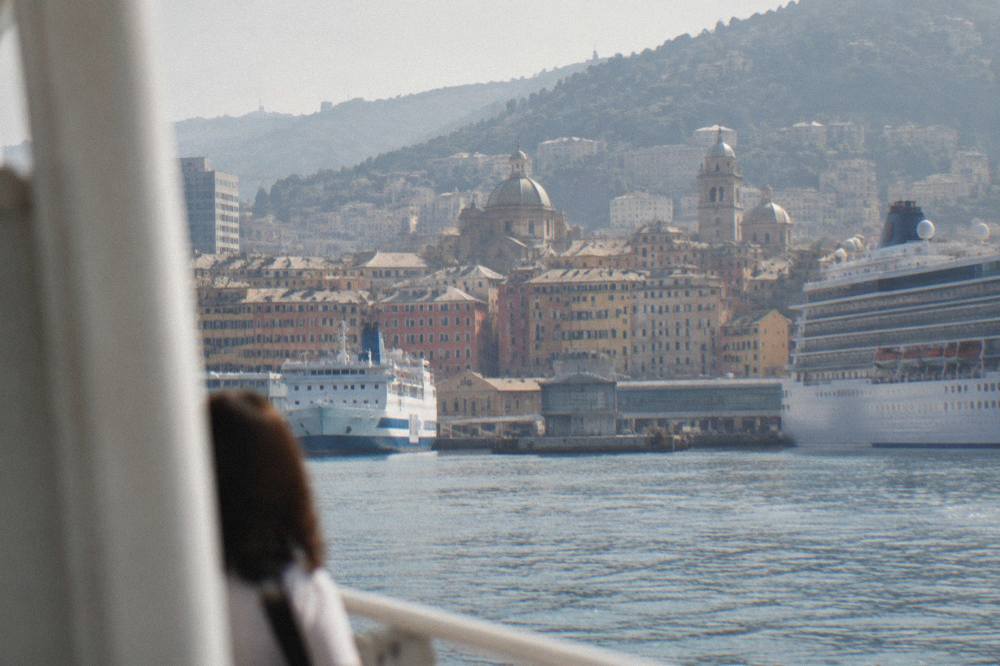
The arithmetic is easiest with a calendar. Count back 180 days from today and total the days inside Schengen in that period. If the answer is at or near 90, a further trip needs a wait until old days fall out of the window. Cruise passengers have a specific wrinkle: time ashore in Schengen ports counts as presence, so a Mediterranean cruise with Italian calls consumes Schengen days like any other visit. Genoa is a major cruise and ferry port, with Ponte dei Mille and Andrea Doria handling cruise ships and Calata Chiappella, Ponte Caracciolo and Ponte Colombo handling ferries, and the port counted 2.4 million cruise passengers in its latest published figures.
| Situation | Effect on the 90-day count |
|---|---|
| Two weeks in Genoa in spring | 14 days consumed |
| Same trip includes Nice and Monaco beforehand | Those days count, all Schengen |
| Day trip by train from Genoa to the Cinque Terre | No extra effect, already inside Schengen |
| Ferry from Genoa to Sardinia | No extra effect, domestic crossing |
| Cruise calls at Genoa, then non-Schengen ports | Only Schengen port days count |
| Leaving to the UK or Ireland, then returning | The clock resumes, it does not reset |
| Overstay | Fines, possible entry bans, refused boarding later |
Genoa works well as a base for exactly the kind of long stay where the count starts to matter. Rail links put Milan about 1h30 to 2h away with fares from about 11 EUR, Turin about 1h36 to 2h18, and the Cinque Terre and Portofino within day-trip range, all inside the same border-free zone. A reader weighing the length of a Ligurian stay can compare the options in how many days in Genoa is enough or the two- and three-day itineraries at Genoa in two days and Genoa in three days.
What Happens At Italian Border Control?
Arriving from the United States, you clear the Schengen external border at your first Schengen airport, which is where the passport check and any questions happen; a connection onward to Genoa Cristoforo Colombo, or a train down from Milan, then involves no further border checks. Officers verify passport validity and the ETIAS status once live, and they may ask the purpose of the stay, the address of the first night and how the visit is funded.
To have data working the moment you land, book a travel eSIM here.
Answer plainly and have the first hotel address to hand, written down or on the confirmation, because that is the single question asked again and again. Officers may also ask for a return ticket. Unlike the United Kingdom or the United States, Italy does not require visa-exempt visitors to hold a specific entry clearance, but the border officer's decision is final and discretionary in the same way everywhere. Everything else covered here is indexed on Genoa Travel Guide.
Once inside, movement is borderless. A traveller who lands in Paris and trains to Genoa via Milan never shows a passport after the first stamp, and the same applies arriving through Frankfurt, Amsterdam or Zurich. The absence of checks is precisely why the day-counting discipline falls to the traveller: nobody tallies the 90 days for you until an officer does it at a later entry, by which point an overstay already exists.
How Do You Get From Genoa Airport Into The City?
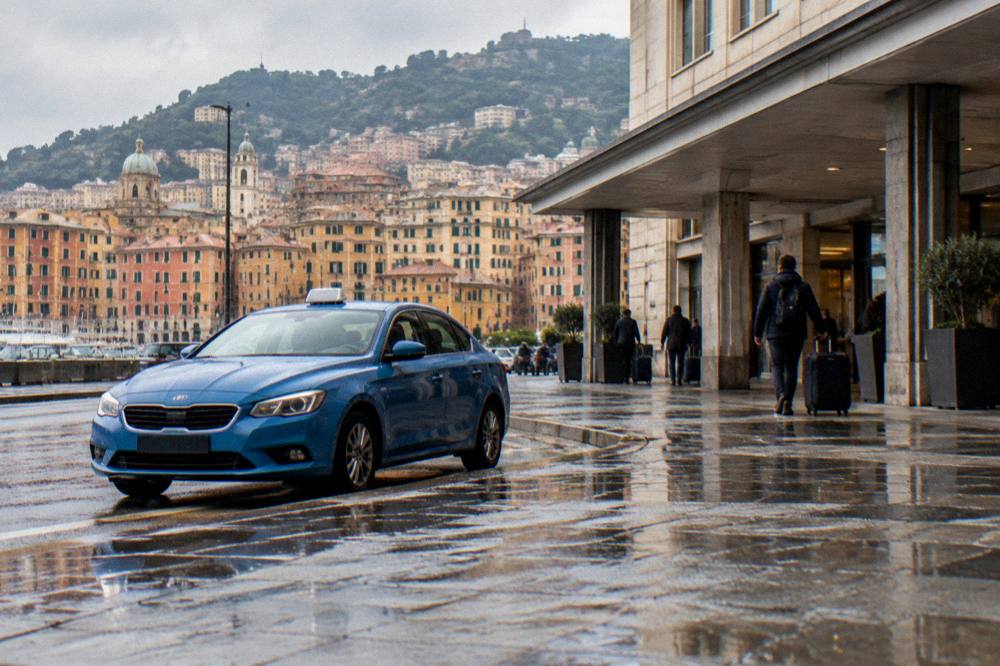
Genoa Cristoforo Colombo airport sits about 7 km west of Piazza De Ferrari in a straight line, and the taxi fare into the centre is fixed at 25 EUR per car, 30 EUR for more than four people, with 2 EUR added at night and on holidays; the alternative is the Volabus shuttle, which runs to Genova Piazza Principe, Piazza De Ferrari and Genova Brignole in about 30 minutes and requires the 10.00 EUR Met Daily ticket (24 hours, full network).
The taxi figures come from the airport's own ground-transport page, and the shared-ride rates listed there run 8 EUR per person to Brignole with a minimum of three passengers and 7 EUR per person to Principe with a minimum of three, or 6 EUR with four. The Volabus rules are an AMT Genova quirk worth internalising early: the Met Daily is a 24-hour ticket covering the whole AMT network, including lifts, the funiculars and even line 782 toward Portofino, so an arrival day ticket keeps paying for itself around town. The ordinary AMT ticket is 2.00 EUR and valid 110 minutes.
| Option from the airport | Fare | Notes |
|---|---|---|
| Fixed taxi to centre | 25 EUR per car | 30 EUR over 4 people, plus 2 EUR night/holiday |
| Shared taxi to Brignole | 8 EUR per person | Minimum 3 passengers |
| Shared taxi to Principe | 7 EUR per person, or 6 with 4 | Minimum 3 passengers |
| Volabus shuttle | Met Daily 10.00 EUR | About 30 minutes, no single fare |
| Ordinary AMT ticket | 2.00 EUR | 110 minutes, whole network |
For the fuller arrival picture, including summer 2026 routes such as KLM to Amsterdam and Vueling to Barcelona, see Genoa airport and Genoa train stations. Arriving overland, the pages on Milan to Genoa cover the rail corridor from the north.
What Is The Tourist Tax In Genoa?
The comune of Genoa charges an imposta di soggiorno on overnight stays, per person per night, and it applies only to the first eight consecutive nights: 2.00 EUR in 1-star hotels, 2.50 EUR in 2-star, 4.00 EUR in B&Bs and guesthouses, and 2.00 EUR in hostels and campsites, with reported rates of 3, 4 and 5 EUR in 3-, 4- and 5-star hotels. Children under 14 are exempt, and the tax is collected by the accommodation, not at any border.
The rates come from the comune of Genoa's own tourist-tax page, and the extra-hotel tariffs were updated with effect from 1 August 2026. The exemptions go beyond children: the comune's regulation also covers disabled guests with certification, students enrolled at the University of Genoa under 26, and patients with companions, among others listed in the municipal rules. The tax is small in absolute terms, a few euros a night, but it is per person, so a family of four in a B&B should budget accordingly on top of the room rate, capped at eight nights.
No advance paperwork is needed. The hotel adds the tax to the bill at checkout, which is also when the passport registration required of Italian hotels happens. Budget travellers can read the money-saving angles in Genoa on a budget.
Do You Need Travel Insurance Or Specific Documents For Genoa?
No document beyond the passport, and the ETIAS authorisation once in force, is legally required of a US visitor entering Italy for tourism, but travel medical insurance is the standard expectation of the Schengen border framework, and US health plans frequently provide no coverage in Italy, so a dedicated policy is the practical choice rather than the legal one. Carry proof of your first night's address and a return ticket.
The insurance expectation comes from the Schengen framework, where medical coverage is mandatory for visa holders; visa-exempt visitors are held to a softer expectation, but it is the benchmark insurers build Schengen products around. Beyond insurance, the practical list is short: the passport, the booking confirmations, and any medication in original packaging with a copy of the prescription. Italy has no vaccination requirement for US arrivals.
| Document | Required? | Notes |
|---|---|---|
| Passport | Yes | 3 months validity beyond departure, issued within 10 years |
| Visa | No | Under 90 days, tourism |
| ETIAS | Once in force | Apply via the official EU site only |
| Return ticket | Not checked, carry it | Common border question |
| First-night address | Not checked, carry it | Hotel registration also uses it |
| Travel medical insurance | Practically yes | Standard expectation of the Schengen framework |
| Driving licence | Only if driving | For car hire, see Genoa car rental |
One Genoa-specific note on timing: the city's event calendar can shift the feel of a stay. The Festival della Scienza ran 22 October to 1 November 2026, the Rolli Days opened the UNESCO palaces 16 to 18 October 2026, and the Salone Nautico is already fixed for 30 September to 5 October 2027. None of these changes entry rules, but hotel demand around them does, which is a planning matter rather than a paperwork one.
What Should US Visitors Know About Money, Phones And Emergencies In Genoa?
Italy uses the euro with no foreign currency of its own, the emergency number is 112 across Italy, and US chip-and-signature cards work at Italian card readers with a signature or PIN prompt, while cash remains useful for small purchases; local prices in Genoa are set in EUR, from the 2.00 EUR AMT bus ticket to the 24 EUR 24-hour Genoa Museum Card, and the comune's tourist tax is collected in euros at checkout.
Card acceptance is broad but not universal, and Italian law caps cash payments above a threshold that has moved in recent years, so confirm current limits if you plan to carry large sums. Tipping norms and the coperto, the fixed cover charge many restaurants add, are cultural details rather than entry requirements, and visitors should simply read the menu and bill. For the food itself, pesto genovese made with Basilico Genovese PDO basil, focaccia and farinata are the Genoese staples, covered in what to eat in Genoa, pesto genovese and focaccia.
Two city-centre resources are worth knowing on day one. The IAT Garibaldi tourist office at Via Garibaldi 12r opens daily 09:00 to 18:20, and the IAT Porto Antico office at Ponte Spinola opens daily 10:00 to 17:00. Both can help with maps and event bookings, reduced hours apply on 25 December and 1 January at Garibaldi.

Weather is the other practical surprise for visitors from much of the United States. The official 1971-2000 climate normals for Genoa Sestri show a mean daily high of 27.3 C in July and 27.7 C in August, a January mean high of 11.5 C with a mean low of 5.5 C, and October as the month with the highest rainfall in the table, at 171.3 mm against July's 24.2 mm. Autumn visitors should pack for rain; the details are in Genoa weather and the best time to visit Genoa.
Which Day Trips From Genoa Stay Inside Schengen Rules?
Every standard day trip from Genoa, to Portofino, the Cinque Terre, Milan, Turin, even Nice and Monaco, stays inside the Schengen area and involves no border formalities at all, because all of them are within the same external frontier; a day trip inside Schengen adds no extra counting beyond the days you are already present, and the practical limits are timetables and fares, not borders.
Distances make the point. From Piazza De Ferrari, Portofino lies about 25 km in a straight line, the Cinque Terre about 67 km, Milan about 119 km, Turin about 123 km, and Nice and Monaco about 141 km, and every one of those destinations is inside Schengen. Trains reach Milan in about 1h30 to 2h from fares of about 11 EUR, and Turin in about 1h36 to 2h18. The Golfo Paradiso "Two Gulfs" boat tour runs from Genoa Porto Antico on listed dates from March 2026, calling at Camogli, San Fruttuoso and Portofino, with full-day fares reported at about 29 EUR. The day-trip planning pages at Genoa to Portofino and Genoa to the Cinque Terre carry the detail.
| Day trip from Genoa | Straight-line distance | Border formalities |
|---|---|---|
| Boccadasse | about 4 km | none |
| Nervi | about 9 km | none |
| Camogli | about 18 km | none |
| Portofino | about 25 km | none |
| Cinque Terre | about 67 km | none |
| Milan | about 119 km | none |
| Turin | about 123 km | none |
| Nice and Monaco | about 141 km | none, both inside Schengen |
The one place the border question genuinely recurs is the ferries. Genoa's ferry terminals serve Sardinia, Corsica, Sicily, Barcelona and Tunis, and the port counted 2.6 million ferry passengers in its latest figures. Sardinia and Sicily are domestic Italian crossings with no border check, Barcelona arrives in another Schengen state, and Corsica is French and Schengen too; Tunis is the only destination in that list that leaves the zone, with a Tunisian entry regime of its own. The details are in Genoa ferries.
Common Questions About Italy Entry Requirements For US Visitors
Do US citizens need a visa for Italy?
No. US citizens can visit Italy and the rest of the Schengen area for up to 90 days in any 180-day period without a visa, for tourism, family visits or short business trips.
What passport validity does Italy require?
At least three months of validity beyond your planned departure from the Schengen area, and the passport must have been issued within the previous ten years. Airlines check both at check-in.
What is ETIAS?
The European Travel Information and Authorisation System, an online travel authorisation that visa-exempt travellers including US citizens will need approved before boarding once the system takes effect. It is not a visa. Confirm its current status on the official EU ETIAS site before travel.
How does the 90-day Schengen limit work?
You may be present in the Schengen area up to 90 days in any rolling 180-day window, counted across all Schengen countries together. Leaving and re-entering does not reset the clock, and cruise days in Schengen ports count.
Is there a tourist tax in Genoa?
Yes. The comune of Genoa charges per person per night for the first eight consecutive nights: 2.00 EUR in 1-star hotels, 2.50 EUR in 2-star, 4.00 EUR in B&Bs and 2.00 EUR in hostels and campsites, with 3-, 4- and 5-star hotels reported at 3, 4 and 5 EUR. Under-14s are exempt.
What number do you call in an emergency in Genoa?
112, the single European emergency number, which works across Italy for police, medical and fire services.