Is Genoa A Safe City For Tourists?
A practical safety answer for Genoa, the coastal city in Liguria: what the official sources say about getting around, the hills, weather alerts, water quality and where to get help.
Genoa is a coastal city in Liguria, north-west Italy, stretched along a narrow strip between the Ligurian Sea and the Apennine hills, and the question of whether it is safe has a practical rather than a dramatic answer. This site publishes no crime statistic, no safety ranking and no list of streets to avoid, because none appears in the official research behind these pages. What the sources do give is concrete: a single European emergency number, a public transport network with published fares, a city of hills served by 14 public lifts and funiculars, weather alerts that close museums on red days, and bathing-water classifications published each year by the regional environment agency. That is the material a useful safety answer is built from, and it is what this page reports.
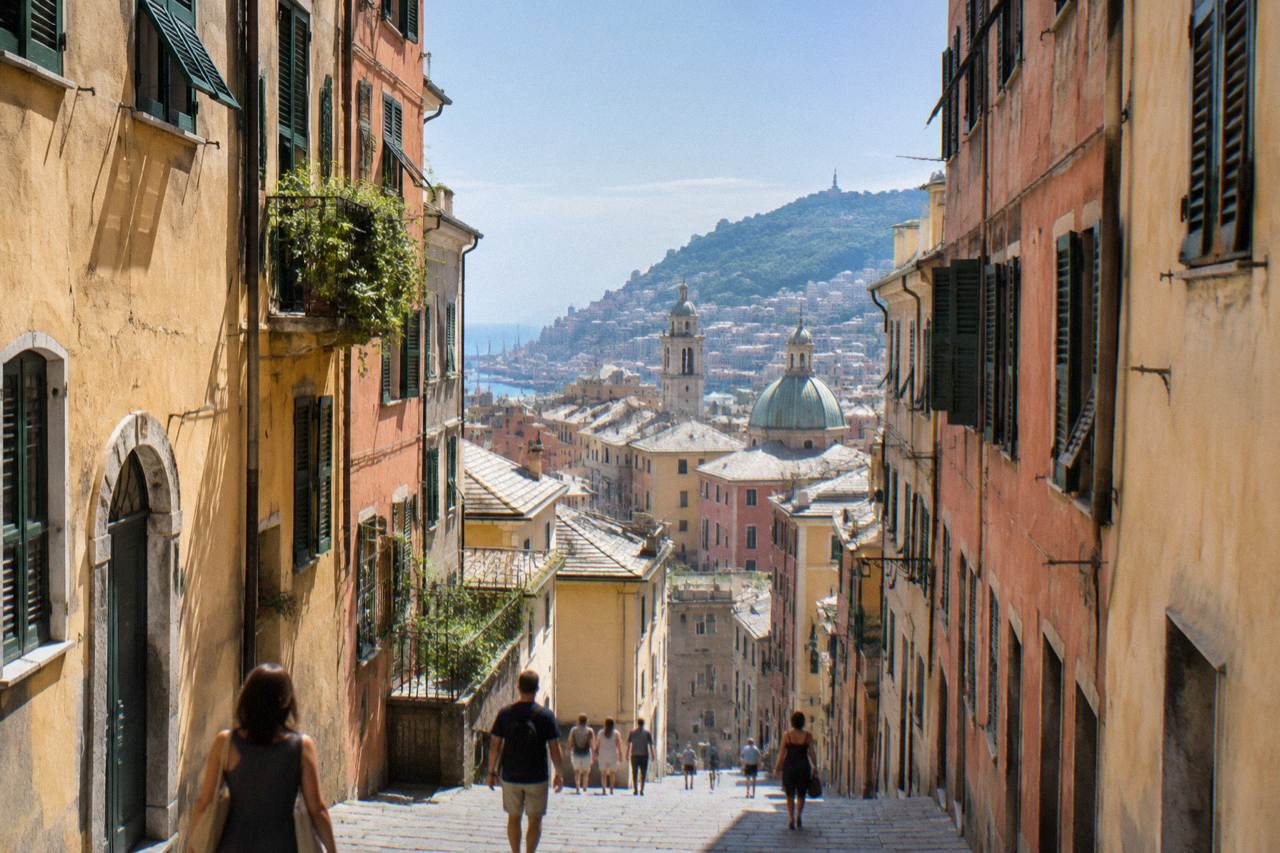
The city itself is on a human scale. The Comune di Genova counted 566,247 residents at 1 January 2026, with 820,691 in the metropolitan city, and the old town, the caruggi, covers 113 hectares that the municipal tourism site describes as one of the largest medieval historic centres in Europe. Its lanes are walked daily by residents, commuters and port workers. The sections below cover the parts of a Genoa trip where safety questions actually arise: the hills and the lifts, the sea and the weather, getting around, and the numbers to know before you go.
Is Genoa A Safe City For Tourists?
Yes, in the sense that Genoa is an ordinary working European port city with no official tourist warning against it, a single emergency number (112) that works across Italy, and public infrastructure, lifts, funiculars, a metro and buses, run on published fares by the municipal operator AMT. This site prints no crime figure and no street-by-street safety rating, because none exists in the official research. The real safety questions here are practical: steep hills, changeable weather and red weather alerts that close museums.
Those three practical points deserve the attention. The city climbs from the waterfront into the hills almost immediately, which is why AMT runs 14 public lifts and funiculars alongside the metro and buses; the Zecca-Righi funicular and the Castelletto Levante lift both run daily from 06:40 to 24:00, and a single ride on a lift or the Sant'Anna funicular costs 1.20 EUR. Weather is the second point: the official 1971-2000 normals for Genoa Sestri record October as the month with the highest rainfall, 171.3 mm on average, and the Musei di Strada Nuova state plainly that they close on red weather alert days. The third point is the sea: ARPAL, the Ligurian environment agency, classified Boccadasse's bathing water as poor for 2026 and Nervi's as good, so swimming spots are not interchangeable. Each of these is covered in its own section below.
For a first visit, orientation matters more than caution. A good starting point is the Genoa city guide, and the question is Genoa worth visiting deals with what the city offers in the first place.
How Steep Is Genoa And How Do The Lifts Work?
Genoa is built on a hillside rising straight out of the Ligurian Sea, and the city's own transport operator AMT runs 14 public lifts and funiculars to move people up and down it, which is the clearest official statement of how steep the place is.
A single ride on the lifts or the Sant'Anna funicular costs 1.20 EUR, the Zecca-Righi funicular and the Castelletto Levante lift run daily 06:40 to 24:00, and the ordinary AMT ticket, 2.00 EUR for 110 minutes, is valid on the whole urban network.
The practical consequence for a visitor is footwear and planning rather than alarm. The Spianata Castelletto, reached by the Castelletto Levante lift from Piazza Portello, a rise of 57 metres, gives the city a viewing terrace without the climb. The Zecca-Righi funicular covers seven stations in about 12 minutes. The metro runs 7 km with 8 stations from Brin to Brignole, serving Genova Piazza Principe, Sant'Agostino, De Ferrari and Genova Brignole among them. None of this is hazardous; it is simply a city where "two streets over" can mean two streets up.
Two accuracy notes: the metro does not yet reach Canepari or Martinez, with those extensions reported as targeted for June 2027 and December 2028 respectively, and a plain AMT ticket does not cover every mode. The Volabus airport service requires the Met Daily ticket, a 24-hour pass at 10.00 EUR that covers the whole AMT network. The details are in the guide to Genoa public transport and the page on Genoa lifts and funiculars.
| Transport fact | Figure | Notes |
|---|---|---|
| Emergency number | 112 | Works across Italy, police, medical and fire |
| AMT ordinary ticket | 2.00 EUR | Valid 110 minutes on the urban network |
| Lift or Sant'Anna funicular ride | 1.20 EUR | Single ride, vertical transport |
| Met Daily 24-hour ticket | 10.00 EUR | Whole AMT network, required for Volabus |
| Metro line | 7 km, 8 stations | Brin to Brignole via Principe and De Ferrari |
| Airport taxi to centre, fixed fare | 25 EUR per car | 30 EUR for over 4 people, +2 EUR night and holidays |
That table is the short version of a safe day out in Genoa: know the number, know the fare, and know that the city's vertical transport is part of the ordinary ticketing system rather than a separate adventure.
What About The Sea And Swimming In Genoa?
Swimming in Genoa is a location-by-location question, and the official answer is ARPAL's annual bathing-water classification: for 2026 the agency classified Boccadasse, the old fishermen's village, as SCARSA, meaning poor, while Nervi's Passeggiata di Nervi sampling point was classified BUONA, meaning good. No blanket statement about the water along the whole city coastline is supported, and ARPAL's 2026 network covers 380 sampling points on the Ligurian coast in four classes from eccellente to scarsa.
The distinction matters because the two best-known seaside spots in the city sit on opposite sides of that line. Boccadasse, about 4 km from Piazza De Ferrari in a straight line, has a small public pebble beach; Nervi, about 9 km, has public rock access along the Passeggiata Anita Garibaldi, a cliff-top promenade of about 2 km, and the Parchi di Nervi covering 9.2 hectares above it. The ARPAL classifications are published annually and can change year to year, so the current class for any specific point is worth checking against the agency's own balneazione pages before swimming.
Beyond the city, the picture changes again. The rocks and coves of Portofino, San Fruttuoso and Camogli are separate destinations reached by boat or train, and the FAI, which runs the abbey at San Fruttuoso, notes that boat access there is weather-dependent, with crossings suspended when the sea is rough. The full swimming picture, including what the classifications mean, is on Genoa beaches, and the question can I swim in Genoa answers it directly.
Does Weather Ever Make Genoa Unsafe?
Yes, in a limited and well-managed way: the official 1971-2000 climate normals for Genoa Sestri show why, with October recording the highest average monthly rainfall at 171.3 mm and July the lowest at 24.2 mm, and the Musei di Strada Nuova state that they close on red weather alert days. Rain in Genoa can be heavy and sustained, the yearly normal totals 1079.2 mm, but the city's institutions publish alert-based closures rather than leaving visitors to guess.
Liguria's regional civil protection issues colour-coded weather alerts, and the city's museums act on them: the Strada Nuova museums' own page lists closure on red alert among their opening conditions. Staglieno, the monumental cemetery on the hillside, also closes on weather alerts under a municipal notice. For a visitor this means one simple habit: on a stormy day, check the venue's own page or the municipal site before setting out, and treat a red alert day as a museum-and-indoor day by design rather than by accident. Other pages covering the same trip are gathered on Genoa Travel Guide.
The temperature picture is mild rather than extreme. The same normals give January a mean daily high of 11.5 C and a mean nightly low of 5.5 C, and August a mean high of 27.7 C with a nightly low of 21.0 C. Neither end of that range is dangerous to a healthy adult with ordinary preparation; the rainfall is the element that genuinely reshapes a day. The full monthly breakdown is in Genoa weather, and the best time to visit Genoa weighs it against the events calendar.
Is The Old Town Safe To Walk At Any Hour?
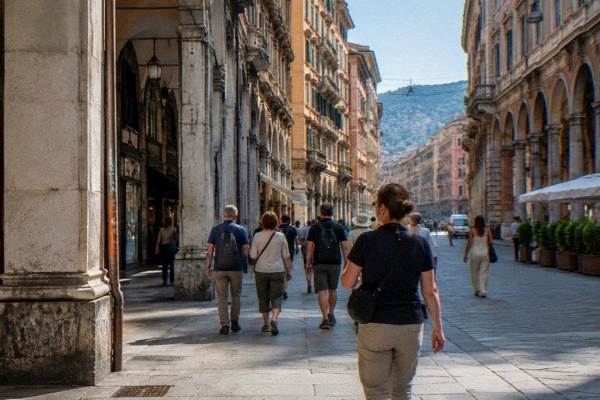
The caruggi, Genoa's medieval old town, is a lived-in urban district of 113 hectares that the municipal tourism site describes as one of the largest medieval historic centres in Europe, and the honest position of this page is that no official source in the research licenses a street-by-street safety verdict, so none is printed.
What is documented is practical: the lanes are narrow and dimly lit in places, they are mixed residential and commercial, and the standard advice for any dense medieval quarter applies, main streets at night, and a guided walk for a first orientation.
That last point is where a tour earns its place. The private historical tour this site features covers the old town's layout with a local guide, which is a reasonable way to learn the geography before exploring alone; the private historical tour of Genoa has its own page with full details, and Check availability at the operator's live listing. There is also a fuller discussion of lanes, timing and what to keep an eye on in what to avoid in Genoa, and the question is Genoa a walkable city covers the terrain with the same no-nonsense approach.
Orientation in the old town is genuinely the main challenge. The lanes run at angles to the modern street grid, addresses carry the old suffix "r" for reddutto on doors that once faced inland, and the whole quarter steps uphill from Via XX Settembre toward the heights where the lifts take over. A map helps, and the city's own Genoa map guide exists for exactly this.
Is Public Transport In Genoa Safe And Easy To Use?
AMT Genova runs the buses, the 7 km metro from Brin to Brignole, the funiculars and 14 public lifts on a single published fare structure, an ordinary ticket is 2.00 EUR for 110 minutes, an integrated AMT and Trenitalia version is 2.20 EUR, and a carnet of 11 tickets is 20.00 EUR, so the system is legible and cheap to use, with tickets sold via the AMT app, machines, retailers and contactless payment on board.
The details worth knowing are the edges of the network rather than its core. The Volabus link between Genova Cristoforo Colombo airport and Genova Piazza Principe, De Ferrari and Brignole takes about 30 minutes and requires the 10.00 EUR Met Daily ticket rather than a single fare. Taxis from the airport run on a fixed fare of 25 EUR per car to the centre, 30 EUR for more than four people, with a 2 EUR supplement at night and on holidays, which removes any negotiation from the arrival. There is no ride-hailing information for this city, and the question can I use Uber in Genoa deals with it directly.
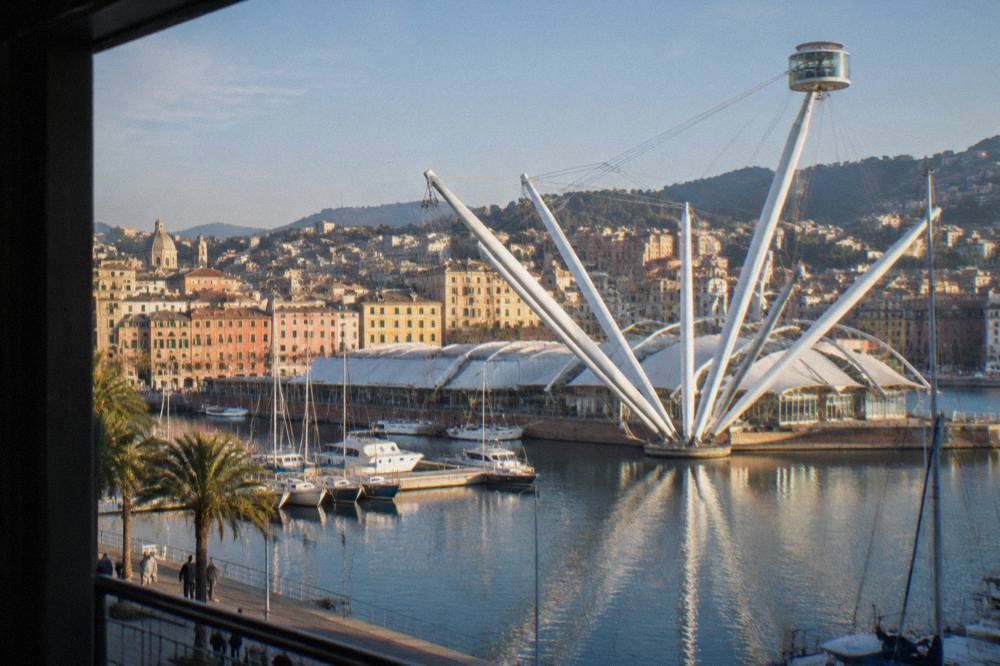
The port area deserves a note of its own, because Genoa is a working port as well as a visitor attraction. The Porto Antico, the old harbour redeveloped around the Aquarium and the Bigo lift, is the public-facing side; the working terminals, Ponte dei Mille and Andrea Doria for cruise ships, and Calata Chiappella, Ponte Caracciolo and Ponte Colombo for ferries, sit beside it. The port authority's own figures record 2.4 million cruise passengers and 2.6 million ferry passengers a year moving through these terminals, which function as ordinary transport hubs with their own staffing. Cruise passengers can walk into the city from the terminal, as this page on walking in from the cruise port explains.
What Numbers And Habits Should A Visitor Know?
The single number that matters is 112, the emergency number for police, medical services and fire across Italy, and beyond it the useful habits are sourced and simple: carry the AMT app or a contactless card for transport, keep an eye on the regional weather alert when museums may close, check the ARPAL classification before swimming at a specific point, and use the fixed airport taxi fare rather than an open-meter ride into an unfamiliar city.
A few Genoa-specific habits complete the picture. The limited traffic zones, the ZTL covering the Centro Storico and other areas, are active on published schedules enforced by cameras, which matters to drivers rather than pedestrians; the rules sit in a municipal disciplinare updated in 2025, and Genoa parking and driving summarises them. For families, the Aquarium publishes child pricing openly, with children aged 4 to 12 from 16.00 EUR and under-4s free, and the FAI's San Fruttuoso abbey lists family and child rates on its own visit page, both of which make planning transparent. The city's tourist information offices have published hours: IAT Garibaldi at Via Garibaldi 12r opens daily 09:00 to 18:20, and IAT Porto Antico at Ponte Spinola daily 10:00 to 17:00.
None of this adds up to a city that needs treating with caution beyond ordinary city sense. Genoa's safety story, as far as the official record goes, is infrastructure: lifts for the hills, alerts for the storms, classifications for the water and a fixed fare for the taxi.
Common Questions About Safety In Genoa
Is Genoa A Safe City For Tourists?
Genoa is an ordinary working European port city with no official tourist warning against it in the research behind this site, a national emergency number, 112, and a fully published public transport system run by AMT. This page prints no crime statistic or safety ranking because none appears in the research behind this site. The practical safety points are the steep hills, red weather alerts that can close museums, and the ARPAL bathing-water classifications for swimming spots.
What Is The Emergency Number In Genoa?
112, the single European emergency number, which covers police, medical services and fire throughout Italy.
Is It Safe To Swim At Boccadasse?
For 2026, ARPAL, the Ligurian environment agency, classified Boccadasse's bathing water as SCARSA, meaning poor, while Nervi's sampling point was classified BUONA, meaning good. The classifications are published annually and vary point by point, so check the current class for the exact spot before swimming.
Do Weather Alerts Affect Museums In Genoa?
Yes. The Musei di Strada Nuova state that they close on red weather alert days, and Staglieno closes on weather alerts under a municipal notice. On a stormy day, check the venue's own page before setting out.
Is The Old Town Of Genoa Difficult To Walk?
The caruggi form a dense medieval quarter of 113 hectares with narrow lanes and sudden changes of level, described by the municipal tourism site as one of the largest medieval historic centres in Europe. It is walkable, but the terrain climbs away from the sea, and AMT's 14 lifts and funiculars exist partly for that reason.
How Do I Get From Genoa Airport To The Centre Safely?
Two published options exist: the Volabus, which runs from Genova Cristoforo Colombo airport to Genova Piazza Principe, De Ferrari and Brignole in about 30 minutes and requires the 10.00 EUR Met Daily 24-hour ticket, or the airport taxi on a fixed 25 EUR per car fare to the centre, 30 EUR for more than four people, with a 2 EUR night and holiday supplement.
The final word is the same as the first: Genoa asks for ordinary preparation, good shoes for the hills, an eye on the weather alert, and the number 112 in your phone, and gives back a compact, walkable port city that runs on published fares and official classifications rather than guesswork.