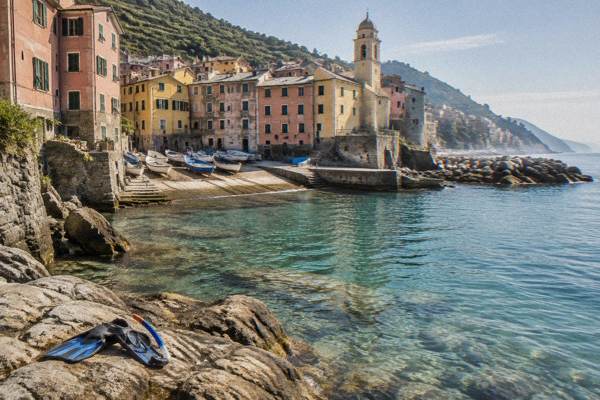
Can I Swim In Genoa?
Yes, you can swim in Genoa: the city sits directly on the Ligurian Sea, with swim spots at Boccadasse, along Corso Italia and at Nervi. Here is what ARPAL's 2026 water classes and the climate normals say.
Genoa is a coastal city in Liguria, north-west Italy, sitting directly on the Ligurian Sea between the port and the Apennine hills, so the question is not whether the sea is there but where swimming actually works. The answer involves a small pebble beach at Boccadasse, the rocky waterline along the Passeggiata Anita Garibaldi at Nervi, and a bathing-water monitoring network that classes every sampling point from Eccellente down to Scarsa. This page from the Genoa Travel Guide lays out what can be stated plainly: the places, the 2026 classes reported by ARPAL, and the temperature picture from the official climate normals. For the wider picture of the city, start with things to do in Genoa and is Genoa worth visiting.
Can I Swim In Genoa?
Yes, you can swim in Genoa. The city sits directly on the Ligurian Sea, and swimming happens at Boccadasse, along the roughly 2.5 km Corso Italia promenade, and from the rocks at Nervi, each within a short bus or train ride of the centre. ARPAL's 2026 bathing-water classes are not uniform, so the spot you choose matters, and the practical season runs across the warm months rather than all year.
That is the honest shape of it. Genoa is not a resort town with a ribbon of sand; it is a working port city whose shoreline mixes beaches, rocks, promenades and industrial water frontage. The swim spots that exist are genuine and easy to reach, but they are pockets rather than a continuous littoral, and the water quality varies point by point. Liguria's 2026 bathing-water network covers 380 sampling points along the coast, each classed Eccellente, Buona, Sufficiente or Scarsa by ARPAL, the regional environment agency. Within Genoa itself, the two classes reported for this page are SCARSA for Boccadasse and BUONA for the Nervi point, which is why the next section separates the places rather than lumping "the sea at Genoa" into one verdict.
If your trip is short, pair one swim outing with the city itself. The question of how many days in Genoa is enough depends partly on whether you want sea time at all, since the historic centre, the museums and the caruggi can fill two full days without a single swim.
Where Can You Swim In Genoa?
The named swim spots in Genoa are Boccadasse, with its small public pebble-and-rock beach between Corso Italia and Capo Santa Chiara, the beach establishments along the Corso Italia waterfront, and the rocky access along the Passeggiata Anita Garibaldi at Nervi, about 9 km from Piazza De Ferrari in a straight line. Boccadasse and Corso Italia sit about 4 km from the centre, and Nervi is reachable by train to Genoa Nervi station, which sits beside the promenade.
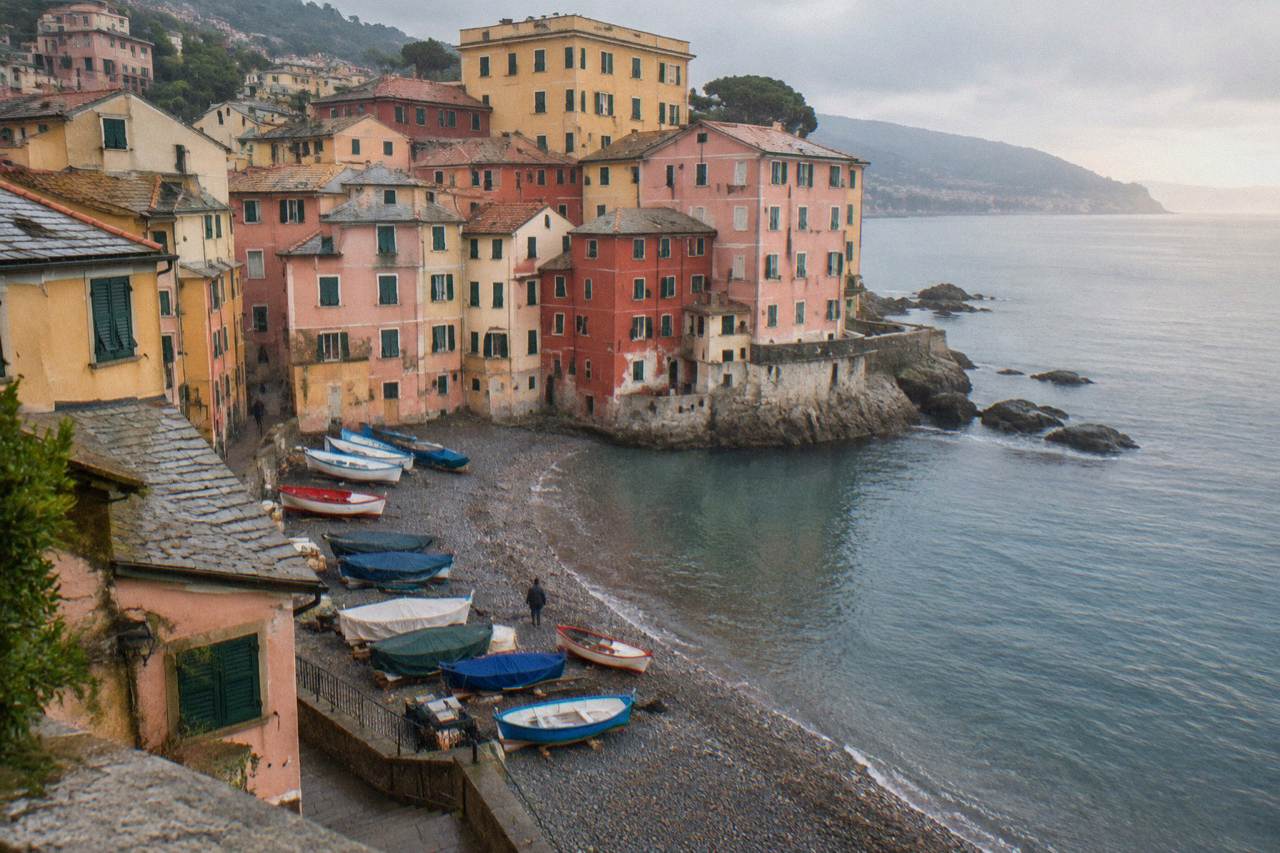
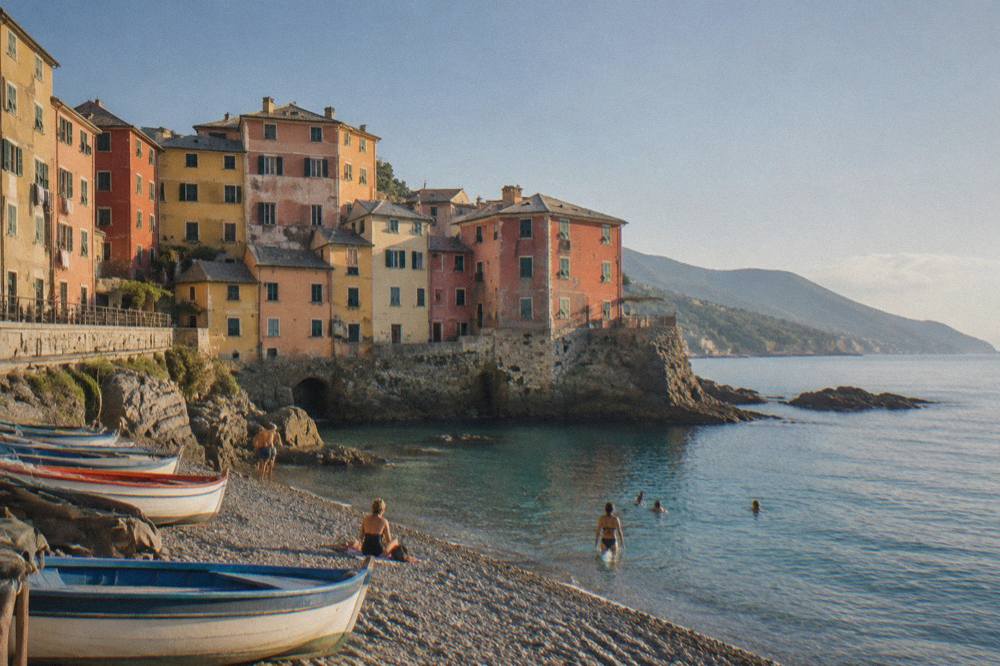
Boccadasse is the former fishermen's village that appears on nearly every image of Genoa's coast: colourful houses, gozzi fishing boats, nets and a small beach of pebbles and rocks with free public access points noted alongside the paid establishments. Corso Italia is the roughly 2.5 km seaside promenade, laid out in the early years of the twentieth century, that links the Foce area to Boccadasse and is lined with beach establishments and historic buildings. Nervi adds a different register: the Passeggiata Anita Garibaldi, a cliff-top pedestrian promenade of about 2 km running from the small harbour to Capolungo, with public rocky access to the water below.
Getting to these spots uses the same tickets as the rest of the city. An AMT ticket is 2.00 EUR and is valid 110 minutes on the whole urban network, and the Met Daily 24-hour ticket at 10.00 EUR covers the full AMT network including the airport Volabus and line 782 toward Portofino. Nervi also has its own railway station next to the promenade, served by regional trains along the coast. The distances are short: the table below gives the straight-line figures from Piazza De Ferrari.
| Swim spot or coastal point | Straight-line distance from Piazza De Ferrari |
|---|---|
| Boccadasse | about 4 km |
| Corso Italia | about 4 km |
| Nervi | about 9 km |
| Pegli | about 10 km |
| Recco | about 17 km |
| Camogli | about 18 km |
Beyond the city line the same sea continues with more celebrated swimming, and the jump is small. Camogli is about 18 km away, San Fruttuoso about 22 km, Santa Margherita Ligure about 24 km and Portofino about 25 km, all straight-line figures, all reachable by train or boat. The question of whether to go to Genoa or Portofino answers itself differently on different trips: Genoa holds the city and the museums, the Riviera villages hold the postcard swimming, and the two are under an hour apart.
What Is The Water Quality Like For Swimming In Genoa?
Water quality in Genoa varies by sampling point, and the 2026 classes reported by ARPAL for this page are SCARSA, meaning poor, for Boccadasse and BUONA, meaning good, for the Nervi point, so the two most famous swim spots inside the city carry different 2026 verdicts from the same monitoring network. Liguria's bathing-water programme classes all 380 of its coastal sampling points from Eccellente down to Scarsa, and no blanket statement about "the sea at Genoa" holds.
That ARPAL distinction matters because Boccadasse is the spot a first-time visitor would naturally head for, on looks alone. The village is photogenic and the beach is real, but its 2026 class is reported as poor, while Nervi's is reported as good. Reported classes are point-specific and year-specific: they describe the sample results for that station in that season, and ARPAL publishes the full Ligurian classification each year. Anyone with a health concern about a specific spot can read the class for that exact sampling point rather than guessing.
What the classes do not tell you is comfort. Sea temperatures, lifeguard seasons and beach-club prices are not printed on this page, and anyone planning around them should check locally. The air-temperature picture, by contrast, is published and stable, and it is the subject of the next section.
Between swims, the UNESCO-listed city itself repays the hours. A guided Segway circuit of the World Heritage site is one way to cover the Strade Nuove and the Palazzi dei Rolli without spending the whole day on foot, and you can Check availability alongside the internal page for the Segway tour of the UNESCO site.
When Is It Warm Enough To Swim In Genoa?
The swimming season in Genoa tracks the air temperatures in the official Aeronautica Militare 1971-2000 climate normals for Genoa Sestri, which show mean daily highs of 27.7 C in August, 27.3 C in July and 24.4 C in September, falling to 20.0 C in October and 20.5 C in May, so the warm window for swimming runs broadly from June through September, with July and August the two warmest months on the record.
Those normals are station figures from the official network, measured at Genoa Sestri at the airport about 7 km west of Piazza De Ferrari, and they are the only temperature series this site uses for Genoa. They describe averages, not forecasts, and they say nothing about the water itself. What they do give is the shape of the year: mild springs, warm and mostly dry midsummers, and a September that still averages a 24.4 C high before October's drop to 20.0 C.
Rain matters too, because it shapes both the water and the day. October carries the highest monthly rain total in the normals at 171.3 mm, with September second at 136.4 mm, while July is the lowest at 24.2 mm. The full picture from the same table:
| Month | Mean high C | Mean low C | Rain mm |
|---|---|---|---|
| May | 20.5 | 14.2 | 72.4 |
| Jun | 23.9 | 17.6 | 58.2 |
| Jul | 27.3 | 20.9 | 24.2 |
| Aug | 27.7 | 21.0 | 69.3 |
| Sep | 24.4 | 17.9 | 136.4 |
| Oct | 20.0 | 13.8 | 171.3 |
Read plainly, the table says the shoulder months are a trade-off. May and June combine climbing highs with the lower rain totals of early summer, while September is warm but markedly wetter, and October pairs a falling high with the year's heaviest rain. August has the highest mean daily high at 27.7 C in the record. None of this is a prediction about any given week; it is the 1971-2000 average, and it is the right basis for choosing when to book rather than for packing on the morning itself.
Can You Combine Swimming With A Day Trip From Genoa?
Yes, and it is one of the strongest uses of a Genoa base, because Camogli, San Fruttuoso, Santa Margherita Ligure and Portofino all sit on the same Ligurian Sea between about 18 and 25 km from the city in a straight line, reachable by regional train along the coast or by boat, with the Golfo Paradiso Two Gulfs tour running from Genoa Porto Antico on listed dates and calling at Camogli, San Fruttuoso and Portofino in a single day.
The boat option leaves from Calata Mandraccio at the Porto Antico at 11:00 and reaches Camogli at 11:45, with crossings of about 30 minutes between Camogli and San Fruttuoso and between San Fruttuoso and Portofino. Camogli to San Fruttuoso boats run year round from Camogli, with an additional Recco service from April to September. The Tigullio operator runs the coastal lines from Rapallo and Santa Margherita toward Portofino, San Fruttuoso and the Cinque Terre. Fares and timetables are seasonal and weather-dependent, so confirm on the operators' own pages before committing a day.
For the train-and-own-plan version, the answer on taking a boat ride from Genoa to Portofino covers the sea route in detail, and what to avoid in Genoa covers the planning errors that waste a Riviera day. One concrete rule worth knowing if you drive: Portofino's centre is a limited-traffic zone for residents and authorised vehicles only, and non-residents park in paid silos at about 8 EUR per hour.
Common Questions About Swimming In Genoa
The questions below repeat the short answers from this page in plain form: swimming in Genoa is possible at named spots, the 2026 water classes differ point by point, the season follows the climate normals, and the best swimming water often sits just down the coast in the Riviera villages within half an hour of the city.
Can I Swim In Genoa?
Yes. Genoa is a coastal city on the Ligurian Sea with swim spots at Boccadasse, along Corso Italia and from the rocks at Nervi, all within a short ride of the centre. Water quality varies by sampling point, so check the ARPAL class for the specific spot.
Is the water clean at Boccadasse?
Boccadasse's 2026 bathing-water class is reported by ARPAL as SCARSA, meaning poor. Nervi's class for 2026 is reported as BUONA, meaning good. The classes are point-specific and published annually by the regional monitoring network.
What month is best for swimming in Genoa?
The official 1971-2000 normals for Genoa Sestri show mean daily highs of 27.3 C in July and 27.7 C in August, with June at 23.9 C and September at 24.4 C. July has the lowest monthly rain total in the record at 24.2 mm. The warm window broadly runs June through September.
Are there sandy beaches in Genoa?
The named public bathing spots are a pebble-and-rock beach at Boccadasse, the establishments along the roughly 2.5 km Corso Italia promenade, and rocky sea access along the Passeggiata Anita Garibaldi at Nervi. Ribbon sandy beaches are a feature of the wider Riviera rather than the city itself.
Can I swim on a day trip from Genoa?
Yes. Camogli, San Fruttuoso, Santa Margherita Ligure and Portofino all sit on the same sea between about 18 and 25 km from Piazza De Ferrari in a straight line, reachable by regional train or by the Golfo Paradiso Two Gulfs boat tour from the Porto Antico on listed dates.
How do I get to the sea from central Genoa?
An AMT ticket costs 2.00 EUR and is valid 110 minutes on the whole urban network, covering buses toward Boccadasse, Corso Italia and Nervi. Nervi also has a railway station beside the promenade served by regional coastal trains.