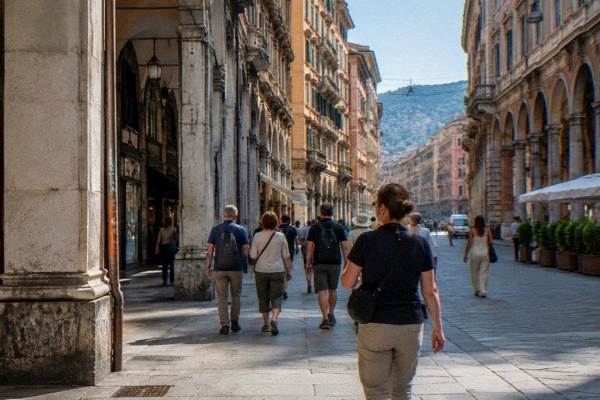
What To Avoid In Genoa?
The mistakes to avoid in Genoa: wrong transport tickets, museum days, bathing-water classes, day-trip ferries and the rainy October climate, all from official sources.
Genoa is a coastal city in Liguria, north-west Italy, squeezed between the Ligurian Sea and the Apennine hills, and its avoidable mistakes are almost all logistical rather than scenic. The port city of 566,247 residents in the comune, per ISTAT figures reported for 1 January 2026, runs on a handful of exact fares, timetables and calendar rules, and each of them punishes guesswork. The common errors break down into five families: transport tickets, museum days and cards, weather timing, sea and bathing assumptions, and day-trip bookings. Each one has an official figure behind it, and this page sets out what the primary sources say so the mistakes stay avoidable rather than expensive.
What To Avoid In Genoa?
The main things to avoid in Genoa are buying the wrong transport ticket, showing up at the Strada Nuova museums on a Monday expecting all three palaces, trusting a regular ferry to the Cinque Terre, swimming at Boccadasse, and planning an October trip without rain gear, because the official 1971-2000 normals for Genoa Sestri record 171.3 mm of rain in October, the highest monthly figure of the year.
Each of those errors has a counterpart. The AMT ordinary ticket is 2.00 EUR for 110 minutes on the whole network, and the airport Volabus requires the 10.00 EUR Met Daily ticket, valid for 24 hours on the full network. The winter timetable of the Musei di Strada Nuova, from 28 September 2026 to 18 April 2027, opens the museums daily from 10:00 to 18:30, but on Mondays only Palazzo Rosso can be visited. The sea has an official grading too: ARPAL's 2026 bathing-water classification rates Boccadasse as SCARSA, the poor class, while Nervi is graded BUONA. The sections below take each family of mistakes in turn, with the figures the operators themselves publish.
Which Transport Mistakes Should You Avoid In Genoa?
Avoid assuming the metro reaches stations it has not opened yet, and avoid paying per ride for the lifts and funiculars without knowing the fares: the Volabus airport bus requires the 10.00 EUR Met Daily ticket (24 hours, full network), an ordinary AMT ticket is 2.00 EUR valid 110 minutes, and every lift plus the Sant'Anna funicular costs 1.20 EUR a ride.
The Volabus is the trap people actually fall into. It connects Genova Cristoforo Colombo airport with Genova Piazza Principe, Piazza De Ferrari and Genova Brignole in about 30 minutes, and the AMT fare table assigns it no fare of its own: the Met Daily, a 24-hour pass for the entire AMT network, is the ticket that covers it. A traveller holding only a 2.00 EUR ordinary ticket cannot board. The ordinary ticket itself is generous within the city, 110 minutes across buses, the metro and the funiculars, with an integrated AMT plus Trenitalia version at 2.20 EUR and a carnet of eleven rides at 20.00 EUR.
The metro deserves a second look before any itinerary relies on it. The line runs 7 km with 8 stations from Brin to Brignole, and reported extension timelines target Canepari for June 2027 and Martinez for December 2028: neither is open in 2026. Taxis from the airport are simpler than they look, with a fixed fare of 25 EUR per car to the centre, 30 EUR for more than four people, plus 2 EUR at night and on holidays, per the airport's own page.
| AMT fare | Price | What it covers |
|---|---|---|
| Ordinary ticket | 2.00 EUR | 110 minutes, whole urban and metropolitan network |
| AMT + Trenitalia integrated | 2.20 EUR | 110 minutes including limited Trenitalia sections |
| Met Daily 24h | 10.00 EUR | Full network including Volabus, required for the airport bus |
| Lifts and Sant'Anna funicular | 1.20 EUR | One ride |
| Carnet of 11 ordinary tickets | 20.00 EUR | Eleven 110-minute rides |
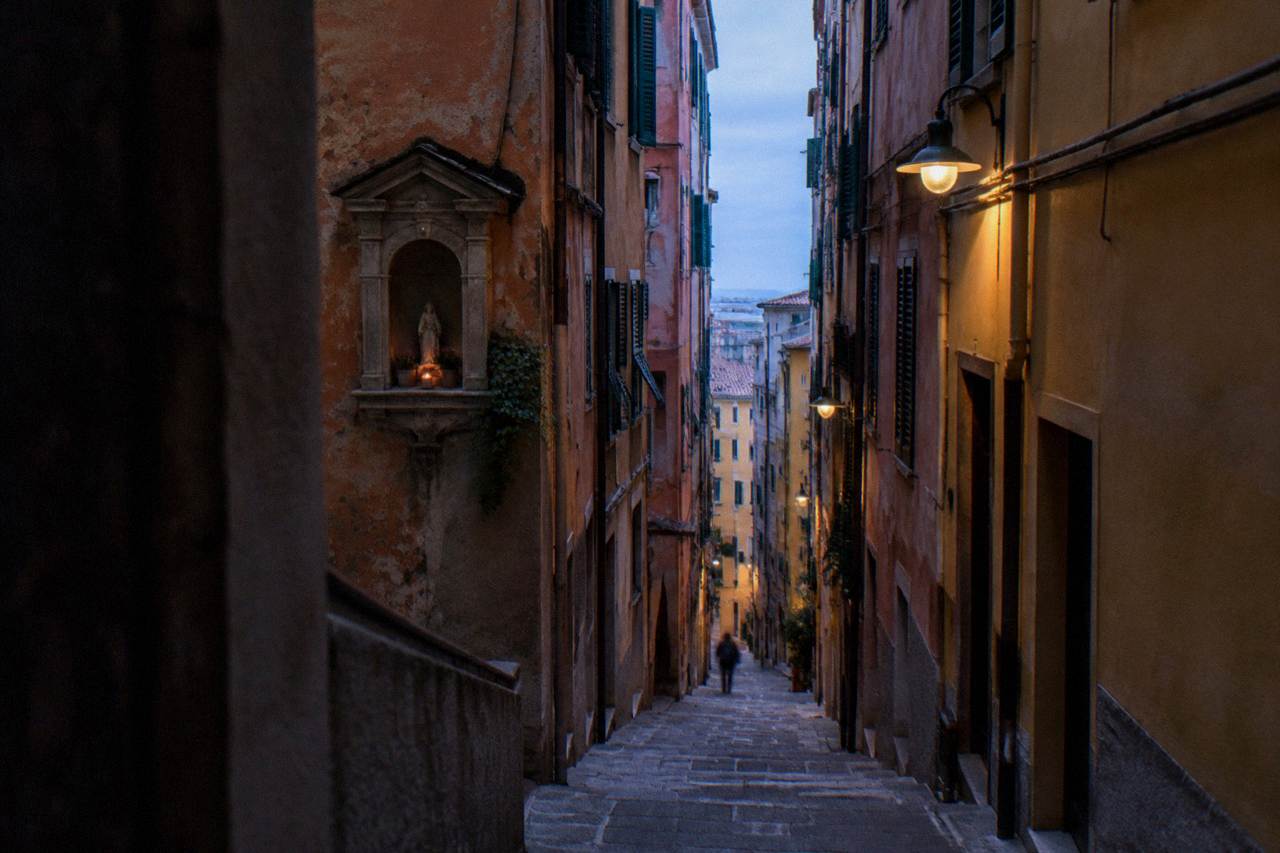
For a first orientation of the caruggi before going alone, the site's historical centre guided walk pages and a guide-led route save the legwork, and the guided walk of the historical centre this site features covers the old town layout with a local guide, or Check availability for its live listing.
Prefer to find your own way once you know the layout? Book a self-guided audio tour here.
Which Museum And Ticket Mistakes Should You Avoid In Genoa?
Avoid visiting the Strada Nuova museums on a Monday expecting Palazzo Bianco and Palazzo Doria-Tursi, avoid quoting Museum Card rates that no longer apply, and avoid assuming the card covers every ride in the city: in the winter timetable from 28 September 2026 to 18 April 2027 the museums open daily 10:00 to 18:30 but on Mondays only Palazzo Rosso can be visited, and the 2026 Genoa Museum Card costs 24 EUR for 24 hours or 45 EUR for 48 hours across 28 museums.
The Monday rule is the single most schedule-breaking detail in the city's cultural calendar, and it only holds in the winter timetable. The rest of the week all three palaces, Palazzo Rosso, Palazzo Bianco and Palazzo Doria-Tursi, keep the daily 10:00 to 18:30 hours, and the combined ticket with the Museo di Sant'Agostino is 14 EUR full price or 9 EUR reduced. The museums also close when a red weather alert is issued, which ties the museum plan to the rain plan in October.
The Genoa Museum Card covers 28 city museums, 19 municipal plus 9 others, at the 2026 rates above. Only the card variants that explicitly add bus transport include AMT buses, and none of them covers Volabus, the Navebus boat or trains. The Aquarium of Genoa is separate: it opens 365 days a year with dynamic pricing, adult fixed-date tickets starting from 26.00 EUR per the Aquarium's own ticket page, and a combined Aquarium, Biosfera and Bigo ticket from 37.00 EUR.
What Weather Mistakes Should You Avoid In Genoa?
Avoid planning purely around summer assumptions: the official 1971-2000 climate normals for Genoa Sestri put October's rainfall at 171.3 mm, the highest monthly total of the year, while July records just 24.2 mm, and August has the highest mean daily high at 27.7 C against January's lowest mean daily low of 5.5 C, so October visits need real rain contingency, not optimism.
The climate table rewards reading rather than skimming. September carries 136.4 mm and November 108.8 mm, so the whole autumn shoulder is wet in normals terms, and the winter months stay cool rather than cold, with January means of 11.5 C high and 5.5 C low. What this means practically is that the indoor-heavy plan, museums, Palazzo Ducale exhibitions and the Aquarium, belongs in the same itinerary as the outdoor one, scheduled flexibly around the forecast rather than fixed to dates booked months ahead. The red-alert closure rule at the Strada Nuova museums makes the same point from the venue side. Other pages covering the same trip are gathered on Genoa Travel Guide.
Rain is not a reason to skip the city, it is a reason to sequence it. The site's indoor planning guide and the Genoa weather reference cover the alternatives, and the question of how many days are enough changes answer entirely in October, when a lost afternoon to rain is a normals-level probability rather than bad luck.
| Month | Mean high C | Mean low C | Rain mm |
|---|---|---|---|
| January | 11.5 | 5.5 | 101.8 |
| April | 16.8 | 10.5 | 88.0 |
| July | 27.3 | 20.9 | 24.2 |
| August | 27.7 | 21.0 | 69.3 |
| October | 20.0 | 13.8 | 171.3 |
Which Sea And Swimming Mistakes Should You Avoid In Genoa?
Avoid assuming the whole Ligurian coast swims equally: ARPAL's 2026 bathing-water classification grades Boccadasse as SCARSA, the poor class, while Nervi is graded BUONA, so the official record points swimmers away from Boccadasse and towards Nervi, and no blanket water-quality claim about the city's shoreline matches the published classes.
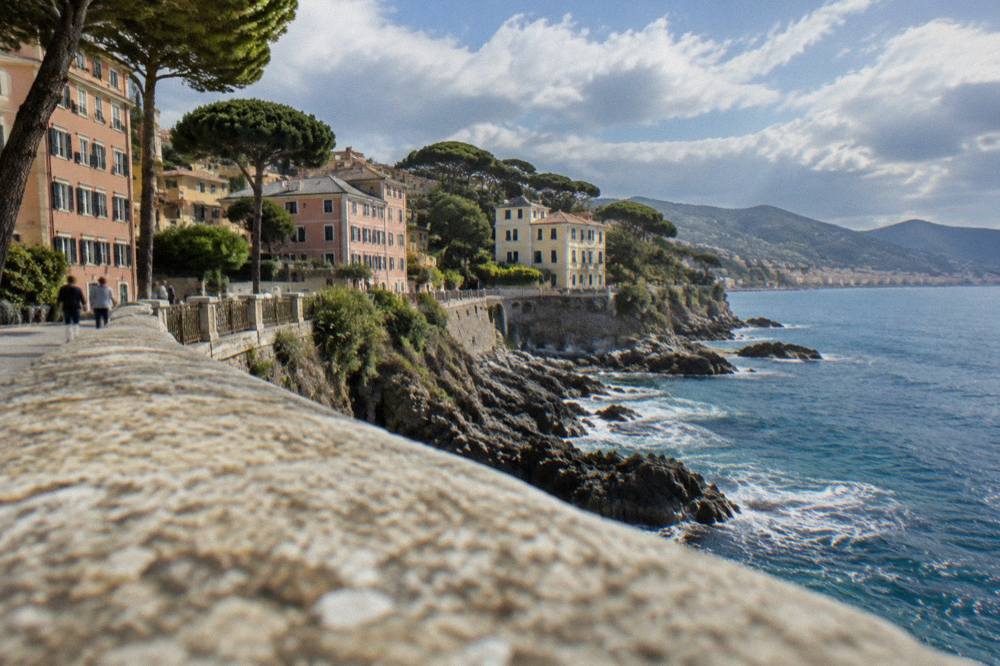
The regional environmental agency runs 380 sampling points along the Ligurian coast and grades each one from Eccellente down to Scarsa, and the 2026 classes for Genoa's two flagship waterfronts differ. That distinction matters for anyone booking a stay around Corso Italia versus the Nervi side, and it is a checkable fact rather than a matter of taste. Boccadasse remains a photogenic former fishermen's village and Corso Italia a roughly 2.5 km seaside promenade, per the city's tourism pages, but the swimming recommendation belongs to Nervi on the official 2026 numbers. Sea temperatures, lifeguard seasons and beach-club prices are not in the record this site reports, so the bathing decision rests on the ARPAL classes alone.
Which Day Trip Mistakes Should You Avoid From Genoa?
Avoid assuming a regular scheduled ferry runs from Genoa to the Cinque Terre, because none was found: the Golfo Paradiso operator runs a Genoa to Cinque Terre tour on set dates only, while its Two Gulfs day tour from Porto Antico serves Camogli, San Fruttuoso and Portofino from March 2026 on listed dates, and driving to Portofino meets a residents-only traffic zone with paid parking reported around 8 EUR per hour.
The boat geography is the part worth internalising. The classic coastal day trip from Genoa is the Two Gulfs tour out of Porto Antico, departing 11:00 with a Camogli call at 11:45 and crossings of about 30 minutes between Camogli, San Fruttuoso and Portofino, with fares reported at about 29 EUR full day and 21 to 26 EUR half day. Camogli to San Fruttuoso boats run year round. For the Cinque Terre, the train is the dependable mode, with the Cinque Terre Treno Card at 22.00 to 35.00 EUR for one adult day depending on date band, and the Via dell'Amore path included in the card but requiring a booked time slot, open 29 March to 24 October 2026 from 09:00 to 21:00.
Portofino closes the loop: non-resident cars face the limited-traffic zone and the paid silos, and AMT line 782 from Santa Margherita Ligure is included in the Met Daily ticket, per the AMT Volabus page. Straight-line distances from Piazza De Ferrari put Portofino about 25 km away and the Cinque Terre about 67 km, and those figures, not drive times, are the ones this site prints. The Portofino comparison page weighs the trade-offs further.
What Food And Practical Mistakes Should You Avoid In Genoa?
Avoid filling the whole food plan with restaurant names from memory instead of the basics: pesto genovese is made with Basilico Genovese PDO basil per the consortium's own site, focaccia di Recco carries IGP status held since 2015 and is produced only in Recco, Camogli, Sori and Avegno, and the tourist tax is real, up to 5 EUR per person per night at the top hotel category with only the first 8 consecutive nights taxed.
The tax detail is the one that surprises. The comune of Genoa's tourist-tax page sets 2.00 EUR at one star, 2.50 EUR at two stars and 4.00 EUR for B&Bs per person per night, with the higher hotel categories reported at 3 to 5 EUR, and minors under 14 are exempt. That is a per-night addition on top of any quoted room rate, and budgeting without it is a planning error rather than a surprise. On the food side, the city's staples are fixed by designation rather than by fashion, which makes them hard to get wrong once known: the what Genoa is famous for foodwise page and the pesto genovese and focaccia guides carry the detail, and a guided food walk covers the same ground with a local pointing at the right counters.
Two smaller errors round out the list. Second, the city context: Genoa was European Capital of Culture in 2004 and European Capital of Sport in 2024, and quotes of later years for either do not match the record.
Common Questions About Avoiding Mistakes In Genoa
Is the Genoa Museum Card worth it instead of single tickets?
The 2026 card costs 24 EUR for 24 hours or 45 EUR for 48 hours and covers 28 city museums, 19 municipal plus 9 others. Only the variants that add bus transport include AMT buses, and no variant covers Volabus, the Navebus boat or trains.
What is the biggest transport mistake in Genoa?
Boarding the Volabus airport bus without the 10.00 EUR Met Daily ticket. The Volabus requires the 10.00 EUR Met Daily ticket, valid for 24 hours on the full network; the ordinary 2.00 EUR ticket does not cover it.
Can you swim in Genoa?
Yes, with an eye on the classes: ARPAL's 2026 bathing-water network grades Nervi BUONA and Boccadasse SCARSA, so the official record favours the Nervi stretch. The site's swimming page covers the detail.
Is October a bad month to visit Genoa?
October carries the highest monthly rainfall in the official 1971-2000 normals for Genoa Sestri, at 171.3 mm, with a mean high of 20.0 C. It is a month for a flexible plan that pairs indoor museums with outdoor walks, and the red-alert closure rule at the Strada Nuova museums is worth knowing.
What day-trip booking error is most common from Genoa?
Expecting a scheduled Genoa to Cinque Terre ferry. The Golfo Paradiso operator runs that route as a tour on set dates only, so the train with a Cinque Terre Treno Card, 22.00 to 35.00 EUR for one adult day, is the dependable option.