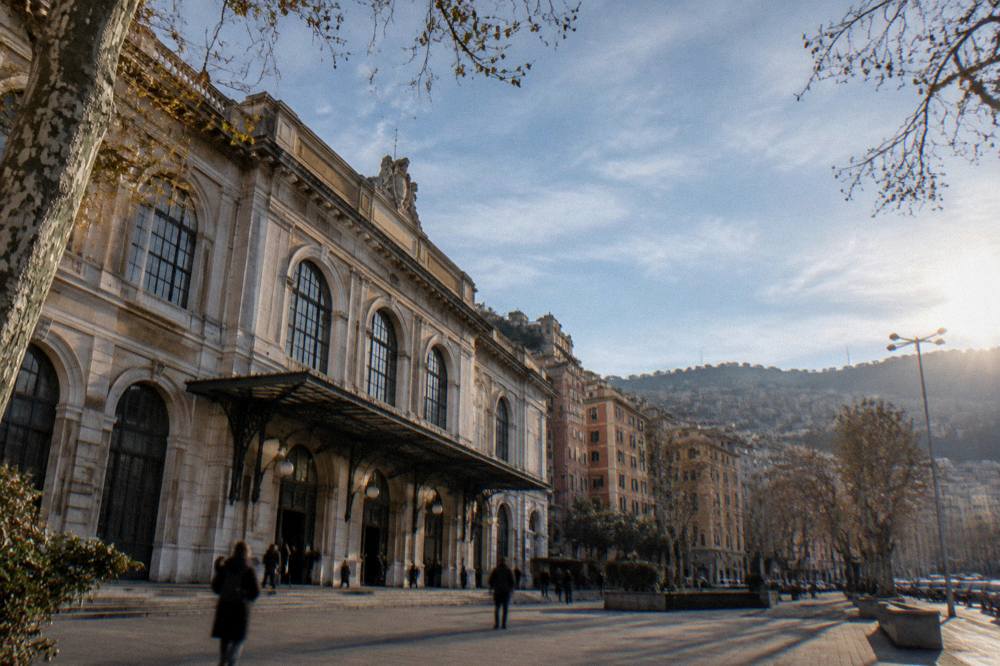
Driving And Parking In Genoa: ZTL Zones And Garages
Genoa squeezes between the Ligurian Sea and the Apennine hills, and that shape decides everything about driving there. Here is what the city's own rules say about ZTL zones, garages, parking costs and the alternatives.
Short answer
Genoa's historic centre and other central zones are limited-traffic areas (ZTL) under a city regulation updated in 2025; non-authorised cars cannot enter them. Park in a garage outside the zones and use AMT public transport, at 2.00 EUR for 110 minutes, or the 10.00 EUR Met Daily ticket.
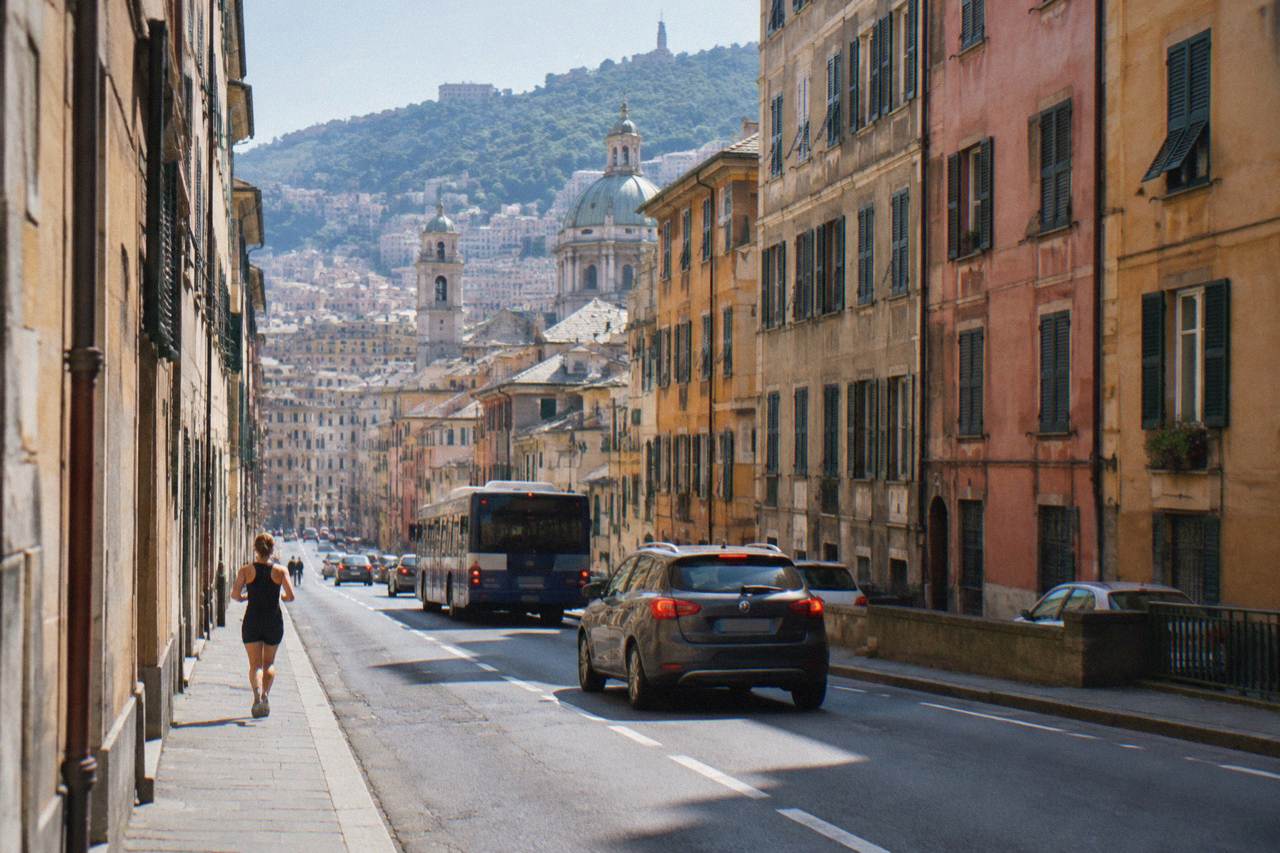
Genoa is a coastal city in Liguria, north-west Italy, pressed between the Ligurian Sea and the Apennine hills, and that geography shapes every driving decision. The city runs along a narrow strip, with a working ferry and cruise port, a historic centre of 113 hectares described by the city's own tourism site as one of the largest medieval historic centres in Europe, and steep residential quarters rising behind it. Space for cars is limited by the terrain itself, and the city answers with limited-traffic zones, a metro line and a dense bus and lift network run by AMT Genova. This guide sets out what the published rules and fares actually say about bringing a car, where the restricted zones sit, what the alternatives cost, and how the day trips along the coast work when you do drive.

What Are The ZTL Zones In Genoa?
The historic centre and other central zones of Genoa are limited-traffic areas, called ZTL, governed by a city regulation that the comune updated in 2025, and only authorised vehicles may enter them. The regulation, issued as DGC 74-2025, covers zones including the Centro Storico and the Molo; specific access hours, fine amounts and the full street-by-street maps are set out in the regulation itself, so confirm them on the comune di Genoa pages before you drive in.
A ZTL is a zone where cameras read number plates at the entrance and vehicles without authorisation are fined. Genoa's zones protect the caruggi, the narrow lanes of the medieval centre, where the street width alone leaves little room for cars and pedestrians to share. The 2025 update to the disciplinare, the legal document that defines access, is the current text; it is published among the comune's normative acts and is the document to read if you need an authorisation, hold a resident permit question, or want the exact boundaries.
Two practical consequences follow. First, a navigation app that routes you "to the cathedral" or "to Piazza De Ferrari" may pick a road inside a zone your rental car cannot legally use. Second, hotel access inside a ZTL is not something this page can promise: arrangements differ by zone and property, and the disciplinare is where the answer lives. If your accommodation sits inside a restricted zone, ask the property directly how access and parking work before you arrive.
What the published material does support is the broader shape of the city. The old town sits inland of the Porto Antico, the redeveloped old harbour, and the main east-west traffic artery runs along Via XX Settembre further up the valley. The areas this site covers, from Principe and Via Balbi in the west to Boccadasse and Nervi in the east, are spread along roughly thirteen straight-line kilometres of coast, which is why the sections below look at where a car helps and where it does not.
| Zone type in Genoa | What the regulation says | Where to confirm details |
|---|---|---|
| Centro Storico ZTL | Limited traffic, authorised vehicles only | Comune di Genova disciplinare, DGC 74-2025 |
| Molo ZTL | Limited traffic, authorised vehicles only | Same disciplinare |
| Other central zones | Defined in the same regulation | Comune di Genova normative acts |
Where Can You Park In Genoa?
The workable pattern in Genoa is to park outside the limited-traffic zones and finish the journey on AMT public transport, where a single ticket costs 2.00 EUR and is valid 110 minutes on the whole Città Metropolitana network, or on the Met Daily ticket at 10.00 EUR for 24 hours across the full network.
Treat any garage price you see quoted elsewhere as something to confirm at the barrier or on the operator's own page.
The transport arithmetic is what makes the park-and-ride pattern sensible. The AMT fare table sets the ordinary ticket at 2.00 EUR for 110 minutes, covering buses, the metro and, within its limits, the whole urban network. The integrated AMT-Trenitalia version costs 2.20 EUR, a 5-hour ticket costs 5.00 EUR, and a carnet of eleven 110-minute tickets costs 20.00 EUR. For a full day of moving around, the Met Daily at 10.00 EUR covers the entire AMT network including the Volabus airport service and line 782 toward Portofino. A car that sits in a garage all day while its passengers ride buses is a car that costs money and gives nothing back.
The metro gives the pattern a spine. The line runs 7 km with eight stations, Brin, Dinegro, Principe, Darsena, San Giorgio, Sant'Agostino, De Ferrari and Brignole, linking the two main rail termini through the centre. Extensions toward Canepari and Martinez are under construction, with Canepari reported as targeted for June 2027 and Martinez for December 2028, but in October 2026 the line still runs Brin to Brignole. Lifts and the Sant'Anna funicular cost 1.20 EUR a ride, and the Castelletto Levante lift and the Zecca-Righi funicular both run daily from 06:40 to 24:00, which matters in a city built on a hillside.
| AMT ticket | Price | Validity |
|---|---|---|
| Ordinary single | 2.00 EUR | 110 minutes, urban network |
| AMT + Trenitalia integrated | 2.20 EUR | 110 minutes, urban plus limited Trenitalia |
| 5-hour ticket | 5.00 EUR | 5 hours |
| Carnet | 20.00 EUR | 11 x 110 minutes |
| Met Daily | 10.00 EUR | 24 hours, full network incl. Volabus and line 782 |
| Lifts and Sant'Anna funicular | 1.20 EUR | Single ride |
Once the car is parked, the centre rewards walking. A self-guided option such as the Genova Walking Tour with Audio and Written Guide by a Local is built exactly for this: you move at your own pace through the caruggi with an audio and written commentary, no vehicle and no schedule to meet. If you would rather have a live guide, the Genoa walking tour options on this site cover the guided alternatives.
Do You Need A Car In Genoa At All?
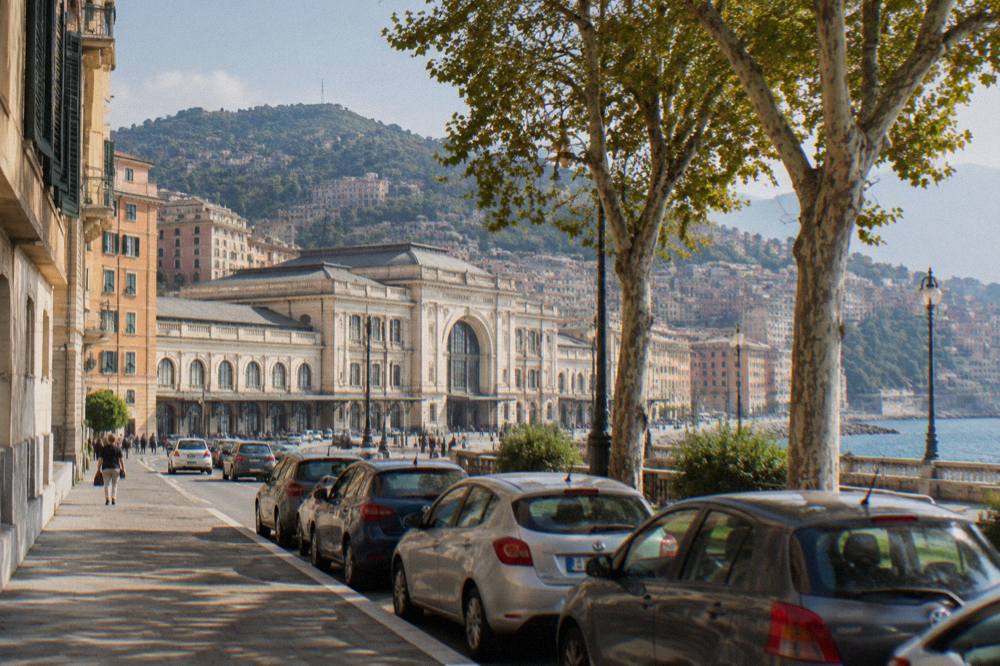
For the city itself, no: an AMT ticket at 2.00 EUR for 110 minutes, the metro from Brin to Brignole, fourteen public lifts and two funiculars cover the distances, and the historic centre is closed to non-authorised traffic anyway. A car earns its keep only for day trips at the far ends of the region, and even there the train reaches Milan in about 1h30 to 2h from fares of about 11 EUR, and boats run along the coast from Genoa Porto Antico.
Consider the straight-line numbers. Boccadasse lies about 4 km from Piazza De Ferrari, Nervi about 9 km, Pegli about 10 km, and the airport about 7 km. These are distances an ordinary ticket or a Met Daily absorbs without effort. Beyond the city, Camogli is about 18 km, San Fruttuoso about 22 km, Santa Margherita Ligure about 24 km and Portofino about 25 km, still inside the range where a boat or a regional train competes with driving, and without the ZTL and parking questions that come with four wheels.
The boat option is worth knowing in detail. Golfo Paradiso runs its Two Gulfs tour from Genoa Porto Antico, calling at Nervi, Recco, Camogli, San Fruttuoso and Portofino, departing Porto Antico at 11:00 and Camogli at 11:45 on listed dates from March 2026, with crossings of about 30 minutes between Camogli and San Fruttuoso and between San Fruttuoso and Portofino. Full-day fares are reported at about 29 EUR and half-day at 21 to 26 EUR, figures to confirm on the operator's own page. Camogli to San Fruttuoso boats run year round, and the Servizio Marittimo del Tigullio connects Rapallo, Santa Margherita Ligure, Portofino and the Cinque Terre area on its seasonal lines.
| Destination from Genoa | Straight-line distance | Car-free options in the pack |
|---|---|---|
| Boccadasse | about 4 km | AMT bus, ordinary ticket 2.00 EUR |
| Airport | about 7 km | Volabus (Met Daily 10.00 EUR), taxi 25 EUR fixed |
| Nervi | about 9 km | Train to Genoa Nervi, AMT bus |
| Camogli | about 18 km | Regional train, Golfo Paradiso boat |
| Portofino | about 25 km | Boat tours, train plus bus 782 (Met Daily) |
| Milan | about 119 km | Train, about 1h30 to 2h, fares from about 11 EUR |
| Nice and Monaco | about 141 km | Train via Ventimiglia, about 3 to 4 hours |
The airport question closes the case for arrival day. The fixed taxi fare from Genova Cristoforo Colombo airport to the city centre is 25 EUR per car, rising to 30 EUR for more than four people, with 2 EUR added at night and on holidays; shared van rates are set at 8 EUR per person to Brignole and 7 EUR per person to Principe with a minimum of three passengers. The Volabus covers the same route to Principe, De Ferrari and Brignole in about 30 minutes and requires the 10.00 EUR Met Daily ticket, valid for 24 hours on the full network. There is no train station at the airport. Full arrival detail sits in the Genoa airport guide.
How Does Parking Work At The Airport And The Stations?
At Genova Cristoforo Colombo airport the published figures are the taxi fares, 25 EUR fixed per car to the centre, and the Volabus on the Met Daily ticket at 10.00 EUR; at the stations, Genova Piazza Principe sits on the metro line at Principe station and Genova Brignole at Brignole, both reachable on an ordinary 2.00 EUR AMT ticket, which is the cheapest way to move between a parked car and either terminus.
The metro stations matter for parking decisions because they mark the two ends of the useful centre. Principe station serves the western side, near the Porto Antico and the Lanterna, which was first built in 1128, rebuilt in 1543 and stands 117 m above the sea, billed as the tallest lighthouse in the Mediterranean. Brignole serves the eastern side, near Via XX Settembre and the routes toward Boccadasse. Between them the metro calls at Darsena, San Giorgio, Sant'Agostino and De Ferrari, with De Ferrari the station for Piazza De Ferrari and Palazzo Ducale. A garage anywhere near a metro station puts the whole line within one 110-minute ticket.
For the stations themselves, the practical reading is the same as for the centre: confirm the specific car park on its own page before you commit. What can be stated is the rail reach. Trains from Genoa to Milan take about 1h30 to 2h with fares from about 11 EUR, Turin is about 1h36 to 2h18, and the regional line east serves Camogli, Santa Margherita Ligure and the Cinque Terre. The Genoa train stations guide carries the full picture, and the Genoa public transport guide covers every AMT ticket type.
One more airport figure belongs here because drivers ask about it: the airport lies about 7 km west of Piazza De Ferrari in a straight line, and the Volabus runs to both main stations in about 30 minutes. If you are picking up a rental car at the airport rather than dropping one, the Genoa car rental guide is the companion page.
Can You Drive From Genoa To Portofino?
You can drive toward Portofino, about 25 km from Piazza De Ferrari in a straight line, but the town itself operates a limited-traffic zone for residents and authorised vehicles, and non-residents are directed to paid parking reported at about 8 EUR per hour with limited capacity, so the boat from Genoa Porto Antico or the train plus AMT bus 782, both covered elsewhere in this guide, are the access routes the published material actually supports.
The Portofino ZTL is the same mechanism as Genoa's, applied at village scale. The town's own material describes the silo car parks and the hourly rate, reported at about 8 EUR, alongside the access restriction; confirm the live rate and availability on the town's pages before driving out. What the constraint means in practice is that a car gets you to the head of the promontory and then charges you to stand still, while the alternatives move.
The boat alternative from Genoa itself is the Golfo Paradiso Two Gulfs tour described above. The train alternative runs to Santa Margherita Ligure, about 24 km away, from where AMT line 782 runs to Portofino and is included in the Met Daily ticket, the same 10.00 EUR product that covers Volabus and the full urban network. A third option is a guided day trip: this site's Portofino boat tour from Genoa page lists the operators, and the Genoa to Portofino guide compares every access method with the figures.
| Access to Portofino | Key published figure | Notes |
|---|---|---|
| Own car | Parking reported about 8 EUR per hour | ZTL for non-residents, limited capacity |
| Golfo Paradiso Two Gulfs boat | Full day reported about 29 EUR | From Porto Antico on listed dates |
| Train plus bus 782 | Met Daily 10.00 EUR | Line 782 included in Met Daily |
| Tigullio boat from Santa Margherita | Return reported about 20 EUR | Seasonal line |
San Fruttuoso adds a wrinkle worth planning around: the abbey there is reached by boat, with crossings of about 30 minutes from Camogli running year round, and the FAI, which runs the abbey, charges 10 EUR full entry with reductions to 5 EUR for visitors aged 6 to 18 and students up to 25. There is no question of parking at the cove itself; the car stays in Camogli, about 18 km from Genoa.
What About Driving To The Cinque Terre?
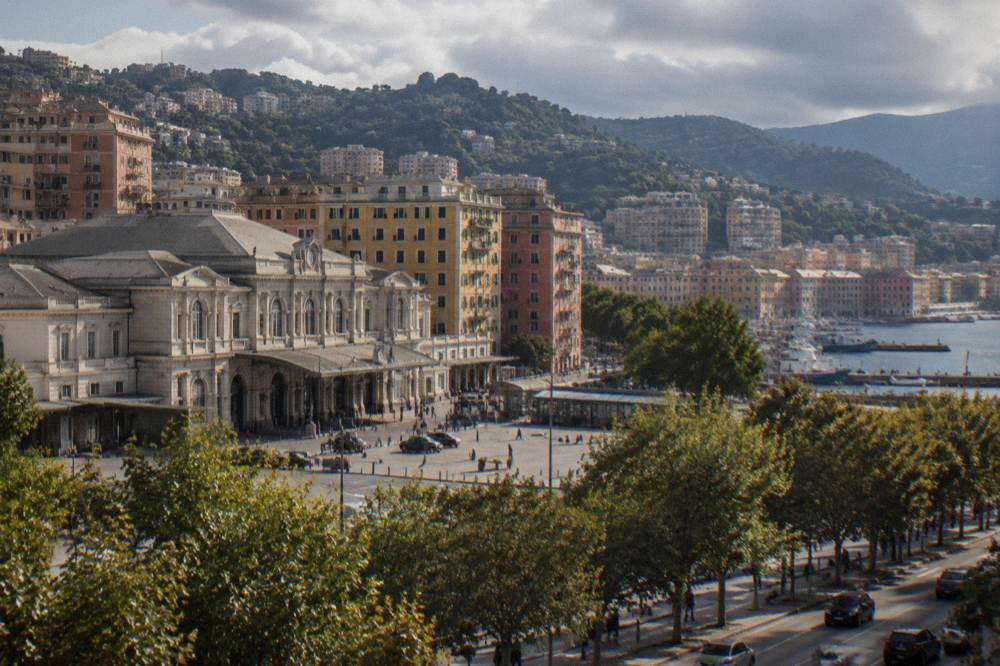
The Cinque Terre lie about 67 km from Piazza De Ferrari in a straight line, and the villages sit on a protected coastal strip where the train is the access method the published material supports: the Cinque Terre Treno Card costs 22.00 to 35.00 EUR for one adult day depending on date band, covers the trains and the paid trails, and includes the reopened Via dell'Amore with a booked time slot, open 29 March to 24 October 2026 from 09:00 to 21:00.
Driving the full distance is the part this site can support least, because the card system and the trail rules, not the road, are what the official material documents. The Treno Card exists precisely because the five villages are managed as a national park with a rail corridor: adult one-day prices run 22.00, 29.50 or 35.00 EUR by date band in the 2026 high season from 14 March to 1 November, two-day cards run 36.50 to 61.00 EUR and three-day cards 49.00 to 81.00 EUR, with low-season rates applying 2 November 2026 to 12 March 2027. A Trekking Card covering only the trails is reported at 10 EUR per standard day and 15 EUR on peak days. Boats from the Tigullio ports connect the villages on seasonal lines, with a Super Cinque Terre return from Santa Margherita or Rapallo reported at 47 EUR.
There is one Genoa-specific trap to set down plainly. No regular scheduled ferry from Genoa to the Cinque Terre appears in the operator material: Golfo Paradiso lists a Genoa to Cinque Terre tour on set dates only. The workable car-free plan is the regional train from Genova Piazza Principe or Genova Brignole, covered in full in the Genoa to Cinque Terre guide, with the card bought for the days you will actually ride.
| Cinque Terre card | Adult price | Covers |
|---|---|---|
| Treno Card 1 day | 22.00 to 35.00 EUR by band | Trains and paid trails, Via dell'Amore with slot |
| Treno Card 2 days | 36.50 to 61.00 EUR | Same, two days |
| Treno Card 3 days | 49.00 to 81.00 EUR | Same, three days |
| Trekking Card | reported 10 EUR, 15 EUR peak | Trails only |
| Via dell'Amore | included in card | Time slot must be booked |
What Should You Know Before Renting A Car In Genoa?
Rent a car in Genoa only for the trips the trains and boats do not cover, park it outside the ZTL zones, and budget around the fixed figures that are published: the airport taxi at 25 EUR per car, the Met Daily at 10.00 EUR for the full AMT network, and the ordinary ticket at 2.00 EUR for 110 minutes; hotel prices, garage tariffs and rental fleet details must be confirmed at booking.
The rental decision is really a route decision. West toward Varazze, Savona, Noli, Finale Ligure and Alassio, or east beyond the Tigullio to Sestri Levante, about 40 km away, a car holds its own, with the caveat that coastal towns across Liguria apply their own access and parking rules of the same family as Portofino's. For Milan, about 119 km, and Turin, about 123 km, the train at about 1h30 to 2h and fares from about 11 EUR removes the parking question entirely, and the Milan to Genoa guide covers that corridor in detail.
Two published regulation facts shape any Genoa rental. The ZTL disciplinare updated in 2025 governs central access, and the comune's tourist tax, the imposta di soggiorno, applies per person per night at rates set by accommodation category, from 2.00 EUR in one-star hotels to 4.00 EUR for B&Bs, for the first eight consecutive nights, with under-14s exempt. Neither concerns the car directly, but both arrive at the same moment as the parking question, on check-in, and the where to stay in Genoa guide pairs them with the neighbourhoods.
The driving-specific numbers to hold onto are few and solid. The fixed airport taxi fare is 25 EUR per car to the centre, 30 EUR over four people, plus 2 EUR at night and on holidays. The Volabus requires the 10.00 EUR Met Daily. Line 782 from Santa Margherita Ligure to Portofino is included in that same Met Daily. And the emergency number across Italy, including Genoa, is 112.
Does The Weather Affect Driving In Genoa?
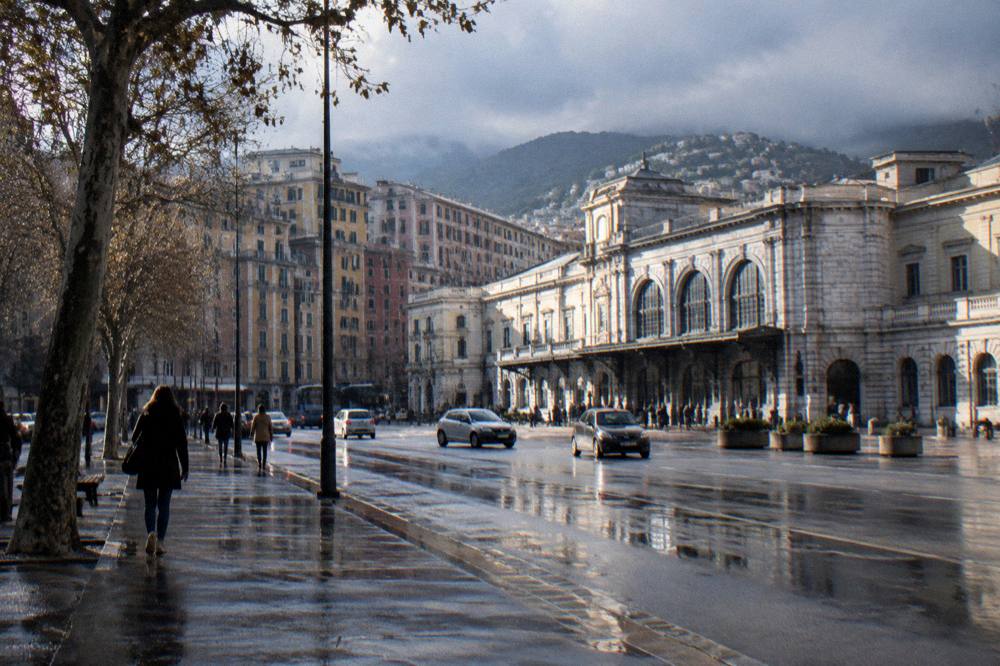
The official 1971-2000 climate normals for Genoa Sestri show why autumn driving deserves attention: October carries 171.3 mm of rain, the highest monthly total in the table, against 24.2 mm in July, and the August mean daily high of 27.7 C and January mean daily low of 5.5 C frame a year in which rain, not cold, is the variable that matters on the roads.
The normals, from the Aeronautica Militare station at Genoa Sestri, sit at the airport about 7 km west of Piazza De Ferrari, and they describe a Mediterranean coastal regime: mean daily highs run from 11.5 C in January to 27.7 C in August, and the rain concentrates outside summer, with September at 136.4 mm, October at 171.3 mm and November at 108.8 mm. Snow and ice barely figure in the numbers; wet roads and reduced visibility on the coastal roads do. The museums add a related footnote: the Strada Nuova museums close on red weather alerts, a rule worth knowing in the same months.
| Month | Mean daily high | Mean daily low | Rain |
|---|---|---|---|
| January | 11.5 C | 5.5 C | 101.8 mm |
| April | 16.8 C | 10.5 C | 88.0 mm |
| July | 27.3 C | 20.9 C | 24.2 mm |
| October | 20.0 C | 13.8 C | 171.3 mm |
| December | 12.5 C | 6.5 C | 93.1 mm |
For planning around the calendar, the Genoa weather guide carries the full monthly table and the best time to visit Genoa page translates it into a visit plan. Neither changes the parking arithmetic; both change when you will want the car at all.
Is A Car Useful On A Cruise Day Or A Short Stay?
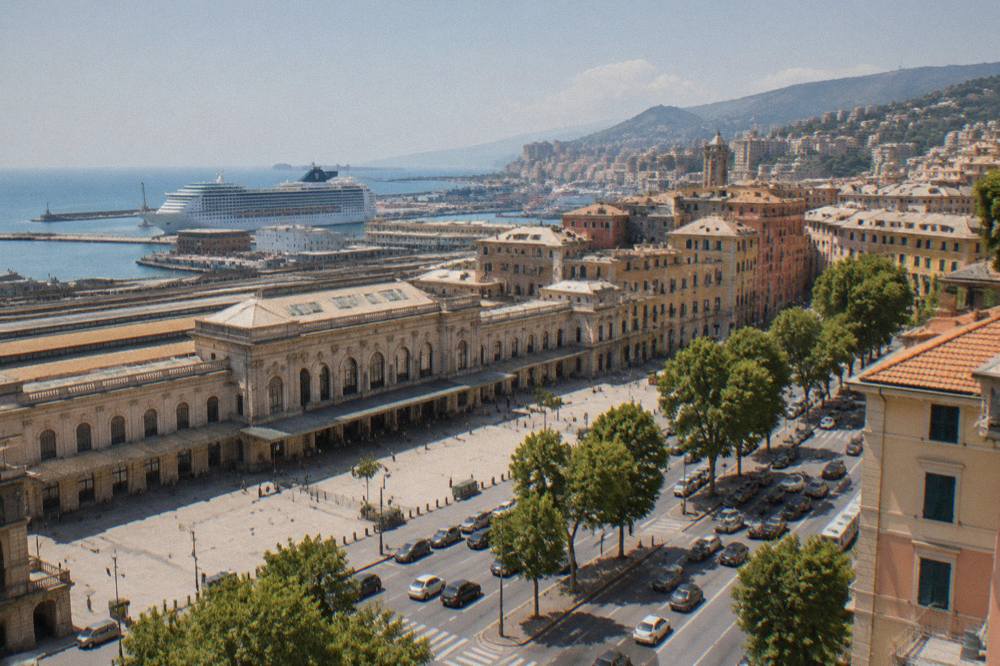
On a cruise day in Genoa the car is irrelevant: the terminals at Ponte dei Mile and Andrea Doria sit at the edge of the centre, the ZTL begins immediately inland, and an ordinary AMT ticket at 2.00 EUR for 110 minutes or a hop-on hop-off pass covers the sightseeing arc from the Porto Antico to Piazza De Ferrari and back, with the Aquarium of Genoa open 365 days a year and adult fixed-date tickets starting from 26.00 EUR.
The cruise port is itself a driver of congestion, with 2.4 million cruise passengers and 2.6 million ferry passengers recorded in the port's own figures across 7,619 ship calls, and the ferry terminal's live tables show GNV, Moby, Tirrenia and Co.Tu.Nav sailing to Palermo, Porto Torres, Tunis and Marseille. Passengers arriving by sea walk into the city; passengers arriving by car to catch a ferry face the same ZTL boundary and the same garage question, and the Genoa ferries guide and Genoa cruise port guide carry the terminal detail.
For a short stay, the honest summary of everything above is that the car pays for itself only at the region's edges. Inside Genoa, the combination to beat is the Met Daily at 10.00 EUR, the metro from Brin to Brignole, and a pair of shoes. The Genoa in one day and Genoa in two days itineraries are built entirely on that combination, and the things to do in Genoa page is the full index.
Common Questions About Driving And Parking In Genoa
Can I drive into Genoa's historic centre?
No, not without authorisation. The historic centre and other central zones are ZTL limited-traffic areas under the comune's regulation updated in 2025, and cameras enforce access. Park outside the zones and walk or use AMT transport.
How much does public transport cost in Genoa?
An ordinary AMT ticket costs 2.00 EUR and is valid 110 minutes on the whole urban network. The Met Daily costs 10.00 EUR for 24 hours on the full network including Volabus and line 782 toward Portofino.
Is there parking at Genoa airport?
The airport, about 7 km west of the centre, is served by the Volabus on the Met Daily ticket and by taxis at a fixed 25 EUR per car to the centre. Confirm car park options and rates on the airport's own pages before you travel.
Can I park in Portofino?
Portofino has a limited-traffic zone for residents and authorised vehicles, and non-residents use paid car parks reported at about 8 EUR per hour with limited capacity. The boat from Genoa Porto Antico or the train plus bus 782 avoid the question.
Do I need a car for the Cinque Terre?
No. The trains are the supported access method, with the Cinque Terre Treno Card at 22.00 to 35.00 EUR for one adult day by date band, covering trains, paid trails and the Via dell'Amore with a booked time slot.
What is the emergency number in Genoa?
112, the single European emergency number, works across Genoa and the whole of Italy.
The pattern across every one of these answers is the same, and it is the one this Genoa Travel Guide returns to throughout: the zones decide where the car stops, the AMT network decides how the day continues, and the boats and trains own the coast. Plan around those three facts and Genoa's narrow strip between the sea and the hills stops being a driving problem and becomes the reason to arrive. If a guided start would help, the audio-and-written-guide walking tour described above is the budget entry point, and its listing can be checked at Check availability before you plan the rest of the route.