Sestri Levante: The Bay Of Silence And The Bay Of Fables
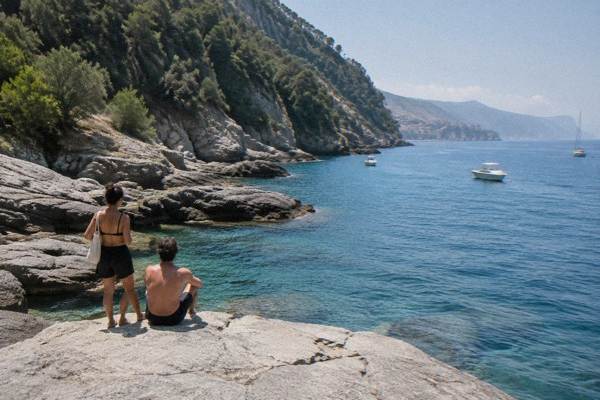
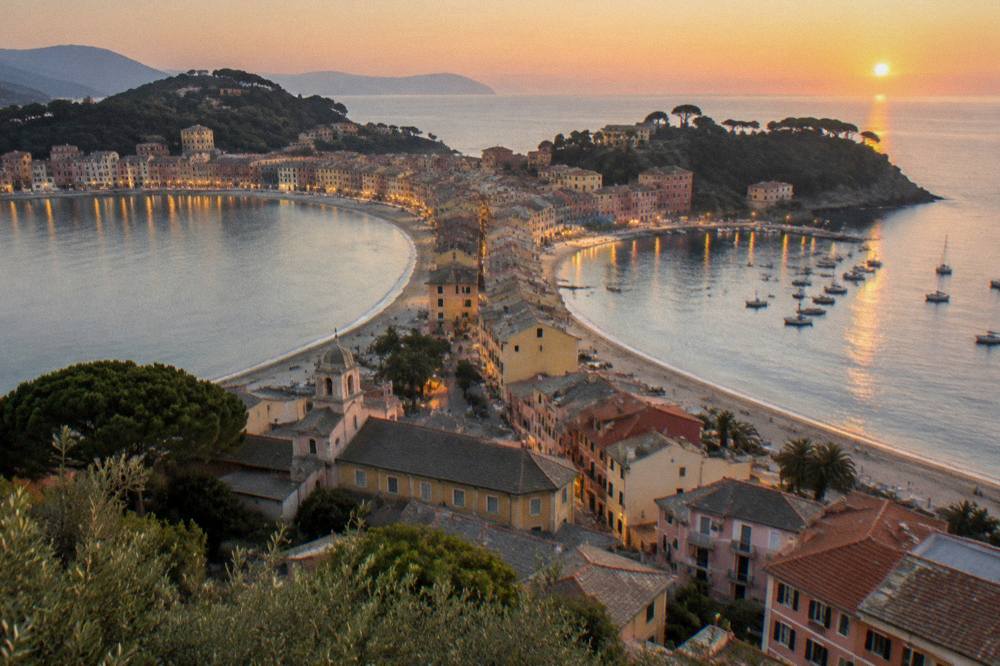
Sestri Levante sits on its own narrow peninsula about 40 km south-east of Genoa, between two bays whose names, the Bay of Silence and the Bay of Fables, say a great deal about why the town is on the Italian Riviera day-trip map.
Short answer
Sestri Levante is a coastal town on the Italian Riviera about 40 km from Piazza De Ferrari in Genoa, reachable as a day trip and connected by boat to Portofino and San Fruttuoso on Servizio Marittimo del Tigullio line 2.
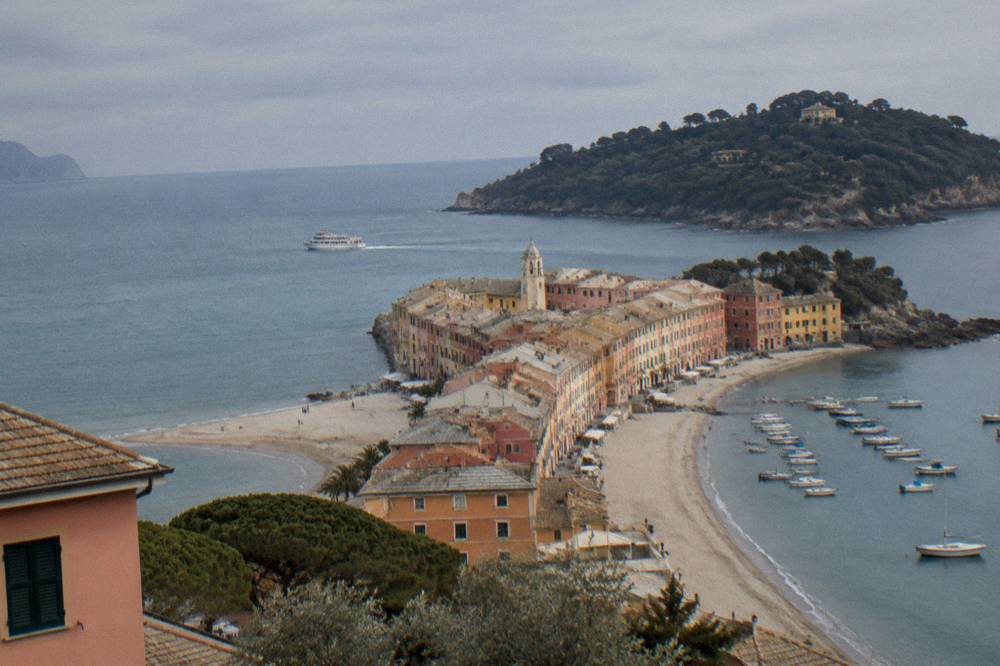
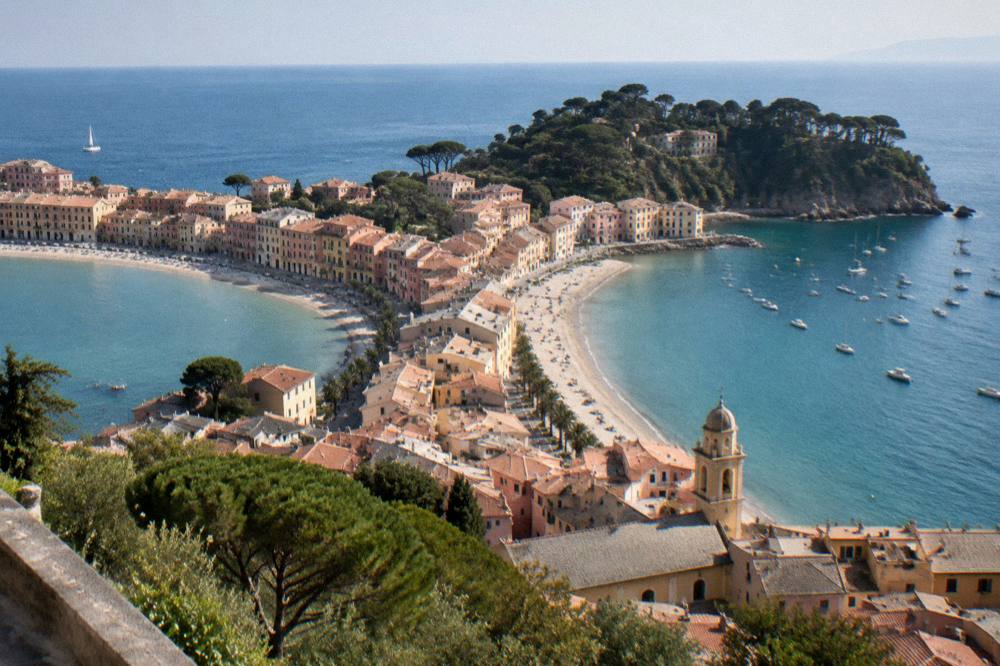
Sestri Levante is a two-bay town on the Ligurian coast about 40 km in a straight line south-east of Genoa, the coastal city in Liguria, north-west Italy, on the Ligurian Sea. The town occupies a low isthmus that joins a small headland to the mainland, so the historic centre looks out over one beach on each side: the Baia del Silenzio, the Bay of Silence, facing the open gulf, and the Baia delle Favole, the Bay of Fables, facing the shore road toward Genoa. The rest of this page covers getting there, the two bays, the boat lines that call at the town, and how Sestri Levante fits alongside Portofino, Camogli and the Cinque Terre in a Riviera itinerary. For the wider coastal context, start with the Genoa Travel Guide overview of the city and its day trips.
Where Is Sestri Levante On The Italian Riviera?
Sestri Levante stands on the Riviera di Levante about 40 km in a straight line south-east of Piazza De Ferrari in Genoa, at the point where the Gulf of Tigullio opens toward Sestri Levante's own wider bay. It sits beyond Recco at 17 km, Camogli at 18 km and Santa Margherita Ligure at 24 km, and it is the largest stop on the coast before the arc bends south toward the Cinque Terre at about 67 km from the city. The town belongs to the same stretch of coastline as the better-known Portofino peninsula, but it is its own destination, with a rail station on the main coastal line and a summer boat network of its own. On a map of Italian Riviera day trips from Genoa, it is the natural far point of a Gulf of Tigullio loop.
The Tigullio coast runs east from the Portofino promontory: Santa Margherita Ligure, then Rapallo, then Chiavari and Lavagna, with Sestri Levante closing the gulf. The Servizio Marittimo del Tigullio network reflects that geography in its line numbering, and line 2 places Sestri Levante on the same boat routes that serve Portofino and San Fruttuoso. That makes the town a workable base or stop for travellers who want the eastern Riviera without the tightest price points of the Portofino peninsula.
Distances below are straight-line kilometres from Piazza De Ferrari in Genoa, computed from map coordinates. They give a sense of the coast's scale, not road times.
| Place | Straight-line km from Piazza De Ferrari |
|---|---|
| Recco | about 17 |
| Camogli | about 18 |
| San Fruttuoso | about 22 |
| Santa Margherita Ligure | about 24 |
| Portofino | about 25 |
| Rapallo | about 25 |
| Sestri Levante | about 40 |
The pattern is worth reading twice. Everything from Recco to Rapallo clusters inside about 25 km, and then the coast opens out: Sestri Levante is another 15 km beyond Rapallo, and the Cinque Terre nearly 30 km beyond Sestri Levante. A day trip that combines Sestri Levante with one western Tigullio stop is geographically reasonable; one that adds the Cinque Terre as well stretches the day across the whole Riviera di Levante.
How Do You Get From Genoa To Sestri Levante?
The practical answer is the coastal railway from Genova Brignole or Genova Piazza Principe toward La Spezia, which serves the towns of the Riviera di Levante, or the boat network in the summer season, where Servizio Marittimo del Tigullio line 2 runs a route of Sestri Levante, Lavagna, Chiavari, Portofino and San Fruttuoso. Within Genoa itself an AMT ticket is 2.00 EUR and lasts 110 minutes on the whole urban network, enough to reach either rail station from anywhere in the centre. For the ticketing, the AMT fare table is unambiguous: the ordinary ticket is 2.00 EUR for 110 minutes, the integrated AMT and Trenitalia ticket is 2.20 EUR, and a 5-hour ticket is 5.00 EUR. Check current train times and fares at booking, since they change by date and season.
Genoa's two main stations divide the work between them. Genova Piazza Principe sits by the Porto Antico and serves the airport-facing Volabus route, while Genova Brignole handles the bulk of the Riviera di Levante traffic. The metro connects the two in minutes, running its 7 km line from Brin to Brignole through eight stations including Principe, De Ferrari and Sant'Agostino. A carnet of 11 ordinary AMT tickets at 20.00 EUR suits a longer stay in the city before the coast trip; the Met Daily at 10.00 EUR covers 24 hours of the full network including Volabus and line 782 to Portofino.
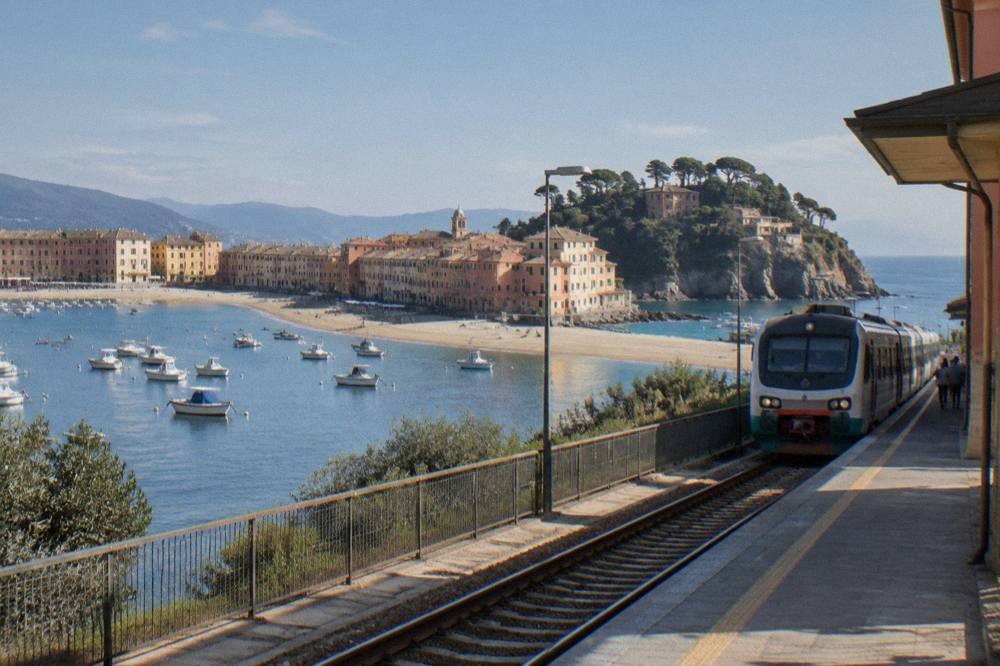
Driving is the option the constraints of this coast argue against. Portofino is a limited-traffic zone where non-residents use a paid car park at about 8 EUR an hour, and the A12 motorway serves the coast but leaves the parking question open at every town. The train-and-boat combination is the pattern the whole Gulf of Tigullio is built around.
The table below gathers the urban Genoa fares that matter for reaching either rail station.
| AMT Genova ticket | Price | Validity |
|---|---|---|
| Ordinary urban ticket | 2.00 EUR | 110 minutes, whole network |
| Integrated AMT + Trenitalia | 2.20 EUR | 110 minutes |
| 5-hour ticket | 5.00 EUR | 5 hours |
| Carnet of 11 ordinary tickets | 20.00 EUR | 11 x 110 minutes |
| Met Daily | 10.00 EUR | 24 hours, full network incl. Volabus |
| Lifts and Sant'Anna funicular | 1.20 EUR | single ride |
For travellers who would rather not assemble the coast piece by piece, a booked day trip is the alternative. The full-day Camogli, San Fruttuoso and Portofino tour from Genoa covers the western half of this same coastline in one itinerary, and the operator's live listing carries the current dates and prices. There is more on the city side in things to do in Genoa for the day before or after.
What Are The Bay Of Silence And The Bay Of Fables?
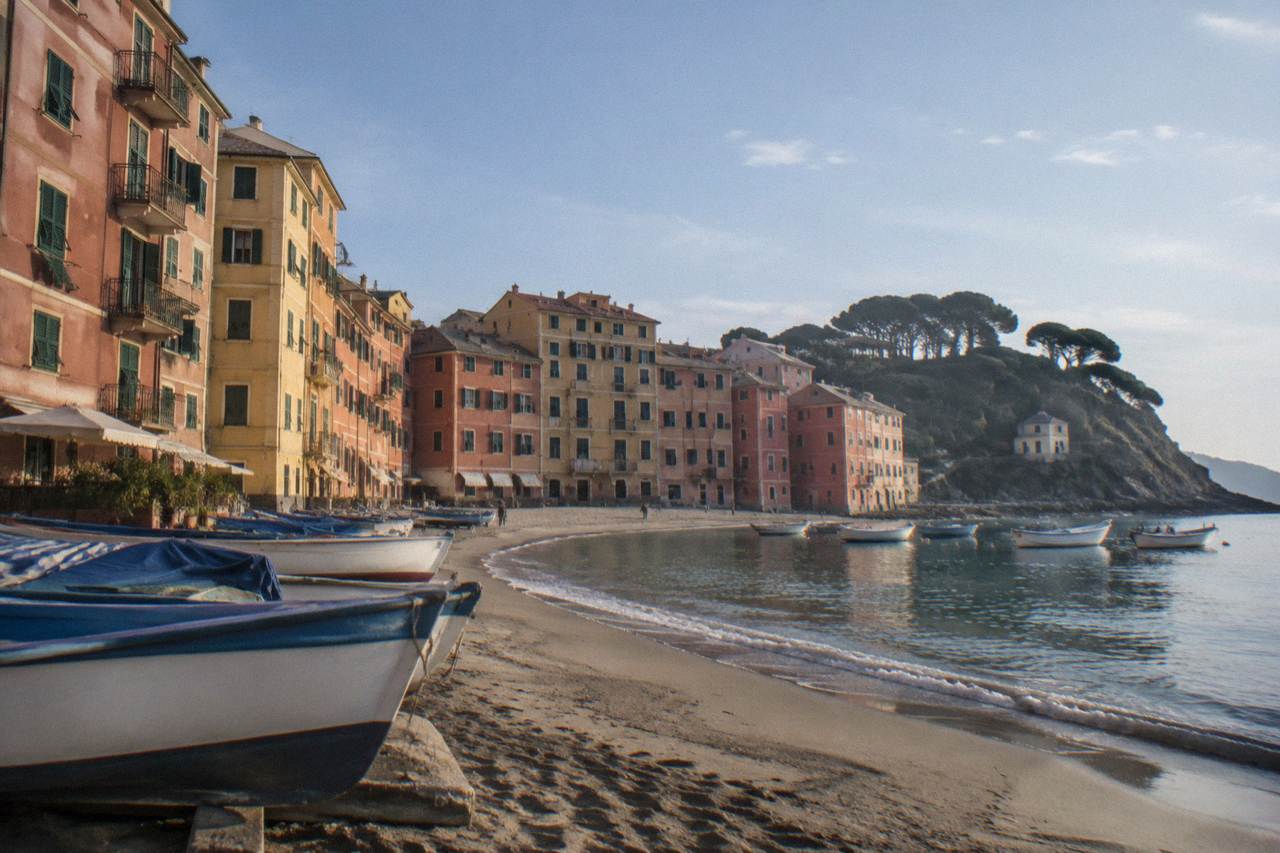
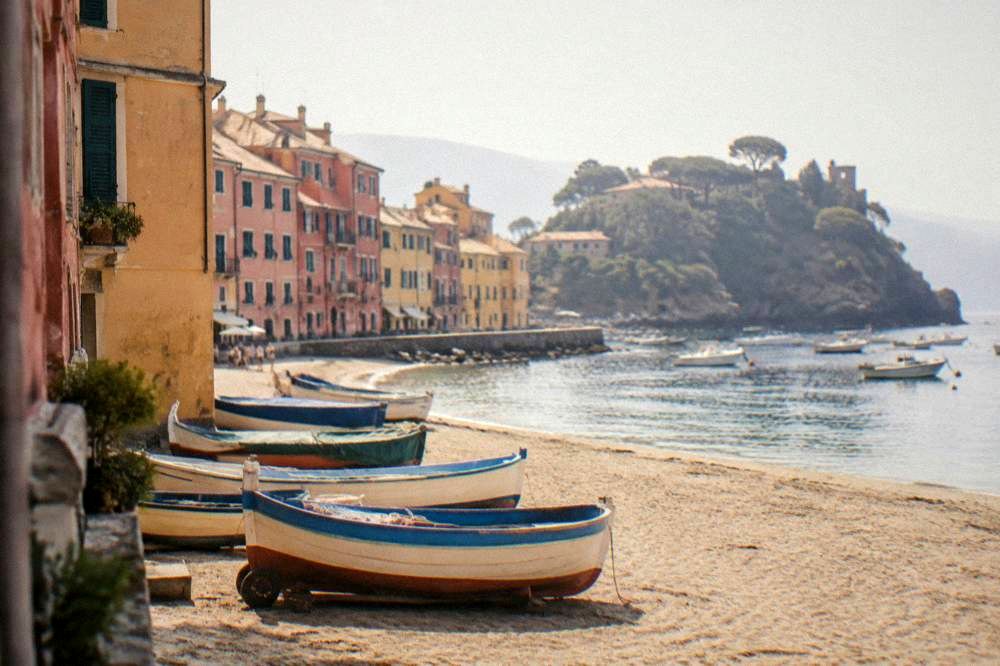
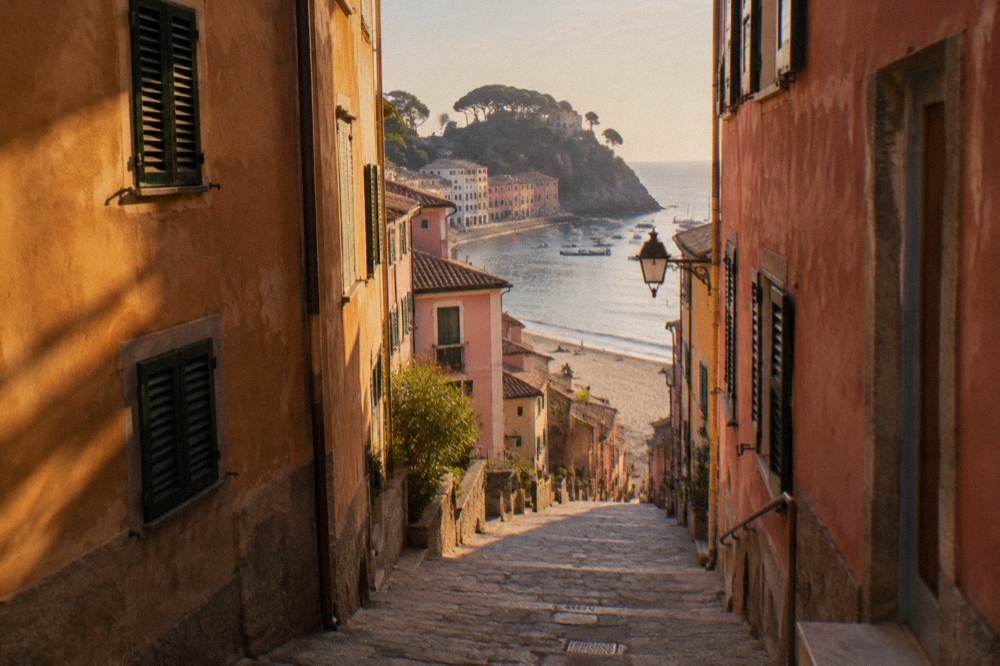
The Bay of Silence, Baia del Silenzio, is the small arc of sand on the gulf side of Sestri Levante's old-town headland, enclosed by tall painted buildings and reached on foot through the historic centre, while the Bay of Fables, Baia delle Favole, is the longer beach on the mainland side facing the shore road and the rail line. The two names are the town's identity: one bay for the enclosed old harbour scene, one for the open, road-facing strand. The Bay of Fables takes its name from Hans Christian Andersen, who is honoured in the town with a dedicated park and prize bearing his name, an association this page notes without adding biography beyond it.
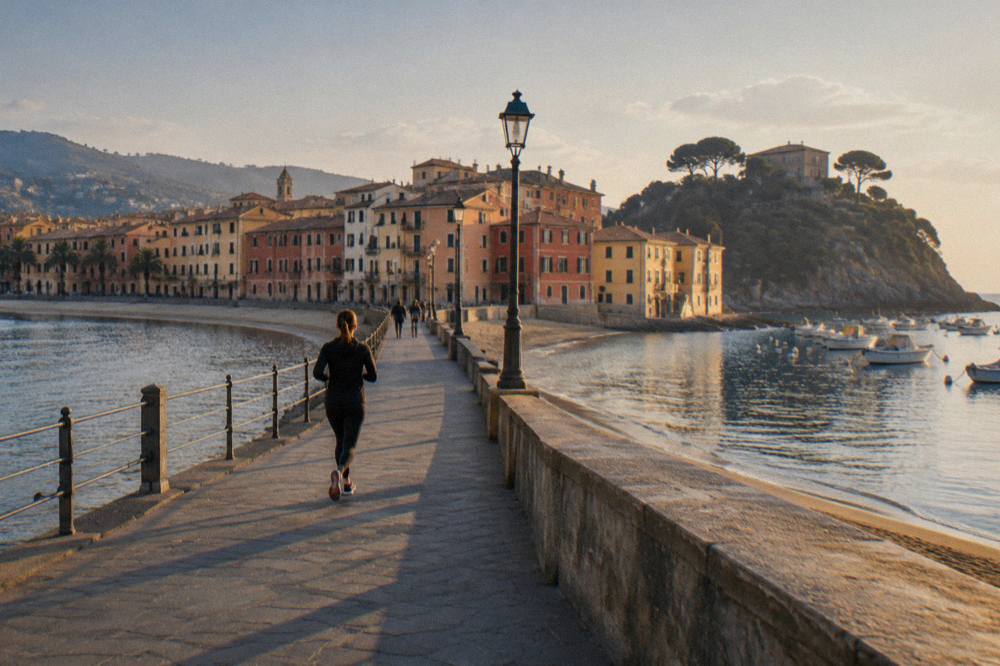
The headland between the bays is the reason the town reads so differently from its neighbours. Where Camogli or Santa Margherita Ligure string along one shoreline, Sestri Levante turns a corner: the walk from one beach to the other crosses the old centre in a few minutes and changes the entire view, from the enclosed gulf to the open road-facing bay. The Bay of Silence in particular is the postcard, with buildings that meet the sand directly and boats pulled up at the water's edge.
Swimming deserves one careful sentence. The ARPAL bathing-water classifications for 2026 grade sampling points on the Ligurian coast into four classes, from Eccellente down to Scarsa, and Boccadasse in Genoa is classed SCARSA while Nervi is BUONA, so the label on any given beach is a point-specific fact worth checking rather than a regional given. No classification for Sestri Levante's bays appears on this page.
| Feature | Bay Of Silence | Bay Of Fables |
|---|---|---|
| Position | Gulf side of the old-town headland | Mainland side, facing the shore road |
| Setting | Enclosed by the historic centre's buildings | Open strand along the seafront |
| Name in Italian | Baia del Silenzio | Baia delle Favole |
| Name association | The quiet of the enclosed bay | Hans Christian Andersen, honoured in the town |
The bays are the town, but they are not its whole geometry. The peninsula carries the old centre, the mainland carries the station and the modern town, and the isthmus between them is short enough that the whole settlement is walked rather than driven. That walkability is what makes Sestri Levante work as a relaxed counterweight to a Portofino or Cinque Terre day, where the terrain is steeper and the stops farther apart.
What Can You Do In Sestri Levante In One Day?
A realistic day divides into three moves: the morning on the Bay of Silence and the old-town headland, the early afternoon on the water or on the Bay of Fables side, and the late afternoon on a boat toward Portofino or San Fruttuoso if the season is right, since Servizio Marittimo del Tigullio line 2 links Sestri Levante, Lavagna, Chiavari, Portofino and San Fruttuoso.
The San Fruttuoso abbey, the FAI property at the heart of that boat arc, charges 10 EUR full, 5.00 EUR for ages 6 to 18 and students to 25, with under-5s free and a family ticket at 26.00 EUR.
The old town rewards the slowest hours of the day. The lanes between the two bays are short and level, the Andersen association gives the parks and promenades a storybook angle that the Bay of Fables name already announces, and the headland walk changes the view at every turn. Nothing about this circuit needs a ticket or a booking; it is the part of the day that costs nothing but time.
The boat afternoon is where the planning matters, and it belongs to its own section below. What the abbey prices show is that San Fruttuoso itself is a modest add-on once the boat fare is settled: 10 EUR for an adult at the door, half that for a student to 25, and a family of the listed make-up at 26.00 EUR. The abbey's opening calendar is seasonal, running 10:00 to 15:45 in January, February and March, 10:00 to 16:45 in April and May, and 10:00 to 17:45 from June to mid-September, and it closes on non-holiday Mondays in January and February.
| San Fruttuoso abbey (FAI) | Price |
|---|---|
| Full | 10.00 EUR |
| Ages 6 to 18 and students to 25 | 5.00 EUR |
| Under 5 | free |
| Family | 26.00 EUR |
Food on this coast has one protected name the card licenses: focaccia di Recco, IGP since 2015 and produced only in Recco, Camogli, Sori and Avegno, the cluster of towns just west of the Portofino peninsula. Sestri Levante is outside that production area, so the Recco classic belongs to the western half of the gulf; pesto genovese, made with Basilico Genovese PDO, is the sauce the whole region shares. For the city's own food landscape, see the companion pages on Genoa food and the wider region.
Back in Genoa, the guided panoramic city tour with funicular pairs the Zecca-Righi funicular, which runs daily 06:40 to 24:00, with a guided overview of the city's viewpoints, a useful half-day complement to a coast day. The listing carries the current price and dates.
Can You Take A Boat From Sestri Levante To Portofino Or San Fruttuoso?
Yes, in season: Servizio Marittimo del Tigullio line 2 runs a route of Sestri Levante, Lavagna, Chiavari, Portofino and San Fruttuoso, placing the town on the same boat network as the Portofino peninsula. Line 1 runs Rapallo, Santa Margherita, Portofino and San Fruttuoso, and line 4 runs Santa Margherita and Rapallo to the Cinque Terre. The Tigullio fare figures this page may cite are reported, so confirm at the operator before booking. The one firm fare on record for the network family is the Super Cinque Terre return at 47 EUR and the Santa Margherita to Portofino return at about 20 EUR, both reported.
The three lines together draw the map of the gulf's summer water transport. Line 2 is the one that matters here because it is the only line with Sestri Levante in its route, and it ties the town to the two headline stops of the peninsula in a single arc. The crossing times and timetables are seasonal and weather-dependent, and the sea closes the service when it decides to; the operator's own pages carry the live calendar.
From the Genoa side, the comparable product is the Golfo Paradiso "Two Gulfs" tour, which departs Genoa Porto Antico at 11:00 on listed dates from March 2026 and runs to Nervi, Recco, Camogli, San Fruttuoso and Portofino, with about 30 minutes each for the Camogli to San Fruttuoso and San Fruttuoso to Portofino legs. Its fares are reported at about 29 EUR for the full day and 21 to 26 EUR for a half day. Camogli to San Fruttuoso boats run year round.
| Servizio Marittimo del Tigullio line | Route | Season note |
|---|---|---|
| Line 1 | Rapallo, Santa Margherita, Portofino, San Fruttuoso | seasonal service |
| Line 2 | Sestri Levante, Lavagna, Chiavari, Portofino, San Fruttuoso | seasonal service |
| Line 4 | Santa Margherita, Rapallo, Cinque Terre | seasonal service |
The booking question on a Sestri Levante day is whether to self-assemble the boats or hand the day to an operator. The Portofino boat tour from Genoa pages cover the packaged side; on this page's roster, the full-day Camogli, San Fruttuoso and Portofino tour is the direct option, and it can be checked at Check availability for the dates that match a Sestri Levante stay.
Where Does Sestri Levante Fit On An Italian Riviera Itinerary?
Sestri Levante works best as the eastern anchor of a Tigullio itinerary: pair it with one western stop such as Camogli, Santa Margherita Ligure or Rapallo, all within about 25 km of Genoa, and keep the Cinque Terre, about 67 km from the city, as a separate day.
The coast between Genoa and Sestri Levante is only about 40 km in a straight line, but it stacks seven named destinations, each with its own beach, old town and boat stop, so the choice is which two or three, not how many.
A two-day Riviera pattern suggests itself from the geography alone. Day one west of the Portofino promontory: Camogli, San Fruttuoso by boat, and Portofino, the arc the full-day tour covers. Day two east: Santa Margherita Ligure or Rapallo in the morning and Sestri Levante after lunch, ending on the Bay of Silence. Travellers with a third day give the Cinque Terre its own itinerary; the Via dell'Amore, reopened and included in the Cinque Terre Card with a booked time slot, runs 09:00 to 21:00 until 24 October 2026 and 09:00 to 18:00 from 25 October 2026 to 27 March 2027.
The Cinque Terre Card prices frame that third day. The Treno Card, covering train plus paid trails, runs 22.00 to 35.00 EUR for one adult day by date band, 36.50 to 61.00 EUR for two days and 49.00 to 81.00 EUR for three, with low-season rates from 2 November 2026 to 12 March 2027. The Trekking Card is reported at 10 EUR per standard day and 15 EUR on peak days. Those figures belong to the Cinque Terre pages, but they set the budget context for comparing a Sestri Levante day, which needs no park card at all, with a national-park day.
| Cinque Terre Treno Card, adult | 1 day | 2 days | 3 days |
|---|---|---|---|
| High season 2026 by band | 22.00 to 35.00 EUR | 36.50 to 61.00 EUR | 49.00 to 81.00 EUR |
The neighbours each carry their own draw. Camogli is the focaccia town and the boat gateway to San Fruttuoso; Santa Margherita Ligure sits on line 782, the AMT route to Portofino included in the Met Daily ticket; Rapallo anchors lines 1 and 4. Sestri Levante's distinction is the two-bay shape: no other stop on this coast offers the headland-and-isthmus geometry that puts two full beaches back to back.
For a shorter western complement, the half-day Camogli tour covers the closest of the Riviera towns to Sestri Levante's arc, with the operator's listing carrying the current price.
When Is The Best Time To Visit Sestri Levante?
The official 1971-2000 climate normals for Genoa Sestri, the station at the airport about 7 km west of Piazza De Ferrari, show July averaging 27.3 C highs and 20.9 C lows, August 27.7 C and 21.0 C, and October the heaviest monthly rainfall of the year at 171.3 mm against July's 24.2 mm.
For a beach-and-boat town, those numbers argue for the warm months, while October, the month of the Salone Nautico in Genoa from 1 to 6 October 2026, is also worth noting.
The full monthly picture, always as the labelled Genoa Sestri normals, reads as follows. Temperatures are mean daily highs and lows, rainfall is the monthly total.
| Month | High C | Low C | Rain mm |
|---|---|---|---|
| Jan | 11.5 | 5.5 | 101.8 |
| Feb | 12.2 | 6.0 | 74.0 |
| Mar | 14.6 | 8.2 | 81.7 |
| Apr | 16.8 | 10.5 | 88.0 |
| May | 20.5 | 14.2 | 72.4 |
| Jun | 23.9 | 17.6 | 58.2 |
| Jul | 27.3 | 20.9 | 24.2 |
| Aug | 27.7 | 21.0 | 69.3 |
| Sep | 24.4 | 17.9 | 136.4 |
| Oct | 20.0 | 13.8 | 171.3 |
| Nov | 15.1 | 9.2 | 108.8 |
| Dec | 12.5 | 6.5 | 93.1 |
Two readings matter for planning. First, the rain is not evenly spread: September at 136.4 mm and October at 171.3 mm together carry a large share of the annual 1079.2 mm, while the June to August window of three months brings little rain. Second, the shoulder months are genuinely warm on the highs, 20.5 C in May and 20.0 C in October, which keeps the walking and sightseeing side of a Sestri Levante day comfortable outside midsummer. The seasonal boat calendars, not the thermometer, are what actually close the boat half of the itinerary outside the warm months.
The autumn events calendar in Genoa overlaps this season in ways a combined trip can use. The Festival della Scienza runs 22 October to 1 November 2026 with the theme Prospettive, the autumn Rolli Days ran 16 to 18 October 2026 with the theme Abitare il cambiamento, and the Salone Nautico's 67th edition is announced for 30 September to 5 October 2027. A coast day slots between any of these without conflict.
Common Questions About Sestri Levante
How far is Sestri Levante from Genoa?
About 40 km in a straight line from Piazza De Ferrari in Genoa, at the eastern end of the Gulf of Tigullio, beyond Recco, Camogli, Santa Margherita Ligure and Rapallo.
Can you get to Sestri Levante by boat?
Yes, in season. Servizio Marittimo del Tigullio line 2 runs a route of Sestri Levante, Lavagna, Chiavari, Portofino and San Fruttuoso. Check the operator's live calendar for dates and fares before travelling.
What are the Bay of Silence and the Bay of Fables?
They are Sestri Levante's two back-to-back beaches: the Bay of Silence, Baia del Silenzio, on the gulf side of the old-town headland, and the Bay of Fables, Baia delle Favole, on the mainland side facing the shore road. The Bay of Fables name is tied to Hans Christian Andersen, honoured in the town.
Is Sestri Levante or Portofino better for a day trip from Genoa?
They serve different purposes. Portofino, about 25 km from Genoa, is the headline village with the tightest boat and parking logistics; Sestri Levante, about 40 km, offers two beaches and a walkable headland with its own boat line toward Portofino and San Fruttuoso. Both are covered on this site's day-trip pages.
How much does the San Fruttuoso abbey cost?
The FAI abbey at San Fruttuoso charges 10 EUR full, 5.00 EUR for ages 6 to 18 and students to 25, free for under-5s, with a family ticket at 26.00 EUR. Opening hours are seasonal and the abbey closes on non-holiday Mondays in January and February.
Sestri Levante rewards exactly the kind of day its geography suggests: arrive by train, walk the headland between the Bay of Silence and the Bay of Fables, and let the Tigullio boat calendar decide whether the afternoon reaches Portofino and San Fruttuoso or stays on the sand. The figures on this page run from the 2.00 EUR AMT ticket that starts the journey to the 10.00 EUR abbey door at its far end; the rest is the coast itself.