Is It Rude To Not Finish Your Plate In Italy?
Italian table etiquette explained for visitors to Genoa: whether leaving food is rude, how courses work, and what to say when you cannot finish a Ligurian meal.
Eating is one of the main reasons to spend time in Genoa, the coastal city in Liguria on the Ligurian Sea, and portions there are generous enough that the question of finishing everything on the plate becomes practical long before it becomes polite. The city's food identity runs from pesto genovese, made with Basilico Genovese PDO basil, to focaccia, farinata, trofie and pansoti, and meals are structured as separate courses rather than one loaded plate. Understanding that structure answers a surprising share of the etiquette question on its own. This page sets out how Italian table customs around leftover food are generally understood, and how they play out at a Genoese table. For the wider picture of the city's food culture, see what Genoa is famous for eating.
Is It Rude To Not Finish Your Plate In Italy?
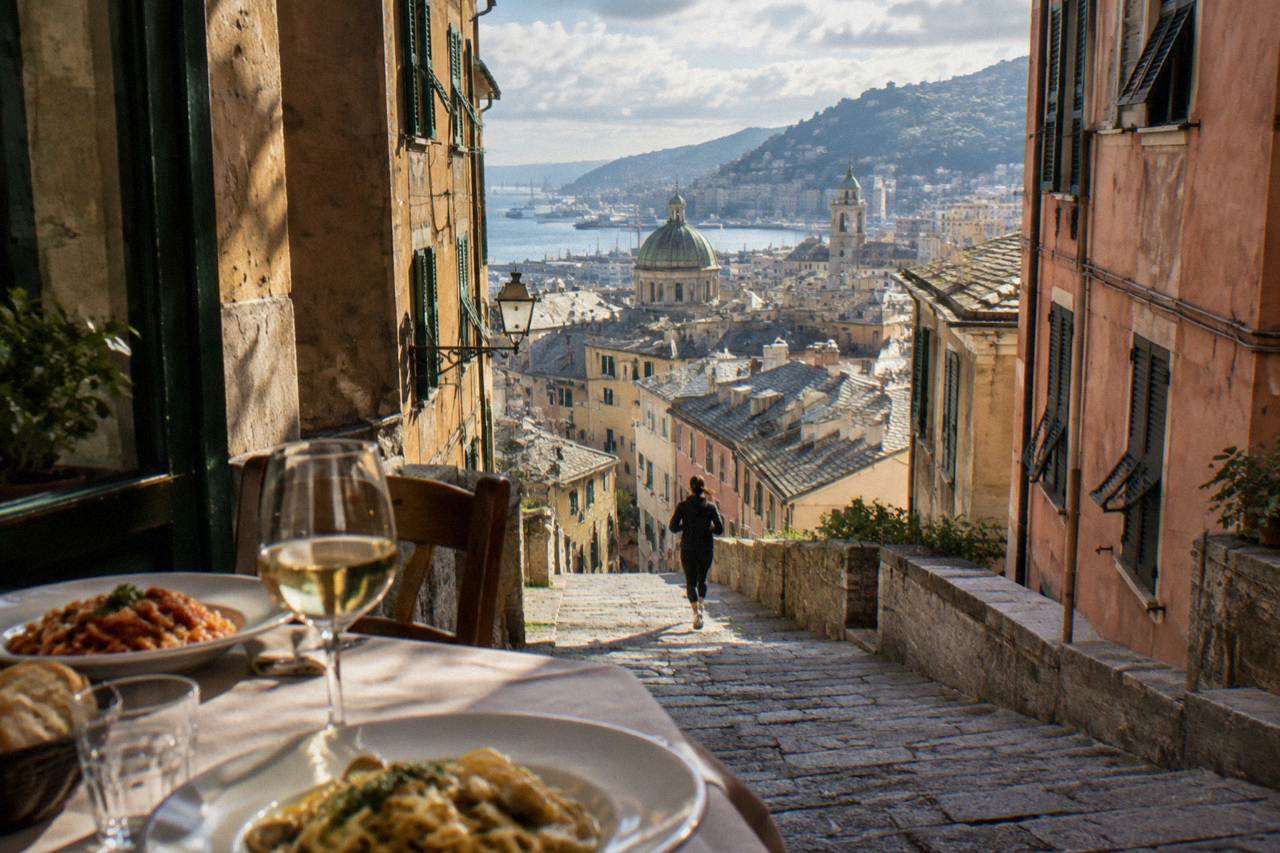
No, not finishing your plate is not considered rude in Italy, and it is far less of an issue than leaving food wastefully or ordering far more than you can eat. Italian meals are served in separate courses sized individually, so a guest who stops when full is read as eating normally, while a guest who forces everything down out of politeness can look odd. What carries weight in Italy is appreciation, pacing and honesty about appetite, not an empty plate.
The stereotype of the clean-plate rule comes from elsewhere. Italian etiquette, as it is generally described, judges the order and the appreciation rather than the outcome. If you ordered three courses, tasted each one and left some of each, that signals plenty of enjoyment. If you ordered three courses, ate two bites of each and pushed the rest aside untouched, that is where the meal's cook or host may read disappointment, because the food itself went unexplored rather than unfinished.
There is a second layer worth knowing. In a family home, or at a small trattoria where the cook comes out to the room, leftover food can prompt an offer of more, or a worried question about whether something was wrong. That is hospitality talking, not accusation. A simple answer, that the dish was good and the portion simply larger than one appetite, settles the matter in a sentence.
Pacing helps more than willpower. Courses arrive in sequence, primi before secondi, and the kitchen expects gaps. Eating slowly and declining a course you know you cannot manage is entirely normal, and it is the honest version of the same respect a clean plate is meant to signal elsewhere. Visitors planning a first trip often ask whether Genoa is worth visiting at all; the food alone is a defensible yes, and it rewards knowing how to eat it comfortably.
How Italian Courses Change The Leftover Question In Genoa
A structured Italian meal splits food into a primo of pasta, risotto or soup, a secondo of fish or meat with a contorno, and then cheese, fruit and dessert, each portioned for one course rather than for a whole meal. That structure is why finishing everything is not expected: the table is designed around sequence and choice, and a diner who eats a full primo and then a smaller secondo is following the pattern, not failing it.
The practical consequence is that ordering is the decision that matters. A couple or a group can order different courses and share tastes, which is ordinary behavior in Italy and not a breach of etiquette. Ordering one of everything per person, solo, is how a table ends with more food than any guest can finish, and that outcome sits in the ordering rather than the eating.
Genoa's own dishes fit this structure in particular ways. Trofie, the twisted pasta traditionally served with pesto genovese, is a primo. Pansoti, the filled pasta with walnut sauce, is likewise a primo. Farinata, the chickpea pancake, cuts across categories, served as a snack or as part of a meal depending on the setting. Focaccia stands apart as a daily food eaten at any hour, and in the eastern Riviera the focaccia di Recco, with its melted cheese, has been an IGP product since 2015, produced only in Recco, Camogli, Sori and Avegno, as its producers describe it.
| Dish | Course Or Use | Status Or Note |
|---|---|---|
| Pesto genovese with trofie | Primo | Made with Basilico Genovese PDO basil |
| Pansoti in walnut sauce | Primo | Filled pasta, traditional to Liguria |
| Farinata | Snack or side | Chickpea pancake, baked in a wood oven |
| Focaccia genovese | Any hour | Daily bread of the city, salted and oiled |
| focaccia di Recco | Snack or meal | IGP since 2015, made only in Recco, Camogli, Sori and Avegno |
Portions in Genoa are shaped by this course logic, and by a food culture that treats a long lunch as a normal event rather than an exception. A single generous primo at midday is a perfectly respectable meal on its own. Adding a secondo, a contorno and a dessert turns the same sitting into a Sunday-scale occasion. Nothing about the smaller version reads as rudeness to the kitchen.
Walking between meals is, in fairness, half of how Genoa works. The old town is one of the largest medieval historic centres in Europe, 113 hectares of narrow caruggi lanes, and the city climbs from the sea to the Spianata Castelletto viewpoint, reachable by the Castelletto Levante lift, a public lift that runs daily 06:40 to 24:00 for a 1.20 EUR single ride. A day built around a long lunch and a long walk is the local shape of things, and the appetite tends to take care of itself.
What To Say When You Cannot Finish A Meal In Genoa
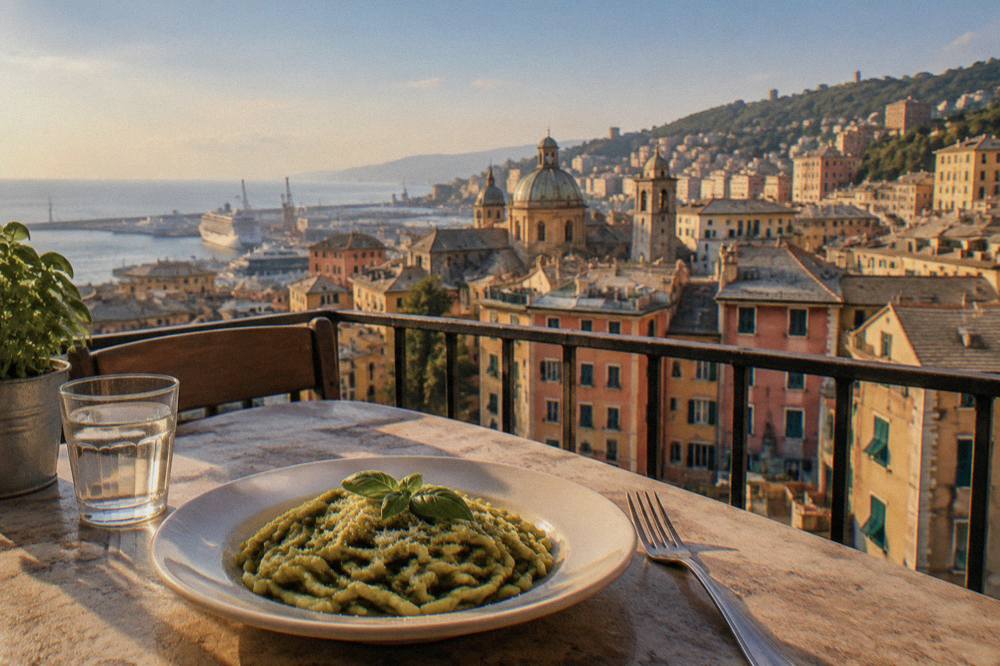
When you cannot finish, say so plainly and kindly: compliment the dish first, then state that the portion was simply more than you could eat. A single sentence at the end of the meal, delivered to the server or the cook, resolves everything the leftover food might have implied. Asking to have the remainder packed to take away is also accepted, and no elaborate apology is expected or useful.
The vocabulary is small. Buono means good, and said with emphasis it does a great deal of work. Non ce la faccio piu means I cannot manage any more, and it is a normal, cheerful thing to say at an Italian table, not a confession. The phrase that visitors sometimes reach for, an apology for wasting food, is heavier than the situation calls for, and a compliment in its place lands better with everyone. The wider set of guides lives on Genoa Travel Guide.
| Italian Phrase | Plain Meaning | When To Use It |
|---|---|---|
| Era buonissimo | It was really good | As you finish or stop, to the server or cook |
| Non ce la faccio piu | I cannot manage any more | Stopping before the plate is empty |
| Sono sazio, grazie | I am full, thank you | Declining an offered extra course |
| Posso avere una busta? | May I have a bag? | Asking for the remainder to take away |
| Solo un primo, grazie | Just a first course, thanks | Ordering light at the start |
Ordering light at the start is the cleanest solution of all, and it is where a visitor has full control. Choosing a primo and a contorno, or a secondo and a salad, produces a meal that fits a normal appetite without any leftover at all. Declining the bread basket or the dessert is not rude either; both are offers, not obligations, and a polite no is an ordinary part of the exchange.
For visitors who want the food explained rather than only served, a guided tasting walk pairs the dishes with their history, and the city's street food traditions reward a guide's context. The Check availability link beside the self-guided audio walk above covers the same ground at your own pace, with the old town lanes between the meals described by a local writer.
Does Leaving Food Change The Bill Or The Service In Genoa?
No, leaving food on the plate does not change what you pay, and it does not entitle anyone to treat you differently: the bill reflects what was ordered, not what was eaten, and service in Italy is not organized around plate-clearing as a signal. What does appear on the bill is whatever the table ordered, course by course, plus any cover charge the house applies, which is set by each establishment rather than by any city rule.
The cover charge, the coperto, is a real line on many Italian bills, and asking about it when reviewing the conto is normal. Its amount varies from place to place, so the number to expect is the one printed on the menu or the bill in front of you. Rounding up or leaving a small amount is a personal choice rather than an obligation, and nothing about an unfinished plate changes that calculation.
The service dynamic is simpler than visitors fear. A server clearing a half-eaten plate in Italy is doing a routine job, and the professional response is neutral. If a question comes, it is usually the hospitality question described above, whether something was wrong with the dish, and it is answered with the same one-sentence honesty. Guests who want a deeper look at local habits often pair this page with what to avoid in Genoa, which covers the visitor errors that actually matter.
One caution belongs here, because it is the one real etiquette trap. Ordering a large amount of food as a photo opportunity, or leaving whole dishes untouched at a tasting, reads as disrespectful in a way that an honest half-portion never does. The rule of thumb that Italian custom supports is simple: order what you intend to eat, taste what you order, and stop when you are done. Everything else on the plate is forgivable.
How Genoa's Food Culture Sets Its Own Pace
Genoa's food culture is built around slow, structured eating rather than speed, and the city's own calendar reflects it: pesto genovese has its protected basil, focaccia di Recco its IGP rules, and the pesto world championship is an actual organised event, even though its next dates had not been announced for 2027. Eating in Genoa is treated as a practice with history attached, and table manners follow that slower frame.
The protected statuses are not decoration. Basilico Genovese PDO is the basil of a true pesto genovese, as the consortium's own material states, and the focaccia di Recco IGP can only be produced in four named communes under its 2015 registration. A visitor eating trofie al pesto in Genoa is eating a dish whose ingredients have legal definitions, and the portions reflect a kitchen that expects the food to be taken seriously.
The wider lesson for the plate question is that a food culture this specific is not counting leftovers. It is checking whether you understood what you were eating. A guest who knows that pansoti come with walnut sauce, that farinata is chickpea and not potato, and that the focaccia at mid-morning is not a substitute for lunch but a part of the day, has already passed the only test the table sets. The plate can stay as full or as empty as appetite dictates.
For travellers fitting the city into a tight schedule, the question of how many days in Genoa is enough usually answers itself around meals, since a single well-chosen lunch can occupy the middle of a day quite legitimately. Whether Genoa is a walkable city matters here too, because the hills make the appetite honest and the lifts, at 1.20 EUR a ride, make the hills optional.
Common Questions About Not Finishing Your Plate In Italy
Is It Rude To Not Finish Your Plate In Italy?
No. Italian table custom reads appreciation and pacing rather than an empty plate, and meals served in separate courses are not designed to be finished in full. Saying the dish was good and that the portion was simply generous resolves any question a host might raise.
Should I Apologize For Leaving Food On My Plate?
A heavy apology is unnecessary. A short compliment to the dish, followed by a plain statement that you are full, is the expected exchange. Asking for the remainder to be packed is also accepted practice.
Is It Rude To Order Only One Course In Genoa?
No. Ordering a single primo, or a secondo with a side, is a normal way to eat in Italy, and it is the most reliable way to avoid leftover food altogether. Courses are options, not obligations.
Does The Coperto Depend On How Much I Eat?
No. The cover charge is set by each establishment and appears on the menu or the bill. It is not adjusted by how much of the food is eaten, and asking the server to confirm it before paying is routine.
Can I Ask To Take Leftover Food With Me?
Yes. Requesting a container or bag for food you cannot finish is accepted, and the phrases in the table above cover it. In a private home it is less customary, and a compliment serves better there.
Is Sharing Dishes Considered Rude In Italy?
No. Sharing tastes between courses at a family table or among friends is ordinary behavior, and ordering fewer courses per person to share more widely is a well-understood way to eat that also keeps portions realistic.