Free Walking Tours In Genoa: What Is Actually Available
Genoa rewards walkers more than almost any other Italian port city, and a large share of its fabric can be seen on foot without a ticket. This page compares the routes you can walk at no cost with the paid guided walks that cover the same ground.
Short answer
Genoa has no genuinely free guided walk listed on this site, but the old town caruggi, the Strade Nuove, the Porto Antico promenade, Spianata Castelletto, Boccadasse and the Nervi parks can all be walked for nothing beyond a 2.00 EUR bus or lift fare. For a guided version, the historical center walk covers the same lanes with a licensed narrator.
Genoa is a coastal city in Liguria, north-west Italy, squeezed between the Ligurian Sea and the Apennine hills, and its historic fabric is dense enough that walking is the only sensible way to see it. The old town alone covers 113 hectares and is described on the official tourism site as one of the largest medieval historic centres in Europe. The good news for a budget-minded traveller is structural: the city's defining sights, the caruggi lanes, the Strade Nuove, the harbour promenade and the viewpoints above the city, are streets and squares rather than ticketed interiors. This page compares the routes you can walk at no cost with the narrated alternatives, setting out prices and opening information, so the choice between walking alone and walking with a guide is a real comparison rather than a guess.
What Does A Free Walking Tour Of Genoa Actually Cover?
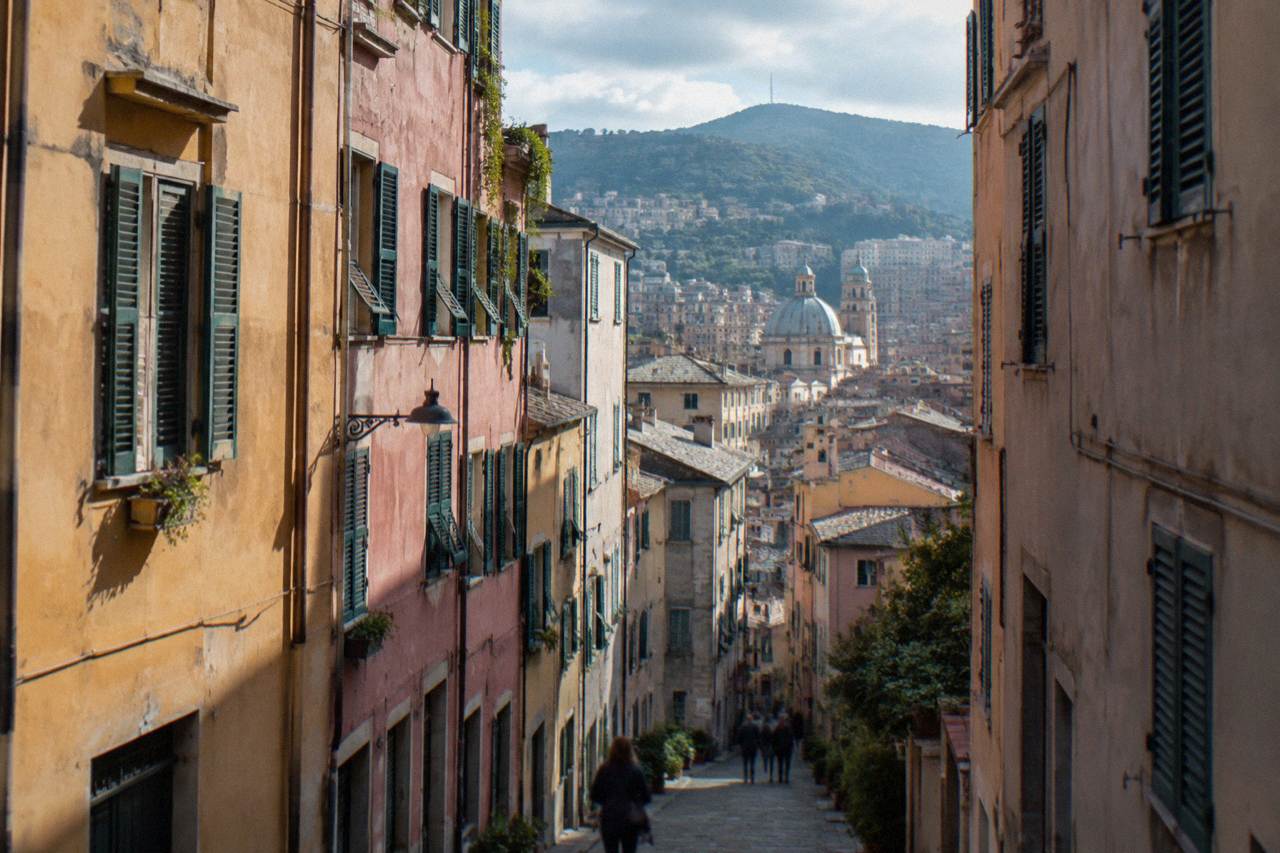
A self-guided walk of Genoa covers the caruggi lanes of the old town, Via Garibaldi and the Palazzi dei Rolli from the street, Piazza De Ferrari, the Cathedral of San Lorenzo exterior, the Porto Antico promenade and the Lanterna from the outside, all at no cost, because every one of these is a public street or square rather than a ticketed interior. What no-cost walking does not cover is the interiors: the Musei di Strada Nuova charge 14 EUR full for the combined ticket with the Museo di Sant'Agostino, and the Aquarium of Genoa starts from 26 EUR for a fixed-date adult ticket. The line between free and paid in Genoa runs exactly between the street and the door.
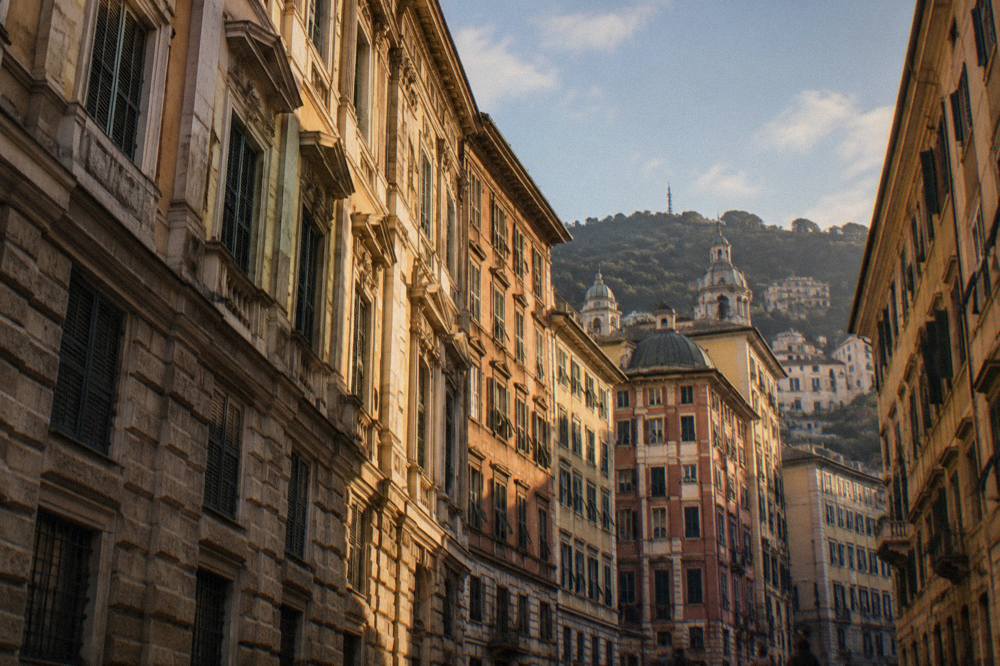
The distinction matters because the street-level experience is genuinely the point. The UNESCO inscription, "Genoa: Le Strade Nuove and the system of the Palazzi dei Rolli", listed in 2006, covers 42 palaces that were placed on the Rolli lists of 1576, 1588, 1599, 1614 and 1664, and the facades along Via Garibaldi are visible to anyone walking past. The Palazzi dei Rolli and the Musei di Strada Nuova have their own pages on this site with the interior details.
One caution that belongs in any honest comparison: the Strada Nuova museums follow a specific winter timetable. From 28 September 2026 to 18 April 2027 they open daily 10:00 to 18:30, but on Mondays only Palazzo Rosso can be visited. A walker arriving on a Monday expecting all three palaces will find two of them shut, which is the kind of detail a guide's commentary also covers.
| Sight in Genoa | Street-level view | Interior ticket |
|---|---|---|
| Caruggi old town lanes | Free, public streets | No ticket, open lanes |
| Via Garibaldi and the Palazzi dei Rolli | Free from the street | Combined Strada Nuova ticket 14 EUR full, 9 EUR reduced |
| Piazza De Ferrari | Free, public square | Not applicable |
| Cathedral of San Lorenzo | Free exterior on a public square | Treasury museum Mon to Sat 09:00 to 12:00 and 15:00 to 18:00, closed Sunday |
| Porto Antico promenade | Free to walk | Aquarium from 26 EUR adult fixed-date |
| Spianata Castelletto viewpoint | Free terrace | Castelletto Levante lift 1.20 EUR a ride |
| Lanterna lighthouse | Visible from the harbour front | Opening days and prices on the lighthouse's own page |
Which Genoa Sights Can You Walk Between Without Paying?
The compact core between Genova Piazza Principe, Piazza De Ferrari and the Porto Antico can be walked end to end on public streets with no entry cost at all, and the extension to Spianata Castelletto costs 1.20 EUR for the lift or nothing at all via the public stairs, so a full day of sightseeing in Genoa can be built entirely from free ground. The AMT public transport network matters only when you branch out: a single ticket is 2.00 EUR and is valid for 110 minutes across the whole network, which is enough to reach Boccadasse, about 4 km from Piazza De Ferrari in a straight line, and walk back along the seafront.
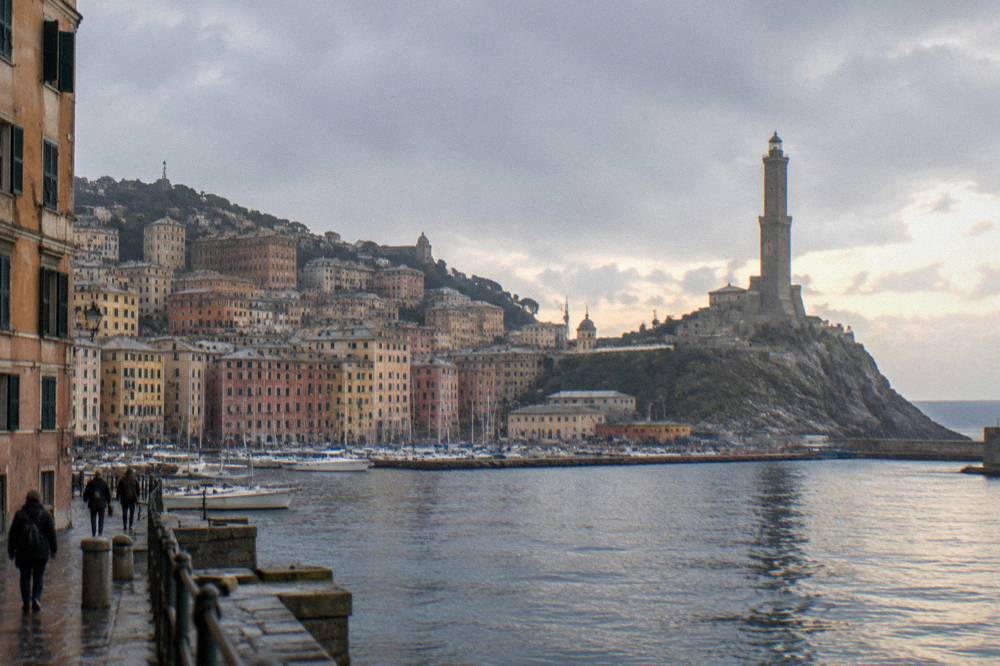
The free roster is longer than in many comparable cities because so much of Genoa's heritage is exterior. The old town caruggi are a web of narrow lanes where the experience is the architecture and the street life itself. The Porto Antico promenade, redeveloped by Renzo Piano for the 1992 Columbus Expo, is an open harbour front: the Bigo lift beside it charges 6 EUR for an adult ride, but walking beneath it costs nothing. The Cathedral of San Lorenzo stands on a public square. The Lanterna, built in 1128 and rebuilt in 1543, standing 117 m above the sea on its rock and billed as the tallest lighthouse in the Mediterranean, is visible from the harbour approach without a ticket.
For the view rather than the street, Spianata Castelletto is the classic terrace over the city and the roofscape of the old town. The Castelletto Levante lift runs daily from 06:40 to 24:00 and a single ride costs 1.20 EUR. Boccadasse, the former fishing village between Corso Italia and Capo Santa Chiara with its small pebble beach and colour-washed houses, is free to wander, and its 2026 bathing-water class is reported by ARPAL as poor, so the visit is for the scene rather than the swim. Nervi's Passeggiata Anita Garibaldi cliff walk and the 92,000 m2 Parchi di Nervi are also open public ground. The free things to do in Genoa guide collects the full list.
| Walking route in Genoa | Ground covered | Cost of the walk itself |
|---|---|---|
| Caruggi circuit from Principe to Piazza De Ferrari | Old town lanes, 113-hectare medieval centre | Nothing |
| Via Garibaldi out and back | Strade Nuove facades, 42 UNESCO-listed palaces | Nothing |
| Porto Antico harbour loop | Renzo Piano waterfront, Bigo, Aquarium exterior | Nothing |
| Spianata Castelletto viewpoint | Panorama over the city | 1.20 EUR by lift, nothing by stairs |
| Corso Italia to Boccadasse | About 2.5 km seaside promenade | Nothing |
| Nervi promenade and parks | Cliff walk and 9.2 hectares of parks | Nothing |
The table above shows the paid, guided alternatives for readers who want narration with the same lanes, or an indoor anchor on a rainy stretch of the day. Between them, the transport piece stays flat and cheap.
| AMT ticket in Genoa | Price | Validity |
|---|---|---|
| Ordinary single | 2.00 EUR | 110 minutes, whole network |
| AMT and Trenitalia integrated | 2.20 EUR | 110 minutes including limited Trenitalia sections |
| 5-hour ticket | 5.00 EUR | 5 hours |
| Carnet of 11 singles | 20.00 EUR | 11 journeys of 110 minutes |
| Lifts and Sant'Anna funicular | 1.20 EUR | Single ride |
| Met Daily | 10.00 EUR | 24 hours, full network including Volabus |
How Does A Guided Walk Of The Historical Center Compare With Walking Alone?
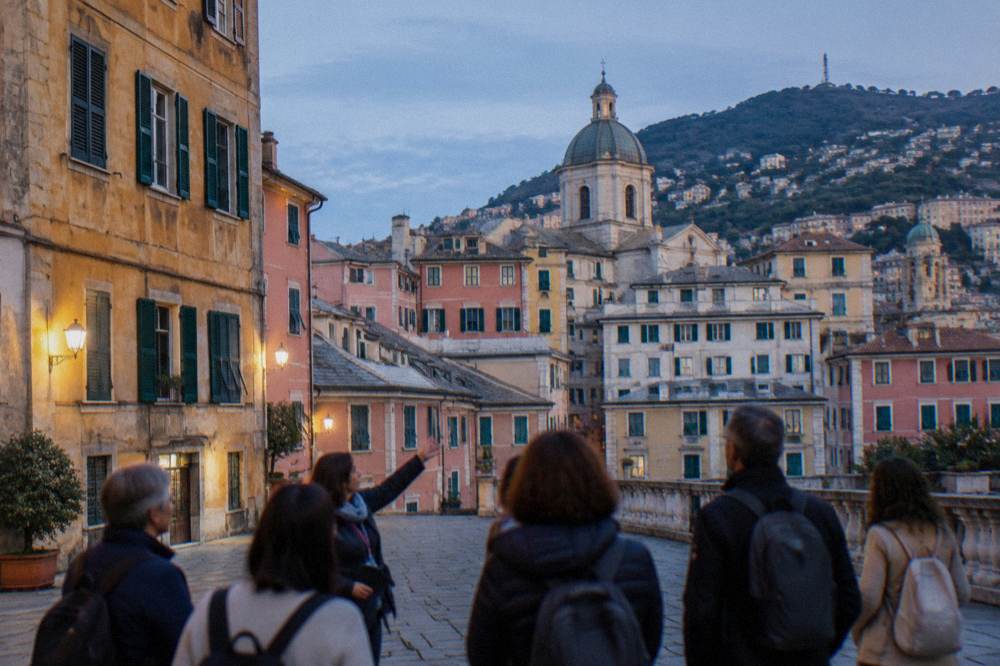
A guided walk of the Genoa historical center covers the same lanes a solo walker reaches, but adds narration, a fixed route and a group, at a from-price printed on the operator's live listing, and the related tour on this page is the guided walking tour of the historical center, which this site links rather than prices in prose. The trade is simple: walking alone costs nothing and runs on your own clock; a guided walk converts two hours into a structured pass through the medieval centre with someone who can answer questions. Cruise passengers on a tight port day usually lean guided, and the Genoa cruise port guide covers that scenario in detail.
The guided walk on this page's roster visits the historical centre with a licensed guide. Solo walkers covering the same ground should still pay attention to the same traps: the Monday rule at the Strada Nuova museums in the winter timetable, the fact that the museums close on RED weather alerts, and the geography of the two main stations, Genova Piazza Principe on the western edge of the old town and Genova Brignole to the east, which makes a one-way walk between them a natural axis.
For a fuller sense of the narrated options across the city, the site's Genoa walking tour page compares them all. If you already know the historical center format suits your day, you can Check availability directly from this page.
What Should A Self-Guided Route Through The Caruggi Look Like?
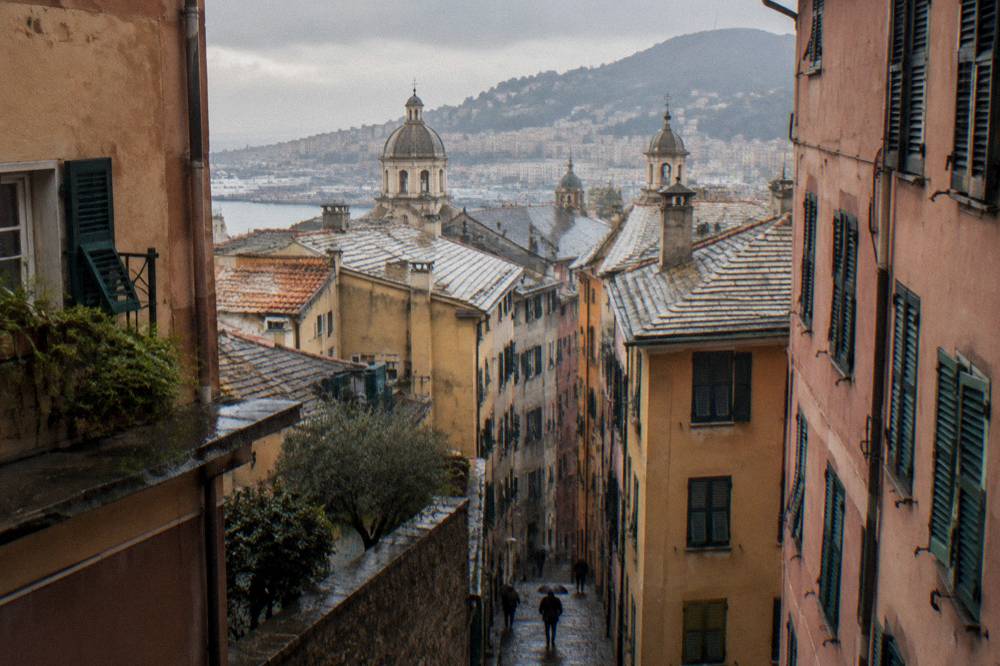
A practical no-cost route through Genoa runs from Genova Piazza Principe along Via Balbi into the caruggi, east through the old town to the Cathedral of San Lorenzo and Piazza De Ferrari, then north to Via Garibaldi for the Strade Nuove facades, a shape that links the station, the medieval centre and the UNESCO street in one continuous walk on public ground. The order can be reversed from Genova Brignole without losing anything, and the Porto Antico sits a short step west of the old town's northern edge for a harbour finish.
The caruggi are narrow lanes, some only a couple of metres wide, running between tall buildings, and the old town they form covers those 113 hectares the tourism site describes. Landmarks to aim for rather than a fixed line: the Cathedral of San Lorenzo on its square, the Casa di Colombo, where Columbus lived between 1455 and 1470, near the Porta Soprana towers, and Piazza De Ferrari, the city's central square with the Teatro Carlo Felice. Il Cannone, the 1743 Guarneri violin associated with Paganini, sits inside Palazzo Doria-Tursi on the Strada Nuova, so a walk that ends there passes the museum entrance even if you do not go in.
Two practical notes from the transport facts. The Zecca-Righi funicular, which climbs toward the Righi hillside, runs daily 06:40 to 24:00, and urban tickets are valid on it, so the hillside leg costs a standard fare rather than a tour price. And the metro line, 7 km with 8 stations from Brin to Brignole, can shortcut a wet day: it calls at Principe, Darsena, San Giorgio, Sant'Agostino and De Ferrari between the two termini.
When Is The Best Weather For A Walking Day In Genoa?
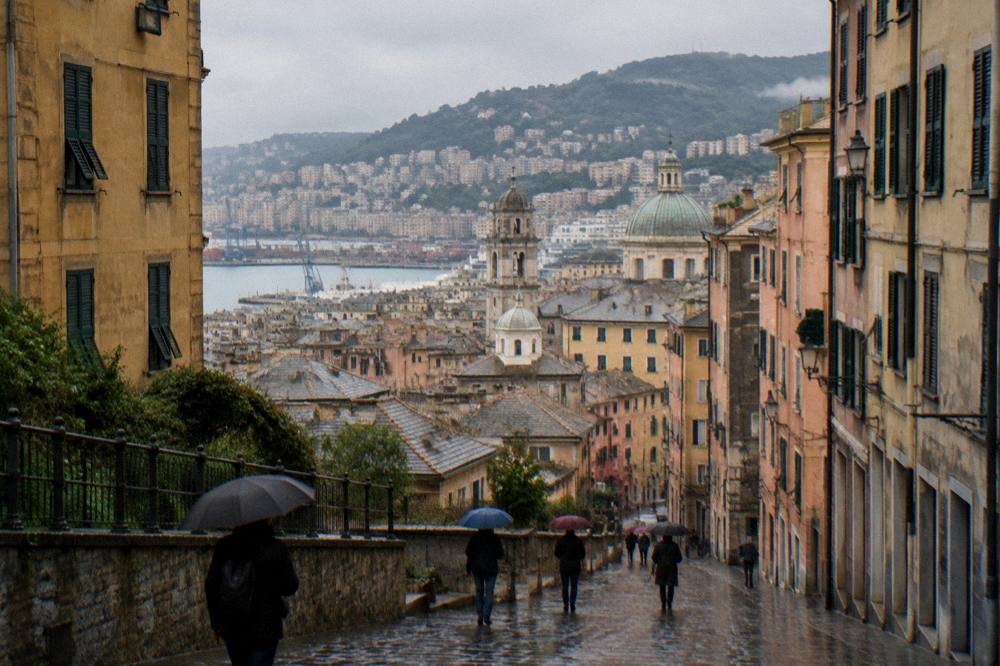
The official 1971-2000 climate normals for Genoa Sestri show July and August as the warmest months with mean daily highs of 27.3 and 27.7 C, October as the month with the highest rainfall at 171.3 mm, and July as the month with the lowest rainfall at 24.2 mm, so walking conditions in Genoa depend far more on rain than on heat. The same normals put January's mean daily low at 5.5 C and its mean high at 11.5 C, which is mild for a city at this latitude and keeps winter walking workable with ordinary layers.
The pattern that matters for planning a route is the autumn concentration of rain. September averages 136.4 mm and October 171.3 mm, and the total across the year comes to 1079.2 mm. Spring is measurably drier than autumn: May averages 72.4 mm and June 58.2 mm, with mean highs of 20.5 and 23.9 C. A wet-day contingency belongs in any Genoa plan, and the things to do in Genoa round-up includes the indoor options for exactly those days.
| Month | Mean daily high (C) | Mean daily low (C) | Rainfall (mm) |
|---|---|---|---|
| January | 11.5 | 5.5 | 101.8 |
| April | 16.8 | 10.5 | 88.0 |
| July | 27.3 | 20.9 | 24.2 |
| October | 20.0 | 13.8 | 171.3 |
Figures are the official Aeronautica Militare CLINO 1971-2000 station normals for Genoa Sestri, the airport station about 7 km west of Piazza De Ferrari.
Can You Combine A Free Walk With Food Stops In Genoa?
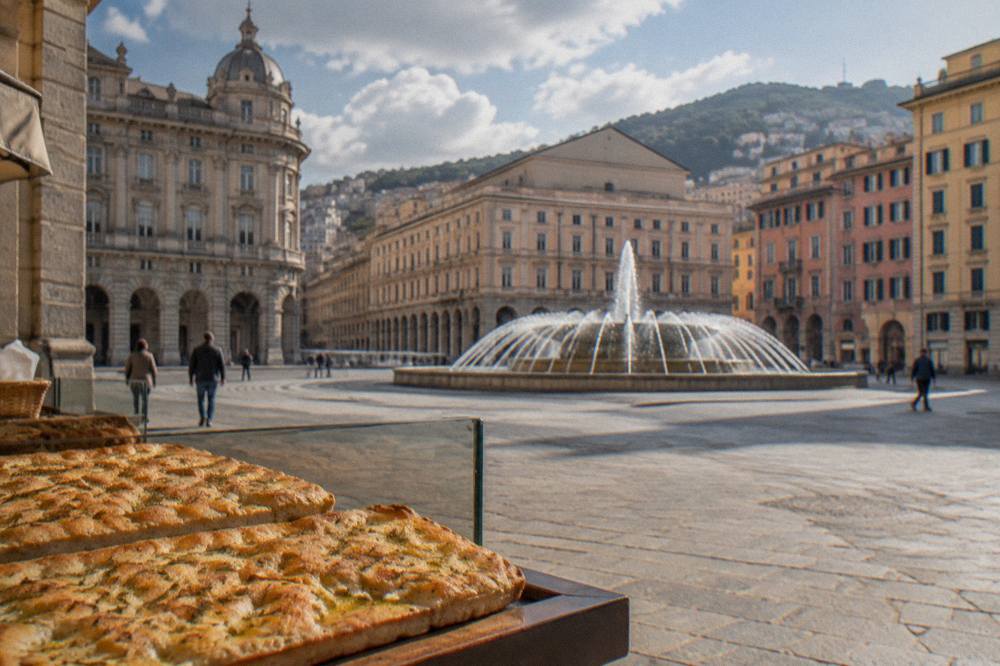
A free walk and the food of Genoa combine naturally, because pesto genovese, made with Basilico Genovese PDO basil, focaccia, farinata, trofie and pansoti are street-level foods, and the site's Genoa food tour page compares the guided versions that build tasting stops into a narrated route. The solo version costs whatever you spend on the food itself; the guided version adds a structure and a narrator. Focaccia di Recco, IGP-protected since 2015 and produced only in Recco, Camogli, Sori and Avegno, is strictly a day-trip food rather than a city one, since those towns sit 18 to 40 km away along the coast.
The guided food options on this site's roster walk and eat at the same time. The Genoa food tour page lays out the comparison: full-meal small-group formats, shorter tasting walks, and wine-led history walks. A walker building the same day alone would trace the Mercato Orientale area by Via XX Settembre and the old town lanes, stopping where the counters are, though the market's own hours are not among the facts this site can print.
The pairing of a free walk with one paid anchor is the pattern that suits the largest number of itineraries. A morning in the caruggi at no cost, an afternoon narrated walk or a food-led route, and a viewpoint at sunset from Spianata Castelletto for the price of a lift ride: that is a full Genoa day built almost entirely from public streets.
What Day Trips Can You Reach After Walking Genoa Itself?
Portofino sits about 25 km from Piazza De Ferrari in a straight line, Camogli about 18 km, San Fruttuoso about 22 km and the Cinque Terre about 67 km, and each is reachable as a boat or train excursion from Genoa, so the walking city doubles as a base for the Ligurian coast. The boat option from Genoa Porto Antico is the Golfo Paradiso Two Gulfs tour, which runs from March 2026 on listed dates, departing Porto Antico at 11:00 and Camogli at 11:45, with crossings of about 30 minutes between Camogli, San Fruttuoso and Portofino. Camogli to San Fruttuoso boats run year round, and the San Fruttuoso abbey charges 10 EUR full entry, 5 EUR for visitors aged 6 to 18 and students up to 25.
The train side is the other half of the picture. Reported times put Milan about 1h30 to 2h from Genoa with fares from about 11 EUR, and Turin about 1h36 to 2h18. Bus line 782 between Santa Margherita Ligure and Portofino is included in the Met Daily ticket, which is a detail worth knowing: the 10.00 EUR day ticket covers the airport Volabus, the whole AMT network and that coastal bus in one product.
| Day trip from Genoa | Straight-line distance from Piazza De Ferrari | Getting there |
|---|---|---|
| Camogli | About 18 km | Train, or Two Gulfs boat tour |
| San Fruttuoso | About 22 km | Boat from Camogli, year round |
| Portofino | About 25 km | Boat tour, or train plus bus 782 |
| Santa Margherita Ligure | About 24 km | Train along the coast |
| Sestri Levante | About 40 km | Train |
| Cinque Terre | About 67 km | Train, Treno Card 1 day 22.00 to 35.00 EUR by date band |
The Portofino boat tour from Genoa and Cinque Terre tour from Genoa pages carry the full excursion comparisons, and the Genoa shore excursions page serves cruise passengers whose walking time in the city is capped by the ship, with visitors advised to check the official site for current service details.
What Should You Know Before Setting Off On Foot In Genoa?
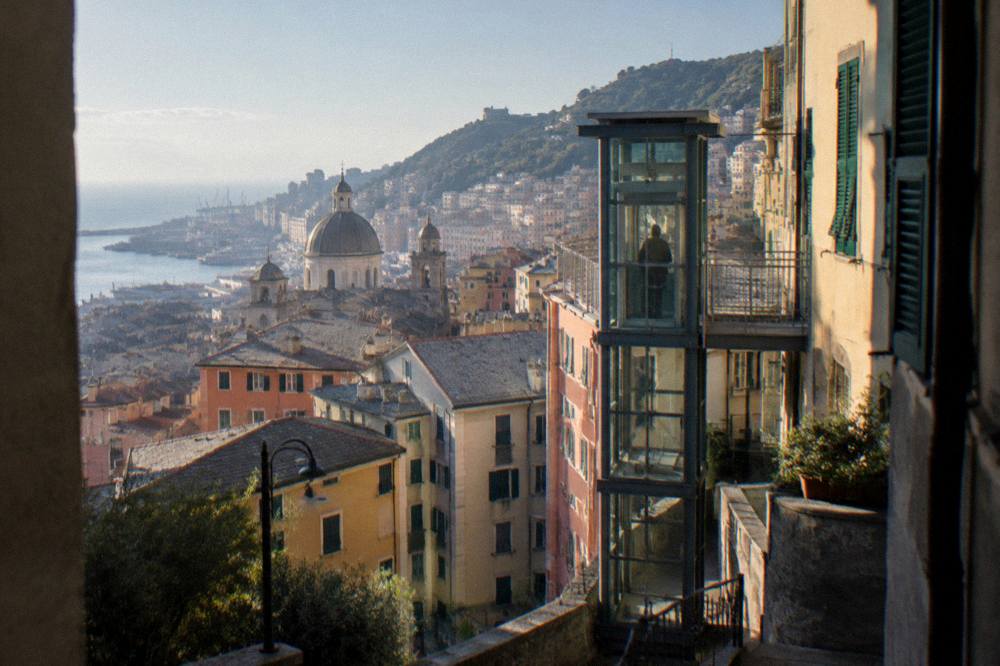
Three facts shape every walking day in Genoa: the city climbs fast, so the lifts and the Zecca-Righi funicular are working transport rather than attractions at 1.20 EUR a ride; the 2.00 EUR AMT single is valid 110 minutes, enough for a bus, a metro leg and a transfer; and the Genoa Museum Card costs 24 EUR for 24 hours or 45 EUR for 48 hours in the 2026 rates, covering 28 city museums. Only the "+bus" card variants include buses, and none of them covers Volabus, Navebus or trains, so the card and the transport ticket answer different questions.
For arrival logistics, the airport taxi runs a fixed 25 EUR per car to the centre, 30 EUR for more than four people, plus 2 EUR at night and on holidays, and the Volabus connects the airport with Genova Piazza Principe, Piazza De Ferrari and Genova Brignole in about 30 minutes under the Met Daily ticket. The Volabus requires the 10.00 EUR Met Daily ticket (24 hours, full network). The emergency number in Italy is 112.
For readers weighing Genoa against a smaller coastal base, the arithmetic favours the city for walking: the same 113 hectares of medieval streets, the UNESCO Strade Nuove and the harbour are all inside one walkable strip between the sea and the hills, while Portofino and the Cinque Terre are excursions outward rather than substitutes. Boccadasse, about 4 km away, and Nervi, about 9 km, extend the same city along the coast without a change of transport product.
The Aquarium of Genoa page carries the full ticket detail for the one indoor sight most walkers add, open 365 days a year with fixed-date adult tickets from 26 EUR under dynamic pricing, and the combined Aquarium, Biosfera and Bigo ticket from 37 EUR.
Common Questions About Free Walking Tours In Genoa
Is There A Free Walking Tour Of Genoa?
This site lists no free or pay-what-you-want guided walk in Genoa. The no-cost option is self-guided: the caruggi, the Strade Nuove facades, Piazza De Ferrari, the Porto Antico promenade, Boccadasse and the Nervi parks are all public ground you can walk without a ticket. For narration, the guided historical center walk is the low-cost alternative compared on this page.
What Can You See In Genoa Without Paying For Tickets?
The old town lanes of the 113-hectare medieval centre, the Via Garibaldi facades of the 42 UNESCO-listed Palazzi dei Rolli, the Cathedral of San Lorenzo from its square, the Porto Antico harbour front, the Spianata Castelletto terrace and the seafront at Boccadasse are all free to walk. Paid interiors along the same routes include the Strada Nuova museums at 14 EUR full combined with the Museo di Sant'Agostino and the Aquarium from 26 EUR adult.
How Much Does Public Transport Cost For A Walking Day In Genoa?
An AMT single ticket costs 2.00 EUR and is valid 110 minutes on the whole network. Lifts and the Sant'Anna funicular cost 1.20 EUR a ride, and the Zecca-Righi funicular accepts ordinary urban tickets. The Met Daily at 10.00 EUR covers 24 hours on the full network, including the Volabus airport service and bus 782 to Portofino.
Is Genoa Easy To Walk Around?
The core between Genova Piazza Principe, the old town and Piazza De Ferrari is compact and continuous on foot. The city climbs steeply from the sea into the hills, which is why AMT operates 14 public lifts and two funiculars; the Castelletto Levante lift to the Spianata Castelletto viewpoint runs daily 06:40 to 24:00 and costs 1.20 EUR a ride.
What Is The Best Month For Walking In Genoa?
The official 1971-2000 normals for Genoa Sestri put July rainfall at 24.2 mm and October at 171.3 mm, with July and August mean daily highs of 27.3 and 27.7 C and January mean highs of 11.5 C. Rain, not heat, is the variable to plan around, and autumn is a rainy stretch of the year in the record.
Can You Walk From The Cruise Port Into Genoa?
The cruise terminals at Ponte dei Mille and Andrea Doria sit at the eastern edge of the Porto Antico area, and the harbour promenade, the old town and Piazza De Ferrari form a continuous walking corridor from there. The Genoa cruise port guide covers the full port-day routing, and the narrated alternatives are compared on the Genoa Travel Guide walking pages.