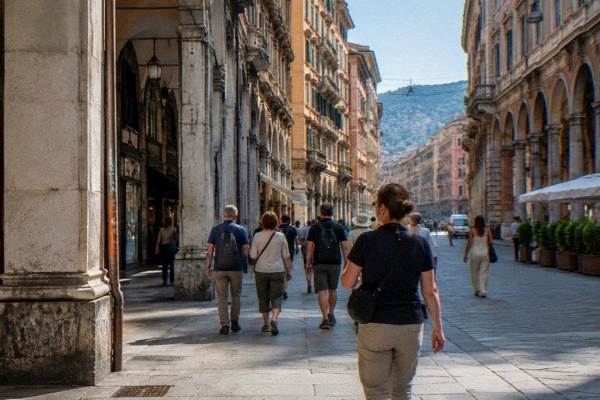
Staglieno Monumental Cemetery: Marble Mourners On The Hillside
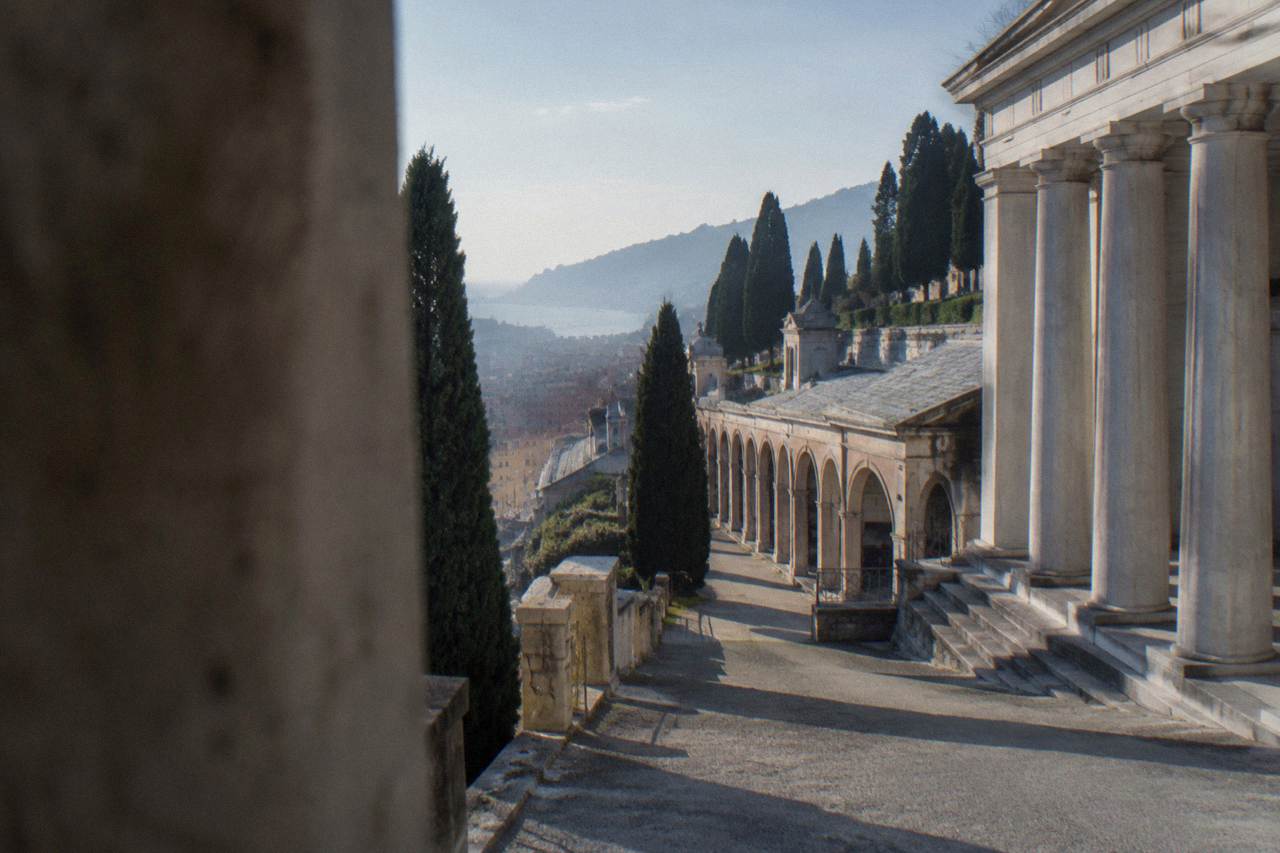
Staglieno Monumental Cemetery is Genoa's great hillside cemetery of marble sculpture, opened to the public on 1 January 1851 after works began in 1844.
Short answer
Staglieno Monumental Cemetery in Genoa is a monumental hillside cemetery whose works began in 1844 and which opened to the public on 1 January 1851. An AMT ticket at 2.00 EUR covers 110 minutes on the whole urban network, and a visit pairs naturally with Genoa's lifts, the Spianata Castelletto and the Zecca-Righi funicular.
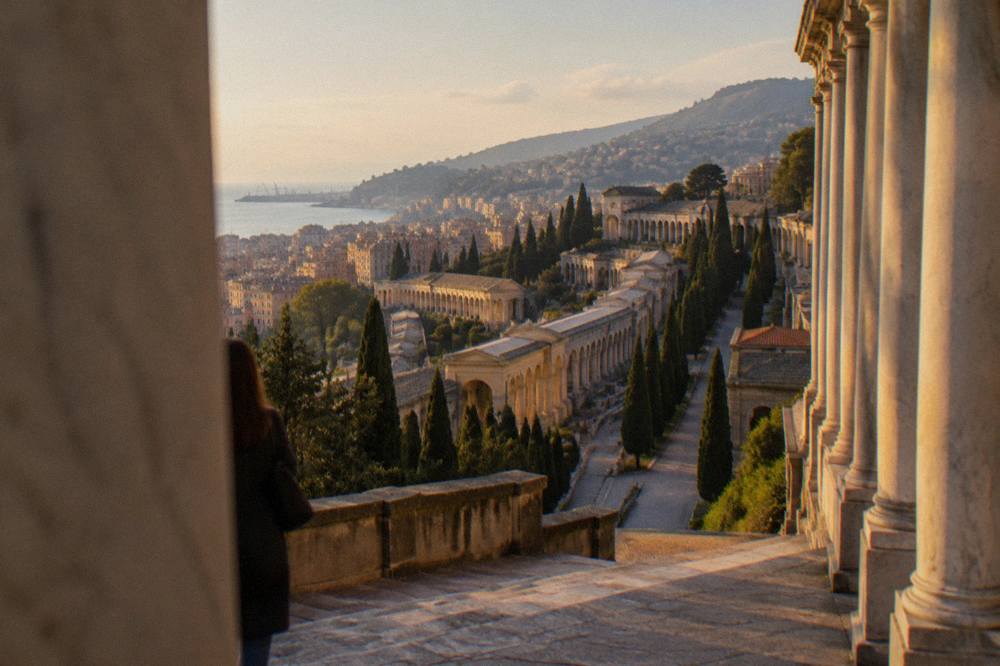
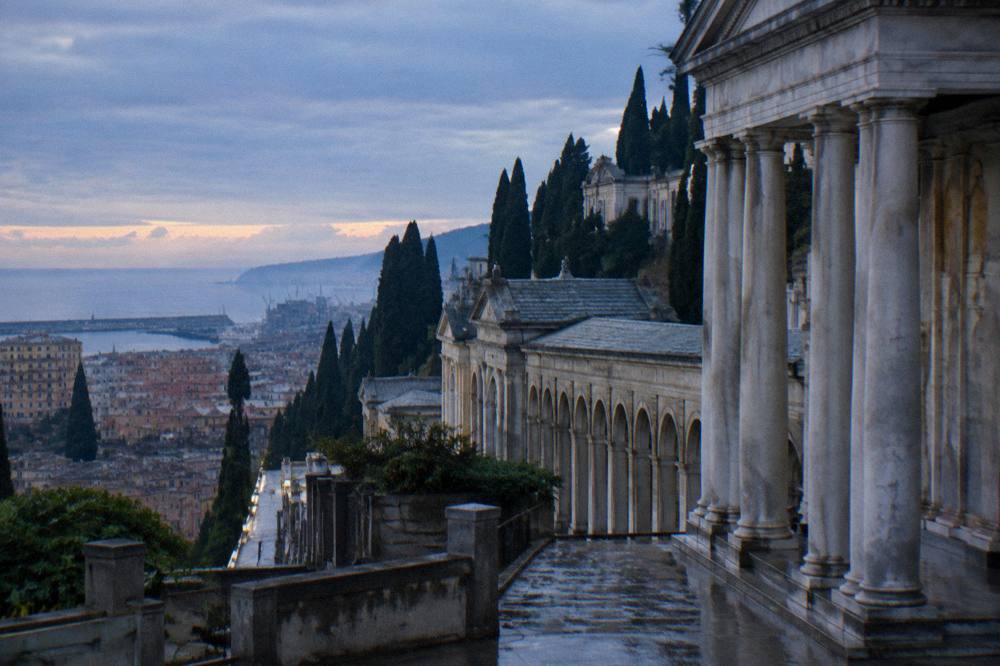
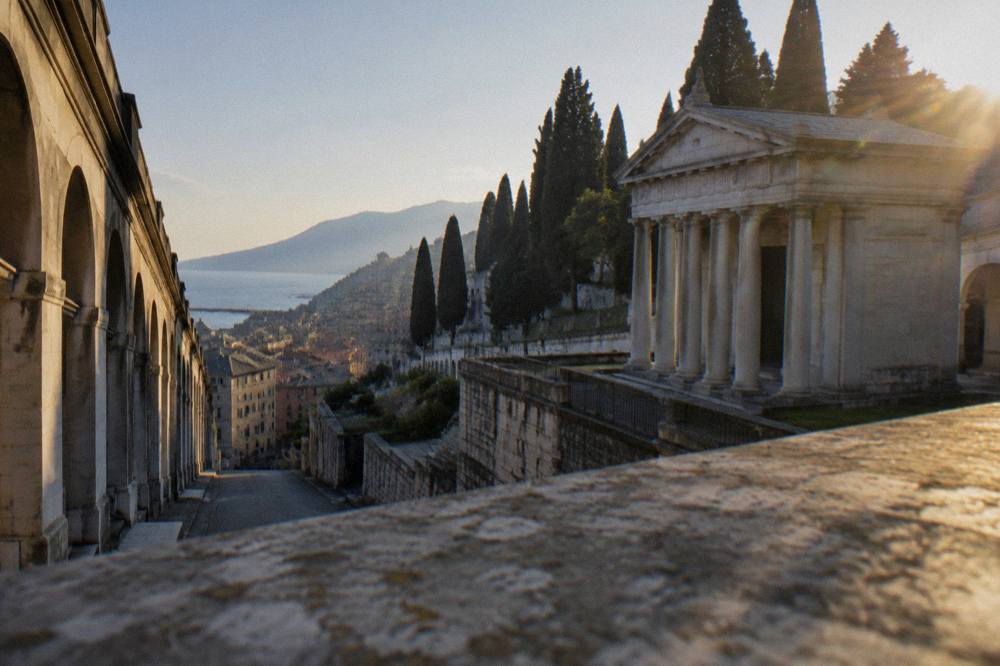
Staglieno Monumental Cemetery is the grand hillside cemetery of Genoa, the coastal city in Liguria, north-west Italy, on the Ligurian Sea. Works on the cemetery began in 1844, and it opened to the public on 1 January 1851, making it one of the great municipal projects of the city in that period. The approved title of this page calls it a place of marble mourners on a hillside, and that is the honest frame for a visit: sculpture, terraces and greenery above a dense port city squeezed between the sea and the Apennine hills. Hours are set by the comune and should be confirmed before setting out.
What Is Staglieno Monumental Cemetery In Genoa?
Staglieno Monumental Cemetery is Genoa's principal monumental cemetery, laid out on the hillside above the city, with works that began in 1844 and an official public opening on 1 January 1851. It is administered by the Comune di Genova, it closes on weather alerts, and its opening hours are published by the comune rather than fixed in this guide, so confirm them before a visit.
The date matters more than it might seem. A city that had been an aristocratic republic until 1797, and that was rebuilding its civic identity after that republic's end, put serious public money into a cemetery designed as a place for the living as much as for the dead. That is why Staglieno reads differently from a parish churchyard: it is a municipal landscape, terraced and planted, with funerary sculpture at a scale the city's churches could never hold.
The comune's own Staglieno pages carry the two dates this site reports: works from 1844, public opening on 1 January 1851. Everything else about the setting, the terraces and the sculpture is best read on the spot or in the comune's material, because detail beyond those dates is where invented description creeps into guidebook copy. What can be said plainly is that this is a monumental cemetery, and visitors should consult the comune's official site.
How Do You Get To Staglieno From The Centre Of Genoa?
An AMT ordinary ticket costs 2.00 EUR and is valid for 110 minutes on the whole urban and metropolitan network, which is the practical way to reach Staglieno from central Genoa. Lifts and the Sant'Anna funicular cost 1.20 EUR a ride, and the Met Daily 24-hour ticket at 10.00 EUR covers the full AMT network for a day, including Volabus to Genova Cristoforo Colombo airport.
The fare structure is simple once it is laid out, and it is worth knowing before boarding anything. The AMT fare table sets these prices, and they apply to the buses, the metro and the funiculars alike where noted.
| AMT ticket | Price | What it covers |
|---|---|---|
| Ordinary single | 2.00 EUR | 110 minutes on the whole Città Metropolitana network |
| AMT + Trenitalia integrated | 2.20 EUR | 110 minutes urban plus limited Trenitalia segments |
| 5-hour ticket | 5.00 EUR | Five hours on the urban network |
| Carnet of 11 tickets | 20.00 EUR | Eleven 110-minute journeys |
| Lift or Sant'Anna funicular ride | 1.20 EUR | One ride on a public lift or the Sant'Anna funicular |
| Met Daily 24h | 10.00 EUR | Full AMT network for one day, including Volabus and line 782 |
The metro itself runs 7 km with 8 stations from Brin to Brignole, serving Genova Piazza Principe and Genova Brignole, the city's two main rail stations. Two extension targets are reported for later in the decade, Canepari in June 2027 and Martinez in December 2028, but neither station is open, so the current line is the line to plan around.
For a day that combines Staglieno with the viewpoints, the hills and the museums, a different logic applies: the Genoa Museum Card covers the city museums, and the "+bus" variants add AMT transport; prices, validity periods and current rates should be checked on the official site. It does not cover Volabus, the Navebus or trains. If a cemetery-and-museums day is the plan, the arithmetic between the Met Daily and the Museum Card "+bus" is worth doing in advance.
If a guided shape to the day appeals, the private custom walking tour with a local guide can be pointed at the hills and Staglieno rather than only the old town; Check availability on the operator's live listing. The same tour family is one of this site's picks for a first day in the city.
How Much Time Should You Allow For Staglieno?
Allow half a day for Staglieno itself, reached by AMT bus or a taxi from the centre, with the remainder of the day given to the hills above Genoa: the Spianata Castelletto terrace, the Zecca-Righi funicular and the Castelletto Levante lift, all open daily from 06:40 to 24:00, form a natural circuit with a hillside cemetery visit and need no car.
The reasoning is geography. Genoa is a narrow strip between the Ligurian Sea and the Apennine hills, and Staglieno sits on the hillside, not in the flat. Climbing from the cemetery grounds to the viewpoints the same day is a matter of public transport, not stamina: AMT runs 14 public lifts across the city, and the two headline vertical routes are the Castelletto Levante lift, rising 57 m from Piazza Portello to the Spianata Castelletto, and the Zecca-Righi funicular, a roughly 12-minute ride through seven stations. Both run daily from 06:40 to 24:00, and a single ride on either, like the Sant'Anna funicular, is 1.20 EUR.
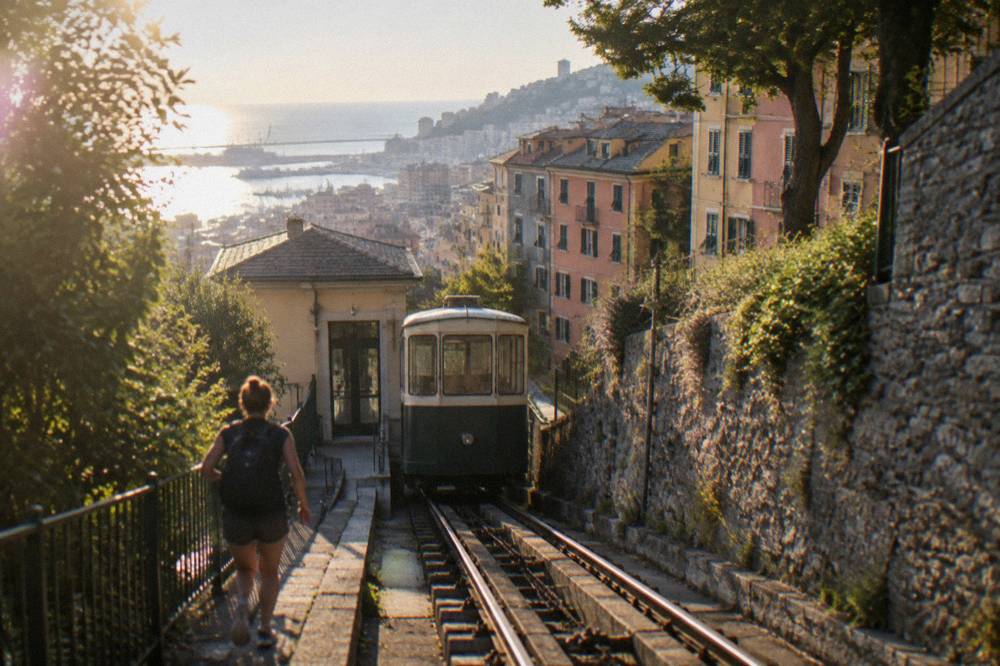
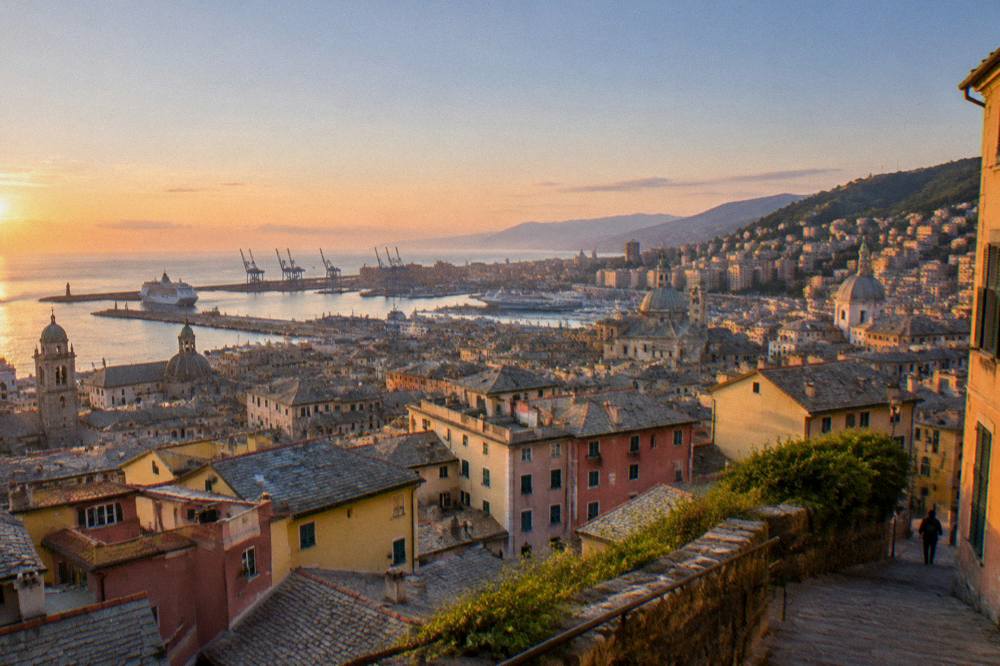
A pairing that works on paper is Staglieno in the first part of the day, then the Spianata Castelletto for the panorama over the old town and the port, then a descent into the caruggi. The old town is 113 hectares and is described by the city's tourism site as one of the largest medieval historic centres in Europe, so the descent is where the day either fills out or runs long. A tighter version of the same idea, with timings and a cut-down route, is laid out in the Genoa in one day itinerary.
What Should You Expect From The Grounds Themselves?
Expect a terraced hillside cemetery under municipal management, opened on 1 January 1851, with funerary sculpture along its walks and closure on weather alerts; the comune of Genoa publishes the current hours, and visitors should confirm them at the source.
The honest way to write this section is narrowly, because the verifiable record is narrow. The dates are solid: works from 1844, public opening on 1 January 1851. The management is solid: the Comune di Genova. The closure rule is solid: the cemetery closes on weather alerts, which in a Ligurian autumn is a real planning factor rather than boilerplate. Other pages covering the same trip are gathered on Genoa Travel Guide.
What the visitor adds to that frame is their own reading of the sculpture and the plantings, and the funerary monuments at Staglieno are the reason the cemetery is written about internationally. A guided visit, or the comune's own published material, carries that layer better than unsourced description. The private custom walking tour with a local guide on this site's roster is the product that fits this need, since the route is shaped to the traveller rather than fixed.
Which Other Genoa Viewpoints And Hills Pair Well With Staglieno?
The Spianata Castelletto terrace, about 0.7 km in a straight line from Piazza De Ferrari, and the Zecca-Righi funicular, about 1.9 km, are the two closest headline viewpoints, both running daily 06:40 to 24:00, with rides at 1.20 EUR; the Parco delle Mura and the Castello d'Albertis widen the same hillside day.
Distances below are straight-line kilometres from Piazza De Ferrari, computed from the site's coordinate data, and are given for orientation only, not as travel times.
| Genoa viewpoint or vertical link | Straight-line distance from Piazza De Ferrari | Notes |
|---|---|---|
| Spianata Castelletto | about 0.7 km | Castelletto Levante lift, 57 m rise, daily 06:40 to 24:00 |
| Zecca-Righi funicular | about 1.9 km | Roughly 12 minutes, 7 stations, daily 06:40 to 24:00 |
| Staglieno | hillside east of the centre | Works 1844, opened 1 January 1851, closes on weather alerts |
| Boccadasse | about 4 km | Former fishermen's village on the coast |
| Nervi parks | about 9 km | 9.2 hectares of parks and the cliff-top promenade |
| Lanterna | about 4 km west, at the port | Built 1128, rebuilt 1543, 117 m above the sea |
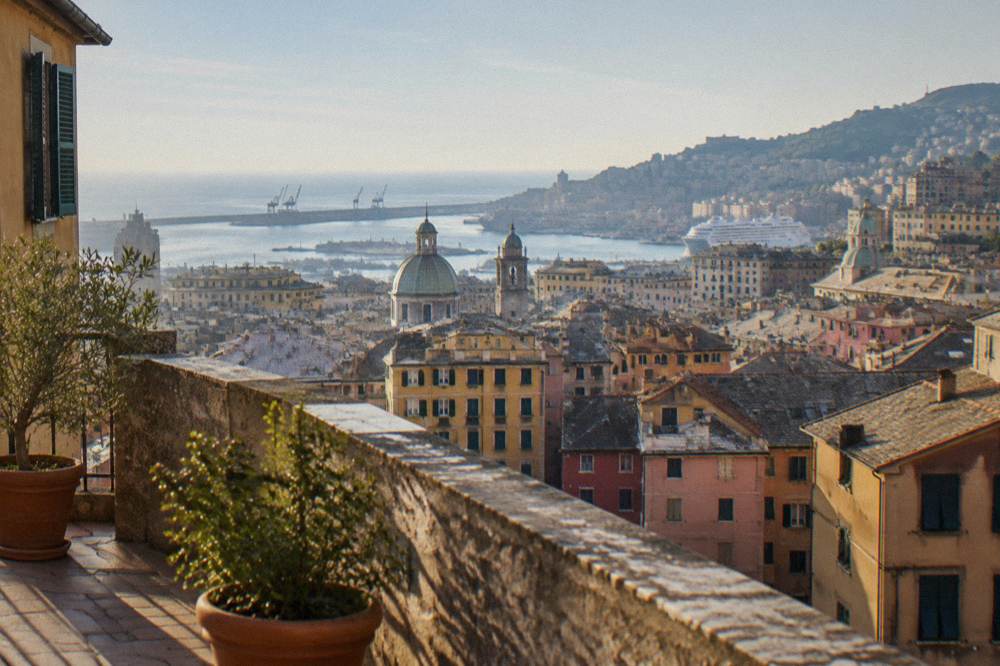
The lifts deserve their own word because they are unusual in Italy at this scale. Fourteen public lifts and two funiculars, one of them the Sant'Anna, stitched into daily 06:40 to 24:00 service, are what make a car-free hillside day realistic in a city this steep. The practical pages on this site cover the Spianata Castelletto and the Zecca-Righi funicular in detail, and the hill-walking alternatives sit under Parco delle Mura and the forts.
For a second hillside stop with interiors rather than views, the Castello d'Albertis is reached by its own lift, the Montegalletto, running weekdays from about 07:10 to 19:50 and holidays from about 07:15 to 20:55 at the standard 1.20 EUR ride price.
What Does A Staglieno Day Cost?
The transport costs are fixed and small: 2.00 EUR for a 110-minute AMT ticket, 1.20 EUR a ride on lifts and the Sant'Anna funicular, or 10.00 EUR for a Met Daily covering the full network for a day; the Genoa Museum Card at 24 EUR for 24 hours covers 28 museums if the day expands beyond the cemetery and the hills.
A sample budget for a cemetery-and-hillside day looks like this.
| Item | Cost | Basis |
|---|---|---|
| AMT single, each leg | 2.00 EUR | 110 minutes, whole urban network |
| Lift or Sant'Anna funicular ride | 1.20 EUR | Per ride, one-way |
| Met Daily 24h | 10.00 EUR | Full AMT network for one day, Volabus included |
| Genoa Museum Card 24h | 24 EUR | 28 city museums, 2026 rate |
| Genoa Museum Card 48h | 45 EUR | 28 city museums, 2026 rate |
| Airport taxi to centre | 25 EUR per car | Fixed fare, 30 EUR over 4 people, plus 2 EUR at night and holidays |
Two cautions on the numbers. First, the Museum Card's transport inclusion applies only to the "+bus" variants, and no variant covers Volabus or trains, so the airport bus leg is a Met Daily matter, not a Museum Card matter. Second, the fixed airport taxi fare of 25 EUR per car is per vehicle, not per person, and rises to 30 EUR for more than four passengers.
If the day stretches indoors, the museum prices nearby are these.
| Venue | Ticket | Price |
|---|---|---|
| Strada Nuova museums with Sant'Agostino | Combined full | 14 EUR |
| Strada Nuova museums with Sant'Agostino | Combined reduced | 9 EUR |
| Aquarium of Genoa | Adult fixed-date, from | 26.00 EUR |
| Aquarium of Genoa | Children 4 to 12, from | 16.00 EUR |
| Aquarium + Biosfera + Bigo | Adult combined, from | 37.00 EUR |
The Aquarium is covered on the Aquarium of Genoa page; the palace museums, sit under Via Garibaldi and the Musei di Strada Nuova.
When Is The Best Time Of Year To Visit Genoa For Staglieno?
The official 1971-2000 climate normals for Genoa Sestri show October as the month with the highest rain total, 171.3 mm, and July the lowest, 24.2 mm, with August the month with the highest mean daily high at 27.7 C; since Staglieno closes on weather alerts, autumn rain is the planning variable that matters most for a cemetery visit.
The full temperature and rain picture from the official Aeronautica Militare normals for the Genoa Sestri station, the only temperature and rainfall source this site uses, reads as follows.
| Month | Mean daily high C | Mean daily low C | Rain mm |
|---|---|---|---|
| January | 11.5 | 5.5 | 101.8 |
| March | 14.6 | 8.2 | 81.7 |
| May | 20.5 | 14.2 | 72.4 |
| July | 27.3 | 20.9 | 24.2 |
| September | 24.4 | 17.9 | 136.4 |
| October | 20.0 | 13.8 | 171.3 |
| November | 15.1 | 9.2 | 108.8 |
| December | 12.5 | 6.5 | 93.1 |
Two readings of the table are useful. October, the month this site's data is drawn from, carries the heaviest rain of the year at 171.3 mm, and Staglieno's closure rule on weather alerts turns that figure from trivia into a real contingency: a wet-weather alternative matters. The Genoa museums cluster, from the Palazzo Ducale exhibitions to the Galata Museo del Mare, open 10:00 to 19:00, is that alternative.
Second, the shoulder months carry very different rain loads from the autumn: May shows 72.4 mm against October's 171.3 mm, with mean highs of 20.5 C. The normals are averages, not forecasts, and no season gets a blanket promise here; the point is simply that the cemetery closes on alerts, and the rain column is the one to watch.
How Does Staglieno Fit Into A Longer Genoa Itinerary?
Staglieno anchors the hillside half of a Genoa stay, while the Porto Antico, the Aquarium, the Palazzi dei Rolli and the caruggi anchor the sea-level half; with the Cinque Terre about 67 km and Portofino about 25 km away in a straight line, a two- or three-day split, one hillside day including Staglieno and one coastal day, is the shape that fits the geography.
The straight-line distances from Piazza De Ferrari put the day-trip options in order.
| Destination | Straight-line distance from Piazza De Ferrari |
|---|---|
| Boccadasse | about 4 km |
| Nervi | about 9 km |
| Camogli | about 18 km |
| San Fruttuoso | about 22 km |
| Portofino | about 25 km |
| Santa Margherita Ligure | about 24 km |
| Sestri Levante | about 40 km |
| Cinque Terre | about 67 km |
| Portovenere | about 82 km |
For the coastal half of the stay, the Golfo Paradiso Two Gulfs boat day from Genoa Porto Antico stops at Camogli, San Fruttuoso and Portofino on listed dates, with the Camogli to San Fruttuoso leg about 30 minutes; the San Fruttuoso abbey, run by FAI, charges 10 EUR full and 5 EUR for visitors aged 6 to 18. The train reach is real too: Milan is about 1h30 to 2h away with fares from about 11 EUR, which makes a Genoa base with a Staglieno morning and a Milan afternoon technically possible, if rushed.
Within the city, the pairing logic is simple. Staglieno plus the viewpoints makes one day; the Porto Antico and the Aquarium, open 365 days a year, make another; the Palazzi dei Rolli and the old town's 113 hectares make a third. A Genoa in two days plan compresses the first two; three days lets the cemetery and the hills breathe.
One event worth cross-checking against any itinerary: the autumn Rolli Days ran 16 to 18 October 2026, opening Rolli palaces across the city with booked entry, and the UNESCO inscription of the Strade Nuove and the Palazzi dei Rolli, covering 42 palaces, dates from 2006. A hillside morning at Staglieno followed by a booked palace afternoon is the kind of day that uses Genoa's vertical geography properly.
Common Questions About Staglieno Cemetery
When did Staglieno Cemetery open?
Works on Staglieno Monumental Cemetery began in 1844, and it opened to the public on 1 January 1851. It is administered by the Comune di Genova.
How do I get to Staglieno Cemetery from central Genoa?
By the AMT network: an ordinary ticket costs 2.00 EUR and is valid 110 minutes on the whole urban network. A Met Daily at 10.00 EUR covers the full network for a day.
What are Staglieno Cemetery's opening hours?
Hours are set by the Comune di Genova and should be confirmed on its own pages before a visit. The cemetery closes on weather alerts, which matters in particular in the autumn months.
Can I combine Staglieno with Genoa's viewpoints?
Yes. The Castelletto Levante lift to the Spianata Castelletto and the Zecca-Righi funicular both run daily 06:40 to 24:00, with rides at 1.20 EUR, so a car-free hillside day is realistic.
Does it rain a lot in Genoa?
The official 1971-2000 normals for Genoa Sestri show an annual rain total of 1079.2 mm, with October the month carrying the highest total at 171.3 mm and July the lowest at 24.2 mm.
Is Staglieno part of the Genoa Museum Card?
The Genoa Museum Card covers 28 city museums, at 24 EUR for 24 hours and 45 EUR for 48 hours under the 2026 rates, and it is a museums product; transport inclusion applies only to the "+bus" variants, which do not cover Volabus, Navebus or trains.
The through-line of a Staglieno visit is that Genoa rewards going uphill: the cemetery's opening times should be confirmed on the official site, the lifts and funiculars run late into the evening, and the ticket that reaches the hillside covers the whole urban network. Confirm the comune's current hours, watch the weather alerts, and give the marble mourners the half-day they were built to fill.