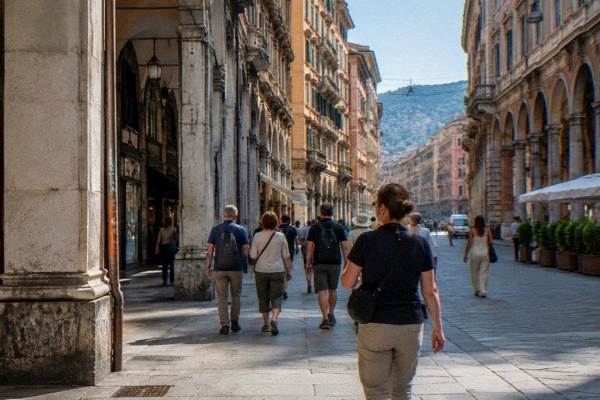
What Is The Population Of Genoa?
Genoa, the coastal city in Liguria, north-west Italy, has 566,247 residents in the comune and 820,691 in the metropolitan city at 1 January 2026. Here is what those figures mean for a visit.
Genoa, the coastal city in Liguria on the Ligurian Sea in north-west Italy, counted 566,247 residents inside the comune at 1 January 2026, with 820,691 across the wider Città Metropolitana di Genova, figures reported from ISTAT data. Two different population numbers therefore circulate for the same place, and which one a guide quotes changes the story a great deal. This page sets out both figures, explains where the boundary between them runs, and looks at what a city of this size means in practice: how the population sits between the sea and the Apennine hills, how it compares with the other northern Italian cities, and what it means for the scale of a visit. The population question sounds like the simplest one a traveller can ask, and in Genoa it has one of the more interesting answers in Italy.
What Is The Population Of Genoa?
The comune of Genoa, the single municipality that covers the city itself, had 566,247 residents at 1 January 2026, while the Città Metropolitana di Genova, the wider metropolitan city that replaced the old province, had 820,691, both figures reported from ISTAT demographic data. The comune number is the one that answers the question "how big is Genoa", because the municipality boundaries run from Nervi in the east to Voltri in the west.
The two figures exist because Italy converted Genoa's province into a metropolitan city. The comune is one municipality, governed by one mayor and one council from Palazzo San Giorgio. The metropolitan city is a layer above it, coordinating dozens of municipalities across the Ligurian hinterland. When a newspaper or a statistics site gives one number for Genoa and another gives a different one, the difference is almost always this boundary rather than a disagreement about people.
One detail matters for understanding how unusual the comune figure is. Genoa's municipality stretches about 30 kilometres along the coast, swallowing districts that in any other Italian region would be separate towns: Nervi in the east, Voltri in the west, and the valley towns of the Polcevera and Bisagno behind them. The 566,247 residents are spread across that whole ribbon, not packed into a historic core. The result is a city that behaves, for transport and sightseeing purposes, like a chain of settlements joined by one long coastal strip, which is also why the question of how many days in Genoa is enough has no single answer.
| Area | Residents | Date | Source |
|---|---|---|---|
| Comune di Genova (the city) | 566,247 | 1 January 2026 | Reported from ISTAT data |
| Città Metropolitana di Genova | 820,691 | 1 January 2026 | Reported from ISTAT data |
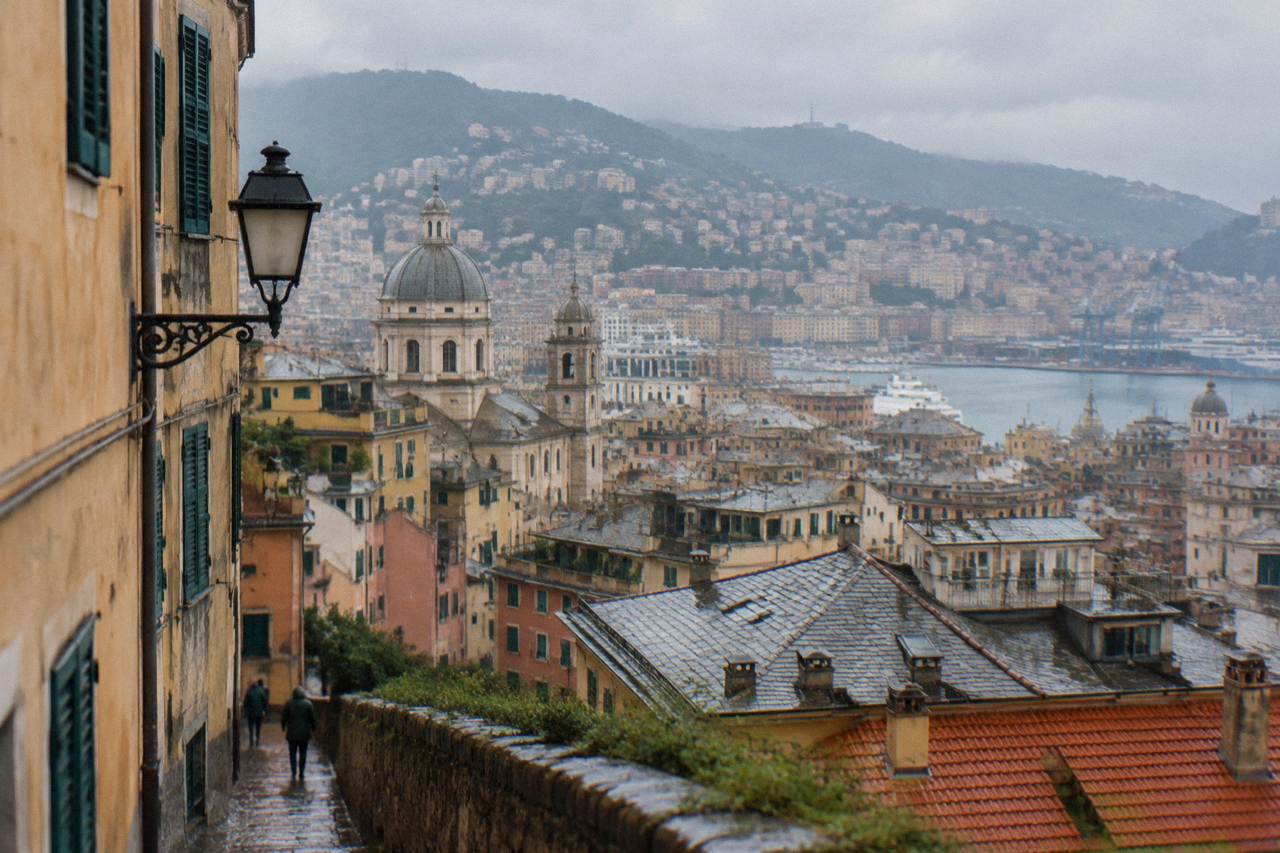
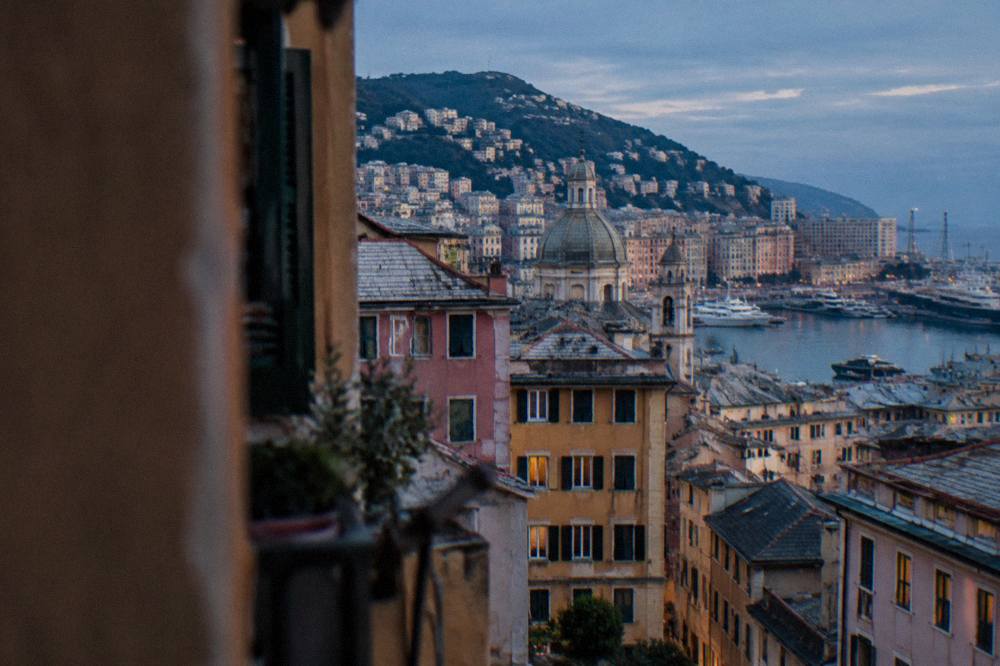
Genoa is a long narrow strip between the sea and the Apennine hills, and the population follows that shape. The city climbs the hillsides in tiers above the port, fills the short valleys that cut inland, and thins out toward the eastern and western edges of the municipality. The historic centre, at 113 hectares one of the largest medieval historic centres in Europe according to the city's own tourism site, sits at the centre of it all between the Porto Antico and Piazza De Ferrari. For a sense of how the population is actually distributed, the centres of gravity are the old town, the districts around Via XX Settembre, and the coastal stretches of Corso Italia toward Boccadasse.
How Does The Genoa Figure Compare With Other Northern Italian Cities?
Genoa's 566,247 residents in the comune place it among Italy's larger cities by municipal population, though the comparison depends entirely on which boundary each city uses, since Italian municipality sizes vary enormously and a comune figure in one region covers a very different physical area than in another. The metropolitan figure of 820,691 measures a different thing again: a coordination area, not a continuous built-up city.
The honest way to read any Italian city population is to check what the boundary encloses first. Genoa's comune is unusually large and unusually elongated, running from the fishing village atmosphere of Boccadasse to the western port districts, with hill neighbourhoods reached by funicular and public lift stacked in between. A traveller who arrives expecting a compact city of half a million will find instead a vertical, linear place where the AMT network of buses, metro, lifts and the Zecca-Righi funicular does real work joining the pieces together. The metro line itself runs 7 km with 8 stations from Brin to Brignole, a small system for a city of this size, and reported extension targets put Canepari at June 2027 and Martinez at December 2028.
The port is the other half of the comparison. Genoa is a major working and ferry port as well as a city: the port authority's own "port in numbers" page counts 2.4 million cruise passengers and 2.6 million ferry passengers, with 7,619 ship calls in the figures it publishes. A population count in a port city always sits beside a floating population of crew, ferry travellers and cruise day visitors, which is one reason the city around the Stazioni Marittime terminals feels fuller than the resident number alone would suggest. The can you walk into Genoa from a cruise port question answers yes, and that walkability between port and centre is a direct consequence of where the population historically settled.
The scale question is also why Genoa rewards a first visit structured around a guide rather than a self-directed wander. The 2 hours private historical tour in Genoa covers the historic centre in a single loop, which suits a city whose population weight and sights sit close together even though the municipality itself runs for kilometres. Private tour pricing and the operator's live listing carry the current figure, and the tour's own page sets out the route.
Why Does Genoa Feel Smaller Than Its Population Suggests?
Genoa concentrates its 566,247 residents along the coastal strip and the immediate hillsides, so the parts a traveller sees, the old town, the Porto Antico, Via XX Settembre and the seafront to Boccadasse, sit within a walkable and lift-connected band, while large residential districts spread east and west along the municipality without ever crossing a visitor's path. The city feels smaller than its number because the number counts 30 kilometres of coastline.
The geography explains it. Between the sea and the Apennine hills there is little flat land, so the city grew along the shore and up the slopes rather than outward in rings. Public lifts and funiculars are part of ordinary daily transport here, not tourist attractions: AMT runs 14 lifts, the Castelletto Levante lift rises 57 m from Piazza Portello to the Spianata Castelletto, and lifts and the Sant'Anna funicular cost 1.20 EUR a ride on the standard fare table. The Zecca-Righi funicular runs daily 06:40 to 24:00. A resident population distributed across a vertical grid produces a city centre that is dense, walkable and compact at street level even though the municipality is enormous.
The second reason is historical. Genoa was the capital of an aristocratic republic that lasted until 1797, and the city's monumental core, the Strade Nuove with the Palazzi dei Rolli, was inscribed by UNESCO in 2006 as "Genoa: Le Strade Nuove and the system of the Palazzi dei Rolli", covering the 42 palaces named on the Rolli lists of 1576, 1588, 1599, 1614 and 1664. That ceremonial core is compact because it was built as a single ensemble along one street. The Aquarium of Genoa opened in 1992 for the Columbus Expo, and the Renzo Piano redevelopment of the Porto Antico of the same year stitched the harbour edge to the old town. A visitor therefore experiences a set of connected quarters, each a short walk or a single AMT ticket from the next, and the 110-minute validity of the 2.00 EUR ordinary ticket covers transfers across much of that band.
What Does Population Mean For Getting Around Genoa?
A city of 566,247 spread over a 30-kilometre coastal municipality is served by one AMT fare system, and the ordinary ticket, 2.00 EUR and valid 110 minutes on the whole urban network, is the practical answer for a visitor, with the 10.00 EUR Met Daily 24-hour ticket covering the airport Volabus, line 782 toward Portofino and the full network including lifts and funiculars. Population spread, not population size, is what shapes the transport choice.
The fare table from AMT Genova sets the options plainly. The ordinary ticket covers the whole Città Metropolitana network for 110 minutes; the integrated AMT-Trenitalia version costs 2.20 EUR; a 5-hour ticket costs 5.00 EUR; a carnet of 11 tickets costs 20.00 EUR. Lifts and the Sant'Anna funicular are 1.20 EUR a ride. The metro runs from Brin to Brignole through 8 stations, including Principe, Sant'Agostino and De Ferrari, and does not yet reach Canepari or Martinez. For accommodation planning, the city's tourist tax, set by the comune of Genoa's own tariff page, runs from 2.00 EUR per person per night at 1-star hotels to 2.50 EUR at 2-star and 4.00 EUR at B&Bs, charged on the first 8 consecutive nights, with under-14s exempt.
For day trips the population fact matters in one specific way: the city's two main stations, Genova Piazza Principe and Genova Brignole, sit at the centre of a dense regional rail spine along the coast, which is how a city of this size connects to Portofino, the Cinque Terre and beyond. The distances are short in Italian terms: Portofino lies about 25 km from Piazza De Ferrari in a straight line, Camogli about 18 km, the Cinque Terre about 67 km. Boat tours and train services both answer that geography, and the can I take a boat ride from Genoa to Portofino question has a fuller answer on its own page.
Is Genoa A Big City Or A Small One For A Visitor?
For a visitor, Genoa behaves like a large city with a small city's centre: 566,247 residents and a UNESCO-listed core, but a walkable historic heart, a single aquarium-and-harbour district, and hill viewpoints reached by lift rather than by long cross-city journeys. The metropolitan figure of 820,691 mostly matters for regional transport, not for sightseeing.
The practical reading is that population size and visitor effort come apart in Genoa. The old town's caruggi, the Musei di Strada Nuova at Palazzo Rosso, Palazzo Bianco and Palazzo Doria-Tursi, the Cathedral of San Lorenzo and Palazzo Ducale all sit within the same compact band, and the winter timetable from 28 September 2026 to 18 April 2027 opens the Strada Nuova museums daily 10:00 to 18:30, with Mondays limited to Palazzo Rosso only. The combined ticket with the Museo di Sant'Agostino costs 14 EUR full price. Beyond that band, Boccadasse lies about 4 km from Piazza De Ferrari in a straight line and Nervi about 9 km, both reachable on the same AMT tickets.
Visitors weighing the population question are usually really asking whether the city justifies the trip. The answer on this site is a dedicated one: is Genoa worth visiting covers the case for and against, and why is Genoa famous explains what the city is known for, from the Republic that lasted until 1797 to pesto genovese made with Basilico Genovese PDO basil. For the fullest single overview, the things to do in Genoa page gathers the sights, the food and the day trips in one place. Anyone wanting the region's fuller picture can also read the where is Genoa page for the city's position on the Ligurian coast.
Common Questions About The Population Of Genoa
What Is The Population Of Genoa?
The comune of Genoa had 566,247 residents at 1 January 2026, and the metropolitan city had 820,691, both reported from ISTAT demographic data. The comune figure is the standard answer for the city itself.
Is Genoa A Large City?
By municipal population Genoa is among Italy's larger cities, though Italian municipality boundaries vary widely. For a visitor it functions as a compact historic core with a long coastal municipality attached, from Nervi in the east to Voltri in the west.
What Is The Difference Between The Comune And The Metropolitan City?
The comune is the municipality of Genoa itself, one local government. The Città Metropolitana di Genova replaced the old province and coordinates many municipalities across the hinterland, which is why its population of 820,691 is higher.
Does The Port Add To Genoa's Population?
The resident figures count people registered in the municipality. The port authority's published figures count 2.4 million cruise passengers and 2.6 million ferry passengers, plus 7,619 ship calls, a separate floating traffic that the resident number does not include.
Does Genoa's Population Affect Getting Around?
It affects the shape of transport more than the cost. An AMT ordinary ticket is 2.00 EUR and valid 110 minutes across the whole urban network, the Met Daily is 10.00 EUR for 24 hours including Volabus and line 782, and lifts and the Sant'Anna funicular are 1.20 EUR a ride.
A city counted twice, once at 566,247 inside the municipality and once at 820,691 across the metropolitan city, rewards knowing which number a guide is quoting. For planning a visit, the smaller number is the honest one: it describes the city a traveller actually walks, rides and eats in, spread along 30 kilometres of Ligurian coast between the sea and the hills. For help deciding how long that visit should run, the Genoa Travel Guide pages on itineraries, food and day trips carry the detail, and a private historical tour remains the quickest way to see how the population's historic core fits together in a single afternoon.