What Happened To The Morandi Bridge In Genoa?
The Morandi bridge in Genoa collapsed on 14 August 2018 and was replaced by Renzo Piano's Ponte San Giorgio, opened in August 2020. The full timeline and what it means for visitors.
On 14 August 2018 the Ponte Morandi, the motorway viaduct that carried the A10 across the Polcevera valley in Genoa, collapsed during a storm, dropping a section of deck and vehicles to the ground below. Genoa is a coastal city in Liguria, north-west Italy, squeezed between the Ligurian Sea and the Apennine hills, and the bridge stood on the inland side of that strip, above a densely built neighbourhood. The replacement crossing, Renzo Piano's Ponte San Giorgio, was inaugurated on 3 August 2020. This page sets out the dated facts of the collapse and the rebuild, and what the story means for a visitor trying to place the event within the city they see today.
What Happened To The Morandi Bridge In Genoa?
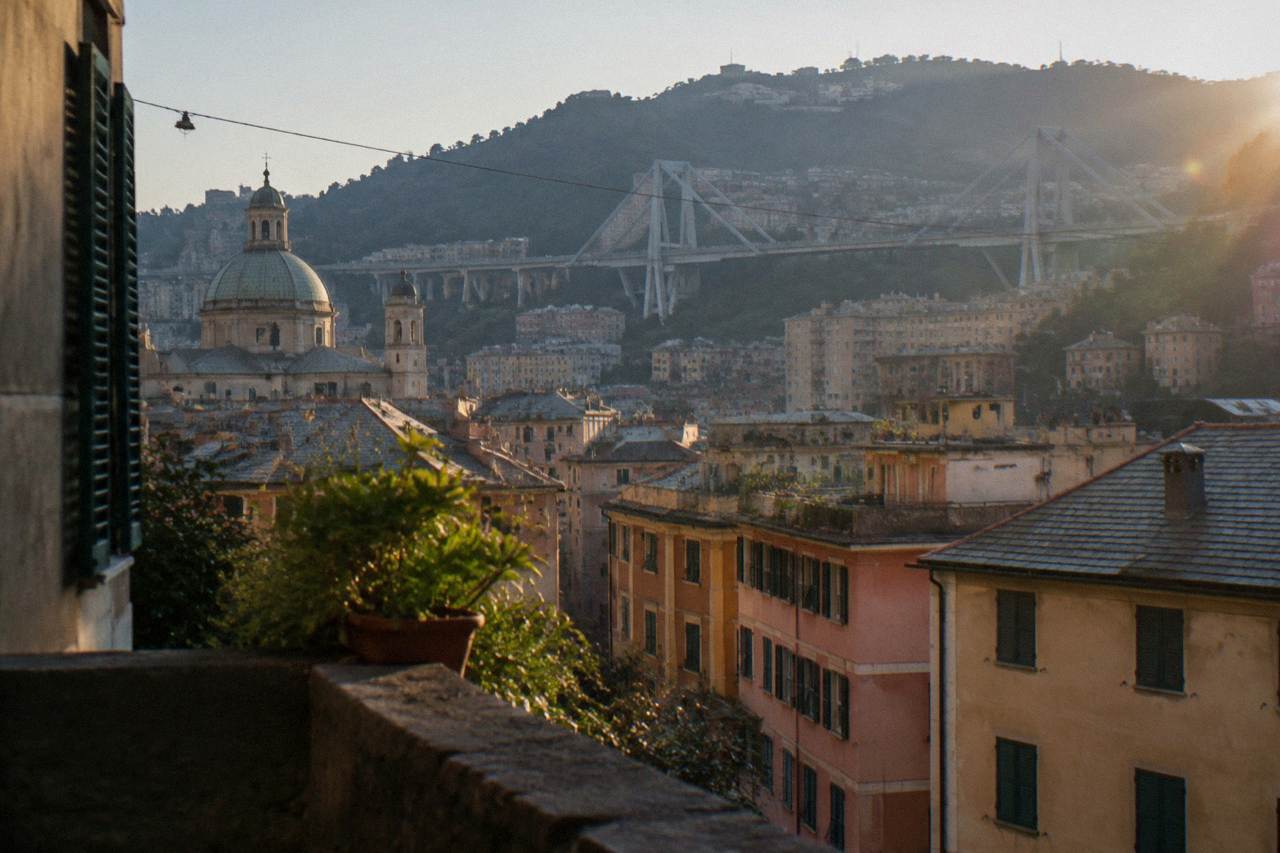
The Ponte Morandi collapsed on 14 August 2018, during a storm, dropping part of its deck over the Polcevera valley on the north-western edge of Genoa. The bridge carried the A10 motorway, and the failure severed a main road link through the city. A replacement crossing, the Ponte San Giorgio designed by Renzo Piano, was inaugurated on 3 August 2020, a little under two years after the collapse.
The date and the two bridges frame everything else. The Morandi viaduct was a motorway structure, not a city street: it belonged to the long-distance road network that threads the narrow Ligurian coastal strip, connecting Genoa with the Italian and French rivieras and with the motorway system of northern Italy. When the deck fell, the consequences spread beyond Genoa itself, because freight and holiday traffic that had crossed the valley on the A10 had to be rerouted while the replacement was designed and built.
The rebuild was unusually fast by the standards of large infrastructure projects. The new bridge, named the Ponte San Giorgio after Genoa's patron saint, was inaugurated on 3 August 2020, with traffic reported from around 5 August 2020. The name ties the structure back into the city's own identity rather than the road network's, which is worth knowing when you read Italian coverage of the anniversary commemorations.
| Date | Event |
|---|---|
| 14 August 2018 | Ponte Morandi collapses during a storm over the Polcevera valley |
| 3 August 2020 | Ponte San Giorgio, designed by Renzo Piano, inaugurated |
| Around 5 August 2020 | Traffic reported running on the new bridge |
Who Designed The Replacement Bridge In Genoa?
The Ponte San Giorgio was designed by Renzo Piano, and it is 1,067 metres long on 18 piers, at a reported cost of about 202 million EUR. Piano is the architect of the 1992 Porto Antico redevelopment, so the bridge joins the old harbour among the major works he has shaped in his home city. The structure replaced the collapsed Ponte Morandi on the same A10 corridor over the Polcevera valley.
The reported figures for the new crossing are concrete and worth setting side by side, because they describe a completely different structure from the one that fell. The San Giorgio bridge is a continuous beam bridge with a slender deck, and its length is given as 1,067 metres carried on 18 piers. The cost figure of about 202 million EUR is reported for the project as a whole.
| Fact | Ponte San Giorgio |
|---|---|
| Designer | Renzo Piano |
| Opened | 3 August 2020 |
| Length | 1,067 m |
| Piers | 18 |
| Reported cost | About 202 million EUR |
| Replaces | Ponte Morandi (collapsed 14 August 2018) |
Renzo Piano's name also attaches to the Porto Antico redevelopment of 1992, carried out for the Columbus Expo, which gave the city the Aquarium quarter and the Bigo lift. A visitor connecting the two works can see the same hand in the harbour the city now shows to cruise passengers, documented in the Genoa cruise port guide, and in the bridge that carries motorway traffic high over the valley.
Can You See The New Bridge On A Visit To Genoa?
The Ponte San Giorgio carries the A10 motorway over the Polcevera valley, on the inland side of Genoa, about 7 km straight-line from the airport and north of the historic centre, which sits about 119 km straight-line from Milan. It is a working motorway bridge rather than a sight, so the practical ways a visitor encounters it are from the road when arriving by car or coach, or from the surrounding city fabric it crosses above.
The straight-line distances from Piazza De Ferrari put the geography in scale: the airport is about 7 km away, Milan about 119 km, Turin about 123 km, and Nice and Monaco about 141 km. The A10 corridor that the bridge serves is the artery that connects those places along and beyond the Ligurian coast. No walk time, viewing platform or bus line is in the record this site works from. The wider set of guides lives on Genoa Travel Guide.
For context on how the city reads today, the bridge story sits alongside the wider question of why Genoa is famous: the UNESCO-listed Strade Nuove and Palazzi dei Rolli, the medieval old town of 113 hectares described as one of the largest medieval historic centres in Europe, the Lanterna lighthouse and the working port all belong to the same narrow strip of coast. The Polcevera crossing is the modern layer of that story.
How Did The Collapse Change Getting Around Genoa?
The collapse cut the A10 motorway link across the Polcevera valley on 14 August 2018, and the gap was closed by the Ponte San Giorgio on 3 August 2020, so through motorway traffic has a crossing again. Within the city itself, the transport a visitor uses is the AMT network: a 2.00 EUR ticket valid 110 minutes, a 7 km metro line with 8 stations from Brin to Brignole, and the Volabus airport link, which needs the 10.00 EUR Met Daily ticket.
None of the city networks were part of the bridge, and none of them changed with it. The metro runs Brin to Brignole with stations including Principe, San Giorgio, Sant'Agostino and De Ferrari; the Zecca-Righi funicular and the Castelletto Levante lift run daily 06:40 to 24:00; the ordinary AMT ticket is 2.00 EUR for 110 minutes. Volabus connects Genova Cristoforo Colombo airport with Genova Piazza Principe and Genova Brignole in about 30 minutes, and it requires the Met Daily 24-hour ticket at 10.00 EUR, which covers the whole AMT network. The Volabus requires the 10.00 EUR Met Daily ticket (24 hours, full network).
A traveller weighing the city against its neighbours can also check whether Genoa is worth visiting and how many days in Genoa are enough, both of which depend less on the motorway bridge than on the old town, the museums and the coastline.
| Mode | Figure |
|---|---|
| AMT ordinary ticket | 2.00 EUR, 110 minutes |
| Met Daily 24-hour ticket (required for Volabus) | 10.00 EUR |
| Lifts and Sant'Anna funicular, single ride | 1.20 EUR |
| Metro line | 7 km, 8 stations, Brin to Brignole |
| Volabus, airport to Genova Brignole | About 30 minutes |
| Fixed taxi fare, airport to city centre | 25 EUR per car (30 EUR over 4 people) |
What Should A Visitor Know About The Bridge Site Today?
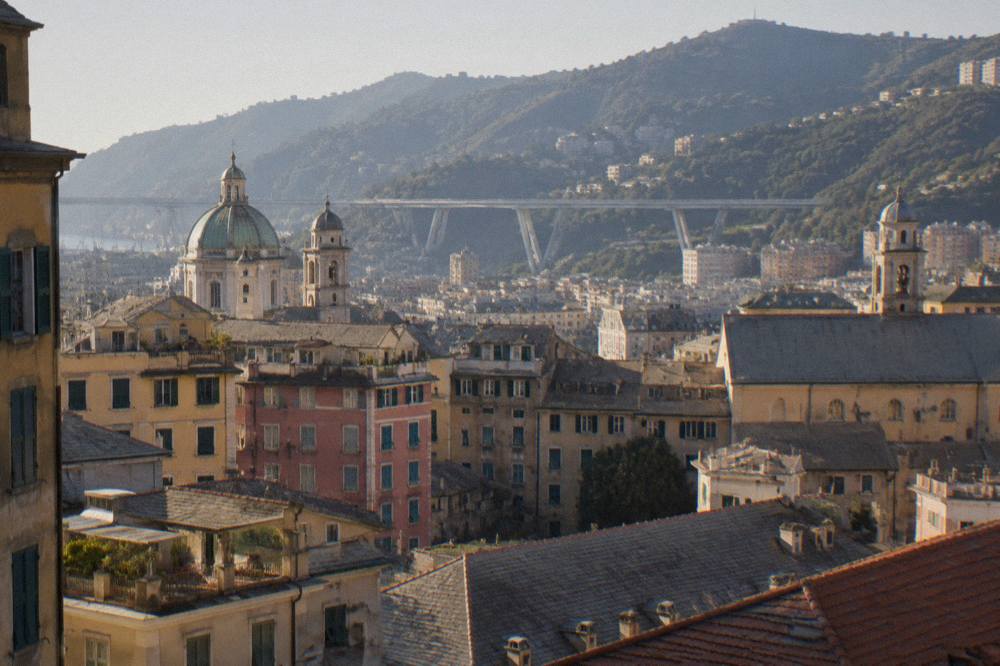
The Ponte San Giorgio has carried the A10 over the Polcevera valley since August 2020, standing where the Morandi deck fell on 14 August 2018. The site is a living motorway corridor, not a memorial museum, and the commemorations that mark the anniversary belong to the city's calendar rather than to a ticketed attraction. Nothing about the bridge blocks or reshapes a standard visit to the old town, the Porto Antico or the Aquarium.
The honest way to place the event as a visitor is historical. The collapse on 14 August 2018 and the reopening on 3 August 2020 now sit in the same timeline as the city's other dated milestones this site records: the Republic of Genoa lasting until 1797, the Staglieno cemetery opening to the public on 1 January 1851 after works began in 1844, and the Aquarium opening in 1992. The bridge is the most recent of the big structural dates, and the fastest turnaround between loss and replacement.
Anyone planning a first visit can build around the main things to do in Genoa, from the Strada Nuova museums to Boccadasse, and treat the Polcevera crossing as geography rather than an itinerary stop. A guided walk with the Genoa Walking Tour: Explore Top Sights & Hidden Gems route through the historic centre covers the city's sights in one loop, and you can Check availability beside the same decision.
The surrounding region rewards the time too. Portofino lies about 25 km straight-line from Piazza De Ferrari, San Fruttuoso about 22 km, the Cinque Terre about 67 km, and a boat along that coast is the natural counterpart to a city stay, as the Portofino boat tour from Genoa guide sets out. Food is the other half of any Genoa plan, from pesto genovese made with Basilico Genovese PDO to focaccia and farinata, all covered in what Genoa is famous for eating.
Common Questions About The Morandi Bridge In Genoa
What Happened To The Morandi Bridge In Genoa?
The Ponte Morandi, carrying the A10 motorway over the Polcevera valley, collapsed during a storm on 14 August 2018. Part of the deck fell into the valley below. It was replaced by Renzo Piano's Ponte San Giorgio, inaugurated on 3 August 2020.
When Did The Replacement Bridge Open?
The Ponte San Giorgio was inaugurated on 3 August 2020, with traffic reported from around 5 August 2020, just under two years after the collapse.
Who Designed The New Bridge In Genoa?
Renzo Piano designed the Ponte San Giorgio. He is also the architect of the 1992 Porto Antico redevelopment in the same city.
How Long Is The Ponte San Giorgio?
The bridge is 1,067 metres long, carried on 18 piers, at a reported cost of about 202 million EUR.
Does The Bridge Affect A Normal Visit To Genoa?
It carries motorway traffic on the inland side of the city and does not shape a standard visit to the old town, the Porto Antico, the Aquarium or the seafront. City transport runs on the AMT network, with a 2.00 EUR ticket valid 110 minutes and a metro line from Brin to Brignole.
Where Is Genoa, The City The Bridge Serves?
Genoa is a coastal city in Liguria, north-west Italy, on the Ligurian Sea, a narrow strip between the sea and the Apennine hills with a working and ferry port. Straight-line distances from Piazza De Ferrari: Milan about 119 km, Turin about 123 km, Nice and Monaco about 141 km.