Is There A Metro In Genoa?
Yes, Genoa has a metro: a 7 km line with 8 stations from Brin to Brignole, run by AMT, with tickets at 2.00 EUR for 110 minutes. Here is how it fits a visit.
Genoa, the coastal port city in Liguria on the Ligurian Sea, does have a metro, and it is a useful one for visitors even though it is short. The line runs for 7 km with 8 stations from Brin in the west to Genova Brignole in the east, according to AMT Genova, the operator. It passes through the two main rail stations, Genova Piazza Principe and Genova Brignole, and stops at De Ferrari, the square at the heart of the city. This page sets out what the metro covers, what it does not, how the tickets work, and how the line fits with the buses, funiculars and lifts that carry the rest of the city's public transport, because in a city built on hills between the sea and the Apennines the vertical network matters as much as the horizontal one.
Is There A Metro In Genoa?
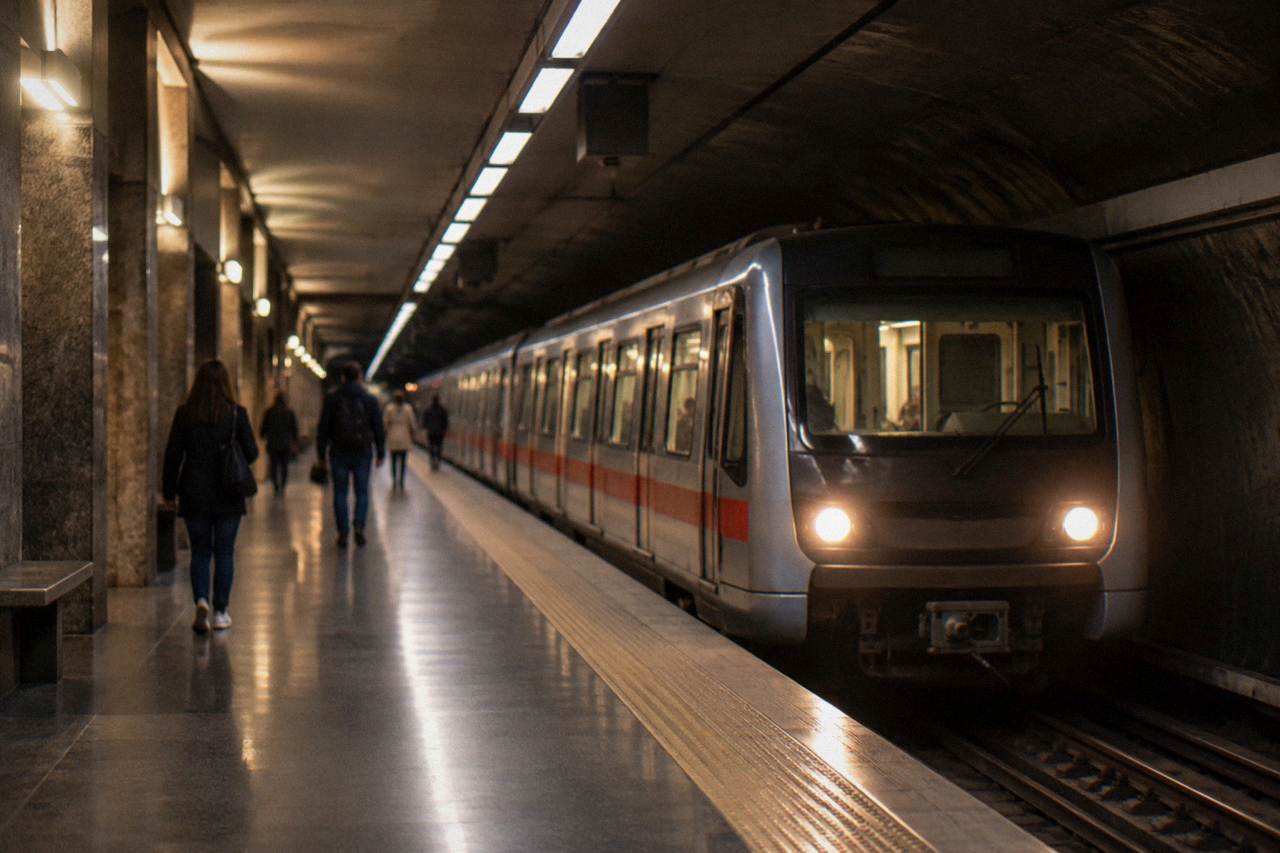
Yes, Genoa has a metro: one line, 7 km long, with 8 stations running east to west from Brin to Genova Brignole, operated by AMT Genova. The stops in order are Brin, Dinegro, Principe, Darsena, San Giorgio, Sant'Agostino, De Ferrari and Brignole, so the line links the two main railway stations and the city's central square on a single thread.
That is the whole of it, and the scale matters for planning. This is not a multi-line network of the kind Milan or Turin run; it is a single line that serves the corridor along the lower city between the port and the centre. For a visitor staying near Genova Piazza Principe, the cruise terminals of the Porto Antico, or Piazza De Ferrari, the metro connects those points directly, and it is the one part of the network that avoids the hills entirely, because it runs underground for the length of the city centre.
The stations map onto recognizable places. Principe sits at the main western rail hub, where trains arrive from Milan, Turin, Nice and the Riviera di Ponente. Darsena and San Giorgio serve the old harbour area, and De Ferrari opens at the fountain square that anchors the modern centre, within walking distance of the Cathedral of San Lorenzo, the Palazzo Ducale and Via XX Settembre. Brignole, the eastern terminus, is the city's second rail station, useful for trains toward the Riviera di Levante, Camogli and the Cinque Terre. A practical first stop for arrival logistics is the guide to getting around Genoa by public transport, which covers buses and rail in more depth.
Two extensions are under construction, and both are worth knowing about so that a map from another site does not mislead you. The metro does not yet reach Canepari, with that extension reported as targeted forJune 2027, or Martinez, reported as targeted forDecember 2028, according to reports on the works. In October 2026 the line ends where it ends: Brin to Brignole, 8 stations, no further.
What Does A Genoa Metro Ticket Cost?
A single AMT ordinary ticket costs 2.00 EUR and is valid for 110 minutes across the whole Citta Metropolitana network, metro, buses, lifts and the Zecca-Righi funicular alike, per the AMT fare table. There is no separate metro-only fare: one ticket covers a metro ride plus onward connections within the time window.
The fare structure rewards knowing what you are doing. Beyond the single ticket, the integrated AMT plus Trenitalia 110-minute ticket costs 2.20 EUR, a 5-hour ticket costs 5.00 EUR, and a carnet of 11 tickets costs 20.00 EUR, or 22.00 EUR in the integrated version that includes limited Trenitalia travel. For a fuller day there is the Met Daily 24-hour ticket at 10.00 EUR, which covers the whole AMT network including Volabus, the airport bus, and line 782 toward Portofino. One rule trips people up at the airport: boarding the Volabus requires the 10.00 EUR Met Daily ticket, valid 24 hours on the full network.
| AMT ticket | Price | What it covers |
|---|---|---|
| Ordinary single | 2.00 EUR | 110 minutes, whole network |
| AMT + Trenitalia single | 2.20 EUR | 110 minutes, plus limited Trenitalia |
| 5-hour ticket | 5.00 EUR | 5 hours on the network |
| Carnet of 11 tickets | 20.00 EUR | 11 x 110-minute rides |
| Met Daily 24h | 10.00 EUR | 24 hours, full network incl. Volabus and line 782 |
Lifts and the Sant'Anna funicular charge 1.20 EUR a ride if bought as single vertical tickets, though the ordinary ticket also covers the Zecca-Righi funicular and the Castelletto Levante lift, both of which run daily from 06:40 to 24:00. The Castelletto lift climbs 57 m from Piazza Portello to the Spianata Castelletto viewpoint, which is a genuine transport use: reaching one of the city's best panoramas without the stairways. For a sense of how the hills shape movement in this city, see is Genoa a walkable city.
For the views above the city rather than below it, book a guided panoramic city tour here.
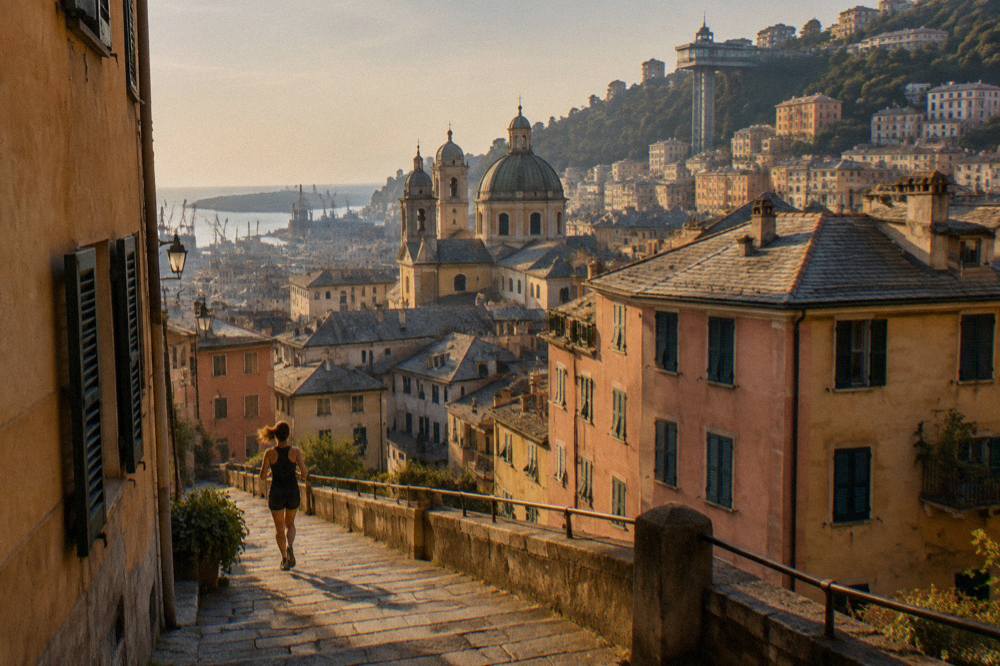
If the metro plus the vertical network sounds like enough of a plan already, a guided walk covers the parts of the centre no line reaches: the storyteller-led walk through Genoa's secrets threads the caruggi of the old town, and Check availability on the operator's live listing.
Can The Metro Replace Buses And Walking In Genoa?
No. The metro covers only the lower corridor from Brin to Genova Brignole, so it reaches the two rail stations, the old harbour and Piazza De Ferrari, but it serves none of the hill districts, Boccadasse, Nervi, the Pegli coast or the sights stacked above the centre. Buses, two funiculars and fourteen public lifts carry the rest, and on many journeys a mix of metro and lift is the practical route.
Consider what sits off the line. Boccadasse, the old fishermen's village, lies about 4 km from Piazza De Ferrari in a straight line, and Nervi about 9 km, both reached by bus or regional train rather than metro. The Zecca-Righi funicular climbs to the Righi hillside in about 12 minutes through 7 stations, and AMT runs 14 public lifts across the city, including Montegalletto up to Castello d'Albertis. The old town itself, 113 hectares and one of the largest medieval historic centres in Europe, is a matter of footwork through the caruggi rather than anything on rails: no metro station delivers you into its lanes, and the nearest stops, San Giorgio and De Ferrari, sit at its edges. The full index of guides sits on Genoa Travel Guide.
The cruise-port question is a common one, and the metro is only part of the answer. The terminals of the Stazioni Marittime stand close to the Darsena and San Giorgio area, and the page on walking into Genoa from a cruise port covers that arrival in detail. For airport arrivals, the metro has no station at Genova Cristoforo Colombo airport; the connection is the Volabus bus, which runs from the airport to Principe, De Ferrari and Brignole in about 30 minutes, and which needs the Met Daily ticket rather than a single fare. The airport taxi alternative is a fixed 25 EUR per car to the centre, 30 EUR for more than four people, plus 2 EUR at night and on holidays, per the airport's own page.
For day trips the metro hands over to the railway entirely. Trains from Genova Piazza Principe and Genova Brignole run to Milan in about 1h30 to 2h, with fares from about 11 EUR, and to Turin in about 1h36 to 2h18, on dynamic pricing. Camogli, Santa Margherita Ligure and the Cinque Terre are regional lines along the coast, and the page on the ferry question for the Cinque Terre addresses the sea alternative.
How Should You Use The Metro On A Short Visit?
Use the metro for the Principe to De Ferrari to Brignole corridor, especially with luggage between rail stations, and use single 2.00 EUR tickets unless a Met Daily at 10.00 EUR pays for itself through an airport bus ride plus three or more further journeys. Everything else in Genoa, the hills, the old town lanes, the seafront villages, belongs to buses, lifts, funiculars and your own feet.
A one-day visitor arriving at Principe by train can ride three stops to De Ferrari, walk the cathedral and Palazzo Ducale corridor, then take the lift to Spianata Castelletto on the same ticket within 110 minutes, or buy fresh tickets as the day goes on. A visitor with a morning only might follow the pattern in how many days in Genoa is enough and keep the metro as the spine, with the funicular and the old town as the flesh. Anyone flying out should note the Volabus rule again, because the Volabus requires the 10.00 EUR Met Daily ticket (24 hours, full network); the Met Daily is the airport answer on public transport.
| Journey | Best option | Fare basis |
|---|---|---|
| Principe to De Ferrari | Metro, 3 stops | 2.00 EUR single |
| De Ferrari to Brignole | Metro, 1 stop | 2.00 EUR single |
| Airport to centre | Volabus bus | Met Daily 10.00 EUR |
| Centre to Spianata Castelletto | Castelletto lift | 1.20 EUR single ride |
| Centre to Camogli or Portofino area | Regional train / line 782 | Train fare / Met Daily |
One caution that belongs to this city rather than to the metro: Genoa's public transport answers to its geography, and the geography is vertical. The Zecca-Righi funicular and the lift network are not curiosities but ordinary commuting infrastructure, running daily from 06:40 to midnight on the main lines, and a metro ticket that covers them is often the difference between a staircase and a ride. More on the city's shape and its sights and quarters rounds out the planning picture.
Common Questions About The Genoa Metro
Is There A Metro In Genoa?
Yes. Genoa has one metro line, 7 km long with 8 stations from Brin to Genova Brignole, operated by AMT Genova. It links Genova Piazza Principe, Darsena, San Giorgio, Sant'Agostino, De Ferrari and Genova Brignole on a single underground thread through the lower city.
How much does the Genoa metro cost?
A single AMT ordinary ticket is 2.00 EUR and is valid 110 minutes across the whole network, metro, buses, lifts and funiculars. A Met Daily 24-hour ticket is 10.00 EUR and also covers Volabus to the airport and line 782 toward Portofino.
Does the Genoa metro go to the airport?
No. Genova Cristoforo Colombo airport has no metro station. The public transport link is the Volabus, which runs from the airport to Principe, De Ferrari and Brignole in about 30 minutes and requires the Met Daily ticket; the airport taxi is a fixed 25 EUR per car to the centre.
Does the Genoa metro reach the Cinque Terre or Portofino?
No. The metro stays within the city, from Brin to Genova Brignole. The Cinque Terre, Portofino, Camogli and Santa Margherita Ligure are reached by regional trains from Genova Piazza Principe or Genova Brignole, or by boat tours on the operator's listed dates.
Is the Genoa metro being extended?
Yes, but neither extension is open in October 2026. The Brin to Canepari extension is reported as targeted forJune 2027 and Brignole to Martinez for December 2028, according to reports on the works.
Can one ticket cover the metro and the funiculars?
Yes. The 2.00 EUR ordinary ticket is valid 110 minutes on the whole AMT network, including the Zecca-Righi funicular and public lifts such as Castelletto Levante, both running daily from 06:40 to 24:00. A single lift or Sant'Anna funicular ride bought alone is 1.20 EUR.