Is It Better To Carry Cash Or Card In Italy?
Cash or card in Italy? What the published fares and ticket rules in Genoa say about where each payment method works, from AMT buses to the Aquarium and the city tourist tax.
Italy uses the euro, and Genoa, the coastal city in Liguria on the Ligurian Sea, publishes enough fixed fares and ticket rules to answer the cash-versus-card question with real figures rather than habit. The short version: cards and contactless payments cover the big, priced, machine-mediated purchases, from Aquarium tickets bought online to AMT bus tickets charged to a bank card on board, while cash covers the small, fixed, person-to-person payments such as the city tourist tax settled at your hotel desk. Neither method wins outright. The two together cover everything the published fare tables show, and carrying a modest amount of euro cash removes the few friction points that remain.
Is It Better To Carry Cash Or Card In Italy?
Card, mostly, with a small cash reserve for fixed person-to-person payments. In Genoa the AMT fare table lists contactless payment on board buses and metro, the Aquarium sells dynamic-priced tickets online, and the hop-on hop-off and day-trip products on this site are booked in advance, while the city tourist tax and the fixed 25 EUR airport taxi fare are the classic cash moments. A card plus a modest float of euro notes covers every published fare in the city.
The reason the answer leans toward card is structural, not cultural. Everything expensive in Genoa is bought through a system that already accepts electronic payment. The Aquarium of Genoa's own ticket page lists dynamic pricing that changes by date, which makes buying in advance online the standard route. The AMT network sells its ordinary ticket through the AMT app, by SMS, at machines and retailers, and through the ILA contactless system that charges a bank card directly on board. The Genoa Museum Card is bought through the museum network's own channels. None of that requires notes and coins.
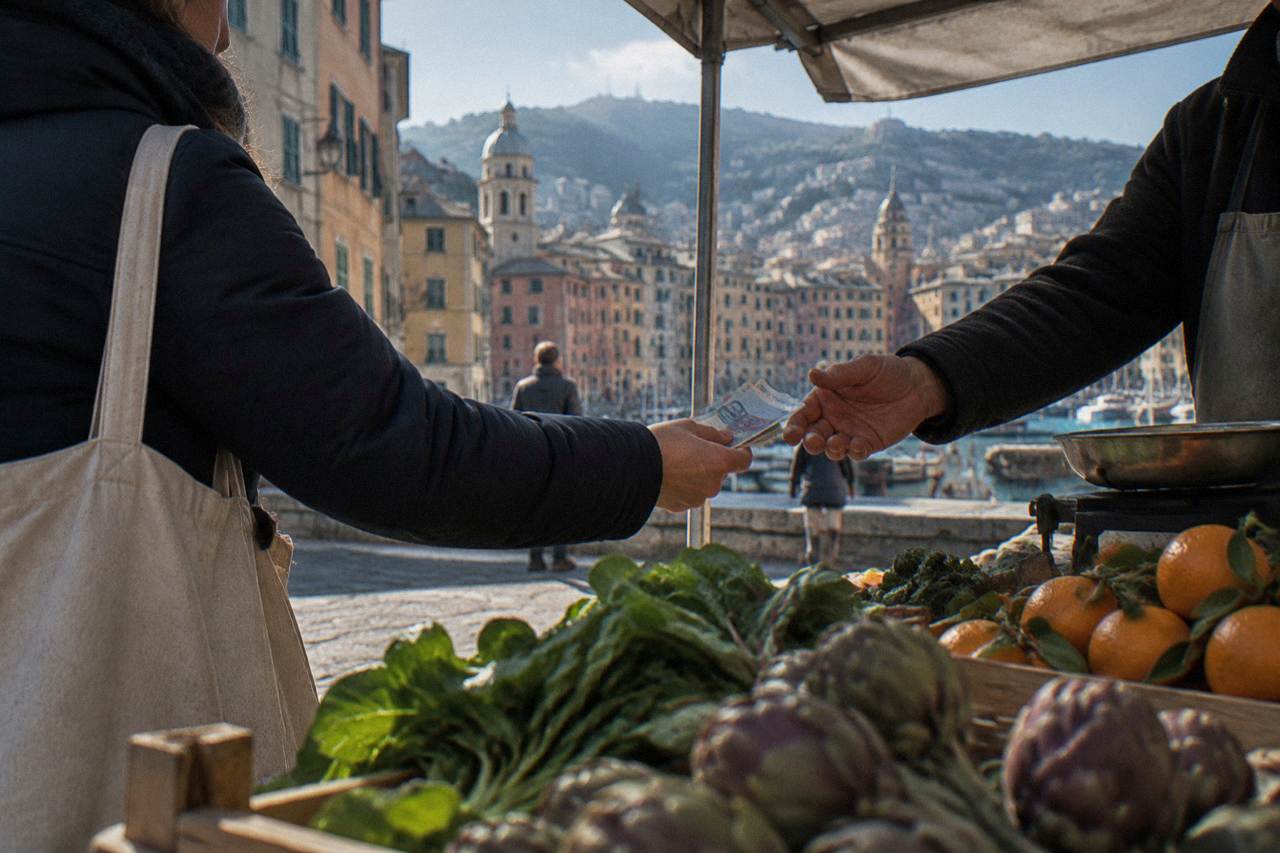
Cash retains a role because a handful of published, official figures are settled between people rather than machines. The comune of Genoa's tourist-tax page sets the imposta di soggiorno per person per night by accommodation category, and it is collected at the property. The airport's own page lists the fixed taxi fare of 25 EUR per car to the centre, 30 EUR for more than four people, plus 2 EUR at night and on holidays. Small amounts, exact figures, paid on the spot: that is the profile of a cash payment, and carrying enough euro to cover it is all the cash planning a Genoa trip needs.
Where Cards Already Cover Everything In Genoa
Public transport and pre-booked attractions are fully card-friendly. The AMT ordinary ticket is 2.00 EUR for 110 minutes and the AMT network lists app, SMS, contactless ILA, machines and retailers as purchase channels, the Met Daily 24-hour ticket at 10.00 EUR is bought online or in the app, and the Aquarium of Genoa's ticket page sells fixed-date and combined tickets online with dynamic pricing. Cards handle the entire priced infrastructure of the city.
The transport detail matters because it removes the classic tourist worry of scrambling for coins before boarding. AMT Genova publishes the contactless option alongside every other sales channel for its ordinary ticket, and the integrated AMT plus Trenitalia version at 2.20 EUR, the 5-hour ticket at 5.00 EUR and the carnet of 11 tickets at 20.00 EUR are sold through the same channels. The airport Volabus, which requires the 10.00 EUR Met Daily ticket, is likewise an online or in-app purchase before you board.
Museum entry follows the same pattern. The Genoa Museum Card costs 24 EUR for 24 hours and 45 EUR for 48 hours at the 2026 rates, covers 28 city museums, and is sold through the museum network's ticket channels described on the Genoa Museum Card page. The Strada Nuova museums sell a combined ticket with the Museo di Sant'Agostino at 14 EUR full and 9 EUR reduced. Buying these ahead with a card also means the exact fare is settled before you stand at a desk.
Where Cash Still Matters In Genoa
Cash matters for the fixed, person-to-person payments in the published rules: the tourist tax at 2.00 to 5.00 EUR per person per night depending on the accommodation category, the fixed airport taxi fare of 25 EUR per car, and the lifts and Sant'Anna funicular at 1.20 EUR a ride if you buy on the spot rather than through a pass. These are small exact amounts where notes and coins settle the bill instantly.
The tourist tax is the clearest case. The comune's page sets 2.00 EUR for one-star hotels, 2.50 EUR for two-star, 4.00 EUR for B&Bs and affittacamere, and 2.00 EUR for hostels and campsites, with three, four and five-star rates reported at 3, 4 and 5 EUR. Only the first eight consecutive nights are taxed, and children under 14 are exempt. A property collects it directly, so having the cash ready avoids any question at checkout, though plenty of properties also take cards.
The taxi fare is similar: the airport's own page fixes the centre transfer at 25 EUR per car, 30 EUR when more than four people travel, plus a 2 EUR supplement at night and on holidays, and lists shared-ride per-person rates for Brignole and Principe. A fixed fare is the easiest cash payment that exists, because there is no meter to watch and no rounding to negotiate.
How To Split Your Money Across A Genoa Day
Put the big tickets on a card before you travel and keep a small euro float for the fixed local payments. The published figures that shape a typical day are the 2.00 EUR AMT ticket, the 10.00 EUR Met Daily if the airport bus is involved, the 24 EUR or 45 EUR Museum Card, Aquarium admission from 26.00 EUR, and the tourist tax at your hotel, and every one of the first four is designed for electronic purchase while the last is settled at the desk.
The practical split follows from how each fare is sold. Here is what the published tables show:
| Payment in Genoa | Published figure | How it is normally paid |
|---|---|---|
| AMT ordinary ticket, 110 minutes | 2.00 EUR | App, SMS, contactless card on board, machines, retailers |
| Met Daily 24 hours, whole network incl. Volabus | 10.00 EUR | Online or in the AMT app |
| Genoa Museum Card, 24 hours | 24 EUR | Museum network ticket channels |
| Airport taxi to the centre, fixed | 25 EUR per car | Paid to the driver |
| Tourist tax, B&B | 4 EUR per person per night | Collected at the property |
| Lifts and Sant'Anna funicular, single ride | 1.20 EUR | AMT ticket or on the spot |
None of these amounts is large, which is the point. The euro float you need for a day of cash moments in Genoa is small, because the expensive items, transport passes, museum cards and Aquarium admission, all sit on the card side of the table. The Met Daily also bundles the Volabus airport link, the line 782 toward Portofino and the funicular network, so one online card payment can close off several potential cash situations at once. The wider set of guides lives on Genoa Travel Guide.
For the fuller picture of how the city is laid out for visitors on foot, the is Genoa a walkable city page covers the terrain, and how many days in Genoa is enough helps size the pass you actually need.
Paying For Tours And Bookings In Genoa
Booked tours are card-only by design, because payment happens on the operator's live listing before the day, not in cash on the street. The tour products on this site, including the hop-on hop-off bus, the guided historical-centre walk and the half-day Portofino boat, are all reserved through the listing, which means the cash question disappears entirely for the guided part of a Genoa trip.
This is where the cash-or-card debate quietly resolves itself for the experiences people travel for. A Genoa hop-on hop-off bus tour is a voucher on your phone, and the same is true of the walking tours and the day trips; there is no desk transaction at all. If the bus appeals as a first-day orientation, Check availability before you leave home.
The same logic applies to day trips. A boat from Genoa toward Portofino, a question covered in detail on the can I take a boat ride from Genoa to Portofino page, is a ticketed product reserved ahead. The Cinque Terre cards, which the Genoa to Cinque Terre page explains, are another pre-paid system: the Treno Card runs from 22.00 to 35.00 EUR for one adult day depending on the date band, and the Via dell'Amore time slot is booked through the card rather than paid at a gate.
Cash, Cards And Day Trips From Genoa
Day trips run on the same split as the city: trains and boats on cards and passes, arrivals on a mix. The train toward Milan takes about 1 hour 30 to 2 hours with fares from about 11 EUR bought through the rail operators, the Two Gulfs boat tour from Porto Antico costs about 29 EUR for the full day, and at the destination the small costs, a 10 EUR abbey entry at San Fruttuoso or a coffee stop, are where the euro float earns its keep.
The boat network around Genoa publishes its own fares, and they behave like city fares. The San Fruttuoso abbey, run by FAI, charges 10 EUR full and 5 EUR for visitors aged 6 to 18 and students up to 25, with under-5s free. The Tigullio boat network's Super Cinque Terre return is reported at 47 EUR and the Santa Margherita to Portofino return at about 20 EUR. Big-ticket transport, small-coin arrivals: the pattern repeats wherever you go from the city.
A useful planning view of the surrounding region, with the distances that decide which trips are worth the card spend, sits on the is Genoa worth visiting page, and the what to avoid in Genoa page covers the practical mistakes that cost money rather than prevent it.
| Day-trip item | Published figure | Card or cash moment |
|---|---|---|
| Train Genoa to Milan, one way | from about 11 EUR, about 1h30 to 2h | Card, rail operator channels |
| FAI abbey entry, San Fruttuoso | 10 EUR full, 5 EUR reduced | Either, at the site |
| Santa Margherita to Portofino boat, return | about 20 EUR | Ticket office or online |
| Cinque Terre Treno Card, 1 adult day | 22.00 to 35.00 EUR by date band | Online before travel |
Common Questions About Cash And Card In Genoa
Is it better to carry cash or card in Italy?
Card for everything pre-booked and machine-sold, cash for the fixed person-to-person payments. In Genoa that means cards for AMT tickets, museum cards and Aquarium admission, and a small euro float for the tourist tax and the fixed 25 EUR airport taxi fare.
Do I need euros in Genoa if I have a card?
A small amount helps. The published cash-shaped payments are the tourist tax of 2.00 to 5.00 EUR per person per night by category, the 25 EUR fixed airport taxi fare and the 1.20 EUR single ride on the lifts and the Sant'Anna funicular if bought on the spot. Everything else in the fare tables has an electronic channel.
Can I pay for Genoa public transport with a card?
Yes. AMT Genova lists the ILA contactless system, which charges a bank card on board, alongside the app, SMS, machines and retailers for the 2.00 EUR ordinary ticket, and the 10.00 EUR Met Daily is bought online or in the app.
Is the Genoa Museum Card bought with cash?
It is bought through the museum network's ticket channels at the 2026 rates of 24 EUR for 24 hours and 45 EUR for 48 hours. Only the "+bus" variants include buses, and none of them covers Volabus, Navebus or trains.
Should I pay for tours in cash in Genoa?
No, tours are reserved and paid through the operator's live listing before the day. The hop-on hop-off bus, guided walks and Portofino boats on this site all work that way, so no cash changes hands for the guided part of a trip.
Does the tourist tax have to be paid in cash?
The comune of Genoa's page sets the amounts, from 2.00 EUR per person per night at one-star hotels to 4.00 EUR at B&Bs, capped at the first eight consecutive nights, and collection happens at the property. Having the amount in cash avoids any question at the desk, though properties also take cards.
The balanced answer, backed by every published fare in the city, is a card for the priced infrastructure of Genoa and a thin fold of euros for the fixed payments settled between people. Carry both, in that proportion, and no fare table in the city has a surprise in it.