Genoa Churches Beyond The Cathedral
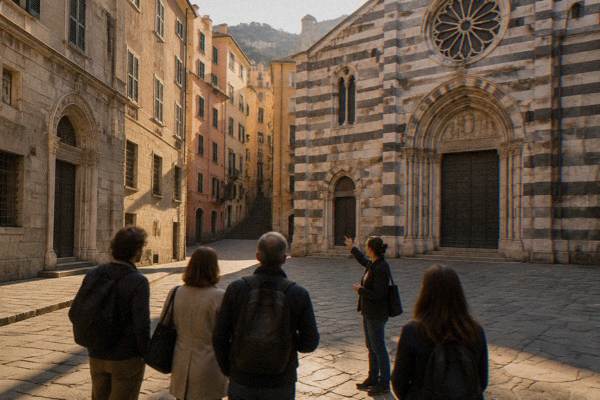
Genoa's churches range from the striped Cathedral of San Lorenzo to chapels tucked into the caruggi, and this guide sets out hours, tickets and advice on how to plan a church-focused visit to the city.
Short answer
The Cathedral of San Lorenzo anchors any church visit to Genoa, its Museo del Tesoro opens Monday to Saturday 09:00 to 12:00 and 15:00 to 18:00 and closes on Sunday, several former religious buildings now work as museums covered by the 24 EUR or 45 EUR Genoa Museum Card, and an AMT ticket at 2.00 EUR for 110 minutes connects the sites.
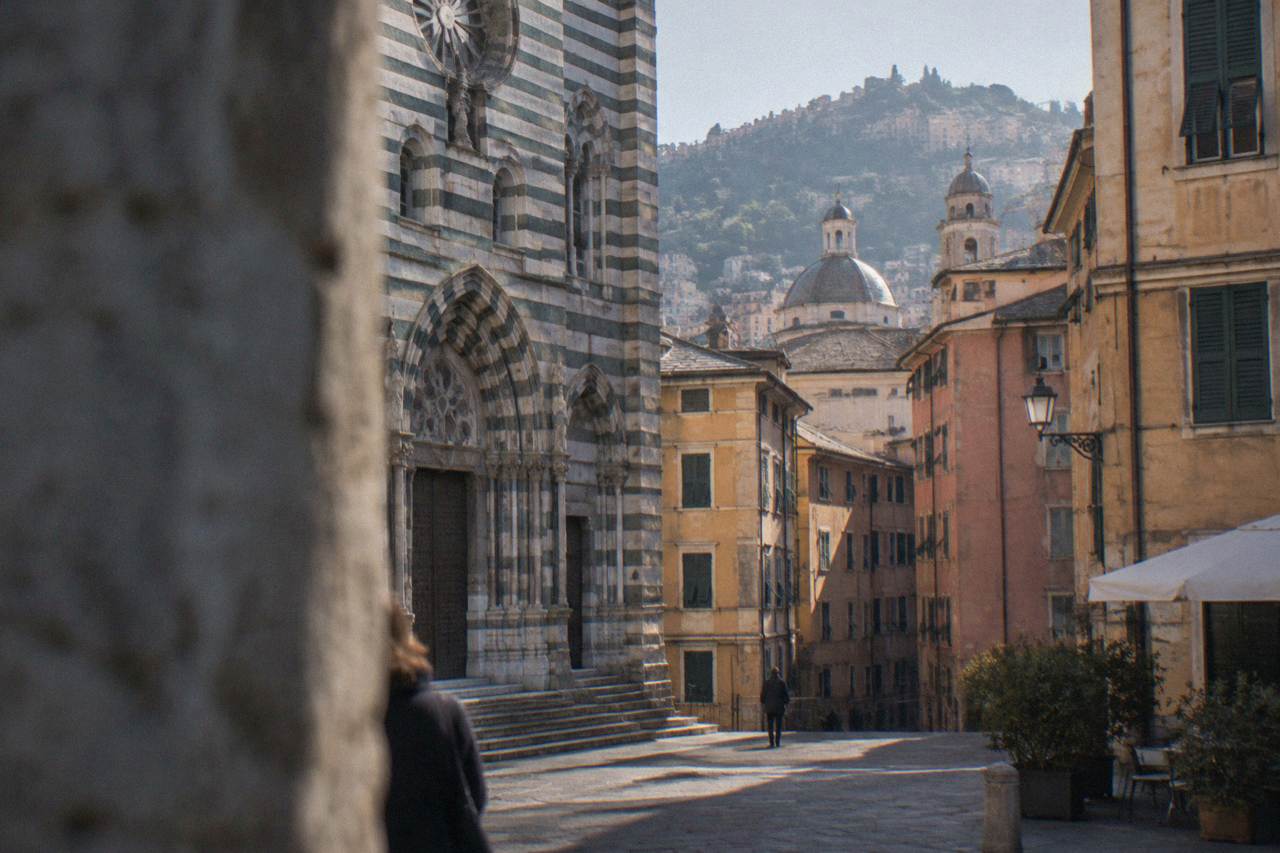
Genoa, the coastal city in Liguria on the Ligurian Sea, packs an unusual density of religious architecture into a historic centre that the city's own tourism site describes as one of the largest medieval historic centres in Europe, covering 113 hectares. Church towers and bell cotes rise over the caruggi, the narrow lanes of the old town, and the city's republican past, an aristocratic republic that lasted until 1797, paid for sacred buildings on a scale that still shapes the streetscape. This guide reports on the churches of Genoa and the former religious buildings that now serve as museums, with the hours, tickets and passes that can be checked against a figure rather than a guess.

What Are The Most Important Churches In Genoa?
The headline church of Genoa is the Cathedral of San Lorenzo, the city's cathedral, and around it stand the chapels and former convent buildings of the old town, several of which now operate as museums, including the Museo di Sant'Agostino, whose combined ticket with the Musei di Strada Nuova is set at 14 EUR full and 9 EUR reduced. A church visit here therefore splits into two parts: working sacred buildings, and museum spaces converted from religious ones.
The cathedral sits at the heart of the story. It gives its name to the surrounding quarter, it carries the city's patronal identity, and it holds the Museo del Tesoro di San Lorenzo, the treasury museum with published opening hours, on its site. For a fuller treatment of the building itself, the dedicated Genoa Cathedral guide covers the sight in depth.
Beyond the cathedral, the old town's religious legacy runs through buildings that no longer hold services. The Museo di Sant'Agostino, reached through the same combined ticket as the three Strada Nuova palaces, occupies a former religious complex, and the pattern repeats elsewhere in the city: convents, churches and cloisters absorbed into civic museum use. That is the honest frame for planning. Hours and ticket details for the museum side of the city's religious heritage are established, while individual working churches set their own schedules, which should be confirmed on the spot.
What Makes The Cathedral Of San Lorenzo The Anchor Of A Church Visit To Genoa?
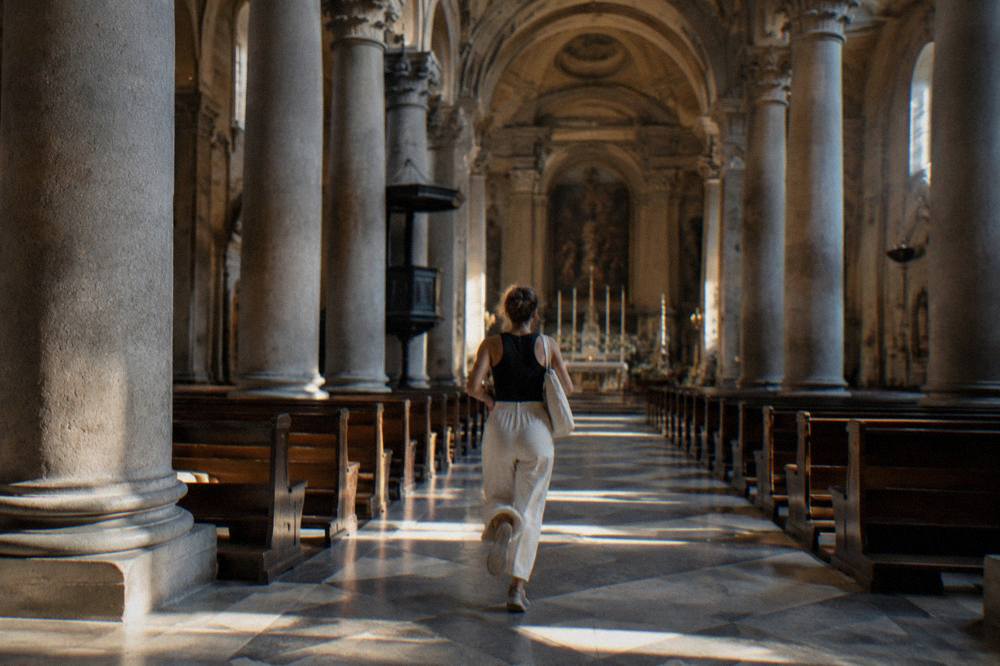
The Cathedral of San Lorenzo is Genoa's cathedral and the fixed point of any church itinerary, and the one part of the complex with fully published visitor hours is its Museo del Tesoro, which opens Monday to Saturday from 09:00 to 12:00 and from 15:00 to 18:00 and closes on Sunday. The cathedral itself stands in the heart of the medieval city, a short distance from Piazza De Ferrari, and its full sight profile sits on the dedicated cathedral page of this site.
The treasury museum's split-day schedule is the detail that most often catches planners out. It opens for a morning session, closes over the middle of the day, and reopens for an afternoon session, Monday to Saturday only. Anyone building a Sunday itinerary around the treasury will find it shut, so the practical move is to schedule the cathedral complex on a weekday or a Saturday and leave Sunday for the museums that do open daily, such as the Strada Nuova palaces under their winter timetable.
The cathedral's place in the city is not only devotional. It sits within the 113-hectare medieval centre, among the caruggi where chapels and oratories sit between houses, and it forms a natural pairing with nearby civic sights. The Genoa in one day itinerary places the cathedral quarter in a walkable route that also takes in Piazza De Ferrari and the old town lanes.
What Are The Museo Del Tesoro Opening Hours And How Do You Plan Around Them?
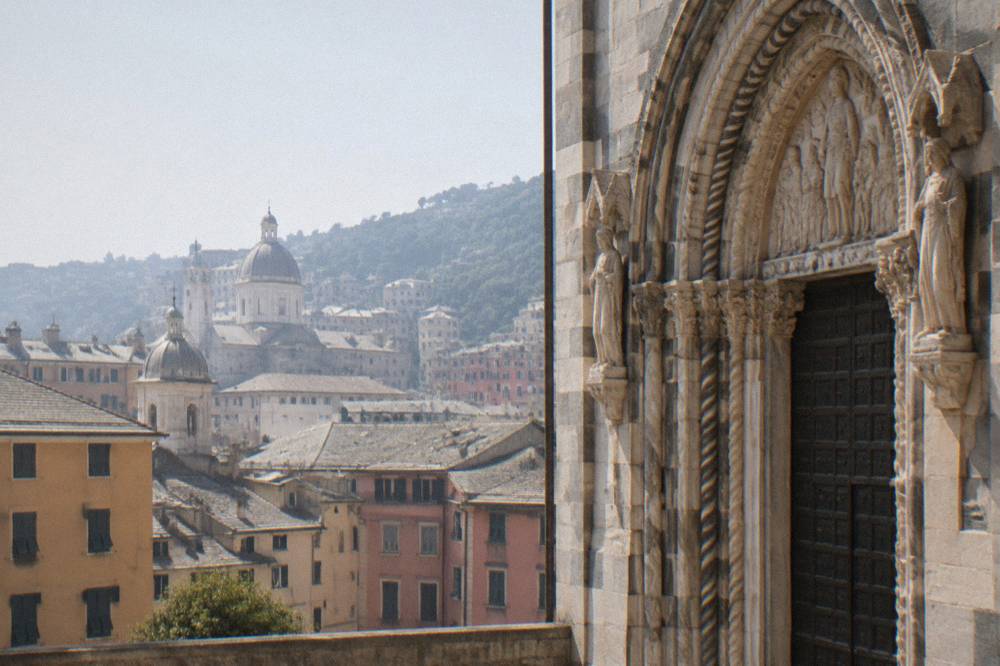
The Museo del Tesoro di San Lorenzo opens Monday to Saturday from 09:00 to 12:00 and from 15:00 to 18:00, and it is closed on Sunday, which gives a week of two-session days and one full closure day for planning. The treasury's ticket price should be checked at the entrance or on the cathedral's own information at the time of the visit.
The morning window is the longer-planning-friendly one for anyone combining the treasury with other sights, because the 09:00 start lines up with the 09:00 daily opening of the IAT Garibaldi tourist office on Via Garibaldi 12r, and with the museums that open at 10:00. The afternoon session, 15:00 to 18:00, pairs with a morning in the Strada Nuova museums, whose winter timetable runs daily from 10:00 to 18:30.
Two structural facts matter more than any individual schedule. First, Sunday is the treasury's closure day, so a weekend visitor should invert the plan: churches and the cathedral on Sunday, treasury and museums on Saturday. Second, the winter timetable for the Strada Nuova museums, in force from 28 September 2026 to 18 April 2027, opens them daily but on Mondays admits visitors to Palazzo Rosso only, so Monday is a Palazzo Rosso and treasury day, with the treasury open in both its sessions that day.
| Day | Museo Del Tesoro di San Lorenzo | Musei di Strada Nuova (winter timetable, 28 Sep 2026 to 18 Apr 2027) |
|---|---|---|
| Monday | 09:00 to 12:00, 15:00 to 18:00 | Open 10:00 to 18:30, Palazzo Rosso only |
| Tuesday | 09:00 to 12:00, 15:00 to 18:00 | Open 10:00 to 18:30 |
| Wednesday | 09:00 to 12:00, 15:00 to 18:00 | Open 10:00 to 18:30 |
| Thursday | 09:00 to 12:00, 15:00 to 18:00 | Open 10:00 to 18:30 |
| Friday | 09:00 to 12:00, 15:00 to 18:00 | Open 10:00 to 18:30 |
| Saturday | 09:00 to 12:00, 15:00 to 18:00 | Open 10:00 to 18:30 |
| Sunday | Closed | Open 10:00 to 18:30 |
Which Former Religious Buildings In Genoa Now Work As Museums?
The Museo di Sant'Agostino is the clearest case of a religious building converted to museum use in Genoa, and it is tied to the Musei di Strada Nuova by a combined ticket set at 14 EUR full and 9 EUR reduced, while the wider network of 28 city museums covered by the Genoa Museum Card includes further converted religious and civic buildings reachable on one 24 EUR or 45 EUR pass.
The combined ticket is the practical lever. It joins the three Strada Nuova palaces, Palazzo Rosso, Palazzo Bianco and Palazzo Doria-Tursi, with the Museo di Sant'Agostino in a single purchase, and it turns a church-and-museum day into one transaction. The Strada Nuova trio sits on the street whose UNESCO inscription, "Genoa: Le Strade Nuove and the system of the Palazzi dei Rolli", was made in 2006 and covers 42 palaces from the Rolli lists of 1576, 1588, 1599, 1614 and 1664.
Palazzo Doria-Tursi adds a direct sacred-and-secular crossover: it houses Paganini's violin "Il Cannone", built in Cremona in 1743 by Bartolomeo Giuseppe Guarneri, in its Paganini rooms. A church-focused visitor therefore gets a museum circuit, not just places of worship, and the circuit is documented hour by hour and euro by euro. The Genoa museums overview and the Via Garibaldi and Musei di Strada Nuova guide carry the fuller museum picture.
| Ticket | Price (2026 rates) | What it covers |
|---|---|---|
| Combined Musei di Strada Nuova + Museo di Sant'Agostino, full | 14 EUR | The three Strada Nuova palaces plus the Museo di Sant'Agostino |
| Combined Musei di Strada Nuova + Museo di Sant'Agostino, reduced | 9 EUR | Same circuit at the reduced rate |
| Genoa Museum Card, 24-hour | 24 EUR | 28 city museums, 19 municipal plus 9 others |
| Genoa Museum Card, 48-hour | 45 EUR | Same 28 museums over two days |
| Genoa Museum Card, annual | 60 EUR | 28 museums for a year, 50 EUR for residents, 25 EUR for students |
How Do Genoa's Churches Sit Inside The Old Town Caruggi?
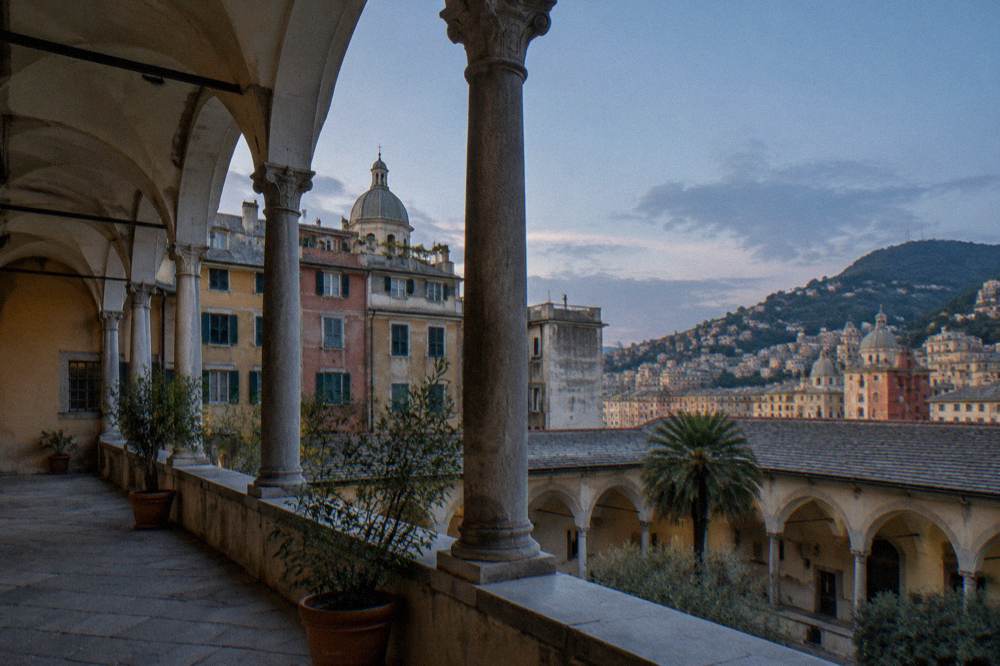
Genoa's churches are woven into the caruggi, the narrow lanes of a medieval centre that covers 113 hectares and is described by the city's tourism site as one of the largest medieval historic centres in Europe, which means church visiting in Genoa is a walking activity by default, with chapels, oratories and parish churches encountered between the houses rather than collected on a single monumental axis.
The layout rewards a route rather than a checklist. The cathedral quarter, Piazza De Ferrari and the lanes that run down toward the Porto Antico form one connected walk, and the Strada Nuova museums sit a short step away on the Renaissance street that gives the UNESCO inscription its name. An AMT ticket at 2.00 EUR, valid 110 minutes on the whole network, covers any bus or metro hop needed to reposition, and the city's 14 public lifts and two funiculars charge 1.20 EUR a ride, the Zecca-Righi funicular and the Castelletto Levante lift both running daily from 06:40 to 24:00.
The cathedral, the piazzas and the sea all connect on one walk. Book an audio tour here.
For the full old town context, the old town caruggi guide maps the lanes, and the Genoa walking tour options page collects guided and self-guided formats. A church walk and a caruggi walk are, in practice, the same walk.
The related audio-and-written-guide walking format suits this kind of itinerary because it moves at the reader's pace through a district where detours are the point. The listing's own page carries the current price and availability, and the inline option below goes straight to the operator's live listing for the walk that threads the cathedral quarter and the lanes.
What Do Church And Museum Visits Cost In Genoa Overall?
A church-and-museum day in Genoa can be built on a single 24 EUR Genoa Museum Card that opens 28 city museums for 24 hours, or a 45 EUR 48-hour version for a slower pace, while the combined Strada Nuova and Sant'Agostino ticket costs 14 EUR full and 9 EUR reduced, the treasury's price should be checked on the official site, and moving between sites costs 2.00 EUR per AMT ticket valid 110 minutes.
The card arithmetic depends on the day count. A one-day visitor who intends the Strada Nuova palaces, the Museo di Sant'Agostino and two or three further museums in the 28-museum network is already past the 24 EUR threshold on individual tickets. A two-day visitor spreads the same network over 45 EUR. The card's coverage is museums, not working churches, so a plan that leans on places of worship plus one museum cluster may do better on single tickets: the combined 14 EUR Strada Nuova and Sant'Agostino ticket plus the treasury at its posted rate. The full index of guides sits on Genoa Travel Guide.
Transport is a small, fixed line in the budget. The AMT ordinary ticket at 2.00 EUR covers 110 minutes across buses, metro, lifts and funiculars; the integrated AMT and Trenitalia version is 2.20 EUR; a carnet of 11 tickets is 20.00 EUR; and the 24-hour Met Daily at 10.00 EUR covers the full network. Entry terms for working churches are set locally and confirmed on arrival.
| Item | Price | Validity or note |
|---|---|---|
| AMT ordinary ticket | 2.00 EUR | 110 minutes, whole urban network |
| AMT + Trenitalia integrated | 2.20 EUR | 110 minutes, urban plus limited rail |
| AMT carnet | 20.00 EUR | 11 tickets of 110 minutes |
| Met Daily | 10.00 EUR | 24 hours, full AMT network |
| Lift or Sant'Anna funicular, single ride | 1.20 EUR | One ride |
| Combined Strada Nuova + Sant'Agostino, full | 14 EUR | Three palaces plus the museum |
| Genoa Museum Card 24-hour | 24 EUR | 28 museums, one day |
| Genoa Museum Card 48-hour | 45 EUR | 28 museums, two days |
How Does A Church Visit Fit The Rest Of A Genoa Trip?
A church-focused visit slots cleanly into the wider Genoa itinerary because the cathedral quarter, the Strada Nuova museums and the old town lanes form one contiguous walk, the Aquarium of Genoa opens 365 days a year with adult fixed-date tickets from 26.00 EUR, and the city's position on the coast puts Portofino and the Cinque Terre within day-trip range by boat or train, so sacred architecture and sea can share a week without backtracking.
The pairing logic is simple. The cathedral and treasury fill a half day, the Strada Nuova and Sant'Agostino ticket fills another, and the remainder of the time divides between the Porto Antico, the Aquarium and the coastline. The Genoa in two days and Genoa in three days itineraries sequence all of it, and the best time to visit Genoa page adds the climate frame, drawn from the official 1971-2000 normals for Genoa Sestri, which put October's rainfall at 171.3 mm, the year's highest monthly total in that record, against July's 24.2 mm.
Day trips extend the same theme along the coast. The Genoa to Portofino and Genoa to the Cinque Terre guides cover the mechanics, and the Golfo Paradiso Two Gulfs boat tour from the Porto Antico, reported at about 29 EUR full day, stops at Camogli, San Fruttuoso and Portofino, with the FAI abbey at San Fruttuoso charging 10 EUR full entry and open, in the January and February calendar, daily except non-holiday Mondays from 10:00 to 15:45.
What Should A Cruise Visitor Know About Genoa's Churches?
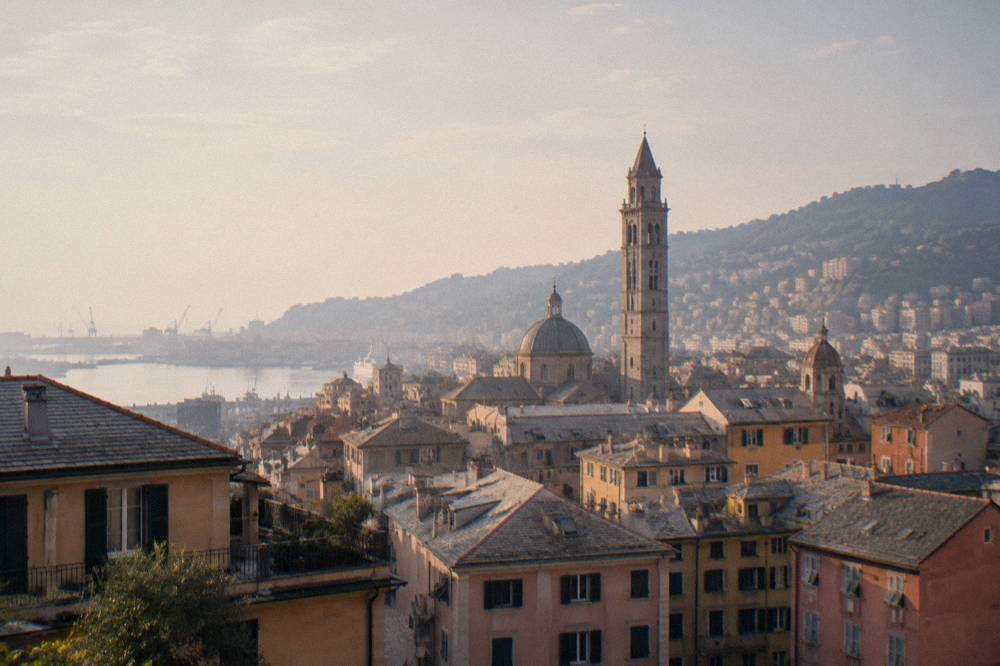
A cruise visitor with a day in Genoa can walk from the passenger terminals at Ponte dei Mille and Andrea Doria into a city whose cruise and ferry traffic ran at 2.4 million and 2.6 million passengers respectively in the latest port figures, and reach the cathedral quarter, the caruggi and the Strada Nuova museums on foot or with a 2.00 EUR AMT ticket valid 110 minutes, with the treasury closed Sunday and the winter Monday museum rule limiting access to Palazzo Rosso.
The timing constraints are the same as for any visitor, compressed. The treasury's two daily sessions, 09:00 to 12:00 and 15:00 to 18:00, bracket a midday window that suits the cathedral itself and the lanes, and the Strada Nuova museums' 10:00 to 18:30 winter hours allow a late finish. The Genoa cruise port day itinerary sequences the walk from the terminal, and the Genoa cruise port guide covers the terminals themselves: Ponte dei Mille and Andrea Doria for cruise calls, Calata Chiappella, Ponte Caracciolo and Ponte Colombo for ferries.
One caveat belongs to any port day in a church city. Working churches keep their own calendars around services, so the museum side, with its printed hours and ticket prices, is the part of a sacred-architecture day that can be locked in advance. The Genoa shore excursions overview collects guided formats that cover the cathedral quarter.
The Lanterna, Genoa's lighthouse, built in 1128 and rebuilt in 1543, standing 117 m above the sea and billed as the tallest lighthouse in the Mediterranean, makes a coastal counterpart to a morning of church architecture, and its entrance ticket is listed on the site's dedicated page. Its opening schedule is set by the operator, so the listing is the place to confirm the day's availability.
When Is The Best Season For A Church Trip To Genoa?
The official 1971-2000 climate normals for Genoa Sestri record mean daily highs of 27.7 C in August against 11.5 C in January, with October the high month for rainfall at 171.3 mm and July the low at 24.2 mm, so church visiting, which is largely indoor and walkable between close buildings, is season-proof in a way beach-dependent plans are not, and the shoulder months combine moderate temperatures with the museum winter timetable in force from 28 September 2026 to 18 April 2027.
The numbers behind that framing come from the Aeronautica Militare station record, and they matter for planning in two ways. Rain peaks in October, 171.3 mm across the month, with November at 108.8 mm and September at 136.4 mm, so autumn visitors should expect wet walks between churches even though the interiors are dry and open. Summer highs of 27.3 C in July and 27.7 C in August make the cool stone interiors a natural midday refuge, and January lows of 5.5 C mark the cold end of the record.
The events calendar adds a seasonal layer. The autumn 2026 Rolli Days ran from Friday 16 to Sunday 18 October under the theme "Abitare il cambiamento", opening palaces with free entry and booking required, and marking the twentieth anniversary of the 2006 UNESCO inscription. The Festival della Scienza ran from Thursday 22 October to Sunday 1 November 2026 with around 250 events. Neither is a church event, but both fill the same streets in the same weeks.
| Month | Mean high C | Mean low C | Rain mm |
|---|---|---|---|
| January | 11.5 | 5.5 | 101.8 |
| March | 14.6 | 8.2 | 81.7 |
| May | 20.5 | 14.2 | 72.4 |
| July | 27.3 | 20.9 | 24.2 |
| September | 24.4 | 17.9 | 136.4 |
| October | 20.0 | 13.8 | 171.3 |
What Practical Rules Apply Around Genoa's Churches?
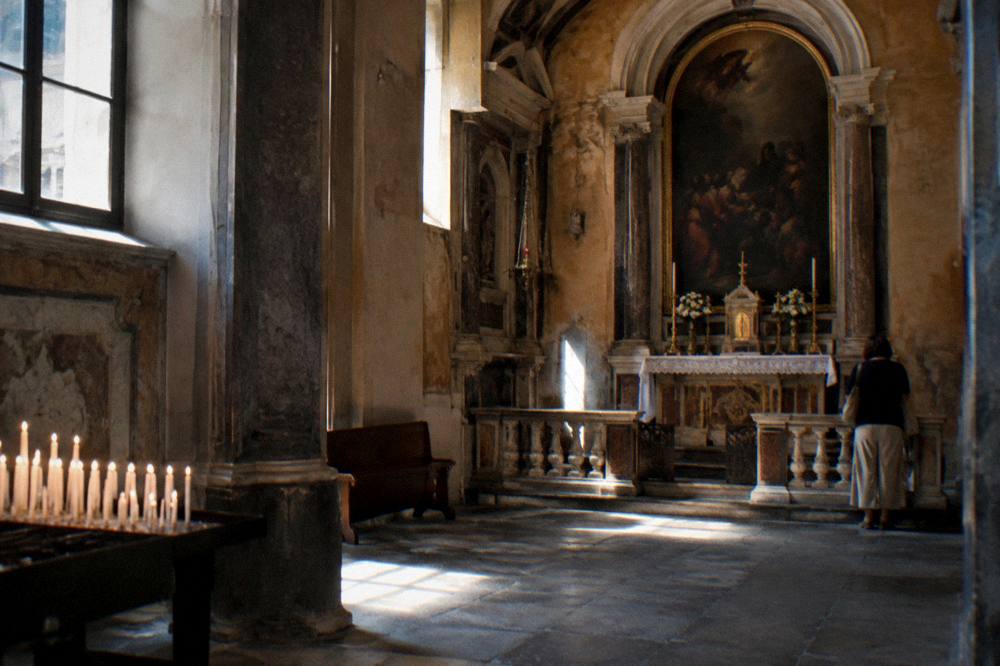
Genoa's practical frame for a church trip is fixed and inexpensive: an AMT ticket costs 2.00 EUR for 110 minutes, the Met Daily 24-hour ticket costs 10.00 EUR, the Zecca-Righi funicular and the Castelletto Levante lift run daily from 06:40 to 24:00 at 1.20 EUR a ride, and the tourist office at Via Garibaldi 12r opens daily 09:00 to 18:20, all of it easy to plan against without guesswork.
The tourist tax is the line item that surprises. The comune of Genoa's tariff sets 2.00 EUR at 1-star and residence level, 2.50 EUR at 2-star, 4.00 EUR for B&Bs, affittacamere and holiday apartments in the main extra-hotel category, and 2.00 EUR for hostels and campsites, per person per night, capped at the first 8 consecutive nights. It is collected by the accommodation, not the churches, but it belongs in any multi-day church-and-museum budget.
Getting advice on the ground is straightforward. The IAT Garibaldi office on Via Garibaldi 12r, a short walk from the Strada Nuova museums, opens daily 09:00 to 18:20 with reduced hours on 25 December and 1 January, and the IAT Porto Antico office at Ponte Spinola opens daily 10:00 to 17:00. The emergency number throughout Italy is 112. For arrival logistics, the how to get to Genoa and Genoa airport guides carry the detail, including the Volabus link from Genova Cristoforo Colombo airport, which requires the 10.00 EUR Met Daily ticket.
A boat afternoon on the coast is the counterweight to a morning of stone and vaults. The Portofino boat tour with free time to explore runs from Genoa, and the listing carries the operator's live schedule and price; the Portofino boat tour from Genoa guide explains the route options, including the Two Gulfs stops at Camogli, San Fruttuoso and Portofino.
How Do You Build A One-Day Genoa Churches Itinerary?
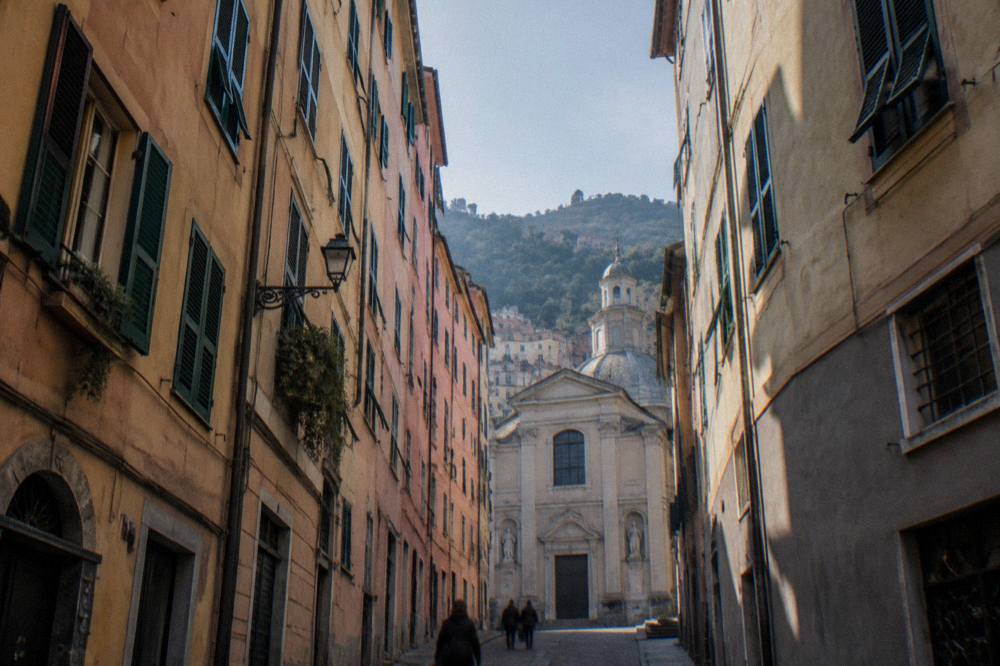
A one-day Genoa churches itinerary works best in this order: the Cathedral of San Lorenzo and its treasury in the 09:00 to 12:00 session, the caruggi lanes through the late morning, the Musei di Strada Nuova and the Museo di Sant'Agostino on the 14 EUR combined ticket from 10:00 to 18:30, and the evening on the Spianata Castelletto, reached by the Castelletto Levante lift at 1.20 EUR, with any repositioning hops on the 2.00 EUR AMT ticket valid 110 minutes.
The sequence respects the published hours rather than fighting them. The treasury's morning session ends at 12:00 and its afternoon session starts at 15:00, so the middle of the day belongs to the cathedral itself, the lanes, and lunch, with the what to eat in Genoa guide covering the city's pesto genovese, made with Basilico Genovese PDO basil, and its focaccia. The museums absorb the afternoon under their winter timetable, and Monday travellers should note that only Palazzo Rosso admits visitors that day.
Two variants adjust the frame. Sunday travellers invert it: churches and lanes only, since the treasury closes and the museums open normally. Two-day travellers split the sacred and the secular, and add the Aquarium of Genoa, open 365 days a year, with adult fixed-date tickets from 26.00 EUR and the combined Aquarium, Biosfera and Bigo ticket from 37.00 EUR, per the Aquarium's own ticket page. The Genoa Travel Guide site carries each of these as a dedicated page, and the Genoa itinerary collection sequences them by trip length.
Common Questions About Genoa Churches
Is the Cathedral of San Lorenzo open every day?
The cathedral is a working church in the heart of Genoa's medieval centre, and its own opening schedule is set locally and confirmed on site. The part of the complex with published visitor hours is the Museo del Tesoro di San Lorenzo, open Monday to Saturday from 09:00 to 12:00 and 15:00 to 18:00, closed on Sunday.
How much does it cost to visit Genoa's churches?
Entry terms for working churches are set locally and confirmed on arrival. The priced items around them are the combined Musei di Strada Nuova and Museo di Sant'Agostino ticket at 14 EUR full and 9 EUR reduced, and the Genoa Museum Card at 24 EUR for 24 hours and 45 EUR for 48 hours, covering 28 city museums.
Is the Museo Del Tesoro open on Sunday?
No. The Museo del Tesoro di San Lorenzo is closed on Sunday. It opens Monday to Saturday in two daily sessions, 09:00 to 12:00 and 15:00 to 18:00.
Can you see Genoa's churches and museums in one day?
Yes. The treasury's morning session, the cathedral and the caruggi lanes fill the morning, and the Strada Nuova museums plus the Museo di Sant'Agostino on the 14 EUR combined ticket run until 18:30 under the winter timetable in force from 28 September 2026 to 18 April 2027, with the Monday exception of Palazzo Rosso only.
Does the Genoa Museum Card include churches?
The card covers 28 city museums, 19 municipal plus 9 others, and it is a museum pass rather than a church pass. Converted religious buildings such as the Museo di Sant'Agostino fall inside museum networks, while working churches set their own entry terms.
What is the best time of year to visit Genoa for its churches?
Church visiting is largely indoor and short-walk based, so it is less exposed to weather than coastal plans. The official 1971-2000 normals for Genoa Sestri record October as the high month for rainfall at 171.3 mm and July as the low at 24.2 mm, with mean daily highs between 11.5 C in January and 27.7 C in August.