Pisa From Genoa: The Leaning Tower In Half A Day
Pisa sits about 139 km in a straight line from Piazza De Ferrari, far enough to feel like a proper excursion yet close enough that the tower, the cathedral and the baptistery can fill a half day before the train back to the Ligurian coast.
Short answer
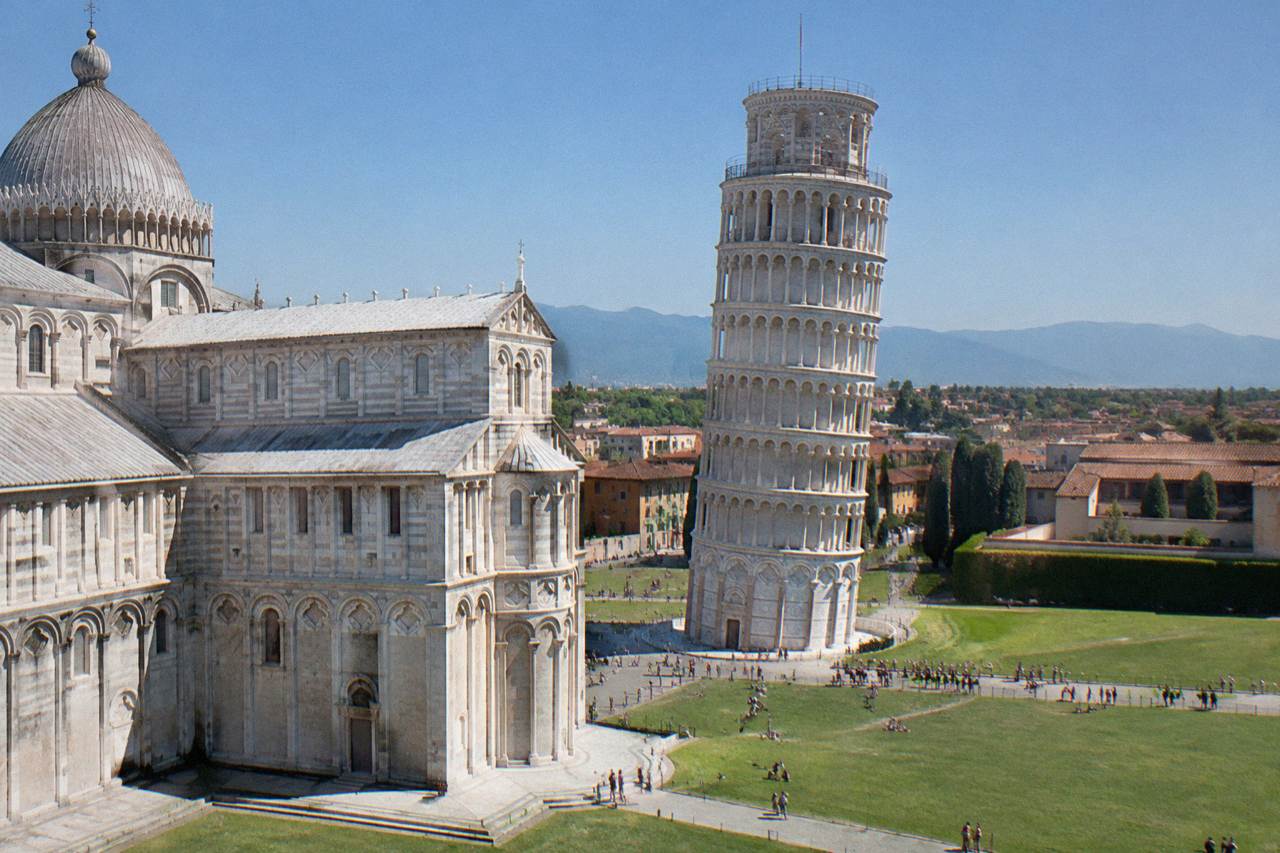
Pisa lies about 139 km in a straight line from Genoa's Piazza De Ferrari. Direct trains run from Genova Piazza Principe, and the Piazza dei Miracoli with the Leaning Tower is a short walk from Pisa Centrale. A half day covers the tower, the cathedral and the baptistery, with time for the riverside walk back to the station.
Genoa, the coastal city in Liguria on the Ligurian Sea, keeps its famous excursions close to hand: Portofino about 25 km away, the Cinque Terre about 67 km, Milan about 119 km. Pisa sits further out, about 139 km in a straight line from Piazza De Ferrari, and it answers a different itch. The Leaning Tower, the cathedral, the baptistery and the Camposanto stand together on the Piazza dei Miracoli, one of the recognized monumental squares in Italy, and the whole ensemble can be absorbed in a half day of focused sightseeing before a return train to the port city. This page sets out what to know about getting there, moving around, and fitting Pisa into a trip that is anchored in Genoa.
How Far Is Pisa From Genoa?
Pisa lies about 139 km in a straight line from Piazza De Ferrari in central Genoa, which places it further than Milan (about 119 km), Turin (about 123 km) and the Cinque Terre (about 67 km), but closer than Nice and Monaco (about 141 km). The figure is a straight-line distance, so the rail route between the two cities runs longer than the airborne measurement. No sensible planning should treat it as a suburban hop.
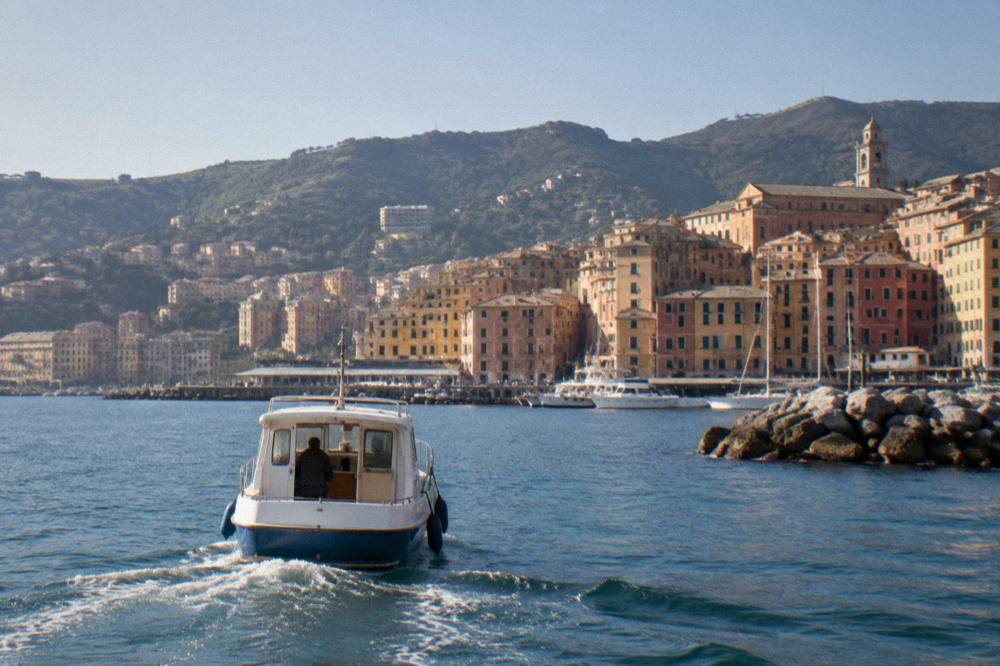
The distance matters because Genoa's day-trip geography splits into two belts. The near belt is the Ligurian coast itself: Boccadasse about 4 km, Nervi about 9 km, Camogli about 18 km, Portofino about 25 km, all reachable by boat, bus or short train hops. The far belt is the plain beyond the Apennines and the arc of Tuscany, where Pisa, Milan and Turin sit. A day trip to Pisa is a far-belt trip: it rewards an early start and a clear plan, and it leaves the coastal morning ritual of focaccia and the Spianata Castelletto view for another day.
For comparison, here is where Pisa sits in Genoa's measured day-trip set, using the straight-line distances computed from Piazza De Ferrari:
| Destination | Straight-line distance from Piazza De Ferrari |
|---|---|
| Boccadasse | about 4 km |
| Camogli | about 18 km |
| Portofino | about 25 km |
| Sestri Levante | about 40 km |
| Cinque Terre | about 67 km |
| La Spezia | about 79 km |
| Milan | about 119 km |
| Turin | about 123 km |
| Pisa | about 139 km |
| Nice and Monaco | about 141 km |
Distances alone do not decide the day. Milan and Turin have the fastest rail links from Genoa, with trains to Milan taking about 1h30 to 2h and trains to Turin about 1h36 to 2h18, fares to Milan from about 11 EUR, all reported by Trenitalia-sourced listings and worth confirming before booking. For Pisa's own journey time, check the live timetable rather than trusting a rounded estimate. What the distance table does show is that Pisa and Nice occupy the outer edge of what Genoa treats as a day trip, and both deserve a full day rather than a spare afternoon.
Which Station In Genoa Do You Leave From For Pisa?
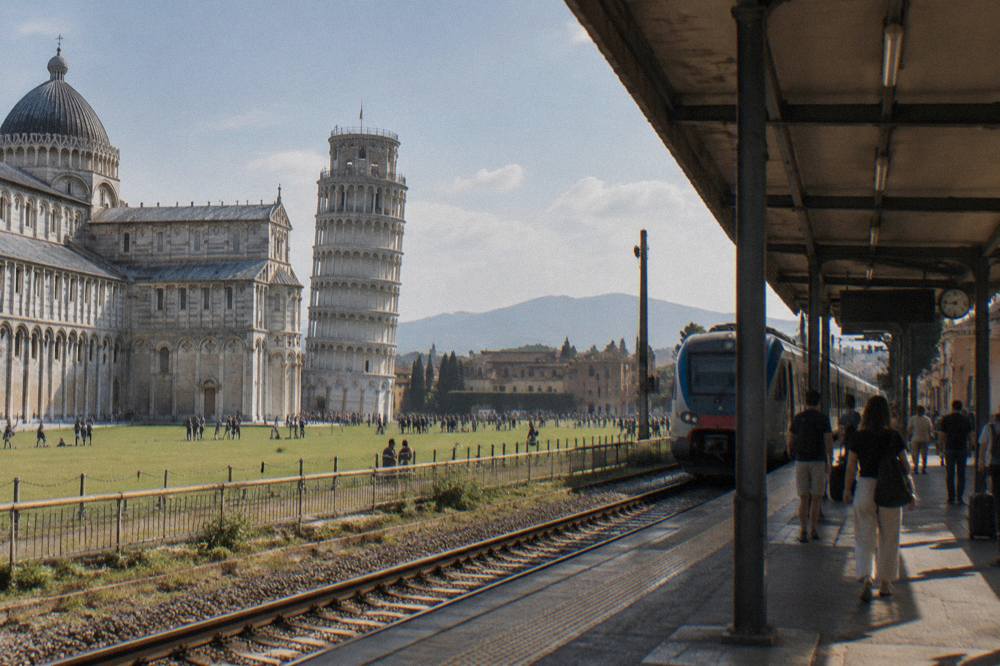
Trains towards Pisa leave from Genova Piazza Principe, the station on the western side of central Genoa, with some services also calling at Genova Brignole on the eastern side before heading south and east along the coast. Genova Piazza Principe sits a short walk from the Porto Antico and the Aquarium, which makes it the natural departure point for anyone staying in the historic centre. Confirm the departure station on the ticket, not on habit.
The two stations are not interchangeable. Genova Piazza Principe serves the west-facing main lines, including the airport link via Volabus, which takes about 30 minutes from Genova Cristoforo Colombo airport to Principe, De Ferrari and Brignole and requires the 10.00 EUR Met Daily ticket. Genova Brignole serves the eastern side, including the coastal line towards Nervi and the Tigullio towns. For a Pisa trip, Principe is the working assumption, but a train that starts at Brignole can also be the more convenient boarding point for a visitor staying near Piazza De Ferrari's eastern edge.
Within Genoa itself, the city transport fares are simple. An AMT ordinary ticket costs 2.00 EUR and is valid 110 minutes on the whole Città Metropolitana network. The integrated AMT plus Trenitalia version is 2.20 EUR, a 5-hour ticket is 5.00 EUR, a carnet of 11 journeys is 20.00 EUR, and the Met Daily 24-hour ticket, which covers Volabus, the line 782 to Portofino and the Genoa-Casella railway, is 10.00 EUR. Lifts and the Sant'Anna funicular cost 1.20 EUR a ride. The metro runs 7 km with 8 stations from Brin to Brignole; it does not yet reach Canepari or Martinez.
| AMT Genova ticket | Price | What it covers |
|---|---|---|
| Ordinary single | 2.00 EUR | 110 minutes, whole urban network |
| AMT + Trenitalia | 2.20 EUR | 110 minutes including limited Trenitalia segments |
| 5-hour ticket | 5.00 EUR | Five hours on the urban network |
| Carnet 11 tickets | 20.00 EUR | Eleven 110-minute journeys |
| Met Daily 24h | 10.00 EUR | Full AMT network incl. Volabus and line 782 |
| Lift or Sant'Anna funicular | 1.20 EUR | One ride |
Arriving back in Genoa in the evening has its own small pleasures, and the station area connects quickly to the rest of a Genoa stay. If the trip is part of a first visit, the one-day itinerary at Genoa in one day sequences the old town, the Strade Nuove museums and the Porto Antico into a workable order, and the broader list lives at things to do in Genoa.
Before settling on a long rail day, it is worth weighing the coastal alternative, where the tours run from the city itself:
What Do You Actually See In Pisa In Half A Day?
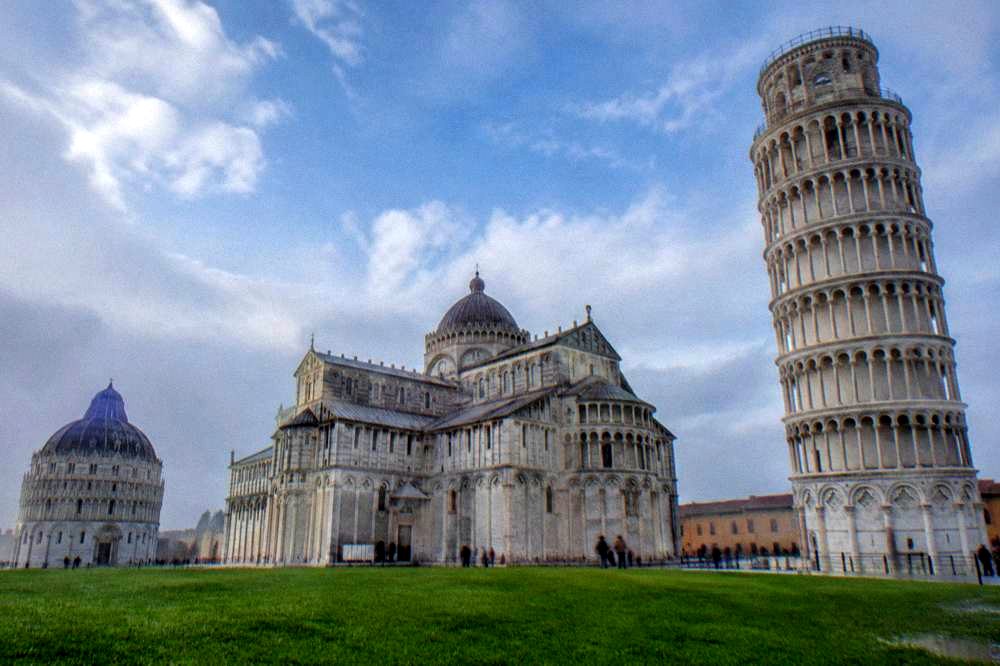
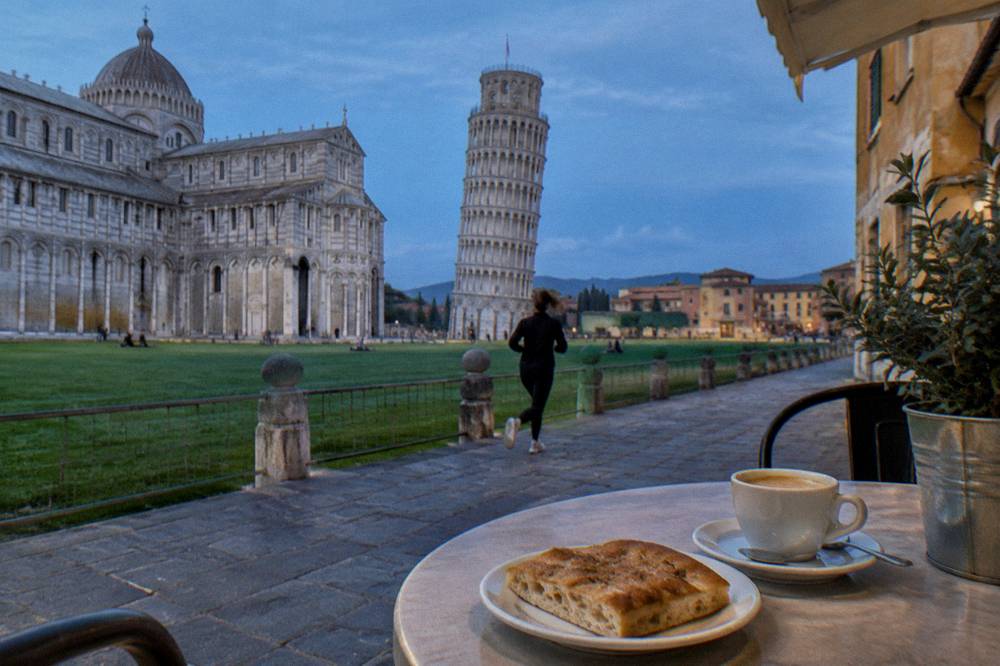
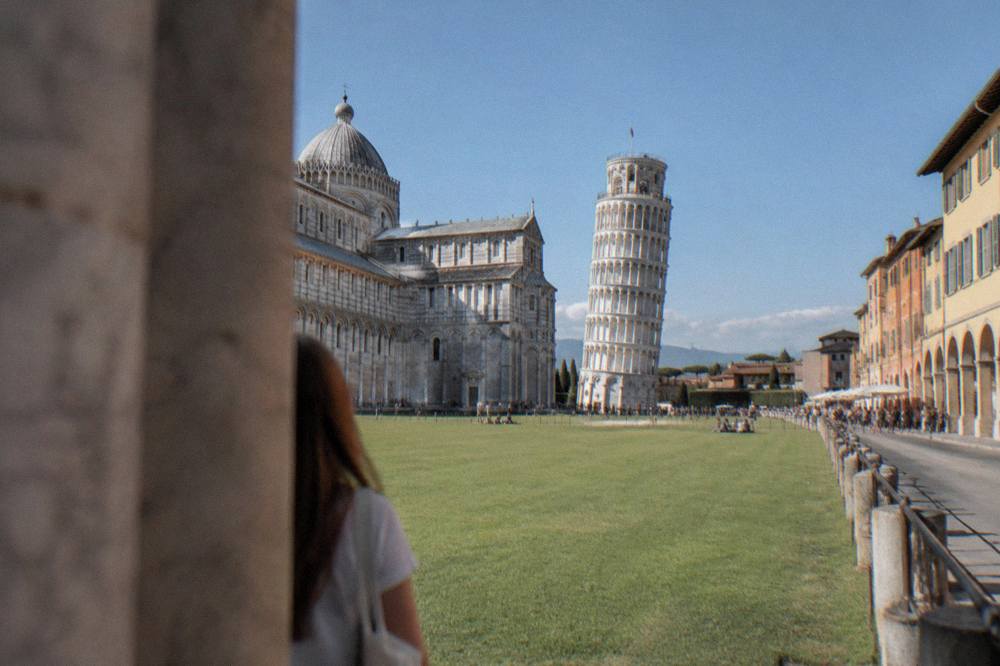
The core of a short visit is the Piazza dei Miracoli, the walled monumental square that holds the cathedral, the baptistery, the Camposanto and the Leaning Tower, all within a few minutes' walk of one another, with the walk from Pisa Centrale station to the square passing through the old town along the shopping street. Half a day is enough for the square, the interior of the cathedral and the tower itself, with a riverside stroll along the Arno before the return train.
Prefer a smooth arrival without the train timetable? Book a private airport transfer here.
The constraint on this page is honesty: the Genoa sources cover the journey and Genoa's own sights in depth, and Pisa's monument details, tower climb prices and combined-ticket options belong to Pisa's own institutional pages. Check those directly before travelling, because tower visits run on timed entry and the allocation moves with the season. What can be said plainly is the shape of the visit. The four monuments share one square, the tower leans beside the cathedral's west front, and the whole ensemble reads as a single planned composition rather than four separate stops, which is why a compact half day works.
A practical rhythm for the day looks like this:
| Time | Activity |
|---|---|
| Morning | Direct train from Genova Piazza Principe towards Pisa |
| Late morning | Walk from Pisa Centrale through the old town to the Piazza dei Miracoli |
| Midday | Cathedral interior, then the baptistery and the Camposanto |
| Afternoon | Leaning Tower timed slot, then the Arno riverside walk |
| Late afternoon | Return train to Genoa, dinner in the caruggi or the Porto Antico |
The contrast with Genoa's own scale is part of the fun. Genoa's old town covers 113 hectares and is described by the city's tourism authority as one of the largest medieval historic centres in Europe, a dense lattice of caruggi where a half day disappears. Pisa's monumental core is the opposite: concentrated, monumental and open to the sky. Travelers who enjoy both densities tend to plan Pisa as the single-focus day and leave Genoa's maze for the remaining days, following something like the sequence in Genoa cruise port day even when arriving by rail rather than ship.
Can You Combine Pisa With Another Stop On The Way?
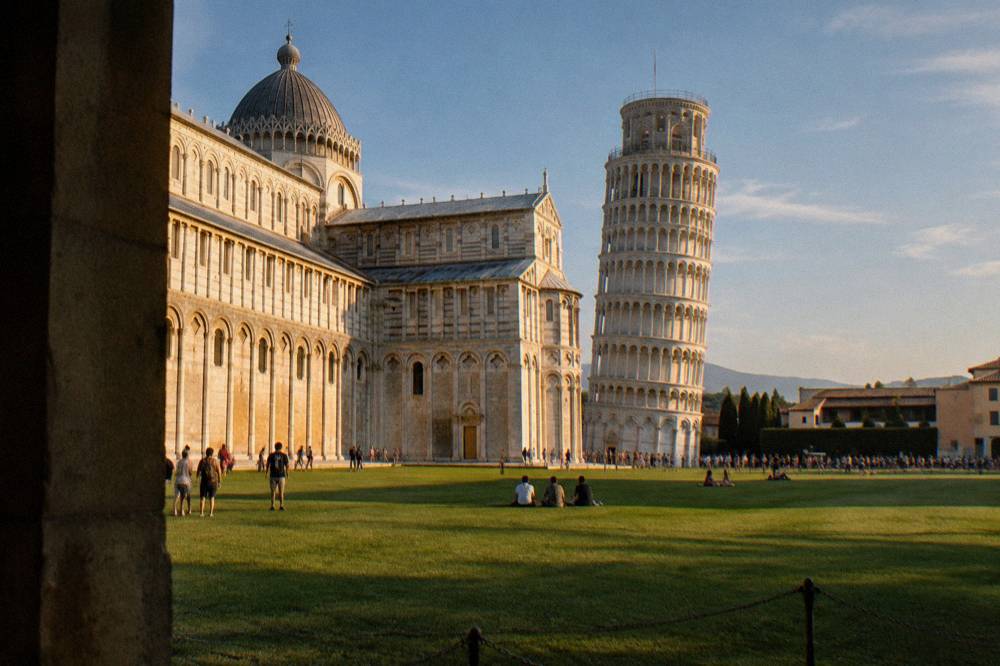
Combining Pisa with another stop is possible but tight, because the Pisa trip already consumes the better part of a day from Genoa; the natural pairings are the coastal line towns such as La Spezia (about 79 km from Genoa) or the Cinque Terre villages (about 67 km) on the rail route south-east, though adding either turns the day into a two-stop marathon. A cleaner plan gives Pisa its own day and books the coast separately.
The geography decides this. Trains from Genoa towards Pisa and trains towards La Spezia both use the coastal corridor out of the city, and La Spezia is the gateway station for the Cinque Terre. A determined traveler can break the journey at one of the seaside towns and still reach Pisa by early afternoon, but the Piazza dei Miracoli deserves unhurried time and the return leg lands in Genoa late. The reverse also holds: the Cinque Terre alone justifies a full day, with the Treno Card at 22.00 to 35.00 EUR for one adult day depending on the date band, two days at 36.50 to 61.00 EUR and three days at 49.00 to 81.00 EUR, low-season rates applying from 2 November 2026 to 12 March 2027, and the Trekking Card at 10 EUR a day standard and 15 EUR on peak days.
For the coast itself, the practical guides are Cinque Terre from Genoa, La Spezia and Portofino, and the question of trading inland Tuscany for the Riviera altogether is argued in is Genoa worth a day trip from Milan, which reverses the lens for visitors based in Lombardy.
| Combined itinerary | Straight-line distance from Genoa | Realistic scope |
|---|---|---|
| Pisa only | about 139 km | Half day on site, full day door to door |
| Pisa plus La Spezia | 139 km and 79 km | Long day, two stations, little slack |
| Cinque Terre only | about 67 km | Full day, hiking and villages |
| Milan only | about 119 km | Full day, about 1h30 to 2h by train |
| Turin only | about 123 km | Full day, about 1h36 to 2h18 by train |
Train times and fares to Milan and Turin in the table above are reported figures from Trenitalia-sourced listings and should be confirmed at booking; the Pisa journey time is deliberately left to the live timetable for the same reason.
How Much Should You Budget For The Day?
The transport side of the budget is fully priced and small: 2.00 EUR for an AMT ticket covering 110 minutes to reach Genova Piazza Principe from anywhere in the city, and the intercity rail fare to Pisa on top, which is dynamic and must be read from the operator's own booking page. Inside Pisa, monument entry prices sit on the Pisa institutions' own pages, so budget for those after checking, and keep a margin for food beyond the packed focaccia.
Genoa's outbound costs are the friendly part of the ledger. The whole urban network costs 2.00 EUR per 110-minute journey, and if the Pisa day follows a museum-heavy day in Genoa, the earlier spending is equally predictable: the Genoa Museum Card costs 24 EUR for 24 hours or 45 EUR for 48 hours at the 2026 rates and covers 28 city museums, 19 municipal plus 9 others. The Aquarium of Genoa, open 365 days a year, sells fixed-date adult tickets from 26.00 EUR, reduced tickets from 20.00 EUR, children 4 to 12 from 16.00 EUR and under-4s free, with dynamic pricing, and the combined Aquarium, Biosfera and Bigo ticket starts from 37.00 EUR for an adult. Other pages covering the same trip are gathered on Genoa Travel Guide.
For anyone building a multi-day Ligurian base with occasional inland excursions, the budgeting guide at Genoa on a budget collects the free and low-cost angles, and the shore-excursion overview at Genoa shore excursions lists the guided versions of the coastal runs.
| Cost item | Figure | Note |
|---|---|---|
| AMT ticket to Principe | 2.00 EUR | 110 minutes, whole network |
| Genoa Museum Card 24h | 24 EUR | 28 city museums |
| Genoa Museum Card 48h | 45 EUR | 28 city museums |
| Aquarium adult entry | from 26.00 EUR | Dynamic, open 365 days |
| Aquarium + Biosfera + Bigo | from 37.00 EUR adult | Combined ticket |
| Cinque Terre Treno Card 1 day | 22.00 to 35.00 EUR | Adult, by date band |
| Genoa tourist tax, 1-star hotel | 2.00 EUR per person per night | Max 8 consecutive nights |
When Is The Best Time Of Year For A Pisa Day Trip From Genoa?
The official 1971-2000 climate normals for Genoa Sestri show why the shoulder months suit a day that mixes a train ride with open-air monuments: July and August average mean daily highs of 27.3 C and 27.7 C, while April, May and September sit at 16.8 C, 20.5 C and 24.4 C, and October carries the heaviest rainfall of the year at 171.3 mm. The rain numbers, not the temperature numbers, are what actually shape the calendar.
Rain is the quiet variable on the Ligurian coast. The normals record 136.4 mm in September, 171.3 mm in October and 108.8 mm in November, against 24.2 mm in July and 58.2 mm in June. A wet coast in October does not guarantee a wet Pisa, but the two share a latitude and an autumn regime, and a day built around an open square has no roof. Visitors who want a rain plan can hold Genoa in the rain in reserve for theGenoa half of the trip, since the museums run regardless.
| Month | Mean daily high C | Mean daily low C | Rain mm |
|---|---|---|---|
| Jan | 11.5 | 5.5 | 101.8 |
| Feb | 12.2 | 6.0 | 74.0 |
| Mar | 14.6 | 8.2 | 81.7 |
| Apr | 16.8 | 10.5 | 88.0 |
| May | 20.5 | 14.2 | 72.4 |
| Jun | 23.9 | 17.6 | 58.2 |
| Jul | 27.3 | 20.9 | 24.2 |
| Aug | 27.7 | 21.0 | 69.3 |
| Sep | 24.4 | 17.9 | 136.4 |
| Oct | 20.0 | 13.8 | 171.3 |
| Nov | 15.1 | 9.2 | 108.8 |
| Dec | 12.5 | 6.5 | 93.1 |
One Genoa-specific calendar note belongs here even though it concerns the home city rather than Pisa: the Festival della Scienza runs 22 October to 1 November 2026 with roughly 250 events, and the Salone Nautico ran 1 to 6 October 2026 with its 67th edition set for 30 September to 5 October 2027. October in Genoa is therefore a month of competing temptations, and a Pisa day carved out of it competes with both.
Should You Take A Guided Tour Or Travel To Pisa Independently?
Independent travel is the natural shape for a Pisa day trip from Genoa, because the journey is a single train ride and the Piazza dei Miracoli explains itself from the lawn, while guided tours from Genoa earn their keep on the coastal and maritime runs where the boat, the timing and the local knowledge are the product. Pisa's own tower slots, by contrast, are booked on Pisa's systems either way.
The site's own roster reflects that split. The escorted products that run from Genoa concentrate on the sea: half-day and full-day boats to Portofino, San Fruttuoso and Camogli, whale watching in the Pelagos Sanctuary, snorkeling close to the city centre, and walking formats that range from a two-hour historical centre walk to a private custom tour with a local guide scaled from two to eight hours. None of them goes to Pisa, which is itself a signal: the rail day is simple enough to self-manage, and the water days are the ones where an operator adds real structure.
For the coastal alternatives, the half-day boat to Portofino is the closest rival to a Pisa day in terms of effort, since it departs from Genoa rather than requiring a station sprint, and readers weighing it can check availability through Check availability alongside the boat-day guides at Portofino, Santa Margherita Ligure and Camogli.
The deciding factors, honestly weighed:
| Factor | Independent rail day | Guided coastal tour |
|---|---|---|
| Destination | Pisa, one monument square | Portofino, San Fruttuoso, Camogli by sea |
| Booking complexity | Train ticket plus timed tower slot | One operator listing |
| Weather exposure | Rain affects the square | Sea state affects the crossing |
| Time in transit | Longest of the day-trip set | Departure from Genoa itself |
| Fits a short stay | Better as a dedicated full day | Half-day formats exist |
How Does Pisa Compare With The Other Big Day Trips From Genoa?
Pisa is the monuments-and-Tuscany option in a day-trip set otherwise dominated by the coast and by two northern cities: Milan (about 119 km) and Turin (about 123 km) are city days with faster trains, the Cinque Terre (about 67 km) and Portovenere (about 82 km) are sea-and-trail days, and Pisa is the one that trades water for marble, leaning architecture and a single unforgettable silhouette. The choice is really about what the rest of the week already contains.
A week anchored in Genoa usually mixes three registers: the city's own UNESCO-listed Strade Nuove and Palazzi dei Rolli, inscribed in 2006 with 42 palaces on the Rolli lists of 1576, 1588, 1599, 1614 and 1664; the coastal belt from Recco and Rapallo out to Sestri Levante and Portovenere; and one or two inland runs. Pisa competes with Milan and Turin for those inland slots. Milan wins on rail speed and shopping scale, Turin on museums and espresso-salon culture, Pisa on instant recognizability and compactness: nowhere else in the set delivers its entire headline sight within a five-minute radius.
The western Riviera belt, Varazze, Noli, Savona and Finale Ligure, sits closer than everything above and makes an easier half day than Pisa if the weather turns or the legs tire. Genoa's aquarium-sized anchors, the Bigo lift at 6 EUR adult and the Musei di Strada Nuova open daily 10:00 to 18:30 under the winter timetable with only Palazzo Rosso visitable on Mondays, absorb the days when the rails feel like too much.
What Does A Realistic Pisa Day Look Like Hour By Hour?
A realistic day leaves Genova Piazza Principe in the morning after a 2.00 EUR AMT ride from anywhere in the city, arrives in Pisa with the late-morning light on the square, gives the cathedral, baptistery and Camposanto the midday hours, reserves an afternoon timed slot for the Leaning Tower, walks the Arno side as the shadows lengthen, and returns to Genoa in time for dinner near the Porto Antico, with the whole rail cost reading from the operator's live fare page.
The discipline is in the edges. The Genoa half starts with the 110-minute AMT ticket, which is generous enough to cover a detour for coffee without a second fare, and ends back at Principe, from which the Porto Antico, the Aquarium and the caruggi are all within an easy evening walk. The Pisa half is a triangle: station, square, river, station. Travelers who prefer the plan pre-assembled can compare the escorted formats below with the independent rail day, since the roster's boats and walks all start from Genoa and none requires a station dash.
Common Questions About A Pisa Day Trip From Genoa
How far is Pisa from Genoa?
Pisa lies about 139 km in a straight line from Piazza De Ferrari in Genoa, further than Milan (about 119 km) and Turin (about 123 km) and slightly closer than Nice and Monaco (about 141 km). The rail distance is longer than the straight-line figure.
Can you do a Pisa day trip from Genoa?
Yes. Trains towards Pisa run from Genova Piazza Principe, with some services calling at Genova Brignole, and the Piazza dei Miracoli's four monuments sit close enough together for a focused half day on site. Check the live timetable and the tower's timed-entry system before committing to a date.
Which Genoa station serves trains to Pisa?
Genova Piazza Principe is the main departure station, reachable with a 2.00 EUR AMT ticket valid 110 minutes on the whole urban network. Some services also call at Genova Brignole on the eastern side of the centre.
Is Pisa or the Cinque Terre the better day trip from Genoa?
They answer different questions. Pisa is a monuments day around one famous square; the Cinque Terre, about 67 km away, is a sea-and-trails day covered by the Treno Card at 22.00 to 35.00 EUR for one adult day by date band. A coastal boat tour from Genoa, such as the half-day Portofino run, is a third option that needs no rail journey at all.
What does the Pisa day cost?
The 2.00 EUR AMT ticket covers the ride to the station, and the rail fare is dynamic, so it must be read from the operator's booking page. Pisa's monument and tower entry prices sit on the Pisa institutions' own pages, so check those before budgeting the full day.
When is the best time of year for the trip?
The official 1971-2000 normals for Genoa Sestri put October rainfall at 171.3 mm and July's mean daily high at 27.3 C, so the shoulder months balance temperature and rain for a day spent mostly outdoors on an open square.