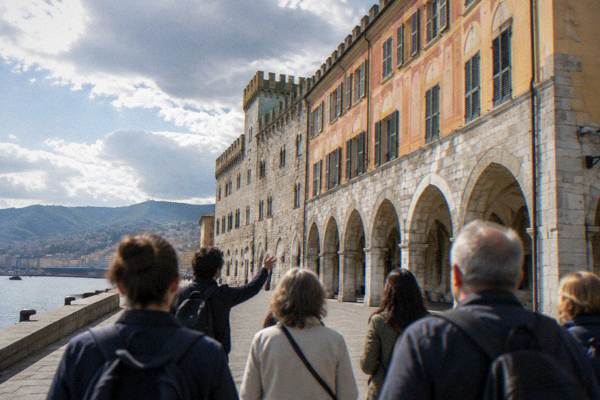
What Language Is Spoken In Genoa?
Italian is the language of Genoa, but the city also has its own Ligurian dialect, zeneise, heard on street signs and in the old town. Here is what to expect on menus, in museums and at the port.
Genoa, the coastal city in Liguria on the Ligurian Sea, is Italian-speaking territory in every official sense: school, government, transport announcements and museum labels all run in Italian. Yet the city has a second linguistic layer, the Ligurian dialect known as zeneise, which surfaces in place names, food vocabulary and the dialect plaques mounted on buildings through the old town. This page explains what you will actually hear and read, how much English you can rely on, and which handful of local words carry real meaning once you are inside the caruggi.
What Language Is Spoken In Genoa?
The language spoken in Genoa is Italian, the official language of Italy, used in every shop, restaurant, museum and transport setting in the city. Alongside it survives Ligurian, the regional language whose Genoese variety is called zeneise, which appears on commemorative plaques and in local food words but is not what you need in order to communicate. Standard Italian serves every practical purpose from the airport to the Aquarium.
Genoa belongs to the Italian-speaking world without qualification. The comune of Genova had 566,247 residents at 1 January 2026, with 820,691 in the metropolitan city, and the public language across all of it is Italian. Tickets for the Aquarium of Genoa, the signs in the metro stations from Brin to Brignole, the announcements on the AMT bus network and the labels in the Musei di Strada Nuova are all in Italian first, with English translations at the major sights.
The second layer is regional rather than practical. Ligurian is recognised in Italy as a historical language rather than a mere accent, and its Genoese variety, zeneise, was for a long stretch of the city's past a commercial language in its own right, used by the merchant network of the Republic of Genoa, which lasted until 1797. You will meet it mostly in written fragments: dialect plaques, often humorous or moralising, fixed to buildings in the old town, and the Genoese names of dishes and streets.
For a traveller, none of this changes the practical answer. Learn or carry a few Italian phrases and you are equipped for Genoa. The dialect is a reward for curiosity, not a barrier to communication, and the guide to the city's essentials works in exactly the same way: Italian signage, English available at the main attractions.
Is The Genoese Dialect Still Heard In The City?
Yes, the Genoese dialect, zeneise, is still heard in Genoa, mainly in informal speech among residents and in fixed written forms such as the dialect plaques of the old town, the Genoese names of traditional dishes and the wording of local songs and theatre. It sits beside Italian rather than replacing it, and no visitor needs to speak it, but it explains spellings and food words that otherwise look like errors.
Zeneise is the variety of Ligurian associated with the city, and its written presence is the part a visitor meets. The old town, described by the city's tourism body as one of the largest medieval historic centres in Europe at 113 hectares, carries dialect plaques on its buildings, and these are written in Genoese spelling, not standard Italian. The same spellings explain local food vocabulary: the chickpea flatbread farinata, the herb sauce pesto genovese, and the names of dishes such as pansoti all belong to the Ligurian culinary vocabulary that this site's food guide covers in detail.
The spoken reality is harder to quantify. What is documented is the cultural infrastructure: dialect survives in local literature, in Genoese song, and in the traghetti and food markets where trade has run for centuries. The practical effect for a visitor is small but real. A menu may offer a dish under its Genoese name rather than the Italian one, and a street sign or plaque may use a spelling with x or z where standard Italian would not.
Understanding a single principle helps: Genoese is not sloppy Italian. It is a separate Romance language with its own phonology, and the city treats it as heritage. Genoa Travel Guide treats it the same way, reporting what the city's own institutions say about the dialect rather than rounding it off as accent.
| Italian | Genoese (zeneise) | English |
|---|---|---|
| Genova | Zena | Genoa |
| mangiare | mangiâ | to eat |
| casa | câ | house |
| strada | stradda | street |
| bello | bello | beautiful |
| grazie | graçie | thank you |
Can You Get By With English In Genoa?
English works at Genoa's major attractions, transport hubs and ticket counters: the Aquarium of Genoa publishes its ticket page in English, the tourist offices serve international visitors, and the airport and cruise terminals operate in English as a matter of course. In smaller shops, back-street bakeries and neighbourhood parts of the old town, English coverage thins out, and a handful of Italian phrases carries you the rest of the way.
The pattern is the common one for a large Italian city that is not primarily a resort. At the visitor-facing layer, English is routine. The Aquarium's own site carries a full English edition with its ticket options, from the fixed-date adult ticket at 26.00 EUR up to the combined Aquarium, Biosfera and Bigo ticket from 37.00 EUR. The IAT Garibaldi tourist office at Via Garibaldi 12r, open daily 09:00 to 18:20, and the IAT Porto Antico at Ponte Spinola, daily 10:00 to 17:00, exist precisely to handle questions from abroad. Train stations Genova Piazza Principe and Genova Brignole display departures in a format any traveller can read, and the airport's Volabus connection to the centre in about 30 minutes is announced in English as well as Italian. The full index of guides sits on Genoa Travel Guide.
Deeper in, Italian takes over. A focaccia counter in a side lane, a workshop in the caruggi or a bar away from the centre will run in Italian and in Genoese inflection, and nobody expects otherwise. The answer is not fluency. Greetings, numbers and politeness do the work, and pointing at what you want has a long and respectable history in Italian commerce.
For structure rather than language, a guided walk solves both problems at once: the route through the historical centre comes with a guide who translates the city as you go. The guided walking tour of the historical center is the site's featured pick for exactly this, and you can Check availability through the operator's live listing.
For structure rather than language, a walk solves both problems at once, book a self-guided audio tour here.
Why Do Signs Say Genova And Not Genoa?
The signs say Genova because that is the city's Italian name, and Genoa is the English exonym for the same place: one city, two names in two languages. Rail stations use Genova Piazza Principe and Genova Brignole, the airport is Genova Cristoforo Colombo, and Italian signage follows the Italian form, while English publications including this site use Genoa in prose and Genova inside proper names.
This is ordinary exonym practice, the same reason English speakers say Rome and not Roma. The complications come at the boundaries, and a short discipline keeps it clean. Official names keep their Italian form even in English sentences: the comune of Genova, the AMT Genova transport authority, the Genova Museum Card. Everything else in English prose is Genoa. The full explanation of the two names sits on its own page, and the short answer is that nothing is different between them except language.
Zeneise adds a third layer. In the Genoese dialect the city is Zena, and that form appears in dialect writing and in the city's own self-descriptions in dialect contexts. So a single building can carry three names for one place depending on who is speaking and in what language, which is unusually tidy for a city that is otherwise vertically stacked between sea and hills.
For pronunciation, English speakers generally say JEN-oh-ah, while Italian is JEH-no-vah. The pronunciation guide breaks the sounds down if you want to arrive saying it the local way, and the overview of where the city actually is covers the geography if the map is the confusing part.
Where Does The Dialect Show Up On A Visit?
The Genoese dialect shows up in Genoa on dialect plaques in the old town, in the Genoese names of traditional dishes on menus, in the wording of local festivals and songs, and in the distinctive Genoese pronunciation of Italian itself. A visitor reads Italian for everything official and meets the dialect in the texture of the city: walls, food and voices rather than tickets and timetables.
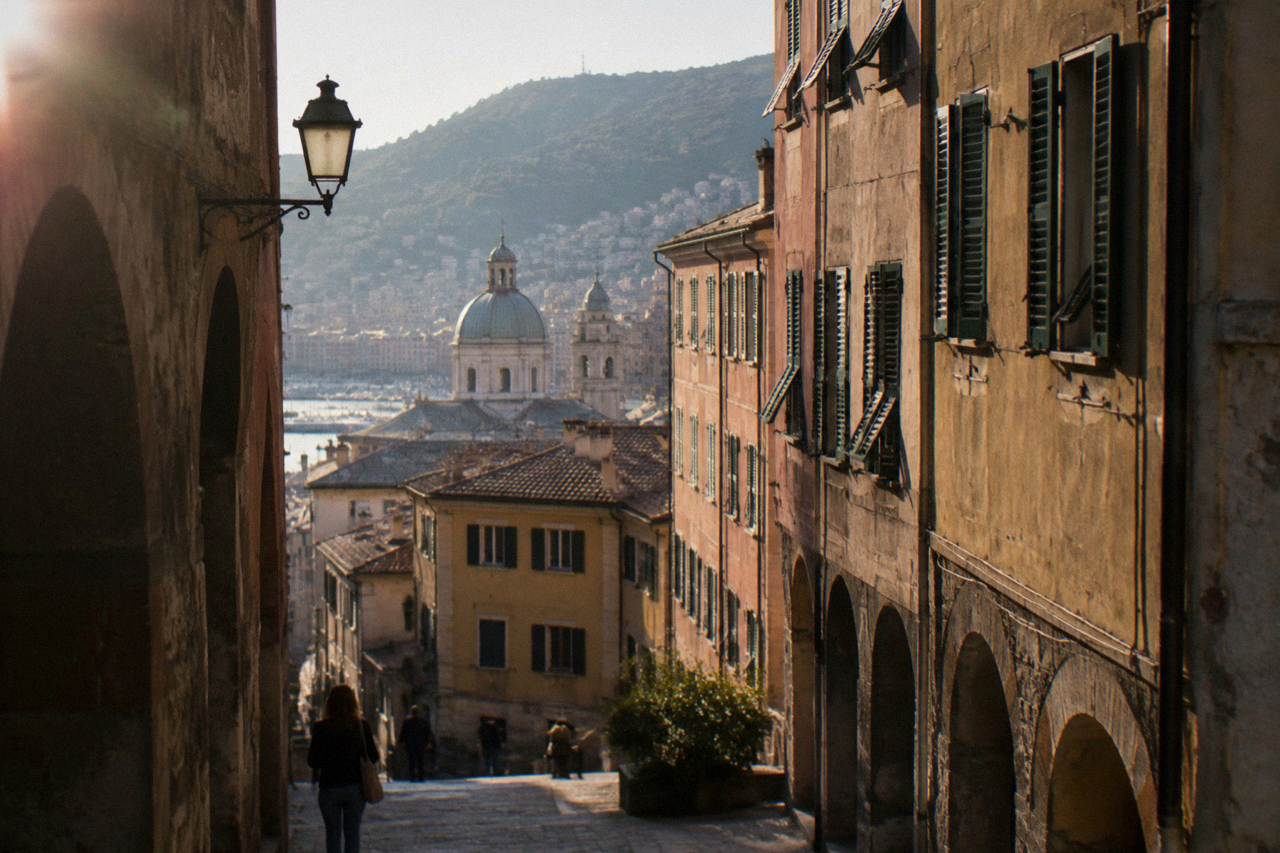
The plaques are the most visible piece. Walking the caruggi, the narrow lanes of the medieval centre, you pass small ceramic or stone tablets carrying proverbs and rhymes in zeneise, many of them wry commentaries on neighbours, poverty or luck. They are a deliberate feature of the historic quarter rather than accidents, and they are written in Genoese spelling conventions that look strange beside standard Italian.
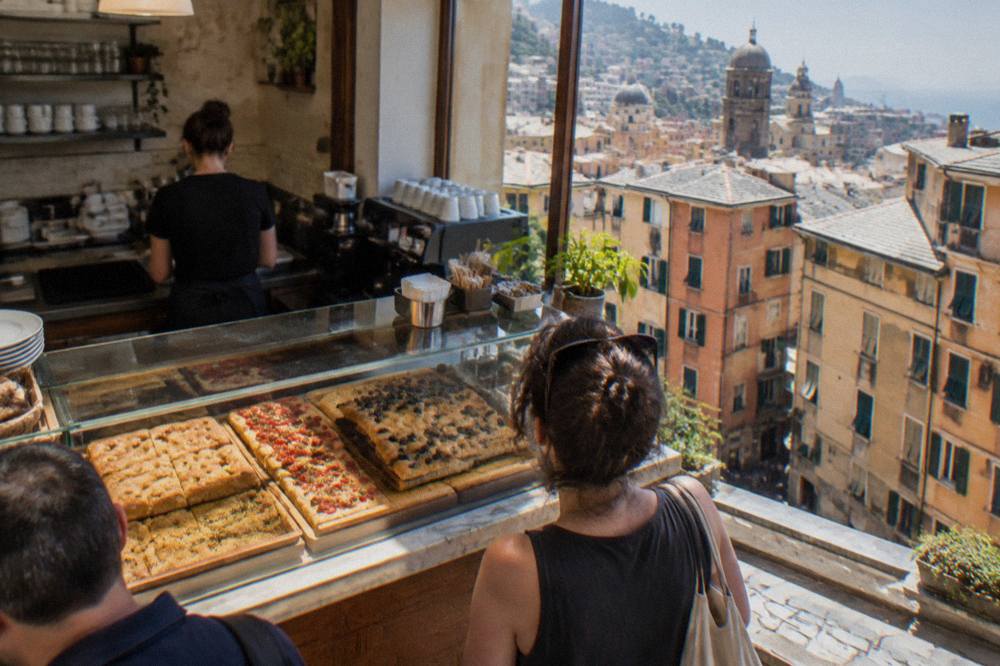
Food is the second place. The vocabulary of the Genoese table is dialect vocabulary: focaccia, farinata, trofie with pesto genovese, pansoti in walnut sauce. The basil that defines pesto genovese has its own protected status, Basilico Genovese DOP, under Italian and EU law, and the sauce's name itself is the Genoese form. When a menu in Genoa prints a dish name that does not match a dictionary, the dictionary is usually the thing that is wrong locally, not the menu. The dedicated food answer goes dish by dish.
The third place is accent and rhythm. Italian as spoken in Genoa carries a recognisable Genoese cadence, and residents of other Italian cities identify it readily. Describing it precisely is beyond what this page needs; noticing it is free.
Common Questions About Language In Genoa
What Language Is Spoken In Genoa?
Italian is the language spoken in Genoa, used in all official, commercial and tourist settings. The city also has a regional language, Ligurian, whose Genoese variety is called zeneise, heard informally and seen on plaques and menus, but Italian is what you need for everything practical.
Is English Widely Spoken In Genoa?
English is used at the major attractions, the tourist offices, the airport and the cruise and ferry terminals. In smaller neighbourhood shops and bakeries coverage is thinner, so a few Italian phrases are worth carrying.
Is Genoese A Dialect Or A Language?
Ligurian, including its Genoese variety zeneise, is classified in Italy as a historical language rather than a mere dialect of Italian, with its own grammar and spelling conventions distinct from standard Italian.
Why Does The City Have Two Names, Genoa And Genova?
Genova is the Italian name and Genoa is the English exonym for the same city. Official names such as Genova Piazza Principe station and Genova Cristoforo Colombo airport keep the Italian form even in English text.
Do I Need To Know Italian To Visit Genoa?
No, but greetings, numbers and polite forms earn their space. Ticketed sights publish English information, the Aquarium of Genoa runs an English ticket page, and guided tours with English-speaking local guides cover the historical centre.
What Does Zena Mean?
Zena is the name of Genoa in the Genoese dialect, zeneise. It appears in dialect writing, songs and plaques in the old town, and is a third name for the same city alongside Italian Genova and English Genoa.